
Oil prices were in positive territory for the third consecutive day, with Brent crude hitting its highest since late last month after the latest signals from Washington and Tehran crushed hopes of an imminent end to the conflict
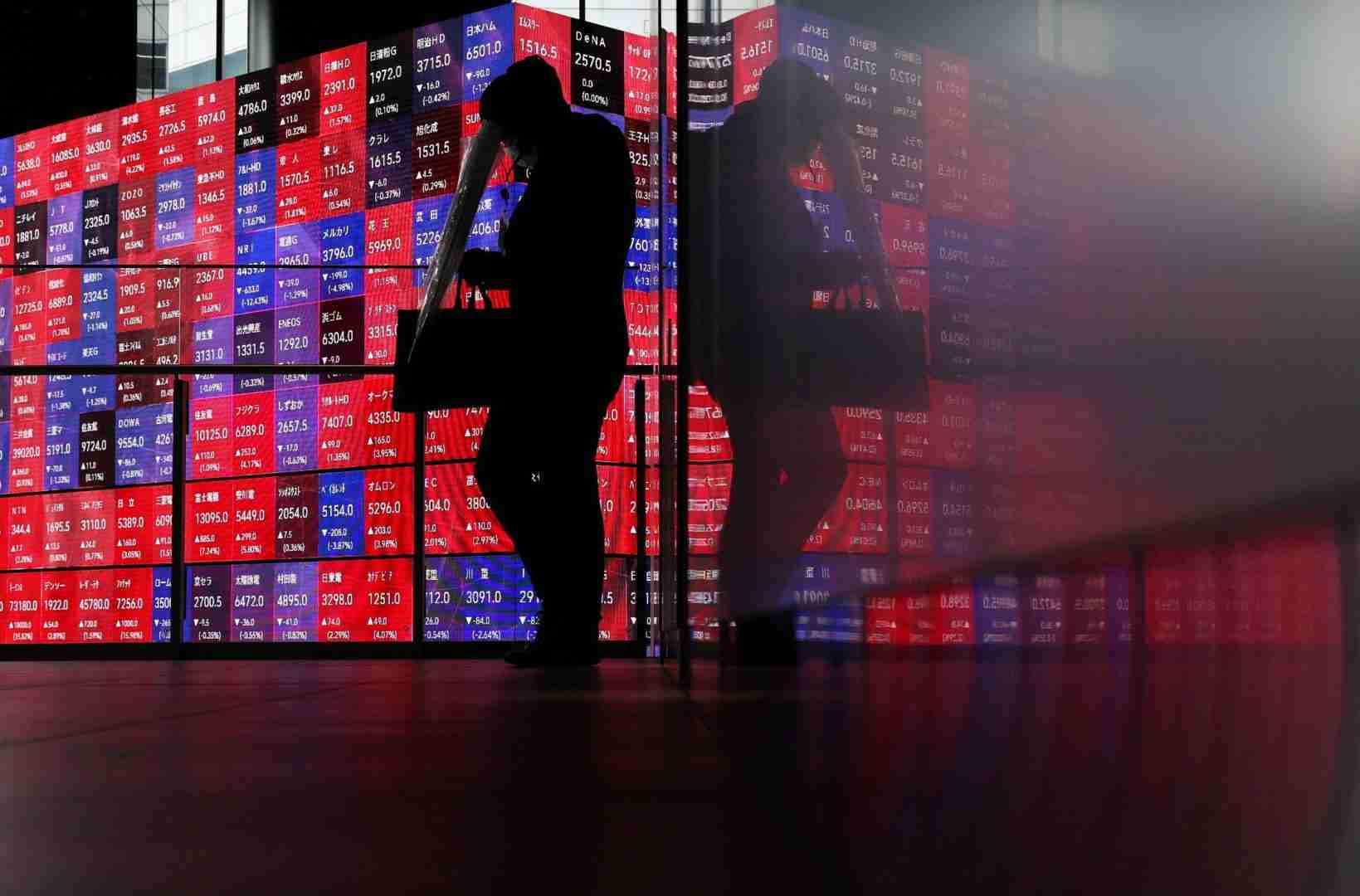
International News via Reuters:
A selloff in U.S. government bonds picked up pace on Tuesday, sending the 30-year Treasury yield to a near two-decade high as fears of an escalation in the Middle East war fuelled inflation worries and pressured stocks.
Oil prices were in positive territory for the third consecutive day, with Brent crude hitting its highest since late last month after the latest signals from Washington and Tehran crushed hopes of an imminent end to the conflict.
The market’s reaction shows that tensions in the Middle East remain a potent source of risk, with a renewed escalation capable of reverberating across oil, bonds, currencies and equities.
It has also shattered the calm after a recent run of soft data in the U.S. eased jitters about rate hikes by the Federal Reserve.
Traders see a 34.6% chance of a hike at the Fed’s September meeting, lower than 48.4% a week ago, according to the CME FedWatch tool.
But “if things unravel and the conflict escalates, a mid-cycle adjustment would be necessary,” said George Bory, chief investment strategist for fixed income at Allspring Global Investments.
The yield on the U.S. 30-year Treasury bond rose 1.42 basis points to 5.3232%, its highest in almost 20 years. Its 10-year counterpart traded up 0.99 basis points at 4.7339%. [US/]
The pressure also spread to other major government bond markets. Yields on Japan’s 10-year government bond were on the brink of hitting 3% for the first time since the mid-1990s, while euro zone bond yields were hovering at multi-year highs.
MARKETS TURN CAUTIOUS
Europe’s STOXX 600 fell 0.52% to 653.01. On Wall Street, futures tracking the S&P 500 and the Nasdaq 100 slipped 0.50% and 1.22%, respectively.
MSCI’s gauge of stocks across the globe dipped 0.26% to 1,153.64.
High bond yields can weigh on equities by making stocks less attractive and raising borrowing costs for capital-intensive companies investing heavily in AI infrastructure.
The CBOE Volatility Index, Wall Street’s fear gauge, hit its highest in more than a week.
“The unresolved standoff argues for maintaining hedges against renewed oil and inflation volatility,” strategists at Gramercy Funds Management wrote.
Investors are also awaiting minutes of the Fed’s most recent policy meeting, scheduled to be released on Wednesday. The central bank’s Jackson Hole symposium next week will also be scrutinised for clues on policymakers’ interpretation of the latest economic data.
“Given the reduced information content of the FOMC’s policy statement and Fed chair (Kevin) Warsh’s press conferences, the minutes from the FOMC meetings arguably have become more important in conveying the balance of views among policymakers,” said Jonas Goltermann, chief markets economist at Capital Economics.
The Federal Open Market Committee is the Fed’s interest-rate-setting body.
Reporting by Niket Nishant in Bengaluru and Gregor Stuart Hunter in Singapore; Editing by Sonali Paul, Clarence Fernandez, Muralikumar Anantharaman, Gareth Jones and Sharon Singleton