
Two controversial motions have been dropped by the party, which now awaits final order from the Supreme Court to bring proceedings to a close
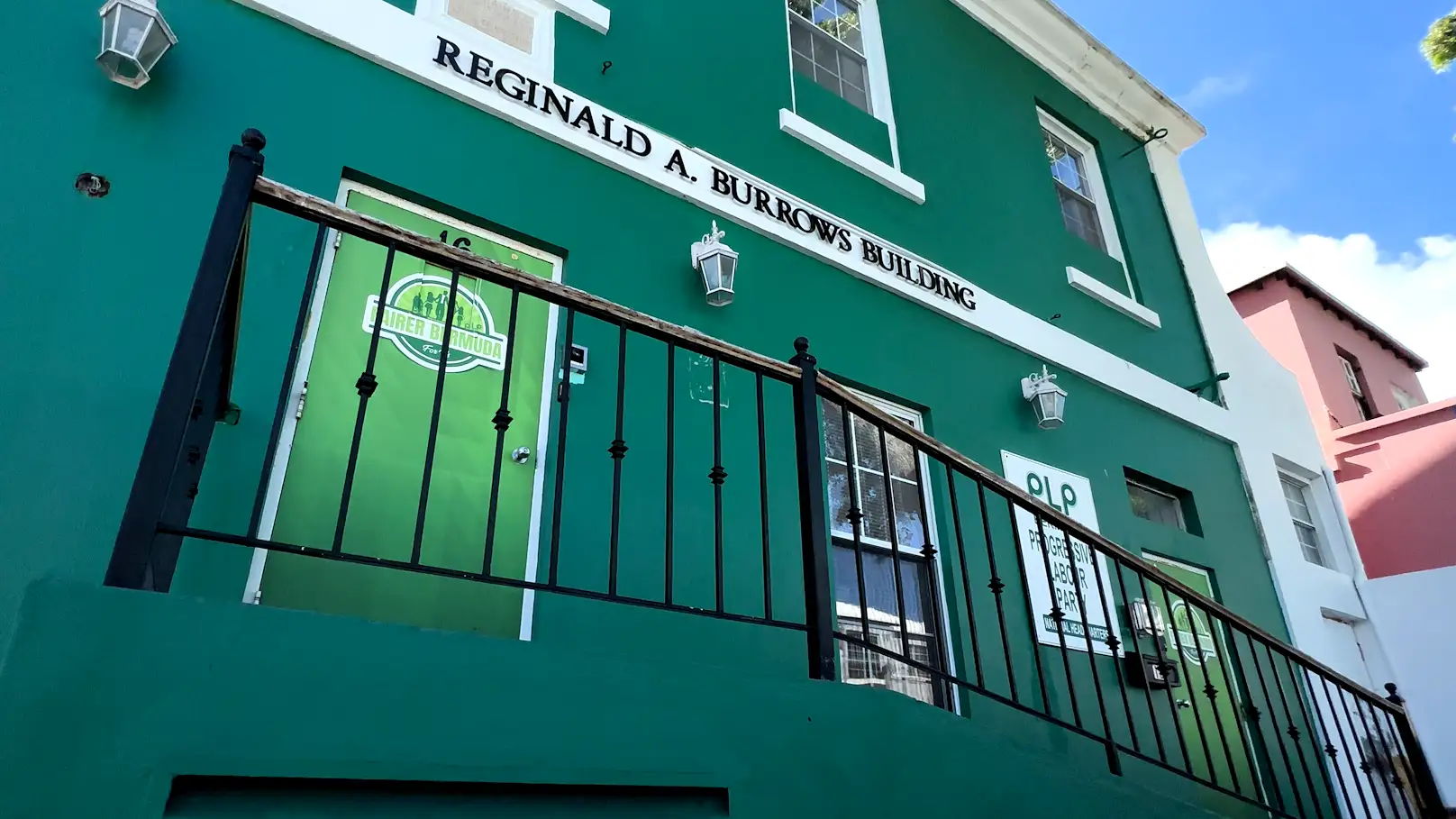
This afternoon, the Progressive Labour Party filed a notice with the Supreme Court that brings to a resolution the case brought by five of its members over two motions passed by the Central Committee on 24 August 2026. In that notice, the Party has consented to every order the plaintiffs asked the Court to make, in the terms they themselves drafted. All that remains is for the Court to make the final order to bring the proceedings to a close, and we have asked for that to happen as soon as possible.
What the case was about
The case asked one question: whether the Central Committee had the authority, under the Constitution as it is currently written, to pass the two motions it passed on 24 August.
The first motion dealt with new membership applications. It gave the Branch Chair, Secretary or MP of the relevant Branch the right to raise an objection, with evidence, where an applicant within their Branch had stood as a candidate against the PLP, or campaigned against the PLP, in a recent general election. The Central Committee would then consider each case individually. The second motion dealt with delegates, the members who represent their branch at conference. It required a member to have belonged to the Party for one year before being eligible to serve as a delegate. New members could still join, attend branch meetings, vote to choose their delegates and take part fully in the life of the Party.
The Central Committee acted in good faith, in what it believed was its duty under the Constitution to protect the Party and take the action it considered necessary, out of genuine concern for the integrity of our membership process.
The plaintiffs argued that changes of this kind are, in substance, changes to the Constitution, and that only the delegates can make them. For the purposes of these proceedings, and on the documents before the Court, the Party has chosen not to contest that argument.
Who the Central Committee is
Much of the public commentary has suggested that these motions were the act of the Party Leader, or of a handful of Party officers. That is not how the PLP works. Between conferences, the Party is governed by its Central Committee, which is made up of:
a representative from every PLP branch across the island, chosen by that branch;
six members elected directly by the delegates at conference;
the Party’s officers, elected at conference;
four members of the Parliamentary Group, including one Senator;
a representative of the Youth Wing; and
a representative of the Women’s Caucus.
The Central Committee is the voice of the Party’s membership between conferences, not a vessel for any one individual. The motions of 24 August were debated and passed by a majority vote.
They were not a decree.
Why we have chosen to bring this to a resolution
By filing this notice, the Party has given the plaintiffs everything they asked the Court for. There is nothing left to argue. We have invited the plaintiffs to sign a consent order so that the Court can close the matter quickly. We hope they will, and that when the Court next sits, it will be simply to bring these proceedings to an end, so that our members, our volunteers and our Party can move forward together.
Enough is enough. In less than three weeks, these proceedings produced multiple court orders, urgent applications, mounting legal costs, and an application asking the Court to warn our volunteer officers that they could face imprisonment, fines or the seizure of their assets. The people carrying that burden are volunteers who give their evenings and weekends to this Party for no pay. The toll – financial, reputational and personal – was no longer one we were willing to ask our members to bear.
We could have fought on. We chose not to. The PLP has always settled its differences at its own table, and that is where this belongs.
What this means
The Party has accepted that the two motions, as passed by the Central Committee on 24 August, will be set aside. This resolution does not decide what the Party’s rules should be. It decides only where those rules must be made.
Not arguing against the plaintiffs’ reading of the Constitution as it is written today is not the same as agreeing that this is how it should be written. The terms we have agreed to, which were proposed by the plaintiffs themselves, expressly preserve the Party’s right to hold future meetings, deliberate on these questions, and amend its Constitution through the proper process. The scope of the Central Committee’s authority, the conditions of membership and delegate eligibility, matters affecting future conferences, and anything else the Party chooses can now go before the delegates, at a Special Delegates Conference or the Annual General Conference. If the delegates believe the Central Committee should have the authority it exercised, they are free to say so, and to write it into our Constitution.
Looking forward
We will take this as a lesson. In the Party’s history, no one anticipated that a decision of the Central Committee – a democratic body drawn from every branch and organ of the Party, taken after debate and by majority vote – would be challenged by our own members in a court of law. That is not the PLP way. True PLP members argue hard, and then resolve their differences among themselves. Our Constitution was written in that spirit, which is why it never anticipated a moment like this.
Now that it has come, it gives us the opportunity to take a fresh look at our Constitution and our processes, and to ask what is needed to protect and preserve the spirit, intent and aims of the founders of this Party. That work belongs to our members, through their delegates, and that is where it will now go.
To every member of this Party, new and long-standing: the PLP is a family, and families disagree.
What matters is what we do next – together, and within the walls of our own meeting halls.
In service,
Progressive Labour Party