Unclear whether Trump and Putin had spoken to each other directly
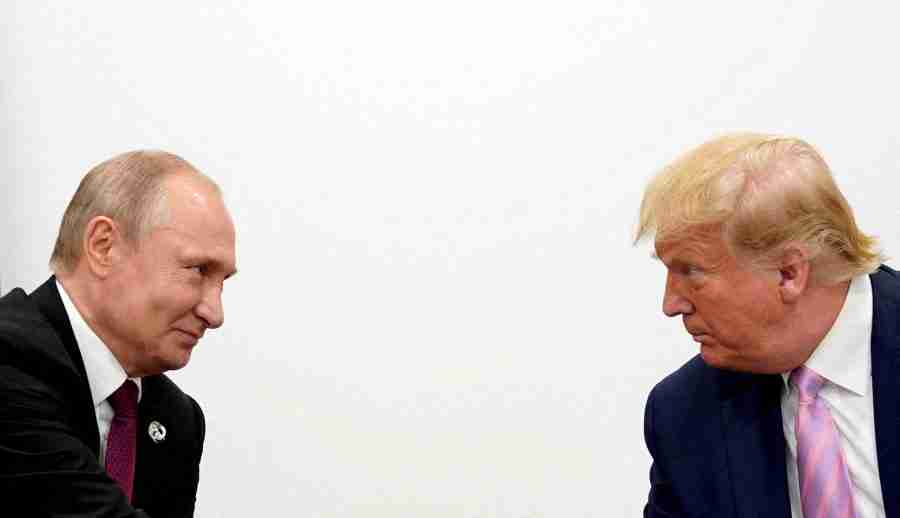
FILE PHOTO: U.S. President Donald Trump and Russian President Vladimir Putin hold a bilateral meeting at the G20 leaders summit in Osaka, Japan June 28, 2019. REUTERS/Kevin Lamarque/File Photo
International news via Reuters:
U.S. President Donald Trump said on Friday there is a “very good chance” the war between Russia and Ukraine can end after “productive” discussions with Russian President Vladimir Putin on Thursday.
“We had very good and productive discussions with President Vladimir Putin of Russia yesterday, and there is a very good chance that this horrible, bloody war can finally come to an end,” Trump said in a Truth Social post, adding that he had requested that Putin spare the lives of “completely surrounded” Ukrainian troops.
U.S. envoy Steve Witkoff had a long meeting with Putin in Moscow on Thursday night, a source briefed on the matter, who spoke on condition of anonymity, said.
The Truth Social post did not say whether Trump and Putin had spoken to each other.
However, Kremlin spokesman Dmitry Peskov said Putin had used the meeting to convey “signals” to Trump through Witkoff. He said Russia and the U.S. would work out the timing of a phone call between their presidents once Witkoff had briefed Trump.
The U.S. president has said he wants Moscow and Kyiv to agree a swift ceasefire to pause fighting in a conflict which he has warned has the potential to spiral into World War Three and has already cost many lives on both sides.
Reporting by Katharine Jackson and Steve Holland; Editing by Chizu Nomiyama, Don Durfee and Kevin Liffey
Shadow Finance Minister Dr. Douglas DeCouto calling for answers
Shadow Finance Minister Dr. Douglas DeCouto via OBA press release:
The Chamber of Commerce just released its March 2025 Economic Report.
While the information and statistics in this report should be carefully studied, the messages in the data paint a clear but disturbing picture.
And unfortunately, that picture is unsurprising as we’ve been watching it evolve for several years under the PLP Government’s continued failure to grow the economy and properly run our country.
To highlight a few key issues among many, the chamber report highlights that while the overall economy seems to grow, as measured by GDP, it’s driven by IB.
The local economy in many ways is stuck and stagnant, a reflection of the failure of most of Government’s Economic Development Initiatives to make an impact.
In addition the report estimates a massive reduction in Bermuda’s population of 7,000 to 9,000 people, with a rapidly aging workforce.
This shrinking population underlies serious structural issues in our tax base, pensions, and healthcare costs.
However, despite acknowledging this issue in great deal in its own reports, the Government has yet to not produce any solutions or way forward.
Finally, the report identifies significant issues around releasing key data from Government, that has been getting worse over time.
Government need to properly resource these departments so they can produce the information required for informed decision making, and Ministers need to stop sitting on reports and hiding information from the public.
On key example is the 2023 Pensions Actuarial review, that will tell us the health of the Social Insurance and Public Service Pensions – why hasn’t Government shared these?
These and other topics will be some of the major concerns we will debate in the upcoming Throne Speech and Budget debates – we hope we can get some answers.
Campus protests and counter-protests have drawn allegations of antisemitism and Islamophobia
International news via Reuters:
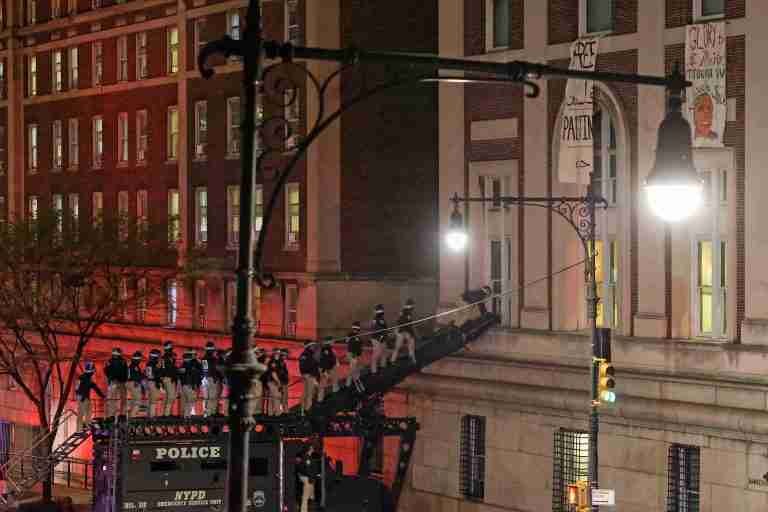
Columbia University on Thursday said it had doled out a range of punishments to students who occupied a campus building last spring during pro-Palestinian protests.
The announcement came a week after President Donald Trump’s administration announced that it had canceled $400 million in federal grants and contracts in response to what it said was the Ivy League school’s poor response to antisemitism on campus.
Columbia University’s interim president, Katrina Armstrong, has called the administration’s concerns legitimate and said her institution was working with the government to address them. Campus protests and pro-Israel counter-protests have drawn allegations of antisemitism, Islamophobia and racism.
The university said in a statement on Thursday that its “judicial board determined findings and issued sanctions to students ranging from multi-year suspensions, temporary degree revocations, and expulsions related to the occupation of Hamilton Hall last spring.”
The university’s judicial board is comprised of students, faculty and staff selected by the university Senate.
The university, citing legal privacy restrictions, did not release the names of students who were disciplined, nor did it say how many students faced punishments, which the students can appeal.
The union representing Columbia student workers, UAW Local 2710, said in a written statement that its president, Grant Miner, was among the students expelled, just one day before contract negotiations with the university were set to begin, a move the union called “the latest assault on First Amendment rights …”
A university spokesperson said they had no comment on the union statement.
Columbia was the epicenter of anti-Israel protests that hit several U.S. college campuses.
The demonstrations began after the Hamas attack on Israel in October 2023 and subsequent U.S.-supported Israeli assault on Gaza. Protesters demanded that university endowments divest from Israeli interests and that the U.S. end military assistance to Israel, among other demands.
The Trump administration has vowed a severe crackdown on what it labels as pro-Hamas protesters.
Over the weekend federal immigration agents detained Columbia student Mahmoud Khalil, a leader of last year’s campus protests whom the administration seeks to deport. The administration has said that his detention was the first of many it hopes to carry out. Khalil’s deportation has been temporarily blocked by a federal judge.
Reporting by Brad Brooks in Colorado; additional reporting by Kanishka Singh in Washington; editing by Donna Bryson, Leslie Adler and Michael Perry
Prosecutors have accused him of crimes against humanity for state-sanctioned killings
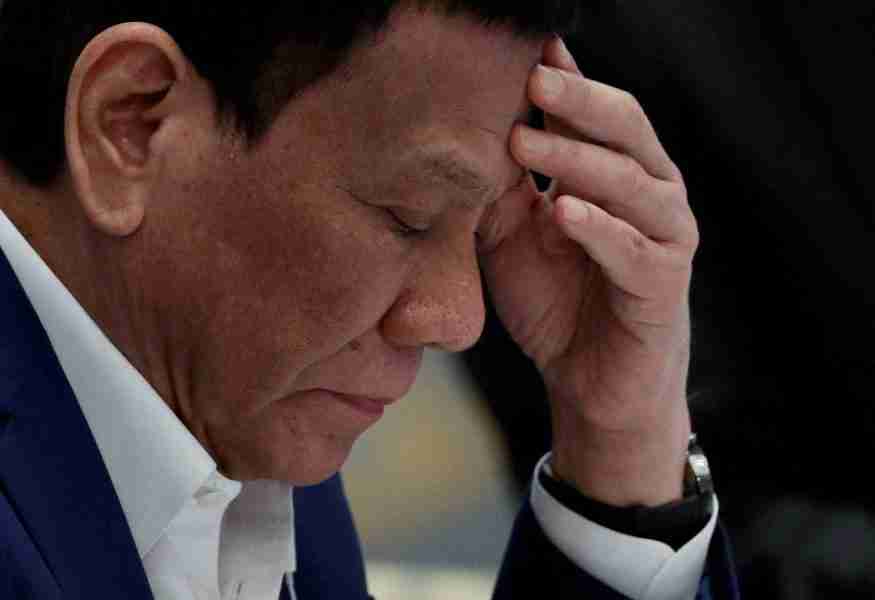
FILE PHOTO: Philippine President Rodrigo Duterte attends a plenary session during the 34th ASEAN Summit in Bangkok, Thailand, June 22, 2019. REUTERS/Jorge Silva//File Photo
International news via Reuters:
Former Philippine President Rodrigo Duterte makes his first appearance at the International Criminal Court in The Hague on Friday, where he faces murder allegations stemming from his “war on drugs”.
Duterte arrived in the Netherlands on a flight from Manila on Wednesday and was taken into ICC custody after being arrested by authorities on an International Criminal Court warrant.
Prosecutors have accused him of crimes against humanity for what they call a systematic attack on the civilian population.
Thousands of purported drug dealers and users were killed during the crackdown, when death squads he allegedly created and armed carried out widespread extrajudicial killings.
The 79-year-old arrived at Rotterdam airport on a chartered plane Wednesday and was transferred to a detention unit on the Dutch coast up the road from the ICC building. In video message on social media, Duterte took responsibility for his actions.
Duterte, who led the Philippines from 2016 to 2022, is set to be the first Asian former head of state to go on trial at the ICC, a court of last resort created more than two decades ago to prosecute individuals for war crimes, crimes against humanity, aggression and genocide.
During an initial appearance, judges usually summarise the allegations against a suspect, who will not be asked to enter a plea. Duterte will be represented by a court-appointed defence council and his former executive secretary Salvador Medialdea.
The ageing former president will also be asked about his condition and the conditions in detention.
Duterte has said that he suffers from a series of ailments including a chronic neuromuscular disorder, back problems, migraines and a condition that can cause blockages in the blood vessels.
Duterte’s surrender to the court marks a big victory for Chief Prosecutor Karim Khan, who faces U.S. sanctions over his arrest warrant for Israel’s Benjamin Netanyahu.
After the initial appearance, the court will likely set a confirmation of charges hearing in several months, when prosecutors can present part of their evidence and judges decide what charges can be in the indictment. A trial would not be expected to start until early 2026.
Reporting by Stephanie van den Berg and Anthony Deutsch; Editing by Alex Richardson
Annual spending on incapacity and disability benefits exceeds the country’s defence budget
Chelsea Shubert, stops the traffic for pedestrians to cross the road during her shift as a school crossing patrol, commonly known as lollipop lady, outside a school in Chatham, Britain, March 13, 2025. REUTERS/Isabel Infantes
International news via Reuters:
Britain’s government wants to tame its ballooning bill for supporting people with disabilities and long-term health conditions which, despite the cost, leaves many claimants distressed or struggling to find work.
Annual spending on incapacity and disability benefits already exceeds the country’s defence budget and is set to top 100 billion pounds ($129 billion) by 2030 according to official forecasts, up from 65 billion pounds now.
Prime Minister Keir Starmer warned this week that the welfare arrangements he inherited from the previous government were “indefensible economically and morally” and he wanted to see more people back in work. His government is expected to propose changes next week.
Broadcaster ITV has reported that the reform would include 6 billion pounds of cuts, alarming some lawmakers from Starmer’s left-leaning Labour Party.
Finance minister Rachel Reeves is keen to find ways to reduce the benefits bill as official forecasts due on March 26 may otherwise show the government will miss its debt-reduction goals.
Welfare experts say the government will nevertheless struggle to ensure that a push for quick savings does not jeopardise longer-term efforts to boost employment.
“Trust is very low,” said Louise Murphy, senior economist at the Resolution Foundation think tank, adding that many disabled people on benefits feared losing money or facing a tough time with a work coach if they considered employment.
Asked about potential cuts, a spokesperson for Britain’s Department for Work and Pensions said it had “a duty to put welfare spending on a more sustainable path … through meaningful, principled reforms rather than arbitrary cuts to spending”.
FIRST STEPS
Chelsea Shubert, 23, is the type of person the government wants to encourage.
Diagnosed with autism and living with anxiety, dyslexia and other conditions, she left school without key qualifications and received unemployment and disability benefits.
In 2021, a government employment adviser urged her to do an unpaid six-month stint at a charity shop, which did not lead to a job.
But she has now passed an English exam and began her first paid job as a school crossing guard in January.
“It’s very rewarding and gets me out, even though it’s only half an hour in the morning and half an hour in the evening,” she said.
Eventually she hopes to work with children for longer hours so she is not so reliant on benefits.
“Being someone that’s living with a disability and a health condition, this world that we live in is horrible. There’s not enough support out there,” she said.
Bad experiences with Britain’s benefits system are common, said Ben Baumberg Geiger, professor of social science and health at King’s College London.
His recent study based on a survey of nearly 4,000 claimants found two in five felt they would be better off dead or wished to commit an act of self-harm.
“We have a very dysfunctional benefit system that simultaneously is spending a lot of money … and at the same time doesn’t feel like it’s providing support,” he said.
While Britain’s unemployment rate is low by European standards at 4.4% of the workforce, 10% of the working-age population claim incapacity or disability benefits, up from about 8% before the COVID-19 pandemic.
Other European countries have not seen the same rise, which analysts suggest may reflect the gap between the levels of unemployment and disability benefits in Britain.
Most single jobless people get 393 pounds a month plus some housing costs, while those deemed too sick to work receive 810 pounds.
In addition, disabled people – in work or not – can receive a separate benefit averaging 586 pounds a month to cover extra disability-related costs.
The Resolution Foundation’s Murphy said the government was right to consider narrowing the gap between unemployment and incapacity benefits and whether regular lump-sum payments truly reflected extra costs caused by health conditions.
But she was concerned tighter eligibility rules for future claimants could see the brunt of cuts borne by an unlucky minority of disabled people.
Short-term budget pressures must not distract the government from getting more people back into work, Murphy said.
Geiger said Britain might learn from countries like the Netherlands, where employers are liable for initial costs if a staffer is no longer able to work due to ill health, increasing their incentive to retain the worker.
European countries with higher rates of employment for disabled people had achieved this through better working conditions rather than a benefits crackdown, he added.
In Britain, fewer than one in 100 people receiving the higher rate of incapacity benefit return to work each month – half the proportion in 2012, according to the Resolution Foundation.
One organisation which says it can help turn that round is the Shaw Trust, a charity which receives government contracts to prepare people with poor health to return to work or stay in their job by offering intensive, specialist support.
This costs more than 2,000 pounds per person and secures lasting employment for fewer than half those helped.
But the charity says it delivers an average return on investment for the taxpayer of 2.42 pounds per pound spent in the first year, rising to 9.22 pounds after three years.
The Shaw Trust’s chief commercial officer, Richard Clifton, hopes these figures ensure its work is spared from any public spending cuts.
“In reality these programmes give you payback within the year,” he said.
($1 = 0.7734 pounds)
Reporting by David Milliken; Editing by Hugh Lawson
Team already without right back Conor Bradley and defender Joe Gomez due to injuries
FILE PHOTO: Soccer Football – Premier League – Liverpool v Southampton – Anfield, Liverpool, Britain – March 8, 2025 Liverpool’s Trent Alexander-Arnold shoots at goal REUTERS/Phil Noble/File Photo
International news via Reuters:
Liverpool boss Arne Slot will not have Trent Alexander-Arnold available when they defend their League Cup title against Newcastle United on Sunday at Wembley in a blow to a squad already missing two defenders through injury.
Alexander-Arnold hobbled off the pitch during Tuesday’s Champions League last-16 loss to Paris St Germain with an ankle injury.
“Trent is indeed not available. He will not be there at the final,” Slot told reporters on Friday. “But he’s still to be assessed for how long it’s going to take. We do expect him back before the end of the season.”
Slot is hopeful that Ibrahima Konate will be fit to play on Sunday, when Liverpool, who defeated Chelsea in last year’s League Cup final, look to hoist their first silverware of the season.
Konate was substituted during extra time against PSG and Slot said the centre back would be assessed after training later on Friday.
“With Ibou, we expected only it to be that he was tired or he had some cramps so we are hoping and are expecting that he will be ready to play Sunday again,” Slot said. “We didn’t train yesterday – we had a day off – and the day before was recovery. I expect him to train with us today, but let’s see how it is.”
Liverpool are already without right back Conor Bradley and defender Joe Gomez due to hamstring injuries.
Fans were tipped off to Alexander-Arnold’s absence earlier on Friday when the 26-year-old was left out of Thomas Tuchel’s England squad.
While Liverpool could win two trophies this season as they also have a huge lead in the Premier League title race, the heartbreak of their Champions League elimination cannot be eased by a victory on Sunday, Slot said.
“If we win or lose the final, there will be disappointment that we lost against Paris St Germain, we are out of that tournament,” the Dutchman said.
“But you play games like this to win it, and that’s what we’re going to try to do. And we’re really looking forward to it, to playing a final again, because you cannot take a final for granted, especially not in this country with so many good teams involved in every cup competition.
“So we’re looking forward that we are part of it, and if you are part of it, of course you want and try to win it. But that’s probably what Newcastle wants as well.”
Alexander-Arnold, forward Mohamed Salah and captain Virgil van Dijk are all in the final months of their contracts, with no sign of extensions from Liverpool evident.
Van Dijk, who English media reports say is weighing a large contract offer from Saudi Arabian side Al-Hilal, had little to say when asked about contract negotiations after Tuesday’s loss.
“I still have no idea at the moment… Talks aren’t on hold, nothing’s on hold,” the defender had said.
When asked about Van Dijk’s comments, Slot said: “The only thing I know is that I want Virgil to be here next season, and all the rest, these talks about contracts, that’s not what I do over here.”
Reporting by Lori Ewing; Editing by Christian Radnedge
Regulatory outlook still in flux, key agencies being run by interim leaders
FILE PHOTO: People walk around the Financial District near the New York Stock Exchange (NYSE) in New York, U.S., December 29, 2023. REUTERS/Eduardo Munoz/File Photo
International news via Reuters:
Big banks are holding off on acquisitions and staying cautious about the Trump administration’s pledges to unleash dealmaking, according to industry executives.
Treasury Secretary Scott Bessent said last week that bank mergers had been slowed by minor issues. Days earlier, newly installed regulators moved to scrap strict Biden-era rules that raised oversight of big transactions.
“The slowdown in deals which we have seen has been caused by a whole host of things,” said Bill Burgess, co-head of financial services investment banking at Piper Sandler.
While welcoming deregulatory signs, bankers and industry executives told Reuters that big mergers were stalled by market volatility, economic uncertainty, concerns about paper losses on banks’ balance sheets, and the complexity of transactions among large, heavily regulated lenders.
Cheryl Pate, senior portfolio manager at Angel Oak Advisors, expects some consolidation among smaller regional and community lenders, but sees larger combinations as challenging.
“I’m less optimistic about M&A at the super regional level, I think that’s still probably going to have a lot more scrutiny,” which makes mergers of equals “unlikely,” said Pate, whose firm manages $18.4 billion in assets.
For larger banks, only a few big targets would make sense to expand their businesses, so executives are prepared to wait for the right deal to come along. PNC Financial Services, U.S. Bancorp and Truist Financial are among the companies often cited by analysts as candidates for expansion.
The Republican-led board of the Federal Deposit Insurance Corp said on March 3 it will reinstate earlier guidelines for its bank merger review process, stepping back from the stricter framework of the Biden era.
“The FDIC’s 2024 M&A guidelines were, in some ways, a significant departure from historical practice,” said Randy Benjenk, co-chair of financial services at law firm Covington & Burling. Rescinding of the rules was an important step in returning certainty to the industry, he added.
“Productive and synergistic mergers are often slowed due to immaterial supervisory issues,” Bessent said in a March 6 speech to the Economic Club of New York. The Trump administration wants to refocus financial regulation after the overreach of Biden-era regulators, he added.
SENTIMENT
The caution around deals contrasts with the excitement after President Trump’s election in November. The expected deregulatory wave was forecast to make it easier for U.S. banks — of which there are more than 4,500 — to combine. While mergers still need to be reviewed, the new administration is doing away with some of the tougher guidelines set out last year.
Biden regulators’ close scrutiny of combinations was bemoaned by industry executives who said it delayed transactions and discouraged new deals.
The $35-billion combination between Capital One and Discover Financial Services that was announced in February 2024 has yet to receive regulatory sign-off a year later. It is seen as a litmus test for the new administration’s willingness to speed up approvals.
There have only been nine announced transactions worth more than $1 billion since March 2022, according to S&P Global Market Intelligence. That compares with a dozen deals worth more than $1 billion struck during Biden’s first year in office.
Industry executives cite Toronto-Dominion Bank’s lapsed $13.7 billion acquisition of First Horizon also serving as a cautionary tale of what can happen when things go wrong. The deal was called off in 2023 after waiting for approvals for more than a year, and while First Horizon’s share price has recovered somewhat, the bank is today worth only 70% of the original deal price.
Regulators were reportedly reluctant to sign off on the merger amid concerns over TD’s policing of customer transactions. In 2024, the bank paid over $3 billion in penalties to resolve charges of violating anti-money laundering laws.
UNCERTAINTY
The regulatory outlook is still in flux because agencies including the FDIC and Office of the Comptroller of the Currency are being run by interim leaders. Many lenders also have regulatory problems that would need to be fixed before any large-scale M&A would be approved by officials.
Around two-thirds of large U.S. banks remain in the regulatory penalty box, as the Federal Reserve has deemed them to have unsatisfactory practices in areas ranging from governance structures to liquidity risk management, according to a recent report from law firm Wachtell, Lipton, Rosen & Katz.
Turmoil from the failures of Silicon Valley Bank and First Republic Bank in 2023 also weighed on investor sentiment and discouraged combinations. Meanwhile, rising U.S. interest rates have caused banks to hold swelling paper losses on their securities portfolios, which would be booked as actual losses if they were to merge.
“There are still some obstacles,” said Jason Goldberg, an analyst at Barclays. “The banks need to understand what exactly regulators want to see to approve a merger and less policy uncertainty. Over time, I think unrealized losses will decline and deals will come back. The industry is ripe for consolidation.”
Reporting by David French and Tatiana Bautzer in New York and Pete Schroeder in Washington, additional reporting by Saeed Azhar, editing by Lananh Nguyen and Nick Zieminski
Sudan officials said they rejected the proposal by the United States
FILE PHOTO: Palestinians pass by the rubble of destroyed houses, in Gaza City, March 11, 2025. REUTERS/Dawoud Abu Alkas/File Photo
International news via Reuters:
The U.S. and Israel have contacted officials from Sudan, Somalia and its breakaway region of Somaliland to discuss using their territory for resettling Palestinians from Gaza, the Associated Press reported on Friday, citing U.S. and Israeli officials.
Sudan officials said they rejected the proposal by the United States, and officials from Somalia and Somaliland said they were unaware of any contacts, AP reported.
The White House and the U.S. State Department did not immediately respond to Reuters’ requests for comment. The information ministers for Somalia and Somaliland did not answer telephone calls by Reuters seeking comment.
The foreign ministry of Sudan, a country dealing with a devastating civil war that has displaced 12 million of its own people and spread famine, did not immediately respond to a request for comment.
Earlier this month, Arab leaders adopted a $53 billion Egyptian reconstruction plan for Gaza that would avoid displacing Palestinians from the enclave, in contrast to U.S. President Donald Trump’s vision of a “Middle East Riviera”.
They included the leaders of both Sudan and Somalia.
Trump has proposed a U.S. takeover of the Gaza Strip to reconstruct the destroyed enclave, after earlier suggesting that Palestinians should be permanently displaced.
Trump’s plan reinforced long-standing Palestinian fears of being permanently driven from their homes, and was met with widespread international rejection.
The Palestinian militant group Hamas carried out attacks on communities in southern Israel on October 7, 2023, killing about 1,200 people and taking about 250 people hostage, according to Israeli tallies.
More than 48,000 Palestinians have been killed in the military offensive Israel launched in response, according to Gaza health officials.
Reporting by Gnaneshwar Rajan in Bengaluru, Khalid Abdelaziz in Dubai; Editing by Kim Coghill, Michael Perry and Timothy Heritage
Previously pleaded not guilty to charges including sex trafficking
FILE PHOTO: Sean “Diddy” Combs sits during a bail hearing in federal court in the Manhattan borough of New York City, U.S., September 18, 2024 in this courtroom sketch. REUTERS/Jane Rosenberg/File Photo
International news via Reuters:
Sean “Diddy” Combs is expected on Friday to be arraigned in court on a new indictment, which added accusations that the hip-hop mogul forced employees to work long hours and threatened to punish those who did not assist in his two-decade sex trafficking scheme.
U.S. District Judge Arun Subramanian is expected to ask Combs, 55, for his plea to the new indictment at a 2 p.m. EDT (1800 GMT) hearing in Manhattan federal court. A trial remains scheduled for May 5.
Combs previously pleaded not guilty to charges of racketeering conspiracy, sex trafficking and transportation to engage in prostitution.
While the new indictment added no new charges, it described what prosecutors called the “forced labor” that Combs demanded in connection with the racketeering conspiracy.
It said Combs and his associates “maintained control” over some employees by forcing them to work long hours with little sleep, through the use of or threats to use physical force, financial harm, psychological harm and reputational harm.
Combs’ defense lawyer, Marc Agnifilo, has said his client never forced anyone to engage in sexual acts against their will.
Prosecutors with the Manhattan U.S. Attorney’s Office said Combs used his business empire, including his record label Bad Boy Entertainment, to sexually abuse women between 2004 and 2024.
Combs’ alleged abuse included having women take part in recorded sexual performances called “freak offs” with male sex workers, who were sometimes transported across state lines.
Agnifilo has said the freak offs were consensual sexual activity.
Combs also faces dozens of civil lawsuits by women and men who accused him of sexual assault and other misconduct. He has denied all wrongdoing.
Friday’s hearing is also expected to discuss jury selection, including the potential difficulty in finding an impartial jury given Combs’ fame and the substantial media coverage of his criminal case.
Prosecutors want jury selection to begin on April 21, to help ensure the trial does not run past the July 4 holiday. Defense lawyers want jury selection to begin on May 5, saying an earlier date would be unfair to them.
Combs has been held in a Brooklyn jail awaiting trial since his September 2024 arrest.
Also known during his career as Puff Daddy and P. Diddy, Combs founded Bad Boy Records and is credited with helping turn rappers and R&B singers such as Mary J. Blige, Faith Evans, Notorious B.I.G. and Usher into stars in the 1990s and 2000s.
His career has been derailed since federal agents raided his Los Angeles and Miami Beach, Florida, homes in early 2024 as part of the sex trafficking investigation that led to his indictment.
Sterling weakened by around two tenths of a cent against the U.S. dollar before recovering
Commuters walk during the morning rush hour near the Bank of England in the City of London financial district in London, Britain, February 8, 2024. REUTERS/Toby Melville
International news via Reuters:
Britain’s economy unexpectedly contracted in January, extending a run of stop-start data that has dogged finance minister Rachel Reeves’ attempts to ignite growth, before an update to parliament on the economic outlook.
Gross domestic product fell by 0.1% in January, pulled down by a sharp drop in industrial output compared with December, the Office for National Statistics said on Friday.
A Reuters poll of economists had forecast a monthly expansion of 0.1%. While January’s drop only partially reverses a 0.4% expansion in December, the reading represents a disappointment for Reeves, whose number one mission is to get the economy growing.
“The world has changed and across the globe we are feeling the consequences,” Reeves said in response to Friday’s data.
On Thursday, U.S. President Donald Trump threatened to slap a 200% tariff on wine, cognac and other alcohol imports from Europe, opening a new front in a global trade war that has roiled financial markets and raised recession fears.
Reeves is due to present new economic and fiscal forecasts from the Office for Budget Responsibility in her March 26 Spring Statement, with weak growth and higher borrowing costs eating into the slim margin against which she met her fiscal rules in October’s budget.
Reeves has said the fiscal rules are non-negotiable and has indicated she will cut public spending if needed to ensure they are not broken.
Sterling weakened by around two tenths of a cent against the U.S. dollar after the data before largely recovering.
Over the three months to January, the economy expanded by 0.2%, the ONS said, slightly weaker than the 0.3% Reuters poll consensus.
“Following the lacklustre performance in the second half of 2024, growth remains fragile due to global and domestic uncertainty,” said Hailey Low, economist at the National Institute of Economic and Social Research think tank.
“It is crucial that the upcoming Spring Statement provides stability rather than adding to domestic uncertainty. Frequent policy U-turns risk undermining business and investor confidence at a time when clarity and consistency are most needed.”
Investec chief economist Philip Shaw said the underlying picture, looking past volatile swings in the monthly data, showed a slowly expanding economy, perhaps around 0.1% per month on average.
Manufacturing output slumped by 1.1% in January alone, with the metals and pharmaceutical sectors performing especially poorly, while the broader industrial sector was also hurt by a fall in oil and gas extraction.
Output in the dominant services sector grew by 0.1%, marking the third straight month-on-month expansion. Supermarket sales rose but spending at pubs and restaurants fell as Britons sought to save money by eating at home.
Construction output slipped by 0.2%, with the ONS citing anecdotal evidence from companies of stormy weather hitting construction activity.
(Reporting by Andy Bruce and David Milliken; Editing by Kate Holton, Timothy Heritage and Susan Fenton)
Expulsions have shrunk the staff at Britain’s embassy since the start of the war
FILE PHOTO: A flag flies above the British embassy in Moscow, Russia September 13, 2024. REUTERS/Evgenia Novozhenina/File Photo
International news via Reuters:
Two British diplomats expelled in a spying row. A blistering statement from Russia’s foreign intelligence service calling Britain “a warmonger.” And a threat from a top ally of Vladimir Putin to seize UK assets inside Russia.
As the U.S. under Donald Trump seeks to reset ties with Moscow and broker peace between Russia and Ukraine, Britain has been granted the status of Russia’s public enemy number one.
It’s a mantle it has held on and off over the past two centuries.
“London today, like on the eve of both World Wars of the last century, is acting as the main global ‘warmonger’,” Russia’s foreign intelligence service said in an unusually charged public statement on Monday. It accused London of trying to derail Trump’s efforts to broker peace in Ukraine.
“The time has come to expose them and send a clear message to ‘perfidious Albion’ and its elites: you will not succeed,” the agency, known as the SVR, said.
It did not elaborate on its objections to Britain’s behaviour prior to the two World Wars.
While Moscow has singled out Britain for particularly severe opprobium, it has ramped up its rhetoric against the European Union and French President Emmanuel Macron in particular too, whose talk of France’s nuclear arsenal as a counterpoint to a perceived Russian threat has angered the Kremlin.
Russia’s invasion of Ukraine in 2022 has become Europe’s biggest and deadliest conflict since World War Two. It has left hundreds of thousands of dead and injured, displaced millions more, and triggered the sharpest confrontation between Moscow and the West in decades.
For most of the war, Russia lambasted Washington for its role in supplying aid to Kyiv. With Trump in office, that has changed.
Three Russian officials, who spoke on condition of anonymity because they were not authorised to speak to the media, said Britain was now regarded as Moscow’s main foe, with one fuming that London was “stoking chaos and war” in Ukraine.
Another described Britain as the driving force in the West when it came to galvanising opposition to Russia.
Prime Minister Keir Starmer’s talk this month of putting British boots on the ground and planes in the air in Ukraine as part of a potential peacekeeping force has angered senior Russian politicians.
So did his hosting of a meeting of the “coalition of the willing”, as well as his in-person and phone lobbying of Trump to support Ukraine.
Russian Foreign Minister Sergei Lavrov has cast Starmer as fuelling tensions at the very moment when Trump was trying to calm them.
British diplomats in Russia say they know what they’re up against. Tit-for-tat expulsions have already shrunk the staff at Britain’s embassy by at least 10 diplomats since the start of the war. Neither Russia nor Britain has defence attaches in post.
Russia’s FSB security service on Monday accused a British diplomat and the spouse of another diplomat of spying and expelled them – allegations London called “baseless.”
Britain summoned Russia’s ambassador in London on Wednesday and expelled a Russian diplomat and a diplomatic spouse in retaliation.
“It is clear that the Russian state is actively seeking to drive the British Embassy in Moscow towards closure,” the British Foreign Office said in a statement on Wednesday.
Russia’s Foreign Ministry and British Foreign Office did not immediately respond to requests for comment.
“HOSTILE ACTION”
Russia, according to the head of Britain’s MI6 Secret Intelligence Service, has used “staggeringly reckless” sabotage on British and European soil.
A London court this month found three Bulgarians guilty of being part of a Russian spy unit. In October, a British man admitted to a London court that he had carried out an arson attack on a Ukrainian-owned warehouse in east London on behalf of Russia.
A British inquiry blamed Russia for the 2006 poisoning of Kremlin critic Alexander Litvinenko in London with a radioactive substance. London also accused Moscow of the 2018 Salisbury poisoning that used the Novichok nerve agent. Moscow rejected those accusations.
Some Russian politicians have suggested, without providing evidence, that Britain helped Ukraine carry out sabotage operations on Russian targets such as on the bridge linking Crimea with mainland Russia, in which two people were killed in 2023.
One of the three Russian officials said Starmer, like Boris Johnson before him, was using the Ukraine war to distract from domestic problems. London says it wants to ensure Ukraine gets “a just peace” rather than being forced to capitulate.
‘THE ENGLISHWOMAN RELIEVES HERSELF’
Nationalist commentators on Russian state TV have started telling Russians that London has been trying to undermine Moscow for centuries.
Despite London’s popularity as a Russian investment destination after the collapse of the Soviet Union in 1991, distrust of Britain traces its roots back to at least the Crimean War of 1853-1856, when it was part of an alliance that defeated the Russian Empire.
Britain’s more recent purported transgressions have had Russian politicians reaching for a nineteenth century phrase used to describe Britain’s hostile foreign policy towards Russia under Queen Victoria: “The Englishwoman relieves herself” on Russia, a saying meant to signify Britain’s alleged systematic efforts to act as a spoiler.
The new, souring anti-British mood, which has been accompanied by a marked and rapid softening of anti-U.S. rhetoric in state media, could leave London more exposed.
As Russia enters a fourth year of war with its economy overheating, there is a sense in Moscow that Trump’s new approach offers a chance for peace on terms favourable to Moscow.
Some lawmakers have said companies from “hostile” nations like Britain should not be allowed back even if Western sanctions are eased after an eventual peace deal with Ukraine, or given a much harder ride if they are.
Vyacheslav Volodin, a top Putin ally, this week spoke of the need to claw back money from Britain, a reference to interest accrued on frozen Russian assets in the UK worth around $26 billion that London has been handing to Ukraine.
British-Russia trade has shrunk from over 16 billion pounds in 2021 to just over 2 billion pounds in 2023, according to UK government data, with oil company BP taking a hit of over $20 billion to exit Russia in 2022.
Other British companies, such as the British-Swedish pharmaceuticals giant AstraZeneca and GlaxoSmithKline, continue to do business there.
BRITISH LOCOMOTIVE
Some in Britain might be surprised by the global importance attributed to London’s intelligence services and special forces by Moscow. But one of the three Russian officials said London had shown it was able to lead by example on Ukraine.
“They’re the locomotive and pull others along with them,” the official said.
Britain, which offers training and finance to the Ukrainian military, was the first country to pledge Western-made main battle tanks to Ukraine and the first to deliver long-range cruise missiles at a time when other countries were hesitating.
It deeply angered Russia.
“If today Britain is hitting our territory with its missiles from Ukraine … I consider this a good reason for Britain to cease to exist, Andrei Gurulyov, a pro-Putin lawmaker and former military commander, told state TV in January.
Russia’s attempt to cast Britain as a warmonger echoes Putin’s accusation that former British prime minister Boris Johnson persuaded Ukrainian President Volodymyr Zelenskiy to walk away from a potential peace deal in 2022, an assertion Johnson and Zelenskiy reject.
And though it would appear to weaken the charge that Britain poses a threat to Moscow, Russian politicians and commentators have been eager to point out the shrunken state of the British military, which currently has less than 75,000 full-time army soldiers. Russia has an estimated 1.1 million active servicemen.
State TV anchor Yevgeny Kiselyov used his flagship show this month to quip that the entire British army could fit into London’s Wembley football stadium.
Reporting by Andrew Osborn in London;Additional reporting by Guy Faulconbridge in Moscow; Writing by Andrew Osborn; Editing by Daniel Flynn and Frank Jack Daniel
Says demonstration aims to highlight community trauma and unity
Update via press release:
Sophia Cannonier, a community advocate and former political candidate, will hold a single-person protest on March 14, 2025, as Bermuda’s Parliament reconvenes at the Cabinet Grounds for the Progressive Labour Party (PLP) Government’s Throne Speech, delivered by Governor Andrew Murdock.
This demonstration calls attention to unresolved societal trauma from the COVID-19 pandemic and urges unity in addressing its lingering effects.
The protest takes place against a backdrop of growing public concern about community well-being. On March 7, Bermuda marked its first “Grief and Loss Awareness Day” at City Hall, spotlighting the collective need for healing after years of social and economic upheaval.
Additionally, Dr. Stanley James’ ongoing “State of the Nation” seminar series emphasizes themes of “healing, wholeness, and hope,” underscoring a broader societal reckoning with post-pandemic challenges.
Cannonier’s advocacy has gained momentum following her appeal against the government’s use of emergency powers during the pandemic and her political campaign in the February 18 General Election.
Her platform has consistently called for accountability in public health policies and systemic reform to address inequities exacerbated by the pandemic.
Sophia Cannonier’s protest symbolizes her commitment to fostering transparency, unity, and resilience in Bermuda.
Her call for action resonates with a community increasingly focused on addressing collective trauma while seeking pathways to healing and progress.
To provide the best experiences, we use technologies like cookies to store and/or access device information. Consenting to these technologies will allow us to process data such as browsing behavior or unique IDs on this site. Not consenting or withdrawing consent, may adversely affect certain features and functions.
Functional
Always active
The technical storage or access is strictly necessary for the legitimate purpose of enabling the use of a specific service explicitly requested by the subscriber or user, or for the sole purpose of carrying out the transmission of a communication over an electronic communications network.
Preferences
The technical storage or access is necessary for the legitimate purpose of storing preferences that are not requested by the subscriber or user.
Statistics
The technical storage or access that is used exclusively for statistical purposes.The technical storage or access that is used exclusively for anonymous statistical purposes. Without a subpoena, voluntary compliance on the part of your Internet Service Provider, or additional records from a third party, information stored or retrieved for this purpose alone cannot usually be used to identify you.
Marketing
The technical storage or access is required to create user profiles to send advertising, or to track the user on a website or across several websites for similar marketing purposes.