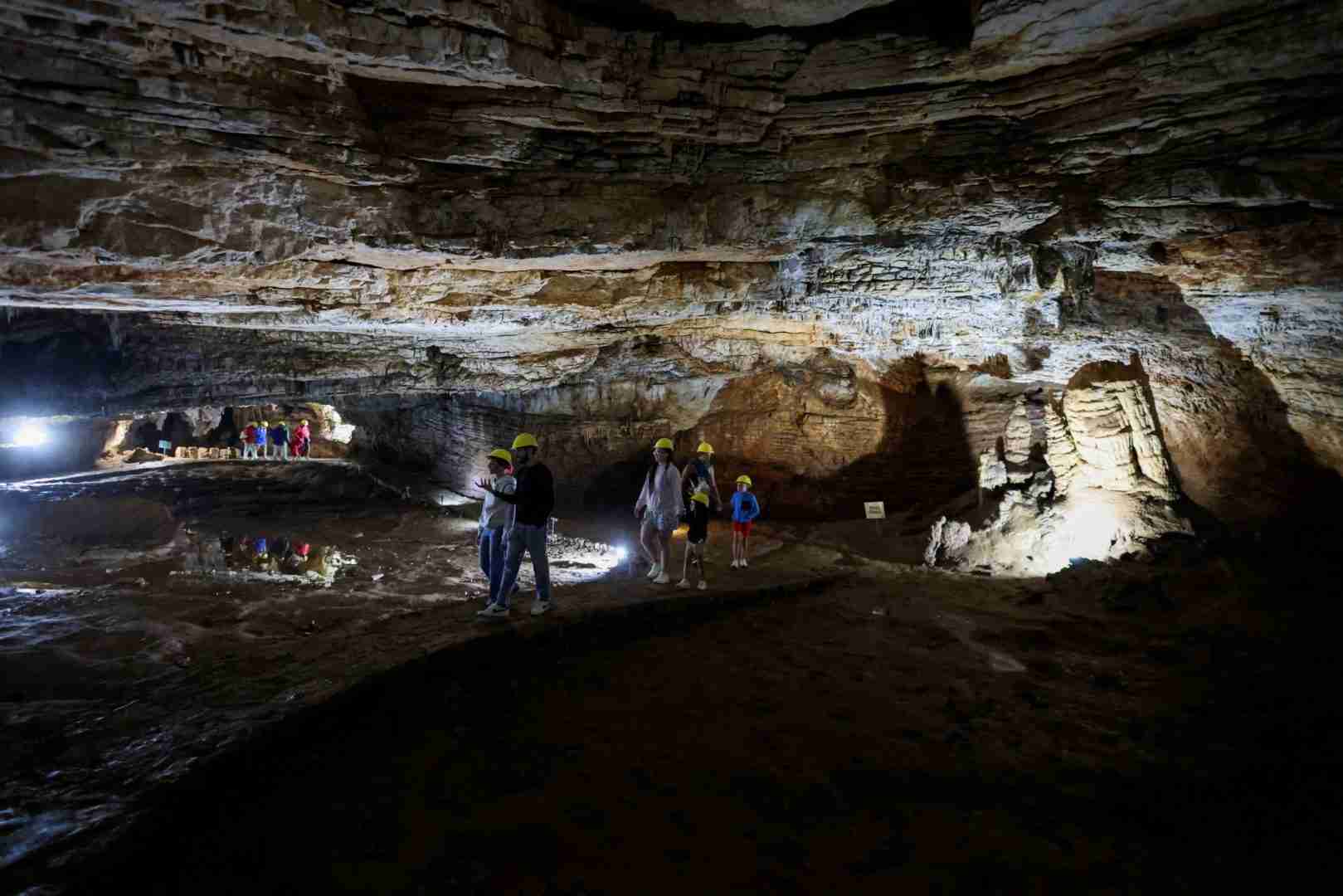
Vjetrenica, which means wind cave, is located in the south of Bosnia and Herzegovina, about 25 km (15 miles) north of the Adriatic town of Dubrovnik, where cruise liners in high season arrive daily with thousands of visitors
International News via Reuters:
As southern Bosnia sweltered in 40 degree Celsius (104 degrees Fahrenheit), tourists have taken shelter in the constantly cool temperatures of the UNESCO-listed Vjetrenica cave.
Vjetrenica, which means wind cave, is located in the south of Bosnia and Herzegovina, about 25 km (15 miles) north of the Adriatic town of Dubrovnik, where cruise liners in high season arrive daily with thousands of visitors.
Numbers allowed to visit the cave are limited because of the sensitivity of the environment. Its constant 11 degrees Celsius (52 F) temperature year-round has made it a refuge for biodiversity as well as for humans.
Visitor groups of a maximum of 80 at a time explore some of the 7.5 km labyrinth of dark corridors and spacious chambers, where legend says fairies used to dance all the way down to the Adriatic Sea.
“Initially when we are entering the cave, it’s a nice wind and then it’s very cold and it does not only give a cool for your eyes but also for your body,” said Ranjithkumar Rajendran, a neurobiologist based in Germany, who visited the cave with his family.
“It’s literally like free air conditioning,” said Mila Jankovic, a young Serb living in England.
Davor Bakovic, director of the Vjetrenica public institution that manages the cave, said increasingly intense summer heatwaves had meant that more than half of last year’s 21,000 visitors to the cave arrived during the summer months.
He also said Vjetrenica was working with scientific organisations to try to protect the biodiversity of the cave, which has been home to hundreds of organisms.
The most famous is Proteus anguinus, the European blind cave salamander that can live up to 100 years.
Reporting by Daria Sito-Sucic; editing by Barbara Lewis
Temperatures in the eastern province, a key farming belt, have soared as high as 41.2 degrees Celsius (106.16 degrees Fahrenheit)
International News via Reuters:
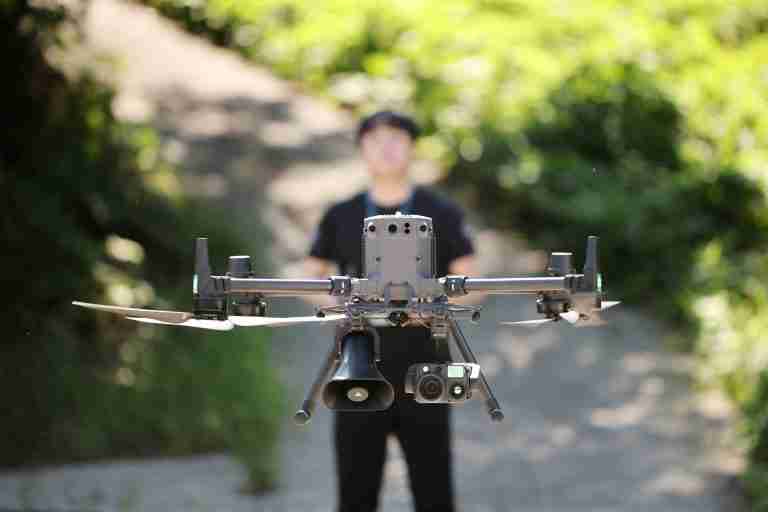
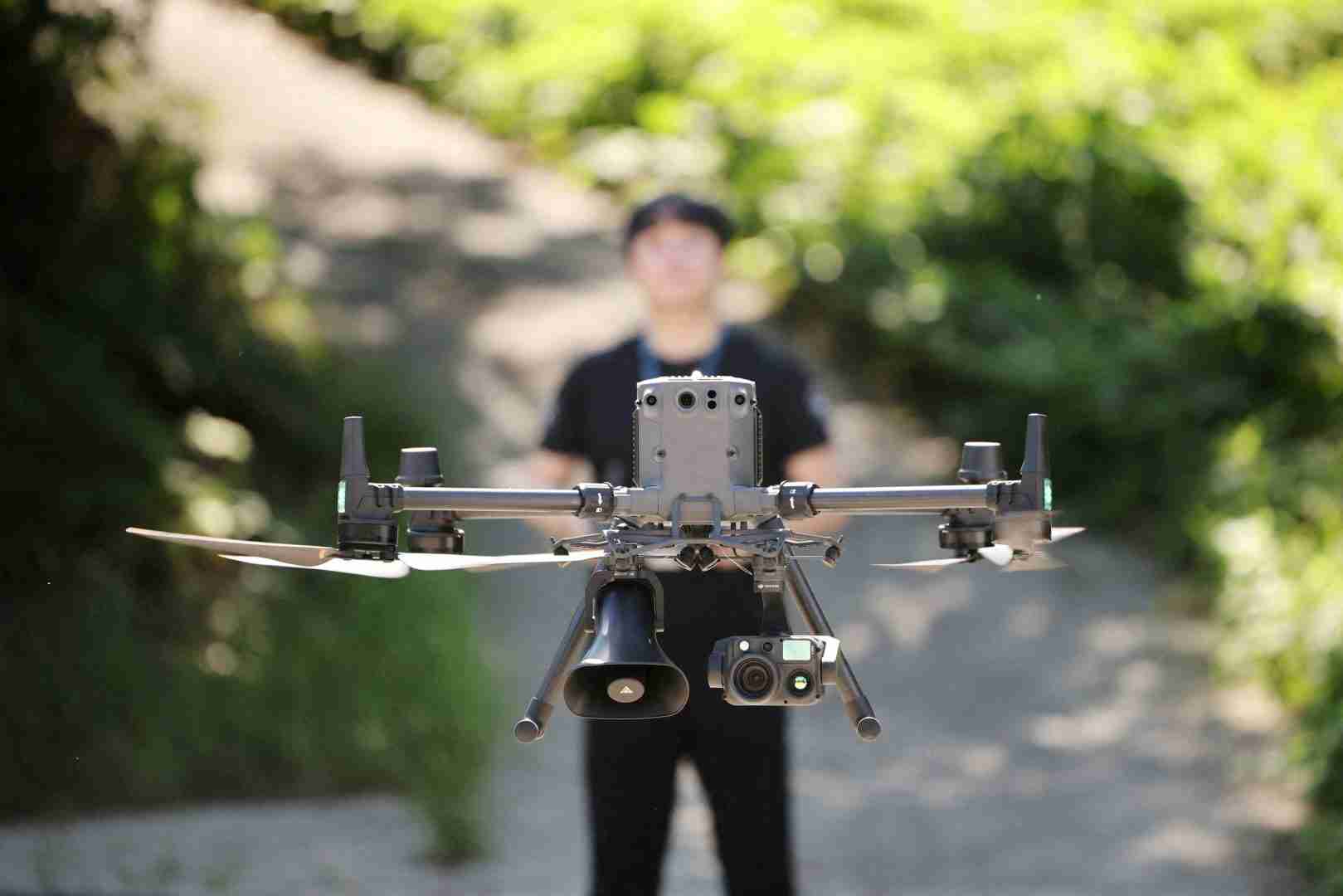
Hwang Hyun-guk, a 69-year-old farmer in South Korea, often gets engrossed in tending his pepper crop. These days, however, as the country grapples with its worst heatwave in years, drones flying overhead urge him to take breaks, cool down and work shorter hours.
The drones, equipped with loudspeakers and thermal imaging cameras, are part of measures taken by North Gyeongsang Province to protect its farmers, many of whom are elderly, and reduce heat-related illnesses.
Temperatures in the eastern province, a key farming belt, have soared as high as 41.2 degrees Celsius (106.16 degrees Fahrenheit).
South Korean President Lee Jae Myung has called the heatwave a “national disaster” and on Thursday ordered an all-out response as deaths attributed to the heat rose to 21.
The province built the drone surveillance system in partnership with the Korea Forest Service in 2023 to monitor wildlife.
Authorities began using drones for heatwave alerts last year, after officials sought to make broader use of the technology, said Hwang Han-jae, an official in the Safety and Administration Office in the provincial government.
The official drives out twice a day to fly the drones, which can travel up to 5 kilometres (3.11 miles) and reach areas that would otherwise be difficult to access. The drones broadcast warnings such as “Do not work for long hours” and “There is a heatwave alert, so be careful.”
In rural areas, local leaders broadcast heat warnings through a loudspeaker, but many farmers cannot hear the messages when in the fields, he said.
“We can also send drones to broadcast alerts to particularly concerning spots, based on what the thermal imaging camera shows us,” said Hwang.
Government data shows the province accounts for 16.7% of South Korean farming households, the highest share nationwide.
People aged 65 and older make up 59.2% of the farming households in the province.
Other South Korean regions, such as Gwangju and South Jeolla, also use drones to broadcast heatwave warnings.
Hwang, the farmer, said this year’s heatwave was worse than previous years, prompting him to cut his morning working hours from seven to five and hire two migrant workers to help. They harvest crops under umbrellas, moving on wheeled stools.
“We spend less time in the fields this year, since it’s challenging to work outdoors under the scorching temperature,” he said. “We’ve also seen a 30% decrease in crop yields compared to last year because of the heat,” he said.
Reporting by Hyeyoon Cho and Daewoung KimEditing by Ed Davies
Siemens said it was seeing strong demand for data centres used to process AI, as well as for AI-enabled software and devices used to control factories and buildings
International News via Reuters:
Siemens is benefiting from the AI investment boom, the German industrial group said on Thursday, reporting its highest-ever quarterly industrial profit and raising its full-year guidance.
Siemens said it was seeing strong demand for data centres used to process AI, as well as for AI-enabled software and devices used to control factories and buildings.
Sentiment was also improving from aerospace, defence and machine building customers, prompting the company to raise its full-year profit guidance after beating third-quarter expectations.
“Our sharp focus on driving industrial AI and our strong positioning in attractive markets give us a solid foundation for our success,” Chief Executive Roland Busch told reporters.
The company’s industrial AI products, which help customers speed up innovation and improve productivity, were driving growth, he added.
Siemens was also benefiting from strong demand from the electronics and semiconductor makers, many of which are expanding capacity to supply AI-related equipment and chips.
“There is tremendous demand for electronics,” Busch said. “They are building more and more factories and they need to be automated, which is where Siemens’ business comes in.”
Siemens was working with nine of the top 10 largest data centre providers, he said, while orders had increased by a triple-digit percentage in the first nine months of its 2026 fiscal year.
HIGHEST QUARTERLY INDUSTRIAL PROFIT
Companies like Siemens, Swiss rival ABB and France’s Schneider Electric are seeing surging demand as Big Tech races to add data centres, chips and electricity capacity for AI training and operation.
Capital spending by five of the largest technology companies, a key driver of the global data-centre boom, is expected to rise 75% in 2026 from more than $400 billion in 2025, the International Energy Agency said in April.
For the quarter to the end of June, Siemens reported industrial profit rising 25% to €3.52 billion ($4.09 billion), its highest quarterly figure, beating forecasts for €3.18 billion in a company-gathered consensus.
Revenue rose 7% to €20.79 billion, ahead of forecasts for €20.64 billion, while orders picked up 13% to €27.90 billion, also a quarterly record.
Siemens raised its full-year earnings per share for the year ending in September to €11.20 to €11.50, from €10.70 to €11.10 previously.
Its shares fell 5.2% in mid-morning trading. Up to Wednesday’s close, they had gained nearly 20% from the beginning of the year to hit a record high at €291.50 in the session.
The company also said it had agreed with German tax authorities on the treatment of Siemens Healthineers shares that it plans to distribute to investors following the planned spin-off, meaning the distribution would be tax-free for Siemens shareholders.
($1=0.8660 euros)
Reporting by John RevillEditing by Linda Pasquini, Miranda Murray and Alexander Smith
French brokerage Portzamparc said profitability was well above its expectations, helped by higher oil prices and contained operating costs
International News via Reuters:
French oil producer Maurel & Prom reported a 78% jump in its half-year net income to $191 million on Thursday, boosted by higher crude prices, and said crude exports from Venezuela were expected to normalise in the second half of 2026.
French brokerage Portzamparc said profitability was well above its expectations, helped by higher oil prices and contained operating costs.
The company resumed crude oil sales from Venezuela in June, after receiving a license from the U.S. to operate there in February, though uncertainty remains over the country’s contribution to the business and how the situation will unfold, an analyst told Reuters.
Group working-interest production averaged 37,890 barrels of oil equivalent per day in the first half of 2026, up 1% from a year ago and 3% from the second half of 2025.
Free cash flow rose 21% year-on-year to $77 million. The company also raised its ordinary dividend paid out in August by 15% to €0.38 per share, or around $90 million in total.
Separately, Canadian oil and gas producer Gran Tierra Energy said on Wednesday it had agreed to sell its oil operations in Colombia and Ecuador to Maurel & Prom for $1.33 billion, including debt, which would mark the French company’s entry into Ecuador and expand its oil portfolio in Colombia.
Shares of Maurel & Prom were up 2.3% at 0800 GMT.
Reporting by Zakarya Meliani and Jerome Terroy in Gdansk, editing by Milla Nissi-Prussak
The blue-chip FTSE 100 index rose 0.3% to 10,921.64 points by 0942 GMT, while the midcap FTSE 250 climbed 0.1% to 24,663.72 points
International News via Reuters:
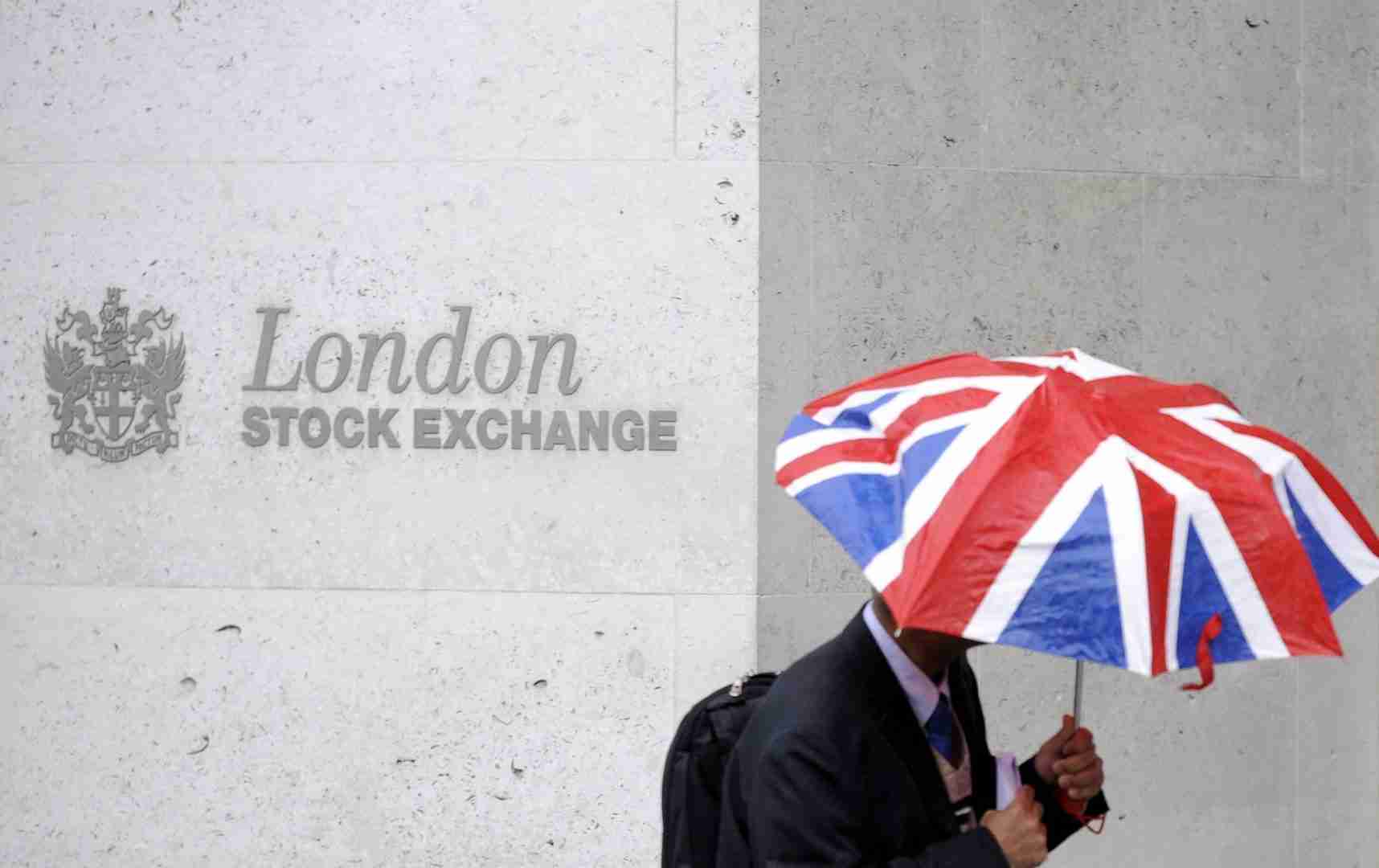
The UK’s main stock indexes edged higher on Thursday, bucking the weakness in Asian markets, as strong earnings from companies, including Persimmon and WPP, lifted sentiment.
The blue-chip FTSE 100 index rose 0.3% to 10,921.64 points by 0942 GMT, while the midcap FTSE 250 climbed 0.1% to 24,663.72 points.
• Persimmon climbed 3.6% after the housebuilder forecast annual home deliveries at the top end of its range, while insurer Admiral jumped 4.6% after its first-half results and share buyback announcement.
• Among the midcap stocks, WPP soared 26%, on track for its biggest single-day percentage gain in over three decades, after the ad firm said the trajectory had improved in recent months, even as it reported a 4.7% drop in first-half adjusted revenue.
• Asian stocks and U.S. Nasdaq futures came under pressure as turbulence in the chip sector persisted, though broader European markets were at record highs.
• Oil prices edged higher as uncertainty over Iran-Oman talks to end five months of war between Iran and the United States, as well as reports of attacks on Saudi tankers in key shipping routes, stoked supply concerns. [O/R]
• Investors are awaiting U.S. non-farm payrolls data on Friday for clues on the health of the labour market and interest rate trajectory.
• The downturn in Britain’s construction industry eased in July as commercial building and housebuilding weakened less sharply, with builder optimism hitting its highest level since before the Iran war, a survey by S&P Global showed.
• An index of British housebuilders added 1.2%.
• Among other movers, real estate investment trust Tritax Big Box REIT dropped 4%, becoming the top decliner in the FTSE 100, after it placed a £350 million share sale at £1.64 a share.
• Hikma Pharmaceuticals rose 9% after it reported a 9% rise in half-year core operating profit and maintained its annual outlook.
Reporting by Anand Gopal and Sruthi Shankar in Bengaluru; Editing by Vijay Kishore
Global financial markets are watching events in the Middle East closely, as expectations have risen that a deal that could potentially reopen the strait – one of the biggest sticking points in wider efforts to end the U.S.-Iran war – could be close
International News via Reuters:
The British pound was steady against both the euro and the dollar on Thursday as investors awaited updates on a possible deal between Iran and Oman that could reopen the Strait of Hormuz.
Global financial markets are watching events in the Middle East closely, as expectations have risen that a deal that could potentially reopen the strait – one of the biggest sticking points in wider efforts to end the U.S.-Iran war – could be close.
“There was a clear intention from the latest de-escalation not to create too prolonged disruption in the Strait of Hormuz,” said Francesco Pesole, FX strategist at ING. “I think that’s what markets are caring about at the moment.”
Sterling was little changed against the dollar at $1.3460 on Thursday as markets bided their time before a possible announcement on a deal.
Against the euro, the pound was flat at 85.73 pence.
BOE POLICY
The Bank of England kept interest rates on hold last week, flagging that it needed more time for a sense of how much the war in the Middle East would push up inflation.
Investors were now pricing in about 23 basis points of tightening by the end of the year, with a first hike not fully priced until the February 2027 meeting.
ING’s Pesole believes tightening expectations have overshot, suggesting that the pound could fall, particularly against the euro, if the central bank fails to deliver on rate hikes.
“We remain pretty bearish on sterling, primarily because we think the market pricing for the Bank of England is way too hawkish, especially if you compare with the ECB,” Pesole said.
A survey on Thursday showed the downturn in Britain’s construction industry eased slightly in July as commercial building and housebuilding weakened less sharply and builders turned the most optimistic since before the Iran war started.
S&P Global’s UK Construction Purchasing Managers’ Index (PMI) rose to 44.7 last month, from 38.4 in June, although that was still below the 50 threshold that separates growth from contraction.
Reporting by Samuel Indyk; Editing by Alex Richardson
Female driver and two passengers also taken to hospital
Media Release:
Around 10:00 p.m. on Wednesday, 5 August 2026, police and other first responders were dispatched to a report of a serious two vehicle collision involving a motor car and a motorcycle at the junction of Cobb’s Hill Road and Ord Road, Paget.
Initial information suggests that the female driver of the motor car was travelling along Cobb’s Hill Road towards Ord Road when she collided with a motorcycle travelling on Ord Road.
The motorcycle rider, a male, sustained injuries believed to be serious. The female driver of the car and her two female passengers were also transported to King Edward VII Memorial Hospital for treatment. The extent of their injuries is not known at this time.
Traffic diversions are currently in place at Ord Road, Cobb’s Hill Road, and the Railway Trail while police work to process the scene. Motorists are advised to avoid the area if possible and use alternative routes until the scene has been cleared.
Anyone who may have witnessed this collision is asked to call PC 2614 Krislyn Lambert on 211 or email krislyn.lambert@bps.bm.
The Bermuda Police Service can confirm the island has now suffered its 11th road fatality of 2026.
At approximately 7:00 p.m., on Saturday, July 25, Police and Emergency Medical Services personnel, attended a single-vehicle road traffic collision involving a motorcycle, near the junction of Church Road and South Road, Southampton.
The male motorcycle rider was found lying on the roadway. He was provided medical attention at the collision scene and subsequently transported by ambulance to King Edward VII memorial Hospital for further treatment of his injuries.
Sadly, he succumbed to his injuries on August 1.
An investigation was commenced shortly after the collision took place and remains ongoing. Anyone who may have witnessed the collision, or has information relating to it, is asked to contact Police Constable, Jason Ming, of the Roads Policing Unit by calling, 247-1309, 717-0862, or via email at, jming@bps.bm.
Chris Maybury of Westend Properties wants Bermuda to see the opening of the Palmetto Beach Club as proof that the massive redevelopment of the Fairmont Southampton Hotel will be worth the wait
We’re not only going to be the best in Bermuda, but the best in the world.
Encouraging words from developers as they unveiled the Palmetto Beach Club.
It’s seen as a major milestone in the re-development of the island’s biggest hotel, the Fairmont Southampton.
The shakeup comes during a pivotal juncture for Google DeepMind: the flagship version of its latest Gemini model remains unreleased despite a planned June launch
International News via Reuters:
Google parent company Alphabet on Wednesday announced a leadership overhaul of its AI division, with AI chief Demis Hassabis leaving his main managerial role and several leaders of its Gemini model, including veteran engineer Jeff Dean, departing the company.
The shakeup comes during a pivotal juncture for Google DeepMind: the flagship version of its latest Gemini model remains unreleased despite a planned June launch, sparking investor and industry concerns that Google is falling behind its rivals Anthropic and OpenAI, each of which scooped up a star Google AI staffer this summer.
Shares of Alphabet fell 4% after the news.
Hassabis, a Nobel Prize recipient, will take the newly created title of Alphabet’s chief scientist and transition from being Google DeepMind CEO to being its chairman, he said in a memo to staff. He cited the closeness of artificial general intelligence (AGI), an advanced state of AI in which computers in essence become as smart as humans, as the impetus for his role change.
“(Hassabis) and I have been long discussing a role that allows him to put his full attention on actively shaping the future of AGI,” Alphabet chief Sundar Pichai said in a separate company-wide memo. “It’s work that is vitally important to Alphabet and humanity, and I can’t imagine a better person than Demis to do it.”
Koray Kavukcuoglu, the unit’s chief technology officer, will assume day-to-day responsibilities. He will hold the title of senior vice president, rather than CEO, of the business unit, in addition to his parallel role as Alphabet’s chief AI architect.
Dean, Sanjay Ghemawat, Oriol Vinyals and Quoc Le — some of Google’s most famous and lauded AI and engineering leaders — left the company to launch a startup called Discovery Loop, which will focus on researching breakthroughs in machine learning, science and engineering. The startup is structured as a public benefit corporation.
Alphabet did not provide any details on what precipitated the moves or their coincident timing.
As Reuters detailed in a report last year, some people who have worked with Hassabis said he put scientific pursuits often ahead of making money for Google. The London-born scientist targeted a Nobel Prize as a business objective for DeepMind, three people familiar with the effort said. He worked against other efforts, insiders previously said, that could have meant new revenue for Alphabet or a better footing in the AI race. Allies inside Google rejected the notion that he was too focused on long-term science or gave short shrift to the business.
Senior leaders in Google Cloud, the company’s main AI revenue engine, cheered Kavukcuoglu’s takeover on Wednesday as welcome news for advancing commercialization efforts, according to a source with direct knowledge.
Kavukcuoglu had already been more directly involved than Hassabis in collaborations between DeepMind and Cloud, and his appointment as head of the AI lab was expected to steer Gemini towards a more product-oriented direction, the source said.
Hassabis will explore research and strategy related to societal impacts of AGI and will have few direct reports, an Alphabet spokesperson told Reuters.
In his company memo, Hassabis touted the “great progress” on Google’s AI models including an unreleased upgrade called Gemini 4.
He also said in his memo that he would spend more time with Isomorphic Labs, a drug discovery company that spun out of DeepMind, which he founded and remains CEO.
“I’ve always believed the No. 1 application of AI should be to improve human health,” he said. “It’s time for AI to prove its unequivocal value to the world, and what better way to demonstrate that than to help finally cure diseases like cancer.”
BRAIN DRAIN
Dean and Hassabis were considered the two leading AI figures at Google for years before the field became the center of technological innovation.
Hassabis co-founded DeepMind in 2010 and continued to run the lab from London after selling it to Google for around $650 million in 2014.
Dean in 2011 co-founded Google Brain, a U.S.-based unit he led that researched AI separately from Hassabis’ team. By then, he was already a revered figure inside Google known for his collaboration with Ghemawat on many of the landmark infrastructure projects that still power the company today.
In 2023, after the launch of OpenAI’s ChatGPT caught Google off guard, Pichai announced the merger of DeepMind and Google Brain into a new organization called Google DeepMind. Hassabis was appointed its CEO and Dean its chief scientist.
Until recently, Dean, Vinyals and Noam Shazeer had co-led development of Gemini. Under their stewardship, Google released Gemini 3 last November which the industry widely saw as closing the gap with leading models from Anthropic and OpenAI.
But subsequent advances from those rivals, as well as momentum for cheaper Chinese open-source models, have set Google on the defensive. At Google’s annual developer conference in May, Pichai and other Google leaders touted Gemini’s cost advantage, rather than its state-of-the-art capabilities.
Shazeer left for OpenAI in June, less than two years after Google paid billions to hire him and a team of his researchers away from the startup he led. The same week, senior research scientist John Jumper, who won a Nobel Prize alongside Hassabis in 2024, said he would join Anthropic.
Vinyals, Le and former OpenAI chief scientist Ilya Sutskever coauthored a 2014 research paper that became foundational to modern AI research by establishing the concept that scaling up data to “pre-train” AI systems would send them to new heights.
“Google has a deep bench of talent but losing these four individuals will leave a mark for some time. Getting innovation and execution back online is not going to be easy and losing key contributors won’t make it any better,” said Brian Mulberry, chief market strategist for Zacks Investment Management.
Discovery Loop received investment from Google and also entered into a partnership with its cloud division to provide computing capacity.
Reporting by Kenrick Cai in San Francisco, additional reporting by Juby Babu in Mexico City; Editing by Lisa Shumaker
The school-bus-size object is the second stage of a SpaceX Falcon 9 rocket that had launched a lunar lander from Firefly Aerospace toward the moon in January 2025
International News via Reuters:
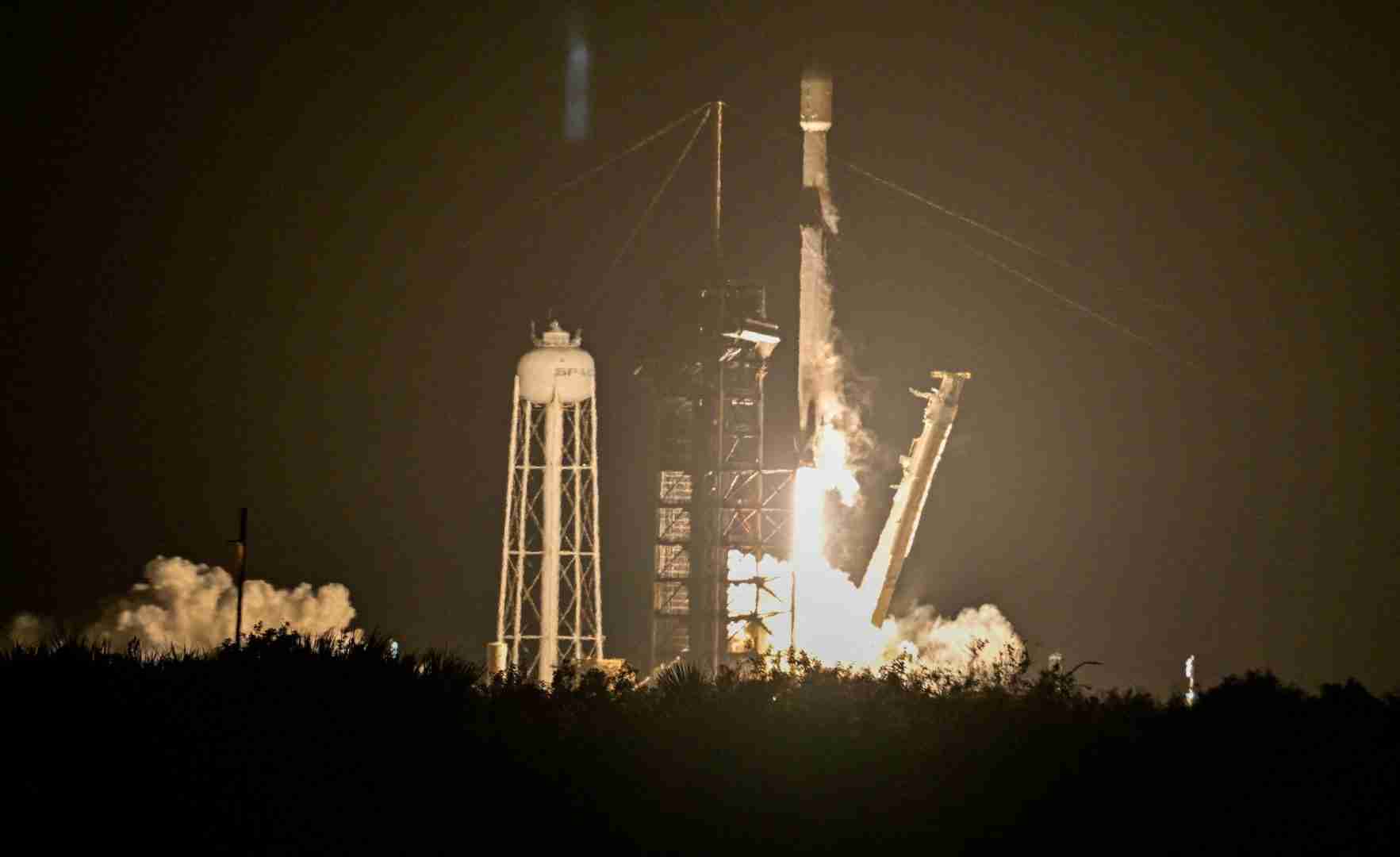
A SpaceX rocket piece floating in space since last year smashed into the moon at high speed early Wednesday morning, joining the ranks of meteoroids, wayward spacecraft and other pieces of space junk that have bombarded the lunar surface for ages, astronomers confirmed.
The school-bus-size object is the second stage of a SpaceX Falcon 9 rocket that had launched a lunar lander from Firefly Aerospace toward the moon in January 2025. Its predicted collision with the moon became a spectacle for astronomers and space enthusiasts eager to watch how it would unfold.
Weighing 4 metric tons (4,000 kg), the rocket body slammed into the moon around 2:35 a.m. ET (0635 GMT), travelling at 5,400 miles per hour (8,690 kph). None of the few spacecraft orbiting the moon were positioned to capture close-up images of the impact.
But at the Paranal Observatory in Chile, the European Southern Observatory’s Very Large Telescope detected glimmers of light associated with the impact.
“We can confirm that the telescope detected spectral lines of sodium and lithium gas in the impact plume lasting for 5-10 minutes after impact,” an ESO spokesperson told Reuters.
The impact occurred near the moon’s terminator line, or the boundary of its shadow between the sunlit side and its far side. Similar to past objects that have hit the moon, the rocket stage kicked up a plume of lunar dust that was briefly illuminated by sunlight, but difficult to spot with the naked eye from Earth.
How the impact plume interacted with the sunlight allowed astronomers to glean clues about its composition.
The sodium gas evidenced in the spectra is believed to have originated from the lunar soil, while the traces of lithium may have come from the rocket stage itself, Carl Schmidt, the lead astronomer conducting the impact observations, told Reuters.
“This observation did not go perfectly and this is a very crude analysis, but I wanted to share something quickly, and we can say more about these results in time,” Schmidt said by email.
The impact was unintentional, SpaceX said. The rocket piece was expected to hit near Einstein Crater on the moon’s western limb, which is often difficult to see from Earth.
COSMIC FORCES NUDGED PIECE TO MOON
Such stages typically fall back into Earth’s atmosphere and burn up or plunge into the ocean after boosting the rocket’s payload to a precise spot in orbit.
But because the January lunar lander mission required more thrust than missions closer to Earth, the rocket’s second stage remained in space, floating aimlessly among thousands of other pieces of space junk that active satellites must steer clear of.
It was not until earlier this year that astronomers determined that the rocket stage, which had dumped its remaining fuel and could not be controlled, was on an orbital trajectory ending at the moon.
“What has happened is essentially a mixture of solar activity and gravity forces have put it on a path toward the moon,” Julianna Scheiman, SpaceX director of NASA science and Dragon programs, told reporters on Monday.
“This may be of some — probably minor — scientific interest, and we may learn some things from it,” said Bill Gray, creator of widely used astronomy software Project Pluto, who appeared first to calculate and publish a report predicting the stage’s impact in April.
“By January, I was pretty sure it would hit, though with only a vague idea as to where it would do so. By April, I was confident enough to post an announcement,” Gray said.
Gray said that the impact presents no danger to anyone, “though it does highlight a certain carelessness about how leftover space hardware (space junk) is disposed of.”
Space junk impacts on the moon are rare. A Chinese rocket stage crashed into the moon in March 2022 after completing a lunar test mission. In 2009, NASA intentionally crashed a rocket stage into the moon to study the plume of lunar material kicked up by the impact, leading to a key discovery that lunar dirt contains traces of water ice.
Several spacecraft intending to softly land on the moon in recent years have crashed instead. Russia’s nuclear-powered Luna-25 mission spun out of control and crashed in 2023. Its small power source of plutonium-238 likely remains harmlessly on the lunar surface.
India’s Chandrayaan-2 lander mission crashed in 2019. Israel’s Beresheet lander crashed that same year. Among the Israeli lander’s payloads were tiny tardigrades, microscopic animals known for surviving radiation and other harsh environments and which may still be on the surface.
NASA intentionally crashed stages from its Saturn V moon rocket into the moon in the 1970s to study the impacts’ seismic effects.
NASA and SpaceX are discussing ways to prevent future lunar impacts, Scheiman said. The U.S. space agency plans to build a lunar base and send routine astronaut missions to the lunar surface beginning later this decade under its multibillion-dollar Artemis program. It would not want errant pieces of space junk impacting those assets.
Reporting by Joey RouletteEditing by Rod Nickel, Alex Richardson and Alistair Bell
To provide the best experiences, we use technologies like cookies to store and/or access device information. Consenting to these technologies will allow us to process data such as browsing behavior or unique IDs on this site. Not consenting or withdrawing consent, may adversely affect certain features and functions.
Functional
Always active
The technical storage or access is strictly necessary for the legitimate purpose of enabling the use of a specific service explicitly requested by the subscriber or user, or for the sole purpose of carrying out the transmission of a communication over an electronic communications network.
Preferences
The technical storage or access is necessary for the legitimate purpose of storing preferences that are not requested by the subscriber or user.
Statistics
The technical storage or access that is used exclusively for statistical purposes.The technical storage or access that is used exclusively for anonymous statistical purposes. Without a subpoena, voluntary compliance on the part of your Internet Service Provider, or additional records from a third party, information stored or retrieved for this purpose alone cannot usually be used to identify you.
Marketing
The technical storage or access is required to create user profiles to send advertising, or to track the user on a website or across several websites for similar marketing purposes.