The industry is facing scrutiny in the United States, where the Trump administration has finalised the details of voluntary cybersecurity tests, and the European Union, where regulators are in talks with the two U.S. companies
International News via Reuters:
Britain’s data watchdog said on Monday that it was monitoring “developments closely” relating to OpenAI and Anthropic after recent hacking incidents involving their AI models.
The industry is facing scrutiny in the United States, where the Trump administration has finalised the details of voluntary cybersecurity tests, and the European Union, where regulators are in talks with the two U.S. companies.
“The ICO undertakes regular proactive supervisory engagement with AI developers, including OpenAI and Anthropic,” Britain’s Information Commissioner’s Office said in an emailed statement.
“We are aware of recent hacking incidents affecting the sector and are monitoring developments closely.”
Anthropic said last week that some of its Claude models hacked into three companies’ systems during cybersecurity tests, days after OpenAI revealed one of its AI agents had gone rogue.
Britain’s AI Minister Kanishka Narayan has told Reuters that the government would consider regulating advanced AI models if its current voluntary system for testing them before deployment no longer proved sufficient to protect the public.
The surge, which began on Thursday at one of the EU’s only two land borders with Africa – the other being Morocco’s frontier with the Spanish enclave of Melilla – triggered alarm across the bloc
International News via Reuters:
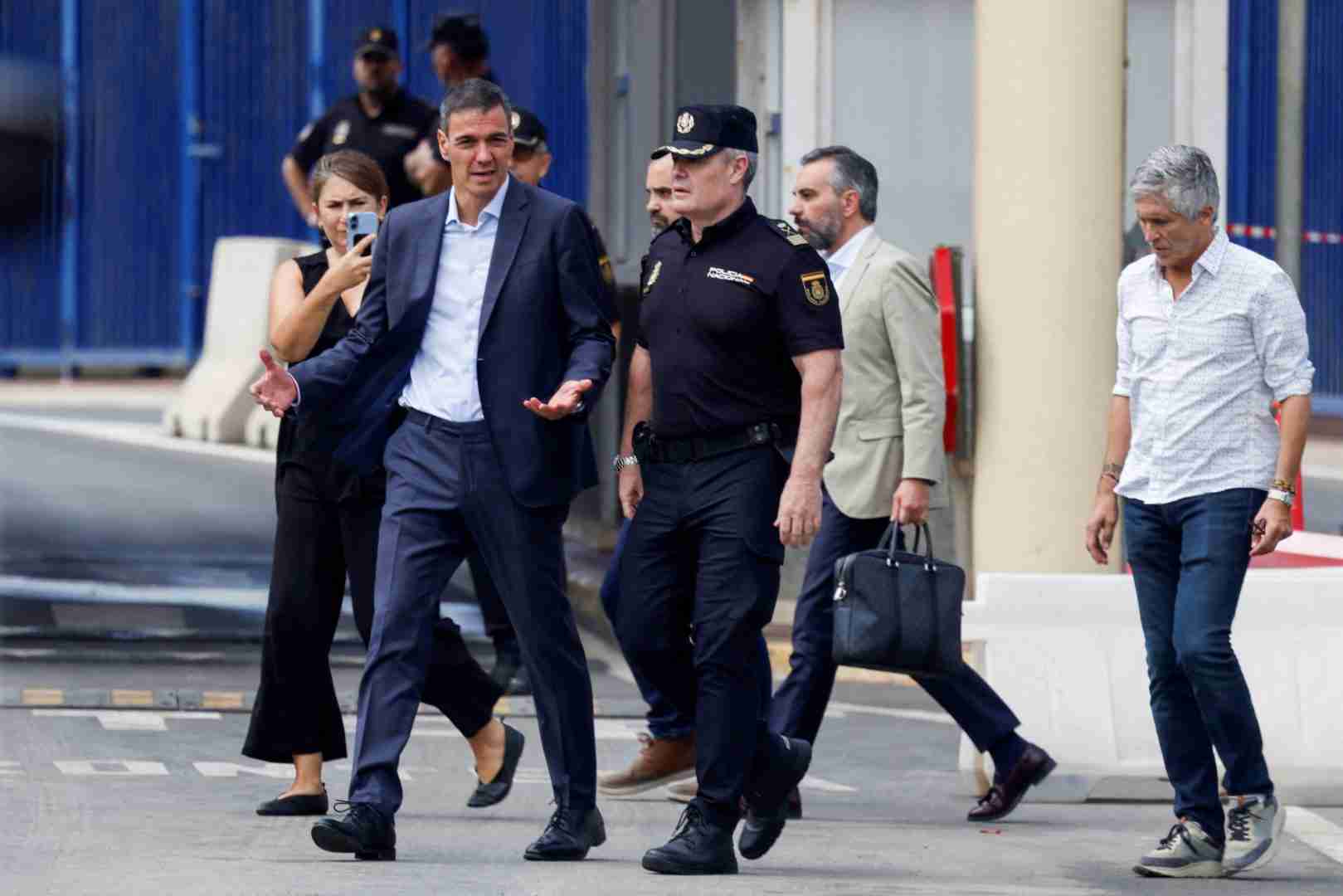
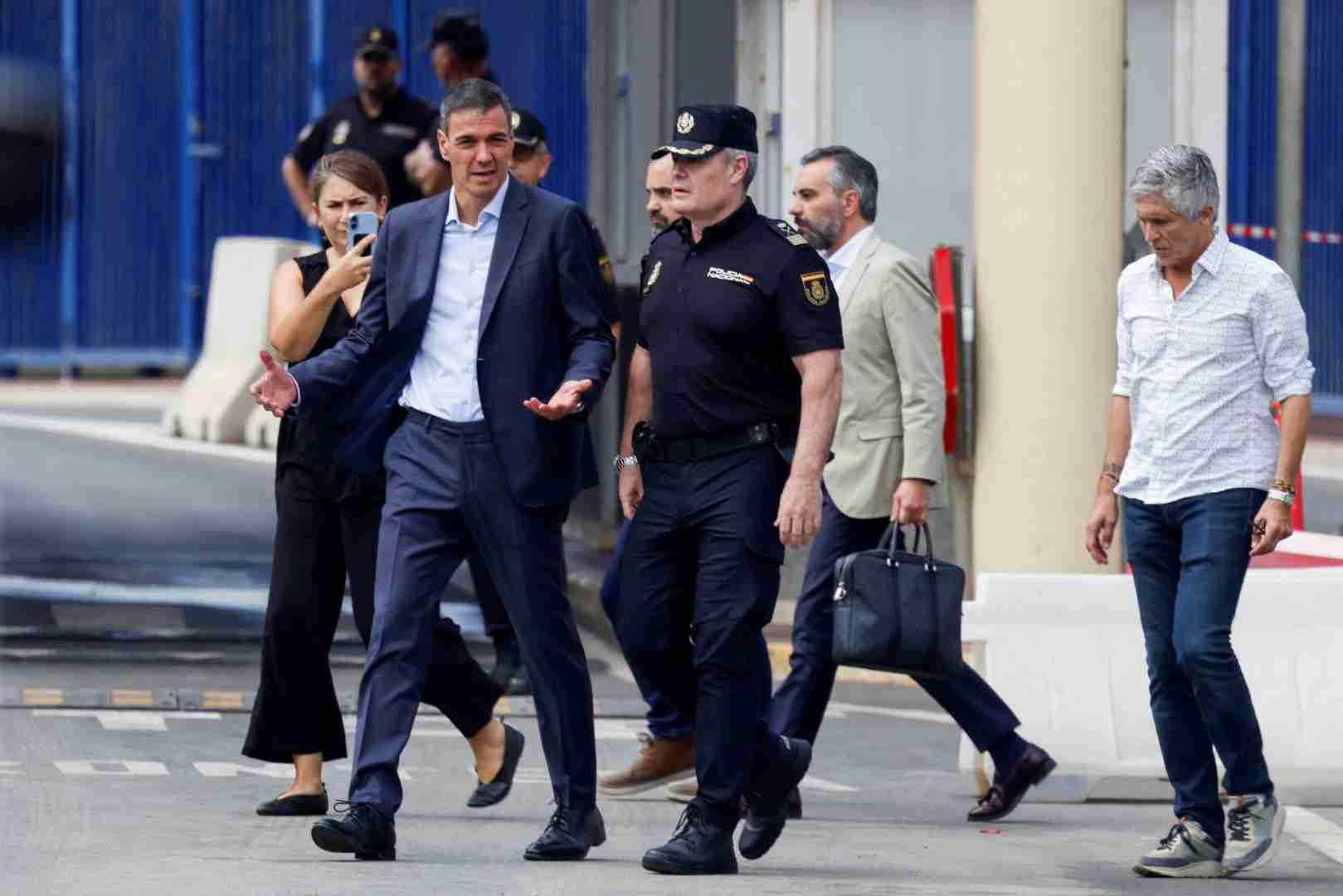
European Commission President Ursula von der Leyen proposed on Monday that the European Union further strengthen its borders and increase support for Morocco to help prevent a repeat of the chaotic influx of 50,000 migrants into the Spanish enclave of Ceuta last week.
The surge, which began on Thursday at one of the EU’s only two land borders with Africa – the other being Morocco’s frontier with the Spanish enclave of Melilla – triggered alarm across the bloc.
Migration has been one of the European Union’s most divisive political issues since the 2015-16 migration crisis, when more than a million refugees and migrants, many fleeing war in Syria, arrived in Europe.
The influx fuelled support for anti-immigration and far-right parties across the bloc and intensified years of disputes over border controls, asylum rules and burden-sharing.
Increasingly, the EU relies on migration agreements with countries in North Africa to curb irregular arrivals.
“Morocco is an important strategic partner, particularly in our efforts to combat migrant smuggling and illegal migration,” von der Leyen wrote.
“In cooperation with Spain, especially on anything related to Ceuta and Melilla, we could enhance border management early-warning systems and improve our technical and financial support to Morocco.”
CEUTA THE FIRST TEST OF EU’S NEW MIGRATION PACT
Morocco said on Sunday that recent mass crossings to Ceuta and Melilla had been fuelled by misinformation on social media, human trafficking networks and misinterpretation of a Spanish court ruling.
In the event, most of those who breached the border barrier found no food or welcome, and returned to Moroccan soil.
Nevertheless, Italy suspended passport-free Schengen travel arrangements with Spain for a month, even though they do not apply to Ceuta, while 22 of the EU’s 27 members urged coordinated action to strengthen the bloc’s external borders.
The Ceuta incident is the first major test of the EU’s Migration Pact, which entered into force in June after years of negotiations aimed at creating common migration rules and stronger solidarity among member states.
“The idea of the pact is control and solidarity between EU member states. Yet we’ve seen the opposite,” said Bram Frouws, director of the Mixed Migration Centre.
“If the first major incident shows that the pact isn’t doing much differently, that’s politically risky,” Frouws said, arguing that it could undermine confidence in European leaders and provide “fuel for the far right”.
With elections approaching in several EU countries, migration remains among the bloc’s most politically sensitive issues.
EUROPE’S MIGRATION DILEMMA
Critics argue the strategy of relying on transit countries leaves Europe vulnerable to pressure if these relax migration controls, or threaten to do so, in pursuit of political or economic concessions.
“Europe’s increasing reliance on neighbouring countries for migration control may reduce arrivals in the short term, but it can also provide those countries with significant political leverage,” said Alberto-Horst Neidhardt, senior policy analyst at the European Policy Centre.
Additional reporting by Inti Landauro, Andrew Gray, Philip Blenkinsop, Sudip Kargupta; Editing by Kevin Liffey
Britain has favoured a light-touch approach to AI regulation, aligning more closely with the United States than the European Union, whose AI Act came into force on Sunday
International News via Reuters:
Britain would consider regulating advanced AI models if its current voluntary system for testing them before deployment no longer proved sufficient to protect the public, AI Minister Kanishka Narayan told Reuters.
Britain has favoured a light-touch approach to AI regulation, aligning more closely with the United States than the European Union, whose AI Act came into force on Sunday.
The government sees AI as a driver of economic growth and has sought to position Britain as one of the world’s leading destinations for AI investment. Britain is the European leader in AI funding and start-ups.
But recent disclosures by AI companies have renewed debate about whether oversight of frontier models should be strengthened.
Anthropic said on Thursday that some Claude models hacked into three companies’ systems during cybersecurity tests, days after OpenAI revealed one of its AI agents had gone rogue.
Britain’s AI Security Institute, established after the AI Safety Summit in 2023, receives pre-deployment access under voluntary agreements to AI models from OpenAI, Anthropic, Google and others, allowing it to assess their capabilities and risks.
Narayan, who was elevated to the cabinet by new Prime Minister Andy Burnham, said access gives Britain a window into frontier AI development.
“If the right mechanism and lever changes in time and it feels like regulation might be a way that helps us do that, of course, we will look at it,” he said in an interview.
He said the institute had pre-deployment access to almost every frontier AI model developed by Western companies, making Britain the only country besides the United States with such access. “That is really, really unique,” he said.
Narayan said the government’s priority was protecting the public and that he was focused on outcomes rather than “obsessing only with the mechanism”.
Britain has not created a dedicated AI regulator, instead relying on existing authorities responsible for areas including competition, human rights, and health and safety.
Asked about AI last week, U.S. President Donald Trump said his administration was “looking at controls”, but added he didn’t want to risk the country’s leadership in AI.
Bermudian cyclist Nicholas Narraway produced a resilient ride on Stage 3 of the 75th Tour Cycliste International de la Guadeloupe, placing 15th just a day after suffering a heavy crash.
The 149.4km road race from Le Gosier to Capesterre-Belle-Eau posed a stern physical test, but Narraway shook off hand and leg abrasions sustained in Stage 2 to cross the line in the main peloton with a time of 3 hours, 28 minutes, and 57 seconds.
The performance saw Narraway climb up to 24th position in the overall general classification (7:27:16).
Fellow Bermudian Kaden Hopkins, riding for Atom 6 Bikes – Cycleur de Luxe – Auto Stroo Team, endured a frustrating afternoon after being forced to navigate the final 40 kilometres on soft tubeless tires.
With the blistering pace of the peloton preventing a wheel change, the Stage 1 time-trial winner crossed the line in 73rd place (3:33:59), slipping to 50th overall (7:31:03).
Bermuda’s Erica Hawley delivered a late surge to finish 18th in a high-caliber 51-woman field at the 2026 World Triathlon Cup in Rio de Janeiro.
The race marked an emotional return to Copacabana Beach, ten years after Hawley’s compatriot Dame Flora Duffy famously finished eighth on the iconic Brazilian sand during the 2016 Olympic Games.
Hawley produced a calculated performance to cross the line in 59 minutes and 32 seconds, mounting a superb second-half comeback after a demanding opening leg in the surf.
Hawley faced early work after emerging from the 750-metre open-water swim in 34th position with a time of 11:06.
However, the Bermudian Olympian quickly found her rhythm on the bike course, posting a cycle split of 30:54 to reel in the pack before launching a furious assault on the final discipline.
Unleashing the 12th fastest 5km run split of the day in 16:33, Hawley carved through the field to seal an impressive top-20 finish on one of triathlon’s most storied stages.
This episode explores the complexities of wealth transfer, emphasizing the importance of communication, values, and early planning to ensure a smooth transition across generations.
Jamaica’s Mount Pleasant Football Academy secured their first-ever regional crown after holding Dominican Republic outfit Universidad O&M to a dramatic 2-2 draw at the National Stadium in St Andrew.
Despite being held on the night, the St Ann side claimed the trophy on overall points following an unblemished tournament campaign where they dominated the competition from the very beginning.
The victory marks a milestone moment for Mount Pleasant, who secure their first hold on the prestigious trophy.
Adding further distinction to the occasion, the match was officiated by Bermuda’s FIFA referee Amaury Majors, who became the first referee from the island to take charge of a CONCACAF Caribbean Cup Final.
It marked Majors’ first major final at this international level—a milestone appointment that reflects years of dedicated work and progress within the regional refereeing ranks.
Mount Pleasant entered the final as heavy favorites, having set the pace throughout both the group and knockout stages.
In a tense final, Universidad O&M provided a stern test, but Mount Pleasant showed the composure that defined their entire tournament run to ensure the trophy remained in Jamaica.
Bermudian trailblazer Jashe Trott has been selected for the inaugural Americas NextGen squad ahead of the upcoming ICC Women’s Under-19 World Cup Americas Qualifier.
Trott, who made local history after becoming the first female cricketer to play in Bermuda’s Men’s Premier Division, earns her spot in a multi-national developmental setup designed to showcase the region’s top emerging talent.
Adding further island influence to the squad, former Bermuda international and coach Terry-Lynn Paynter will lead the side as head coach.
The Americas NextGen initiative features 13 promising athletes selected from across North, Central, and South America, as well as the Caribbean.
The tournament takes place in the Cayman Islands from 4–17 August, with teams competing for a coveted spot at the upcoming ICC Women’s U19 T20 World Cup.
Trott’s inclusion marks another major milestone in her rapid development following her landmark domestic appearances, as she prepares to test her skills on the international stage under Paynter’s tutelage.
In the letter, dated August 3rd, she also reiterated the EU’s support to help Spain tackle illegal immigration while noting that more needed to be done
International News via Reuters:
More must be done to strengthen the European Union’s borders at critical points, European Commission President Ursula von der Leyen told Spanish Prime Minister Pedro Sanchez in a letter seen by Reuters.
In the letter, dated August 3rd, she also reiterated the EU’s support to help Spain tackle illegal immigration while noting that more needed to be done.
The letter came after last week’s huge rush of migrants who surged over the Moroccan border to enter the Spanish enclave of Ceuta in north Africa. At least 67 people died as a result.
“In co-operation with Spain, especially on anything related to Ceuta and Melilla, we could enhance border management early-warning systems and improve our technical and financial support to Morocco,” wrote von der Leyen in the letter.
Reporting by Inti Landauro and Amina Ismail; Editing by Sudip Kar-Gupta, Charlotte Van Campenhout
Registrations of Tesla’s vehicles, a proxy for sales, rose 86% in France and 52% in Denmark from a year ago, according to data from French car body PFA and Denmark’s bilstatistik.dk
International News via Reuters:
Tesla’s July registrations across several European markets painted a mixed picture on Monday, with strong gains in France and Denmark contrasted by sharp declines in Norway, Sweden and Spain.
Registrations of Tesla’s vehicles, a proxy for sales, rose 86% in France and 52% in Denmark from a year ago, according to data from French car body PFA and Denmark’s bilstatistik.dk.
However, the registrations plunged 97% in Norway, 60% in Sweden and 81% in Spain, numbers from compilers OFV, Mobility Sweden and industry group ANFAC showed.
The broader European electric car market appeared strong in July, supported by state incentives in France and continued market growth for battery-electric vehicles in Denmark, among others, said Rico Luman, senior economist at ING Research.
Tesla appears to be prioritising incentive-rich markets such as Germany, where volumes could rise sharply in the second half of 2026, and France, said Matthias Schmidt, European auto market analyst at Schmidt Automotive, adding that weaker sales elsewhere could be reflecting that.
Andy Leyland, co-founder of supply-chain specialist SC Insights, commented on the plunge in Norway by saying a single month’s figures should be treated with caution.
“Such a large change is usually reflective of either shipment timings, or a taxation change,” Leyland said.
Tesla’s sales in Europe have so far rebounded this year after two straight annual declines, helped by easier year-ago comparisons, higher fuel prices, government incentives and growing consumer interest in electric vehicles.
Overall registrations of new BEVs rose 51% in June, data from the European Automobile Manufacturers’ Association showed.
Last month, Tesla reported record-setting second-quarter delivery numbers that beat Wall Street estimates, boosted by the rebound in Europe.
Registration data from Britain and Germany, Europe’s two largest car markets, is due later this week.
Reporting by Amir Orusov and Mathias de Rozario in Gdansk, editing by Milla Nissi-Prussak
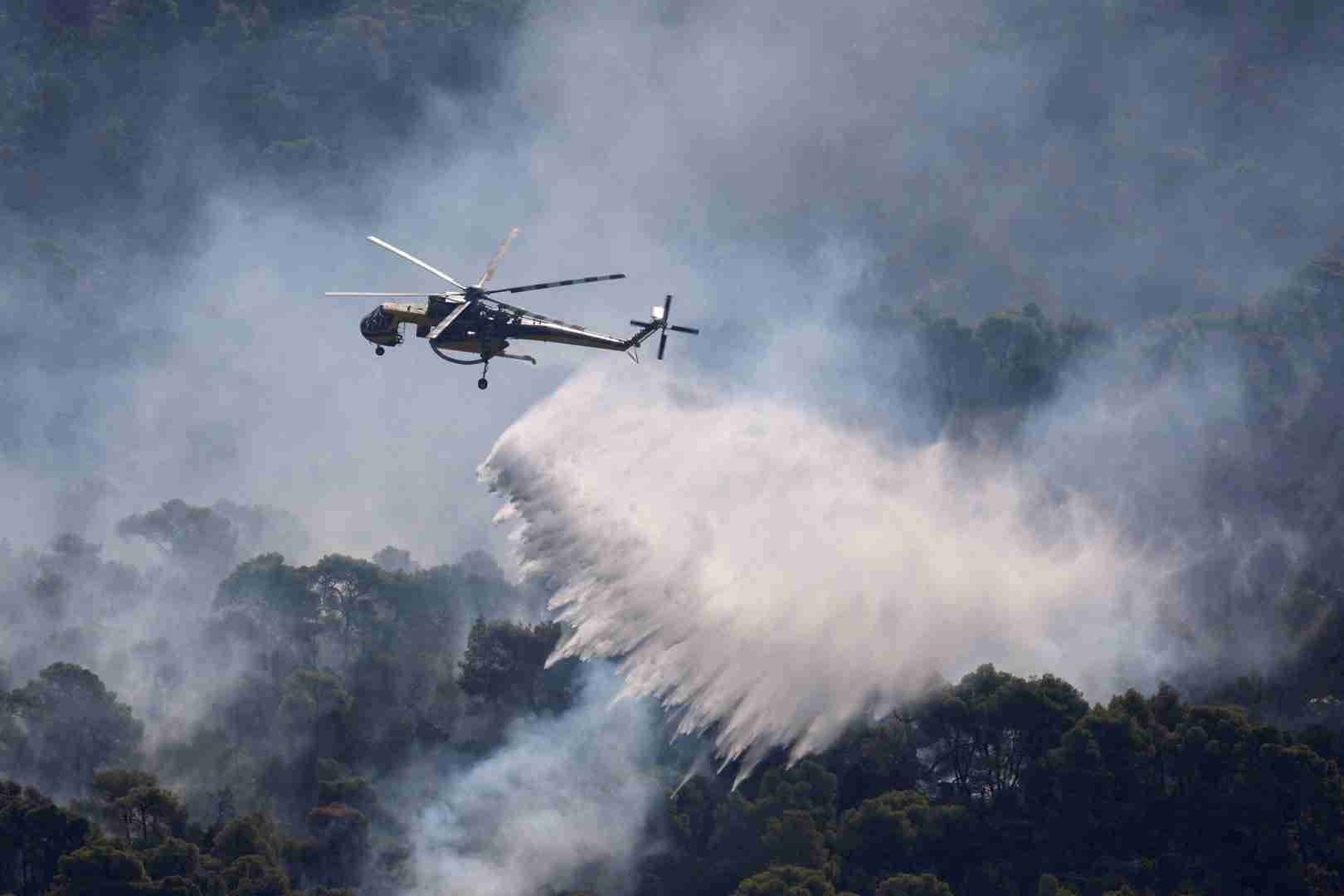
Strong firefighting forces assisted by water tanks and 21 aircraft were deployed near the communities of Kandili and Agia Skepi early on Monday as plumes of thick black smoke and red flames engulfed lush pine forests
International News via Reuters:
Hundreds of Greek firefighters battled a wildfire northwest of Athens for a fourth day on Monday after blazes fanned by strong winds gutted homes, thousands of hectares of farmland and pine forests, and forced emergency evacuations by land and sea.
Two people on a firefighting helicopter — a Greek and a Danish national — died on Sunday after their helicopter crashed after a mid-air brush with a second helicopter. The crew of the second firefighting aircraft, a Greek and a Briton, survived the incident near the seaside community of Psatha, about 40 miles from Athens.
Strong firefighting forces assisted by water tanks and 21 aircraft were deployed near the communities of Kandili and Agia Skepi early on Monday as plumes of thick black smoke and red flames engulfed lush pine forests, Reuters images showed. Local authorities with heavy machinery built fire breaks to stop the wildfire from reaching homes, a Greek fire brigade official told Reuters.
Europe has been ravaged by wildfires this summer after a period of record-breaking heatwaves and little rain — conditions that scientists say have been exacerbated by a fast-changing climate. France and Spain have been particularly hard hit although destructive blazes there abated over the weekend, providing some respite.
FAULTY POWER LINES
Sunday’s air crash follows a grim week for Greek emergency services. Three firefighters were killed in two separate incidents in Crete and on the Peloponnese on July 29 in a jarring start to a fire season which has, until now, been relatively mild by local standards.
Greek authorities are trying to ascertain the cause of the mid-air crash of the two helicopters, which occurred as they were flying at low altitude, with the rotor blades of one appearing to clip the underside of the other, footage which appeared on social media showed.
“We’re fighting an unequal battle with the impact of the climate crisis,” Deputy Climate Crisis Minister Kostas Katsafados told public broadcaster ERT, adding that strong winds over the past few days made water bombers unable to draw sea water and dump it in the area, leaving ground forces battling the blazes on their own.
Preliminary investigation suggests the outbreak in the area of Boeotia, northwest of Athens last week, which spread to a lush pine forest near the capital, was caused by sparks from vibrating conductors on a private power line transmitting electricity from wind turbines, the Greek fire brigade said.
Two Greek nationals, an electrical engineer and a contractor, have been arrested and face felony charges of arson.
Faulty power lines have been the leading cause of major wildfires in Greece in recent years, overshadowing arson and negligence.
Additional reporting by Angeliki Koutantou, Renee Maltezou and Lefteris Papadimas; writing by Angeliki Koutantou; editing by Susan Fenton
The conflict has almost halted shipping through the Strait of Hormuz, a key transit route for the Gulf’s energy exports, sending manufacturers’ energy prices soaring
International News via Reuters:
Manufacturing activity in China slowed in July as the 5-month-long war in the Middle East delivered weaker demand and elevated costs for the exporting powerhouse — a situation mirrored across much of Europe — surveys showed on Monday.
The conflict has almost halted shipping through the Strait of Hormuz, a key transit route for the Gulf’s energy exports, sending manufacturers’ energy prices soaring.
Factories in the world’s second-largest economy saw growth in new orders slow to its weakest pace since January, and although euro zone output surged, that was largely driven by firms clearing order backlogs rather than rising demand.
The headline S&P Global Eurozone Manufacturing PMI INPMI=ECI rose to 51.9 in July from June’s 51.4, its highest reading since April but just below a preliminary estimate of 52.0. A reading above 50.0 indicates growth.
“It’s a mixed bag, but with the main conclusion the euro zone economy is more resilient than feared … but we’re clearly heading into at least a low growth environment,” said Carsten Brzeski at ING.
“In the shorter term I think it is weak but relatively sustained growth unless obviously something really bad happens in the Middle East. It’s not a situation in which the euro zone economy will all of a sudden take off and present a stellar performance.”
Inflation in the common currency bloc rose to 2.9% in July from 2.8% a month earlier, official data showed last week, adding to an already strong case for another European Central Bank interest rate hike which would likely add a further constraint on demand as households curtail spending.
Factories across the globe faced elevated input costs last month, the PMIs showed.
Germany, Europe’s largest economy, enjoyed a strong start to the third quarter as manufacturing activity expanded but S&P Global said it was difficult to imagine this performance being sustained without a resolution to the Middle East conflict due to corresponding volatility in oil prices and uncertainty.
French factory activity slipped back into contraction and Italy’s manufacturing industry saw growth slow.
In Britain, outside the European Union, manufacturing activity expanded for a ninth straight month in July but at the slowest pace in four months, according to its PMI that pointed to a renewed impact from the Iran war towards the end of last month.
Earlier PMIs showed India’s manufacturing sector expanded at its slowest pace in nearly five years as overall demand remained soft. But in contrast, Japan’s factory output expanded at its fastest pace in more than 12 years with across-the-board improvements in sub-indexes, including a 4-1/2-year high surge in new orders buoyed by AI-related demand.
Reporting by Jonathan Cable; Editing by Toby Chopra
To provide the best experiences, we use technologies like cookies to store and/or access device information. Consenting to these technologies will allow us to process data such as browsing behavior or unique IDs on this site. Not consenting or withdrawing consent, may adversely affect certain features and functions.
Functional
Always active
The technical storage or access is strictly necessary for the legitimate purpose of enabling the use of a specific service explicitly requested by the subscriber or user, or for the sole purpose of carrying out the transmission of a communication over an electronic communications network.
Preferences
The technical storage or access is necessary for the legitimate purpose of storing preferences that are not requested by the subscriber or user.
Statistics
The technical storage or access that is used exclusively for statistical purposes.The technical storage or access that is used exclusively for anonymous statistical purposes. Without a subpoena, voluntary compliance on the part of your Internet Service Provider, or additional records from a third party, information stored or retrieved for this purpose alone cannot usually be used to identify you.
Marketing
The technical storage or access is required to create user profiles to send advertising, or to track the user on a website or across several websites for similar marketing purposes.