Brent futures gained $2.49, or 2.6%, to $98.49 a barrel at 1049 GMT, while U.S. West Texas Intermediate (WTI) crude climbed $2.51, or 2.7%, to $96.27
International News via Reuters:
Oil prices rose more than 2% on Wednesday, extending gains from the previous session, as hostilities in the Middle East erupted anew and talks between Tehran and Washington showed little progress.
Brent futures gained $2.49, or 2.6%, to $98.49 a barrel at 1049 GMT, while U.S. West Texas Intermediate (WTI) crude climbed $2.51, or 2.7%, to $96.27. Brent and WTI hit their highest since May 27 and May 22, respectively, earlier in the day.
Iran launched ballistic missiles towards regional neighbours Kuwait and Bahrain, injuring dozens according to Kuwaiti authorities, and U.S. forces conducted strikes on Iran’s Qeshm Island.
Tom Baker, a managing director for Bahrain at global commodities trader Vitol, told an energy conference on Tuesday that the global oil market was underpricing some risks from the Iran war, even as the conflict entered its fourth month.
The International Energy Agency’s warning that global oil inventories could hit critical levels ahead of the peak summer demand period if stock draws continue at their current pace was adding to the bullish sentiment.
“The stalling in the U.S.-Iran negotiations and IEA warnings of critical global low stock levels are adding upward layers in risk premium in benchmark prices,” said Emril Jamil, a senior analyst for oil at LSEG.
U.S. crude oil inventories fell for a seventh straight week last week, according to market sources citing American Petroleum Institute data released on Tuesday. Crude stocks declined by 6.8 million barrels in the week ended May 29, the sources said.
U.S. government data on stockpiles is due at 10:30 a.m. ET (1430 GMT) on Wednesday. [EIA/S]
Additional reporting by Nicole Jao in New York and Jeslyn Lerh in Singapore; Editing by Cynthia Osterman, Kevin Buckland and Tomasz Janowski
The S&P Global Purchasing Managers’ Index for Britain’s services sector fell to 49.3 from April’s 52.7, representing the first fall in output since April 2025, though the reading was stronger than the original flash estimate of 47.9
International News via Reuters:
British services firms suffered a small fall in activity in May as the strains of the Iran war pushed up their costs sharply and hit optimism, a survey showed on Wednesday.
The S&P Global Purchasing Managers’ Index for Britain’s services sector fell to 49.3 from April’s 52.7, representing the first fall in output since April 2025, though the reading was stronger than the original flash estimate of 47.9. A reading below 50 signals contraction, while one above 50 signifies growth.
Earlier on Wednesday, the OECD nudged up its growth forecast for Britain this year to 0.9% from the 0.7% it predicted just after the Middle East conflict broke out, and the decline in activity signalled by the PMI was smaller than in the euro zone.
Inflation pressures remain strong, however. The PMI’s gauge of input cost inflation fell slightly in May but was still the second-highest since December 2022, in the aftermath of Russia’s full-scale invasion of Ukraine. Businesses said rising energy, fuel and transport costs, as well as salaries, contributed to the surge.
BUSINESSES PASS ON HIGHER COSTS
Companies passed on these costs to customers by raising prices on the second-broadest basis in three years, only just behind April’s increase.
“Worries about a prolonged spike in inflationary pressures, combined with elevated geopolitical tensions and subdued demand, continued to weigh on business activity expectations in May,” said Tim Moore, economics director at S&P Global Market Intelligence.
Despite the inflationary warning signal, the Bank of England is unlikely to raise interest rates this month – something that markets had judged a near-certainty after the Middle East conflict started – as Governor Andrew Bailey takes the view that the bank has time to wait to get a better sense of the impact.
Financial markets on Tuesday saw a 90% chance that the BoE will keep borrowing costs at 3.75% in its June 18 announcement.
However, in a speech at the University of Derby on Tuesday, BoE policymaker Megan Greene said price rises by services companies not hit hard by energy costs showed Britain might be facing a broader inflation problem.
“To my mind it was quite surprising that services firms are putting up their prices so much in the face of this shock,” she said.
S&P said business sentiment about the year ahead slipped to its weakest since last April when it tumbled after U.S. President Donald Trump announced an array of trade tariffs.
Hiring contracted for the 20th month in a row, the longest continuous period of job shedding since early 2010.
“The dilemma facing the Monetary Policy Committee is becoming clear. Businesses are reducing headcount while raising prices,” said Matt Swannell, chief economic adviser to forecasters ITEM Club, who expect rates to be on hold all year.
Survey respondents reported weaker domestic and overseas demand in May.
The composite PMI, which includes last week’s manufacturing data, was revised up to 49.7 from a preliminary reading of 48.5 and down from 52.6 in April.
Reporting by Suban Abdulla and David Milliken; Editing by Hugh Lawson
The blue-chip FTSE 100 index fell 0.2% to 10,350.5 points by 1013 GMT, while the midcap FTSE 250 slipped 0.1%
International News via Reuters:
UK shares declined on Wednesday, as risk sentiment took a hit after hostilities in the Middle East picked up again and sent crude oil prices higher, with little sign of progress on a peace deal keeping investors on edge.
The blue-chip FTSE 100 index fell 0.2% to 10,350.5 points by 1013 GMT, while the midcap FTSE 250 slipped 0.1%.
• Gulf hostilities flared again, with an Iranian missile attack damaging Kuwait’s airport and the U.S. military carrying out strikes near the Strait of Hormuz.
• Oil prices jumped around 3% as the Middle East situation escalated, sending shares of UK energy firms 1.3% higher.
• Healthcare was among the top drags with drugmaker AstraZeneca down 2.2%.
• Precious metal miners and industrial metal miners fell over 1% each as metal prices pulled back.
• Investment manager Ninety One fell 6.4% as analysts noted smaller-than-expected net inflows during the second half of 2026.
• British private equity firm Bridgepoint Group fell 3.4% after Switzerland’s Partners Group said it is capping withdrawals from an $8.6 billion private equity fund.
• Shares of B&M added 16.1% after the British discount retailer reported a smaller-than-expected drop in annual pretax profit.
• Debenhams Group jumped 22.3% after the online fashion retailer returned to growth with a 0.5% rise in first-quarter gross merchandise value along with a “substantial” increase in core profit.
• On the data front, British services firms buckled in May as the strains of the Iran war pushed up their costs and hit optimism.
• The OECD scaled back an earlier assessment of the immediate impact of the Iran war on British growth and inflation this year, but sees less recovery in 2027 than it did in its last set of forecasts in late March.
Reporting by Shashwat Chauhan in Bengaluru; Editing by Shailesh Kuber
Talks to end the war remain at a stalemate, while hostilities flared again on Wednesday as an Iranian missile attack damaged Kuwait’s airport and the U.S. military carried out strikes near the Strait of Hormuz
International News via Reuters:
The British pound was little changed against the dollar and euro on Wednesday, with investors remaining focused on the conflict in the Middle East, and the impact a prolonged war would have on monetary policy.
Talks to end the war remain at a stalemate, while hostilities flared again on Wednesday as an Iranian missile attack damaged Kuwait’s airport and the U.S. military carried out strikes near the Strait of Hormuz.
That pushed up oil prices on Wednesday, with Brent crude futures trading at their highest level in a week.
Britain’s greater reliance on imported energy leaves it more exposed than the United States to higher global fuel costs. While prices have eased from their late April highs, they remain significantly above their levels before the U.S.-Israeli attacks on Iran on February 28 that ignited the war.
The pound was last down about 0.1% against the dollar at $1.3447, within the middle of its recent range.
Against the euro, sterling was little changed at 86.34 pence.
BOE RATE HIKE PUSHED BACK
Investors are betting that the Bank of England can wait before hiking rates and have lowered expectations for future hikes from the start of the war.
Money market futures are not fully pricing in a quarter-point rate hike until the September meeting, while just under two hikes are priced by the end of the year.
“The market has given the Bank of England a window to wait this out, as long as the Strait (of Hormuz) opens pretty soon,” said Gustav Helgesson, macro strategist at SEB.
“Obviously it will depend on what happens with underlying inflation, but as long as we don’t see any big surprises there, the Bank of England could sit this out and, from a rate-differential perspective, this should weaken the pound.”
If there was an end to the war, it could also ease pressure on the public finances, which could act as a positive for sterling, Helgesson added.
In contrast to the BoE, the European Central Bank is widely expected to raise interest rates when it meets next week, while investors are starting to bring forward their expectations for rate hikes from the Federal Reserve given recent resilient U.S. data and growing price pressures.
Reporting by Samuel Indyk; Editing by Alex Richardson
Tourism minister joins regional leaders in New York Caribbean Week 2026 to discuss industry growth and collaboration
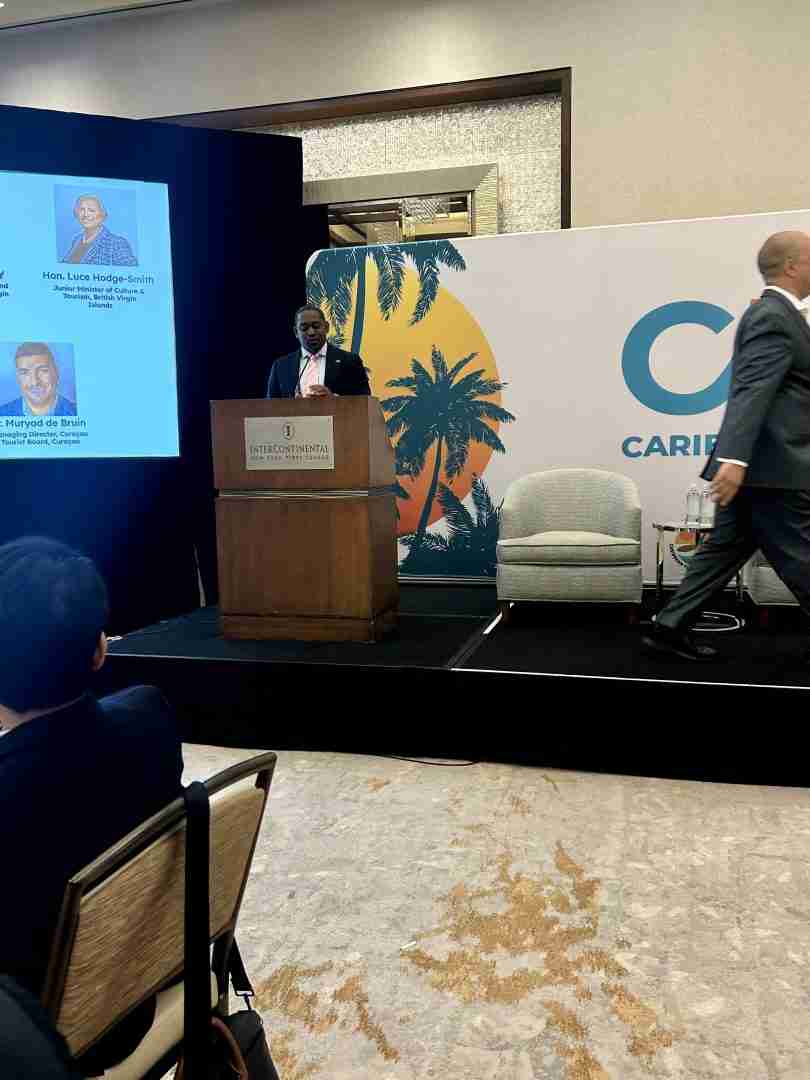
The Minister of Tourism & Transport, Culture & Sport, the Hon. Owen Darrell, JP, MP, is representing Bermuda at the Caribbean Tourism Organization (CTO) Caribbean Week 2026 in New York City from 31 May to 4 June. The annual event brings together tourism leaders, policymakers, industry stakeholders and international partners from across the Caribbean to discuss opportunities and challenges facing the sector.
“Caribbean Week provides an important opportunity for Bermuda to showcase the strength of our tourism industry, strengthen regional partnerships and engage with key stakeholders who play a role in shaping the future of tourism,” said Minister Darrell. “By sharing our experiences and learning from our regional counterparts, we can continue to enhance Bermuda’s tourism product and grow the industry for the benefit of our economy.”
On 1 June, Minister Darrell attended the official Opening Ceremony at the InterContinental New York Times Square alongside fellow Ministers and tourism officials from across the region. He also participated in the “Around the Caribbean in 60 Minutes” session, delivering an update on the state of Bermuda’s tourism industry.
The session provided an opportunity for Caribbean tourism leaders to highlight recent achievements, emerging trends and strategic priorities within their respective destinations. Minister Darrell outlined Bermuda’s ongoing efforts to strengthen visitor experiences, increase tourism investment and support sustainable growth.
On June 2, Minister Darrell will participate in the CTO Council of Ministers Meeting as part of the Caribbean Week programme.
Bermuda’s participation in Caribbean Week reinforces the Government’s commitment to promoting the island in key international markets, fostering regional collaboration and ensuring the continued success and competitiveness of Bermuda’s tourism industry.
Media release and images supplied by the Government of Bermuda.
Hospital says boarding times have dropped by about 60 per cent since earlier this year
The Ministry of Health and the Bermuda Hospitals Board are providing an update on ongoing work to improve patient flow, reduce Emergency Department overcrowding, and strengthen Bermuda’s acute and long-term care capacity. This update forms part of the shared commitment to keep the public informed as progress continues, particularly at King Edward VII Memorial Hospital, Bermuda’s only emergency department.
BHB has set a clear operational target of six hours for Emergency Department (ED) boarding, which is the time between the decision to admit a patient and their transfer to an inpatient bed. This benchmark is consistent with the standard used by the US Centers for Medicare & Medicaid Services and is the primary measure of ED flow.
Hallway care, delayed discharges, and lost acute care bed days all affect how many inpatient beds are available. Because they are connected, these issues are managed together under the boarding target. Bermuda faces a special challenge: King Edward VII Memorial Hospital is the country’s only emergency department, and there are no other local facilities where patients can be sent instead.
For admitted patients, time in the Emergency Department has two parts: the time it takes to reach a decision to admit, and the time spent boarding until an inpatient bed becomes available. As of May 2026, admitted patients waited a median of about five hours for a decision to admit, followed by a further median of about twenty hours boarding. This resulted in a typical total of roughly twenty-four hours in the ED before transferring to a ward. While this remains above the six hour target, boarding times have improved meaningfully over the past several months. Most patients who are not admitted continue to be treated and discharged within a median of under four hours.
A review of 29,512 ED encounters between April 2025 and March 2026 found that roughly 25 to 35 percent of patients, about 20 to 28 patients per day, could have potentially been treated in primary or community care settings. This work supports ongoing efforts to strengthen primary care access and reduce avoidable ED demand.
Since the introduction of the Bed Capacity Management Plan, BHB has seen measurable improvements. Median boarding time has dropped from around fifty hours earlier in 2026 to around twenty hours in May 2026, a reduction of about sixty percent. ED overcrowding has eased as a result, supported by enhanced discharge processes and the use of the new discharge lounge.
Performance still varies week to week, and boarding remains above target. The progress to date reflects the commitment of clinical teams and the coordinated approach between BHB and the Ministry of Health. To support long-term system sustainability, BHB will be adding thirty long-term care beds at MWI. This is part of the broader strategy to address the projected need for approximately 365 skilled nursing facility beds by 2035. In addition, a robust and expedited procurement process for the independent review of ED access is nearing completion.
Although an external reviewer has not yet been appointed, the process is actively progressing under the governance oversight of the Chairman of the Bermuda Hospitals Board. Updates will be provided at appropriate stages to ensure transparency while protecting the independence and integrity of the review.
As of 1 June 2026, forty-one patients who are medically fit for discharge were occupying acute care beds. Their median length of stay to date is about seventy‑three days, with an average of about one hundred and eleven days. Seventeen patients with stays of ninety days or longer account for seventy‑eight percent of all bed days used by this group. These patients are predominantly older adults, with a median age of seventy‑four, and require skilled nursing or long‑term care placement, which is the main reason for the delay. Work continues across the system to support timely and appropriate placement options.
The Minister of Health The Hon. Kim Wilson said: “The progress we are seeing is the result of strong collaboration between BHB and the Ministry, and I want to acknowledge the dedication of the teams who are working every day to improve patient flow and strengthen the system. While there is more work ahead, we are encouraged by the improvements already achieved and remain committed to supporting BHB as they continue this important work.”
The Acting CEO of BHB Ms. Judy Richardson added: “Our staff have been working extremely hard to improve the experience for patients and families, and the reduction in boarding times reflects that effort. We appreciate the Ministry’s ongoing support as we continue to implement the Bed Capacity Management Plan and expand long-term care capacity. We are committed to building on this progress and ensuring that patients receive timely, safe, and appropriate care.”
BHB, with the full support of the Ministry of Health, remains committed to reducing ED boarding times, improving patient flow, expanding long-term care capacity, strengthening primary and community care pathways, and maintaining transparency as this work continues.
Media release supplied by the Government of Bermuda.
Meetings with regional counterparts focused on legal cooperation, governance and the rule of law
The Ministry of Justice advised today that the Attorney-General and Minister of Justice, Sen. the Hon. Kim Wilkerson, JP, held a series of official justice-sector meetings during her visit to Trinidad and Tobago last week.
Minister Wilkerson was in Port of Spain to attend the 62nd Plenary and Working Group Meetings of the Caribbean Financial Action Task Force, held from 25 to 29 May 2026. A separate release will be issued regarding Bermuda’s participation in those meetings.
As part of the Minister’s visit to Trinidad and Tobago for the Working Group Meetings of the Caribbean Financial Action Task Force (CFATF) last week, she made a courtesy call at the Caribbean Court of Justice, where she met with the Honourable Mr Justice Winston Anderson, President of the Caribbean Court of Justice, and attended an in-person judgment delivery.
The Minister was accompanied by the Permanent Secretary for the Ministry of Justice, Mr David Roberts and Solicitor General, Mrs Shakira Dill-Francois.
Minister Wilkerson and Mr Roberts also met with Senator the Hon. John Jeremie SC, Attorney-General of Trinidad and Tobago and with the Honourable Devesh Maharaj, Minister of Justice of Trinidad and Tobago.
Minister Wilkerson said the meetings provided a valuable opportunity to engage directly with regional justice leaders and to observe the work of an important Caribbean judicial institution.
“It was a privilege to visit the Caribbean Court of Justice and to meet with the Honourable Mr Justice Winston Anderson,” said Minister Wilkerson.
“The Court plays an important role in the region’s legal architecture and attending an in-person judgment delivery was a meaningful opportunity to see that work first-hand.”
Minister Wilkerson said the visit also allowed for productive discussions with her counterparts in Trinidad and Tobago.
“These meetings gave us an opportunity to exchange views on justice-sector priorities, institutional cooperation and the importance of maintaining effective legal systems across the region,” Minister Wilkerson noted.
“Bermuda benefits from remaining engaged with regional partners, particularly where we share common legal traditions, common challenges and a common interest in public confidence in the administration of justice.”
Minister Wilkerson added that such engagement supports Bermuda’s wider justice policy work and reinforces the importance of continued dialogue between Caribbean jurisdictions.
“Justice systems do not operate in isolation,” she said. “Regular engagement with regional counterparts allows us to share perspectives, learn from each other’s experiences and ensure Bermuda remains connected to the wider regional conversation on justice, governance and the rule of law.”
Media release and image supplied by the Government of Bermuda.
A postponed prescription coverage deal between Allshores and Phoenix came into effect yesterday, with the insurer lauding that some high-cost drugs will now have no co-pay
A list of 46 high-cost drugs will now have zero co-pay in most circumstances for some Allshores members – if they fulfill those prescriptions at one of the eight Phoenix Pharmacies.
If members choose to fulfill elsewhere, however, the most Allshores will cover is 50%.
The 46 prescriptions include diabetes and weight-loss drugs Ozempic, Mounjaro and Waygovy; blood-thinner Eliquis; and specialized cancer drugs such as Lenalidomide.
The deal was supposed to come into effect in April, but Health Minister Kim Wilson had the Bermuda Health Council request a delay to implementation, after independent pharmacies and doctors cited concerns over the deal.
The online list states that fulfilling prescriptions at other pharmacies will be considered out-of-network, and “coverage will be 50% or per the member’s Schedule of Benefits”.
The website also states that prior to June 1st, Allshores coverage for many of these drugs was 80%, whereas the new deal puts that up to 100% with no co-pay at Phoenix Pharmacies.
An Allshores spokesperson told the Royal Gazette that “at the heart of this initiative is a commitment to ensure members receive the care they need without financial hardship.”
Independent pharmacists previously voiced their concerns when it appeared the Allshores deal may restrict certain prescriptions to one network, citing the loss of established relationships with long-term patients, limited choice for customers, and the fact that Phoenix Pharmacies are in only eight locations – not including St David’s, St. George’s and Somerset.
In February, when Health Minister Kim Wilson sought a delay to the Allshores/Phoenix deal, she also reiterated that Government is committed to introducing anti-monopoly legislation.
“Competition law is not about punishing success,” the Minister said, “it is about protecting the public interest. It ensures that innovation thrives, that consumer choice is preserved, and that market power is not exercised in ways that undermine affordability, fairness, or access.”
Responding to our questions as to whether all Allshores plans will include coverage of specialist drugs, an Allshores spokesperson said that benefits can vary depending on the plan, and members should refer to the latest schedule of benefits.
The spokesperson added that the new Allshores-Phoenix deal has removed significant out-of-pocket costs that many patients previously faced, and that “some of our cancer patients currently pay thousands of dollars per month even with just a 20% copay, for example. These patients will now have no copay.” (Full response from an Allshores Spokesperson below)
The full list of medications affected by the Allshores/Phoenix deal can be found at allshores.com/pharmacy.
Response from an Allshores Spokesperson:
“People with Allshores health plans should refer to their latest Schedule of Benefits for the information about their plans. Benefits can vary depending on the plan. If there are any questions about their benefits, people can reach out to our teams at pharmacy@allshores.com who are ready to assist them. At the heart of this initiative is a commitment to ensure members receive the care they need without financial hardship. By reducing the acquisition cost of these specialist medications, we have been able to expand coverage to 100% for most eligible members—removing significant out-of-pocket costs that many patients previously faced. Some of our cancer patients currently pay thousands of dollars per month even with just a 20% copay, for example. These patients will now have no copay.”
At Microsoft’s annual software developer conference in San Francisco, Microsoft executives revealed Project Solara, a family of prototypes that includes devices around the size of a smart speaker or keycard badge
International News via Reuters:
Microsoft, the company known for its operating system and apps, on Tuesday hinted at a new wave of gadgets that will use AI agents designed to complete specific tasks in healthcare and retail rather than traditional apps.
At Microsoft’s annual software developer conference in San Francisco, Microsoft executives revealed Project Solara, a family of prototypes that includes devices around the size of a smart speaker or keycard badge, based on chips from Qualcomm and MediaTek.
The devices have screens and microphones, but instead of running an operating system and apps like a smartphone, Microsoft executives showed them hosting AI agents that talk to cloud-computing systems to carry out specific tasks, such as documenting a medical visit with a nurse.
“It’s a new platform, but perhaps more importantly, it’s a set of new platform rules that don’t, in some sense, hem in what you can imagine,” Microsoft CEO Satya Nadella said during a keynote address.
Microsoft is competing against rivals such as OpenAI and Anthropic to sell cloud-based AI tools for coding and other tasks, while also trying to nudge Microsoft customers toward running AI technologies on the fleets of laptop and desktop computers running its Windows operating systems.
NVIDIA-POWERED ‘DREAM MACHINE’
Microsoft on Tuesday showcased a new computer called the Surface RTX Spark Dev Box loaded with an Nvidia chip.
Nadella said the forthcoming computer was a “dream machine.” There is a wait list to buy the computer and Nadella said he is on it, too.
The new machine uses an Nvidia chip, unveiled on Monday, to help bring AI directly to PCs. The Surface RTX Spark Dev Box follows a laptop that Microsoft introduced with Nvidia this week, and Microsoft executives showed it running an AI model with 120 billion parameters — a rough measure of a model’s complexity — that most PCs would not be able to load.
The new wave of PCs is priced to compete with Apple’s premium offerings, and their announcement helped boost shares of both Microsoft and major PC makers such as Dell Technologies, though analysts said it may take time for businesses to adopt the new machines.
Microsoft on Tuesday said it is developing new tools to help Windows run OpenClaw, a piece of open-source software that can direct groups of AI bots called agents to carry out everyday tasks for users.
Many of the tools Microsoft showed on Tuesday are aimed at making OpenClaw, which has gained popularity in China and helped rival Apple sell Mac computers, safe enough for businesses to use on computers with sensitive corporate data. Onstage during a demo, executives showed how a corporate IT department could prevent users from inadvertently deleting all the files on their desktop.
“You can totally run OpenClaw inside your company now,” Peter Steinberger, the Austrian software engineer who created OpenClaw, said during a guest appearance.
NEW AGENTS, AI MODELS
Microsoft also said it would introduce a new AI agent called Scout that can carry out tasks such as gathering up emails or messages that need a decision from the user to move forward.
Microsoft also showcased the work of its AI unit’s superintelligence team, formed late last year. Aiming to catch up to rivals Anthropic and OpenAI, the unit released what it called the most efficient transcription AI model of any cloud hyperscaler and an image model to vie with Google’s.
MAI-Thinking-1, Microsoft’s first reasoning model, matched the performance of Anthropic’s Claude Opus 4.6, launched earlier this year, said Mustafa Suleyman, who heads Microsoft’s AI efforts. Anthropic last week announced Opus 4.8.
Microsoft on Tuesday also introduced a technology called Web IQ, an AI agent that can perform web searches.
Reporting by Stephen Nellis and Jeffrey Dastin in San Francisco; Editing by Muralikumar Anantharaman, Rod Nickel, Matthew Lewis and Cynthia Osterman
The proposed 50-bed unit on an air force base in central Kenya for Americans exposed to the virus in Democratic Republic of Congo or Uganda has angered many Kenyans
International News via Reuters:
A Kenyan court blocked on Tuesday for another three weeks a proposed U.S. Ebola quarantine facility that has triggered protests in which two people were killed, and ordered the government to disclose its agreement with Washington.
The proposed 50-bed unit on an air force base in central Kenya for Americans exposed to the virus in Democratic Republic of Congo or Uganda has angered many Kenyans. They accuse the U.S. of offloading the health risk of caring for patients.
A Kenyan court last week temporarily suspended the plan in response to a lawsuit from a legal advocacy group. However, U.S. military aircraft have continued to fly in staff and equipment in recent days, according to a U.S. official and diplomatic sources.
Kenyan High Court Judge Patricia Nyaundi on Tuesday issued an order barring the Kenyan government from taking any steps to build or begin operations at the facility in the town of Nanyuki before the case is resolved.
The judge also ordered the government to disclose all agreements and operational protocols related to the facility within seven days and scheduled the next hearing for June 23.
Senior U.S. health official Mehmet Oz told reporters in a White House briefing on Tuesday that President Donald Trump’s administration is confident the State Department will be able to work with Kenya to establish the facility.
“I think we’re going to work out … a very favourable arrangement with Kenya,” Oz said. “They’re going to do the right thing for everybody, and I think it’s a perfect solution.”
Hundreds protested against the plan in Nanyuki on Monday. Protest organiser Patrick Wahome said two people were killed by gunshot wounds after police opened fire. A security source also said two people had died but did not specify the cause of death.
Police spokesperson Michael Muchiri said he was not aware of the deaths.
KENYAN PRESIDENT RUTO DEFENDS US AGREEMENT
On Monday, Kenyan President William Ruto said the facility was part of a wider national preparedness plan and long-running health partnership with Washington.
The U.S. said last week it would provide $13.5 million for Kenya’s Ebola preparedness effort. Ruto said the site would serve Kenyans and foreign nationals too.
“We are a responsible government. We know what we are doing,” Ruto said.
A U.S. official, speaking on condition of anonymity, told Reuters the facility would only be treating U.S. citizens.
“American officials, doctors, and clinicians will be at this facility, treating American citizens at the facility. Our highest priority is containing the spread of Ebola and offering the highest clinical care to Americans,” the official said.
Kenyan courts are known for their independence, especially by regional standards, although activists often accuse the government of ignoring or circumventing orders.
The outbreak of the rare Bundibugyo strain of Ebola is centred in eastern Congo and several cases have spilled over into neighbouring Uganda.
There have been 321 confirmed cases and 116 suspected cases of Ebola in Congo, including 48 deaths, the World Health Organization said on Tuesday. Uganda has confirmed 15 cases.
The Trump administration has said it “cannot and will not allow” any cases to enter the U.S., unlike during the 2014-2016 Ebola outbreak in West Africa when several infected U.S. nationals were treated on U.S. soil.
A U.S. citizen who contracted Ebola while treating patients in the DRC as a medical missionary was moved to Germany last month for treatment along with five others who were exposed.
A seventh person was taken to the Czech Republic.
The facility in Nanyuki is meant to receive Americans who have been exposed to the virus but are still asymptomatic. Patients who develop symptoms would be sent for care in other countries, U.S. officials have said.
Reporting by Humphrey Malalo, Edwin Okoth, Aaron Ross and Ammu Kannampilly; Additional reporting by Steve Holland and Ahmed Aboulenein in Washington; Writing by Vincent Mumo Nzilani and Aaron Ross; Editing by Kate Mayberry, Andrew Cawthorne and Gareth Jones
An agreement between the U.S. and Iran to open the crucial strait would ease pressure on currencies of oil-importing countries such as Japan and euro zone nations, while reducing safe-haven demand for the dollar
International News via Reuters:
The dollar traded in a narrow range on Tuesday as investors stayed on alert for signs of progress on a potential deal to reopen the Strait of Hormuz.
An agreement between the U.S. and Iran to open the crucial strait would ease pressure on currencies of oil-importing countries such as Japan and euro zone nations, while reducing safe-haven demand for the dollar.
U.S. President Donald Trump said on Monday that talks with Iran were ongoing. Oil prices were higher on Tuesday, and investors have treated news of progress around ending the U.S.-Israeli war on Iran with caution, citing the fragility of a ceasefire struck between Washington and Tehran in April and frequent assertions by Trump in recent weeks that an agreement is forthcoming.
The dollar index, which measures the currency against six peers, was up 0.046% at 99.216. It has traded in a narrow range of about 98.9 to 99.5 since May 15. Despite the surge in energy prices, the U.S. economy has remained stable, though growth has slowed and job openings have increased.
“The dollar could gain momentum through the week if US-Iran negotiations remain inconclusive and Friday’s non-farm payrolls report confirms continued resilience in the world’s largest economy,” said Karl Schamotta, chief market strategist at Corpay, in a research note.
The dollar jumped at the start of the Iran conflict on February 28, buoyed by safe-haven demand and the U.S. economy’s relatively limited exposure to energy-driven inflation. It has given back some of those gains as uncertainty over the conflict’s direction persists.
DATA IN FOCUS
Euro zone inflation data reinforced expectations for a quarter-point European Central Bank rate hike later this month, which markets had already widely priced in. Traders now are betting on two hikes by December and are putting about a 50% chance on a third increase.
The euro fell 0.03% to $1.1629.
“The pass-through of higher energy and input prices to final consumption will be limited due to a lack of ability and willingness of consumers to actually pay for these higher prices,” said Carsten Brzeski, head of macro at ING.
U.S. data on Tuesday showed job openings rose to 7.618 million in April, ahead of Friday’s closely watched monthly employment report.
Markets expect the Federal Reserve’s next move will be a rate increase.
“The combination of loose U.S. financial conditions, reversing safe-haven support and the Fed sounding patient has kept the dollar in check,” Paul Mackel, global head of forex research at HSBC, said.
YEN’S 160 PER DOLLAR MARK IN THE SPOTLIGHT
Japan’s Finance Minister Satsuki Katayama said on Tuesday authorities are ready to respond in currency markets as needed, while refraining from comment on recent moves.
The yen was last weaker at 159.920 per dollar, near the 160 level widely seen as a trigger for intervention.
Markets are awaiting a speech by Bank of Japan Governor Kazuo Ueda on Wednesday for clues on whether the central bank will raise rates next week.
“Action remains likely, and even though inflation has eased, the risk of being behind the curve is rising,” Derek Halpenny, head of research, global markets at MUFG, said.
Bitcoin was last down 5.8% at $67,213.42, lowest since April.
Reporting by Hannah Lang in New York and Stefano Rebaudo. Additional reporting by Satoshi Sugiyama. Editing by Emelia Sithole-Matarise, Chizu Nomiyama, Mark Potter and David Gaffen
To provide the best experiences, we use technologies like cookies to store and/or access device information. Consenting to these technologies will allow us to process data such as browsing behavior or unique IDs on this site. Not consenting or withdrawing consent, may adversely affect certain features and functions.
Functional
Always active
The technical storage or access is strictly necessary for the legitimate purpose of enabling the use of a specific service explicitly requested by the subscriber or user, or for the sole purpose of carrying out the transmission of a communication over an electronic communications network.
Preferences
The technical storage or access is necessary for the legitimate purpose of storing preferences that are not requested by the subscriber or user.
Statistics
The technical storage or access that is used exclusively for statistical purposes.The technical storage or access that is used exclusively for anonymous statistical purposes. Without a subpoena, voluntary compliance on the part of your Internet Service Provider, or additional records from a third party, information stored or retrieved for this purpose alone cannot usually be used to identify you.
Marketing
The technical storage or access is required to create user profiles to send advertising, or to track the user on a website or across several websites for similar marketing purposes.