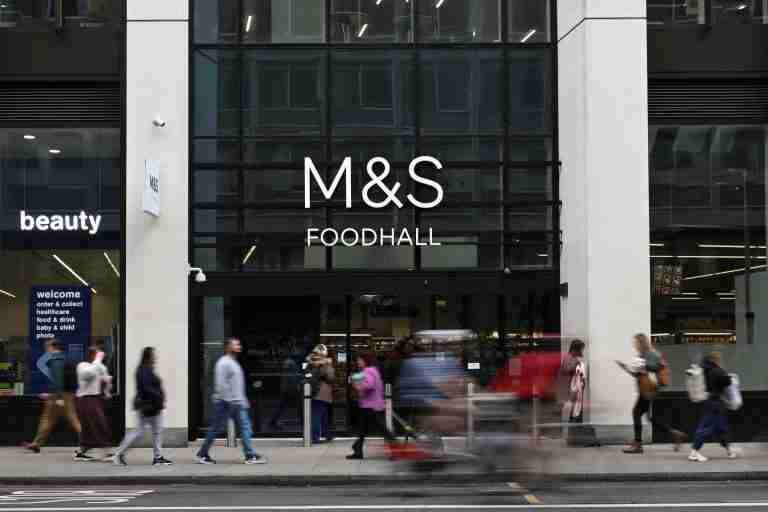
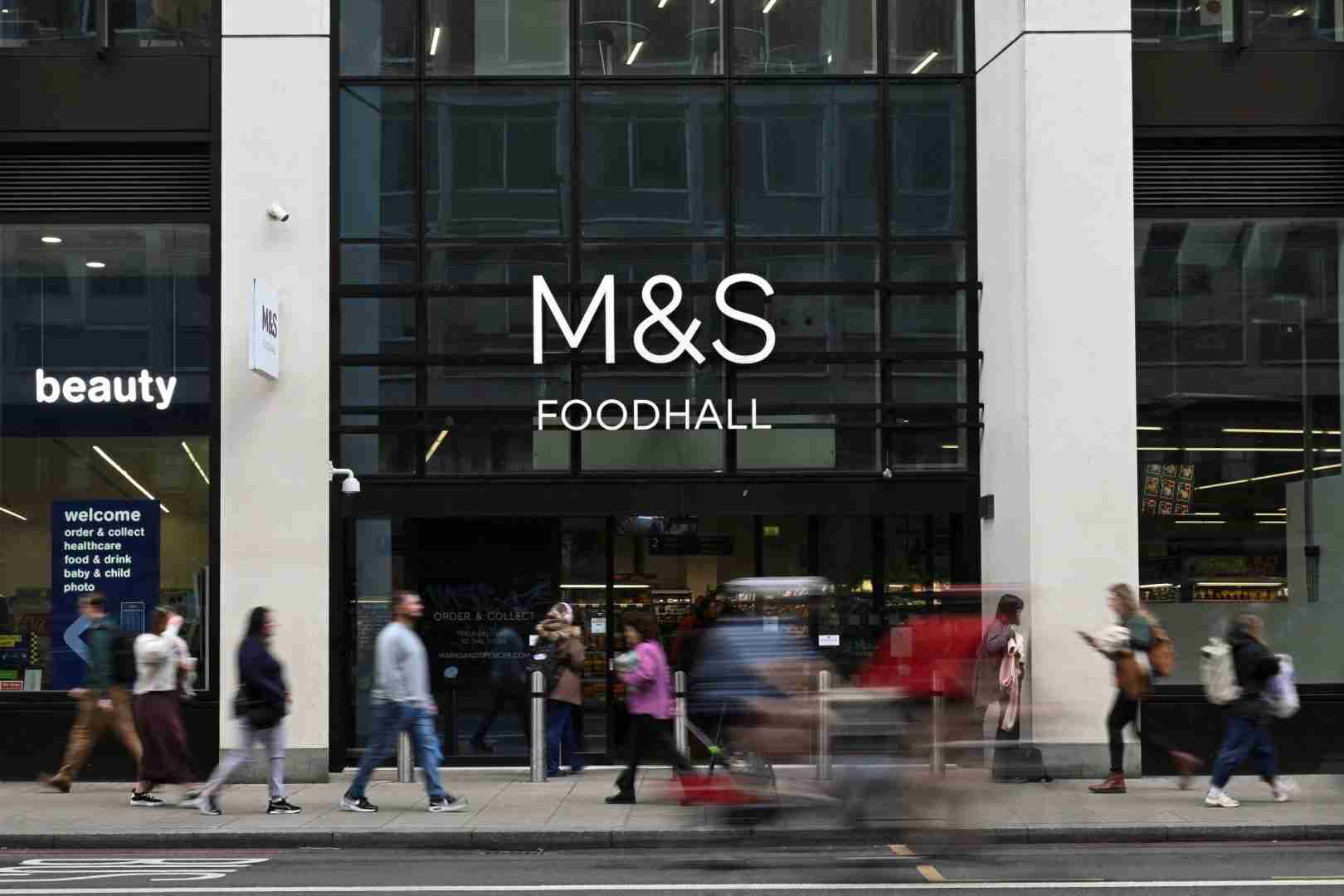
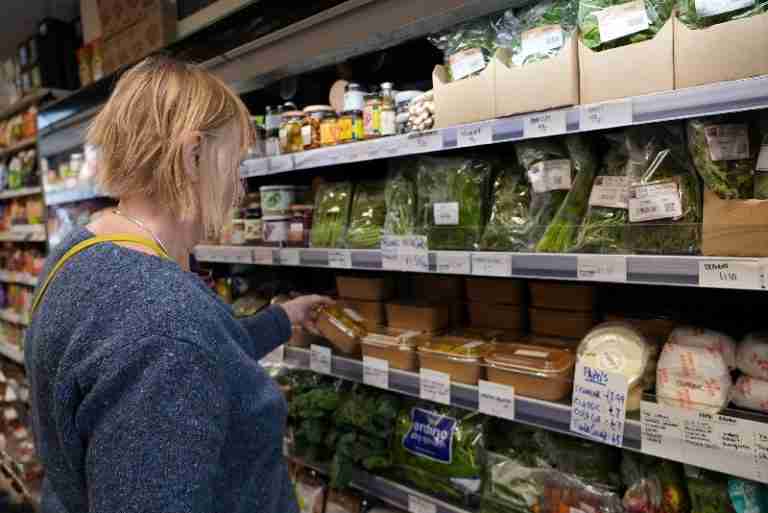
M&S said its outlook for the current year takes account of higher fuel, freight and input costs caused by the Iran war and continued government tax levies and regulatory challenges for the sector
International News via Reuters:
British retailer Marks & Spencer forecast a return to profit growth this year after it slumped 24% in 2025/26, hit by a disruptive cyberattack that dented sales and margins.
The 142-year-old M&S, one of the biggest names on the UK high street, said it entered its current reporting year to March 2027 with a clear plan and a strong balance sheet and was focused on delivering further improvements to product availability and service levels.
“Profit growth is expected to resume versus 2024/25,” it said on Wednesday, sending its shares up 5%.
M&S said its outlook for the current year takes account of higher fuel, freight and input costs caused by the Iran war and continued government tax levies and regulatory challenges for the sector.
It would mitigate these through improved buying, reinvestment in value to drive volume, and savings from its structural cost-reduction programme.
Dominic Younger, fund manager at Columbia Threadneedle Investments, one of M&S’ top five investors, said the group’s update drew a line under a year of huge adversity.
“When actively investing on behalf of clients, we look for companies to emerge from crises stronger and it is a credit to M&S that, just as we saw after COVID, the business appears in good shape to face the fresh challenges of this year.”
ONLINE CLOTHING ORDERS SUSPENDED
The cyberattack forced M&S to suspend online clothing orders for seven weeks and click-and-collect services for nearly four. Clothing and food availability in stores was also hit, while additional waste and logistics costs were incurred.
“We were laser focused on our customers, worked incredibly hard to recover our business, and we came out stronger,” CEO Stuart Machin said.
The group made adjusted profit before tax of £671.4 million in the year to March 28, down from £881.1 million in 2024/25. Second-half profit grew 4.1% from the previous year.
M&S said costs related to the cyber hack were £131.3 million.
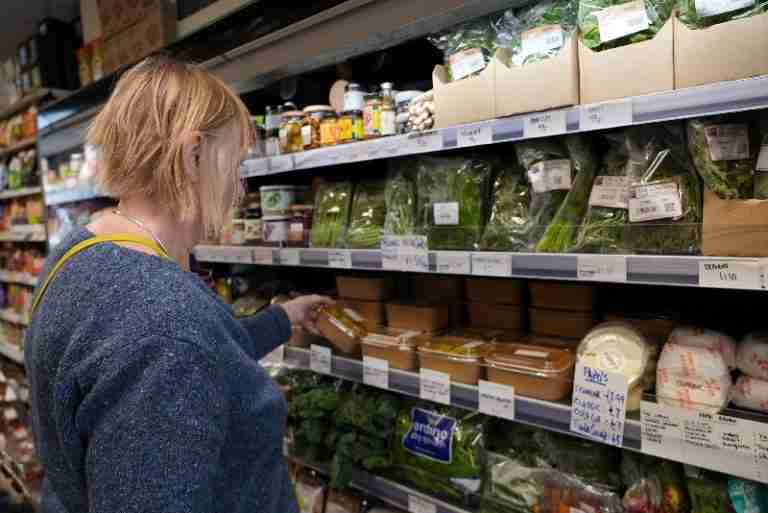
While food sales rose 7.0% and the division grew market share, sales in fashion, home and beauty slid 7.7%.
Machin said recovery in fashion, home and beauty has taken longer, “but there is strong growth potential.”
He also said, however, that retailers faced “a triple whammy of headwinds with increased taxation, a greater regulatory burden and ongoing global conflict.”
British consumers, shaken by the inflationary impact of the Middle East conflict, cut their spending last month for the first time since November 2024, a survey by Barclays showed last week.
Reporting by James Davey; editing by Sarah Young, Elizabeth Piper and Tomasz Janowski
Prime Minister Keir Starmer, facing potential leadership challenges after a heavy local election defeat this month, is pushing departments to shield households from rising prices
A customer shops inside Londis N16 corner shop in London, Britain April 17, 2026 REUTERS/Marissa Davison
International News via Reuters:
Britain’s government ruled out mandatory supermarket price caps on Wednesday, but said it was in talks with the sector on ways to ease cost-of-living pressures partly driven by the Iran war.
Prime Minister Keir Starmer, facing potential leadership challenges after a heavy local election defeat this month, is pushing departments to shield households from rising prices.
Suggestions of price caps, however, drew a sharp backlash.
‘PREPOSTEROUS’ IDEA, SAYS M&S
Marks & Spencer Chief Executive Stuart Machin called the idea “completely preposterous”.
On Tuesday, a Financial Times report, later confirmed by Reuters, said the government was asking major supermarkets to introduce price caps on key products such as eggs, bread and milk, in exchange for delaying levies and relaxing regulations.
A day later, Treasury minister Dan Tomlinson played down the proposal.
“The government is going to be having conversations with supermarkets about what more we can do to support households, but no, we are not going to be implementing a mandatory price cap,” he told BBC radio.
The Scottish National Party, which holds power in Scotland’s devolved parliament, has announced a plan to introduce a maximum price for “essential” supermarket items.
“I don’t think the government should be trying to run business. I think they should probably try to understand business better,” Machin told reporters after M&S reported annual results.
He said many retailers, including M&S, already sold staples such as milk, bread and bananas at a loss, adding that easing tax and regulatory pressures would do more to curb food inflation.
The sector says recent government measures – higher employer taxes, a rise in the minimum wage, new packaging levies and proposed product reformulations – were already stoking inflation before added pressure from the Middle East conflict.
Asked about the FT report, a finance ministry spokesperson said on Tuesday that finance minister Rachel Reeves “has been clear we want to do more to help keep costs down for families, and will set out more detail in due course”.
FOOD PRICE PRESSURES
Official data on Wednesday showed food inflation eased to 3.0% in April, but the Bank of England has said firms it spoke to last month expect it to reach 6% to 7% later this year.
The British Retail Consortium, which represents major supermarket groups including market leader Tesco and Sainsbury’s, said it opposed price caps.
“Rather than introduce 1970s-style price controls and trying to force retailers to sell goods at a loss, the government must focus on how it will reduce the public policy costs which are pushing up food prices in the first place,” BRC CEO Helen Dickinson said.
A 2023 investigation by Britain’s competition regulator cleared supermarket groups of profiteering during a cost-of-living crisis, when food inflation peaked at 19%.
On Wednesday, Reeves said she will give the Competition and Markets Authority stronger powers to crack down on companies found to have raised prices unfairly during crises.
Reporting by James Davey. Additional reporting by Alistair Smout and Muvija M. Editing by Gareth Jones, Elizabeth Piper and Mark Potter
It marked the weakest reading since the year to April 2024
International News via Reuters:
British house prices were flat in the 12 months to March after a 1.7% increase in the year to February, the Office for National Statistics said on Wednesday.
It marked the weakest reading since the year to April 2024.
Average UK monthly private rents increased by 3.5% in the year to April, compared with 3.4% the 12 months to March.
Reporting by Andy BruceEditing by William Schomberg
The patient has been previously identified by the Serge Christian mission organization as medical missionary Peter Stafford
A convoy with an ambulance believed to be carrying an American health worker, who has been brought to Germany for treatment after contracting Ebola in the Democratic Republic of Congo, arrives at the Charite University Hospital in Berlin, Germany, May 20, 2026. REUTERS/Axel Schmidt
International News via Reuters:
A U.S. citizen who contracted Ebola in the Democratic Republic of Congo, where an outbreak of a rare strain of the virus has killed over 130 people, is currently on his way to Germany for treatment, the U.S. CDC said on Tuesday.
The patient has been previously identified by the Serge Christian mission organization as medical missionary Peter Stafford.
Germany earlier on Tuesday said it was preparing to treat the individual at the largest university hospital in Berlin.
The health ministry confirmed a U.S. citizen would be admitted to the special isolation ward at Berlin’s Charite University Hospital after U.S. authorities requested assistance.
“Arrangements are currently being made to admit and treat the patient in Germany,” a spokesperson said, adding that there was a network of experts in the country for the management and care of patients with highly infectious diseases.
Six others who are considered “high-risk contacts” are finalizing travel plans to transit to Europe, Dr. Satish Pillai, the incident manager for the U.S. Centers for Disease Control and Prevention’s Ebola response, told reporters on a call.
“The individuals are traveling to Europe, including in Germany, and they will be in quarantine during their monitoring period,” Pillai said. One person will be going to the Czech Republic, and the rest to Germany, he said.
The outbreak of the rare Bundibugyo strain of the virus in eastern DRC has killed 131 people and been declared a public health emergency by the World Health Organization.
SUPPORT FOR RESPONSE CLINICS
The U.S. State Department on Tuesday said it would fund up to 50 treatment clinics and associated costs in Ebola-affected regions of the DRC and Uganda and the Congo. The funding would come mainly via the Central Emergency Response Fund (CERF) administered by the United Nations Office for the Coordination of Humanitarian Affairs (OCHA), the State Department said.
State added that it would continue to work closely with the CDC to mobilize global resources to respond to the outbreak. The clinics will enable implementing partners to provide emergency Ebola screening, triage and isolation capacity, while setting up containment perimeters around affected areas.
The World Bank said it was also focused on ensuring the mobilization of financing and technical support for countries responding to the Ebola outbreak.
Genetic testing has shown that diagnostic tests currently available for Ebola are effective in detecting the strain, the CDC’s Pillai said.
The risk to the United States remains low, he said, and the CDC is working with state, local, tribal, and territorial health departments on immediate patient isolation, specimen collection, and testing in suspected cases.
Pillai pointed to other measures the CDC has taken, including entry restrictions the U.S. agency announced on Monday for travelers who have departed from, or were present in, the DRC, Uganda and South Sudan during the past 21 days.
AFRICA CDC CRITICIZES TRAVEL CURBS
The Africa CDC criticized the decision on Tuesday, saying in a statement that travel restrictions are not a solution and could potentially increase the risk rather than reducing it.
“The fastest path to protecting all countries in the world is to aggressively support outbreak control at the source,” said Africa CDC Director General Dr. Jean Kaseya. “Global health security cannot be achieved through borders alone.”
Public health experts say cuts to the U.S. CDC under President Donald Trump’s administration and the official withdrawal of the U.S. from the World Health Organization this year will hamper U.S. response efforts and support.
The U.S. CDC has a country office with 30 staff members in the DRC, Pillai said, and another with 100 staff in neighboring Uganda, where there have been at least two confirmed cases.
One CDC expert will be sent to the region tomorrow, he said, and the agency is providing remote and on-the-ground assistance in several ways including disease tracking, contact tracing, rapid laboratory sample collection and viral sequencing.
He did not directly address a question on the DRC team and the upcoming World Cup but said the CDC was working with FIFA to ensure that travelers and the American public remain safe throughout.
Reporting by Ahmed Aboulenein and Andrea Shalal in Washington, Michael Erman in New York, Julie Steenhuysen in Chicago, Friederike Heine and Ludwig Burger in Berlin, Ryan Patrick Jones in Toronto; Editing by Timothy Heritage, Andrew Cawthorne, Deepa Babington and Stephen Coates
The German programme is leaning on the European Hydrogen Bank’s Auctions-as-a-Service, or AaaS, for the auction that closed in 2026, the Commission said in a statement
International News via Reuters:
The European Commission on Wednesday approved €1.3 billion ($1.5 billion) in German state aid for the production of renewable hydrogen to cut greenhouse gas emissions and dependence on Russian fossil fuels.
• The German programme is leaning on the European Hydrogen Bank’s Auctions-as-a-Service, or AaaS, for the auction that closed in 2026, the Commission said in a statement.
• The approved scheme will support the construction of up to 1,000 MW of electrolyser capacity for the production of up to 10 million metric tons of hydrogen, meant to avoid up to 55 million tons of CO2.
• The go-ahead comes at a challenging time for the green hydrogen market, with German electrolyser maker Thyssenkrupp Nucera warning that customers continue to delay investment decisions.
($1 = €0.8627)
Reporting by Ludwig Burger, editing by Thomas Seythal
The blue-chip FTSE 100 index gained 0.13% as of 10:40 am GMT, while the midcap FTSE 250 climbed 0.29%
International News via Reuters:
UK shares rose marginally on Wednesday after softer-than-expected April inflation offered relief to investors, though sceptics warned the reprieve would be temporary.
The blue-chip FTSE 100 index gained 0.13% as of 10:40 am GMT, while the midcap FTSE 250 climbed 0.29%.
• Consumer prices in April rose by an annual rate of 2.8%, compared with March’s figures of 3.3% and expectations of 3.0%.
• That prompted some analysts to question the need for rapid rate hikes by the Bank of England, especially as data released on Tuesday also showed the unemployment rate ticking up.
• “We continue to think markets are overestimating the Bank of England’s willingness to tighten policy,” said James Smith, developed markets economist, UK, at ING.
• On Monday, the International Monetary Fund had also said that the central bank may not need to raise rates to get inflation down to its target.
• Still, others warned that inflation may tick up in the coming months as the impact of higher oil prices due to disruption in the Strait of Hormuz flows through.
• “Some people might be scratching their heads that the headline inflation figure for April came in at just 2.8%. But this bright spot is set to be relegated to the past in the months to come,” said Danni Hewson, head of financial analysis at AJ Bell.
• Aerospace and defence stocks rose 1.6%, thanks to a 3.2% gain in shares of defence contractor Babcock International Group after Peel Hunt upgraded the stock to “buy” from “add”.
• Retailer Marks & Spencer rose 4.2% and was the biggest gainer on the FTSE 100 after forecasting it will return to profit growth this year.
• Investors are also contending with a noisy political backdrop, as questions about Prime Minister Keir Starmer’s future persist.
Reporting by Niket Nishant in Bengaluru; Editing by Vijay Kishore
Sterling was last down 0.07% at $1.3384, not far from a nearly six-week low of $1.3304 that was touched on Friday
International News via Reuters:
The pound slipped slightly on Wednesday after data showed British inflation fell more than expected in April despite the U.S.-Israeli war on Iran and as the dollar climbed.
Sterling was last down 0.07% at $1.3384, not far from a nearly six-week low of $1.3304 that was touched on Friday.
The euro was down 0.05% against the pound at 86.61 pence.
Headline CPI inflation came in at 2.8% in April, data from the Office for National Statistics showed, down from 3.3% in March and below economists’ expectations for a 3% reading.
Economists warned that the reprieve was likely to be short-lived, however, given that benchmark global oil prices have risen 50% since the Iran war began and will filter through to the British economy.
Some analysts said the cooler-than-expected reading reduced the immediate pressure on the Bank of England to raise interest rates.
Lower expected interest rates tend to weigh on a currency by making bonds and other investments in a country look less attractive due to lower returns.
“Today’s UK inflation data, like yesterday’s jobs numbers, questions the need for aggressive rate hikes,” said James Smith, UK economist at ING.
Data on Tuesday showed Britain’s employers reduced their hiring and posted fewer job vacancies in April as the Iran war hit the economy.
“We continue to think markets are overestimating the Bank of England’s willingness to tighten policy at current levels of energy prices,” Smith added.
Traders in money markets were pricing in just over 50 basis points of BoE tightening by December, down from around 60 bps on Tuesday.
British bond yields have risen sharply over the last two weeks as traders price in BoE rate hikes and brace for the potential downfall of Prime Minister Sir Keir Starmer, which could lead to a more left-wing successor who increases spending.
Meanwhile, the pound has slipped as the U.S. dollar has climbed due to fears about the Iran war dragging on; U.S. Treasury yields have also risen.
Reporting by Harry Robertson; Editing by Dhara Ranasinghe and Thomas Derpinghaus
The proposals come as Prime Minister Keir Starmer’s government seeks to address an ongoing cost of living crisis and follow a similar move by the Scottish National Party
A customer shops inside Londis N16 corner shop in London, Britain April 17, 2026 REUTERS/Marissa Davison
International News via Reuters:
Britain’s finance ministry is pressuring major supermarket groups to introduce voluntary price caps on key products, such as eggs, bread and milk, in return for easing some regulations, according to two people with knowledge of the situation.
Confirming a Financial Times report that the ministry had proposed relaxing some new packaging rules and possibly delaying changes to rules around healthy food in exchange for price caps, the people said the grocers had reacted with anger and were pushing back.
The proposals come as Prime Minister Keir Starmer’s government seeks to address an ongoing cost of living crisis and follow a similar move by the Scottish National Party, which holds power in Scotland’s devolved parliament.
“If this happened, nobody would invest in the UK,” one of the people said.
“If you want food price inflation to decline, you need to start looking at the cost of regulation on business,” they said, highlighting the government’s moves to raise employer taxes, the national minimum wage, introduce new packaging levies and propose the reformulation of thousands of food lines.
A spokesperson for the British finance ministry said: “The chancellor (Rachel Reeves) has been clear we want to do more to help keep costs down for families, and will set out more detail in due course.”
British grocery inflation was 3.8% in the four weeks to April 19, according to researcher Worldpanel by Numerator.
The Bank of England said that businesses it had spoken to last month expected food price inflation to reach 6% to 7% later this year, reflecting the economic fallout from the Iran war.
The British Retail Consortium, which represents Britain’s major supermarket groups, including market leader Tesco and Sainsbury’s, said it opposed price caps.
“Rather than introduce 1970s-style price controls and trying to force retailers to sell goods at a loss, the Government must focus on how it will reduce the public policy costs which are pushing up food prices in the first place,” BRC CEO Helen Dickinson said.
Reporting by James Davey, additional reporting by Alistair SmoutEditing by Gareth Jones
Alphabet, which recently came within striking distance of Nvidia as the world’s most valuable company, also reinforced its core consumer products including Search and YouTube by announcing a set of agents that will autonomously complete tasks
Google’s CEO Sundar Pichai speaks at Google’s I/O 2026 developer conference in Mountain View, California, U.S. May 19, 2026. REUTERS/Manuel Orbegozo
International News via Reuters:
Alphabet’s Google on Tuesday put AI agents directly into its search box and rolled out a faster, cheaper version of its Gemini model, aiming to blunt gains by rivals Anthropic and OpenAI among enterprise customers.
Alphabet, which recently came within striking distance of Nvidia as the world’s most valuable company, also reinforced its core consumer products including Search and YouTube by announcing a set of agents that will autonomously complete tasks like making purchases, monitoring ticket availabilities, and planning schedules in real time.
“When people use our AI-powered features in Search, they use Search more,” Alphabet CEO Sundar Pichai said.
The moves, unveiled at Google’s annual I/O developer conference in Mountain View, California, mark its first major showcase since last winter’s update to its Gemini AI model that helped it regain ground in a high-stakes AI race and underline Google’s push to turn its vast consumer reach into an edge in AI.
In their messaging, Pichai and other Google executives attempted to proclaim the course of AI’s future, after spending past conferences on the back foot from the threat of disruption by AI and the new rivals it had spawned.
“When we look back at this time, I think we will realize that we were standing in the foothills of the singularity,” said Demis Hassabis, chief of Google’s DeepMind AI lab. “It will be a profound moment for humanity.”
Google announced a slew of new tools built using its new Gemini 3.5 model family. The company launched Gemini 3.5 Flash, a model designed for coding and automated tasks, on Tuesday and Pichai said 3.5 Pro was coming next month.
GOOGLE SLASHES PRICES FOR CORPORATE USERS
Alphabet lowered the cost of its top-tier AI Ultra subscription plan, which gives users access to higher AI usage limits and advanced AI models, to $200 a month from $250. It also announced a $100-a-month version of the Ultra subscription it said was tailored for developers and other work-related users.
As competition shifts to big-spending business customers, Google is stressing lower costs.
“We’ve heard that many companies are already blowing through their annual token budgets, and it’s only May,” Pichai said, referring to the units of data processed by AI models.
He added that heavy users such as big companies could save more than $1 billion a year by switching to Google’s models, which he told journalists at a briefing before the conference could offer similar performance to other frontier models at up to one-third of the cost.
As AI rivals OpenAI and Anthropic, which are gearing up for IPOs, focus on capturing lucrative enterprise customers, Google swiped back with a new version of coding assistant Antigravity, which competes with Anthropic’s market-leading Claude Code.
Google last year hired key staff from popular AI code generation startup Windsurf to bolster efforts around AI-powered coding.
GOOGLE’S CONSUMER PRODUCTS FUEL AI GROWTH
Tuesday’s announcements reflect a company emboldened by its embrace of AI after quelling market concerns that the technology could upend Google’s competitive edge, either through chatbots like OpenAI’s ChatGPT or upstart AI search alternatives like Perplexity.
Google fought back by leveraging its vast consumer reach into an edge in AI, connecting Gemini to personalized user data across its suite of products that includes Chrome, Gmail and YouTube.
Google on Tuesday introduced Gemini Spark, a new agent that pulls information from various of these apps to draft reports and manage schedules.
Gemini now has 900 million monthly users, according to Pichai, more than doubling from about 400 million last May. Its AI Overviews feature in Search now has 2.5 billion monthly users, while AI Mode has about 1 billion, he added.
The search engine will also now answer certain queries with AI-generated visuals and code to explain scientific concepts or create tools like a fitness tracker.
“We’re entering the next chapter of Google Search, where incredible AI features aren’t just in search, Google Search is AI search, through and through,” said Liz Reid, a vice president who leads the search team.
Nick Fox, a senior vice president in charge of Google’s lucrative Search and Ads unit, said in an interview ahead of I/O that the changes to Search marked the “biggest reinvention of the search box in 25 years.”
Search was Alphabet’s biggest revenue driver in 2025, when it reported $402.8 billion in total revenue. The company is ramping up spending on AI infrastructure, expecting $180 billion to $190 billion of capex this year.
AI VIDEO AND GLASSES
The company also unveiled Gemini Omni, a new video model that Google executives sought to cast as a successor to the Nano Banana image generator, which attracted 13 million first-time users in just four days in September in what has marked one of Google’s few viral AI moments.
Hassabis said Gemini Omni represented the next step in Google’s vision to create a “world model,” which can simulate the physical nature of the world.
“Starting with video, but over time, Omni will be able to generate any output from any input,” he said.
Google also put a timeline of this autumn for the launch of a revived smart glasses effort it is building in partnership with Samsung and eyewear companies Warby Parker and Gentle Monster.
Reporting by Kenrick Cai in Mountain View, California, and Deborah Mary Sophia in Bengaluru; Editing by Sayantani Ghosh, David Gregorio and Matthew Lewis
Any decision to launch a mission would require the approval of all NATO’s 32 members and several have already signalled opposition, although no formal proposal has been presented so far, according to diplomats
FILE PHOTO: Ships and boats in the Strait of Hormuz, Musandam, Oman, April 22, 2026. REUTERS/Stringer/File Photo
International News via Reuters:
NATO is not drawing up any plans for a potential mission in the Strait of Hormuz and would need a political decision to do so, its top commander said on Tuesday, amid suggestions by some members that the alliance could play a role there.
Any decision to launch a mission would require the approval of all NATO’s 32 members and several have already signalled opposition, although no formal proposal has been presented so far, according to diplomats.
“The conditions under which NATO would consider operating in the Strait of Hormuz are ultimately a political decision,” said U.S. Air Force General Alexus Grynkewich, NATO’s Supreme Allied Commander for Europe.
“The political direction comes first, and then the formal planning happens after that. Am I thinking about it? Absolutely … But there’s no planning yet until the political decision is taken,” he told reporters in Brussels.
Iran began blockading the critical Gulf waterway after the United States and Israel launched military action against the country in February. The blockade has pushed up the prices of oil, driven up shipping costs and squeezed supplies of raw materials.
U.S. President Donald Trump has berated NATO members for not being willing to help open the Strait. European nations have said they do not want to be drawn into the war – which was launched without consulting them – but are ready to help secure the Strait after the war.
So far, France and Britain have taken the lead in putting together a coalition of countries that could help ensure safe transit through the Strait once the situation there stabilises or the conflict is resolved.
ALLIANCE MEMBERS DIVIDED SO FAR OVER POSSIBLE HORMUZ ROLE
But some countries say NATO could have some role to play, even if it is not leading a mission, according to diplomats, speaking on condition of anonymity to discuss internal deliberations.
“Some allies believe NATO should play a role in Hormuz. NATO has a lot of maritime capabilities,” said one European diplomat.
However, multiple countries are opposed or hesitant about NATO involvement in the region, four diplomats told Reuters.
“Many allies do not see a role for NATO as such in that endeavour,” said one of the diplomats.
Another diplomat added that “in my understanding the key reason is the reluctance to be seen to become a party to the conflict”.
“Several allies support a NATO Hormuz mission but the opposition is clear – that’s why we have a coalition (rather than a NATO mission),” said a fourth diplomat, adding: “I don’t think there will be a formal NATO mission”.
Reporting by Andrew Gray, Lili Bayer, John Irish and Charlotte Van Campenhout; Editing by Inti Landauro and Daniel Wallis
To provide the best experiences, we use technologies like cookies to store and/or access device information. Consenting to these technologies will allow us to process data such as browsing behavior or unique IDs on this site. Not consenting or withdrawing consent, may adversely affect certain features and functions.
Functional
Always active
The technical storage or access is strictly necessary for the legitimate purpose of enabling the use of a specific service explicitly requested by the subscriber or user, or for the sole purpose of carrying out the transmission of a communication over an electronic communications network.
Preferences
The technical storage or access is necessary for the legitimate purpose of storing preferences that are not requested by the subscriber or user.
Statistics
The technical storage or access that is used exclusively for statistical purposes.The technical storage or access that is used exclusively for anonymous statistical purposes. Without a subpoena, voluntary compliance on the part of your Internet Service Provider, or additional records from a third party, information stored or retrieved for this purpose alone cannot usually be used to identify you.
Marketing
The technical storage or access is required to create user profiles to send advertising, or to track the user on a website or across several websites for similar marketing purposes.