Wednesday, October 21, 2026
Home Blog Page 56

Oil prices continue surge, rising 3% amid Saudi pipeline outage after attack

Brent crude futures climbed $3.00, or 2.9%, to $107.61 per barrel by 1112 GMT, having earlier hit a session high of $108.65
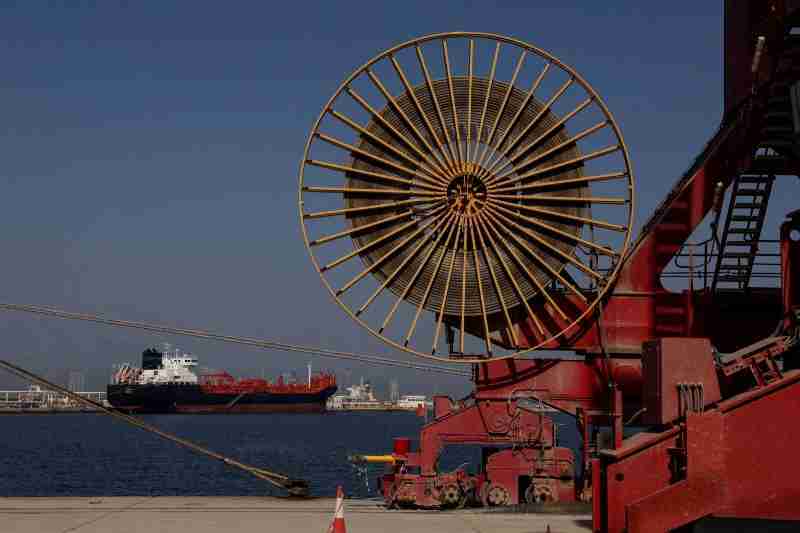
FILE PHOTO: An oil tanker docked at the Port of Fujairah, in Fujairah, United Arab Emirates, May 6, 2026. REUTERS/Amr Alfiky

International News via Reuters:

Oil prices continued their surge, rising more than 3% on Monday, after new strikes on Saudi Arabian energy infrastructure and attacks on ships in the Middle East compounded supply concerns.

Brent crude futures climbed $3.00, or 2.9%, to $107.61 per barrel by 1112 GMT, having earlier hit a session high of $108.65. WTI futures gained $2.48, or 2.5%, to $102.53 per barrel.

Oil prices surged around 9% higher last week as attacks in the Middle East escalated, with Brent rising above $100 a barrel for the first time since July and hitting its highest since May at around $110. The rally pushed U.S. diesel prices above $6 a gallon for the first time ever, triggering a plea from U.S. President Donald Trump to Ukraine to stop attacking Russian diesel infrastructure.

Global bond markets have come under pressure from higher energy prices feeding inflation and higher interest rates, with yields repeatedly climbing to fresh multi-year highs.

Saudi Arabia’s East-West Pipeline was temporarily shut following a drone attack, according to Saudi officials. The shutdown of the pipeline, which helps Saudi Arabia avoid the Strait of Hormuz and re-route its exports through the Bab el-Mandeb strait, threatens up to 4% of global oil supply.

With the pipeline out of service, the port of Yanbu on the Red Sea has enough inventory to cover just five to seven days of exports, according to three industry sources.

“The relatively contained price reaction suggests the market still expects Saudi inventories to cushion exports in the near term, but if the disruption extends beyond the five-to-seven-day inventory cushion, that could change quickly,” said Janiv Shah, oil markets analyst at Rystad.

Moving to tighten their control over Bab el-Mandeb, meanwhile, Yemen’s Iran-aligned Houthis reached the strategic island of Perim on Friday.

In the Strait of Hormuz a vessel was struck by a projectile, causing a fire and forcing the crew to evacuate, the British maritime security agency ‌UKMTO said on Sunday.

Iran said one person was killed and four crew wounded aboard an Iranian commercial vessel struck off its coast.

A scheduled Monday meeting in Oman between Gulf countries and Iran to discuss the Strait of Hormuz had been postponed, Oman’s Foreign Minister said, dampening hopes of improved shipping.

Meanwhile, Iran issued a list of 77 ships it said had violated its protocols for operating in Hormuz.

“Short of stopping both oil price affecting wars and curing the global refinery (capacity) problem, our fraternity is wondering where an inoculation against $120 Brent can be found,” said PVM analyst John Evans, pointing to Russian refinery outages and falling stockpiles.

Reporting by Shadia NasrallaAdditional reporting by Colleen Howe in Beijing and Jeslyn Lerh in SingaporeEditing by Joe Bavier, Susan Fenton and Louise Heavens
UK’s FTSE 100 rises as oil stocks gain; key announcements in focus

The blue-chip FTSE 100 index rose 0.55% to 10,708.76 points by 0959 GMT. The midcap FTSE 250 slipped 0.4% to 23,878.45, its lowest intraday level in more than a month

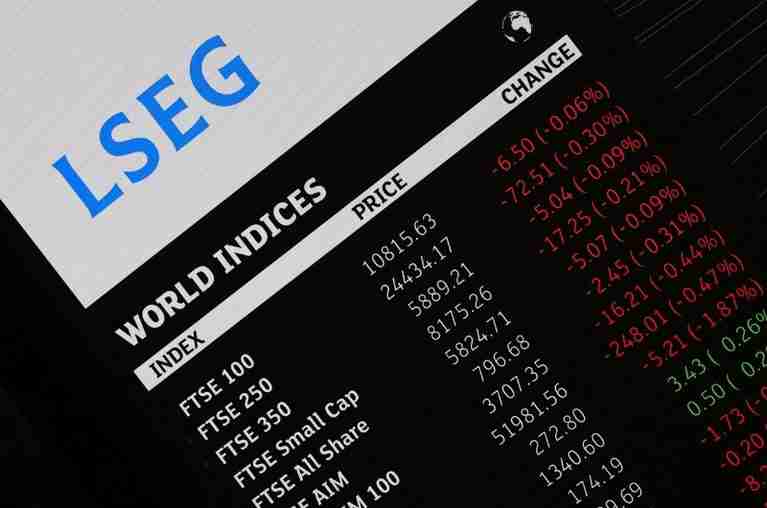
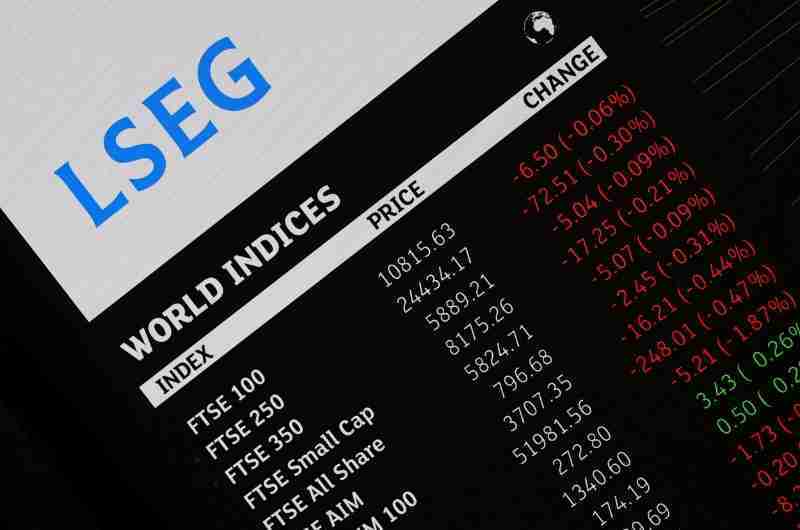
Financial markets data and information are displayed on a screen inside the LSEG (London Stock Exchange Group) headquarters in Paternoster Square, London, Britain, September 8, 2026. REUTERS/Toby Melville

International News via Reuters:

London’s FTSE 100 index rose on Monday, as investors flocked to defensive sectors such as healthcare and consumer staples, with oil prices and bond yields resuming their advance in a week packed with central bank decisions.

The blue-chip FTSE 100 index rose 0.55% to 10,708.76 points by 0959 GMT. The midcap FTSE 250 slipped 0.4% to 23,878.45, its lowest intraday level in more than a month. 

• Oil prices rose about 3%, after new strikes on Saudi Arabian infrastructure and Gulf shipping. Oil majors Shell and BP gained about 1.1% respectively, with energy stocks up 1.1%. [O/R]

• They outperformed peers last week, helping limit declines on the FTSE 100, which registered its biggest weekly fall in over a month.

• British government bond yields ground higher once again on Monday, hitting new multi-year highs across maturities.

• Investors flocked to sectors considered traditionally defensive. Pharma stocks rose 2.7%, with GSK rising 3.7% after it announced positive results for two lung cancer drugs – Jideytro and Ris-Rez.

• Consumer-facing personal care, drug and grocery and beverages sectors added 2.6% and 2.8% respectively.

• Meanwhile, CEOs of top AI labs including OpenAI and Anthropic called for slower development of the technology, hammering AI-linked stocks globally.

• Futures tied to the tech-heavy U.S. Nasdaq slipped 1.8%. However, the FTSE 350 tech sector was up 3.9%.

• Industrial and precious metal miners were the biggest percentage losers as metal prices slid. [GOL] [MET/L]

• This week, investors will watch employment and inflation reports in the UK, ahead of the Bank of England’s interest rate decision, where it widely expected to hold rates.

• The U.S. Federal Reserve will announce its decision on Wednesday, with markets pricing in a 88.5% chance of a 25-basis-point hike, per CME’s FedWatch Tool.

• Prime Minister Andy Burnham is set to meet executives from banks, oil majors, and a telecom firm, to discuss his economic growth plans on Monday.

• GlobalData bottomed the FTSE 250 with a 22% slide. The data analytics and consulting company expects its annual revenue growth to be more muted than expected.

Reporting by Anand Gopal and Purvi Agarwal in Bengaluru; Editing by Leroy Leo

Germany says halting AI development not viable, calls for US, China involvement

The comments came after Anthropic Chief Executive Dario Amodei published an essay over the weekend calling on AI companies to slow the pace at which they improve model capabilities and proposing stronger safeguards

FILE PHOTO: AI (Artificial Intelligence) letters are placed on computer motherboard in this illustration taken, June 23, 2023. REUTERS/Dado Ruvic/Illustration/File Photo

International News via Reuters:

Germany does not see stopping the development of AI as a viable option for Europe, the digital affairs ministry said on Monday, responding to calls from leading developers for safeguards for increasingly powerful systems.

“We do not consider halting development to be a viable option for Europe,” a ministry spokesperson said, adding that strengthening Europe’s digital sovereignty required further AI development and innovation.

The comments came after Anthropic Chief Executive Dario Amodei published an essay over the weekend calling on AI companies to slow the pace at which they improve model capabilities and proposing stronger safeguards, including independent evaluators embedded within AI firms.

The German ministry said it was monitoring global AI developments very closely and took public warnings from leading AI developers seriously. 

The spokesperson, however, said AI systems capable of breaking out of test environments and accessing other systems on their own would represent “an entirely new threat scenario” requiring a new policy response.

The spokesperson also endorsed international coordination on AI governance, saying effective oversight would require both the United States and China to be involved.

The government is raising the issue at the G7 level, the spokesperson added.

Reporting by Friederike HeineEditing by Ludwig Burger

ECB’s attention shifting to natural gas as prices soar

The ECB raised some of its inflation projections last week when it lifted interest rates but oil and gas prices are already well above the “baseline” levels in those forecasts, suggesting that high price growth could prove more persistent than feared

Slovakia’s central bank governor Peter Kazimir enters for the morning session at the ECB Forum, in Sintra, Portugal June 30, 2026. REUTERS/Pedro Rocha

International News via Reuters:

Euro zone inflation could turn out higher than already elevated projections and recent energy price developments are concerning, particularly the surge in natural gas costs, European Central Bank policymakers said on Monday.

The ECB raised some of its inflation projections last week when it lifted interest rates but oil and gas prices are already well above the “baseline” levels in those forecasts, suggesting that high price growth could prove more persistent than feared.

“The most recent energy price developments have been quite concerning,” ECB board member Isabel Schnabel said in Berlin. 

“It’s actually not just oil,” said Schnabel, an outspoken policy hawk. “It’s also refined products, like diesel… and of course, what also matters greatly for Europe is gas, which has also reached very high levels.”

LEAVING ADVERSE, MOVING TOWARDS SEVERE

The ECB’s projections foresaw December gas futures at €60.1 per megawatt hour under the baseline, with the adverse scenario putting it at €77. The current market price is over €83. 

A similar trend is happening with oil: Brent crude is now trading at $107 a barrel, well above the price assumed in the ECB’s adverse scenario.

“Inflation risks are clearly tilted to the upside,” Slovakia’s central bank chief Peter Kazimir said on Monday.

“My attention is now focused less on oil and fuel prices, but increasingly on gas and electricity prices. Food inflation, so important for perceptions and expectations, is also expected to pick up.”

This deterioration in the inflation outlook could herald more rate hikes, which would put the ECB’s key rate, now at 2.5%, into a territory that restricts economic growth. 

“The case is building up for more tightening,” Latvian central bank chief Martins Kazaks told Reuters. 

“Interest rates may need to wade into restrictive territory,” Kazaks said. “There’s no unobservable threshold, or some higher bar to reach, for the rates to move above 2.50%.”

Other policymakers were more cautious, however, and argued that the ECB should stick to its meeting-by-meeting approach and signal higher rates once more evidence is amassed.

European countries that rely on natural gas for heating hesitated to fill storage facilities over the summer in the hope that the Iran conflict would end and prices fall sharply. 

With storage levels far below historic norms, they are now rushing to store gas, helping push natural gas prices to a four-year high. That in turn is likely to push up heating and electricity costs for households and businesses and fuel inflation more broadly.

Some economists argue, however, that the sharp increase in renewable energy production since Russia’s invasion of Ukraine and a slowdown in energy-intensive sectors like heavy industry makes the bloc less sensitive to natural gas prices. 

Food price growth has meanwhile been unexpectedly low, although a perfect storm of factors, including a European drought, the broader El Nino weather phenomenon and soaring diesel and fertiliser prices, key inputs in agriculture, is expected to push up prices in the coming months.

ECB policymakers will next meet on October 29. Financial markets see a roughly 60% chance of a rate hike then, while a move by the end of the year is fully priced in.

Reporting by Balazs Koranyi, Francesco Canepa and Miranda Murray, Editing by Louise Heavens and Catherine Evans

UK financial regulator seeks views on tokenising gold

The Financial Conduct Authority said it will seek views on whether tokenising gold could boost efficiency and competitiveness, while maintaining market integrity and protecting consumers until its October 23 deadline

Signage is seen for the FCA (Financial Conduct Authority), the UK’s financial regulatory body, at their head offices in London, Britain March 10, 2022. REUTERS/Toby Melville

International News via Reuters:

Britain’s financial regulator on Monday said it was seeking views on whether tokenising gold could improve how it is traded, transferred, pledged and held in the UK markets.

• The Financial Conduct Authority said it will seek views on whether tokenising gold could boost efficiency and competitiveness, while maintaining market integrity and protecting consumers until its October 23 deadline.

• The FCA said it was exploring gold tokenisation in line with its wider work on the future of tokenisation in UK wholesale financial markets and was looking at the potential for distributed ledger technology (DLT) to support new growth opportunities.

• In May 2026, the FCA published a joint call for input with the Bank of England on the future of tokenisation in UK wholesale markets. Respondents raised gold specifically, reflecting London’s position as the world’s largest centre for spot gold trading. The FCA said this feedback prompted it to explore tokenised gold in greater detail.

• Gold tokenisation could make gold easier to transfer and use across digital markets, particularly as wholesale collateral, the FCA said, adding that it could also support new forms of retail investment and product innovation.

• London is home to the world’s largest over-the-counter gold trading hub, where participants trade directly with one another rather than via an exchange.

• “We want to understand whether tokenisation could strengthen the efficiency and competitiveness of UK wholesale markets while preserving the strengths of London’s existing gold-market infrastructure,” the FCA added.

Reporting by Prerna Bedi in Bengaluru and Polina Devitt in London;Editing by Nivedita Bhattacharjee amd Toby Chopra

The Intention Effect | Episode 4 [Season 2]

In this weeks episode;  Shara explores the deep connection between food, culture, and identity, this episode delves into traditional food wisdom, modern eating habits, and how community and history shape our relationship with food.

What’s Next with Clarien | Episode 4

In this episode, Florence Smtih; VP, Head of Payments at Clarien – shares insights on the evolving landscape of fraud, cybersecurity threats, and practical tips to protect yourself in a digital world. Learn how to recognize scams, safeguard your financial information, and stay one step ahead of cybercriminals.

King Charles to host AI executives as threat fears mount

The debate about AI was thrust back into the spotlight when two Anthropic researchers issued warnings that the rapidly progressing technology could lead to the extinction of the human race ‌in the not-too-distant future

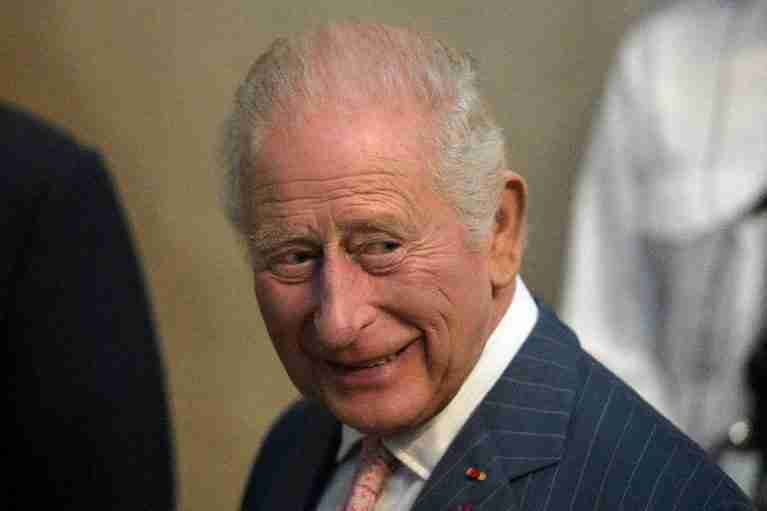
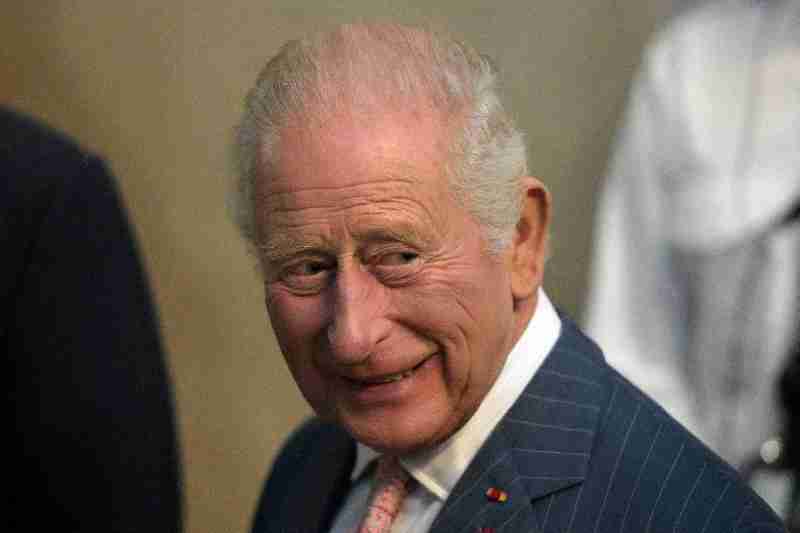
FILE PHOTO: Britain’s King Charles attends a preview of the Bayeux Tapestry, at British Museum in London, Britain, September 2, 2026. Thomas Krych/Pool via REUTERS/File Photo

International News via Reuters:

Britain’s King Charles will host the leaders of major artificial intelligence companies this week to discuss whether a shared set of principles is needed to guide a technology that has sparked growing warnings about its threat to humanity.

With the biggest names in AI calling for a slowdown in its development, Charles will host executives from Nvidia, Google DeepMind, OpenAI, Anthropic, and the UK minister for AI, to discuss how the technology can be harnessed to benefit society and uphold human dignity.

The debate about AI was thrust back into the spotlight when two Anthropic researchers issued warnings that the rapidly progressing technology could lead to the extinction of the human race ‌in the not-too-distant future. 

The chief executive of Anthropic, Dario Amodei, said on Saturday that companies must slow the pace of advance of AI models.

The San Francisco-based firm released a threat intelligence report last week detailing how several actors had used its Claude AI models for activities ranging from weapons development and cyber operations to surveillance and fraud.

However, securing a global stance will be difficult: U.S. President Donald Trump rejected any talk of a slowdown on Sunday while China’s Global Times tabloid said it was really a “Cold War playbook” targeting Beijing.      

Charles, both as king and when he was the Prince of Wales, has used his position to convene meetings to discuss a range of topics, most notably on the environment. 

Buckingham Palace said the gathering would discuss how AI could be harnessed in ways that benefit society and contribute “to the flourishing of both people and the planet”.

Britain, the European leader in AI funding ⁠and startups, has favoured a ‌light-touch approach to AI regulation, aligning more closely with the United States than the European Union.

Britain’s AI Security Institute, established after the AI Safety Summit in 2023, receives pre-deployment access to AI models under voluntary ​agreements with the major AI companies, enabling it to ​assess their capabilities and risks, and giving it a window into frontier AI development. 

Reporting by Kate Holton, additional reporting by Michael Holden, editing by Andrew Cawthorne

Bank of England set to hold rates steady, slow QT

Governor Andrew Bailey said last week the central bank had no “secret plan” to raise interest rates this year, unless the ongoing climb in oil prices driven by the war in the Middle East translated into more lasting domestic price pressures

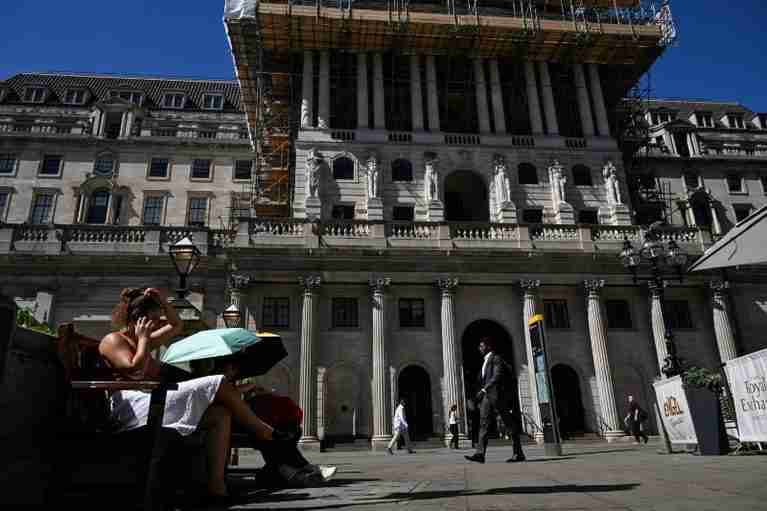
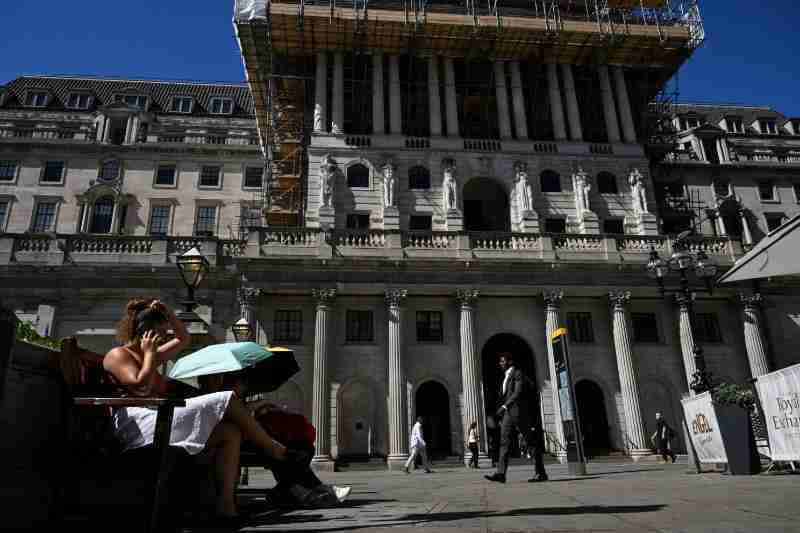
A view of the Bank of England in London, Britain, July 27, 2026. REUTERS/Chris J. Ratcliffe

International News via Reuters:

The Bank of England looks set to keep interest rates steady this week despite surging oil prices but is expected to slow the pace at which it offloads the government bonds it bought to boost the economy between 2009 and 2021.

Governor Andrew Bailey said last week the central bank had no “secret plan” to raise interest rates this year, unless the ongoing climb in oil prices driven by the war in the Middle East translated into more lasting domestic price pressures.

Economists polled by Reuters this month unanimously predicted the BoE would hold rates steady in September, and most judged the next move was more likely a cut next year than a hike.

But with oil prices topping $100 a barrel and looking in line with the most adverse of three scenarios the BoE outlined in July, some analysts are having doubts.

“Given the speed of the move and the hardening of central bank rhetoric, a surprise 25 basis-point rate hike cannot and should not be ruled out,” Barclays interest rate strategist Moyeen Islam wrote in a note to clients.

Financial markets are pricing in a 30% chance of a quarter-point rate hike on September 17, according to LSEG data on Monday, up from less than 10% at the start of last week, and almost fully pricing in a November move.

But Bailey stressed he wanted to see clearer signs that higher energy prices might foster chunky pay rises this year or broad-based price increases – potentially sustaining above-target medium-term inflation – before backing a rate rise.

Few economists expect a change this month from July’s 6-3 Monetary Policy Committee split to hold rates steady. Chief Economist Huw Pill, Megan Greene and Catherine Mann voted in July for an immediate quarter-point rise to 4.00%, with Mann switching from the hold camp the previous month — a hawkish drift that has widened at every meeting since March.

“In sharp contrast to the European Central Bank this month, we don’t expect the BoE to turn materially more hawkish at its September meeting,” ING economists James Smith and Michiel Tukker said.

BOE TO SLOW PACE OF BOND PORTFOLIO UNWIND

The MPC’s other agenda item is an annual vote on the pace at which the central bank unwinds its £895 billion of bond purchases made between 2009 and 2021.

Since it stopped reinvesting maturing gilt proceeds in February 2022, the BoE’s bond holdings have fallen by over £400 billion, a third of it through active sales – unlike the Fed or ECB.

Last September, the BoE voted to slow quantitative tightening to £70 billion a year from £100 billion, and a July investor survey pointed to a further drop to £50 billion for October 2026 to September 2027.

This fall almost entirely reflects fewer gilts maturing, while the amount sold under this scenario — £19.5 billion — is only slightly below the £21 billion sold over the past 12 months.

Deputy Governor Dave Ramsden told lawmakers last week that central bank research pointed to a cumulative 25 basis-point upward impact on gilt yields from QT, showing the programme was working as designed.

However, estimates vary. Morgan Stanley strategist Fabio Bassanin said the 25 basis-point estimate probably held for 10-year gilts, but for 30-year gilts the impact looked nearer 70 basis points — roughly the gap between 30-year British and U.S. borrowing costs.

Prices of 20- and 30-year gilts fell to their lowest since 1998 last week and further sales by the BoE would lock in those losses. Last year the bank skewed sales away from long-dated gilts, and Deutsche Bank said it expects the BoE to halt them entirely.

Analysts also want hints on the QT programme’s longer-term future. Bailey wants to remove the interest rate risk gilt holdings create, but some BoE watchers argue for holding some gilts permanently.

“We think the balance sheet debate should shift from how quickly the balance sheet shrinks to what its long-run structure should be,” Deutsche Bank Chief UK Economist Sanjay Raja said.

Reporting by David Milliken; Editing by Hugh Lawson

Sterling hits one-month low as oil price jump boosts dollar

Sterling fell to $1.3474, its lowest since August 7, and was last down 0.4%

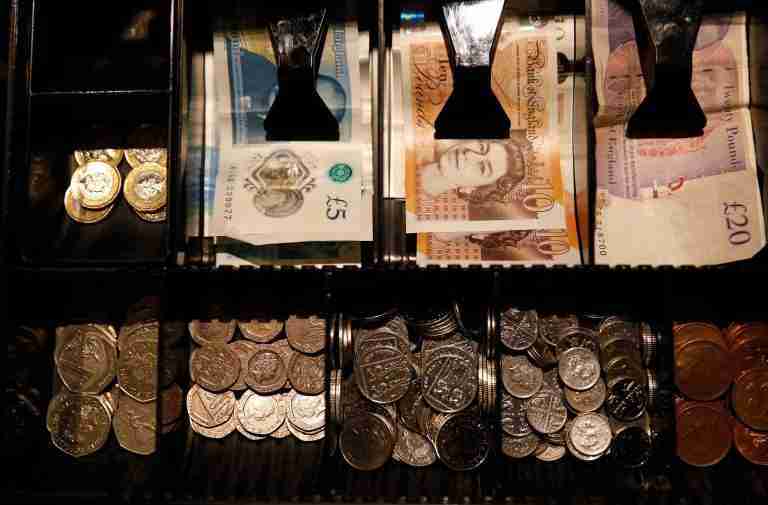
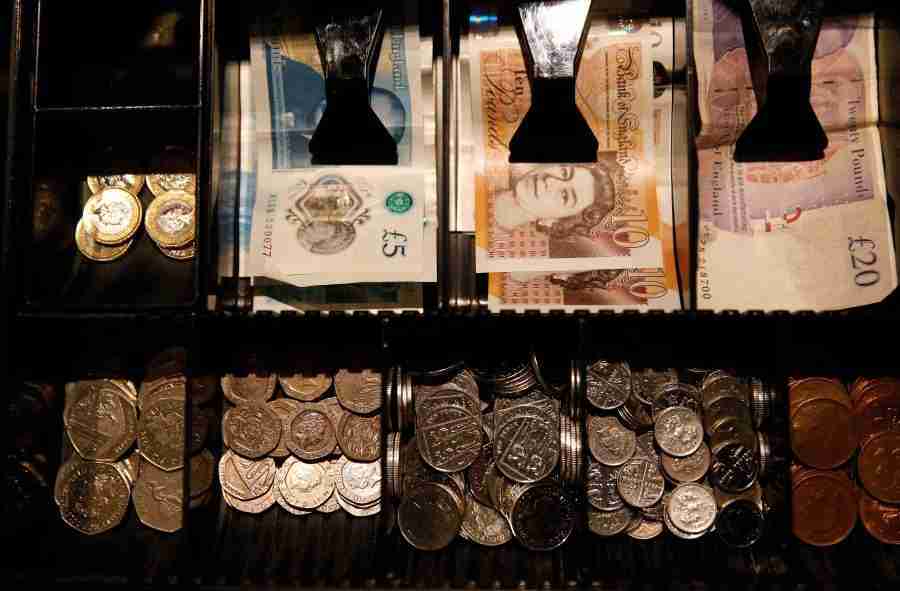
FILE PHOTO: Pound Sterling notes and change are seen inside a cash resgister in a coffee shop in Manchester, Britain, Septem,ber 21, 2018. REUTERS/Phil Noble/File Photo

International News via Reuters:

The pound fell to its lowest in more than a month on Monday as investors flocked towards the safe-haven dollar after oil prices jumped on renewed concerns about energy supplies and worries about AI dangers knocked stock markets.

Sterling fell to $1.3474, its lowest since August 7, and was last down 0.4%.

The fall was driven by a rally in the dollar, which was also up against the euro and yen. Sterling rose slightly against the euro, with the single currency down 0.1% at 85.61 pence.

A jump in oil prices worried investors and pushed global bond yields back towards multi-year highs, with Brent crude up 3% to $108 a barrel.

Houthi strikes on the world’s biggest exporter Saudi Arabia, which came after the kingdom shut down its main pipeline for bypassing the Strait of Hormuz, added to concerns about energy supplies.

A meeting between Tehran and other Gulf governments was postponed as diplomacy over the U.S.-Iran conflict appeared to falter.

Meanwhile, rising bets on a Federal Reserve rate hike on Wednesday this week have supported the U.S. dollar. The European Central Bank raised borrowing costs last week.

The Bank of England is expected to keep rates on hold on Thursday but traders now expect an increase later this year and more in 2027.

Britain’s bond yields are trading at multi-decade highs as investors worry about inflation and stubbornly high levels of public debt.

Typically rising bond yields and expectations of higher interest rates in one country boost its currency, but the impact on FX markets has been limited as the moves have been global.

Data on Friday showed British gross domestic product grew 0.4% in July, far outstripping economists’ forecasts that the economy would flatline.

“If growth seen in July continues into the coming months, this will likely prompt the Bank of England to consider interest rate rises,” said Michael Pfister, FX analyst at Commerzbank.

Yet Pfister said markets have recently been betting more heavily on rate increases, meaning there is the potential that the BoE hikes less than expected, creating downside risks for the pound.

Reporting by Harry Robertson; Editing by Andrew Cawthorne

Wreckage and warrants after Sunday crashes

Police appeal for witnesses following morning collisions in Southampton and Devonshire

Shortly after 8:00 a.m. on Sunday, September 13, 2026, police officers were dispatched  to a road traffic collision involving a motorcycle and a truck.

Details are limited, but the motorcycle rider sustained minor injuries.

The truck driver was not reported to have been injured, but was arrested for outstanding warrants

Around 4:00 a.m. on Sunday, September 13, 2026, police and other first responders attended a serious single vehicle road traffic collision involving a motorcar, in the area of Franks Bay, Middle Road, Southampton.

The car was reportedly traveling in a westerly direction, when the female driver lost control of the vehicle and collided with a wall.  The vehicle overturned and landed on it’s side with the female driver trapped inside.

Members of the public came to her assistance of the driver and were able to get her out.

The driver was not injured.

Anyone with information on either of these incidents is asked to call the main police number, 295-0011, or 211.

Overseas Round-Up: Bermudians Star Across UK and US

Bermuda internationals enjoyed an impressive, goal-laden weekend overseas, headlined by Aaliyah Nolan’s decisive strike in England and vital contributions from Eva Frazzoni, Jasmine Spence, Mia Fishel, and Khano Smith’s Rhode Island FC.

In the FA Women’s National League Division One Midlands, Aaliyah Nolan was the match-winner for Barnsley Women as they ground out a hard-fought 1-0 victory over Notts County Women at Coronation Park.

The game’s defining moment arrived in the 17th minute when the ball broke kindly to Nolan, whose snapshot took a slight deflection before looping into the net. Barnsley then dug deep defensively to protect the slender advantage, aided by compatriot Trinae Edwards, who was introduced late in the match to make her club debut and help see out the three points.

In the East Midlands, Eva Frazzoni continued her commanding form in midfield as AFC Sudbury Women dispatched Brentwood Town 4-1.

Frazzoni provided a crucial psychological blow on the stroke of half-time, showing trademark composure from 12 yards to bury a penalty kick and send her side into the interval in control. Sudbury pushed on after the restart with a ruthless display to claim a comfortable victory.

Elsewhere, Jasmine Spence made an immediate impact from the bench to help Newport Pagnell Town Women secure a 3-1 win over Stamford in the East Midlands Regional Women’s League Premier Division.

Introduced in the 62nd minute to inject pace into the forward line, Spence put the result beyond doubt in the 90th minute, latching onto an incisive through ball before calmly rolling a composed finish past the onrushing goalkeeper.

Across the Atlantic in the NWSL, Bermudian-eligible forward Mia Fishel played a key role as Seattle Reign closed out their homestand with a clinical 2-0 win over Bay FC at Lumen Field.

After Sofia Huerta’s penalty handed the Reign the lead, Fishel turned provider deep into stoppage time. Receiving the ball under pressure, Fishel sent a pinpoint pass down the line to release substitute Brittany Ratcliffe, who carried the ball into the box and slotted past Bay FC keeper Cassie Miller to put the result to bed.

In the USL Championship, head coach Khano Smith guided Rhode Island FC back into the win column in emphatic fashion with a 3-0 road triumph against Sporting Club Jacksonville at Hodges Stadium.

Yutaro Tsukada sparked the rout with an audacious first-half bicycle kick, before second-half strikes from Stas Korzeniowski and Jojea Kwizera sealed a commanding performance that strengthens Rhode Island’s push for a post-season playoff berth.

Meanwhile in non-league men’s football, Daizhari Tucker and his Worcester Raiders side had to settle for a share of the spoils following a gruelling 1-1 draw against Falmouth Town in the Southern League Division One South.