Thursday, October 22, 2026
Home Blog Page 59

Bonds, stocks selloff pauses as oil falls; pivotal CPI report due

Brent crude hit a four-month high of $109.97 a barrel on Friday after a 6% jump the day before, but it soon ran into selling pressure and was last down over 3.5% at $103.64
International News via Reuters:

A selloff in global bond and equity markets paused on Friday as oil prices retreated from a four-month high, though the recent surge in energy costs continued to fuel inflation worries and expectations that central banks may need to tighten policy.

Brent crude hit a four-month high of $109.97 a barrel on Friday after a 6% jump the day before, but it soon ran into selling pressure and was last down over 3.5% at $103.64. It was still set for a weekly rise of over 7.5%. 

Oil flows remained restricted through the Strait of Hormuz as the U.S. and Iran traded attacks, although prices have fallen after the Financial Times reported that foreign ministers in the Middle East were trying to work out a temporary deal to manage shipping through the waterway.

But markets are still pricing in the risk of a protracted war. Comments from President Donald Trump that the conflict could last beyond the November midterm elections haven’t helped, with bond yields surging globally on heightened inflation fears. 

“Markets are pricing in a scenario of higher rates for longer,” said Gustav Helgesson, macro strategist at SEB. 

The benchmark 10-year Treasury yield was slightly lower on Friday at 4.94%, helped by retreating oil prices. It earlier touched its highest in almost three years at 4.979%.

The 30-year yield scaled another 19-year top of 5.3836% before falling back to 5.352%. Bond yields move inversely with prices.  

The 2-year yield hit a new 14-month peak of 4.5961% after surging 12 bps on Thursday as markets ramped up bets that the U.S. Federal Reserve will have to raise interest rates this month to tame inflation, currently priced at about 67% probability. 

The selloff in the U.S. bond market on Thursday was partly due to a Treasury buyback programme that fell short of the expected $6 billion value. 

In Europe, the 10-year German Bund yield was up 1 bp for the day and up 17 bps for the week, its biggest weekly rise since March.  

EYES ON CPI

The recent surge in oil prices has raised the stakes for August U.S. consumer price data due later in the day, which could make or break the case for a Fed rate hike next week. Forecasts are centred on a 0.2% monthly rise in the core measure of CPI, although risks are skewed towards a higher number as the PPI data overnight showed some stickiness.

“Ahead of every payrolls print, every CPI print, it feels like it’s the most important print yet, but it definitely feels like this one is,” said SEB’s Helgesson.

“If we see a big divergence from expectations, we’ll see very big market swings as well.”

Analysts at JPMorgan now expect eight of the nine developed-market central banks to hike interest rates by the year end, including the Fed, BOJ, all four central banks in Europe, and the reserve banks of Australia and New Zealand.

“The tightening is for now expected to remain shallow, but risks to our forecasts lean in the direction of more action in the face of resilient growth, sticky core inflation, and commodity price pressures,” they said in a note.

The European Central Bank raised interest rates on Thursday for the second time this year and some officials see more tightening ahead with October in play. 

RELIEF FOR EQUITIES

European equity indexes took comfort from a dip in oil and gas prices although they were still set for sharp weekly falls. The pan-regional STOXX 600 was up 0.6% on Friday but down 1.5% this week. Nasdaq and S&P 500 futures both rose about 0.6%.

Asian stocks finished with sharp losses. MSCI’s broadest index of Asia-Pacific shares outside Japan lost 1.5% while Japan’s Nikkei tumbled 1.9%. 

The U.S. dollar lifted with higher Treasury yields, having gained 0.4% on Thursday against its major peers. It was up 0.1% on Friday at 99.17. [FRX/]

Gold rose 0.7% to $4,344 an ounce after dropping nearly 2% on Thursday.

Reporting by Samuel Indyk and Stella Qiu; Editing by Stephen Coates, Elaine Hardcastle
ECB’s hawkish stance and rising energy prices prompt expectations of further rate hikes

The central bank raised interest rates by 25 basis points, as expected, and projected that inflation would remain above its 2% target for an extended period

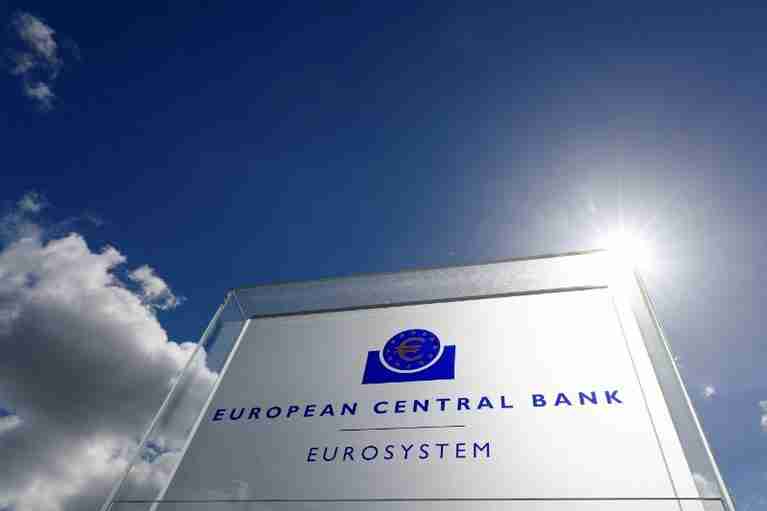
FILE PHOTO: The logo of the European Central Bank (ECB) is pictured outside its headquarters in Frankfurt, Germany, April 26, 2018. REUTERS/Kai Pfaffenbach/File Photo

International News via Reuters:

Wall Street banks Goldman Sachs and Citigroup, alongside Barclays, expect the European Central Bank to raise interest rates further after Thursday’s hawkish policy decision reinforced concerns that inflation could remain elevated for longer.

The central bank raised interest rates by 25 basis points, as expected, and projected that inflation would remain above its 2% target for an extended period.

Renewed hostilities between the United States and Iran have pushed crude prices above $100 a barrel, worsening the inflation outlook for the euro zone and reinforcing expectations that policymakers may need to keep monetary policy restrictive for longer.

While Goldman Sachs, Citi and Barclays expect the ECB to raise rates again in December, Citi anticipates an additional hike in March 2027. Traders are pricing in a 94% chance of a quarter-point rate hike in December, according to LSEG data.

“The longer inflation remains high, the more pronounced the risks that it becomes endogenous,” Citi economists said.

Swiss investment bank UBS, through its Global Research and Global Wealth Management divisions, also expects the ECB to hike rates in December, although UBS Global Research sees the move being reversed later, with rates returning to 2.5% by the fourth quarter of 2027.

Barclays said the ECB’s latest rate hike, which President Christine Lagarde described as a “no-brainer”, underscored policymakers’ continued focus on taming inflation, which the central bank does not expect to return to its 2% target until late 2027. Goldman Sachs said a December rate hike would push interest rates into “mildly restrictive territory”.

The ECB has increasingly emphasised that future policy decisions will be data-dependent. Policymakers are due to meet on October 29.

Attention is also turning to next week’s much-anticipated Federal Reserve and Bank of Japan meetings for signals on whether interest rates could stay higher for longer.

Reporting by Rashika Singh in Bengaluru; Editing by Sonia Cheema and Mrigank Dhaniwala

‘Welcome to Foldables’: Samsung braces for Apple’s foldable iPhone challenge

Apple unveiled on Wednesday the Duo, a folding $1,999 iPhone aimed at shaking up a category long dominated by Samsung and Chinese companies such as Huawei, whose devices have struggled to move beyond a niche audience

New foldable iPhone Duo devices on display during Apple’s event at the Steve Jobs Theater in Cupertino, California, U.S. September 9, 2026. REUTERS/Carlos Barria

International News via Reuters:

Samsung launched a publicity campaign for its foldable phones, touting its hardware advantage and its early entry into the segment as it seeks to fend off a major challenge from Apple.

Apple unveiled on Wednesday the Duo, a folding $1,999 iPhone aimed at shaking up a category long dominated by Samsung and Chinese companies such as Huawei, whose devices have struggled to move beyond a niche audience.

Apple adopted the passport-shaped design that Samsung Electronics unveiled less than two months ago with the Galaxy Z Fold 8, priced at $1,899 and powered by Alphabet’s Gemini artificial intelligence. “Apple’s pricing was one of the most impressive parts. Keeping the iPhone Duo just under the $2,000 mark, at $1,999, and only about $100 above the Galaxy Z Fold 8 looks like a pretty bold move by Apple,” said Liz Lee, an associate director at market research firm Counterpoint.

“We expect that Apple will really change the competitive landscape in foldables, and Samsung will see the most visible share pressure. But Samsung also has scale, years of experience and strong global distribution,” she said.

Counterpoint expects Apple to hold a 25% market share, catching up with Samsung, which is expected to capture a 38% share this year.

Samsung put up billboard advertisements in major cities including Seoul, Tokyo and London, with slogans such as “Welcome to Foldables” and “The World’s Lightest Fold,” highlighting the thin and light design of its devices. The company also detailed its long-running efforts to reduce the weight of its foldable phones in a post on its website on Wednesday.

Responding to Apple’s launch on Wednesday, Samsung launched a flurry of sarcastic posts on X, mocking what it portrayed as a lack of meaningful innovation through taunts such as “reheating our leftovers” and “So far, so same”.

Apple’s new CEO John Ternus criticised existing foldables as being “like two phones awkwardly stuck together.”

Samsung launched the first mass-market foldable phones in 2019, after initial setbacks as reviewers reported broken screens and other display issues, forcing a delayed rollout.

Since then, the Korean company has launched eight generations of foldable phones, as it faces growing competition from Chinese rivals like Huawei.

Apple is leveraging the supply chain Samsung has built for foldable phones, including foldable screens made by Samsung’s own unit, Samsung Display.

“Apple is good at getting its timing right and entering the market when a product reaches a certain level of maturity,” said Ben Wood, chief analyst at CCS Insight.

Reporting by Hyunjoo JinEditing by Ed Davies and Sam Holmes

California enacts new curbs on social media for children

The two measures were among 13 bills Newsom enacted as a package designed to safeguard young people from technology seen as putting them at risk, including greater online privacy protection for minors

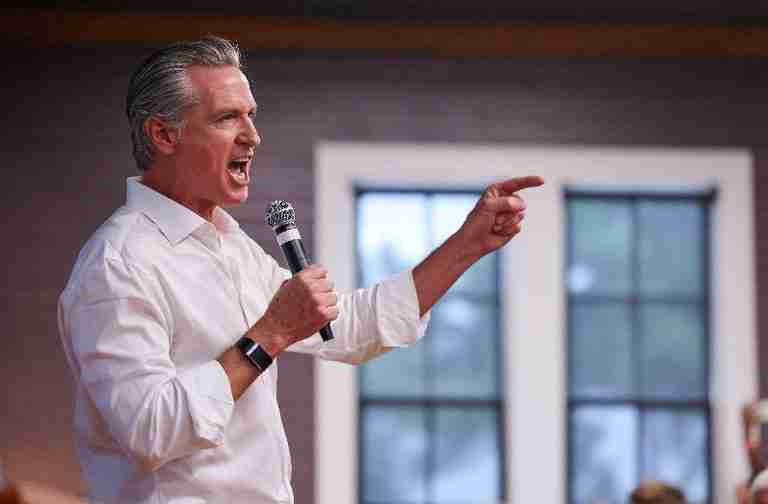
FILE PHOTO: California Governor Gavin Newsom speaks as he meets voters and local leaders while campaigning for Democrats ahead of mid-term elections in Aiken, South Carolina, U.S. September 4, 2026. REUTERS/Sam Wolfe/File Photo

International News via Reuters:

California Governor Gavin Newsom signed into law on Thursday new tech company restrictions barring children under 16 from exposure to behaviorally addictive features on social media platforms and banning toys containing AI companion chatbots.

The two measures were among 13 bills Newsom enacted as a package designed to safeguard young people from technology seen as putting them at risk, including greater online privacy protection for minors.

Another measure expanded the scope of criminal sanctions against child sexual abuse material to include any digitally altered or AI-generated content that depicts a person under the age of 18 engaged in sexual conduct.

Still another bans for the next four years the manufacture and sale of toys that incorporate a companion chatbot. A related measure requires parental controls on chatbot programs, along with other safety and risk assessments.

Newsom touted those regulations as the most far-reaching of their kind in the nation. The bill was dubbed “Adam’s Law,” in memory of Adam Raine, a 16-year-old boy who took his own life in April 2025 after he acted, according to his parents, on suicidal thoughts validated in months of discussion with OpenAI’s ChatGPT program.

OpenAI has said it intends to improve ChatGPT safeguards, which the company has acknowledged became “less reliable” as user interactions grow more prolonged.

“We want our children – and every California kid – to grow up in a world where technology supports their wellbeing, rather than exploits their vulnerabilities,” Newsom, a Democrat, said in a statement announcing the measures.

California, home of such leading internet companies as Google, Meta Platforms and Snap Inc, joins a growing list of U.S. states cracking down on business strategies seen as deliberately designed to hook teenagers on social media, despite evidence that extensive use is harmful to their mental health.

While gaining broad bipartisan support, some critics objected to the bill as an unnecessary restriction on young people’s internet access, including the Electronic Frontier Foundation, which called the bill “a massive privacy and free speech nightmare.”

Utah became the first to adopt laws regulating children’s access to social media, followed by others, including Arkansas, Louisiana, Ohio, Texas, Florida and New York, though approaches have varied.

‘PSYCHOLOGICALLY EXPLOITATIVE’ FEATURES TARGETED

Countries around the world have also moved to curb children’s access to harmful internet content, including a ban in Australia on social media for children under 16. 

California’s version, known as Assembly Bill 1709, prohibits children under age 16 from exposure to a number of “psychologically exploitative features intended to maximize engagement that foreseeably lead to compulsive use.” 

Those include infinite-scroll feeds, algorithmic autoplay and other features to be defined in future regulations.

Its enactment comes at a time when Big Tech, in the face of mounting legal challenges, has shown greater willingness to accept new restrictions. 

Meta agreed three weeks ago to pay as much as $18 billion over the next decade and strictly limit how teenagers use its Facebook and Instagram platforms under a deal with nearly all U.S. states to resolve civil claims that the company designed its social media platforms to addict children. 

Reporting by Steve Gorman in Los Angeles; editing by Lincoln Feast.

UK economy grows by most since early 2025 on possible AI boost

The figures offer a boost to new finance minister John Healey ahead of his first budget on October 28 – which risks being overshadowed by soaring government borrowing costs and surging oil prices

International News via Reuters:

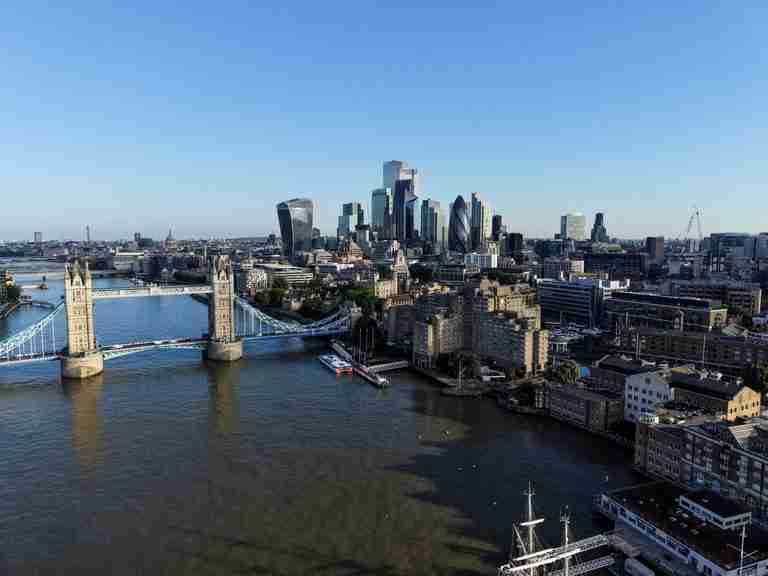
Britain’s economy grew at the fastest annual pace in 18 months in July, helped by a boost from artificial intelligence and extending a strong first-half performance despite headwinds from the U.S.-Iran war, official figures showed on Friday.

The figures offer a boost to new finance minister John Healey ahead of his first budget on October 28 – which risks being overshadowed by soaring government borrowing costs and surging oil prices – and may make some Bank of England officials more willing to consider a rate hike before the end of the year.

British gross domestic product in July was 1.6% higher than a year earlier, the fastest annual growth since February 2025 and above economists’ 1.2% forecast, the Office for National Statistics showed on Friday.

The economy grew 0.4% on the month in July, compared with median expectations in a Reuters poll for unchanged output, and growth in the three months to July – which smooths volatility – was also stronger than expected at 0.4%.

“The UK economy has performed much better than expected amid the fallout of the Iran war,” said James Smith, developed markets economist at ING, noting that inflation had risen less steeply than first predicted.

BUSINESSES BENEFITING FROM AI HELP LIFT GROWTH

Much of the growth over the past three months appeared to come from businesses involved in computer programming that were benefiting from the AI boom, the ONS’ director of economic statistics, Liz McKeown, said.

“Looking at the latest month, services also drove growth in July, with computer programming again making the largest contribution,” she added, noting an extra boost for some firms from the men’s soccer World Cup and unusually hot weather.

Responding to the data, Healey said the economy was showing “welcome resilience” but that growth was “still fragile”.

Sterling was little changed against the U.S. dollar after the data and economists had mixed views about whether Britain’s current economic outperformance would be sustained.

In the first half of 2026, Britain’s economy expanded by 1%, the fastest growth across the Group of Seven large advanced economies, and some analysts believe this may in part reflect seasonal effects that have not been fully adjusted for.

“We’re starting to reach the point in the year where we expect growth to peter out,” said Matt Swannell, chief economic adviser to forecasters ITEM Club.

But others were more positive.

“The UK growth story is becoming harder to ignore,” said Deutsche Bank Chief UK Economist Sanjay Raja. Forecasters were likely to revise up their expectations for full-year growth by 0.1 percentage points after the latest data, he added.

Many economists think British productivity growth – a key driver of longer-term economic performance and living standards – is beginning to recover after a 20-year decline though it remains early days and there is no clear consensus on the cause.

SHADOW OF IRAN WAR

In July, the Bank of England predicted the economy would expand 1.1% over 2026 as a whole, and this week Governor Andrew Bailey told a parliament committee that economic data since then had come in “a bit stronger” than he had expected.

Measures of consumer confidence and business activity also strengthened over the summer after Prime Minister Andy Burnham took over from his Labour predecessor Keir Starmer.

Britain, like other European economies, has taken less of an immediate hit to growth from the U.S.-Israeli war on Iran than economists had feared at the outset.

But the conflict this week pushed oil prices above $105 a barrel with knock-on impacts on government borrowing costs, which are now at multi-decade highs, and the BoE expects inflation to rise to around 3.2% later this year.

Almost all economists polled by Reuters expect the BoE to keep interest rates on hold next week and for the rest of this year, but financial markets think it is near certain that rates will rise by November due to stronger inflation pressures.

Reporting by David Milliken and Andy Bruce; Editing by William James, Kate Mayberry and Alison Williams

Five killed in bus crash near Swiss Alpine village

Police in the canton of Grisons said the accident occurred near the village of Susch, and images of the scene published by the police showed the vehicle lying on its side next to the road

Emergency responders at the site of a crash involving a bus carrying a Dutch tour party, which flipped over in Susch, Switzerland, September 10, 2026. Jon Duschletta/Engadiner Post/Handout via REUTERS

International News via Reuters:

Five people were killed and 40 others injured after a bus carrying a Dutch tour party flipped over in a remote Alpine region of eastern Switzerland, police said on Thursday.

Police in the canton of Grisons said the accident occurred near the village of Susch, and images of the scene published by the police showed the vehicle lying on its side next to the road, surrounded by police and emergency service personnel.

Three of those hurt were in a serious condition, seven had moderately serious injuries, and 30 were slightly injured, police said.

There had been 45 adults on the bus, police said. The dead had yet to be identified, it added.

Police did not say what had caused the accident, but pointed out that part of the road where it happened had been closed due to maintenance work.

Dutch emergency service provider Eurocross said all passengers on the bus had been Dutch nationals.

Dutch King Willem-Alexander and Queen Maxima said their hearts went out to everyone involved in the bus crash.

“Our thoughts are with the next of kin, everyone one who is worried about the fate of their loved ones and the wounded. We feel connected with you during this great tragedy,” they said in a statement.

Dutch tour operator Oad on Friday declined to comment on the cause of the accident.

Reporting by Dave Graham in Zurich and and Rachel More in Berlin, additional reporting by Charlotte Van Campenhout and Bart Meijer in Amsterdam, editing by David Gregorio, Thomas Seythal and Sharon Singleton

Oil set for weekly gain of over 7% on supply disruptions; US diesel hits record high

The benchmarks reversed the early gains after the Financial Times reported that foreign ministers in the Middle East are trying to work out a temporary deal with Iran to manage shipping through the Strait of Hormuz

International News via Reuters:

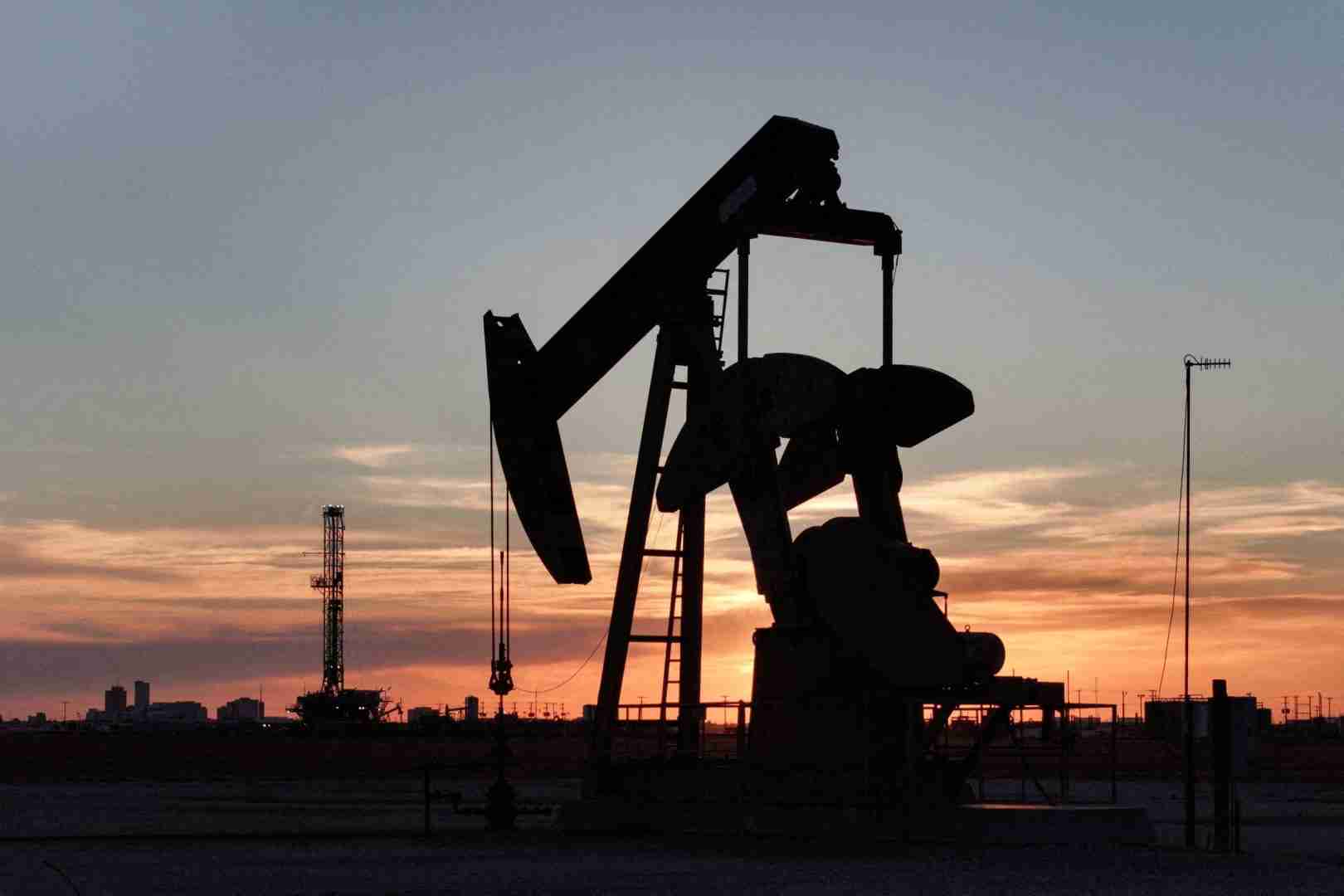
Oil prices slipped on Friday but were still up more than 7% for the week and U.S. diesel prices hit a record high as attacks along key Middle East shipping routes stoked prolonged supply disruption fears.

Brent crude futures were down $3.75, or 3.48%, to $103.88 a barrel at 1012 GMT. U.S. West Texas Intermediate crude fell $3.33, or 3.25%, to $99.15 a barrel. Both benchmarks hit their highest levels since mid May earlier in the session.

The benchmarks reversed the early gains after the Financial Times reported that foreign ministers in the Middle East are trying to work out a temporary deal with Iran to manage shipping through the Strait of Hormuz.

Brent and WTI rose more than 6% on Thursday. 

“Some headlines of possible new talks in the Middle East are weighing moderately on oil prices today,” said UBS energy analyst Giovanni Staunovo, adding: “I keep seeing near-term risks to the upside for oil prices, but we should expect ongoing high price volatility too”.

Iran said it had attacked 10 ships near the Strait of Hormuz on Wednesday, after the U.S. hit five Iranian oil tankers. Iran’s Islamic Revolutionary Guard Corps said it would escalate its response to any further attacks.

Vessel transits at the Strait of Hormuz fell to seven on Thursday from 11 the previous day, preliminary ship-tracking data showed on Friday, well below the 10-day average of 15.

The strait handled about one-fifth of global daily oil and liquefied natural gas supplies before the Iran war began in late February.

Iran-aligned Houthis seized control of Yemen’s port of Mocha on Thursday, posing a further threat to Red Sea traffic, while Gulf traffic remains restricted through the Strait of Hormuz as tanker attacks in the region have intensified in recent days.

Attacks from Yemen on Saudi energy facilities marked an escalation beyond Iran and the Strait of Hormuz and raised fears of prolonged disruptions in the broader region, analysts say.

Global oil supply and demand will fall further than previously thought this year, the International Energy Agency said, as a lack of progress in ending the Iran war delays the return of normal Middle East flows into 2027.

Meanwhile, two European Central Bank policymakers opened the door on Friday to further interest rate increases if a war-fuelled rise in energy prices continues and pushes up other prices in the euro zone.

SUPPLY DISRUPTIONS LIFT FUEL PRICES

Oil supply disruptions due to the Iran war, along with Ukrainian attacks on Russia’s refineries, pushed the U.S. national average diesel price past $6 a gallon for the first time ever on Thursday, according to price tracker GasBuddy.

“Refined products, particularly diesel, are feeling a one-two punch right now,” said Tim Waterer, chief market analyst at KCM Trade.

“As long as both the Gulf shipping constraints and Russian refining outages remain in play, diesel and other refined products are likely to show a higher upside tendency than the broader crude market,” he added.

Commerzbank raised its year-end Brent crude forecast to $85 a barrel from $75, while increasing its jet fuel forecast to $1,230 a ton from $980 and its diesel forecast to $1,200 a ton from $950.

Elsewhere, China’s state planner said on Friday it will raise retail price caps on petrol and diesel from September 12 by 260 yuan ($38.76) and 250 yuan per metric ton, respectively.

Reporting by Sudarshan Varadhan in Singapore, Anushree Mukherjee in Bengaluru. Editing by Lincoln Feast, Alexander Smith and Mark Potter

London stocks rebound as crude retreats ahead of US inflation data

The blue-chip FTSE 100 index rose 0.45% to 10,656.78 points by 1006 GMT, but was on track for its biggest weekly loss since early July

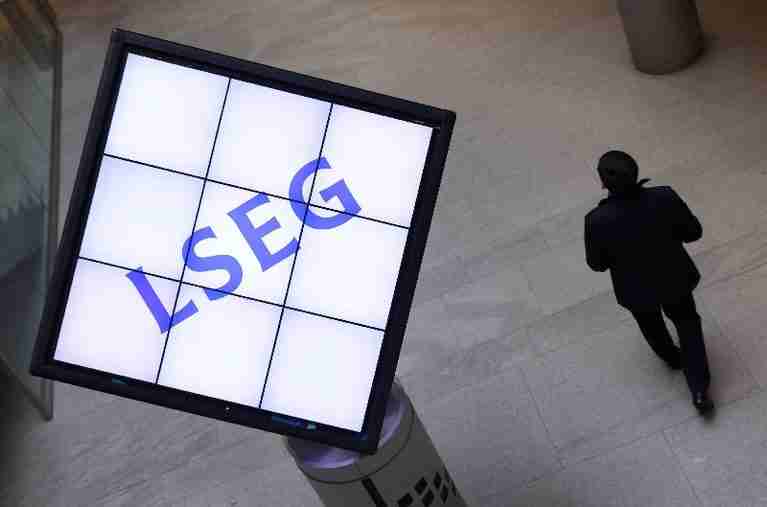
A worker walks near an LSEG (London Stock Exchange Group) branded cube inside the LSEG headquarters in Paternoster Square, London, Britain, September 8, 2026. REUTERS/Toby Melville

International News via Reuters:

London’s FTSE 100 inched up on Friday, after five sessions of declines, as oil prices retreated on reports of a push for a Strait of Hormuz deal, while markets awaited crucial U.S. inflation data, due later in the day.

The blue-chip FTSE 100 index rose 0.45% to 10,656.78 points by 1006 GMT, but was on track for its biggest weekly loss since early July. The midcap FTSE 250 gained 0.36% and was poised for its sharpest weekly decline in over four months.

• Oil prices fell more than 2% after Financial Times reported that Gulf foreign ministers could meet their Iranian counterparts to discuss temporary shipping arrangements in the Strait of Hormuz. [O/R]

• Sectors pressured by rising oil prices recovered on Friday while oil majors Shell and BP fell 0.3% and 1%, respectively. However, energy stocks were set to outperform peers for the week.

• Heavyweight banks rose 1.2%, the biggest boosts to the index, with HSBC and Barclays up 1.3% and 1.4%, respectively.

• Aerospace and defence stocks gained 1.2%.

• Meanwhile, data showed Britain’s economy grew at the fastest annual pace in 18 months in July on a possible AI boost, further improving sentiment.

• Investors are sharply focused on U.S. consumer inflation data due later in the day, after a slightly hotter-than-expected producer inflation reading on Thursday pushed up interest rate-hike bets further.

• Traders are now pricing in a 67.5% chance of a U.S. Federal Reserve hike next week, while broadly expecting the Bank of England to hold rates steady, LSEG data showed.

• Inflation worries, alongside ballooning government budget pushed yields on bonds to multi-year highs this week, hammering risk assets.

• Among other stocks, supplement maker Applied Nutrition dropped 1.1% after executives sold 7 million shares, representing 2.8% of issued capital.

• Harbour Energy underperformed by 2.9% after its top shareholder BASF reduced its stake in the oil and gas producer again.

Reporting by Anand Gopal and Purvi Agarwal in Bengaluru; Editing by Diti Pujara

‘25 years on, we still remember’

Premier Burt recalls the tragic events of 9/11, which claimed the lives of three Bermudians 

Media Release:

Twenty-five years (25) ago today, the world witnessed a tragedy that claimed nearly 3,000 lives and changed countless others forever. Bermuda shared in the grief of September 11. Twenty-five years later, we also remember. We, too, have never forgotten.

For many Bermudians, the memories of September 11, 2001, remain vivid. We each remember where we were and what we were doing when the news came. We remember watching events unfold in disbelief. We remember calling relatives and friends in New York, waiting for word and hoping they were safe.

Three members of our own community died that day. We call their names in remembrance: Rhondelle Tankard, Boyd Gatton and Robert Higley.

Twenty-five (25) years cannot erase the pain and grief of such loss, nor could it make us forget that day and how it changed the world in which we now live.

To the families and loved ones of Rhondelle, Boyd and Robert, we understand that time does not mitigate loss. A significant date can make 25 years feel like yesterday.

Today, Bermuda remembers with you. I also acknowledge that outside of Bermuda, there were many other families who lost loved ones on September 11th, and this year, like every year, is a time to remember them as they grieve. Bermuda’s memorial in the Botanical Gardens contains a piece of steel recovered from the World Trade Centre. As the United States Consulate General marks the anniversary of September 11th with a memorial ceremony at the Botanical Gardens to honour those who died, my thoughts are with those who will gather in remembrance and with every family whose loss is honoured there.

Remembering Russ Ford: A Life Dedicated to Helping Others

A legacy of compassion, courage and service to generations of Bermudians.

A man remembered not only for the lives he touched, but for the institutions he helped build.

Russ Ford, the nurse, advocate and founder of Agape House, died yesterday.

His decades of service left an indelible mark on Bermuda, from his work during the HIV and AIDS crisis to his commitment to people facing some of life’s most difficult circumstances.

His sister Dr Gaynell Hayward-Caesar reflects on the life and legacy of a man who spent his own life helping others. Julie Matthews-Borchardt reports.

EXCLUSIVE: Premier breaks silence on court case against PLP

Premier David Burt, who typically declines to talk about internal party matters, says the seriousness of the current controversy has prompted him to explain his position. He says he has never known a party member to take the party to court before

Premier David Burt today moved to explain his position on a party membership row that has exposed rifts within the PLP.

In an exclusive interview with Gary Foster Skelton, the Premier lamented the fact that internal differences have spilled out into the public domain, and highlighted the impact on party executives who have been named in a legal case.

WATCH the interview clip above. Extended interview below…