Saturday, October 31, 2026
Home Blog Page 768

Ben & Jerry’s crashes Unilever’s ice cream investor party

Unilever and Ben & Jerry’s have been at odds since at least 2021 when the Chubby Hubby ice cream maker said it would stop selling in the Israel-occupied West Bank

International News via Reuters:

Ben & Jerry’s seized the spotlight on Unilever’s ice cream unit on Tuesday to renew a call for its own spin-off ahead of a planned listing of the business in November after years of clashing over the U.S. brand’s vocal position on Gaza.

As the new Magnum Ice Cream Company presented its growth plans on its first investor day ahead of the listing, the stand-off highlights one of the challenges for the new firm as it looks to rev up growth and win over health-conscious consumers.

Ben & Jerry’s founder Ben Cohen protested outside the London hotel demanding to “free Ben & Jerry’s”, which the U.S. brand said was necessary to protect its social values. New Magnum CEO Peter ter Kulve, however, said that the brand would not be sold.

“The business is not for sale. It’s fully integrated in Unilever, in the Magnum Ice Cream Company,” he told investors.

Unilever and Ben & Jerry’s have been at odds since at least 2021 when the Chubby Hubby ice cream maker said it would stop selling in the Israel-occupied West Bank. Ben & Jerry’s has sued its owner over alleged attempts to silence it and called the conflict in Gaza a “genocide”, unusual for a major U.S. brand.

Unilever has previously said that the comments reflect the views of the independent social mission board of Ben & Jerry’s, and they do not speak for anyone other than themselves.

JUST ONE CORNETTO?

Magnum Ice Cream is aiming for average annual organic sales growth of 3-5% in the medium-term from 2026, matching Unilever’s overall outlook but exceeding the 3% historic average for the ice cream business, the company said.     

Unilever expects the ice cream unit, which includes brands such as Magnum, Ben & Jerry’s, Wall’s and Cornetto, to command just over a fifth of the around $88 billion global ice cream market and compete with rivals such as Nestle-backed Froneri.

It expects the sector to grow to nearly $106 billion by 2029.

The mid-November spin-off, which will reduce Unilever’s stake to less than 20%, presents a crucial test for CEO Fernando Fernandez as he looks to shake up the consumer goods giant, streamline management and boost margins.

Its rivals, including Kraft Heinz, are also looking to split up to boost growth and valuations.

Keurig Dr Pepper announced plans last month to combine with JDE Peet’s and then separate its cold beverage and coffee divisions, while Swiss food giant Nestle is considering selling some underperforming brands.  

Unilever’s ice cream business, which includes four of the world’s top five brands, generated 7.9 billion euros ($9.3 billion) in revenue in 2024 and 1.3 billion euros of adjusted earnings before interest tax, depreciation and amortisation. Magnum said its initial net debt to adjusted EBITDA ratio was expected to be 2.4.

Ice cream was Unilever’s fastest-growing category in the second quarter with underlying sales growth of 7.1%, but the division has lagged in terms of margins.

FOCUSED PORTFOLIO

The ice cream split forms part of Unilever’s efforts to operate a more focused portfolio of goods that will enable it to enhance productivity and drive growth.

Unilever’s share price, which has increased slightly during Fernandez’s six-month tenure but underperformed rivals like Danone and Reckitt, was down 1.3% on Tuesday. 

Magnum aims for productivity savings of 500 million euros in the medium term, through reducing overheads, a technology focus and bringing its complex “cold” supply chains together.

The new ice cream business will also test investor appetite for a sugar-heavy product at a time when U.S. President Donald Trump’s administration is pushing to “Make America Healthy Again” and GLP-1 weight loss drugs are increasingly popular.

Magnum said GLP-1 drugs should have “limited impact”.

($1 = 0.8498 euros)

Reporting by Alexander Marrow in London and Dimitri Rhodes in Gdansk; Editing by Kirsten Donovan, Alexandra Hudson, Sharon Singleton, Emelia Sithole-Matarise and Tomasz Janowski
‘Block Everything’: Amorphous protest movement adds to Macron’s political woes

The mystery over what protesters like Vasselin are planning is confounding security services

International News via Reuters:

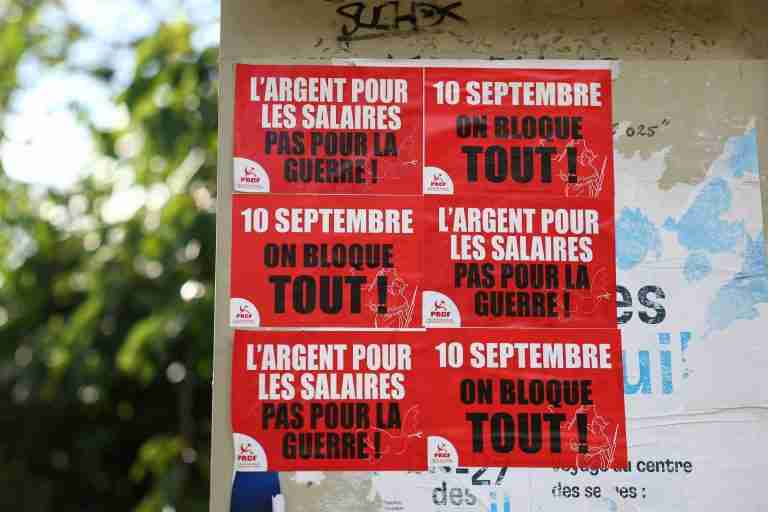
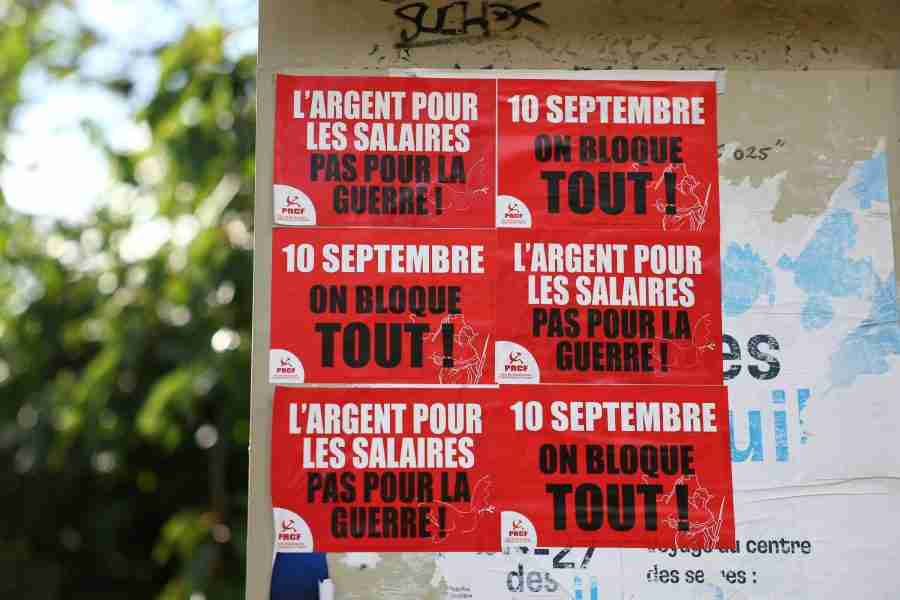
Benoit Vasselin has no problem saying he will take part in France’s “Block Everything” protests this week. But he won’t specify what he and fellow protesters will do when they pitch up outside a trade union HQ in the northern town of Lille early on Wednesday morning.

The mystery over what protesters like Vasselin are planning is confounding security services, just as President Emmanuel Macron grapples with the collapse of his fourth government in less than two years.

The “Block Everything” movement sprung up online in May among right-wing groups, researchers and officials said, but it has since been taken over by the left and far-left. 

Its lack of centralized leadership and ad hoc organisation via social media and Telegram make it hard to gauge just how disruptive Wednesday’s day of action may be. 

The government is not taking any chances, planning to deploy 80,000 police to contain protests that could number 100,000 people and target airports, train stations and highways with blockades or acts of sabotage.

The movement’s snowballing online support underlines a deep vein of popular discontent against what protesters deem a dysfunctional ruling elite preaching a painful gospel of austerity.

“I am extremely angry with the political system in France, which favours large corporations, which favours ultra-wealthy billionaires, and which … erodes the rights of ordinary French citizens – the very ones who keep the country running,” said Mathieu Jaguelin, 43, a tour guide in southwest France who participates in several “Block Everything” groups on Telegram.

France’s Interior Ministry declined comment for this story.

“We will not tolerate any blockage, any violence,” Interior Minister Bruno Retailleau told France 2 television on Monday. “I understand the anger … but the anger cannot be vented in the streets.”

FESTERING ANGER, MOUNTING ECONOMIC WOES 

French lawmakers ousted Prime Minister Francois Bayrou on Monday over his debt-slimming plan, plunging the country deeper into a political and fiscal crisis with no clear exit. 

Reuters spoke with six “Block Everything” participants who said the political system was no longer fit for purpose.    

Some urged a constitutional overhaul, while others called for Macron’s resignation and higher taxes on the rich. All said the movement was a reaction to the political chaos and hoped the protests would prompt politicians to act.

“The public authorities and the government have betrayed us so much that I’m not sure they can really meet the expectations of the people,” said Louise Nechin, a left-wing activist in Paris.

“Block Everything” has drawn comparisons with the 2018 “Yellow Vest” movement, which began as motorists’ protests against diesel taxes before morphing into anger over high living costs and inequality. 

Billions of euros in tax cuts helped quell the uprising after six months, but some residual anger still animates the “Block Everything” movement.

Two major labour unions have backed “Block Everything,” while more unions are planning to strike on September 18, possibly heralding the start of a new era of social unrest confronting Macron, who has been in power since 2017.

DECLINING FAITH IN POLITICAL INSTITUTIONS

Paola Sedda, an expert on online movements at the University of Lille, said “Block Everything” emerged out of the deep anger over Bayrou’s proposed budget cuts at a time of declining faith in political institutions. 

The activists’ deep mistrust of traditional media and political institutions resonated widely, she said.

A French intelligence source, speaking on condition of anonymity, said some “opportunistic” foreign actors, including pro-Russian and pro-Iranian groups, were “amplifying certain popular hashtags, particularly on X … to exploit a sensitive domestic context”.

However, “the phenomenon is relatively marginal compared with publications of domestic origin”, the source added.

The Iranian embassy in Paris denied even “the slightest intention, interest or desire to interfere in the internal affairs of other countries, in this case France.” The Russian embassy did not respond to a request for comment.

One “Block Everything” moderator on a Telegram channel, who declined to give his name as he didn’t want to appear a leader of the group, said the odd pro-Kremlin account sometimes posted but such posts were “systematically moderated or criticized”. 

“This does not change the core reality: the origin of the movement and its dynamics come from real people, here, expressing their anger and desire for change,” he said.

Reporting by Elissa Darwish; Editing by Gabriel Stargardter and Frances Kerry

Cabral & NSU rout Holy Family in statement victory

Emily Cabral and her Nova Southeastern University (NSU) women’s soccer teammates earned a statement victory on opening night, routing Holy Family University 7-1 at the NSU Soccer Stadium. The win, a perfect start to their season, was the most goals scored in coach Amy Vaughan’s tenure.

The Sharks came out firing on all cylinders, with Alexa Bereczki, the reigning SSC Freshman of the Year, scoring two goals to begin the 2025 campaign. She was joined on the scoresheet by Lova Korpas and Liwa Nilsson, who each recorded a goal and an assist. Ginger Schulz added two assists for the Sharks, underscoring their offensive dominance.

For Bermudian Cabral, the match was a significant milestone. She returned to the pitch and played about 20 minutes after a year off through injury, a promising sign for her comeback season with the team.

The seven goals are the most scored in coach Amy Vaughan’s tenure and the second-most scored in a home match, signaling a very strong start to the campaign for the Nova Southeastern Sharks.

Young anti-corruption protests force Nepal PM Oli to quit

The outrage was sparked by a social media ban, which Oli’s government lifted after police fired tear gas and rubber bullets at protesters trying to storm parliament

International News via Reuters:

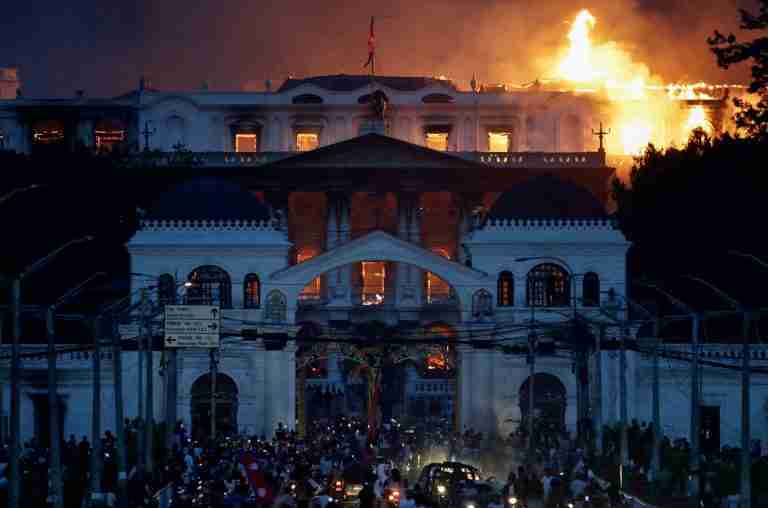
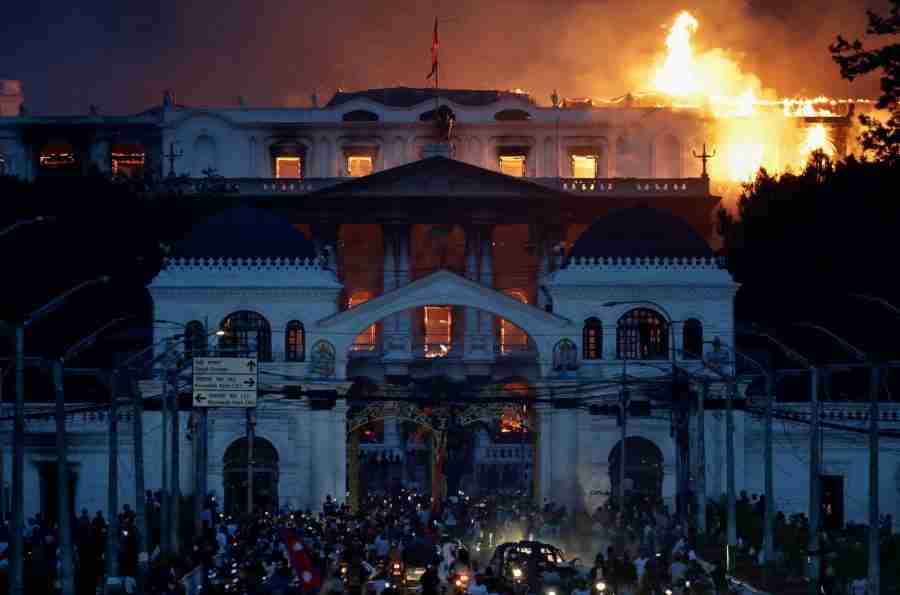
Nepali Prime Minister K.P. Sharma Oli was forced to resign on Tuesday by angry young anti-corruption protesters who defied a curfew and clashed with police, a day after 19 people died in the violence.

The outrage was sparked by a social media ban, which Oli’s government lifted after police fired tear gas and rubber bullets at protesters trying to storm parliament, and 100 people were injured alongside the 19 dead.

But there was no let up in the protests on Tuesday, which plunged Nepal into fresh political uncertainty.

The unrest is the worst in decades in the poor Himalayan country, which is wedged between India and China and has struggled with political and economic instability since protests led to the abolition of its monarchy in 2008.

Young Nepalis have for years been frustrated at the lack of jobs, and millions have gone to work in the Middle East, South Korea and Malaysia, mainly on construction sites, and send money home.

“In view of the adverse situation in the country, I have resigned effective today to facilitate the solution to the problem and to help resolve it politically in accordance with the constitution,” Oli said in his resignation letter to President Ramchandra Paudel.

An aide to Paudel told Reuters the president had begun the process of finding a new premier, but also summoned protest leaders for talks.

A military source said army chief Ashok Sigdel would address the nation later on Tuesday.

Jubilant youths entered the parliament complex on hearing the news, waving their hands in the air and shouting slogans as smoke rose from sections of the building.

“We won,” one protester wrote in huge orange letters on the wall of the parliament building.

Although the protesters were still on the streets of the city, there was no more violence as security forces kept their distance.

PRIME MINISTER’S HOUSE RANSACKED

Oli, 73, was sworn in for his fourth term in July last year as Nepal’s 14th prime minister since 2008. Two of his cabinet colleagues had resigned on “moral grounds” late on Monday.

Early in the day, Oli had called a meeting of all parties, saying violence was not in the interest of the nation and “we have to resort to peaceful dialogue to find solutions to any problem”. He did not respond directly to the protesters’ complaints about corruption.

But protesters continued gathering in front of parliament and elsewhere in the capital Kathmandu, defying an indefinite curfew.

They set fire to tyres on some roads, threw stones at police in riot gear and chased them through narrow streets.

Witnesses also said protesters were setting fire to the homes of some politicians in Kathmandu, and local media reported that some ministers had been plucked to safety by military helicopters.

The Singha Durbar area, which houses the Prime Minister’s Office and other ministries as well as Parliament House, and Oli’s private residence were also set on fire, they said.

Footage circulating on social media showed former prime minister Sher Bahadur Deuba and his wife Arzu Rana, foreign minister under Oli, and Finance Minister Bishnu Paudel being attacked by protesters.

Reuters could not immediately verify the information.

KATHMANDU AIRPORT SHUT

Kathmandu airport, Nepal’s main international gateway, was closed because of smoke from fires set by protesters, the Civil Aviation Authority said.

Organisers of the protests, which spread to other cities, have called them “demonstrations by Gen Z”, driven by young people’s widespread frustration with a perceived lack of action to tackle corruption and boost economic opportunities.

“The protest was intended, first and foremost, against the rampant corruption in government,” a protester said in an email to Reuters, signing off as ‘A concerned Nepali citizen’.

Young Nepalis had been posting on social media about the “luxurious lives of the families and children of corrupt politicians and civil servants” until the government clamped down on the platforms, the email said.

Last week, Oli’s government blocked access to several online platforms for allegedly failing to register with the government, saying social media were being used to spread disinformation and commit fraud.

Reporting by Gopal Sharma and Navesh Chitrakar in Kathmandu; Additional reporting by Surbhi Misra and Sakshi Dayal; writing by Shilpa Jamkhandikar and YP Rajesh; Editing by Tom Hogue, Stephen Coates, Sonali Paul, William Maclean and Kevin Liffey

Bermudian powerboats compete in St. Petersburg Grand Prix

The 5th Annual Monster Energy St. Petersburg Powerboat P1 Grand Prix in Tampa Bay, Florida, proved to be a dramatic event for the two Bermudian boats competing. While one team faced an early mechanical issue, the other was running at the front of the pack in what was their best run of the year. The event also served as the decider for the prestigious Monster Energy P1 Offshore Triple Crown.

The first start in the Super Stock Class was aborted due to mechanical issues with the 32-foot Doug Wright, S-12 NUFF SAID / Team Bermuda, crewed by Luis Martins and Andy Stoneham. When the green flag finally went up for the second time, Say Less MF jumped out to an early lead, quickly separating themselves from the fleet for the 8-lap race.

Meanwhile, drama unfolded further back in the pack. A near collision occurred when Northwing ran off course and made an aggressive move to return, nearly hitting Team Nautical Ventures, who would later pull off the course on the fifth lap.

The Bermudian boat S-25 GL Construction / S-25 Team Bermuda, with driver Steven Bridges and throttleman David Selley, was having a superb run. They were running at the front of the pack, in contention for a podium finish and expertly navigating the mayhem that ensued behind them.

Both Bermudian teams will take away valuable experience from the event, with GL Construction’s strong performance being a positive sign for the remainder of their season.

EU finalizes $176 billion defence loans, with Poland taking largest share

The scheme, called Security Action For Europe (SAFE), is a joint borrowing scheme

International News via Reuters:

The European Union’s 150 billion euros ($176 billion) in cheap loans for defence projects have been fully taken up by a total of 19 EU countries, with Poland securing the biggest part of the loans, the European Commission said on Tuesday.

The scheme, called Security Action For Europe (SAFE), is a joint borrowing scheme, backed by the EU budget to boost the EU’s defence capabilities, address critical gaps, and buy defence products together to prepare for the threat of military aggression from Russia or Belarus.

“There was a lot of skepticism about possible low interest. Now we see the contrary. The interest from the member states has been a resounding success. Not only Eastern frontier countries are interested,” EU Defence Commissioner Andrius Kubilius told a news conference.

Poland will get the lion’s share of the total at 43.7 billion euros, with Romania in second place with 16.7 billion.

Hungary and France will get 16.2 billion each, Italy 14.9 billion, Belgium 8.3 billion, Lithuania 6.4 billion, Portugal 5.8 billion and Latvia 5.7 billion, among others.

Also participating in the loans are Bulgaria, Croatia, Cyprus, Czechia, Denmark, Estonia, Finland, Greece, Slovakia and Spain. Eight EU countries did not apply for the loans because they can borrow at comparable or better rates themselves, the Commission said.

The 19 EU countries will now prepare their investment plans, to describe how they will spend the money and present them by the end of November. The Commission will then assess the plans and make the first disbursements in the first quarter of 2026, Kubilius said.

The scheme offers a 10-year grace period for loan repayment, low interest rates and makes possible agreements with countries outside the EU, like Norway, Britain or Turkey, who have defence equipment the EU is interested in.

($1 = 0.8525 euros)

Reporting by Jan Strupczewski and Bart Meijer

Minors finishes 12th in Elite Mile in Germany

Bermudian runner Dage Minors has been in action on the international stage, competing in the Elite Men’s Mile at the New Balance KÖ MEILE in Düsseldorf, Germany.

Minors, the Bermudian national record holder, finished 12th in a highly competitive field, clocking a time of 4:06.6. The race was won by American Vincent Ciattei, who crossed the line in 3:54.8.

The event, which is part of a series of elite races, provides valuable experience for Minors as he continues his campaign in Europe against some of the world’s best middle-distance runners. The result is a solid performance as he builds toward the later stages of the season.

Human rights course to help youth build a ‘more just society’

Bermuda College to host information session on September 15; course begins October 6

Bermuda College press release:

As Bermuda College prepares to launch a groundbreaking human rights course, one of its international experts is encouraging young Bermudians to see themselves as active participants in building a more just society — both at home and abroad. 

Claudia Seymour, a Bermudian academic and human rights investigator who has worked in conflict-affected countries around the world, is among the facilitators supporting the course through the newly launched Human Rights Education Network (HuRen). 

“After working as a human rights investigator and protection professional in war-affected countries, I came to realise that the most important work might be the work closest to home,” she said. 

“This course is about recognising the dignity and value of every person — and the power each of us has to make a difference in our everyday lives.” 

The 12-hour course — open to anyone aged 18 and over — is the first of its kind in Bermuda. It is designed to equip young Bermudians with the foundational skills and mindset needed to understand, protect, and promote human rights locally and globally. 

Developed by a team of international and local experts, including former Amnesty International Bermuda Chairperson Françoise Palau-Wolffe, HuRen aims to bridge the gap between global frameworks and Bermuda’s national human rights protections. 

Ms Seymour, who lectures at the Graduate Institute in Geneva and has served as a UN advisor, said the course offers vital tools for navigating an increasingly complex world. 

“We all have a role in the realisation of human rights. Societal transformations toward justice and dignity for all start with small, daily actions. We have more power than we realise,” she said. 

She added that Bermuda has something special to offer when it comes to rights work. 

“I have travelled the world, yet Bermuda is unique for the grace and kindness that people offer to each other. This interpersonal respect lays at the foundation of any authentic human rights work.” 

The course begins on October 6 and will be hosted through the College’s Athora Division of Professional and Career Education. An open house information session is scheduled for September 15 at Bermuda College. 

The programme is limited to 20 participants and includes support from the Human Rights Commission and Gender Affairs Council. Financial assistance is available through the College, and local businesses are encouraged to sponsor employees. 

More information is available at www.HuRenBermuda.com or by emailing: apace@college.bm. 

Britain’s M&S drops Tesco’s Booker as wholesale partner

M&S said it has replaced Booker with AF Blakemore & Son Ltd, signing a “multi-year agreement” with the family owned business

International News via Reuters:

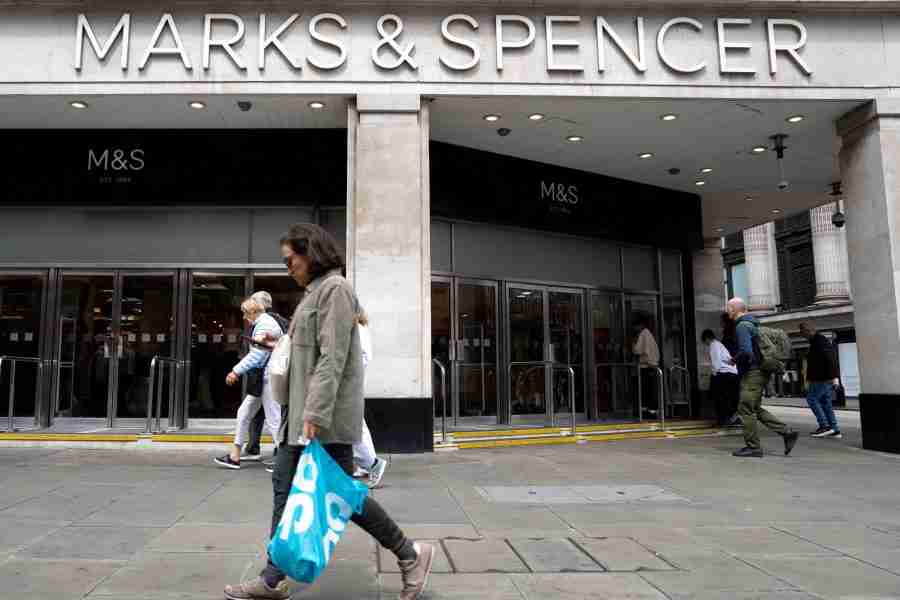
Britain’s Marks & Spencer has ended its 15-year wholesale partnership with Tesco’s Booker unit, dropping it as the primary supplier of third-party branded products for its food business, the retailer said on Tuesday.

M&S said it has replaced Booker with AF Blakemore & Son Ltd, signing a “multi-year agreement” with the family owned business.

M&S predominantly sells own brand, or private label, food products but does sell a small proportion of third-party branded products – usually household names such as Lucozade, Ribena and Pepsi Max drinks and Lurpak butter.

“Blakemore will be providing an improved wholesale solution with a full seven days a week service that will increase availability for our stores and customers,” Alex Freudmann, Managing Director of M&S Food, said.

The retailer said the change does not represent a move to increase third-party food brands offered at M&S, with its focus remaining on own brand food ranges.

Reuters has asked Tesco for comment.

Tesco is Britain’s biggest food retailer with a market share of 28.4%, according to Kantar data.

M&S has a share of 3.7%, according to NielsenIQ data, and is Britain’s second fastest growing physical food retailer after discounter Lidl.

Reporting by James Davey, Editing by Paul Sandle

London commuters turn to bikes and boats as Tube strike enters second day

With almost no underground trains running until Friday, demand for shared bike services and river transport surged as Londoners looked for alternative ways to get to work

International News via Reuters:

Commuters in London turned to bikes, buses and boats on Tuesday as a staff strike shut down the capital’s underground “Tube” network for a second day.

With almost no underground trains running until Friday, demand for shared bike services and river transport surged as Londoners looked for alternative ways to get to work, causing longer journeys and crowding on other parts of the transport network.

The London-based Centre for Economics and Business Research estimates the strike will have a direct impact on the London economy of 230 million pounds ($310 million), and cost millions more indirectly.

Lime, which operates electric bikes across the city, said it saw a 58% increase in trips during Monday’s morning peak compared with the same period a week earlier.

“Journeys were longer in both distance and duration, indicating that many riders relied on Lime for their entire commute rather than just the first or last mile,” a Lime spokesperson said.

Forest, another bike-sharing firm which operates 15,000 e-bikes in London, reported a 100% increase in rides between 7 a.m. (0600 GMT) and 8 a.m. on Monday. It said it expected 60,000 active users throughout the day – more than double its usual Monday volume of about 27,000.

Uber Boat by Thames Clippers, a river bus service operating on the Thames, said its services were “busier than usual,” with extra sailings added, including a shuttle between Canary Wharf and London Bridge.

The strike, called by the RMT union, centres on pay, fatigue management and shift patterns. Transport for London has offered a 3.4% pay rise, but the union is pushing for a reduction in working hours.

Prime Minister Keir Starmer’s government, which vowed to tackle widespread strike action across the economy before it was elected last July, has called for a resolution.

($1 = 0.7362 pounds)

Reporting by Sam TabahritiEditing by Alexandra Hudson

Ethiopia launches Africa’s largest hydroelectric dam

Ethiopia sees the $5 billion Grand Ethiopian Renaissance Dam on a tributary of the River Nile as central to its economic ambitions

International News via Reuters:

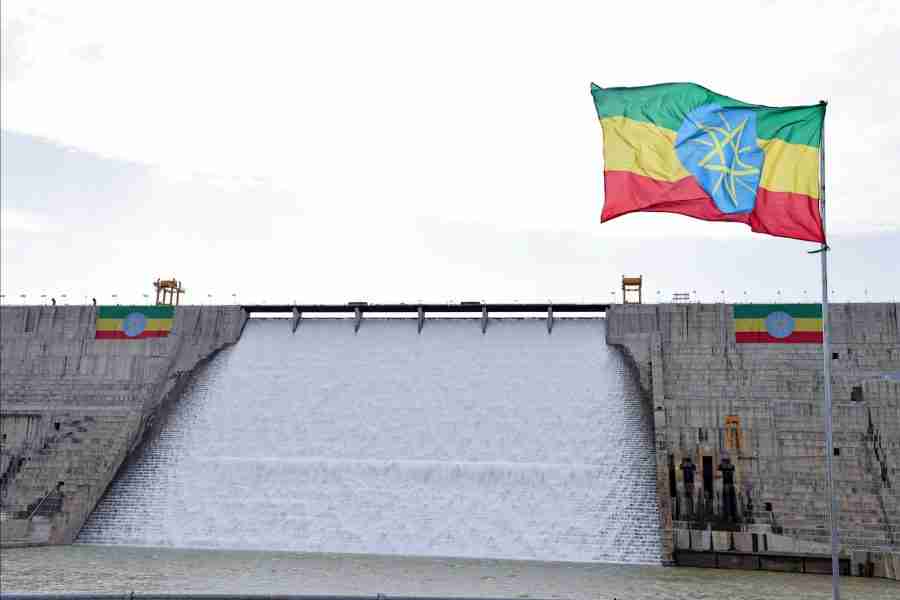
Ethiopia officially inaugurated Africa’s largest hydroelectric dam on Tuesday, a project that will provide energy to millions of Ethiopians while deepening a rift with downstream Egypt that has unsettled the region.  

Ethiopia, the continent’s second most populous nation with over 120 million people, sees the $5 billion Grand Ethiopian Renaissance Dam on a tributary of the River Nile as central to its economic ambitions. 

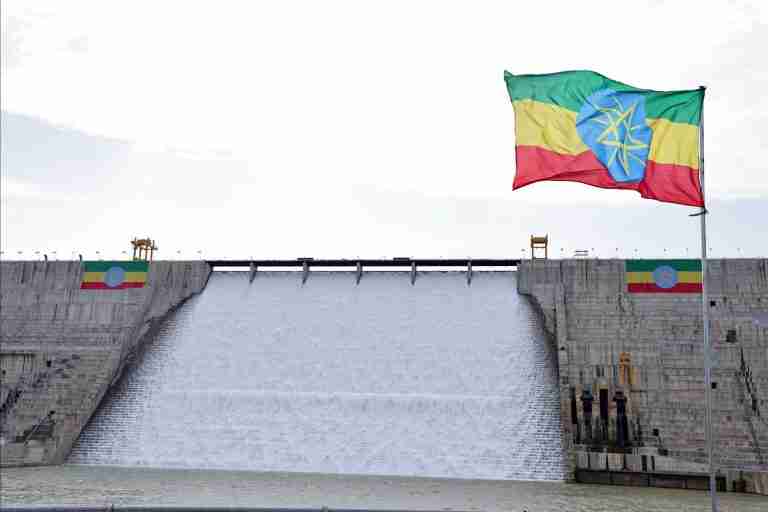
The dam’s power has gradually increased since the first turbine was turned on in 2022, reaching its maximum capacity of 5,150 MW on Tuesday. That puts it among the 20 biggest hydroelectric dams in the world – about one-quarter of the capacity of China’s Three Gorges Dam.

At a ceremony on Tuesday at the site in Guba, an Ethiopian fighter jet flew low over the mist from the dam’s white waters, which plunge 170-metres (558 feet).

Beneath the canopy of a giant Ethiopian flag, Prime Minister Abiy Ahmed later addressed a crowd of dozens of dignitaries including the presidents of Somalia, Djibouti and Kenya.

“To our (Sudanese and Egyptian) brothers; Ethiopia built the dam to prosper, to electrify the entire region and to change the history of black people,” Abiy said. “It is absolutely not to harm its brothers.”

Abiy has said Ethiopia will use the energy to improve Ethiopians’ access to electricity and export surplus power to the region.

The dam’s reservoir has also flooded an area larger than Greater London, which the government says will provide a steady water supply for irrigation downstream while limiting floods and drought. 

DROUGHT RESTRICTIONS?

Ethiopia’s downstream neighbours, however, have watched the project advance with dread since construction began in 2011.

Egypt, which built its own Aswan High Dam on the Nile in the 1960s, fears the GERD could restrict its water supply during periods of drought, and could lead to the construction of other upstream dams.  

It has bitterly opposed the dam from the start, arguing that it violates water treaties dating to the British colonial era and poses an existential threat.

Egypt, with a population of about 108 million, depends on the Nile for about 90% of its fresh water.

Egypt would continue to closely monitor developments on the Blue Nile and “exercise its right to take all the appropriate measures to defend and protect the interests of the Egyptian people”, Egyptian Foreign Ministry spokesperson Tamim Khallaf told Reuters on Monday.

While Egypt has refrained from any direct reprisals against Ethiopia, it has drawn closer in recent years to Addis Ababa’s rivals in the Horn of Africa, notably Eritrea.

Sudan, meanwhile, has joined Egypt’s calls for legally binding agreements on the dam’s filling and operation, but could also benefit from better flood management and access to cheap energy.

‘NOT A THREAT’

Ethiopia in 2020 began filling the reservoir in phases while arguing that the dam would not significantly harm downstream countries.

Independent research shows that so far, no major disruptions to downstream flow have been recorded — partly due to favourable rainfall and cautious filling of the reservoir during wet seasons over a five-year period.

In Ethiopia, which has faced years of internal armed conflict, largely along ethnic lines, the GERD has proven a source of national pride, said Mekdelawit Messay, an Ethiopian water researcher at Florida International University.

“It has been a banner to rally under, and it shows what we can achieve when unified,” Mekdelawit said.

Ethiopia’s central bank provided 91% of the project’s funding, while 9% was financed by Ethiopians through bond sales and gifts, without any foreign assistance, local media has reported.

Sultan Abdulahi Hassan, a farmer who lives near the dam, said the dam has brought electricity to his village.

“We now have refrigerators. We can drink cold water. We now use electricity for everything,” he told Reuters at the launch.

While the extra power will help the country’s burgeoning bitcoin mining industry, most rural Ethiopians may have to wait a little longer to benefit. 

Underdeveloped transmission networks in rural areas are a major constraint on electricity access. While urban areas had a 94% electrification rate as of 2022, just 55% of the country’s total population had electricity, according to the World Bank.

Reporting by Hereward Holland in Nairobi; Mohamed Ezz and Alexander Dziadosz in Cairo; Editing by Aidan Lewis, Ammu Kannampilly and Sharon Singleton