Friday, October 30, 2026
Home Blog Page 781

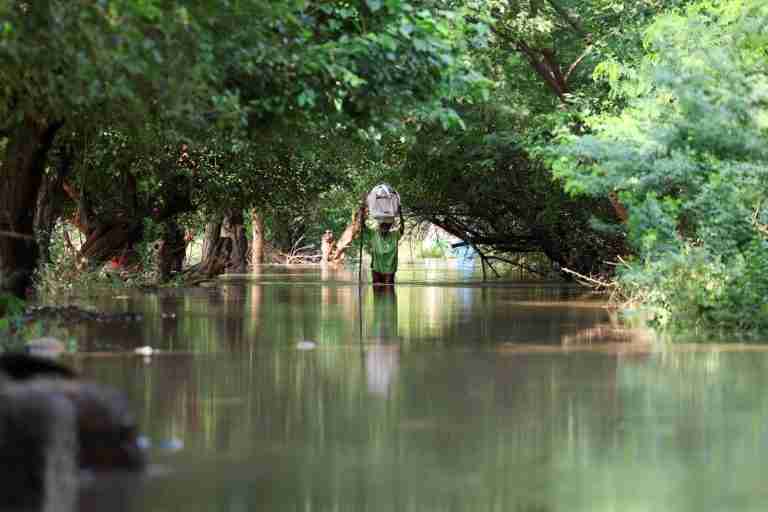
Heavy rain lashes northern India, Yamuna river breaches danger mark in Delhi

The monsoon season in India has been particularly intense this year, killing at least 130 people in August alone in north India, wiping out villages and destroying infrastructure
International News via Reuters:

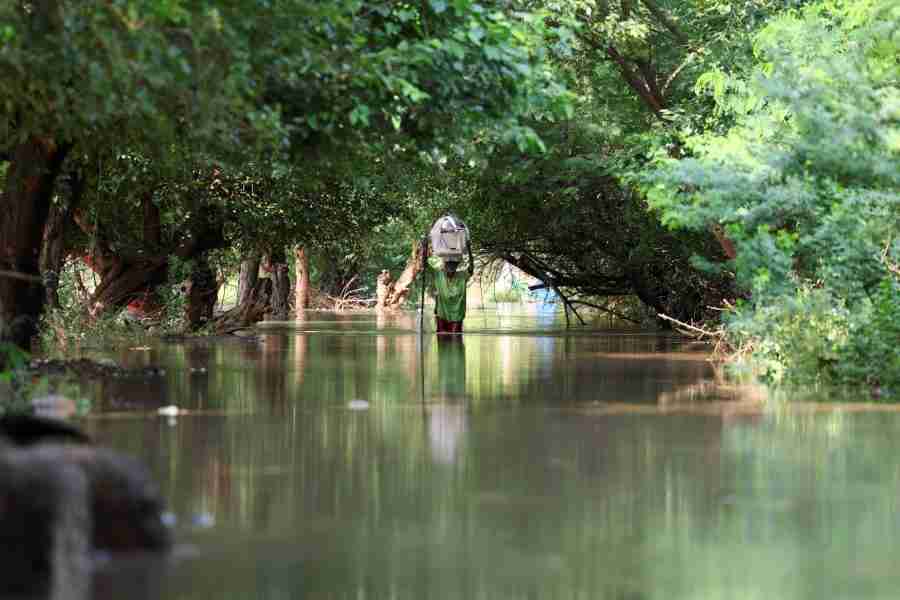
Flooding across northern India killed at least five people on Wednesday, officials said, with more thunderstorms expected and local media reporting that 10,000 people have been evacuated from the river banks in capital Delhi. 

The monsoon season in India has been particularly intense this year, killing at least 130 people in August alone in north India, wiping out villages and destroying infrastructure. 

The latest round of flooding has hit northern Jammu and Kashmir, Himachal Pradesh, Uttarakhand and Punjab, where the Chenab and Tawi rivers have risen above the danger mark at several spots. 

The swollen rivers have triggered landslides and damaged many roads, disconnecting parts of the mountainous regions of Jammu and Himachal from the rest of India. 

At least five people were killed on Wednesday after landslides battered Rajouri and Mandi districts in Jammu and Himachal Pradesh respectively, officials said. 

The India Meteorological Department warned of heavy to very heavy rain in the region on Wednesday, with more downpours expected in Uttarakhand and Uttar Pradesh.

The Central Water Commission said the swollen Yamuna had breached its danger mark on Tuesday in Delhi.

Local media reported that nearly 10,000 people had been evacuated to relief camps set up by the government along the main highways as a precautionary measure for those living in low-lying areas. 

Residents living along the Yamuna in Delhi were evacuated in 2023 as well after floodwaters entered their homes and the river hit its highest level in 45 years.

Many tourist spots in Himachal Pradesh have been hit by landslides in recent weeks, as raging rivers damaged infrastructure. 

Educational institutions were ordered shut, authorities said, asking people to remain indoors due to flood warnings. 

In neighbouring Punjab, the government said 30 people have been killed and nearly 20,000 evacuated since August 1. 

Water gushing through the plains in India’s breadbasket Punjab state has destroyed 150,000 hectares of crops, the government said on Tuesday. 

Continuous rain prompted authorities to release water from dams, which has caused flooding in plains in India and Pakistan in recent days. 

On the other side of the border, Pakistani authorities issued an alert for more floods in the eastern heartland province of Punjab on Wednesday, after India warned it would release water downstream from its dams, officials said.

New Delhi has previously given four such warnings to Islamabad, the officials said.

The worst floods in four decades have killed at least 43 people in Punjab, with more than 3.3 million affected since August 26, the provincial disaster management authority said.

The death toll across the country since the start of the monsoon season in late June stands at 881, according to the National Disaster Management Authority.

Reporting by Tanvi Mehta in New Delhi, Fayaz Bukhari in Srinagar, Jaspreet Singh in Patiala and Mubasher Bukhari in Lahore; Editing by Saad Sayeed
UK’s Reeves promises ‘tight grip’ on public finances at November 26 annual budget

The government also wants to press on with measures to boost economic growth

International News via Reuters:

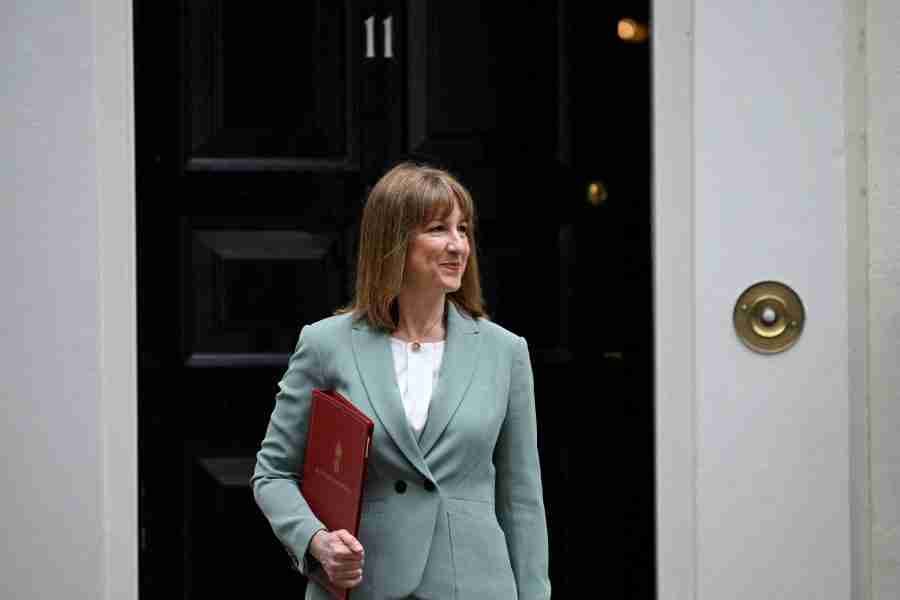
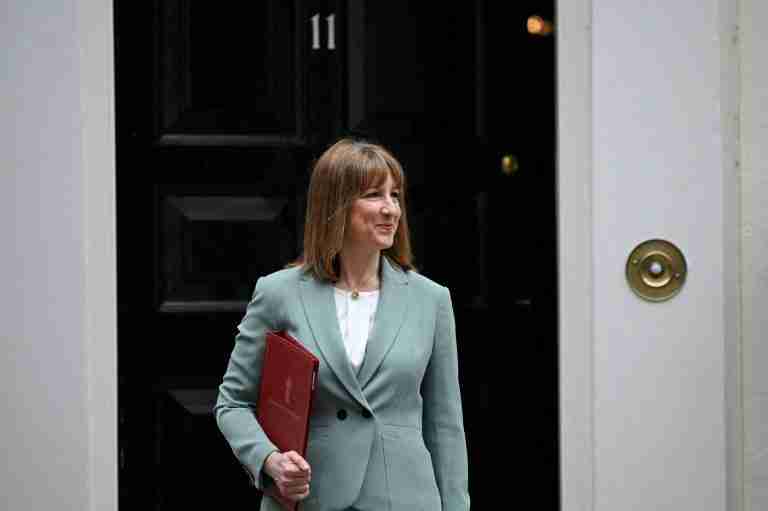
British finance minister Rachel Reeves said on Wednesday that she would deliver her annual budget on November 26, with a focus on keeping a “tight grip” on public spending to help lower inflation and borrowing costs.

The announcement of the budget date comes at a time of renewed financial market scrutiny on Britain, with worries about the UK’s ability to keep its finances under control helping push 20- and 30-year borrowing costs to their highest level since 1998.

British inflation is also the highest in the Group of Seven advanced economies, limiting the Bank of England’s scope to cut interest rates.

“Britain’s economy isn’t broken. But I know it’s not working well enough for working people,” Reeves said in a video message.

“We must bring inflation and borrowing costs down by keeping a tight grip on day-to-day spending through our non-negotiable fiscal rules,” she added.

The government also wants to press on with measures to boost economic growth.

Reeves and Prime Minister Keir Starmer are struggling to meet mounting demands for spending from the already stretched public finances against a backdrop of weak economic growth and pre-election promises not to raise the rates of major taxes.

Setting out her plans for the year ahead will likely involve Reeves needing to find other ways to raise tax revenue, as she aims to balance day-to-day spending with tax revenue by 2029/30.

Reeves had just under 10 billion pounds of headroom to meet that target in March. But economists expect her to now need to tackle a roughly 20 billion-pound deficit, due to weak growth, high borrowing costs and U-turns on plans to cut welfare for the long-term sick and fuel subsidies for retired people.

In last year’s budget, Reeves raised taxes by 40 billion pounds – the biggest increase in over 30 years – something she has promised not to repeat.

The new budget will come alongside a twice-yearly update of growth and borrowing forecasts from the Office for Budget Responsibility.

Reporting by David Milliken; additional writing by Sarah Young; Editing by Kate Holton

Pope Leo, in climate push, to open Vatican-run ecological training centre

The centre includes gardens, vocational training facilities, and educational opportunities for local children

International News via Reuters:

Pope Leo will open a new Vatican-run ecological training centre in the Italian countryside on Friday, in an initiative Catholic officials say is meant to encourage world leaders to address global climate change.

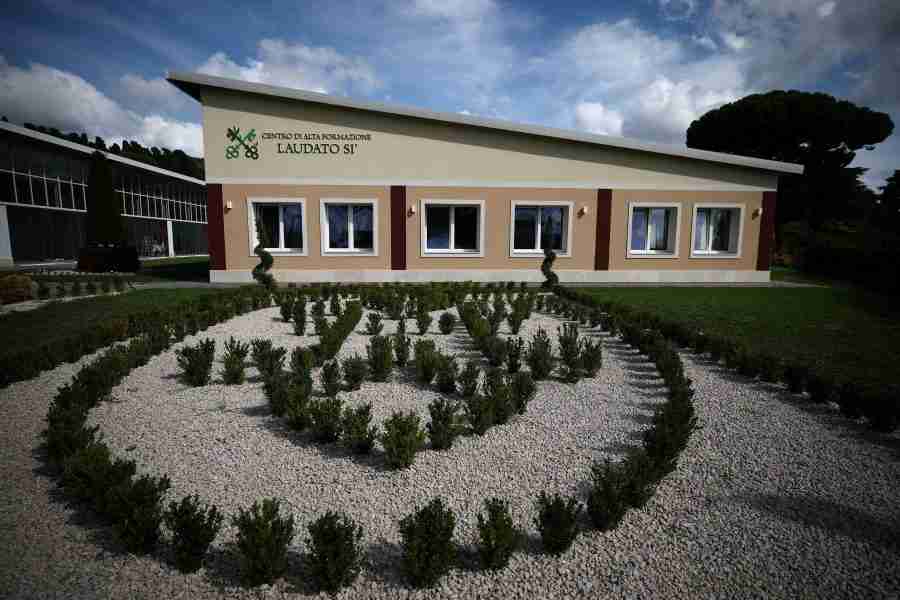
The centre, located across 55 hectares (136 acres) on the sprawling grounds of a Renaissance-era papal villa in Castel Gandolfo, includes gardens, vocational training facilities, and educational opportunities for local children.

Rev. Manuel Dorantes, a U.S. priest directing the centre, said the Vatican wants to set an example for how countries should pursue environmental initiatives.

“If we, the smallest city-state in the world, can do this, what is the potential for other states that are bigger than us?” he said. “Our world can be different if we work together.”

The ecological project, named the “Borgo Laudato Si”, was first announced in 2023 by the late Pope Francis, who was a firm proponent of environmental care. The centre’s large surface area represents about 55 percent of the Vatican’s total landholdings, according to officials.

The centre is named after a major 2015 document by Francis, which was the first papal text to embrace the scientific consensus about climate change and urged nations to reduce their carbon emissions.

Leo, the first U.S. pope, has also emphasised the Church’s environmental teachings. In July, the new pontiff approved a first-of-its-kind rite allowing priests to celebrate Masses that exhort Catholics to exercise care for the Earth.

Castel Gandolfo is about an hour’s drive southeast of Rome on the shores of Lake Albano. A place where popes have spent summer vacations for centuries, the new centre is attached to the building where Leo took his holidays earlier this year.

At the heart of the new institute is a greenhouse built in a curved shape to imitate the colonnade in St. Peter’s Square at the Vatican.

Officials say visiting groups will be able to learn about organic farming in the greenhouse, or take classes in an adjacent 10-room educational facility.

Tourists, who can book a visit, will also be able to buy local agricultural products, including wine grown from vineyards on the Vatican grounds, organic olive oil, and cheese made from 60 cows living on the site.

Reporting by Joshua McElwee; additional reporting by Claudia Chieppa; editing by William Maclean

Sterling, yen slip as traders worry about fiscal, political uncertainties

Traders have been selling long-dated government bonds in Europe and the U.S. since Tuesday as focus once again shifted to rising debt levels across major economies

International News via Reuters:

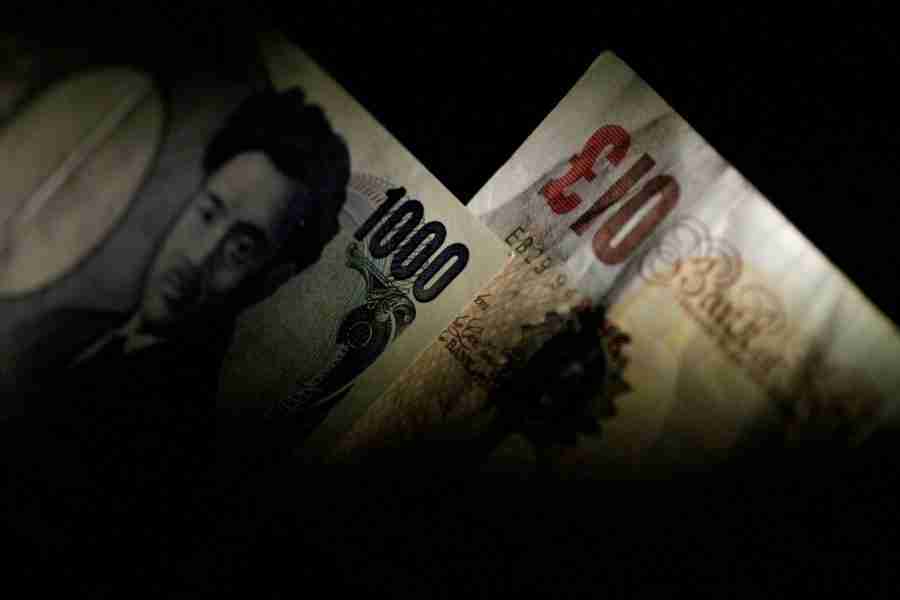
The British pound and the yen continued to fall on Wednesday, as investors worried about the health of government finances globally and political uncertainty in Japan.

Traders have been selling long-dated government bonds in Europe and the U.S. since Tuesday as focus once again shifted to rising debt levels across major economies, rekindling fears that governments around the world are losing their grip over fiscal deficits. The activity spilled over into Japan on Wednesday.

In the gilt market, Britain’s 30-year borrowing costs rose to their highest levels since 1998, which also left sterling vulnerable as it tumbled more than 1% on Tuesday. The pound last traded 0.07% lower at $1.3385.

“I think part of the concern is that there’s an autumn statement or a budget that’s coming up,” said Ray Attrill, head of FX research at National Australia Bank.

“I think at this stage, there’s a lack of confidence in markets that the government is willing to address effectively the scale of the budget deficit and the speed of debt buildup.”

In Japan, the yen was down 0.2% at 148.65 per dollar, having slid 0.8% on Tuesday after the Japanese ruling party’s Secretary-General Hiroshi Moriyama, a close aide to Prime Minister Shigeru Ishiba, said he intended to resign from his post.

That could potentially affect the fate of Ishiba, who has resisted calls to quit over an election loss.

“On the surface, political uncertainty, and the possibility that Prime Minister Shigeru Ishiba might resign in the coming days or weeks, is having a debilitating impact on the yen,” said Kit Juckes, Societe Generale’s chief global FX strategist.

Sanae Takaichi, one of the leading contenders to replace Ishiba, is known for favouring low domestic interest rates.

The yen hardly reacted to comments from Bank of Japan Governor Kazuo Ueda, who said he discussed various topics on the economy and markets, including foreign exchange rate moves, in a meeting with Ishiba on Wednesday.

Meanwhile, the dollar edged 0.1% lower at 98.30 against a basket of currencies, having gained 0.66% on Tuesday.

The euro was up 0.1% at $1.1651, after falling 0.6% on Tuesday.

A survey showed on Wednesday that the euro zone economy kept expanding at a snail’s pace in August as weaker services growth offset improved manufacturing output.

Investors also had their eye on a slew of U.S. labour market data due this week, headlined by Friday’s nonfarm payrolls report for more clues on rate cut trajectories.

Reporting by Rae Wee in Singapore and Joice Alves in London; Editing by Alex Richardson

When thunder roars stay indoors…

Tips to weather Bermuda’s increasingly frequent lightning storms safely

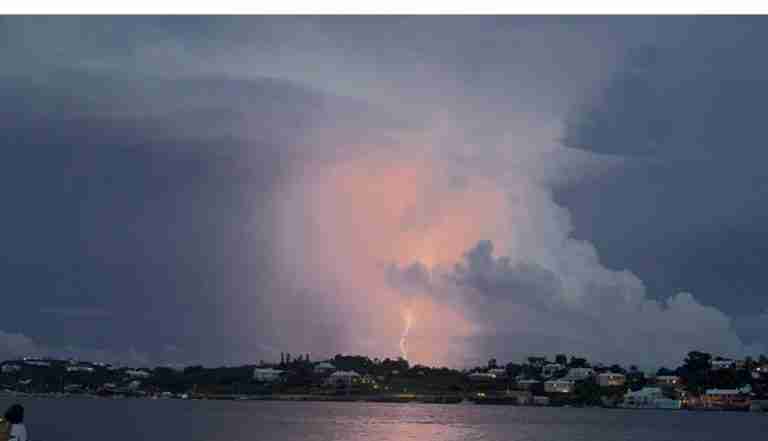
In the span of just a few days, fires, injuries, and major outages hit different corners of the island — each sudden, each seemingly unrelated.

But with lightning confirmed as the common thread, the focus now shifts to staying safe when storms roll in.
Below are tips experts say could make all the difference.

Indonesian police fire tear gas, rubber bullets at student protesters

The protests began in the capital Jakarta, targeting government spending such as enhanced perks for lawmakers, and have since spread nationwide

International News via Reuters:

Indonesian police fired tear gas and rubber bullets at protesters near two universities in the city of Bandung, student groups and authorities said on Tuesday, stoking concerns over unrest in which 10 people have been killed since last week.

The protests began in the capital Jakarta, targeting government spending such as enhanced perks for lawmakers, and have since spread nationwide. They escalated into rioting and looting, causing millions of dollars of damage in the capital, after a police vehicle hit and killed a motorcycle taxi driver.

University students have long been seen as vanguards of Indonesia’s democracy, having taken a leading role in protests that toppled authoritarian President Suharto in 1998.

The incident in Bandung was the first instance of police firing at demonstrators on or near university campuses during the current protests, with previous clashes in and around government buildings and officials’ residences.

President Prabowo Subianto warned on Monday that the police and military would stand firm against violent escalations.

Police official Hendra Rochmawan said officers did not enter the campuses of the Islamic University of Bandung, or UNISBA, and nearby Pasundan University, more than 140 km (87 miles) from Jakarta, on Monday night, but tried to break up crowds of “non-student protesters” around the premises.

The UNISBA student body accused security forces of seeking to silence dissent, saying they “brutally attacked” the campus. Student groups at Pasundan shared a similar account on social media.

“We feel campuses are no longer safe for students … When military or security officers came into our campuses, then there is no longer a safe zone for us,” Raviv Tuanku Alsaid, head of Islamic Students Union at the university, told Reuters.

Pasundan student Yoga Tadiyalaga Ruchiyat said students were angry and had found at least 40 teargas shells on their campus. “We were here as paramedics to help if protesters got injured but the police fired teargas (at us),” he said.

One UNISBA student was critically injured when hit by rubber bullets on his campus and was undergoing surgery, Raviv said.

President Prabowo Subianto had talks with labour unions, some of whom joined demonstrations last week calling for a hike in the minimum wage, and said he told lawmakers to discuss labour laws, according to a statement from his office.

The head of the Indonesia Trade Union Confederation, Said Iqbal, told reporters he had conveyed workers’ demands to Prabowo, such as income tax cuts, and an end to cheap labour and outsourcing of jobs.

Analysts said the protests were testing Prabowo’s young presidency, which nears its first anniversary in October.

Growing inequality had contributed to the unrest, said Achmad Sukarsono, associate director at consultancy Control Risks, citing a recent allowance for lawmakers that stoked public resentment.

“The growing gap between the rich and poor in Indonesia provides an easily combustible dry-hay situation. Policies that fail to consider social sensitivities like the perks for parliamentarians then turn into matchsticks,” he said.

Indonesia’s official human rights body voiced concern over security forces’ handling of the protests and is conducting an investigation, its commissioner Anis Hidayah told journalists.

The security response has also been criticised by international organisations. The United Nations rights office called for accusations of rights violations by security forces to be investigated.

Indonesians added pink and green hues to their pictures in social media profiles in response to the protests. Some used hashtag #ResetIndonesia and listed 25 demands for the government, including an end to police brutality and decent wages for the public.

Reporting by Ananda Teresia; editing by Clarence Fernandez, Saad Sayeed and Mark Heinrich

Looming Fed rate cuts fuel gold price bonanza to records

Gold has gained more than 34% this year and analysts have steadily raised their average 2025 price outlook

International News via Reuters:

Gold’s latest rally, triggered by expectations of U.S. rate cuts, concerns about Federal Reserve independence and strong demand from investors as well as the central bank, is likely to propel prices to new records in the coming weeks.

Analysts see spot gold, which hit a record high of $3,527.5 as of 1700 GMT on Tuesday, in a $3,600-$3,900 range in the near to medium term, with potential to test the $4,000 level in 2026 if economic and geopolitical uncertainties persist.

Gold has gained more than 34% this year and analysts have steadily raised their average 2025 price outlook from $2,756 an ounce in January to $3,065 in April and most recently to $3,220 in July, according to Reuters polls.

Fed Chair Jerome Powell’s acknowledgment of rising employment risks has seen financial markets betting on a September interest rate cut.

“Supportive for gold is the bearish dollar outlook underpinned by expectations of Fed cuts, investors distancing from U.S. assets and tariff-related economic uncertainty,” said Ricardo Evangelista, senior analyst at ActivTrades.

The dollar has fallen nearly 11% since Donald Trump returned to the White House in January. A softer dollar makes the greenback-priced gold less expensive for holders of other currencies.

Meanwhile, Trump’s criticism of Powell and attempts to remove Governor Lisa Cook have heightened concerns over the Fed’s independence and sparked further gold purchases.

“The most bullish wildcard is… potential interference with the U.S. Federal Reserve and concerns about the dollar’s status as a safe-haven,” said Julius Baer analyst Carsten Menke.

Among other factors fortifying gold’s appeal are security concerns emanating from the Middle East and between Russia and Ukraine and central bank demand, particularly from developing countries.

That includes China’s central bank adding gold to its reserves for the ninth consecutive month in July.

World Gold Council data shows central banks plan to increase gold holdings as a share of their reserves, while reducing dollar reserves over the next five years.

“The combination of a rising gold price and central bank accumulation means that gold shares of reserves have risen steeply for some central banks,” said Michael Hsueh, Deutsche Bank’s precious metals analyst.

Gold-backed ETFs have also seen significant inflows. SPDR Gold Trust, the world’s largest physically-backed gold ETF, said its holdings rose to 977.68 tons for a 12% increase so far this year and its highest since August 2022.

Reporting by Anushree Mukherjee and Sherin Elizabeth Varghese in Bengaluru, additional reporting by Kavya Balaraman; Editing by Pratima Desai, Shailesh Kuber and Shreya Biswas

France wants more time to clinch new EU climate target, diplomats say

EU countries are negotiating a legally binding 2040 climate change target

International News via Reuters:

France has demanded that negotiations on the European Union’s new climate change target are escalated to national leaders, diplomats said on Tuesday, a move that could delay a deal on the 2040 emissions goal.

EU countries are negotiating a legally binding 2040 climate change target, which their ministers had planned to approve at a summit on September 18. The EU is striving to reaffirm its commitment to fight climate change, as the U.S. administration abandons global efforts to do this.

   In a closed-door meeting of EU diplomats on Tuesday, France said the 2040 target would not be ready for ministers to approve this month, two diplomats familiar with the talks told Reuters.

   France is mired in a domestic political crisis, with the government facing potential collapse in a confidence vote next week.

   A French diplomatic source said the government had reiterated its concerns on whether the 2040 climate goal is feasible, and asked for the talks to be escalated to EU leaders.

Escalating the climate talks to leaders could make it harder to clinch a deal. Unlike ministers, EU leaders take decisions unanimously.

EU governments’ leaders are next due to meet in October. But Brussels is running up against a mid-September deadline for countries to submit 2035 climate plans to the U.N. – and the Commission has said the EU’s should be derived from its 2040 goal.

France and others argue the 2035 target could still be agreed this month and the 2040 target negotiated later. Countries including Spain and Denmark are opposed, warning this approach would yield a weaker 2035 target.

Climate change has made Europe the world’s fastest-warming continent, fuelling record-breaking wildfires this summer.

Even if ministers try to clinch a deal this month, EU diplomats said it was not clear if it would pass, with countries including the Czech Republic and Poland still warning the 2040 target is too strenuous.

The European Commission wants the EU to commit to cut emissions by 90% by 2040, from 1990 levels. It says this would offer investors certainty and keep Europe on track for net zero emissions by 2050.

The proposed target includes some flexibility for domestic industries but countries are wrangling over whether to add more.

Reporting by Kate AbnettEditing by Gareth Jones

Arrowhead, Novartis in up to $2 billion deal for neuromuscular therapy license

Novartis has been on a deal-making spree in 2025

International News via Reuters:

Arrowhead Pharmaceuticals will get up to $2 billion from Swiss pharma major Novartis for an exclusive worldwide license to the U.S. drugmaker’s experimental therapy that targets neuromuscular conditions such as Parkinson’s.

Shares of Arrowhead, which has also partnered with Sanofi and GSK, rose about 10.4% in morning trading following the news.

Novartis has been on a deal-making spree in 2025, including buyouts and licensing pacts, as it prepares for looming patent expirations on several blockbuster medicines.

The company has been looking to acquire Avidity Biosciences, a developer of treatments for rare muscle disorders, according to media reports.

H.C. Wainwright analysts said the collaboration was a “strategically clean deal” that would extend Arrowhead’s cash runway without diluting its ownership.

They said the deal directly supports Arrowhead’s treatment strategy for the central nervous system alongside its in-house ARO-MAPT program, a candidate for treating neurological disorders such as Alzheimer’s and frontotemporal dementia.

Arrowhead will receive $200 million upfront when the deal with Novartis closes and up to $2 billion in milestone payments and royalties on future sales. Novartis will receive exclusive worldwide rights to the experimental therapy, ARO-SNCA.

Arrowhead had previously said it expects to receive near-term milestone payments from its collaboration with Sarepta Therapeutics despite recent setbacks around the latter’s gene therapy Elevidys, including two deaths.

TD Cowen analyst Joseph Thome said the deal should help mitigate concerns some have expressed around the probability of milestones being received from the Sarepta deal.

ARO-SNCA is in preclinical testing and is designed to lower levels of alpha-synuclein, a protein linked to Parkinson’s and related disorders.

Novartis and Arrowhead said they plan to move the program into human trials as soon as possible.

The agreement also covers future projects using Arrowhead’s RNA-targeting platform. Financial terms for those were not disclosed.

Novartis will use Arrowhead’s platform to develop additional treatments outside the U.S. drugmaker’s current pipeline.

Reporting by Christy Santhosh and Padmanabhan Ananthan in Bengaluru; Editing by Krishna Chandra Eluri and Sriraj Kalluvila

BUEI awards environmental science student $10k

The special one-time only bursary is in honour of Teddy Tucker’s centennial year

Images supplied

BUEI press release:

In honour of Teddy Tucker’s centennial year, the Bermuda Underwater Exploration Institute (BUEI) Board of Directors is pleased to present a special one-time only bursary in the amount of $10,000 to Miss D’Angele Symonds. Teddy, an ocean advocate and one of Bermuda’s early underwater explorers, was a Founding Trustee of BUEI and would have turned 100 on May 8th. Many of the most precious artefacts Teddy recovered from shipwrecks around Bermuda’s ‘golden ring’ of coral reefs are proudly displayed in the Teddy Tucker Shipwreck Gallery at BUEI, which is a true testimony to his legacy and our island’s extensive maritime heritage.

D’Angele is entering her final year of studies for a Bachelor of Science in Geology and Physical Geography at Keele University in the UK with plans to pursue a Master’s Degree in Geology Engineering. These fascinating
environmental science subjects are closely related to BUEI and Bermuda’s natural history. What makes this award
even more special is that D’Angele credits her participation in BUEI’s Youth Climate Summit (YCS) as the catalyst for her choice of academic and career goals.

D’Angele stated “YCS was my first relevant exposure to environmental sciences in a professional setting, engaging with the local community, global youth activists and subject matter experts. I remember thinking ‘I can do this for a living!’ Through YCS, I collaborated with like-minded students and NGOs equally committed to protecting Bermuda’s environment. YCS was my first experience applying what I had learned in a real-world context. The transition from learning to doing was almost immediate, and I gained an understanding of how much my actions can make a difference to our environment.”

BUEI’s Chair of the Board, Mr. Alan Gilbertson, said “D’Angele has been interning at BUEI throughout this summer and was nominated for this special centennial award by her managers. After meeting this phenomenal young lady and learning of the impact BUEI had on her educational experiences, it was evident that she was an ideal nominee for this special award. D’Angele is a well-rounded and composed individual who is driven and committed to excelling in her studies. She has made meaningful contributions to BUEI’s visitor services and education departments during her internship, and there is definitely a bright future ahead for her. On behalf of BUEI’s Board of Directors, Management and staff, I wish D’Angele all the best with her future endeavours and look forward to celebrating her successes.“

Ms. Wendy Tucker, Teddy’s daughter and Honorary Member of BUEI, added “My parents loved the ocean. They
were also advocates for education and provided numerous opportunities for generations of Bermuda’s youth to
learn about the sea, develop an appreciation for the marine environment and go forward with the knowledge to
protect our ocean. I am delighted that BUEI’s Board of Directors have chosen to recognise my father’s
contributions to BUEI and celebrate his centennial by making this generous award to D’Angele. BUEI was an
influence on D’Angele, which made it clear to me that she is a perfect candidate for this special award. Not only
would my parents have been pleased to support D’Angele’s development and university studies, but I am as well.”

After being surprised with the award at a private presentation held at BUEI last week, D’Angele said “I would like
to thank BUEI, Mr. Gilbertson, Ms. Tucker and my mangers for nominating me for this very special award. It was
a complete surprise and I am truly grateful for the support system I have gained through BUEI. They believe in my
vision of furthering my education in Engineering Geology, and I’m not sure I can say thank you enough for
encouragement. As I enter my last year at Keele University, the Teddy Tucker centennial bursary motivates me to
continue striving for academic excellence. I would also like to thank my family for their continuing support.”

BUEI, now in its 28th year of service to the community, is a pillar for ocean literacy and environmental education.
Together, in partnership with stakeholders across the island and beyond Bermuda’s shores, we are developing
ocean advocates and inspiring environmental stewardship.

Visit BUEI.org/education to learn more about our programmes and impact. We welcome everyone to connect,
explore, discover and inspire.