Friday, October 30, 2026
Home Blog Page 794

Pakistan evacuates 150,000 people after flood warning from rival India

The arch-rivals have been ravaged by intense rain and flooding in recent weeks

International News via Reuters:

Pakistan evacuated at least 150,000 people in areas along three rivers in its agricultural heartland under threat of flooding after neighbouring India warned it plans to release excess water from a dam, officials said on Tuesday. 

The arch-rivals have been ravaged by intense rain and flooding in recent weeks. The release of excess water threatens to further inundate part of Pakistan’s Punjab province, which serves as the country’s breadbasket and accounts for a large part of its food supply.

The nuclear-armed nations have been in a tense stand-off since a brief conflict in May, their worst fighting in decades, and any flooding blamed on New Delhi could inflame ties. 

Pakistani officials said they received a surprise warning from India on Monday that it intends to release water from the rapidly filling Madhopur Dam, on its side of Punjab province.  

India routinely releases water from its dams when they get too full, with the excess flowing into Pakistan. 

An Indian government source said they had not mentioned a specific dam but the intense rain led them to share a second warning with Pakistan through diplomatic channels. Asked if more warnings could be issued as rain continues, he said it was possible. 

New Delhi had said on Sunday that it warned Pakistan that large volumes of water would flow into its waterways due to the heavy rainfall.

Three rivers – Ravi, Sutlej and Chenab – flow into Pakistan from Indian territory. Those rivers are seeing medium to high flooding, Pakistan’s National Disaster Management Authority said on Tuesday.

Mazhar Hussain, a Pakistani disaster management official, said India will release a controlled amount of water from dams in the coming days. Hundreds of villages situated on the embankment of the three rivers have been evacuated, he said. 

AGRICULTURAL HEARTLAND

Pakistan’s northwest has been hammered by intense floods, accounting for half of the 799 people killed this monsoon season. 

The northern region of Gilgit Baltistan has suffered accelerated glacial melting, while the southern city of Karachi was partly submerged last week. 

Now the worst of the flooding is threatening the eastern province of Punjab, home to half of Pakistan’s 240 million people. 

The province produces the majority of Pakistan’s staple crops and the areas along the three rivers boast large tracts of fertile agricultural lands.

The warning from India on Sunday came after New Delhi put in abeyance a decades-old treaty with Islamabad on sharing water from the Indus river network. India suspended the treaty after blaming Pakistan for a deadly attack on Hindu tourists in Indian Kashmir, which sparked the hostilities in May. 

Islamabad denied any involvement.     

An Indian official said on Sunday that the warning was shared with Pakistan’s foreign ministry on “humanitarian grounds”, and not under the 1960 Indus Waters Treaty, following heavy rains in the northern Jammu and Kashmir.

Floods in the region have killed at least 60 people this month. 

Pakistan’s foreign ministry said the warning was issued through diplomatic channels “rather than through the Indus Waters Commission as required under the Indus Waters Treaty”.

Reporting by Mubasher Bukhari in Lahore and Asif Shahzad in Islamabad; Additional reporting by Krishna N Das in New Delhi; Editing by Saad Sayeed
UK watchdog approves new private share trading platform

The platform will bring together buyers and sellers of shares in private companies to trade on an intermittent basis

International News via Reuters:

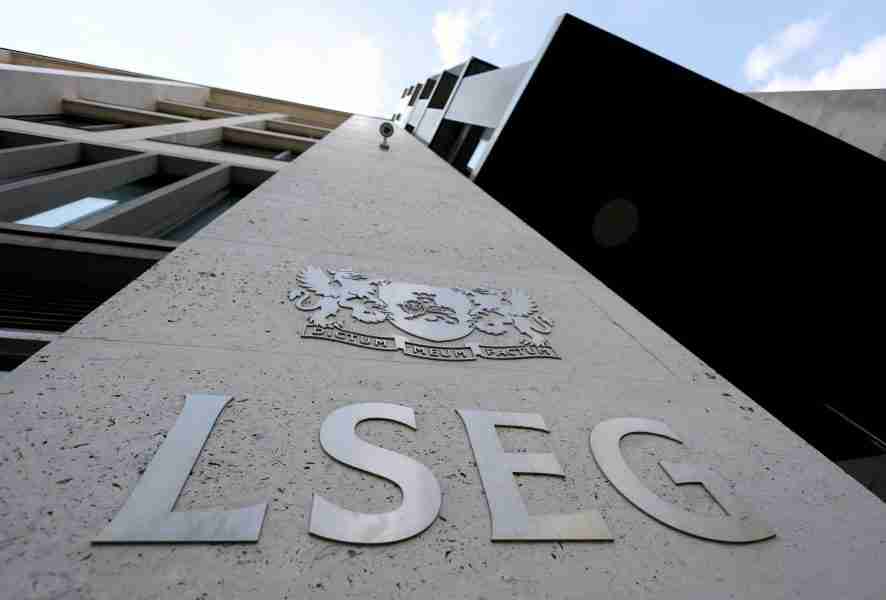
Britain’s Financial Conduct Authority said on Tuesday it had approved the London Stock Exchange to operate the Private Intermittent Securities and Capital Exchange System (PISCES) platform, a new type of private stock market.

The platform will bring together buyers and sellers of shares in private companies to trade on an intermittent basis, the regulator said.

Reporting by DhanushVignesh Babu in Bengaluru; Editing by Rashmi Aich

European shares fall on French political risks, Fed independence concerns

The pan-European STOXX 600 fell 0.8% by 0811 GMT with all major regional bourses in the red

International News via Reuters:

European shares dropped on Tuesday, led by losses in France as the country’s minority government looked increasingly likely to be ousted next month, while mounting concerns over the U.S. Federal Reserve’s independence curbed appetite for riskier assets globally. 

France’s main stock index <.FCHI> fell 2.1% and its bonds stumbled as the three main opposition parties said they would not back a confidence vote which Prime Minister Francois Bayrou announced for September 8 over his plans for sweeping budget cuts. 

The previous government under Prime Minister Michel Barnier also fell to a no-confidence vote in December, underscoring persistent political instability in the euro zone’s second-largest economy.

“The country needs the stricter budget measures in order to contain debt, and that is creating a lot of political problems in France. It’s a deja vu for the French politics,” said Ipek Ozkardeskaya, senior analyst at Swissquote Bank.

“In the medium to long run, we think that the French political schisms will eventually ease, but they will not necessarily bring the necessary budget outlook and predictability to go back into France with full confidence.”

Shares of French banks BNP Paribas and Societe Generale slumped 6.2% and 5.2%, respectively, weighing the wider European index.

The pan-European STOXX 600 fell 0.8% by 0811 GMT with all major regional bourses in the red. 

U.S. President Donald Trump on Monday took the unprecedented action of firing Federal Reserve Governor Lisa Cook, over claims of mortgage borrowing impropriety, sparking fresh concerns over the U.S. central bank’s independence that prompted a flight from U.S. assets.

Hours later Cook responded in a statement emailed to reporters through the law office of lawyer Abbe Lowell, saying of Trump that “no causes exists under the law, and he has no authority” to remove her from the job.     

A dovish tilt from U.S. central bank Chair Jerome Powell had brought the European STOXX 600 within striking distance of an all-time high on Friday.

Among other stocks, British American Tobacco fell 1.9% after the maker of Dunhill cigarettes said that its finance chief Soraya Benchikh is stepping down with immediate effect, after about 15 months in the role.

Bunzl <BNZL.L> rose 5% after the British business supplies distributor posted a decline in half-year profit.

Orsted <ORSTED.CO> steadied 3.4% following a 16% plunge in the prior session after the U.S. halted the Danish company’s Revolution Wind project off Rhode Island.

Markets are bracing for Nvidia’s quarterly results on Wednesday, seen as a key gauge of the strength of the red-hot AI rally this year.

Reporting by Medha Singh in Bengaluru; Editing by Mrigank Dhaniwala

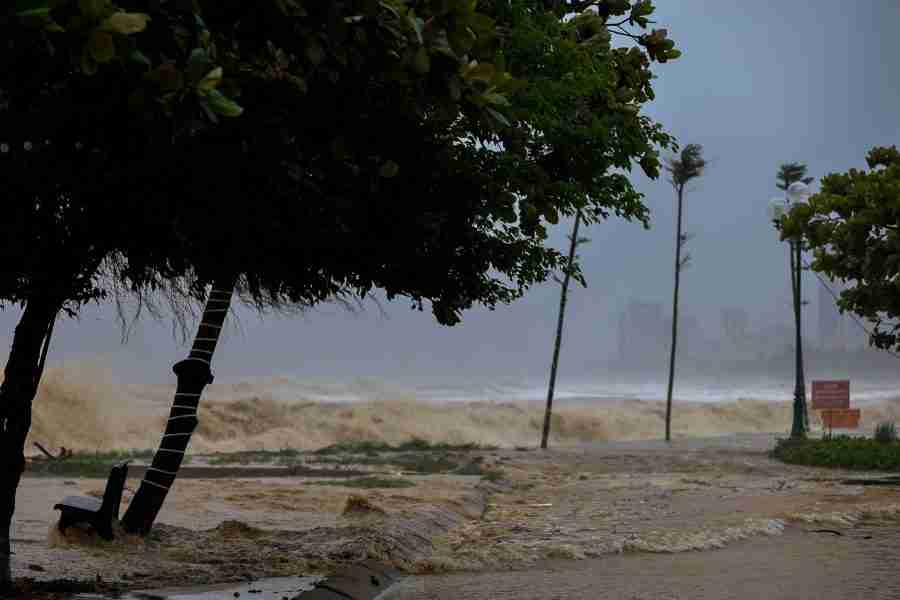
Typhoon Kajiki kills 3 in Vietnam, floods Hanoi streets

The storm damaged nearly 7,000 homes, inundated 28,800 hectares of rice plantings and felled 18,000 trees

International News via Reuters:

Typhoon Kajiki killed at least three people and injured 10 others in Vietnam, authorities said on Tuesday as they warned that heavy rains could cause flooding and landslides.

The storm damaged nearly 7,000 homes, inundated 28,800 hectares of rice plantings and felled 18,000 trees, the government said in a statement. It also brought down 331 electricity poles, causing widespread blackouts in Thanh Hoa, Nghe An, Ha Tinh, Thai Nguyen and Phu Tho provinces.

Streets in the capital Hanoi were severely flooded as heavy rains fell on Tuesday morning, paralysing traffic. Cars were seen submerged up to their roofs in water.

Flood water also surrounded residential areas in the city, which is preparing to host the country’s largest National Day parade in decades next week as it celebrates the 80th anniversary of its founding.

Video clips on state media showed that water at the West Lake, the largest lake in Hanoi, has overflowed its bank, as rain continued to fall.

Several villages in Bac Ninh province have also been isolated due to flooding, state media reports said.

After making landfall on Vietnam’s north central coast on Monday afternoon, Kajiki has since weakened into a tropical depression as it moved across to Laos on Tuesday morning, the national weather agency said. 

The agency warned that rain will continue in several parts of northern Vietnam, with some areas likely to get up to 150 millimetres (6 inches) in six hours, potentially causing flash floods and landslides.

Before making landfall in Vietnam, Kajiki skirted the southern coast of China’s Hainan Island on Sunday, forcing Sanya City on the island to close businesses and public transport.   

Reporting by Khanh Vu; Additional reporting by Francesco Guarascio; Editing by John Mair

London stocks fall as concerns about US Fed’s independence resurface

Risk assets around the world fell after Trump said he was firing Cook over alleged improprieties in obtaining mortgage loans

International News via Reuters:

British equities fell on Tuesday, as global markets went into a risk-off mode after U.S. President Donald Trump said he was firing Federal Reserve Governor Lisa Cook.

The blue-chip FTSE 100 was down 0.6% by 0940 GMT, coming off its all-time highs and on track to snap a five-day winning streak.

Risk assets around the world fell after Trump said he was firing Cook over alleged improprieties in obtaining mortgage loans. Cook said in a statement that the President has no authority to remove her, but Trump’s statement brought back concerns about the Fed’s independence.

The pan-European STOXX 600 was last down 0.7% and U.S. stock index futures also indicated a weak open on Wall Street.

In the UK, heavyweight banks weighed the most on the FTSE 100, down 1.7%. Top lenders HSBC and Standard Chartered slipped 1.8% and 3.1%, respectively.

British 30-year government bond yields surged to their highest level since April 9, tracking a rise in U.S. Treasuries.

UK’s domestically focussed FTSE 250 midcap index dropped 1.1%. Home improvement retailer Wickes languished at the bottom of the index with a 9.3% fall after Deutsche Bank downgraded its rating to “sell” from “hold”.

Rival Kingfisher also lost 4.7% after Deutsche Bank cut its rating to “hold” from “buy”. Primark owner AB Foods dipped 4.6% after Deutsche Bank cut its rating on the stock to “sell”.

On the flipside, business supplies distributor Bunzl jumped almost 4% after the company maintained its annual guidance and resumed a share buyback programme.

A basket of precious metal miners gained 1.4% as gold prices climbed to a more than two-week high.

Last week, the FTSE 100 briefly hit an all-time high after Fed Chair Jerome Powell signalled a possible interest rate cut at the Fed’s September meeting, pushing risk assets higher.

Trading resumed on Tuesday after a UK bank holiday on Monday.

Reporting by Shashwat Chauhan in Bengaluru; Editing by Leroy Leo

One-third of Swiss engineering firms plan shift to EU, survey finds

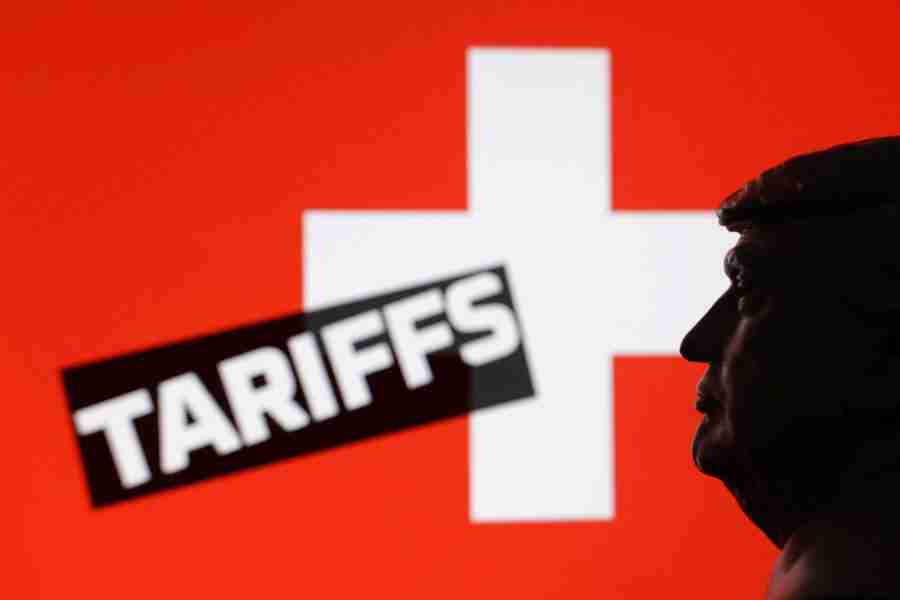
Switzerland was this month hit with one of the highest U.S. tariff rates worldwide

International News via Reuters:

Faced with a strong Swiss franc and a drop in U.S. business due to tariffs, 31% of Swiss mechanical and electrical engineering companies plan to transfer some operations to the European Union, industry association Swissmem said on Tuesday.

Switzerland was this month hit with one of the highest U.S. tariff rates worldwide – 39%, compared with 15% in the neighbouring European Union – while the safe haven Swiss franc has strengthened around 13% this year against the U.S. dollar.

Many Swiss tech companies are gearing up to streamline and transfer businesses, Swissmem President Martin Hirzel said, based on a poll of member companies conducted after the levy came into effect on August 7 in which 385 firms participated.

“Dismissals are inevitable,” he told reporters in Bern, adding that the scale of layoffs would depend on how quickly politicians could bring down the U.S. tariff rate.

Goods exports of the Swiss tech industry in the first half of 2025 dropped 0.9% year-on-year, driven by negative rates in Asia and stagnating demand in Europe, Swissmem said, calling the business trend in the second quarter particularly worrying.

While Swiss tech exports to the U.S. rose sharply in the first quarter, they slumped after the U.S. threatened tariffs in April, bringing overall order intake down 13.4% year-on-year in the second quarter, added Swissmem.

Reporting by Ariane Luthi, Editing by Miranda Murray

UK shop prices rise by most since March 2024, adding to inflation nerves

Shop prices rose by 0.9% compared with August 2024, driven by a jump of 4.2% in food prices

International News via Reuters:

British shop prices rose this month by the most since March last year, potentially adding to the Bank of England’s worries about how long the country’s high inflation problem is likely to last.

Shop prices rose by 0.9% compared with August 2024, driven by a jump of 4.2% in food prices, the biggest since February last year, the British Retail Consortium said on Tuesday.

The BoE said earlier this month that rising food inflation was driving up inflation expectations, something that could fuel demands for higher pay and fuel future inflation.

Britain’s headline consumer price inflation rate – which covers a wider range of goods and services than the BRC measure – hit an 18-month high of 3.8% in July and the BoE thinks it will reach 4% in September before edging down.

Helen Dickinson, chief executive of the BRC, said staples such as butter and eggs saw significant increases in price due to high demand, tightening supply and increased labour costs, while poor cocoa harvests had pushed up the cost of chocolate.

The heads of leading retailers wrote to finance minister Rachel Reeves last week say that further tax increases on them – after an increase in employers’ social security contributions in April – could ruin the government’s promise to improve living standards.

The BRC data was based on prices collected between August 1 and August 7.

As well as the highest headline inflation rate among the big, rich Group of Seven economies, the BoE is also worried about signs of a slowdown in Britain’s labour market.

Separate data published on Tuesday by jobs website Adzuna showed demand for staff fell in July. Vacancies were down a monthly 1.2% and there was a 0.3% drop in advertised salaries, reversing June’s pickup in demand.

Adzuna co-founder Andrew Hunter said there had been a further fall in healthcare roles, contrasting with continued demand in sectors such as construction.

Compared with July last year, vacancies edged up 0.3% while advertised salaries were almost 9% higher, the data showed.

Writing by William Schomberg; editing by David Milliken

Verdmont tours bring history to life

Today, we’re taking a step back in time with the Bermuda National Trust at Verdmont, one of the island’s most treasured historic homes.

Built more than 325 years ago, Verdmont is not only a beautifully preserved house but also a place that holds powerful stories about Bermuda’s past — from the merchant families who lived there to the enslaved men, women, and children whose lives and labour shaped its history.
Kendal Trott sat down with Jo-Rena Davis, an interpreter with the Bermuda National Trust, to talk about the National Trust Guided Tours of Verdmont. 

She shares why, as summer winds down, this 45-minute tour makes for a fun, family-friendly activity — and a meaningful way to connect with Bermuda’s heritage.

London celebrates Notting Hill carnival amid concerns over event’s future

The carnival traces its roots to the hundreds of thousands of migrants from the Caribbean

International News via Reuters:

Revellers, dancers and musicians filled the streets of west London on Monday for the annual Notting Hill carnival, one of the world’s largest street parties that, despite its cultural prominence, has struggled with funding challenges.

The 57th edition of the carnival – which celebrates the city’s diversity and how generations of migrants and their descendants have contributed to British society – was expected to attract more than one million people.

Monday’s celebrations, the event’s third and final day, featured trucks draped in colourful materials carrying bands and sound systems playing soca and reggae songs, surrounded by people in bright festival costumes.

The carnival traces its roots to the hundreds of thousands of migrants from the Caribbean, known as the “Windrush” generation, who came to Britain between 1948 and 1971 to help rebuild the country following World War Two.

Their arrival was accompanied by racial tensions and the unfair treatment of Black people. For some, the carnival’s message remains as important today.

“Continuing to do carnival every year just… reinforces the importance of equality and understanding everybody despite what background they’re from,” said 29-year-old Jocelyn Kuyaziwm, part of one of the carnival’s masquerade groups.

The carnival has been facing financial challenges, with its chair Ian Comfort telling the Guardian newspaper the event came close to not happening this year.

A review commissioned by the organisers highlighted safety concerns, particularly around crowd management, which required additional funding. There are also worries about violent incidents involving a small minority of attendees.

Just weeks before the event, nearly 1 million pounds ($1.35 million) in funding from the London mayor’s office and two local councils enabled it to go ahead but concerns about its future remain.

Kim Taylor-Smith, deputy leader of Kensington and Chelsea Council, said the extra funding his authority provided would apply “for this year only”. He called on the government to support the event financially.

Cristianne Bukhari, 35, has been attending carnival her entire life and said she has been frustrated that authorities often fail to recognise the event’s importance.

“There’s always going to be downsides,” Bukhari said. “But if you look around… there are people from all over the world – white, Black, Asian – coming together and celebrating. We need more of this.”

Reporting by Catarina Demony and Vitalii Yalahuzian; Additional reporting by Leila Dougan; Editing by Alex Richardson

Oil prices rise as Russia-Ukraine peace talks drag on

Brent crude futures were up $1.20, or 1.77%, to $68.93, and West Texas Intermediate crude futures gained $1.29 cents, or 2.03%, to $64.95

International News via Reuters:

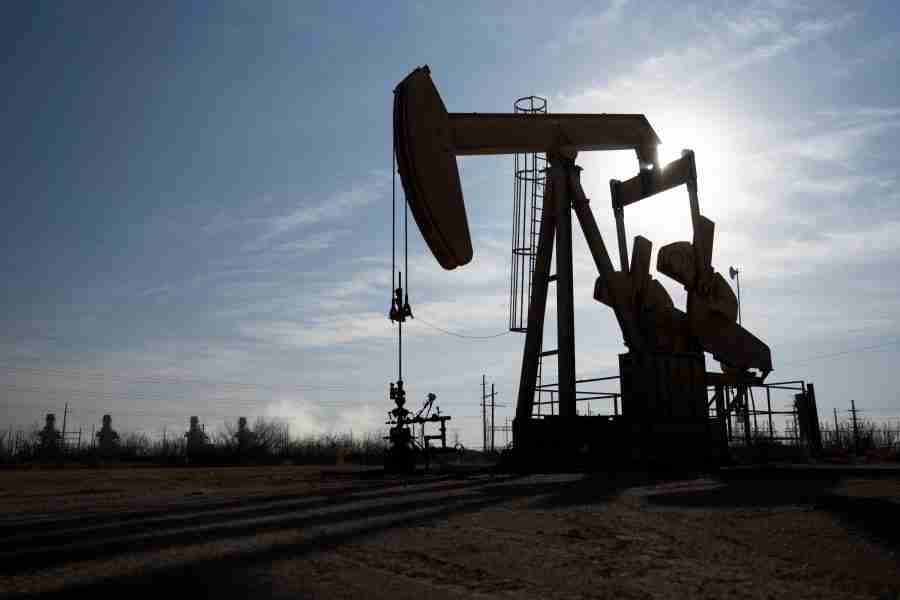
Oil prices climbed on Monday as traders anticipated more U.S. sanctions and Ukrainian attacks targeting energy infrastructure in Russia could disrupt supplies.

Brent crude futures were up $1.20, or 1.77%, to $68.93 by 1:41 p.m. EDT (1741 GMT), and West Texas Intermediate crude futures gained $1.29 cents, or 2.03%, to $64.95.

“There seems to be a sense the peace talks are dragging on,” said Phil Flynn, senior analyst with Price Futures Group. “There could be sanctions on Russia if these talks don’t go well,” Flynn said. 

U.S. President Donald Trump said again on Friday that he would impose sanctions on Russia if there was no progress toward a peaceful settlement in Ukraine in two weeks.

He has also said he may hit India with harsh tariffs over its purchases of Russian oil. 

Over the weekend, U.S. Vice President JD Vance said Russia had made “significant concessions” toward a negotiated settlement in the 3-1/2-year war.

Ukraine, which has stepped up attacks on Russian energy infrastructure, launched a drone attack on Sunday that caused a huge blaze at the Ust-Luga fuel export terminal, Russian officials said.

A fire at Russia’s Novoshakhtinsk refinery, following a Ukrainian drone attack, was burning for the fourth day on Sunday, the region’s acting governor said.

The refinery sells fuel mainly for export and has an annual capacity of 5 million metric tons of oil, or about 100,000 barrels per day.

The market impact of possible Russian supply disruptions was offset by OPEC+’s reversal of a series of production cuts, which is adding millions of barrels to the market, said Ole Hansen, head of commodity strategy at Saxo Bank.

Eight members of the oil exporters’ group are scheduled to meet on September 7, when they are set to approve another boost.

Investors’ risk appetite increased after Federal Reserve Chair Jerome Powell on Friday signaled a possible interest rate cut at the U.S. central bank’s meeting in September. 

Both oil benchmarks, however, appear to lack momentum, said Priyanka Sachdeva, senior market analyst at brokerage Phillip Nova, adding that markets seem increasingly convinced that Trump’s tariffs will hit economic growth, which would limit fuel demand.

Reporting by Anna Hirtenstein in London;Additional reporting by Sam Li in Beijing and Florence Tan in Singapore; Editing by Helen Popper, Clarence Fernandez, Paul Simao and Barbara Lewis

UK watchdog makes further probes into water firms’ executive pay

In June, the government banned the six water companies, including Thames Water and Yorkshire Water, from awarding bonuses to executives for the year ending April

International News via Reuters:

Britain’s water regulator said on Monday that it has written to six water companies requesting details on remuneration disclosed in their annual accounts as part of a review into compliance with rules prohibiting performance-related executive pay.

In June, the government banned the six water companies, including Thames Water and Yorkshire Water, from awarding bonuses to executives for the year ending April, citing failures to tackle pollution.

Regulator Ofwat contacted the companies that triggered the bonus ban rule, which include Thames – Britain’s largest supplier with 16 million customers – and the other five firms, Yorkshire Water, Anglian Water, Wessex Water, United Utilites and Southern Water.

Sky News first reported Ofwat’s written requests, which it said followed disclosures that Yorkshire Water’s offshore parent, Kelda Holdings, paid its chief executive more than 1 million pounds ($1.35 million) in previously unreported fees.

A spokesperson for Ofwat, which regulates the water sector, said it wrote to several companies this month to request further information on their remuneration decisions.

“Where we find evidence that a company has breached the rule, we have powers to direct companies to take remedial actions which, if not complied with, can result in companies facing enforcement action – including financial penalties,” the spokesperson added.

Water industry pay has come under increased scrutiny in recent months, amid a wave of fines for pollution and infrastructure failures.

In May, Ofwat imposed a record 122.7 million pound penalty on Thames Water for environmental breaches and unjustified dividend payments.

Thames has been at the centre of criticism over the privatised sector, accused of discharging sewage into waterways while paying dividends and accumulating 18 billion pounds in debt.

($1 = 0.7402 pounds)

Reporting by Sam Tabahriti; Editing by Susan Fenton and Tomasz Janowski