Friday, October 30, 2026
Home Blog Page 796

Exclusive-U.S. confirms nation’s first travel-associated human screwworm case connected to Central American outbreak

The USDA has estimated a screwworm outbreak could cost the economy in Texas, the biggest U.S. cattle-producing state, about $1.8 billion in livestock deaths

International News via Reuters:

The U.S. Department of Health and Human Services on Sunday reported the first human case in the United States of travel-associated New World screwworm, a flesh-eating parasite, from an outbreak-affected country.

The case, investigated by the Maryland Department of Health and the U.S. Centers for Disease Control and Prevention, was confirmed by the CDC as New World screwworm on August 4, and involved a patient who returned from travel to El Salvador, HHS spokesman Andrew G. Nixon said in an email to Reuters.

Earlier, Reuters reported that beef industry sources said last week that the CDC had confirmed a case of New World screwworm in a person in Maryland who had traveled to the United States from Guatemala.

Nixon did not address the discrepancy on the source of the human case.

“The risk to public health in the United States from this introduction is very low,” he said.

The U.S. government has not confirmed any cases in animals this year.

The differing accounts from the U.S. government and industry sources on the human case are likely to further rattle an industry of cattle ranchers, beef producers and livestock traders already on high alert for potential U.S. infestations as screwworm has moved northward from Central America and southern Mexico.

The government’s confirmation of a screwworm case comes just over a week after U.S. Department of Agriculture Secretary Brooke Rollins traveled to Texas to announce plans to build a sterile fly facility there as part of efforts to combat the pest.

The USDA has estimated a screwworm outbreak could cost the economy in Texas, the biggest U.S. cattle-producing state, about $1.8 billion in livestock deaths, labor costs and medication expenses.

An executive of the industry group Beef Alliance sent emails last week to about two dozen people in the livestock and beef sectors, informing them that the CDC had confirmed a human case of screwworm in Maryland in a person who had traveled to the U.S. from Guatemala, according to a source, who asked not to be identified, and who shared the contents of the emails with Reuters.

Beth Thompson, South Dakota’s state veterinarian, told Reuters on Sunday that she was notified of a human case in Maryland within the last week by a person with direct knowledge of it.        CDC deferred questions to Maryland on a call with state animal health officials, Thompson said.     “We found out via other routes and then had to go to CDC to tell us what was going on,” she said. “They weren’t forthcoming at all. They turned it back over to the state to confirm anything that had happened or what had been found in this traveler.”

Another source said that state veterinarians had learned about a human case in Maryland during a call last week with the CDC. A Maryland state government official also confirmed a case.

A spokesperson for the Maryland Department of Health did not immediately respond to requests for comment. 

WHAT ARE SCREWWORMS?    Screwworms are parasitic flies whose females lay eggs in wounds on any warm-blooded animal. Once the eggs hatch, hundreds of screwworm larvae use their sharp mouths to burrow through living flesh, eventually killing their host if left untreated.

The maggots’ feeding is similar to a screw being driven into wood, giving the pests their name.

Screwworms can be devastating in cattle and wildlife, and rarely infest humans, though an infestation in either an animal or a person can be fatal.

Treatment is onerous, and involves removing hundreds of larvae and thoroughly disinfecting wounds. But infestations are typically survivable if treated early enough.

The emails from the Beef Alliance executive said that due to patient privacy laws, there were no other details available about the positive human case of screwworm. The person was treated and prevention measures were implemented in the state, the email said. 

A livestock economist at Texas A&M University was asked to prepare a report for Rollins on the impacts to industry of the border closure to Mexican cattle, according to the emails, a measure that has largely been in effect since November to prevent the arrival of screwworm to the United States.

The CDC was required to report the positive New World screwworm case to both Maryland health officials and the Maryland state veterinarian, one of the emails said, adding that the CDC also notified other agriculture stakeholders.

“We remain hopeful that, since awareness is currently limited to industry representatives and state veterinarians, the likelihood of a positive case being leaked is low, minimizing market impact,” the beef industry executive wrote.

A representative for the Beef Alliance did not respond to requests for comment.

IMPACT ON BEEF AND CATTLE FUTURES

Livestock traders and beef producers have been on edge about the potential for cases in cattle as prices have already hit record highs because the U.S. cattle herd is at its smallest size in seven decades.

A human case and the lack of transparency around it could present a political challenge for Rollins. The USDA has set traps and sent mounted officers along the border, but it has faced criticism from some cattle producers and market analysts for not acting faster to pursue increased fly production.

Rollins first announced plans for a sterile fly facility at Moore Air Force Base in Edinburg, Texas – near where a production facility to combat screwworm operated during the last major outbreak 50 years ago – in June, saying that the facility would take two to three years to come online.    A spokesperson for the USDA did not immediately respond to a request for comment.    Mexico has also taken efforts to limit the spread of the pest, which can kill livestock within weeks if not treated. The Mexican government said in July that it started to build a $51 million sterile fly production facility in the country’s south.

The sole operating plant is in Panama City and can produce a maximum of 100 million sterile screwworm flies each week. The USDA has estimated that 500 million flies would need to be released weekly to push the fly back to the Darien Gap, the stretch of rainforest between Panama and Colombia.

Screwworms have been traveling north through Mexico from Central America since 2023. They are endemic in Cuba, Haiti, the Dominican Republic and countries in South America, according to the USDA.

Mexico reported a new case about 370 miles (595 km) south of the U.S. border in Ixhuatlan de Madero, Veracruz, in July. The USDA immediately ordered the closure of livestock trade through southern ports of entry, after previously halting imports in November and May.       

The U.S. typically imports over a million cattle from Mexico a year to fatten in feedlots and process into beef.

Screwworms were eradicated from the United States in the 1960s when researchers began releasing massive numbers of sterilized male screwworm flies that mate with wild female screwworms to produce infertile eggs.

Reporting by Cassandra Garrison in Buenos Aires, Tom Polansek in Chicago and Leah Douglas in Washington. Additional reporting by Heather Schlitz in Chicago and Jarrett Renshaw in Washington. Editing by Emily Schmall, Diane Craft and Sonali Paul


Norway’s Northern Lights CCS project starts operations with first CO2 injected

The CO2 is being stored in a reservoir 2,600 meters (8,530 ft) below the seabed, marking a major milestone for CCS

International News via Reuters:

The first volumes of carbon dioxide (CO2) have been injected and stored as part of Norway’s Northern Lights carbon capture and storage (CCS) project, marking the start of operations, owners Shell, Equinor and TotalEnergies said on Monday.

The CO2 is being stored in a reservoir 2,600 meters (8,530 ft) below the seabed, marking a major milestone for CCS, the companies said.   

“This demonstrates the viability of carbon capture, transport and storage as a scalable industry,” Anders Opedal, CEO of Equinor, said in a statement.   

The facility is part of Norway’s heavily subsidised Longship carbon capture and storage project aimed at commercialising CCS as a way to reduce CO2 emissions, especially for sectors that rely on fossil fuel input and are hard to decarbonise.

The CO2 now stored was shipped from the Brevik cement factory operated by Heidelberg Materials in southern Norway, and first offloaded into onshore tanks, before being sent through a 100-kilometer (62 miles) pipeline to the storage reservoir.

The commenced injection completes phase 1 of the Northern Lights development, which can inject 37.5 million metric tons of CO2 over a 25-year period, or 1.5 million tons per year, and is fully booked.

The partners also committed to invest 7.5 billion crowns ($743.93 million) into a second phase, which targets an additional 3.5 million tons a year.

($1 = 10.0816 Norwegian crowns)

Reporting by Nora Buli, editing by Gwladys Fouché

Competing battery technologies shape the EV industry

China controls 85% of the global battery cell production, and 90% of processing of raw materials used in two lithium-ion variants that dominate today’s EV market

International News via Reuters:

Startups worldwide are racing to develop new battery technologies using materials like sodium and sulfur or other innovative chemistries, aiming to cut costs and reduce reliance on some critical minerals to supply electric vehicles (EVs).

China controls 85% of the global battery cell production, and 90% of processing of raw materials used in two lithium-ion variants that dominate today’s EV market.

Battery technology is evolving fast, but the basic principle remains unchanged, with three key components – a cathode, an anode and an electrolyte.

As carmakers weigh long-term options, here is a look at the various battery types currently in use or under development.

LEAD

Used in existing 6 or 12 volt batteries to power car starters.

Pros: Cheap, works in extreme conditions.

Cons: Heavy and low energy.

NICKEL-CADMIUM (NI-CD)

Rechargeable batteries.

NICKEL-METAL HYDRIDE (NI-MH)

Technology used on Toyota’s first Prius, a precursor to hybrids, in 1997.

SODIUM NICKEL CHLORIDE

Has been used on the Venturi Automobiles fleet of the French postal service.

Pros: Smaller, this battery can be fitted to existing vehicles without having to convert them.

Cons: Top speed limited to 100 km/h, range limited to 100 km.

LITHIUM METAL POLYMER (LMP)

Used in Bolloré Pininfarina BlueCar model, Parisian car-sharing service Autolib, both now discontinued. Technology now used mainly for stationary storage, buses and trams.

Pros: “Dry” technology on the capacitor principle, easier industrial process.

Cons: Requires preheating and maintaining the battery at a certain temperature.

LITHIUM-ION

The most widespread technology today, used in phone and laptop batteries, electric cars and other devices, first commercialized in 1991 by Sony.

Pros: Lithium is the second most energetic metal after uranium.

Increasingly high top speed and range, no charge memory, fast and slow charging possible.

Cons: Weight and sensitivity to external conditions (cold, vibrations), so-called “liquid” batteries which require close control of the risks of overheating.

TWO LI-ION TECHNOLOGY FAMILIES DOMINATE THE EV MARKET

NMC (Nickel Manganese Cobalt), with high energy density but at a cost more suited to large vehicles. Cobalt comes mainly from the Democratic Republic of Congo, where the conditions for extracting the metal pose strategic and ethical issues.

LFP (Lithium Iron Phosphate)

Pros: Eliminates the need for cobalt, more affordable technology suitable for smaller vehicles.

Cons: Lower energy density than NMC.

SODIUM-ION

Pros: Eliminates the need for lithium, nickel or cobalt, metals that are currently highly sought after, replaced by aluminium, iron and manganese.

Since sodium is much more abundant than lithium, extraction and supply are easier and less expensive.

Non-flammable, can withstand up to 50,000 recharge cycles, five to 10 times more than lithium-ion.

Cons: Lower energy density, almost non-existent supply of this type of batteries currently, interest linked to the price of lithium.

LNMO (Lithium Nickel Manganese Oxide)

Pros: Eliminates the need for cobalt. Renault argues that this technology, which it expects to deliver by 2028, combines the energy density of NMC, the cost and safety of LFP, and recharge times of less than 15 minutes.

Cons: Still in development.

LITHIUM-SULFUR

Pros: Stellantis-backed U.S. startup Lyten, which bought most of the assets of bankrupt Swedish battery maker Northvolt, claims that this technology has more than twice the energy density of lithium-ion. It also eliminates the need for nickel, cobalt and manganese and ensures greater independence since some of the raw materials can be produced locally, in North America and Europe.

Cons: No deployment before 2028.

SOLID-STATE BATTERIES

A solid electrolyte (polymer, ceramic) replaces the liquid electrolyte of lithium-ion technology.

Pros: Higher energy density, lighter, non-flammable.

Cons: Still under development, no large-scale production yet.

Sources: futura-sciences.com, Plastec, Saft (TotalEnergies), Renault, Arkema, other companies.

By Gilles Guillaume, additional reporting by Nick Carey, translated by Alessandro Parodi and Marie Mannes, editing by Matt Scuffham and Susan Fenton

European shares retreat after Powell rally, JDE Peet’s soars on buyout

British stocks were closed for a public holiday

International News via Reuters:

European shares retreated on Monday, having come close to record highs in the previous session on optimism around U.S. monetary policy easing, while shares of JDE Peet’s touched a three-year high following a buyout deal.

JDE Peet’s surged 17.2%, touching its strongest level since September 2022, after Keurig Dr Pepper said it would buy the Dutch coffee company in a 15.7 billion euro ($18.4 billion) deal.

JDE Peet’s was valued at 12.76 billion euros as of last close.

Broader markets came under pressure following Friday’s surge when U.S. Federal Reserve Chair Jerome Powell pointed to a possible interest rate cut next month, citing rising risks to the job market.

The pan-European STOXX 600 index was down 0.3% as of 0722 GMT. The German DAX dropped 0.5% and France CAC 40 slid 0.4%. British stocks were closed for a public holiday.

A big drag on the STOXX 600 was Denmark’s Orsted, which tumbled 15.5% after the Trump administration ordered the company to stop far-advanced construction on an offshore wind project near Rhode Island.

Orsted said it would proceed with the planned rights issue despite the U.S. order.

Other renewable energy firms including Vestas Wind and Siemens Energy added 3.2% and 2%, respectively.

French drugmaker Valneva slumped almost 20% after the U.S. Food and Drug Administration suspended its license for chikungunya vaccine Ixchiq with immediate effect.

Reporting by Sruthi Shankar in Bengaluru; Editing by Mrigank Dhaniwala

Vietnam braces for Typhoon Kajiki as it nears coast

The storm is projected to move inland across Laos and northern Thailand

International News via Reuters:

Vietnam has shut down airports, closed schools, and begun mass evacuations as it prepares for the most powerful storm so far this year. 

Typhoon Kajiki, with gusts of up to 166 kph (103 mph) at sea, was around 110 km (68 miles) off the northern part of Vietnam’s central coast as of 0300 GMT and was due to make landfall on Monday afternoon, the country’s weather agency said. 

“This is an extremely dangerous fast-moving storm,” the government said in a statement on Sunday night, warning that Kajiki would bring heavy rains, flooding and landslides. 

With a long coastline facing the South China Sea, Vietnam is prone to storms that are often deadly and trigger dangerous flooding and mudslides.

Kajiki is forecast to hit provinces that are less industrialised than the area struck last year by Typhoon Yagi, which killed around 300 people and caused property damage of around $3.3 billion.

The storm is projected to move inland across Laos and northern Thailand.

The Vietnamese government said on Monday about 30,000 people had been evacuated from coastal areas.

More than 16,500 soldiers and 107,000 paramilitary personnel have been mobilised to help with the evacuation and to stand by for search and rescue, the government said in a statement.

Authorities said on Sunday that more than half a million people would be evacuated and ordered boats to remain in port. 

Two airports in Thanh Hoa and Quang Binh provinces have been closed, according to the Civil Aviation Authority of Vietnam. Vietnam Airlines and Vietjet cancelled dozens of flights to and from the area on Sunday and Monday.

Kajiki skirted the southern coast of China’s Hainan Island on Sunday as it moved toward Vietnam, forcing Sanya City on the island to close businesses and public transport.

China’s southernmost province downgraded its typhoon and emergency response alerts on Monday morning but warned of heavy rain and isolated storms in cities in the southern part of Hainan.

The Hainan provincial meteorological authority said it expected weather conditions to improve by Monday night.

Local media reported that many residents in Sanya, a popular holiday resort, had taken shelter from the storm in underground garages on Sunday evening. Some large trees were brought down leaving roads strewn with broken branches by Monday morning, the reports said.

Reporting by Khanh Vu in Hanoi, Minh Nguyen and Thinh Nguyen in Cua Lo and Liz Lee in Beijing; Editing by Saad Sayeed and Kate Mayberry

Keurig Dr Pepper to buy Dutch coffee company JDE Peet’s for over $18 billion

The merged company plans to separate its beverage and coffee units “as soon as practicable”

International News via Reuters:

Keurig Dr Pepper will buy Dutch coffee company JDE Peet’s for 15.7 billion euros ($18.4 billion) in cash, a 20% premium to its stock market valuation at the end of last week, the U.S. company said on Monday.

Shares of JDE Peet’s jumped 18% in early trade, on track for their best day on record.

The merged company, aiming to expand its coffee offering to more than 100 countries, plans to separate its beverage and coffee units “as soon as practicable”, Keurig said.

The two resulting companies, “Beverage Co.” and “Global Coffee Co.”, will be listed in the United States, and led by Keurig CEO Tim Cofer and CFO Sudhanshu Priyadarshi, respectively.

Keurig said that Global Coffee Co., with around $16 billion in combined annual net sales, will be well positioned to profit from the world’s $400 billion coffee market, while Beverage Co., with more than $11 billion in yearly net sales, will focus on North America’s $300 billion refreshment beverage market.

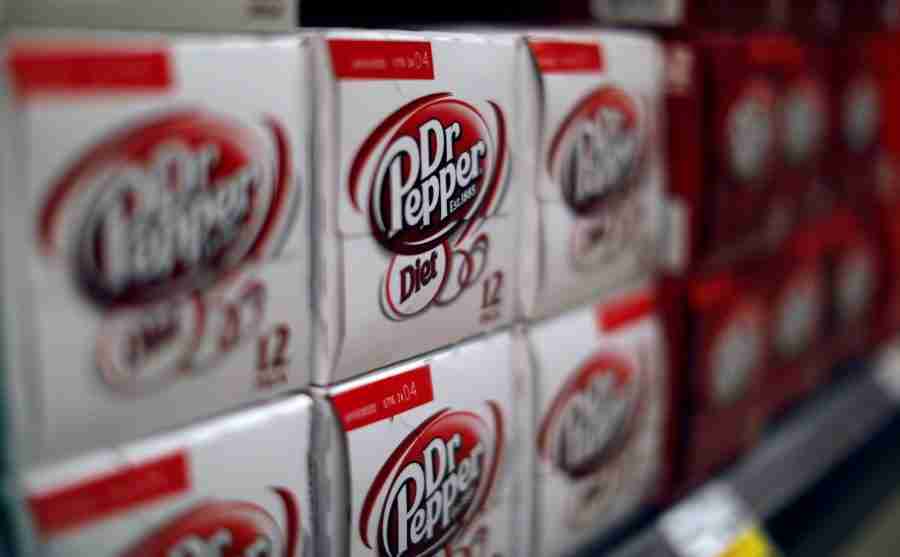
Keurig Dr Pepper, created in 2018 through the merger of Keurig Green Mountain and Dr Pepper Snapple, owns brands including Dr Pepper, Snapple, 7UP, and Green Mountain Coffee.

The company has a market valuation of about $48 billion, while Amsterdam-listed JDE Peet’s, with brands including Jacobs, L’Or, Tassimo and Douwe Egberts, was valued at 12.76 billion euros at Friday’s market close, according to LSEG data.

Keurig’s shares have risen nearly 10% this year on strong beverage sales. Both it and JDE Peet’s have flagged the impact of high coffee bean prices, which are seen rising again after U.S. President Donald Trump slapped a 50% levy on beans imported from Brazil from August 6.

Prices of Arabica and Robusta beans touched record highs this year as unpredictable weather patterns pressured supply, and have been volatile recently.

JDE Peet’s is majority-owned by Germany’s JAB, which also holds a significant minority stake in Keurig Dr Pepper, according to LSEG data.

($1 = 0.8544 euros)

Reporting by Angela Christy in Bengaluru and Mateusz Rabiega in Gdansk; Editing by Stephen Coates, Kirsten Donovan

Major brokerages pivot to Sept Fed rate cut on Powell’s labor warning

Powell’s remarks at the Jackson Hole symposium emphasized a change in the Fed’s reaction function

International News via Reuters:

Major brokerages, including Barclays, BNP Paribas and Deutsche Bank, now expect a 25-basis-point U.S. Federal Reserve rate cut in September following Chair Jerome Powell’s shift in tone at Jackson Hole toward rising risks in the labor market.

Powell’s remarks at the Jackson Hole symposium emphasized a change in the Fed’s reaction function, with greater weight now placed on labor market risks.

“This unusual situation suggests that downside risks to employment are rising,” Powell said, warning that such risks could materialize quickly in the form of layoffs and a spike in unemployment.

In notes released on Friday after Powell’s speech, Barclays pulled forward its previously expected September 2026 cut to September 2025, saying his speech introduced “an easing bias” and raised the bar for not cutting.

“Powell made (it) clear that the Fed intends to deliver a ‘fine-tuning’ rate cut in September unless the data dictates otherwise,” wrote BNP economists, led by Calvin Tse. They reversed the brokerage’s long-standing call for the Fed to stay on hold, forecasting cuts in both September and December.

Meanwhile, both Macquarie and Deutsche Bank revised their expectations of a cut in September and December, respectively, to a 25-bp cut each in those two months.

Morgan Stanley and BofA are the only two major Wall Street brokerages not expecting a September cut yet. Such a move is likely if incoming labor and inflation data confirm further softening, Morgan Stanley said.

Markets are now pricing in an 87% chance of a quarter-point rate cut at the September policy meeting, according to the CME FedWatch Tool, up from 75% before Powell’s speech.

The rate-setting Federal Open Market Committee (FOMC) is scheduled to meet again on September 16 and 17.

Goldman Sachs and J.P. Morgan, meanwhile, reaffirmed their expectations for a September cut, aligning with the broader market view that softening data may warrant policy easing.

Reporting by Rashika Singh in Bengaluru; Editing by Janane Venkatraman

Dollar struggles to recover from Powell’s dovish surprise

The U.S currency added 0.1% to $1.1705 per euro, but remained within striking distance of Friday’s low at $1.174225

International News via Reuters:

The U.S. dollar attempted on Monday to pull itself up from a four-week low on the euro after a dovish pivot from Federal Reserve Chair Jerome Powell sent it tumbling more than 1%.

The U.S currency added 0.1% to $1.1705 per euro, but remained within striking distance of Friday’s low at $1.174225, a level not seen since July 28.

It edged up 0.1% to $1.3509 versus sterling, following a 0.8% slide in the prior session, and rose 0.3% to 147.26 yen, clawing back part of Friday’s 1% tumble.

The risk-sensitive Australian dollar briefly leapt to a one-week high of $0.6523 on Monday before pulling back to trade little changed at $0.6490. In the previous session, it surged 1.1%.

Powell in a closely watched speech at the Fed’s annual Jackson Hole symposium on Friday opened the door to an interest rate cut at the central bank’s meeting next month.

“Downside risks to employment are rising,” he told an audience of international economists and policymakers. “And if those risks materialize, they can do so quickly.”

Traders are now pricing in 84% odds of a quarter-point rate cut on September 17, and a cumulative 53 basis points of reductions by year-end, according to LSEG data.

Traders had ramped up bets on a September cut early this month after an unexpectedly weak monthly payrolls report, but hotter-than-expected producer price inflation and strong business activity surveys forced a paring back in the run-up to Jackson Hole.

“Chair Powell’s Jackson Hole message cleared the market’s low bar for dovishness following a steady erosion in Fed cut pricing,” Goldman Sachs analysts wrote in a client note.

“It will be up to the data to determine the pace and depth of cuts.”

Key upcoming data points include the Fed’s preferred inflation gauge, the PCE deflator, on Friday, and monthly payrolls figures for August, due a week later.

The dollar has been under additional pressure in recent weeks as U.S. President Donald Trump’s attacks on Powell and other Fed policymakers raised concerns about central bank independence.

Fed Governor Lisa Cook became Trump’s latest target last week, and on Friday he said he would fire her if she does not resign over allegations about mortgages she holds in Michigan and Georgia.

Trump has repeatedly criticized Powell, first for not cutting rates this year, and more recently over cost overruns on a renovation of the Federal Reserve building.

Bank of Japan Governor Kazuo Ueda said in Jackson Hole on Saturday that wage hikes are spreading beyond large firms and likely to keep accelerating due to a tightening job market.

The remarks reinforced market expectations for the BOJ to resume raising rates soon after it paused following a hike in January in order to gauge the effects of Trump’s aggressive global tariffs.

Traders currently put the odds of a hike by the BOJ’s October meeting at about a coin toss.

Homin Lee, senior macro strategist at Lombard Odier, sees the yen strengthening to the low 140s versus the dollar over a 12-month horizon, but expects it to be range-bound in the near term.

“We assume the window for the Bank of Japan’s next rate hike to be in January next year, not October,” Lee said.

“They’ll probably keep the real interest rate very low in the negative territory until the end of the year, and only consider gradual rate hikes.”

Reporting by Kevin Buckland; Additional reporting by Summer Zhen; Editing by Christopher Cushing and Shri Navaratnam

Marine and Ports welcomes two new maritime trainees

Dylan Ward to train as Branch Pilot; Ibrahim Douch begins path to Maritime Controller role

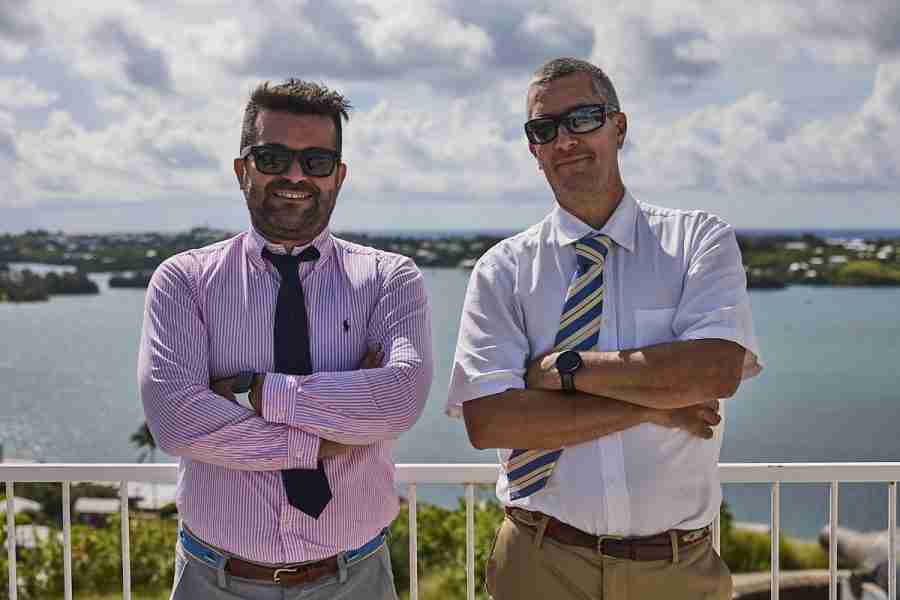
Image supplied

Government press release:

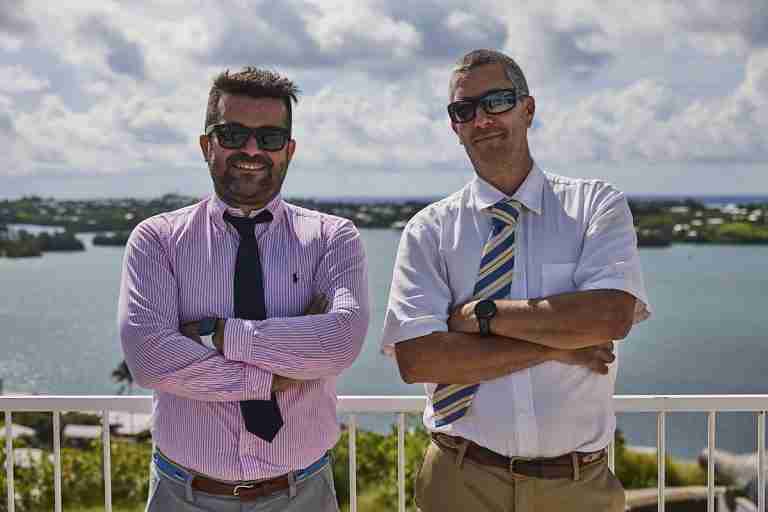
The Department of Marine and Ports Services is pleased to welcome two new maritime trainees: Dylan Ward, who will begin training to become a Branch Pilot and Ibrahim Douch, who will train to become a Maritime Controller with the Bermuda Maritime Operations Centre (BMOC).

Both positions are critical to ensuring Bermuda’s maritime safety and operational readiness, and encompass a fully funded three-year training programme, including overseas certifications and hands-on experience.

Dylan’s training as a Branch Pilot will include earning a Certificate of Competency in Basic Ship Handling from the Maritime Institute of Technology and Graduate Studies in Maryland, USA, as well as attaining his Branch Pilot License. Once qualified, Branch Pilots are responsible for boarding large vessels, navigating them safely into and out of Bermuda’s ports, and ensuring the safety of crew, cargo, and the surrounding marine environment.

“I’ve always been drawn to the sea, whether by fishing, studying biology, or doing ocean crossings, and previously working as a Maritime Controller” said Dylan. “This role offers the chance to continue learning, take on new challenges, and help guide ships safely to shore.”

Ibrahim’s path to becoming a Maritime Controller follows a similar trajectory, shaped by his long-standing interest in marine navigation and small commercial vessel piloting operations in local waters. Having first trained and worked as an airplane pilot, he later earned his charter boat license after moving to Bermuda and took on leadership roles at sea. His three-year training programme will lead to an Officer of the Watch certification from the Warsash Maritime School in Southampton, UK. Maritime Controllers monitor vessel traffic and coordinate port operations, detect vessel hazards, undertake the transmission of marine safety information to mariners, assist with fisheries enforcement, coordinate search and rescue operations and respond to marine pollution and security incidents, and oversee maritime domain awareness in territorial waters, the exclusive economic zone and anywhere globally that Bermuda registered vessels and aircraft operate.

“This position is something I’ve wanted for a long time,” said Ibrahim. “It’s about protecting people, monitoring hazards, and keeping our waters safe. The work is fulfilling, and I would encourage anyone interested to keep learning, gain your licenses, and never become complacent.”

Valerie Robinson-James, Acting Head of the Public Service, highlighted the importance of these roles and the opportunities they present:

“In Bermuda, several Branch Pilots will reach retirement age in the next few years, creating opportunities for the next generation to step forward. The Government funds provide training for these positions, including overseas qualifications, making them accessible to talented and motivated individuals. Dylan and Ibrahim’s stories demonstrate the diversity of careers available within the Public Service, and we encourage others to explore these rewarding paths.”

The Government of Bermuda remains committed to investing in its workforce, offering training programmes that lead to long-term careers while contributing to the island’s safety and prosperity.

To learn more about career opportunities in the Public Service, download our Career Guide at https://www.gov.bm/sites/default/files/2024-06/Your_Guide_To_Careers_In_Public_Service.pdf

Temporary detour for route 3 buses

Work on Middle Road to reroute service tomorrow; rain date set for Wednesday

Government press release:

The Department of Public Transportation (DPT) wishes to inform the public of a temporary detour affecting Bus Route 3 due to scheduled road works on Middle Road, between Store Hill and North Shore Road, on Tuesday, 26 August 2025. In the event of inclement weather, the detour will be implemented on the rain date: Wednesday, 27 August 2025.

To ensure passenger safety and minimize disruption, Route 3 buses will follow an alternate path during the road works:

  • Outbound buses (traveling away from the City of Hamilton) will proceed east on Middle Road, turn right onto Tee Street, left onto South Road, cross Collector’s Hill, turn right onto Sayle Road, then left back onto South Road, continuing to Knapton Hill, where they will resume the regular route at Harrington Sound Road.
  • Inbound buses (heading toward the City of Hamilton) will follow the same route in reverse.

Passengers are encouraged to plan accordingly and allow extra travel time. DPT appreciates the public’s understanding and cooperation during this temporary adjustment.

Man dies in head-on collision in Smith’s

Bermuda has recorded its 6th road traffc fatality of 2025

Full police statement:

Shortly after 5:30 PM on Sunday, August 24, 2025 Police and Emergency Medical Services along with the Bermuda Fire and Rescue Service, were dispatched to a serious road traffic collision involving a motorcycle and a motorcar, just east of the junction of Knapton Hill and Harrington Hundreds Road, Smith’s.

Initial reports indicate the vehicles were traveling in opposite directions along Knapton Hill, when they became involved in a head-on collision.

Upon arrival, first responders found the male motorcycle rider lying unresponsive on the roadway. They immediately commenced life saving measures.

He was subsequently transported by ambulance to King Edward VII Memorial Hospital for further treatment of his injuries, which were considered
life-threatening.

Sadly, he succumbed shortly thereafter.

The female motorcar driver did not appear to be injured.

An investigation into this incident is now underway and anyone with information is asked to contact Police Constable Dennis Joell on 717-2221 or via e-mail djoell@bps.bm.

No further information will be provided at this time.

H&M launches first store in Brazil with local manufacturing ambitions

The short-term goal is to open four stores in Sao Paulo state over the coming months

International News via Reuters:

Swedish fast-fashion retailer H&M opened its first physical store in Brazil on Saturday and launched online operations in the country, where it is already producing some items locally, including footwear and beachwear, an executive said.

The short-term goal is to open four stores in Sao Paulo state over the coming months, Joaquim Pereira, H&M Brazil’s country manager, said in an interview on Friday.

“This courtship with Brazil has been going on for a long time,” he added, noting that the move took years of planning.

H&M aims to compete locally, but not necessarily against Chinese brands such as Shein, which often have below-average prices, the executives said.

“In Brazil there are many national brands that are very good, really very good. In terms of price, in terms of quality. I think it’s a very, very competitive market, regardless of whether it’s a Chinese company or a local company,” said Pereira.

The company did not disclose its total investment in Brazil.

The first Brazilian store, in an upscale shopping mall in Sao Paulo, focuses on women’s fashion. The second, set to open soon, will offer a wider assortment of products including women’s, men’s and children’s clothing, accessories and shoes.

“We want to have pricing that is inclusive,” said Magnus Olsson, H&M’s regional manager for the Southern Hemisphere.

The company plans to increase local production while maintaining global standards, said Olsson. For now, H&M is producing shoes, beachwear and jeans in Brazil and importing the other products from different markets, including India, Bangladesh and Portugal.

The executives said H&M will eventually open stores in other Brazilian states, without elaborating.

The chain also has a 25,000-square-meter distribution center in the southeastern state of Minas Gerais that can be expanded to about 40,000 square meters.

Reporting by Luciana Magalhaes; Editing by Richard Chang