The Bermuda Police Service issued the following media release.
Around 7:15 on Thursday, August 7, 2025, Police attended a report of an altercation involving two males, outside of the Pickled Onion restaurant on Front Street, in the City of Hamilton.
On arrival, officers observed the 71-year-old victim had sustained a serious head injury and was lying on the ground.
He was attended to at the scene by Emergency Medical Services personnel and subsequently transported by ambulance to King Edward VII Memorial Hospital where he was warded for further treatment.
Sadly, he has succumbed to his injuries.
A suspect has been arrested in relation to this matter.
An investigation is now underway and anyone who may have witnessed this incident or, has any information on the circumstances involved, is asked to contact Detective Sergeant, Odessa Philip, on 717-2193 or via email at, aphilip@bps.bm.
You may also call the main police number 295-0011 or provide the information by using the community reporting portal at https://portal.police.bm
Alternatively, we encourage you to share the information with a police officer you’re familiar with or by calling the independent and confidential Crime Stoppers number, 800-8477.
Dr. Weldon: “MyLineage is more than a family tree — it’s a living archive.”
CariGenetics proudly announces the launch of MyLineage, a genealogy consultation service that empowers Bermudians to trace their ancestry as far back as the 1600s, through a powerful database of over 140,000 Bermudians.
Launched at the “Bermudian Heartbeats’ Law to Legacy Unravelling the Narrative” series on August 7, the debut of MyLineage gave attendees the opportunity to speak directly with the team, ask questions, and sign up for the service on the spot.
In a strategic partnership with Dane Simmons Sr., one of Bermuda’s leading genealogist, MyLineage offers clients unprecedented access to deep family history and identity restoration, rooted in both genetic data and a comprehensive Bermudian family database built over two decades.
What Makes This Service Unique: ● Draws from a robust, privately curated Bermudian database of 140,000 individuals, 45,000 marriages and over 18,800 photos ● Trace back up to 8 generations — connects clients to family lines previously lost to migration, slavery, or adoption ● Private and culturally sensitive
Service Features: ● Exclusive launch offer — enjoy a 2-hour private genealogy consultation for the price of 1, now just $299 ● Optional follow-up sessions ● Clients receive personalised reports ● None public family-matching with no data-sharing
Of note, persons who want to use the service do not need to provide any sensitive personal information.
“Tracing your family line back up to eight generations can be a life-changing moment,” said Dr Carika Weldon, Founder and Director of Research at CariGenetics. “For so many Bermudians, including those of African, Azorean, European, or Native American descent, the stories of who we are have been fragmented. MyLineage is about putting those pieces back together.”
“For over 20 years, I’ve been piecing together the story of Bermuda — one name, one family, one generation at a time. What we’ve found is powerful: every Bermudian is connected, regardless of background. Through this partnership with CariGenetics, we now have the platform to share these connections, allowing any Bermudian to tap into their rich historical record. It’s a pathway for Bermudians to discover where they truly come from and how we’ve always been woven together. MyLineage is more than a family tree — it’s a living archive.”
For further details about the MyLineage service or to schedule a consultation, visit www.carigenetics.com/mylineage. Interview inquiries can be directed to jodi@carigenetics.com.
The Wikimedia Foundation took legal action at London’s High Court over regulations made under the law
International News via Reuters:
The operator of Wikipedia on Monday lost a legal challenge to parts of Britain’s Online Safety Act, which sets tough new requirements for online platforms but has been criticised for potentially curtailing free speech.
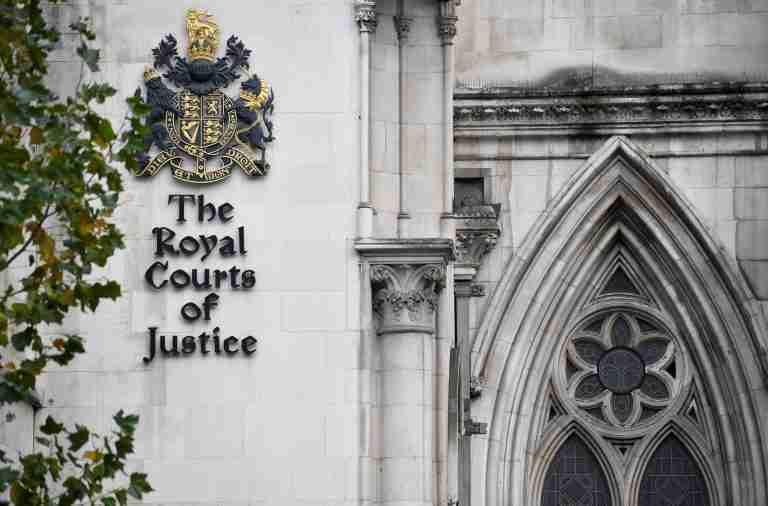
The Wikimedia Foundation took legal action at London’s High Court over regulations made under the law, which it said could impose the most stringent duties on Wikipedia.
The foundation said if it was subject to so-called Category 1 duties – which would require Wikipedia’s users and contributors’ identities to be verified – it would need to drastically reduce the number of users who can access the site.
Judge Jeremy Johnson dismissed its case on Monday, but said the Wikimedia Foundation could bring a further challenge if regulator Ofcom “(impermissibly) concludes that Wikipedia is a Category 1 service”.
The Online Safety Act was criticised earlier this month by social media site X, which said significant changes were needed to the law.
Free-speech campaigners and content creators have complained its rules had been implemented too broadly, resulting in the censorship of legal content.
The British government says the law is designed to protect children and remove illegal content and Technology Secretary Peter Kyle has said those who wanted to overturn it were “on the side of predators”.
Brent crude futures were up 5 cents to $66.64 a barrel at 1003 GMT, while U.S. West Texas Intermediate crude futures were down 1 cent to $63.87
International News via Reuters:
Oil prices were steady on Monday, after falling more than 4% last week, as investors looked ahead to talks between the U.S. and Russia later this week on the war in Ukraine.
Brent crude futures were up 5 cents to $66.64 a barrel at 1003 GMT, while U.S. West Texas Intermediate crude futures were down 1 cent to $63.87.
U.S. President Donald Trump said on Friday that he would meet Russian President Vladimir Putin on August 15 in Alaska to negotiate an end to the war in Ukraine.
The talks follow increased U.S. pressure on Russia, raising the prospect that penalties on Moscow could be tightened if a peace deal is not reached.
Trump set a deadline of last Friday for Russia, which invaded Ukraine in February 2022, to agree to peace or have its oil buyers face secondary sanctions. At the same time, Washington is pressing India to reduce purchases of Russian oil.
Prices fell in recent days as market participants reduced supply disruption estimates, likely because the U.S. only imposed an extra tariff on India rather than all buyers of Russian oil, said UBS analyst Giovanni Staunovo.
UBS has lowered its year-end Brent crude forecast to $62 a barrel from $68, citing higher supply from South America and resilient output from sanctioned countries.
The bank added that Indian demand had fallen short of its expectations of late, and that it expected OPEC+ to pause its production hikes unless larger unexpected supply disruptions emerge.
An Exxon Mobil-led consortium began crude production four months earlier than expected at a fourth floating production, storage and offloading vessel in Guyana, Exxon said on Friday.
Consultancy Energy Aspects estimated Indian refiners have already purchased WTI totalling 5 million barrels for August loadings.
Reporting by Mohi Narayan in New Delhi and Colleen Howe in Beijing. Editing by Jamie Freed, Kirsten Donovan and Mark Potter
The findings could transform theories of early human migrations
International News via Reuters:
Scientists have found a series of stone tools on Indonesia’s Sulawesi island they say may be evidence of humans living 1.5 million years ago on islands between Asia and Australia, the earliest known humans in the Wallacea region.
Archaeologists from Australia and Indonesia found the small, chipped tools, used to cut little animals and carve rocks, under the soil in the region of Soppeng in South Sulawesi. Radioactive tracing of these tools and the teeth of animals found around the site were dated at up to 1.48 million years ago.
The findings could transform theories of early human migrations, according to an article the archaeologists published in the journal Nature in August.
The earliest Wallacean humans, pre-historic persons known as Homo Erectus, were thought to have only settled in Indonesia’s Flores island and Philippines’ Luzon island around 1.02 million years ago, as they were thought to be incapable of distant sea travel, proving the significance of the Sulawesi findings in theories of migration.
“These were artefacts made by ancient humans who lived on the earth long before the evolution of our species, Homo Sapiens,” said Adam Brumm, lead archaeologist from Griffith University in Queensland, Australia.
“We think Homo Erectus somehow got from the Asian mainland across a significant ocean gap to this island, Sulawesi, at least 1 million years ago,” Brumm said.
Wallacea is a region in Eastern Indonesia including several islands such as Sulawesi, Lombok, Flores, Timor, Sumbawa that lie between Borneo and Java and Australia and New Guinea. The region is named for the naturalist Alfred Russel Wallace who studied the fauna and flora of the area.
Reporting by Abdul Rahman Muchtar in Soppeng; Writing by Bernadette Christina; Editing by Christian Schmollinger
The dollar remains on the back foot as investors recently adjusted their expectations for interest rate cuts from the Fed
FILE PHOTO: U.S. dollar banknotes are seen in this photo illustration taken February 12, 2018. REUTERS/Jose Luis Gonzalez/Illustration/File Photo
International News via Reuters:
The U.S. dollar was little changed on Monday before Tuesday’s deadline for Washington and Beijing to strike a tariff deal and a key U.S. inflation report that could help determine whether the Federal Reserve lowers borrowing costs next month.
The dollar index was down less than 0.1% to 98.164 after last week’s 0.4% fall. Against the yen, the U.S. currency traded at 147.39, down 0.2%. Japanese markets were closed on Monday for the Mountain Day holiday.
The euro was up less than 0.1% at $1.1652, while sterling was flat at $1.3462.
The dollar remains on the back foot as investors recently adjusted their expectations for interest rate cuts from the Fed after soft U.S. jobs and manufacturing figures.
Fed officials have sounded increasingly uneasy about the labour market, signalling their openness to a rate cut as soon as September.
Cooling inflation could cement bets for a cut next month but if signs emerge that U.S. President Donald Trump’s tariffs are fuelling price rises it might keep the Fed on hold for now.
“It’s important to note ahead of tomorrow’s data that the bar for a hawkish surprise is higher,” said Francesco Pesole, FX strategist at ING.
Pesole added that a 0.3% monthly rise in core CPI would give the Fed room to lower interest rates, given the deterioration in the labour market.
Economists polled by Reuters expect core CPI to have risen 0.3% in July, pushing the annual rate higher to 3%.
Money market traders are pricing in around a 90% chance of a rate cut next month, while 58 basis points of easing are priced in by year-end, implying two quarter-point cuts and around a one-in-three chance of a third.
Personnel moves at the Fed have also weighed on the dollar recently as Trump prepares to install rate-setters that support his dovish views on monetary policy, including a new chair for when Jerome Powell’s term ends in May.
Trade talks were also in focus as Trump’s August 12 deadline for a deal between the U.S. and China neared, particularly on chip policy. “The market has fully priced in the idea that we’re going to get an extension,” said Chris Weston, head of research at Pepperstone Group Ltd in Melbourne, adding that another 90-day truce was most likely. With the U.S. and China seeking to close a deal averting triple-digit goods tariffs, a U.S. official told Reuters that chip makers Nvidia and AMD had agreed to allocate 15% of China sales revenues to the U.S. government, aiming to secure export licences for semiconductors. “I don’t know if that’s going to be a good thing or a bad thing, but if it puts closure on the matter, it’s not a bad outcome,” Weston said.
“If this is Trump saying 15% and we’ll call it a day, that may not be too bad.”
The offshore yuan fluctuated between gains and losses, trading at 7.1854 to the dollar, after weekend data showed China’s producer prices fell more than expected in July, while consumer prices were unchanged. The Australian dollar fetched $0.6520, trading flat ahead of a rate decision by the central bank on Tuesday, in which it is widely expected to cut rates by 25 basis points to 3.60%, after second-quarter inflation came in weaker than expected and the jobless rate hit a 3-1/2-year high.
Cryptocurrencies jumped, with bitcoin rising as high as $122,308, not far from its July 14 record of $123,153.22, after Trump’s executive order on Thursday freed up cryptocurrency holdings in U.S. retirement accounts.
Ether rose as high as $4,346, its highest since December 2021.
Reporting by Samuel Indyk and Gregor Stuart Hunter; Editing by Clarence Fernandez and Mark Potter
The pan-European STOXX 600 index was up 0.01% as of 0920 GMT
International News via Reuters:
European shares were broadly flat on Monday, as investors refrained from making big bets ahead of a key U.S. inflation data, tariff negotiations and talks between the U.S. and Russia on the war in Ukraine.
The pan-European STOXX 600 index was up 0.01% as of 0920 GMT, retreating from opening gains of as much as 0.4% and hovering near its strongest level since July 31.
Ukrainian President Volodymyr Zelenskiy won diplomatic backing from Europe and the NATO alliance ahead of the Russia-U.S. summit this week in Alaska on Friday, where Kyiv fears Russian President Vladimir Putin and U.S. President Donald Trump may try to dictate terms for ending the 3-1/2-year war.
Trump said a potential deal would involve “some swapping of territories to the betterment of both (sides).”
Hopes of a peace deal weighed on German defence companies. Shares of Rheinmetall dropped 4.7%, while those in Renk and Hensoldt were down 3.3% and 1.3%, respectively.
Further weighing on European stocks was a 28% plunge in Orsted after the Danish wind farm developer unveiled a 60-billion-crown ($9.4 billion) rights issue, citing adverse developments in the U.S. offshore wind market.
Despite concerns about Trump’s tariffs, a strong U.S. earnings season, driven by optimism about AI, and expectations of interest rate cuts from the U.S. Federal Reserve have pushed U.S. stocks to record highs. Europe’s STOXX 600 remains about 3% away from its March record high.
“We’re in a slightly odd and probably unstable equilibrium at the moment where everything feels a little bit (like) Goldilocks,” said Legal & General global equity strategist Robert Griffiths, pointing to the limited impact of tariffs on inflation and companies’ margins so far.
“But that probably isn’t an equilibrium. Answering the question, who’s paying the tariffs, is going to be critical for determining how good or bad that second-half proves for markets.”
Meanwhile, the August 12 deadline for a deal between the U.S. and China looms. Analysts said investors were expecting an extension of the deadline, with both sides seeking to close a deal that would avoid imposing triple-digit tariffs on each other’s goods.
Among other stocks, Northern Data dropped 11.2% after U.S. video platform and cloud services provider Rumble said it was considering an offer of about $1.17 billion for the German AI cloud group.
Novartis climbed 2.3% after the Swiss pharmaceutical company said its Sjogren’s disease treatment, Ianalumab, met the primary endpoint in a late-stage trial.
Reporting by Sruthi Shankar in Bengaluru; Editing by Sherry Jacob-Phillips and Harikrishnan Nair
Shares in M&S were up 2%, paring 2025 losses to 10%
International News via Reuters:
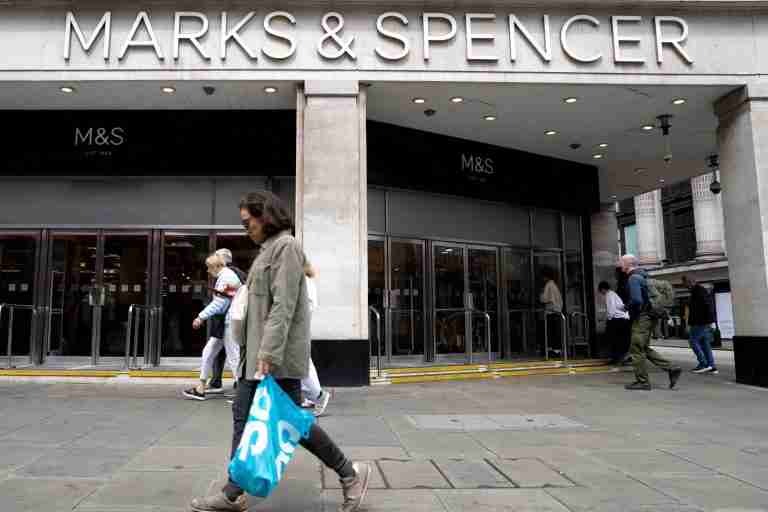
British retailer Marks & Spencer has resumed taking click and collect orders for clothing after a nearly four-month hiatus following a cyber hack and data theft that impacted its earnings during the period, sending its shares higher.
The 141-year-old M&S stopped taking orders through its website and app for clothing and home deliveries and collection from stores on April 25, three days after disclosing it was managing a “cyber incident.”
It gradually resumed taking online orders for delivery from June 10, but click and collect services, which allow customers to order items online and pick up in stores, had remained suspended.
M&S said on its website on Monday that “Click & Collect is back,” and in an Instagram post, John Lyttle, M&S’ managing director for fashion, home and beauty, said the retailer’s full online delivery offers were restored across fashion, homeware and beauty products, including the returns of online orders to any M&S store.
Shares in M&S were up 2%, paring 2025 losses to 10%.
Investec analyst Kate Calvert said the reinstatement of click and collect “is the key ‘back to normal’ signal from a consumer perspective.”
She does not expect the hack to impact M&S’ long-term valuation or growth prospects.
In May, M&S forecast that the hacking of its systems would cost it about 300 million pounds ($404 million) in lost operating profit in its 2025/26 financial year, though it hoped to halve that impact through insurance and cost controls.
As part of its management of the hack and data theft, M&S took other systems offline. That reduced both clothing and food availability in stores, further denting sales.
Rivals, such as Next in clothing and Sainsbury’s in food, have been beneficiaries.
M&S CEO Stuart Machin had told investors in early July the group would be over the worst of the fallout from the incident by August.
Chairman Archie Norman last month told lawmakers that M&S believed the ransomware attack was carried out by the hacker group DragonForce.
Also in July, UK police arrested four people as part of their investigation into the hack and other attacks on the Co-op and Harrods.
($1 = 0.7424 pounds)
Reporting by James Davey; Editing by Jamie Freed, Saad Sayeed and Bernadette Baum
The ban, which supporters say is crucial to Europe’s green ambitions, is up for review in the second half of 2025
International News via Reuters:
The CEO of Mercedes-Benz criticised the European Union’s plan to ban CO2-emitting vehicles from 2035 in a media interview on Monday, joining a chorus of voices calling the target into question as it comes up for review this year.
The ban, which supporters say is crucial to Europe’s green ambitions, is up for review in the second half of 2025, with critics saying it would handicap European carmakers already struggling with weak demand, Chinese competition and disappointing electric vehicle sales.
“We need a reality check. Otherwise we are heading at full speed against a wall,” Mercedes CEO Ola Kaellenius told the Handelsblatt business daily of the 2035 goal, adding that Europe’s car market could “collapse” if it goes ahead.
Kaellenius argued that consumers would simply hurry to buy cars with petrol or diesel engines ahead of the ban.
Currently serving as head of the European auto lobby ACEA, the German auto boss has instead called for tax incentives and cheap power prices at charging stations to encourage the switch to electric cars.
“Of course we have to decarbonise, but it has to be done in a technology-neutral way. We must not lose sight of our economy,” Kaellenius said.
Reporting by Rachel More, Editing by Miranda Murray
The pound was last little changed against the dollar at $1.3458 after earlier touching $1.3476, its highest since July 25
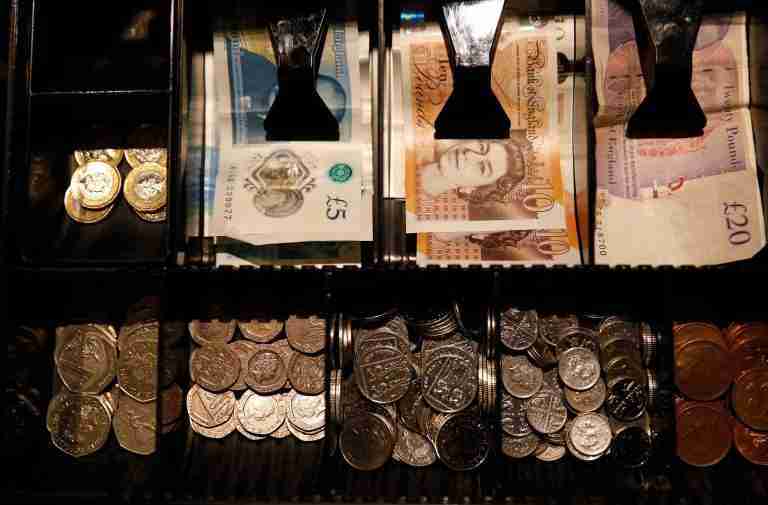
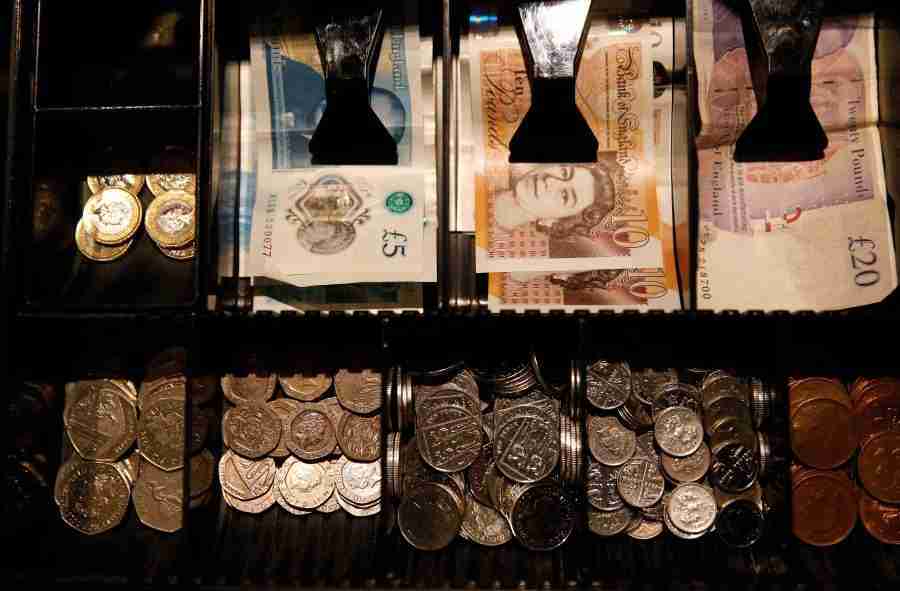
FILE PHOTO: Pound Sterling notes and change are seen inside a cash resgister in a coffee shop in Manchester, Britain, Septem,ber 21, 2018. REUTERS/Phil Noble/File Photo
International News via Reuters:
The pound was steady on Monday after earlier hitting a more than two-week high against the dollar, before job market and growth data later in the week that could take on more importance after the Bank of England’s close decision to cut rates on Thursday.
The pound was last little changed against the dollar at $1.3458 after earlier touching $1.3476, its highest since July 25.
The BoE last week lowered the Bank Rate by 25 basis points to 4%, but the nine-person, rate-setting, Monetary Policy Committee was split, with four members voting to keep interest rates unchanged.
The BoE has eased rates at a slower pace than the European Central Bank, tending to favour a rate cut about once per quarter since it kicked off its easing cycle in the middle of last year, due to worries about sticky inflation.
ING FX strategist Francesco Pesole believes that incoming data will take on a greater importance for the outlook for monetary policy following the BoE’s decision last week.
“I think there will be quite a lot of data-related volatility in sterling,” Pesole said.
“The Bank of England signalled that there’s a stronger case for a slowdown in the pace of easing, and markets are quite torn on whether they should keep that rate cut in December.”
Economists polled by Reuters expect Tuesday’s data to show the unemployment rate remained steady at 4.7% in the three months to June. Preliminary growth data, released on Thursday, is expected to show GDP slowed to 0.1% in the second quarter from 0.7% in the first quarter.
“Soft data will cause markets to price a higher chance of a Bank of England interest rate cut by year end, weighing on GBP/USD in our view,” said Samara Hammoud, currency strategist at CBA.
Money market futures imply about an 80% chance that the BoE cuts interest rates again by December’s meeting.
The pound was little changed at 86.53 pence per euro and 198.7 yen.
Israel has faced accusations of genocide at the International Court of Justice and from human rights groups over its devastating military assault in Gaza
International News via Reuters:
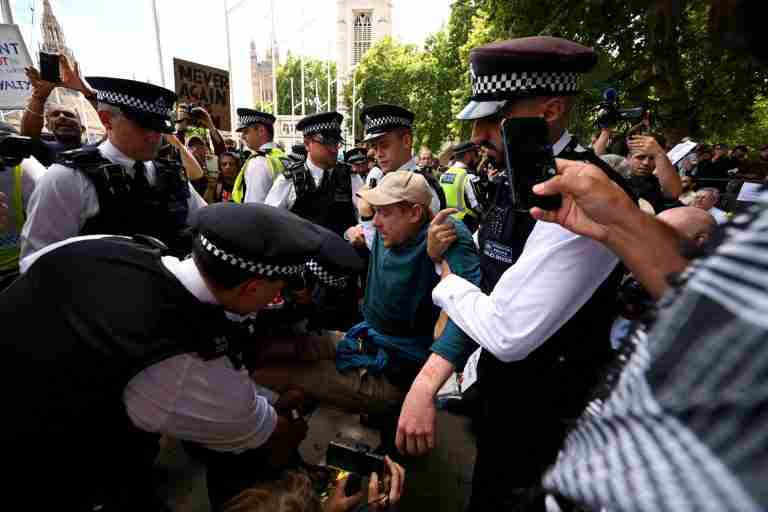
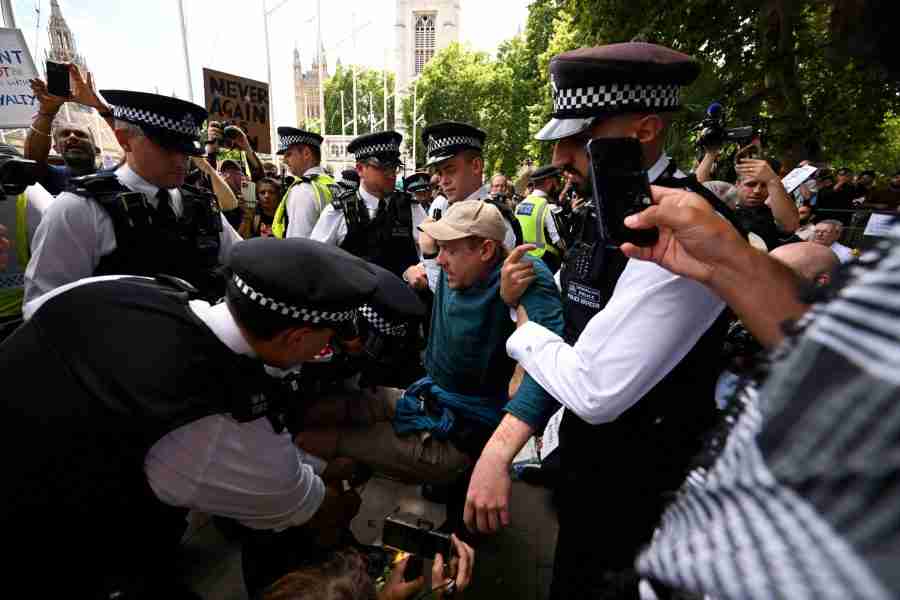
London’s Metropolitan Police arrested more than 466 people at a protest on Saturday against Britain’s decision to ban the group Palestine Action, the force said.
British lawmakers banned Palestine Action under anti-terrorism legislation in July after some of its members broke into a Royal Air Force base and damaged planes as part of a series of protests. The group accuses Britain’s government of complicity in what it says are Israeli war crimes in Gaza.
Protesters, some wearing black and white Palestinian scarves and waving Palestinian flags, chanted “hands off Gaza”, and held placards with the message “I oppose genocide. I support Palestine Action”, video taken by Reuters at the scene showed.
Israel has faced accusations of genocide at the International Court of Justice and from human rights groups over its devastating military assault in Gaza.
Israel denies the accusations and casts its offensive as self-defense after a deadly October 2023 attack by Palestinian Hamas militants.
The Reuters video showed demonstrators who had gathered in Parliament Square by the Houses of Parliament being carried away by police. The crowd chanted “shame on you” at the police.
In a post on X, the police force said it had arrested 466 people for supporting a proscribed organisation.
It also arrested eight people for other offences including five arrests for assaults on officers. The police said no one was seriously injured.
The ban makes it a crime to be a member of Palestine Action, carrying a maximum sentence of 14 years in prison.
The co-founder of the group, Huda Ammori, last week won a bid to bring a legal challenge against the ban.
Reporting by Suban AbdullaEditing by Mark Potter, Barbara Lewis and Nia Williams
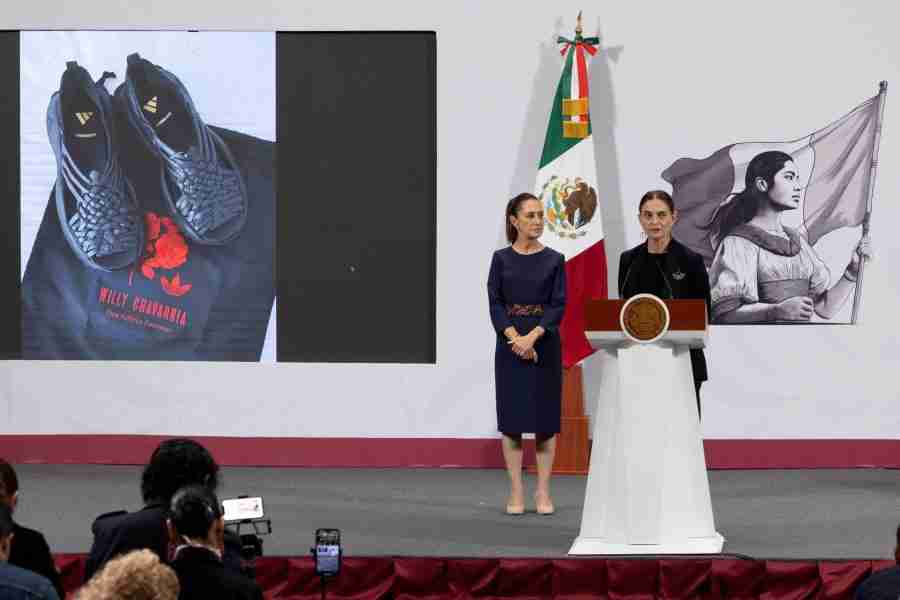
Critics in Mexico argued that the shoe uses the name of the southern Mexican state
International News via Reuters:
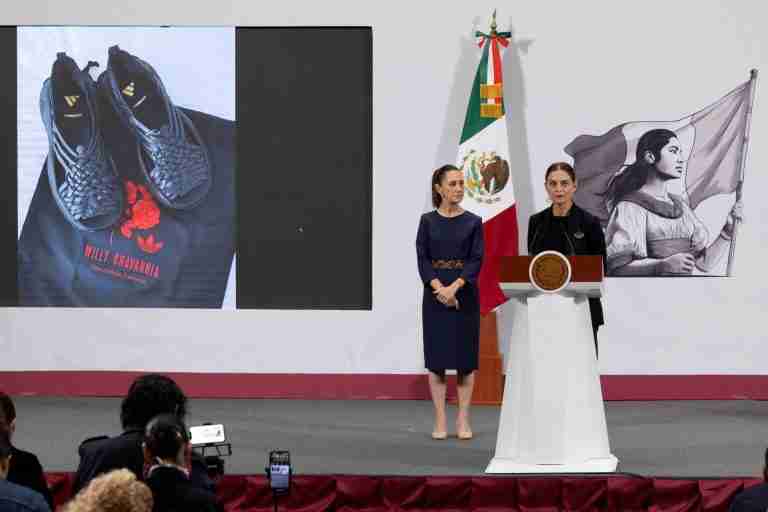
Mexico is looking for footwear giant Adidas to pony up after a Mexican-American designer, Willy Chavarria, working with the firm launched a shoe inspired by a traditional Indigenous sandal, authorities said on Friday.
Chavarria, who has been hailed in the United States for his work bringing Latino issues to light – including his controversial collection touching on the alleged gang members locked up at El Salvador’s notorious CECOT prison – recently dropped the “Oaxaca Slip On” shoe, a sneaker sole topped with the weave of Mexico’s huarache sandals.
Critics in Mexico argued that the shoe uses the name of the southern Mexican state, a major manufacturer of the traditional leather sandals, while Chavarria’s design is manufactured in China and Indigenous artisans received no credit or benefit from the multinational firm.
“Big companies often take products, ideas and designs from Indigenous communities,” Mexico President Claudia Sheinbaum said in her morning press conference. “We are looking at the legal part to be able to support them.”
Deputy Culture Minister Marina Nunez confirmed that Adidas had contacted Oaxacan officials to discuss “restitution to the people who were plagiarized.”
The dispute is the latest by Mexico to protect its traditional designs from global fashion firms, having previously lodged complaints against Zara-owner Inditex and Louis Vuitton.
Chavarria said in a statement on Saturday that he was “deeply sorry that the shoe was appropriated in this design and not developed in direct and meaningful partnership with the Oaxacan community.”
His approach fell short of the respect the community deserved, he said, stating that his intention had always been to “honor the powerful cultural and artistic spirit of Oaxaca and its creative communities,” the statement added.
Adidas did not respond to a request for comment.
Chavarria, born in the United States to an Irish-American mother and a Mexican-American father, had told Sneaker News in a prior interview that he had intended to celebrate his cultural heritage through his work with Adidas.
Reporting by Raul Cortes; Editing by Kylie Madry, Anna Driver and Mark Porter
To provide the best experiences, we use technologies like cookies to store and/or access device information. Consenting to these technologies will allow us to process data such as browsing behavior or unique IDs on this site. Not consenting or withdrawing consent, may adversely affect certain features and functions.
Functional
Always active
The technical storage or access is strictly necessary for the legitimate purpose of enabling the use of a specific service explicitly requested by the subscriber or user, or for the sole purpose of carrying out the transmission of a communication over an electronic communications network.
Preferences
The technical storage or access is necessary for the legitimate purpose of storing preferences that are not requested by the subscriber or user.
Statistics
The technical storage or access that is used exclusively for statistical purposes.The technical storage or access that is used exclusively for anonymous statistical purposes. Without a subpoena, voluntary compliance on the part of your Internet Service Provider, or additional records from a third party, information stored or retrieved for this purpose alone cannot usually be used to identify you.
Marketing
The technical storage or access is required to create user profiles to send advertising, or to track the user on a website or across several websites for similar marketing purposes.