

Two road traffic collisions in Paget – Pembroke MP standing in solidarity with homes impacted by BELCO – Bermuda College highlights hospitality courses… and more



Cardiff City sign goalkeeper Nathan Trott on loan

Cardiff City have bolstered their squad with the loan signing of goalkeeper Nathan Trott for the 2025/26 season. The 26-year-old joins from Copenhagen and brings a wealth of experience from his time at West Ham and various loan spells.
City boss Brian Barry-Murphy expressed his delight with the signing, praising Trott’s quality, skill, and potential for growth. “He fits the mould of the player we want to attract,” Barry-Murphy said, also highlighting the goalkeeper’s experience and leadership qualities.
Speaking about the move, Trott said he was happy to be at Cardiff and excited about the club’s direction. “It’s a great move for me,” he said, adding that he sees this as a “huge moment” in his career.
Bermudian entrepreneurs showcase their wares abroad

Local business owners recently networked with global innovators in Brooklyn, NY, while gaining exposure in the creative sector

Press release:
On Friday, July 18th, representatives from the Bermuda Economic Development Corporation (BEDC) accompanied five Bermudian entrepreneurs to participate in the Events in Culture Summit hosted by Driven Society in Brooklyn, NY. This collaboration provided a unique opportunity for local businesses to showcase their products, gain international exposure, and connect with influential figures in the creative and entrepreneurial communities.
This event marked an important step in BEDC’s partnership with Driven Society, aimed at creating pathways for Bermudian entrepreneurs to reach international markets, network with global innovators, and gain exposure in the creative sector.
As part of the Summit’s programming, Kelsea Williams, BEDC’s Communications & Development Unit Manager, participated in a panel discussion titled “Global Stages: How Culture-Driven Platforms Are Redefining Business and Tourism.” Moderated by Nas Nworu of PVO Global, the panel featured Abdul Abdullah of AfroFuture, Shavonne Dargan from Live Nation Urban, Cedric Shine of Strivers Agency, and BEDC’s Williams. The panel explored how cultural platforms impact and redefine business and tourism collaborations, emphasizing cultural exchange and experiential marketing.

Kelsea Williams highlighted the strategic value of BEDC’s involvement, stating: “This continued partnership with Driven Society creates vital opportunities for Bermudian entrepreneurs to engage internationally, enhance their visibility, and establish lasting business relationships. We look forward to continuing this collaboration and exploring new opportunities to support the growth and success of our entrepreneurs.”
The participating Bermudian vendors included:
- MLK & HNY – Tomei Swan & Jaylen Ever
- Flow by Nico – Nico Bean
- JB’s Coastal Creations – Jerry-Dee Richardson & Brittany Haley
- Strange Bird Bermuda – Camily Lovell
- Tassel Bermuda – Janee Pitt
The Events in Culture Summit served as a prominent platform for brand marketers, event producers, and creators to discuss and share insights into experiential marketing, community-driven experiences, and cultural engagement.
The agenda featured panel discussions, presentations, and networking opportunities designed to foster meaningful connections and business opportunities.

Tomei Swan, co-founder of MLK & HNY, shared her reflections on the experience: “Being at the Events in Culture Summit showed us that the heart, flavour, and storytelling behind MLK & HNY can hold space anywhere. We were proud to represent Bermuda, and even prouder to see how deeply people connected with what we do. Having the opportunity to travel overseas and represent our brand as business partners was a true honour, especially in the same year we launched our business.”
She continued, “It was a surreal experience filled with inspiring panels, creative energy, and valuable insights that we’re excited to carry forward. We’re deeply grateful to the BEDC for their support and for championing inclusion and access for small businesses in Bermuda. This is only the beginning.”
Travis Weeks, Founder of Driven Society, commented on the event’s significance, stating: “It’s important for us to highlight global markets and platforms when we speak about culture. So much of who we are and how we gather with intention is rooted in the communities we come from and how we are able to sustain real connections amongst the people, the drivers of culture at large.”
Through this participation, BEDC continues its commitment to fostering entrepreneurial development, supporting Bermudian businesses, and expanding their reach into international markets.
For more information about BEDC and upcoming initiatives, please visit www.bedc.bm.
Opinion: Seeing with the heart – the light they need is you

NAB Third Sector Spotlight: Vision Bermuda

By Erica Ingemann, Executive Director, Vision Bermuda
Imagine waking up to a world slowly fading – blurring, dimming, and slipping away. For many in Bermuda, this is not imagination. It is daily life.
Vision loss – whether gradual or sudden – deeply affects a person’s independence, mobility, mental health, and connection to community. It can take away the ability to read a recipe, cross the street confidently, or look into a loved one’s eyes.
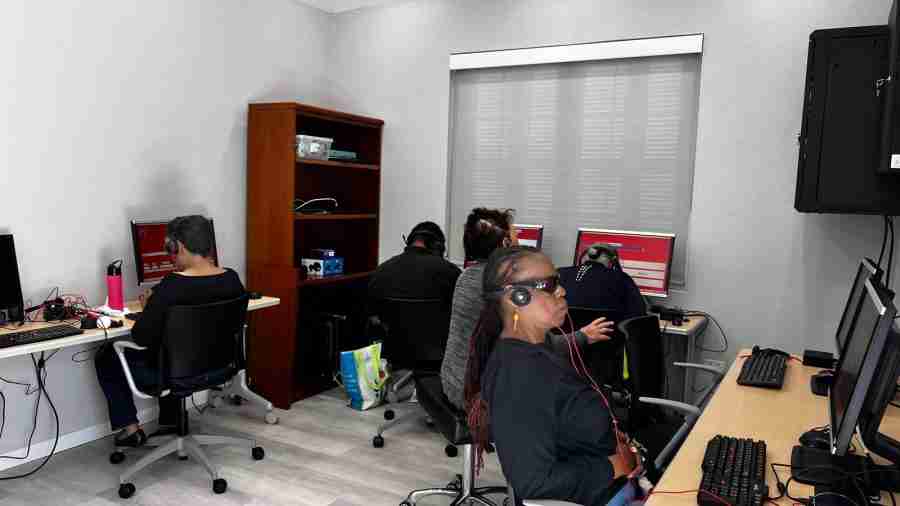
At Vision Bermuda, we empower people with vision loss to live full, independent lives. We do this through training, assistive technology, support groups, and home visits, providing both practical skills and emotional support.
But our work is about more than providing services—it’s about restoring hope when it seems all hope has been lost.
The everyday victories we witness are powerful: a mother preparing lunch for her son’s visit, a senior walking to the grocery store alone, a retiree learning to cook safely again, a reader rediscovering the joy of a newspaper, a young adult returning to work.


To most, these may seem like small feats or routine activities. But for someone learning to live with vision loss, these are life-changing moments of restored identity and self-worth. One of our clients shared, “Vision Bermuda has helped me to be more independent and shown me that life can continue despite your disability.”
Vision loss is increasing in Bermuda, and so is the need for our services. As a nonprofit, Vision Bermuda relies solely on donations, grants, and community support to continue this work.
Your support allows us to serve more people and ensure that no one in Bermuda faces vision loss alone.
Supporting Vision Bermuda is about more than giving—it’s about making a lasting impact. Whether you donate, volunteer, share our story, or advocate for accessibility and inclusion, you’re helping someone reclaim their independence, reimagine their future.
Bermuda is a caring, connected community. With your help, we can ensure that every person experiencing vision loss has the tools, support, and confidence to live fully and independently.
Your support brings vision to life. Be the light someone needs today. For more information about Vision Bermuda, please visit: visionbermuda.bm
This op-ed is part of the Third Sector Spotlight Series, a collective media campaign coordinated by the Nonprofit Alliance of Bermuda. This campaign aims to raise awareness of the value, impact and contributions of Bermuda’s nonprofit sector.
Sabadell shareholders approve sale of its British unit TSB to Santander

Sabadell agreed last month to sell TSB to Santander for an initial 2.65 billion pounds ($3.64 billion) in an all-cash deal

International News via Reuters:
Sabadell shareholders on Wednesday unanimously approved the sale of its British unit TSB to Santander, which analysts said was a defensive move to try to stop BBVA’s around 15 billion euro ($17.36 billion) hostile takeover bid.
Sabadell agreed last month to sell TSB to Santander for an initial 2.65 billion pounds ($3.64 billion) in an all-cash deal.
The sale would allow Sabadell to focus on the Spanish market, “where the bank has a greater growth capacity”, Chairman Josep Oliu told shareholders before the vote.
In Spain, legislation requires the governing bodies of a company targeted in a takeover bid to request shareholder approval before promoting or taking any action that might prevent an acquisition from succeeding.
BBVA last year made a hostile takeover bid for Sabadell in shares that originally valued Sabadell at 12 billion euros. That value has increased to about 15 billion euros as the banks’ share prices have diverged since the offer was first made.
While Sabadell’s management opposed the deal from the beginning, Spain’s anti-trust regulator approved the deal with some minor remedies and the government imposed as a condition that the two banks had to remain separate for at least three years.
Oliu said the government’s condition would prevent synergies from being generated and told shareholders to consider risks arising from the integration process when deciding whether to accept BBVA’s bid.
Sabadell plans to hand most of the cash it will get from the TSB sale to its shareholders as a special 2.5 billion euro dividend, which will be submitted to shareholders in another vote later on Wednesday.
Sabadell had bought TSB in 2015 for 1.7 billion pounds ($2.26 billion), Oliu told the assembly.
Responding to questions from shareholders, Sabadell CEO Cesar Gonzalez-Bueno said BBVA’s future prospectus needed to be transparent and to make clear whether Sabadell shareholders will receive 25% of the bank’s stock market value over the next 12 months or 40% over three years.
($1 = 0.8639 euros)
($1 = 0.7528 pounds)
Reporting by Jesus Aguado and Inti Landauro; Editing by David Latona
Shares in Coca-Cola bottlers drop sharply on weak outlook

Coca-Cola HBC forecast annual organic or self-generated revenue growth at the top end of its 6%-8% guidance range

International News via Reuters:
London-listed shares of bottlers Coca-Cola HBC and Coca-Cola Europacific Partners dropped sharply on Wednesday, as weak consumer sentiment and concerns over the impact of trade tensions weighed on their annual revenue forecasts.
Coca-Cola HBC, which bottles drinks in 29 counties including Italy, Russia and Nigeria, forecast annual organic or self-generated revenue growth at the top end of its 6%-8% guidance range, but fell short of average market estimates of 8.8%.
Meanwhile, Coca-Cola Europacific Partners (CCEP), which operates in 31 countries in Western Europe, Australia, Asia Pacific and Southeast Asia, guided investors to expect revenue growth between 3% and 4%, down from an earlier forecast of about 4%.
Shares in the companies dropped roughly 10% in early London trading, both underperforming the wider FTSE 100 index which was up 0.2%.
In addition to global concerns that U.S. tariffs are weighing on consumer and business sentiment, the bottlers have over the past year faced backlashes from consumers in Indonesia, where CCEP operates, and Egypt, where Coca-Cola HBC operates, as consumers shied away from U.S. brands due to the Israel-Gaza conflict.
The companies, which bottle Coca-Cola and other drinks in different regions, have been raising prices to shield margins from elevated costs and lower spending.
Last month, Coca-Cola Co, which holds stakes in both the bottlers, said cost pressures stemming from global trade dynamics remained manageable, but added it would consider switching to cheaper packaging options, such as plastic bottles, after the Trump administration imposed a 25% tariff on aluminium imports.
Coca-Cola HBC CEO Zoran Bogdanovic told Reuters the company was monitoring U.S. trade policies, but noted that its localized sourcing and production model limits direct exposure to U.S. tariffs.
Reporting by Aatrayee Chatterjee in Bengaluru; Writing by Yadarisa Shabong; Editing by Rashmi Aich and David Holmes
OpenAI’s long-awaited GPT-5 model nears release

GPT-4’s leap was based on more compute power and data, and the company was hoping that “scaling up” in a similar way would consistently lead to improved AI models
International News via Reuters:
OpenAI’s GPT-5, the latest installment of the AI technology that powered the ChatGPT juggernaut in 2022, is set for an imminent release, and users will scrutinize if the step up from GPT-4 is on par with the research lab’s previous improvements.
Two early testers of the new model told Reuters they have been impressed with its ability to code and solve science and math problems, but they believe the leap from GPT-4 to GPT-5 is not as large as the one from GPT-3 to GPT-4. The testers, who have signed non-disclosure agreements, declined to be named for this story.
OpenAI declined to comment for this story.
GPT-4’s leap was based on more compute power and data, and the company was hoping that “scaling up” in a similar way would consistently lead to improved AI models.
But OpenAI, which is backed by Microsoft and is currently valued at $300 billion, ran into issues scaling up. One problem was the data wall the company ran into, and OpenAI’s former chief scientist Ilya Sutskever said last year that while processing power was growing, the amount of data was not.
He was referring to the fact that large language models are trained on massive datasets that scrape the entire internet, and AI labs have no other options for large troves of human-generated textual data.
Apart from the lack of data, another problem was that ‘training runs’ for large models are more likely to have hardware-induced failures given how complicated the system is, and researchers may not know the eventual performance of the models until the end of the run, which can take months.
OpenAI has not said when GPT-5 will be released, but the industry expects it to be any day now, according to media reports. Boris Power, head of Applied Research at OpenAI, said in an X post on Monday: “Excited to see how the public receives GPT-5.”
“OpenAI made such a great leap from GPT-3 to GPT-4, that ever since then, there has been an enormous amount of anticipation over GPT-5,” said Navin Chaddha, managing partner at venture capital fund Mayfield, who invests in AI companies but is not an OpenAI investor. “The hope is that GPT-5 will unlock AI applications that move beyond chat into fully autonomous task execution.”
‘TEST-TIME COMPUTE’
Nearly three years ago, ChatGPT introduced the world to generative AI, dazzling users with its ability to write humanlike prose and poetry, quickly becoming one of the fastest growing apps ever.
In March 2023, OpenAI followed up ChatGPT with the release of GPT-4, a large language model that made huge leaps forward in intelligence. While GPT-3.5, an earlier version of the model, received a bar exam score in the bottom 10%, GPT-4 passed the simulated bar exam in the top 10%.
GPT-4 then became the model to beat and the world came to terms with the fact that AI models could outperform humans in many tasks.
Soon, other companies were catching on. The same year, Alphabet’s Google and Anthropic – which is backed by Amazon and Google – released competitive models to GPT-4. Within a year, open-source models on par with GPT-4 such as Meta Platforms’ Llama 3 models were released.
Along with training large models, OpenAI has now invested in another route, called “test-time compute,” which channels more processing power to solve challenging tasks such as math or complex operations that demand human-like reasoning and decision-making.
The company’s CEO Sam Altman said earlier this year that GPT-5 would combine both test-time compute and its large models. He also said that OpenAI’s model and product offerings had become “complicated.”
Reporting by Anna Tong in San Francisco; Editing by Sayantani Ghosh and Muralikumar Anantharaman
UK stocks rise amid mixed corporate results, eyes on upcoming BoE rate decision
The blue-chip FTSE 100 was up 0.2% as of 0916 GMT, rising for a third consecutive session after touching a four-month low on Friday
International News via Reuters:
British equities edged higher on Wednesday, as investors assessed a mixed bag of corporate earnings and awaited a Bank of England rate cut on Thursday.
The blue-chip FTSE 100 was up 0.2% as of 0916 GMT, rising for a third consecutive session after touching a four-month low on Friday.
The domestically focused midcap FTSE 250 also rose 0.2%.
Insurance stocks rose by 2.7%, after Hiscox reported a 6.2% rise in first-half group net insurance premiums. Shares of the British insurer jumped 8.7%, making it the biggest percentage gainer in the FTSE 100.
Oil and gas sector rose 2.3%, tracking higher oil prices. [O/R]
Heavyweight Shell and BP were among the top gainers in the benchmark index, both up 2.3%.
London-listed shares of Coca-Cola Europacific Partners and Coca-Cola HBC – bottling units of U.S. beverage giant Coca-Cola – fell 11.6% and 9.1%, respectively, after their quarterly reports, dragging on the FTSE 100.
Glencore fell nearly 4% after the UK miner reported a drop in first-half core profit.
British healthcare stocks fell marginally after U.S. President Donald Trump said on Tuesday that Washington would initially place a “small tariff” on pharmaceutical imports, eventually increasing it to 250%.
Among other individual stocks, TP ICAP fell the most in the FTSE 250, down 9.8%, after the British inter-dealer broker posted weaker-than-expected half-year operating profit.
Bank of England is widely expected to cut its key interest rate to 4% from 4.25% and to lower it again before the year’s end, despite inflation nearing double the central bank’s 2% target in June.
“The decision to cut rates again is likely to be far from unanimous…how the Bank couches its accompanying commentary will send a strong signal regarding its perception of the trajectories for economic activity and inflation in coming months”, said Jeremy Batstone-Carr, European Strategist at Raymond James Investment Services in a note.
Reporting by Sanchayaita Roy in Bengaluru; Editing by Vijay Kishore
Pope Leo criticises nuclear deterrence on 80th anniversary of Hiroshima bombing
Leo’s appeal on Wednesday came hours after representatives from 120 countries
International News via Reuters:
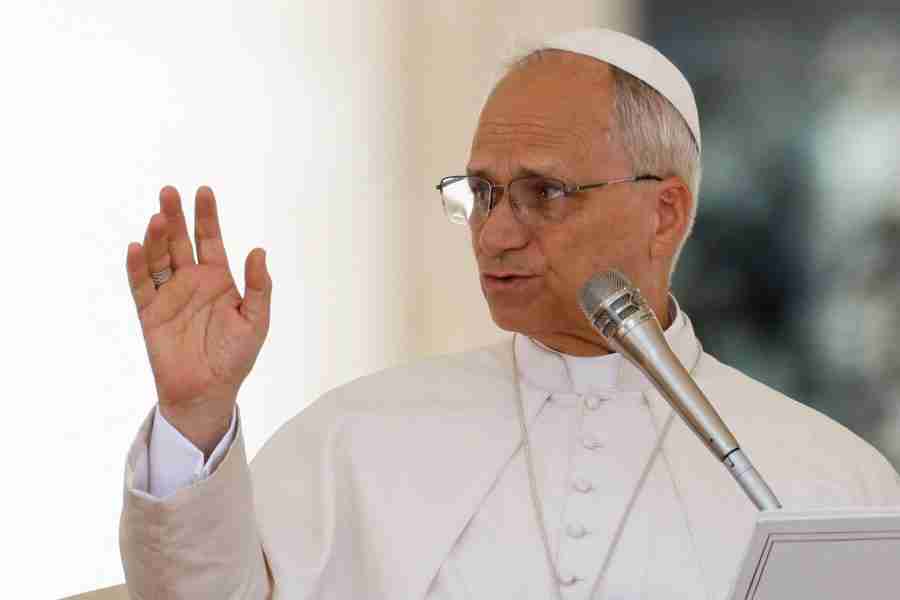
Pope Leo on Wednesday criticised the “illusory security” of the global nuclear deterrence system, in an appeal on the 80th anniversary of the United States dropping an atomic bomb on the Japanese city of Hiroshima at the end of the Second World War.
Leo, the first U.S.-born pope, said in his weekly audience that the destruction in Hiroshima, which killed about 78,000 people instantly, should serve “as a universal warning against the devastation caused … by nuclear weapons.”
“I hope that in the contemporary world, marked by strong tensions and bloody conflicts, the illusory security based on the threat of mutual destruction will give way to … the practice of dialogue,” said the pontiff.
While the Catholic Church for decades gave tacit acceptance to the system of nuclear deterrence that developed in the Cold War, Leo’s predecessor Pope Francis changed the Church’s teaching to condemn the possession of nuclear arms.
Francis, who died in April after a 12-year papacy, also strongly backed the U.N. treaty to ban nuclear weapons, which formally went into force in 2021 but has not gained support from any of the nuclear-armed nations.
Leo’s appeal on Wednesday came hours after representatives from 120 countries, including the U.S., attended an annual ceremony in Hiroshima to mark the atomic bombing.
Among those attending the ceremony was a delegation of Catholic bishops from Japan, South Korea and the U.S. including Cardinals Blase Cupich of Chicago and Robert McElroy of Washington, D.C.
“We strongly condemn all wars and conflicts, the use and possession of nuclear weapons and the threat to use nuclear weapons,” the bishops said in a joint statement on Wednesday.
Reporting by Joshua McElwee, Editing by Alvise Armellini.
Oil rebounds on Trump threats on Russian crude buyers

Brent crude futures gained 90 cents, or 1.3%, to $68.54 a barrel by 0936 GMT, while U.S. West Texas Intermediate crude was up 92 cents, or 1.4%, at $66.08 a barrel

International News via Reuters:
Oil prices climbed on Wednesday, rebounding from a five-week low the previous day, as traders focused on U.S. President Donald Trump threatening India with higher tariffs over its Russian crude purchases and a larger-than-expected U.S. crude draw.
Brent crude futures gained 90 cents, or 1.3%, to $68.54 a barrel by 0936 GMT, while U.S. West Texas Intermediate crude was up 92 cents, or 1.4%, at $66.08 a barrel.
Both oil contracts fell by more than $1 on Tuesday to settle at their lowest in five weeks, marking a fourth session of losses.
“Oil prices are higher today as traders look to India and China’s response to the threat of secondary sanctions,” said Ashley Kelty, an analyst at Panmure Liberum.
“Expectations appear that India may reduce its buying of Russian crude, but I can’t see them doing so entirely as they have been making supernormal profits on buying cheap Russian crude.”
Trump’s renewed threats on Tuesday of higher tariffs on India for buying Russian energy supported the market. India, along with China, is a huge buyer of Russian oil.
U.S. envoy Steve Witkoff arrived in Moscow on Wednesday on a last-minute mission to seek a breakthrough in the Ukraine war, two days before the expiry of a deadline set by Trump for Russia to agree to peace or face new sanctions.
“Overall, the outlook for the Russia-Ukraine war remains uncertain but the ongoing conflict and the threat of escalating tariffs is likely to keep oil prices supported in the near term until there is more clarity on the potential impact of tariffs on oil exports,” analysts at Roth Capital Markets said in a note late on Tuesday.
“We expect minimal disruption to Russian oil exports as we think that China can import the vast majority of Russian crude.”
The market was also seeing some support from U.S. crude inventories falling last week, analysts said, as sources citing American Petroleum Institute figures said on Tuesday that stockpiles had fallen by 4.2 million barrels.
That compares with a Reuters poll estimate of a 600,000 barrels draw for the week to August 1. [API/S][EIA/S]
“The API data showing a U.S. crude draw yesterday was price supportive,” said Giovanni Staunovo, an analyst at UBS, adding that concerns over supply disruptions from the U.S.-India spat were priced in.
Reporting by Seher Dareen in London, Yuka Obayashi in Tokyo and Jeslyn Lerh in Singapore; Editing by Christian Schmollinger, Stephen Coates, Jane Merriman and Kate Mayberry
Glencore rejects US listing in boost for UK markets

The London-listed miner said on Wednesday that a move across the Atlantic would not increase value for shareholders

International News via Reuters:
Glencore will keep its primary listing in London, rejecting a move to the United States for now in a rare win for the city’s markets, which have been shrinking due to a dearth of new share issues.
The London-listed miner said on Wednesday that a move across the Atlantic would not increase value for shareholders. In February, it said it might switch its main listing from London, and CEO Gary Nagle said New York was being considered.
Nagle said on Wednesday that the company had extensively researched a move to the major exchanges around the world.
“A move in our primary listing … would not be value accretive for Glencore at this stage, having done that thorough analysis, and therefore we keep it on a watching brief, but will remain listed in London for the moment,” he said.
The decision is a boost for UK capital markets after years of few initial public offerings and depressed valuations leading to a string of takeovers of public companies. That has led London’s equity markets to shrink as some companies seek higher valuations elsewhere, prompting a suite of listing reforms.
High-profile companies to recently announce their departure from London include travel giant TUI and Netherlands-based food delivery company Just Eat Takeaway.com. BHP Group, the world’s largest miner, also ended its dual listing in favour of Sydney in 2022.
Britain’s reforms to try to attract more companies include reducing shareholder votes on certain transactions, and easing the prospectus requirements for companies listing shares.
Asked about Glencore’s decision, Antonio Simoes, CEO at Britain’s largest investor Legal & General, said he saw pent-up demand to invest in Britain from international clients, including in London-listed companies, but that the government needed to press ahead with reforms to boost economic growth.
“The more we get the country growing, the stock market will be a reflection of that,” he said. “We just want to see those reforms coming through, so that there’s more capital investing in the UK.”
Some companies could still shift London listings, including publisher Pearson, which is under shareholder pressure to do so, and oil major Shell, which is considering a move to the U.S. to address a valuation gap with rivals there.
Glencore’s shares have fallen 26% in the last year, prompting analysts to suggest the company might get a boost by a relisting in New York. However, Nagle said on Wednesday that decline was due at least in part to lower coal prices
He added that the company believed it was unlikely to have been included in U.S. benchmark S&P 500 index – a point that London and other European exchanges have stressed in their campaigns to try to convince companies to list with them.
“A U.S. listing is perceived to offer access to deeper pools of capital and higher valuations in certain sectors but these are often illusory, and it also comes with significant regulatory burden, litigation risk, and increased disclosure requirements as well as big challenges in gaining index inclusion,” said Michael Jacobs, corporate partner at law firm Herbert Smith Freehills Kramer.
Still, some investors were disappointed with Glencore’s decision, with some analysts citing it as a reason for a 4% drop in its shares on Wednesday.
Reporting by Pratima Desai and Charlie Conchie. Additional reporting Iain Withers. Writing by Anousha Sakoui. Editing by Mark Potter
Shares gain around the world, yields edge up
U.S. economic data is one major focus for markets, and Wall Street closed lower on Tuesday
International News via Reuters:
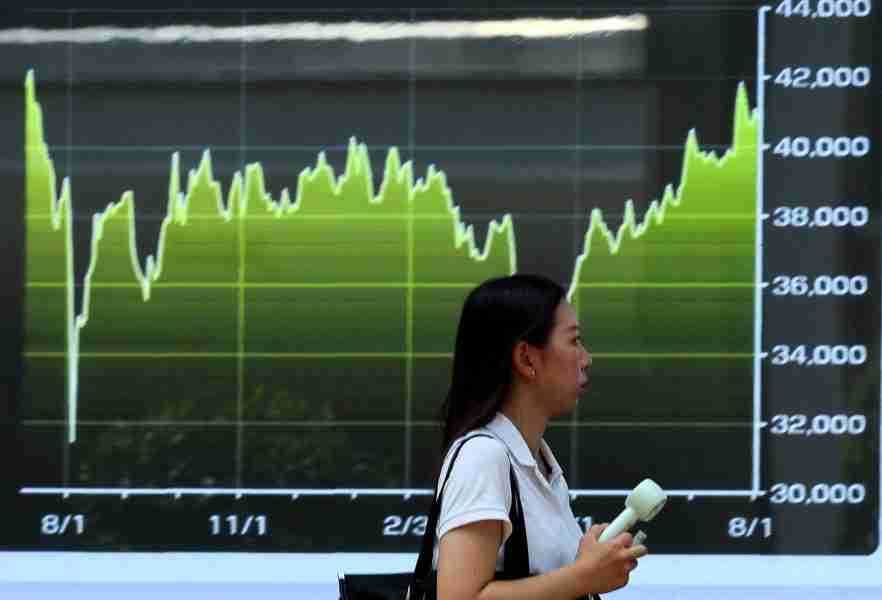
World shares gained on Wednesday as traders bought the dip after recent falls on soft U.S. data and corporate warnings about tariffs, while benchmark U.S. Treasury yields edged up from one month lows.
Europe’s broad STOXX 600 index rose 0.2%, after most Asian benchmarks had risen earlier in the day, while S&P 500 futures were 0.3% higher.
U.S. economic data is one major focus for markets, and Wall Street closed lower on Tuesday after data showed services sector activity unexpectedly flatlined in July.
That reinforced the message from Friday’s soft jobs data, which caused markets to significantly increase bets on the Federal Reserve cutting rates in September.
“There’s this tug of war going on between the more concrete signs that we have seen that the U.S. economy is slowing and the fact that rate cuts are coming which removes some of the pressure on valuations,” said Samy Chaar, chief economist at Lombard Odier.
At least for equity investors, the latter view was in the ascendancy on Wednesday.
Meanwhile, on tariffs Chaar said investors were taking comfort from the fact that at least part of the trade war is settling down, though there could be some complacency there.
“The market is more focused on the fact that we’re not getting maximalist tariffs, but I wonder if it isn’t focusing enough on the fact that we are still getting something moderate, and more could be coming, pharmaceuticals for example.”
U.S. President Donald Trump on Tuesday said he would announce tariffs on semiconductors and chips in the next week or so, while the U.S. would initially impose a “small tariff” on pharmaceutical imports before increasing it substantially in a year or two.
He also said the U.S. was close to a trade deal with China and that he would meet his Chinese counterpart Xi Jinping before the end of the year if an agreement was struck. However, he threatened to further raise tariffs on goods from India over its Russian oil purchases.
Tech and semiconductors were also a theme of the day regardless of tariffs. Shares of AI server maker Super Micro fell 17.2% in premarket trading after it missed fourth-quarter estimates, while chip firm Advanced Micro Devices dropped 5.5%.
Chip foundry giant TSMC shares fell 2%.
In the government bond market, Treasury yields edged up after a $58 billion auction of three-year notes went poorly, but still hovered near multi-month lows. More supply will hit the market this week, with $42 billion in 10-year notes on Wednesday and $25 billion in 30-year bonds on Thursday. [US/]
Two-year Treasury yields rose 1 basis point to 3.742%, having risen 3.5 bps overnight, while benchmark 10-year yields ticked up 4 bps to 4.239%.
Fed funds futures imply a 94% chance of a rate cut next month, with at least two cuts priced in for this year, according to the CME’s FedWatch.
Investors are waiting for Trump’s pick to fill a coming vacancy on the Fed Board of Governors. Trump said the decision will be made soon, while ruling out Treasury Secretary Scott Bessent as a contender to replace current chief Jerome Powell, whose term ends in May 2026.
With European yields moving in line with Treasuries, currency markets were quiet. The euro and sterling were both flat against the dollar at $1.1579, and $1.3288 respectively. [FRX/]
Oil prices rose after four straight sessions of declines. U.S. crude was up 1.44% to $66.1 per barrel, while Brent was at $68.7, up 1.6%. [O/R]
Trump said on Tuesday he will decide on whether to sanction countries that purchase Russian oil after a meeting with Russian officials scheduled for Wednesday.
Spot gold prices slipped 0.4% to $3,365 an ounce.
Reporting by Stella Qiu. Editing by Sam Holmes and Mark Potter
