A nostalgic look back at the last Classic of the 20th Century – Cup Match 1999
St. George’s Cricket Club, Wellington Oval, 1999. Image: Scott Stallard
Here’s a special look at Cup Match in the rear view mirror. The year was 1999, and it was the very last Classic of the 20th Century. Renowned photographer Scott Stallard was at Wellington Oval, shooting video of the crowd, the Crown & Anchor, the food stalls and, of course, the cricket. Scott’s son Kade recently re-discovered and edited the footage. Here are some highlights, of Cup Match 1999.… And in case you were wondering who won the Classic in 1999 – it was a draw.
The Ministry of Public Works and Environment have issued the traffic notice ahead of the weekend festivities
Bacchanal Run revelers, Hamilton. Photo: Party People Entertainment/Instagram
Full press release from the Government of Bermuda:
The Ministry of Public Works and Environment advises the motoring public of two traffic notices:
Multiple Road Closures for the Bacchanal Run – Saturday, 2 August 2025
Traffic controls and road closures will be in place to accommodate the Bacchanal Run, which will be held on Saturday, 2 August 2025. Affected roads include Frog Lane, Palmetto Road, Marsh Folly, and Dutton Avenue.
Road closures will be in effect starting at 7am to 9.30pm.
Commencing on Frog Lane then travel in a northerly direction to Palmetto Road, then turn left and travel in a westerly direction along Palmetto Road and Marsh Folly Road to Dutton Avenue and turn left on Dutton Avenue and travel to Bernard Park Field. The procession route will end at Dutton Avenue.
Motorists are encouraged to plan and follow any directions given by Police Officers present along the route to ensure the public’s safety.
Pitts Bay Road Lane Closure – Monday 11th and Tuesday 12th August 2025
A lane closure will be in effect on Pitts Bay Road, Pembroke Parish, on Monday, August 11, and Tuesday, August 12, 2025.
The restriction is required to accommodate Test Holes on the road.
Motorists are advised to use detour routes via Woodbourne Avenue and Rosemount Avenue, Pembroke.
Working hours will be in effect Monday through Friday from 7.30am to 4pm.
Please review the attached Road Traffic Notices for full details regarding these scheduled traffic restrictions:
Bermuda Broadcasting summer intern Camryn Tyrrell interviews Soleil Richardson, who is on the Boston Celtics NBA dance team
Notes from Camryn Tyrrell, summer intern at Bermuda Broadcasting Company:
“As a dancer myself, I wanted the first video I created to highlight someone excelling in the arts, both in Bermuda and overseas.
Soleil Richardson not only made waves dancing in Bermuda, by teaching classes, she also joined the Boston Celtics NBA dance team.
I had the opportunity to sit down with her and showcase her amazing journey, to show young Bermudian creatives that it is possible to do whatever you want to do.”
Government press release: Due to the Cup Match holiday on Thursday August July 31st and Friday August 1st, household waste normally collected on these days will instead be collected on Saturday, August 2nd. Household waste, recycling and bulky items may also be taken to the Tynes Bay Public Drop-Off; open from 9 am -12 noon on Thursday 31st July and Friday 1st August, and resuming regular hours from 7 am – 7 pm on Saturday 2nd and Sunday 3rd August. Follow waste management on Instagram and Facebook or visit www.gov.bm for more waste management information.
City of Hamilton press release: The City of Hamilton wishes to advise City businesses and residents that garbage collections will be scheduled on the following dates: – Thursday, August 31st and Friday, August 1st – NO GARBAGE COLLECTION – Saturday, August 2nd – BUSINESSES, BARS and RESTAURANTS ONLY – Monday, August 4th – Normal garbage collection will resume for ALL.
All garbage should be placed on the sidewalks or designated garbage areas by the times indicated in the Refuse Collection Schedule. Please DO NOT place garbage out for collection unless a collection is scheduled for that day. Additionally, members of the public are advised that the administrative offices at City Hall and the Laffan Street Works Depot closed for the Cup Match holiday on Wednesday and will re-open on Monday, August 4.
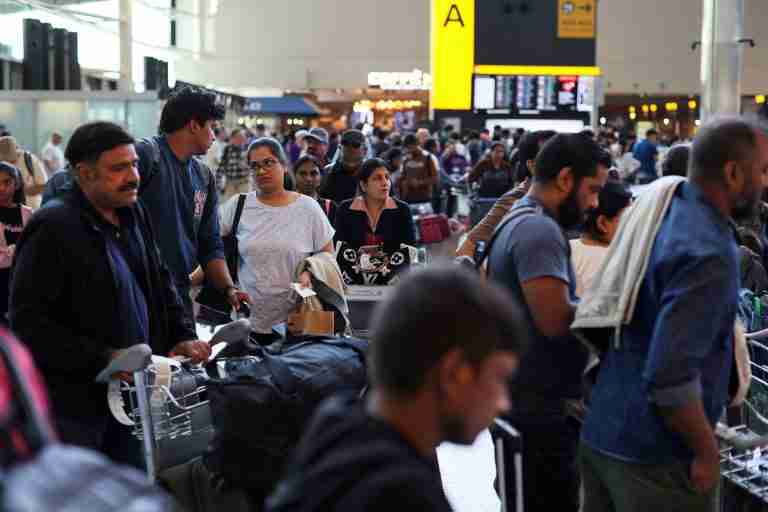
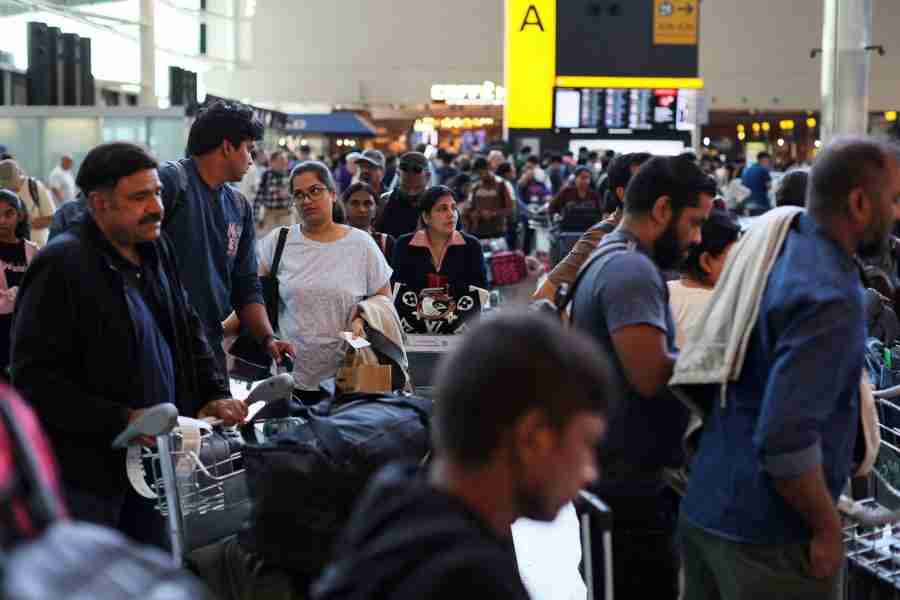
The outage, announced by NATS 20 minutes earlier, included Heathrow Airport, Britain’s largest airport and Europe’s busiest
International News via Reuters:
A technical issue at Britain’s air traffic controllers disrupted flights at major airports in London and elsewhere in the country on Wednesday, though the issue was later resolved and departures were resuming.
“Our systems are fully operational and air traffic capacity is returning to normal,” NATS, the country’s air traffic control provider, said in a post on X.
“Departures at all airports have resumed and we are working with affected airlines and airports to clear the backlog safely. We apologise to everyone affected by this issue.”
The outage, announced by NATS 20 minutes earlier, included Heathrow Airport, Britain’s largest airport and Europe’s busiest.
“Flights at Heathrow have resumed following a technical issue at the NATS Swanwick air traffic control centre. We are advising passengers to check with their airline before travelling,” an airport spokesperson said.
Gatwick Airport and Edinburgh Airport also said operations were resuming.
London City Airport had earlier also reported disruption. It was not clear exactly how long the outage had lasted.
In August 2023, flights across Britain were disrupted after the automatic processing of flight plans malfunctioned.
Britain’s aviation regulator last year said NATS needed to review its contingency plans for outages after the outage, which airline bosses said cost them over 100 million pounds ($133 million) in refunds and compensation.
($1 = 0.7534 pounds)
Reporting by Sam Tabahriti and David Milliken; Writing by Alistair Smout; Editing by William James, Ros Russell, Philippa Fletcher
The European Union has committed to reaching net zero emissions by 2050
International News via Reuters:
Damage to European forests from increased logging, wildfires, drought and pests is reducing their ability to absorb carbon dioxide, putting European Union emissions targets at risk, scientists warned on Wednesday.
The European Union has committed to reaching net zero emissions by 2050. The target includes the expectation that forests will suck up hundreds of millions of tonnes of CO2 emissions and store it in trees and soil, to compensate for pollution from industry.
But that assumption is now in doubt. The average annual amount of CO2 Europe’s forests removed from the atmosphere in 2020-2022 was nearly a third lower than in the 2010-2014 period, according to a paper led by scientists from the EU’s Joint Research Centre – its independent science research service.
In the later period, forests absorbed around 332 million net tonnes of CO2 equivalent per year, said the paper, published in the journal Nature. Recent data from EU countries suggest an even steeper decline.
“This trend, combined with the declining climate resilience of European forests, indicates that the EU’s climate targets, which rely on an increasing carbon sink, might be at risk,” the paper said.
Today, Europe’s land and forestry sector offsets around 6% of the EU’s annual greenhouse gas emissions. That’s 2% short of the amount the EU calculates is needed to meet climate goals – with the gap expected to widen by 2030.
Agustín Rubio Sánchez, professor of ecology and soil science at the Polytechnic University of Madrid, said it was “wishful thinking” to rely on forests to meet climate targets.
“Forests can help, but they shouldn’t be assigned quantities to balance carbon budgets,” he told Reuters.
The findings are a political headache for EU governments, who are negotiating a new, legally-binding 2040 climate target – which is designed to use forests to offset pollution that industries cannot eliminate.
Already, some are warning this won’t be possible.
“What should we do when there are factors that we, as countries, as governments, have not much ability to control – like forest fires or drought,” Sweden’s environment minister Romina Pourmokhtari said in a news conference last week.
Over-harvesting, climate change-fuelled wildfires and droughts, and pest outbreaks are all depleting forests’ carbon storage.
However, some of these risks can be managed – for example, by reducing intense logging, or planting more diverse tree species, which may enhance CO2 storage and help forests withstand climate extremes and pests, the paper said.
Reporting by Alison Withers, Kate Abnett, Simon Johnson; writing by Kate Abnett; editing by Alexandra Hudson
Ten years ago, Lesbos became the first stop for half of the million people headed for Europe from countries including Syria, Afghanistan and Iraq
International News via Reuters:
Sailing in the June sunshine off the island of Lesbos, Greek fisherman Thanos Marmarinos remembers how he saved migrant women and children whose dinghy was breaking up in a gale one night ten years ago.
Initially, when he received the midnight call, he was reluctant to leave his bed. The winds were bitterly cold, and he had already been on one rescue mission that evening – thousands of migrants were arriving in rickety boats every day at that time.
“You’ll feel guilty if they drown,” the 70-year-old recalled his wife saying.
Soon he was lifting people onto his boat. One infant was wrapped up so tight he could only see their eyes.
“We would help again,” Marmarinos said. “I would be the first to.”
He risks jail if he does. Anyone caught helping migrants to shore today may face charges including facilitating illegal entry into Greece or helping a criminal enterprise under a 2021 law passed as part of Europe’s efforts to counter mass migration from the Middle East and Asia.
It’s one example of deterrents that have greatly reduced arrivals to Europe since the 2015 migration crisis but that rights groups say risk the lives of those attempting to enter.
Ten years ago, Lesbos, a tourist destination near Turkey ringed by quiet villages and tree-lined coves, became the first stop for half of the million people headed for Europe from countries including Syria, Afghanistan and Iraq.
Lesbos residents helped them find food and shelter and the island became a hub for charities and aid workers, and a symbol of Europe’s solidarity towards people fleeing war and poverty.
Today, the island shows how far government responses have hardened against people seeking refuge in Europe.
In 2015, some countries initially welcomed the new arrivals, especially those fleeing Syria’s civil war. German Chancellor Angela Merkel opened the borders to nearly 900,000 asylum seekers that year. But communities felt overwhelmed. Her ratings plummeted, and today, anti-immigration policies are multiplying across Europe.
By 2024, irregular migrant arrivals to the European Union had fallen to around 240,000, less than a quarter of 2015 levels, data from EU border agency Frontex show. Just 11,200 migrants, arrived in Lesbos last year, according to figures from the United Nations refugee agency, UNHCR.
When migrants arrive in Lesbos now, they are often intercepted by police as they near a coastal road used by holidaygoers. Charity workers need special permission from authorities to help them ashore or they face fines or imprisonment. A new camp to house migrants is under construction in a pine forest on a remote part of the island.
In the village of Skala Sikamias – which a decade ago was a frenzy of damaged dinghies, exhausted migrants and charity workers – tourists now dine on grilled fish while cicadas hum from the beachside pines.
The island’s tourism industry has recovered after a sharp drop. In 2024, the number of people arriving on international flights to Lesbos topped 76,000, according to Greece’s tourism confederation SETE, back to levels before the crisis.
“The island is moving on,” said Panagiotis Christofas, the mayor of Lesbos’ main city, Mytilene. “The crisis is in the past for us.”
“THEY COULD HAVE SAVED HER”
Not for everyone. At around 2 a.m. on April 3, Beck Morad Sadeji was on a dinghy approaching the island with 30 other migrants from Afghanistan including his wife of 55 years and his daughter, he told Reuters.
The coastguard ordered the boat back to Turkey, he said. But as a coastguard vessel approached the dinghy, it destabilised the overloaded craft, which held six families, including infants.
People fell overboard but the coastguard staff watched for several minutes without helping, Sadeji said. Eight people, including his wife and a 2-year-old boy, drowned.
“If they had helped, no one would’ve died,” Sadeji said.
In a statement on April 3, the coastguard said it launched a rescue operation immediately when it saw the dinghy was taking on water. In response to Reuters requests for comment, it said the coastguard always acts “with professionalism and absolute respect for human life”. Since 2015, Greece’s coastguard service has saved 263,000 third-country nationals in danger at sea, it said.
Sadeji said he still has nightmares and urges other migrants not to come.
“Humans are supposed to help other humans,” he said.
Migrant deaths in the Mediterranean, while far below 2015 levels, are still common. In the Eastern Mediterranean route alone, which includes Greece, 191 migrants died or went missing trying to reach Europe in 2024, according to data from the International Organisation for Migration, a UN agency. The IOM recorded 2,573 migrant deaths and disappearances on all Mediterranean routes last year.
Greece has come under scrutiny for its treatment of migrants and refugees approaching by sea, including one shipwreck in 2023 in which hundreds of migrants died after what witnesses said was the coastguard’s attempt to tow their trawler.
Frontex said in April it is reviewing 12 cases of alleged human rights violations by Greece, including some allegations migrants were pushed back across the frontier. In January, the European Court of Human Rights, which examines complaints against EU member states, found similar violations by Greece.
Greece denies that it violates human rights or that it forcefully returns asylum seekers from its shores.
Meanwhile, Greece’s centre-right government is outspoken against refugees coming by sea. In July, the new migration minister, Thanos Plevris, called the arrivals an “invasion”.
“We are worried about the rhetoric,” said Maria Clara Martin, UNHCR’s representative in Greece. “People will demand more restrictive policies just as conflict is on the rise.”
NEW MUSIC SCHOOL
Lesbos’s change of response was spurred by a March 2016 deal between the EU and Turkey whereby Syrian refugees who arrived in Greece from Turkey would be returned back across the border. Greece changed from being a transit country on the route to northern Europe to a holding zone where migrants had to wait for their fate to be decided.
The number of people stuck on the island swelled as asylum applications to other EU countries slowed. A camp in an old military base outside the village of Moria housed more than 10,000 by 2018, up from a few hundred before the summer of 2015.
Fights broke out between migrants. Locals accused them of stealing livestock and cutting down trees for firewood.
In Moria village, where the cobbled streets are barely wide enough for one car, thousands of camp residents would come daily in search of food. Businesses erected security cameras after a series of break-ins, locals said.
Thanasis Chatziargyriou runs a small window framing factory by the camp. “I couldn’t sleep at night because my alarm kept going off,” he said.
Voters on Lesbos swung to the right. Support for the far-right Golden Dawn Party peaked above 8% in a general election in September 2015, up from 4.6% earlier in the year, official data show.
“The political narrative became about how the refugees destroyed the island,” said Efi Latsoudi, a social scientist and charity worker in Lesbos. “People were talking only about the negative.”
A fire swept through Moria camp in 2020, gutting the makeshift structures used for housing and forcing thousands to sleep on the side of roads. Four Afghan asylum-seekers were sentenced to 10 years in prison for starting it, though their lawyers protested their innocence. Another smaller camp called Kara Tepe was built on the coast, which now houses about 1,000 people.
Today, on the exterior wall of the Moria camp, “Welcome to Europe” is still painted in capital letters. Another message has been scrubbed out but is just visible. “Human Rights Graveyard,” it reads.
Christofas, the mayor of Mytilene, said the Athens government plans to turn Kara Tepe into part of the city port. The Moria site will house a music school.
The annual “What Greeks Believe” opinion poll carried out last year by the Athens-based diaNEOsis think tank showed around 70% of respondents believed Greece should be stricter on managing migrant flows.
The European Union wants tougher rules. In May, the European Commission proposed an amendment to EU law that would allow member states to deport rejected asylum seekers to countries with which they have no connection. The proposal still needs approval by the European Parliament and the Council, which represents national governments.
In July, the United Kingdom and France announced tougher migration controls and Greece passed a law temporarily halting asylum claims from migrants coming from north Africa.
A senior government official, in response to Reuters questions, said Greece had taken the step to suspend those asylum claims in the face of a sharp rise in sea arrivals from North Africa, particularly from Libya.
“This decision sends a clear message to migrant smuggling networks: Greece is not an open corridor to Europe and illegal crossings will not lead to legal settlement,” said the official, adding that authorities were ready to work with Libya to stop migrants at source.
“TOO BIG”
Lesbos’s future, EU-funded, migrant camp is cut into a depression between wooded hills at the end of a dirt track about 40 km (24 miles) north of Mytilene. The facility will be able to house 5,000 people.
Unlike Kara Tepe, which is a short walk from a supermarket, this site comprising rows of identical grey shipping containers is miles from the nearest convenience store.
Locals oppose it, saying it will increase the threat of wildfires in a region that often does not see rain for months.
“The camp is too big for the island,” said mayor Christofas. He sees no need for such a camp on Lesbos, given slowing migrant arrivals.
But people do still come.
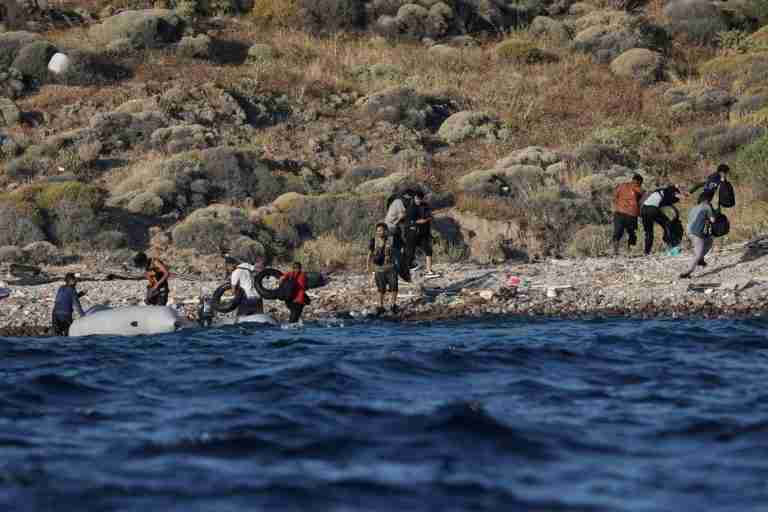
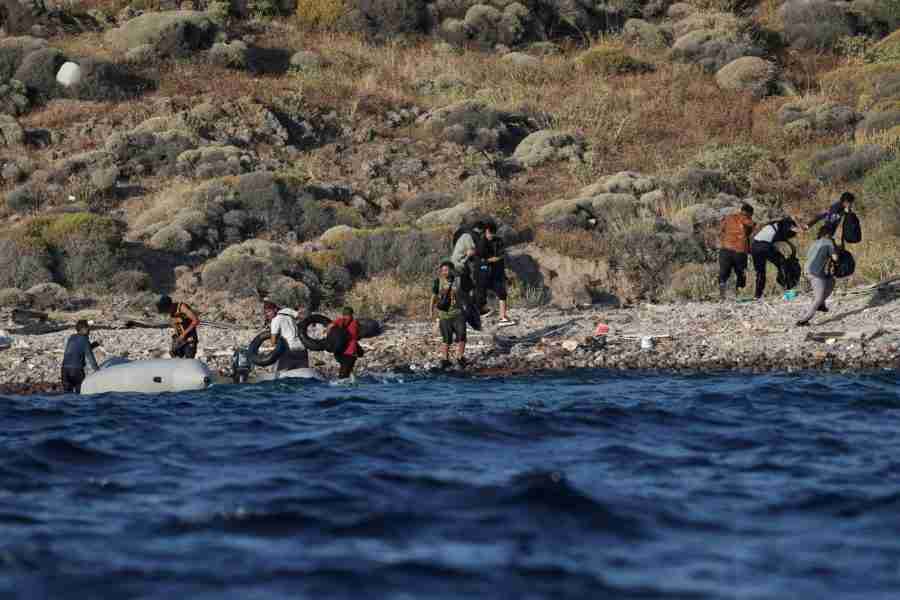
Out at sea that June morning, fisherman Marmarinos spotted another small dinghy approaching.
It held 19 migrants, from Yemen and Sudan, according to Legal Centre Lesbos, a local aid agency that provides legal assistance to migrants.
Marmarinos said he spent so much time in 2015 helping migrants that he barely made a fishing wage. This time, he was reluctant to approach the vessel in case he got in trouble with the coast guard. He looked from afar. If they needed him, he would help, he said.
The boat landed in a rocky cove. The migrants disembarked and ran up a steep hillside. Police, who monitor the coastline from the cliffs, picked up the migrants and took them to a holding camp.
“Someone will call to say a boat has come, and the coast guard will come. We’d better get out of here,” Marmarinos said.
Reporting by Edward McAllister, Vania Turner and Louisa Gouliamaki, Editing by Sara Ledwith
New York-based Evercore said it expects the deal to be earnings accretive in the first full year after the acquisition and beyond
FILE PHOTO: U.S. Dollar banknote is seen in this illustration taken July 17, 2022. REUTERS/Dado Ruvic/Illustration/File Photo
International News via Reuters:
Evercore will acquire British boutique investment bank Robey Warshaw for $196 million, the U.S. investment bank said on Wednesday.
Payment will be made in two tranches, half in Evercore shares when the deal closes and the remainder a year later in either cash or stock, Evercore’s statement said.
The transaction for Mayfair-based Warshaw, whose partners include former UK finance minister George Osborne, is expected to close in the fourth quarter of 2025.
New York-based Evercore said it expects the deal to be earnings accretive in the first full year after the acquisition and beyond.
Robey Warshaw was founded in 2013 by former Morgan Stanley bankers Simon Robey and Philip Apostolides, along with UBS banker Simon Warshaw, and has built a reputation as a leading boardroom adviser to Britain’s largest corporates over the past decade.
“Robey Warshaw brings extraordinary, long-standing relationships with some of the world’s leading multinational companies,” Evercore Chairman and Chief Executive John Weinberg said in a statement.
The deal will enhance Evercore’s market position in the largest M&A advisory market in Europe, the company’s statement said, adding that it will open further significant client opportunities across the EMEA region and globally.
Simon Robey, co-founder of Robey Warshaw, said: “Our clients will continue to get the personal attention and care we have always strived to provide. They will also be able to benefit from greater global reach, broad product capabilities and sector expertise. Evercore is the right home for all of us.”
The latest consolidation in the sector follows Mizuho Financial Group’s $550 million deal for boutique investment bank Greenhill in 2023 and Mediobanca’s $200 million purchase of London-based Arma Partners in the same year.
Reporting by Pretish M J in Bengaluru and Amy-Jo Crowley in LondonEditing by Eileen Soreng and David Goodman
Soca vs Reggae is the vibrant clash of two iconic Caribbean genres. Earlier today, Kendal Trott caught up with soca star V’ghn, who’s headlining Friday night’s Soca vs Reggae event in Bermuda as part of Team Soca. The interview took place during his meet and greet hosted at Digicel. Fans and supporters were eager to connect with the artist, ahead of one of the most anticipated events of the season. V’ghn spoke about the vision behind Soca vs Reggae, what attendees can expect from the experience, and offered valuable advice for up-and-coming artists looking to make their mark on the scene. The concert takes place on Friday night at Tiger Bay in St George’s.
To provide the best experiences, we use technologies like cookies to store and/or access device information. Consenting to these technologies will allow us to process data such as browsing behavior or unique IDs on this site. Not consenting or withdrawing consent, may adversely affect certain features and functions.
Functional
Always active
The technical storage or access is strictly necessary for the legitimate purpose of enabling the use of a specific service explicitly requested by the subscriber or user, or for the sole purpose of carrying out the transmission of a communication over an electronic communications network.
Preferences
The technical storage or access is necessary for the legitimate purpose of storing preferences that are not requested by the subscriber or user.
Statistics
The technical storage or access that is used exclusively for statistical purposes.The technical storage or access that is used exclusively for anonymous statistical purposes. Without a subpoena, voluntary compliance on the part of your Internet Service Provider, or additional records from a third party, information stored or retrieved for this purpose alone cannot usually be used to identify you.
Marketing
The technical storage or access is required to create user profiles to send advertising, or to track the user on a website or across several websites for similar marketing purposes.