Friday, October 23, 2026
Home Blog Page 84

Nepal and China resume flood rescue after lake threat eases, death toll tops 500

Wednesday’s catastrophic flood caused by a glacier collapse killed 547 people in Nepal and five in China’s Tibet, with almost 1,000 more missing in the two countries
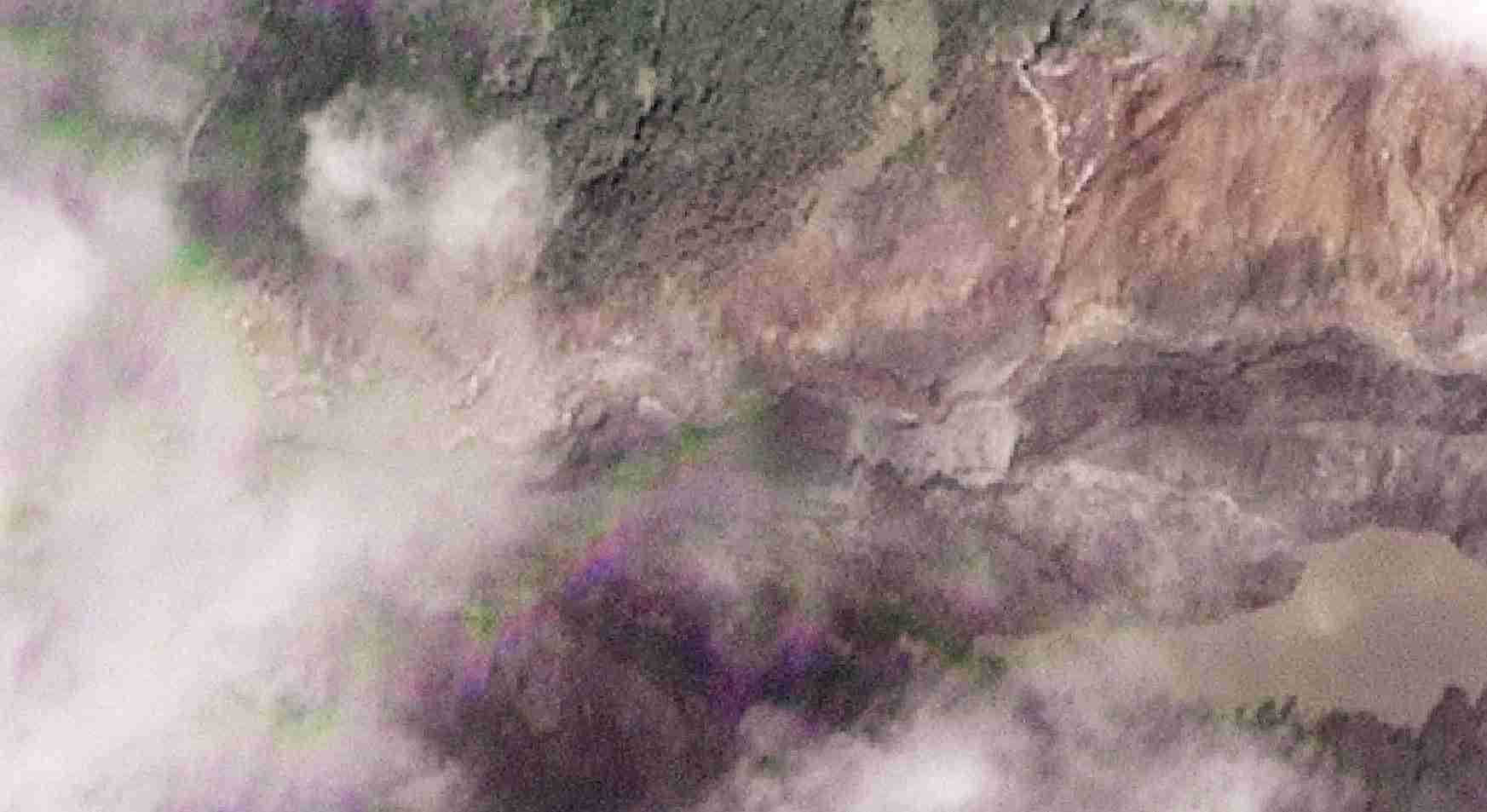
A satellite image shows a barrier lake at the border of Nepal and Tibet Autonomous Region, China, in the aftermath of flash floods and a mudslide, August 27, 2026. Planet Labs PBC/Handout via REUTERS 

International News via Reuters:

Nepal and China resumed rescue operations that had been suspended briefly in the flood-hit Himalayas on Friday after risks from an overflowing lake were found to be manageable, easing fears of fresh devastation.

Wednesday’s catastrophic flood caused by a glacier collapse killed 547 people in Nepal and five in China’s Tibet, with almost 1,000 more missing in the two countries.

A huge torrent of rock, ice, mud and debris cascaded through Himalayan mountain river systems after the collapse, and also led to the formation of a lake where water continued to collect and rise.

OVERFLOW SPARKS FRESH PANIC

On Friday, the lake’s reservoir had topped 2.5 million cubic metres (90 million cubic feet) of water, up from the estimated 1.5-2 million cubic metres (50-70 million cubic feet) recorded a day earlier, before overflowing into the Lhende Khola river and then into the Trishuli, authorities and witnesses in Nepal said.

The overflow sparked panic and warnings from authorities in Nepal, leading to rescue operations being suspended for about three hours. The risk of the lake bursting had prompted all Chinese rescue personnel and vehicles to withdraw on the Chinese side as well and stand by in a safe area, state broadcaster CCTV said.

Both resumed rescue operations after the threat eased.

“By noon, as the risk posed by the upstream dammed lake was deemed manageable, rescue operations for the Gyirong mudslide disaster quickly resumed and were stepped up,” Chinese state broadcaster CCTV said.

Nepal’s army spokesperson Raja Ram Basnet told Reuters that rescue operations had been temporarily halted after the flood alert but it was found that the rise in the water level was only by about 2 feet (0.6 m).

Wednesday’s flood ripped through villages and valleys, destroying power stations, roads and bridges along a route that links Kathmandu with Lhasa in Tibet and is popular with trekkers and pilgrims. Of those missing, at least 540 are foreigners, many of them Hindu pilgrims from India headed to the holy Mount Kailash and Lake Mansarovar in Tibet.

More than 90,000 people are estimated to be affected, the Red Cross said, adding that trucks with relief supplies were blocked after the barrier lake broke its banks.

CHINA CALLS FOR STRONGER MONITORING OF GLACIER LAKES

In Beijing, China’s Politburo met on Friday to direct rescue work, state media reported.

Authorities must “scientifically formulate search-and-rescue plans, make every effort to search for missing people from China and abroad,” the meeting chaired by President Xi Jinping said, according to state news agency Xinhua.

The meeting called for stronger monitoring of glacier lakes, landslide risks and barrier lakes, emergency aid to affected areas in Nepal, and closer international disaster cooperation.

China’s Premier Li Qiang, the country’s No. 2 official, arrived in the disaster-stricken area of Gyirong on Thursday afternoon, state-run Xinhua news agency said. The visit suggested Beijing was treating the disaster as a matter of the highest national priority.

Chinese rescuers had yet to reach the worst-hit site on the Chinese side of the border, the Gyirong border crossing, by Thursday evening, state media reports indicated, as crews worked to clear debris from the key access road leading to the area.

Dramatic footage on Wednesday showed enormous torrents of muddy water and debris tearing through structures in the border crossing area within seconds and engulfing people trying to flee.

The tally of missing in Tibet’s Gyirong County was 558, Chinese state broadcaster CCTV said on Thursday, including 260 foreign nationals. So far, just five people have been confirmed dead on the Chinese side.

‘ALL OF OUR PEOPLE ARE GONE’

Earlier, Nepalese rescue teams used helicopters to search for survivors and drop emergency supplies to thousands cut off in towns and valleys, while emergency services – some using sniffer dogs – recovered dozens of bodies swept down into the plains.

Dibga Tamang was among the last people rescued from Rasuwa on Thursday, airlifted along with three others to an army camp in Nuwakot.

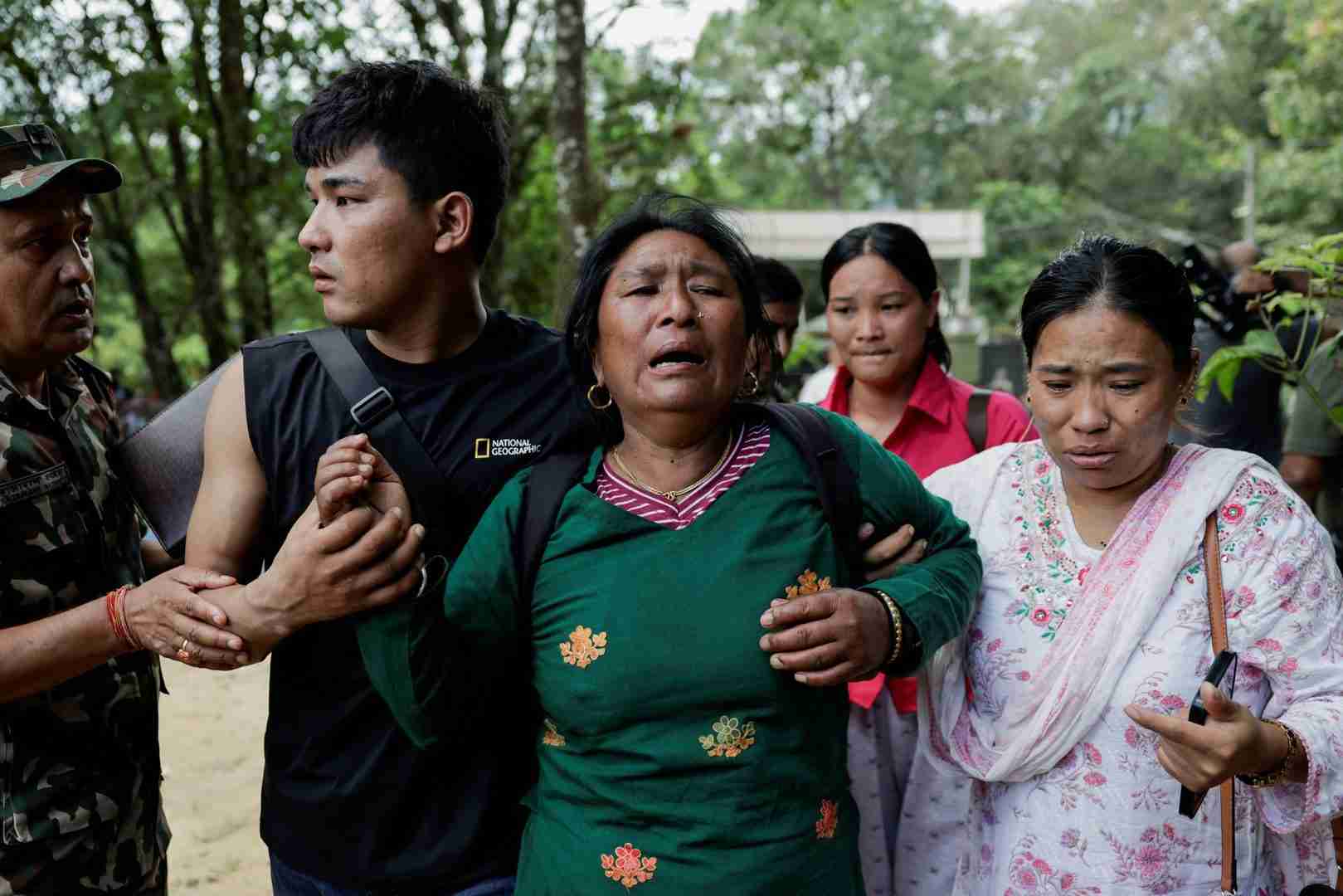
“All of our people have gone. They are dead,” Tamang said. “I have no one left waiting for me. Everything and everyone is gone. The end.”

A large number of people arrived at an army base in the area seeking information about missing and dead family members. Bodies were brought into the barracks and lists of rescued people were posted outside to help families find information.

BUILDINGS ‘WIPED OUT LIKE TOOTHPICKS’

Around the world, relatives of those missing were desperate for information about their whereabouts.

Sneha Sudhir was one of 10 women whose husbands had set out from Nepal on a trek to Tibet’s Mount Kailash when the region was struck by disaster.

The men, all from northern Virginia, are among dozens of Americans missing.

“Where are they?” Sudhir said tearfully from her home in Chantilly, Virginia, on Thursday.

Sudhir said the women were supporting each other and reaching out to officials, politicians and friends and family in the United States and India, hoping for word.

“Everybody is taking turns in shedding their tears, wiping it off and getting back to work,” she said.

President Donald Trump said the U.S. had offered support to Nepal.

“Nobody’s ever seen anything quite like that, where very powerful, strong, well-built buildings were wiped out like they were toothpicks. It’s a terrible thing. We are sending aid and we’ve spoken to the leadership and we let them know anything they want, they’ll have.”

NEPAL DECLINES FOREIGN RESCUE HELP

While offers of assistance are pouring in, Nepal said it does not need help from other nations in search and rescue missions.

A South Korean rapid response team is already in Kathmandu but has not been deployed because the Nepali government does not have a plan to accept foreign rescue yet, according to the foreign ministry in Seoul.

The Kathmandu Post reported that India, China, the United States, Britain, Japan, South Korea, Sri Lanka and Bangladesh had asked the government to allow their search-and-rescue teams to assist in the operation.

Reporting by Gopal Sharma, Sahana Bajracharya, Aftab Ahmed, Saurabh Sharma, Liz Lee, Yukun Zhang, Xiuhao Chen, Shi Bu, Sakshi Dayal, Kanjyik Ghosh, Shilpa Jamkhandikar, Hritam Mukherjee, Ashley Tang and Christine Chen; Writing by Lincoln Feast and YP Rajesh; Editing by Stephen Coates, Raju Gopalakrishnan and Conor Humphries
Sweden to deploy fighter jets, war ships to Finland

The initiative follows a request by Finland to Sweden, which has a 1,340-kilometre (833-mile) long eastern border with Russia, a spokesperson for the Swedish defence minister said

International News via Reuters:

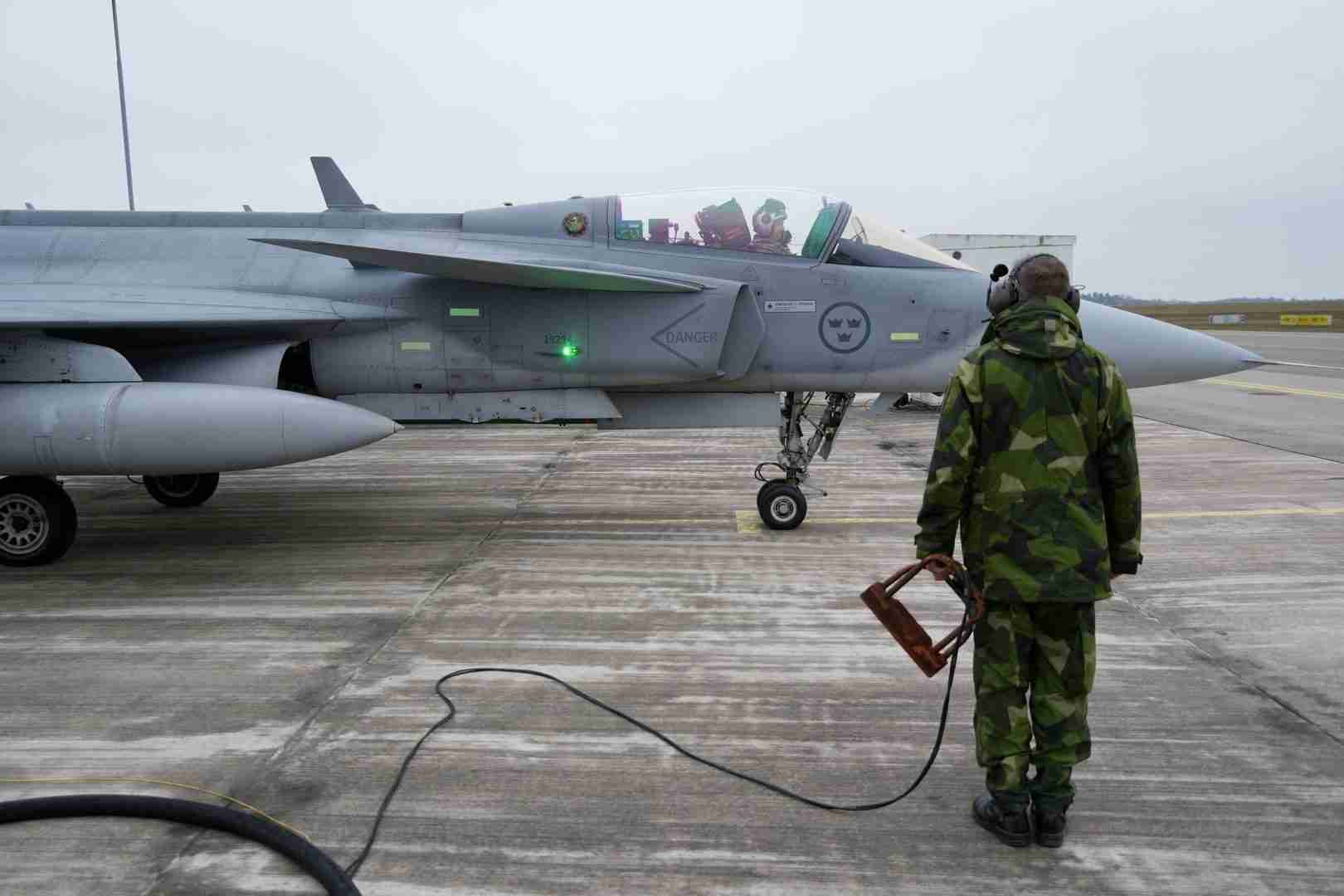
Sweden’s military will participate in the surveillance and protection of Finland’s territory with Gripen fighter jets and corvette warship, at least until the end of 2026, Finland’s defence forces said on Friday.

“The Swedish equipment strengthens air surveillance in particular, releasing the Finnish Defence Forces’ own resources for repelling violations and incidents, if need be,” Finland’s military said in a statement.

The initiative follows a request by Finland to Sweden, which has a 1,340-kilometre (833-mile) long eastern border with Russia, a spokesperson for the Swedish defence minister said.

Finland and Sweden, NATO’s two newest members, already have a close bilateral defence cooperation.

Reporting by Anna Ringstrom, editing by Louise Rasmussen and Terje Solsvik

Trump administration seeks to restrict internships for international students

It resulted in some schools, including the University of California, Los Angeles and the University of California, Berkeley, pausing certain applications for work authorizations for international students

International News via Reuters:

President Donald Trump’s administration has issued a memo for universities that seeks to restrict issuance of certain internship work authorizations for international students as the federal government warned that colleges not complying with the regulations may lose certification to enroll foreign students.

The federal memo dated August 24 said the Student and Exchange Visitor Program, which is part of the U.S. Immigration and Customs Enforcement agency, has “observed a rise in Curricular Practical Training (CPT) authorizations that appear to violate regulatory requirements which permit CPT only where the training is an integral part of an established curriculum.”

“Failure to comply with SEVP regulations may result in an institution losing certification to enroll foreign students,” the memo said.

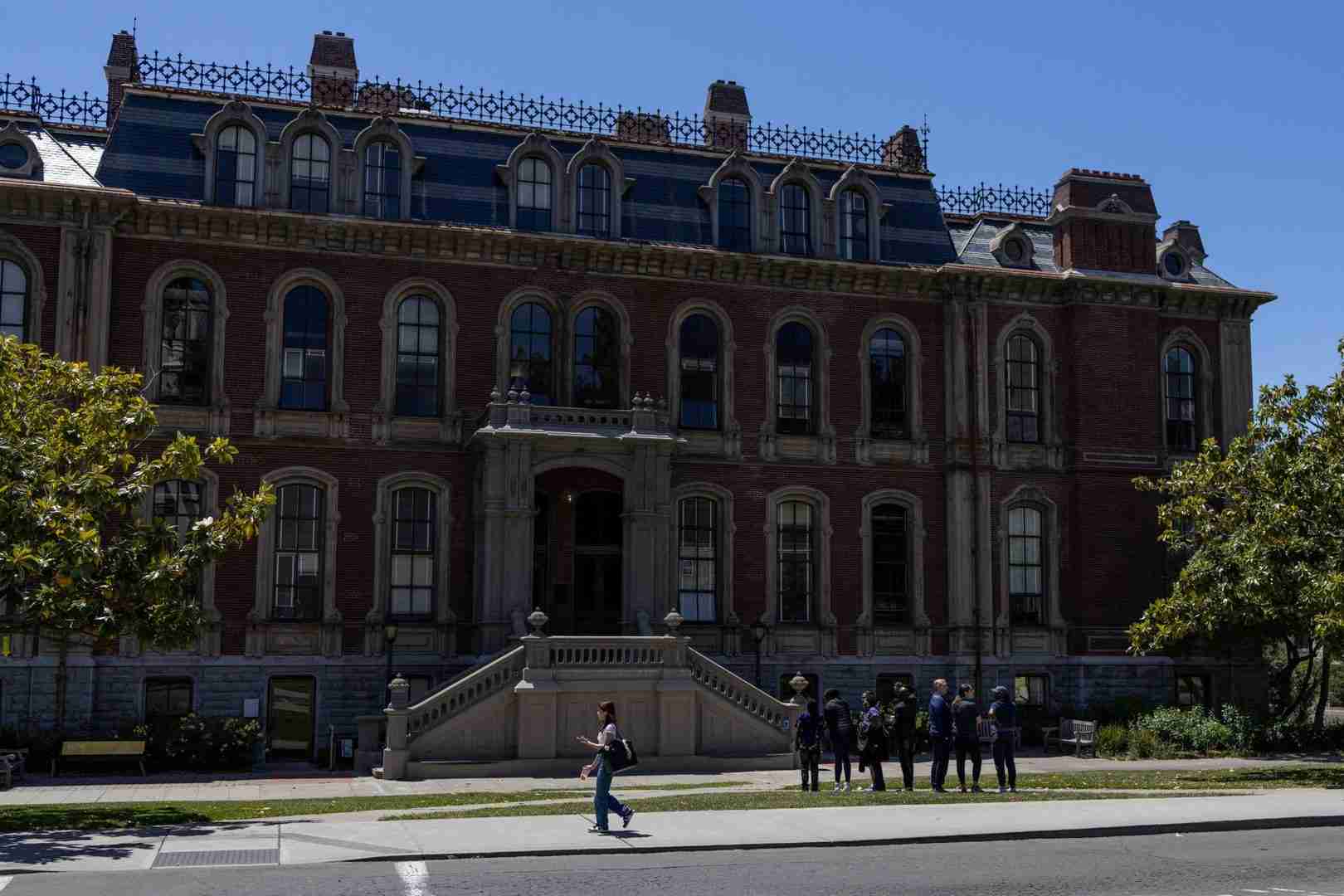
It resulted in some schools, including the University of California, Los Angeles and the University of California, Berkeley, pausing certain applications for work authorizations for international students.

“UCLA has paused certain Curricular Practical Training authorizations while it reviews recent federal guidance and determines next steps,” a UCLA spokesperson said.

UC Berkeley’s international office said the August 24 memo was “more narrow in focus, more direct, and includes content that is more restrictive in nature.” The federal government had also issued an earlier memo in mid-August.

UC Berkeley’s international office said it is unlikely that it will process certain work authorization applications “in the near future” and urged those international students to plan accordingly.

It said it will continue processing “degree-requirement” CPT as normal and would resume processing “Doctoral Dissertation and Master’s Thesis Research CPT.” The office said it would consult legal experts to develop new processes aligning with new federal requirements.

“Nothing about these regulations has changed,” the Department of Homeland Security, ICE’s parent, said in a statement. “However, schools and employers should consider themselves on notice: under President Trump, abuse of this generous system will no longer be tolerated.”

Trump has targeted universities with probes and funding threats over issues like pro-Palestinian protests against U.S. ally Israel’s assault on Gaza, diversity initiatives, climate programs and transgender policies. Rights advocates have raised free speech, academic freedom and due process concerns.

Separately, the U.S. Justice Department alleged on Thursday admissions practices at the George Washington University School of Medicine and Health Services favored Black and Hispanic applicants, citing findings of a probe as the Trump administration continued its diversity crackdown.

“We are disappointed by the DOJ’s conclusions, which we believe are incorrect,” the university said, saying the admissions policies were in compliance with law and not discriminatory.

The Justice Department has alleged similar bias at other schools, saying the department aims for settlement talks. If those efforts fail, the department will file suit, it said.

Trump’s administration has also revoked visas of student protesters over pro-Palestinian protests that it casts as antisemitic and sympathetic to extremists.

Protesters, including some Jewish groups, say opposition to Israel’s assault on Gaza and its occupation of Palestinian territories is not antisemitic and advocacy for Palestinian rights is not the same as supporting extremism.

Reporting by Kanishka Singh in Washington; Editing by Thomas Derpinghaus and Raju Gopalakrishnan

Over 90,000 affected by Himalayan landslide, Red Cross says

Fisher said that the organisation’s trucks with relief supplies were blocked after a lake formed by the landslide broke its banks, temporarily halting rescue operations

International News via Reuters:

More than 90,000 people are estimated to be directly affected by the Himalayan landslide and in urgent need of humanitarian assistance, the Red Cross said on Friday, as aid officials voiced fears of further flooding.

“We believe that at least 93,000 people have been affected and are in great need,” David Fisher, head of delegation for the International Federation ​of Red Cross and ​Red Crescent Societies in Nepal, told a Geneva press briefing.

“We’re of course very concerned about the secondary flood,” he added.

Fisher said that the organisation’s trucks with relief supplies were blocked after a lake formed by the landslide broke its banks, temporarily halting rescue operations.

Kamal Kishore, Head of the United Nations Office for Disaster Risk Reduction, warned of further “cascading hazards that might unfold”.

“In a sense, the disaster is not yet completely over. It is still unfolding in some ways,” he said.

World Health Organization spokesperson Tarik Jasarevic said at the same briefing that six health facilities had been damaged in the landslide and that eight healthcare workers were missing.

“Following a disaster of this scale, displacement, overcrowding and disruption to water, sanitation and health services can increase the risk of infectious diseases, including diarrhoea and respiratory illnesses,” he said.

Reporting by Emma Farge in Geneva, editing by Miranda Murray and Thomas Seythal

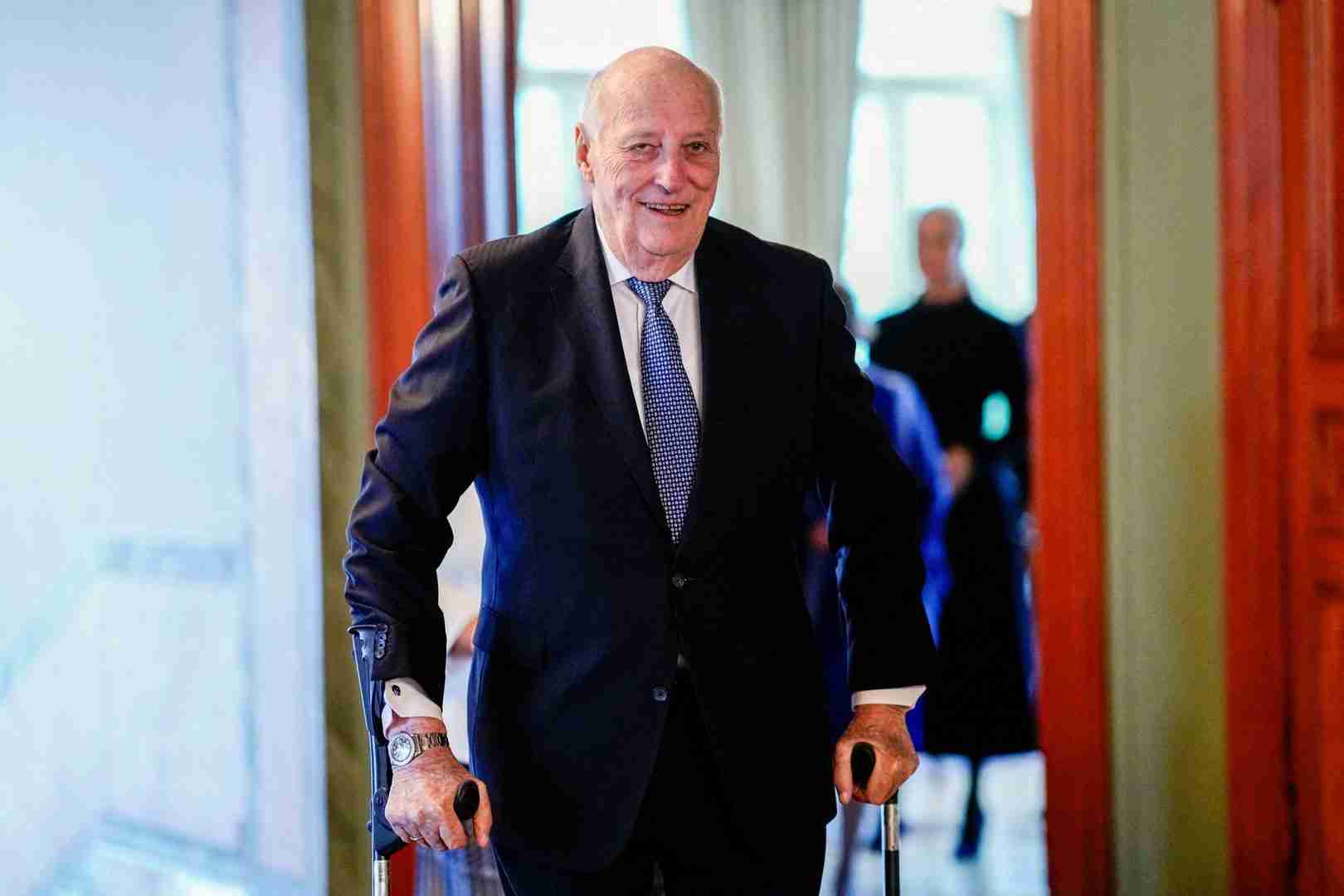
King Harald V, Norway’s reform-minded head of state, dies at 89

Harald, who was Europe’s oldest living monarch, was taken to hospital on August 17

International News via Reuters:

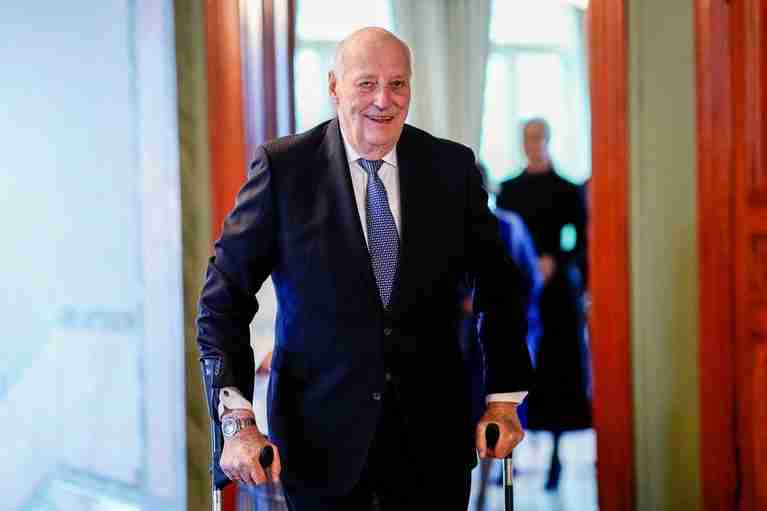
Norway’s King Harald, a reformer who emerged from the shadow of his well-loved, extrovert father over more than three decades on the throne, died on Friday at the age of 89, the royal palace said, at a time of multiple crises for the Norwegian royal family.

“King Harald passed away peacefully at Oslo University Hospital on Friday 28 August, 0635 (local time, 0435 GMT),” the royal palace said on its website.

Harald, who was Europe’s oldest living monarch, was taken to hospital on August 17. The palace said he was being treated for a bacterial infection in his blood.

In 2024, he had been hospitalised for an infection while on holiday in Malaysia and received a temporary pacemaker. He was flown back home by the Norwegian armed forces and later fitted with a permanent device.

That same year, Harald, Norway’s ceremonial head of state since 1991, said he would reduce the number of official engagements in which he took part but ruled out abdication, insisting that his oath as king was for life.

After his death was announced, hundreds of people converged on the palace in Oslo to lay flowers and the government declared nationwide mourning until after his funeral.

Tributes poured in from politicians and other European monarchs, also from Norway’s star footballer Erling Haaland.

Harald’s 53-year-old son will become Norway’s new king, Haakon VIII, and Haakon’s 22-year-old daughter Ingrid Alexandra becomes crown princess.

MULTIPLE CHALLENGES

Harald’s death comes at a tumultuous time for the royal family. 

Crown Princess Mette-Marit, married to Haakon and who becomes the new queen, is facing intense scrutiny for her friendship with the late sex offender Jeffrey Epstein, a relationship for which she has apologised.

Her son Marius Hoiby, born from a relationship predating her marriage to Haakon, was found guilty in June of ​two out of four counts of rape and one count of domestic violence and sentenced to four years in prison after a seven-week trial. Both he and the prosecution have appealed the sentence.

Two days after Marius was convicted, the palace said Mette-Marit had undergone a successful lung transplant, without specifying when the procedure took place. 

After several weeks of recovery in hospital, she returned home and celebrated her silver wedding anniversary with Haakon in August.

Support for the monarchy dropped to 60% in February 2026, from 70% the previous month, according to a Norstat poll published by public broadcaster NRK, rising slightly to 64% in May.

Harald had constantly remained popular with Norwegians. According to the February poll, he was the royal who best represented the Norwegian royal family, with a note of 9.2, on a scale of 1 to 10.  

A DESCENDANT OF QUEEN VICTORIA

A great-great-grandchild of Britain’s Queen Victoria, Harald acceded to the throne in 1991 and slowly introduced modern touches that brought a ceremonial post seen mainly as a symbol of national independence into the 21st century.

The popular king played a crucial role comforting the nation in times of mourning.

When far-right, anti-Islam fanatic Anders Behring Breivik killed 77 people in 2011 in Oslo and on Utoeya island, the king consoled the nation with a powerful televised speech. His voice trembling with emotion, he said that “freedom is stronger than fear”.

After floods, storms and other disasters, he would travel to the scene wearing rubber boots and a well-worn jacket to meet those who had lost homes or loved ones.

Late in life he spoke up for tolerance, declaring in a 2016 speech that Norwegians could have many backgrounds, beliefs and sexual orientations.

In November 2005, Harald and his wife, Sonja Haraldsen, invited 550 Norwegians to a ball to celebrate the centenary of the country’s independence from Sweden.

Harald said in an interview at the time that Europe’s royal families should not be tempted to reverse moves towards openness and retreat to their palace towers.

“If you’ve opened the gate it’s very difficult to close it again,” he told Reuters. “I’m not sure I’d want to close it. So far so good, as far as I’m concerned.”

Like his father Olav, Harald was a sports and automotive enthusiast and often drove his own car, particularly to informal events.

A sailor, he captained his boat to win a world championship title and competed in several Olympics, but failed to repeat his father’s feat of winning Olympic gold.

Harald also took a great interest in the preservation of nature. He realised a lifelong dream when, aged 76, he spent four days deep in the Amazon jungle of Brazil, living with the Yanomami people and sleeping in a hammock.

BIRTH AND REIGN

Harald’s birth on February 21, 1937, was cause for national celebration – he was the first royal heir to be born in Norway in almost 570 years. Danish and Swedish monarchs had ruled over the Scandinavian nation for centuries, until 1905.

Just three years after Harald was born, Nazi Germany invaded the country. King Haakon and then-Crown Prince Olav fled to Britain, where they led Norway’s government-in-exile, while the 3-year-old Harald went with his mother, Crown Princess Märtha, to neutral Sweden, then to the United States.

After living briefly at the White House, and then for five years in Bethesda, Maryland, Harald, his older sisters Ragnhild and Astrid and their mother met frequently with U.S. President Franklin D. Roosevelt, whom Harald years later described as like a grandfather.

When he returned to Norway after the war ended in 1945, Harald attended state schools rather than the private lessons his father had received.

His marriage in 1968 to a commoner broke with tradition and followed a nine-year stand-off with his father that ended only after Harald threatened never to marry rather than give up Sonja.

LATER YEARS

In 1998, the king faced an unprecedented wave of public criticism over press reports that he had accepted a 4-million-crown ($400,000) yacht from a group of industrialists as a birthday present, and that palace repairs had cost the government 500 million crowns.

Around the same time, his former deputy private secretary suggested that Harald should abdicate at the egalitarian country’s normal retirement age of 67.

Opinion polls gave the king firm backing to stay on for life, however, and the criticism subsided. A year later, in another Reuters interview, Harald joked that he would remain on the throne for life unless he went mad.

“There is no tradition in Norway for that (abdication). But you never know. If you go completely bonkers,” he said. Queen Sonja laughed and said: “But who will ever tell you that?”

Editing by Andrew Heavens

London stocks tick higher ahead of Warsh’s Jackson Hole speech

The blue-chip FTSE 100 rose 0.1% to 10,807,89 points by 1054 GMT, on course to end the week nearly flat

International News via Reuters:

UK stocks edged higher on Friday as investors digested several corporate updates and awaited Federal Reserve Chair Kevin Warsh’s speech at the Jackson Hole symposium. 

The blue-chip FTSE 100 rose 0.1% to 10,807,89 points by 1054 GMT, on course to end the week nearly flat. The midcap FTSE 250 added 0.2% to 24,936.06 points, but was on track for a near 1% weekly gain.

• Global stock markets were in a wait-and-watch mode ahead of Warsh’s speech at 1400 GMT, with investors watching for him to offer more details about the economy, recent volatility in bond markets, and the risks facing the U.S. and global outlook.

• At issue is whether he can maintain his less-is-better approach to monetary policy communications or feels compelled to provide at least a rough roadmap of how he views elevated inflation and what might prompt him to conclude that higher interest rates are needed to contain it.

• Oil prices dipped on Friday but Brent crude stayed close to $90 a barrel following a report that U.S. President Donald Trump is not interested in returning to previous deal terms with Iran. [O/R]

• Still, investors have been paring back expectations of a rate hike from the Bank of England this year.

• British businesses turned the most confident since March this month, bolstered by a rosier view of the economy, according to a survey that echoes other signs of an improving outlook.

• Among single stocks, Halfords climbed 2% after the retailer forecast annual profit ahead of market expectations as warm weather drove sales of its bicycles, camping gear and outdoor equipment.

• Goodwin climbed 5.9% after the mechanical engineering company reported full-year trading profit of £77.50 million ($105.3 million), more than double from a year ago.

• Recruiter Hays climbed about 5% after Panmure Liberum upgraded the stock to “buy” from “hold”.

Reporting by Anand Gopal and Sruthi Shankar in Bengaluru; Editing by Shailesh Kuber

Sterling heads for weekly loss, focus on Jackson Hole symposium

The British pound eased about 0.1% at $1.3582 to a more than one-week low and was set for a weekly drop of 0.4%

International News via Reuters:

Sterling was headed for its first weekly drop against the dollar in more than a month on Friday as expectations for a Bank of England interest rate hike this year receded, ahead of a key U.S. Federal Reserve symposium at Jackson Hole.

The British pound eased about 0.1% at $1.3582 to a more than one-week low and was set for a weekly drop of 0.4%. The euro was broadly steady versus the UK currency and was set for a weekly rise of 0.1%. It last fetched 85.69 pence.

This week’s losses were largely driven by dollar strength as the U.S. currency recouped some losses and as investors cut some of their bets for an interest rate hike by the BoE this year, even as the war in the Middle East has kept energy prices elevated.

Traders are currently pricing in about 25 basis points of rate hikes by December, according to LSEG-compiled data, down from the 30 bps they were wagering more than a week ago.

Markets were also awaiting any clues on fiscal plans from Britain’s new Andy Burnham-led government as parliament re-convenes next week. The broader budget is expected in October, against a backdrop of fiscal concerns.

“The Bank of England will wait first for the budget, for the government to set up and to reveal its own policy, and then adopt accordingly,” said Ipek Ozkardeskaya, senior market analyst at Swissquote Bank.

“A scenario where Burnham’s budget is not that expensive, the growth output will be less, but then the pressure on inflation will be less as well. So then the Bank of England could remain contained and wait a little bit longer.”

As part of Britain’s fiscal plans, key focus will be on defence spending at a time when European economies are under pressure to finance their own defence needs and reduce their reliance on the U.S.

On Thursday, Russia warned that it could strike British military targets inside and outside Ukraine in response to Ukrainian attacks on targets inside Russia using long-range British cruise missiles.

Focus will now shift to the Jackson Hole economic symposium in Wyoming at 1400 GMT, with investors keen on any of Chairman Kevin Warsh’s thoughts on monetary policy outlook.

“Warsh may preview the Fed five task forces’ early findings on communications, the balance sheet, economic data, productivity and jobs, and the inflation frameworks,” said Elias Haddad, global head of markets strategy at Brown Brothers Harriman.

Warsh established the five task forces on the workings of the Fed at the start of his term, and has said their findings will influence his future plans.

Reporting by Johann M Cherian in Bengaluru; Editing by Jan Harvey

Iran’s security chief denies report about a potential plot against Trump’s son

International News via Reuters:

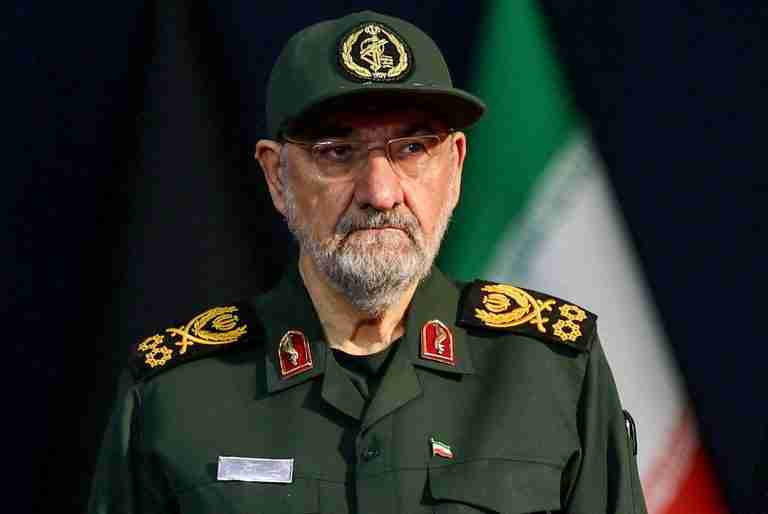
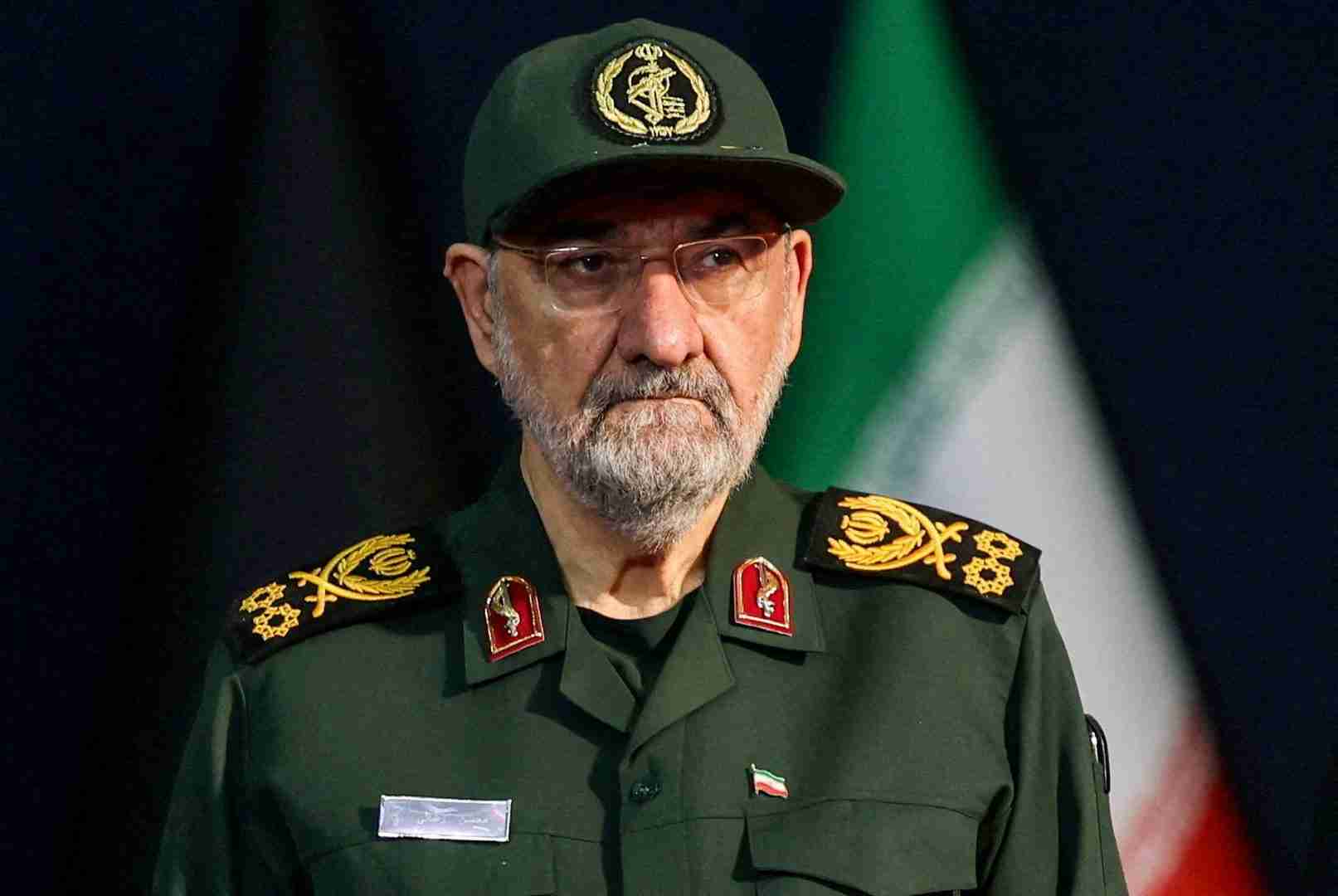
Iran’s Security Chief Mohsen Rezaei said a report about a potential plot to assassinate U.S. President Donald Trump’s youngest son is a lie, in an interview broadcast by Lebanon’s Al Manar TV on Thursday.

The U.S. Secret Service said on Tuesday that it was aware of a video broadcast by Iranian state television discussing a potential plot to assassinate U.S. President Donald Trump’s youngest son Barron Trump.

Reporting by Elwely Elwelly, Editing by Franklin Paul

Shell has ended talks with Unimot over selling German refinery stake, Bloomberg News reports

The sale discussions, which began in 2023, concluded months ago

International News via Reuters:

British oil major Shell has ended negotiations to sell its stake in Germany’s Russia-linked Schwedt refinery to Polish energy group Unimot, Bloomberg News reported on Thursday, citing people familiar with the matter

• The sale discussions, which began in 2023, concluded months ago, the Bloomberg report said.

• Shell declined to comment

• Unimot, which emerged as a possible buyer of Shell’s 37.5% stake in Germany’s PCK Schwedt refinery, did not immediately respond to a Reuters request for comment outside regular business hours.

• The refinery, majority-owned by Russia’s Rosneft, has been a problem for the German government ever since Berlin ended energy ties with Moscow in response to Russia’s invasion of Ukraine.

• Germany put Rosneft’s 54.17% stake under trusteeship, essentially giving the government control over the asset while technically leaving ownership in the Russian group’s hands — a move that prompted Shell to revive its sale plans.

• According to Bloomberg, Shell and Unimot had been in advanced talks as of February, before ending talks.

Reporting by Sumedha Mukherjee in Bengaluru; Editing by Vijay Kishore and Joyjeet Das

Rupert Murdoch wish to re-merge Fox Corp and News Corp ‘could happen in future,’ court documents and video show

Discussions of a possible re-merger were revealed during the last few weeks in unsealed court documents and an attorney’s testimony related to a family succession saga that began in 2023

International News via Reuters:

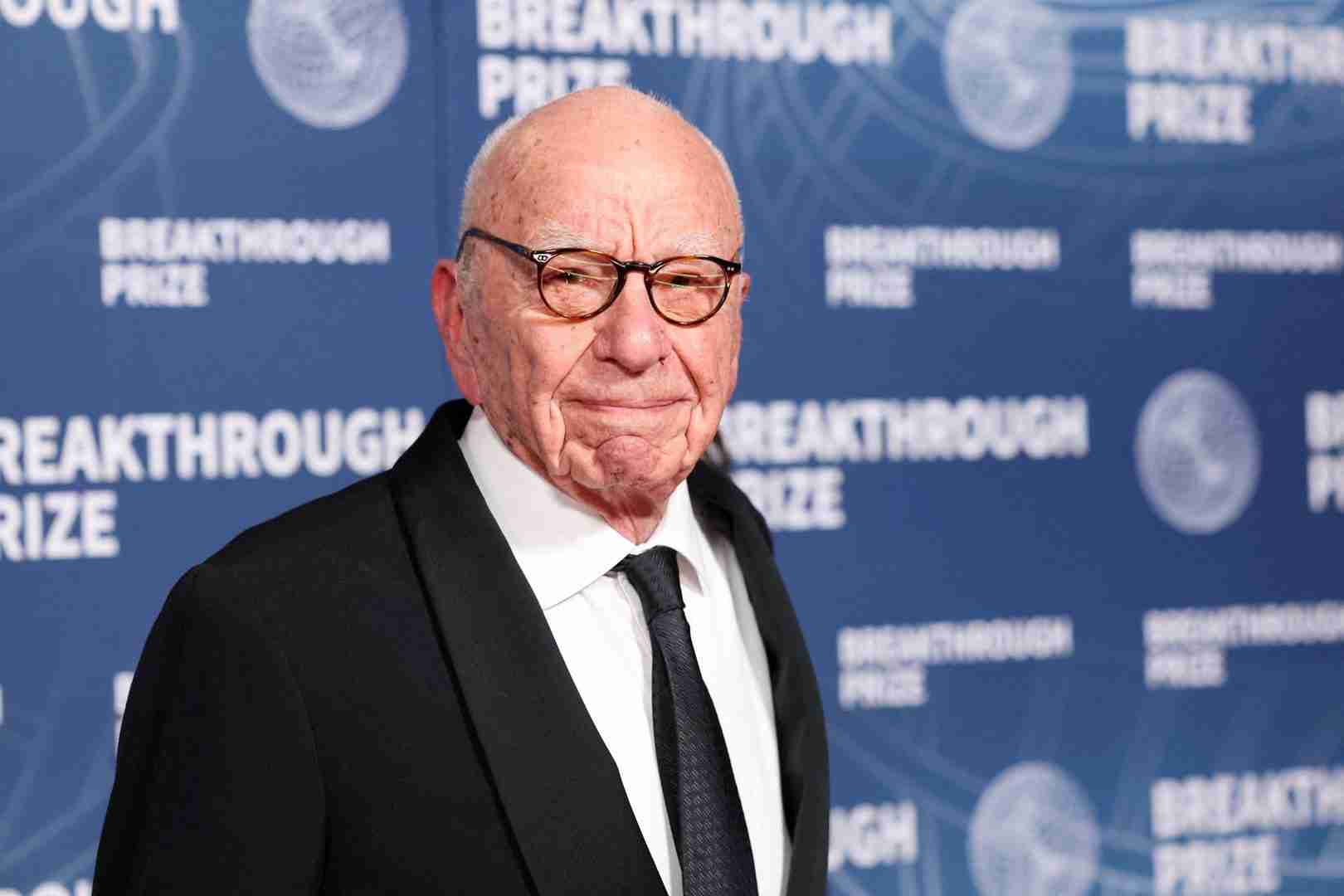
Rupert Murdoch’s longstanding wish to reunite his Fox Corp and News Corp could happen in a potential merger that would unite a TV company with a widespread news operation, cementing the family’s control over a smaller empire, court documents and video show.

Discussions of a possible re-merger were revealed during the last few weeks in unsealed court documents and an attorney’s testimony related to a family succession saga that began in 2023. The judicial official overseeing the matter released the findings at the end of July.

They showed that in 2022, Rupert Murdoch, then chairman of Fox Corp and News Corp, became interested in recombining the two companies after he split them less than 10 years earlier.

Murdoch drafted a letter to both boards stating the family trust would not “vote in favor of any alternative sale, merger or similar transaction involving either company.” After a representative for Murdoch’s daughter Elisabeth questioned the re-merger, Rupert texted her and threatened to “ram it through … if necessary.” 

The merger failed after investors balked, but court proceedings in June show Murdoch could make a renewed attempt. In a hearing to determine whether the court testimony should be made public, an attorney for Lachlan Murdoch argued any discussions related to the merger should be sealed or redacted because it’s “something that still could happen in the future.”

Fox Corp and News Corp declined to comment. Shares in Fox dropped as much as 2.9% while News Corp rose 1.5% following the Reuters report. 

A merger would bring together what remains of Murdoch’s waning media empire. It would unite an array of disparate businesses across television, newspapers and streaming, including Fox News, Fox broadcast, which airs NFL games, the Wall Street Journal, the Sun, and the New York Post. 

Fox, led by Lachlan Murdoch, struck a $22 billion deal in June to acquire the streaming platform Roku, giving Fox access to more than 100 million households in an attempt to reach more digital audiences as television declines. 

Murdoch split his empire in two after a hacking scandal at his UK newspapers in 2013 threatened his enterprise. Murdoch and his son James Murdoch apologized to a UK parliamentary committee after it was revealed one of his tabloids had hacked the mobile phone of murdered schoolgirl Milly Dowler. Murdoch cleaved the faster-growing and more lucrative television business from his shrinking newspaper empire, and investors boosted the value of both.

The court findings were released after several news organizations, including Reuters, petitioned the probate commissioner presiding over the case to release the proceedings.

The fractious family dispute started in December 2023, when the then 93-year-old media titan moved to alter the family trust to give effective control of Fox and News Corp to his eldest son Lachlan, cutting out three of his children, Prudence MacLeod, Elisabeth, and James.

The children took their father to court but settled last year after a two-year battle. Lachlan became the heir to his father’s business while the three children were paid $1.1 billion each in a deal that dissolved their stakes in the family trust that controls Murdoch’s companies.

Details from the succession drama were first revealed by the New York Times Magazine last year, but the July findings from the Nevada court relayed fresh comments from the elder Murdoch.

When a family representative questioned his motivation to further consolidate his control over the businesses, Rupert Murdoch responded: “Sorry, Richard! This has been a family-dominated business for 70 years,” and added, “It would be a disaster for at least the U.S. and Australia if these assets fell into the wrong hands.”

Reporting by Edmund Lee; Editing by Rod Nickel

Music and community to be celebrated at Devonshire Rec

Sounds Fest Bermuda will celebrate sound-system culture, music and community in a two-day event that starts tomorrow at Devonshire Recreation Club.
It will feature live performances, a celebrity football match, Gombey exhibition, majorettes, art and more.

Kendal Trott spoke with Original Productions founder Mitchell Trott, who shared the inspiration behind the event, what makes the concept unique and what the public can expect from two days of entertainment and culture. 
Sounds Fest Bermuda runs from 11:30AM to 11:30PM, with free admission.