The new Cup Match themed flags, launched by CURB, symbolize both celebration and remembrance
Media release:
Citizens Uprooting Racism in Bermuda (CURB) is proud to announce the release of a new commemorative flag in honour of Bermuda’s Emancipation and the historic Cup Match holiday. This flag is designed to not only celebrate the beloved holiday but also highlight its deeper meaning; Bermuda’s journey to freedom and the legacy of abolitionist Mary Prince.
Bermudians know how to celebrate. Our holidays are vibrant, joyous, and full of life. Yet, amidst the fun, we often overlook the importance of commemoration. At CURB, especially during Cup Match, we believe it’s essential to reflect on the origins and purpose of this uniquely Bermudian celebration.
Cup Match is far more than a cricket match. It represents unity, culture, resilience, and the recognition of our freedom. This year, CURB is excited to unveil a flag that symbolizes both celebration and remembrance.
The flag incorporates the traditional Cup Match colours while featuring:
A silhouette of Mary Prince with a broken chain, representing her fight for freedom and her powerful role in Bermuda’s emancipation.
A cricketer, celebrating the spirit of the game and the holiday that brings the island together.
“We envision this flag flying proudly across Bermuda, at Cup Match campsites, on cars, and in homes, as a powerful reminder of our shared history and our vibrant culture.
Flags are now available for purchase for $20 at the CURB office, located at 26 Bermudiana Road, International Centre. Please email admin@uprootingracism.org or call 7071496 to confirm your order.
As we prepare for this year’s Cup Match, CURB invites all Bermudians to both celebrate and commemorate, to honour our ancestors, acknowledge our history, and embrace the community spirit that defines this special time of year.
The ECB cut its policy rate to 2% last month, half its level of a year earlier
International News via Reuters:
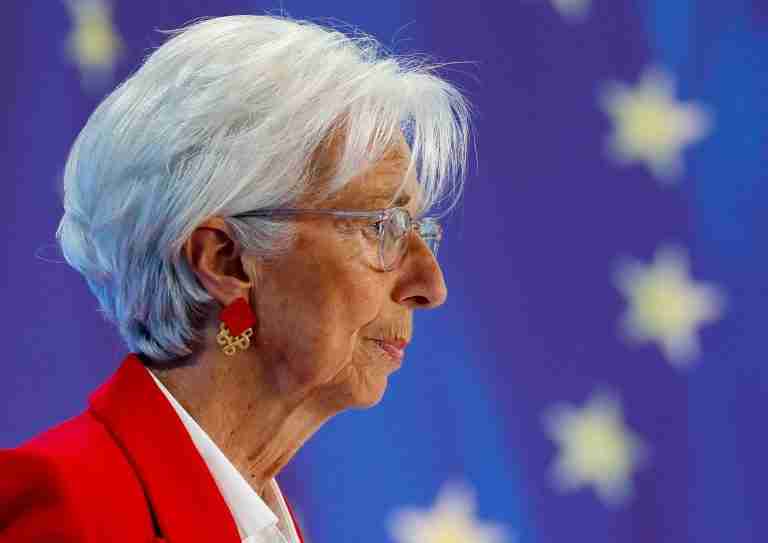
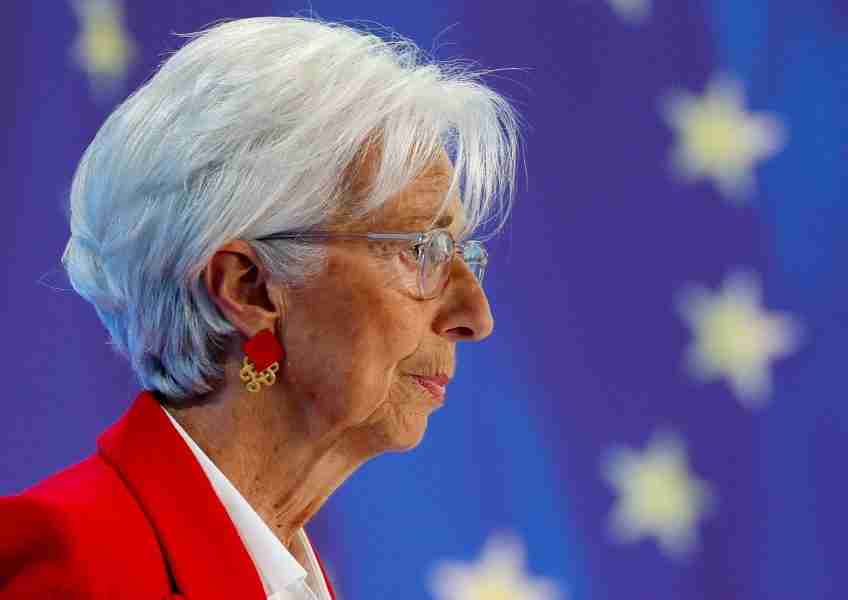
The European Central Bank left interest rates unchanged on Thursday after cutting eight times in a year, biding its time while Brussels and Washington try to negotiate a trade deal that could ease persistent uncertainty over tariffs.
Financial markets scaled back bets on future easing, however as ECB President Christine Lagarde delivered what was viewed as an overall upbeat assessment of the region’s economic outlook.
The ECB cut its policy rate to 2% last month, half its level of a year earlier, after taming a surge in prices that followed the end of the COVID-19 pandemic and Russia’s full-scale invasion of Ukraine in 2022.
With inflation now back at the ECB’s 2% goal and expected to stay there, policymakers chose to stay put on Thursday, just as trade talks between the European Union and United States appeared to be in their final stretch. Reports have suggested a possible deal based on a 15% tariff on U.S. imports of EU goods.
“We are attentive to where the negotiations are heading (but) we take the news one day at a time,” Lagarde told a press conference.
“The sooner this trade uncertainty is resolved, the less uncertainty we will have to deal with and that will be welcomed by many economic actors including ourselves.”
While the White House has dismissed the reports as speculation, 15% tariffs would be roughly halfway between the ECB’s baseline and severe scenarios for the euro zone economy, presented last month, but milder than Trump’s threatened 30%.
The ECB’s June estimate showed that higher U.S. tariffs would result in lower growth and – depending on any EU retaliation – lower medium-term inflation in the euro zone.
Even the ECB’s baseline projection from June, which incorporates 10% tariffs from the United States, saw price growth below 2% over the next 18 months.
Lagarde acknowledged that scenario did include the possibility of a temporary undershooting of the inflation target but said it was not a cause for concern.
“We are in a good place because our projections point to inflation stabilising at targets in the medium term,” she said, noting that supply bottlenecks and trade disruption caused by tariffs could also emerge as inflationary.
That upbeat assessment pushed short-dated German bond yields to their largest daily rise in two months as traders took it as a signal that another series of rate cuts next year might be unlikely.
Underlining the uncertainty, economists commenting on the meeting’s outcome offered markedly divergent views on the way forward, with some seeing scope for further cuts and others suggesting the ECB’s next move could even be a hike.
The euro zone economy is showing some tentative signs of acceleration but growth remains modest. Companies, while still optimistic about an upturn ahead, report starting to feel the pinch from tariffs on their profits.
On the bright side, euro zone banks have seen rising loan demand and policy uncertainty has not yet translated into an economic or market downturn.
After a short-lived selloff in April, investors have taken the trade turmoil in their stride, with European equity indices close to new highs, thanks also to Germany’s newly found appetite for spending.
In fact, erratic policy-making in the United States, including Trump’s relentless criticism of Federal Reserve Chair Jerome Powell, has lured foreign investors to euro zone assets. That briefly pushed the euro to its highest level against the dollar since September 2021 – $1.1829 – earlier this month.
ECB board member and outspoken hawk Isabel Schnabel has even said the central bank should watch out for price hikes caused by tariffs and that the bar for further cuts was “very high”.
But the euro’s appreciation has unnerved other policymakers, who fear a stronger currency would make European exports less competitive and contribute to pushing down inflation.
Lagarde on Thursday repeated the ECB’s official line that it monitors the exchange rate closely but does not target a level for the euro.
Editing by Toby Chopra, Tomasz Janowski and Catherine Evans
Cycling: Bermudian Narraway continues to make his mark on the UCI Europe Tour
Bermudian cyclist Nicholas Narraway is continuing his demanding campaign on the European circuit, representing Tenerife-BikePoint-LaSedeBycicles in the Vuelta a Castilla y León cycle race in Spain.
Following a solid performance in the opening 3.8-kilometre time trial, Narraway tackled Stage Two, a 156.0-kilometre road race from Santa Marta de Tormés to Cuéllar.
Narraway finished 82nd in this stage, clocking a time of 3 hours, 13 minutes, and 21 seconds. He crossed the line 2 minutes and 19 seconds behind the stage winner, Spain’s Estelrich Mateu, who recorded a time of 3 hours, 11 minutes, and 2 seconds. Mateu, a Spanish rider for Supermercados Froiz, secured a notable victory in this stage.
Narraway’s continued participation in this UCI Europe Tour event provides invaluable experience against strong European riders in a multi-stage format that tests both individual time trial ability and road race endurance. With four more stages remaining in the Vuelta a Castilla y León, Narraway will be looking to build on his performances and further improve his overall standings as the race unfolds.
Sailing: Scatteraction crosses the line first on Wednesday night
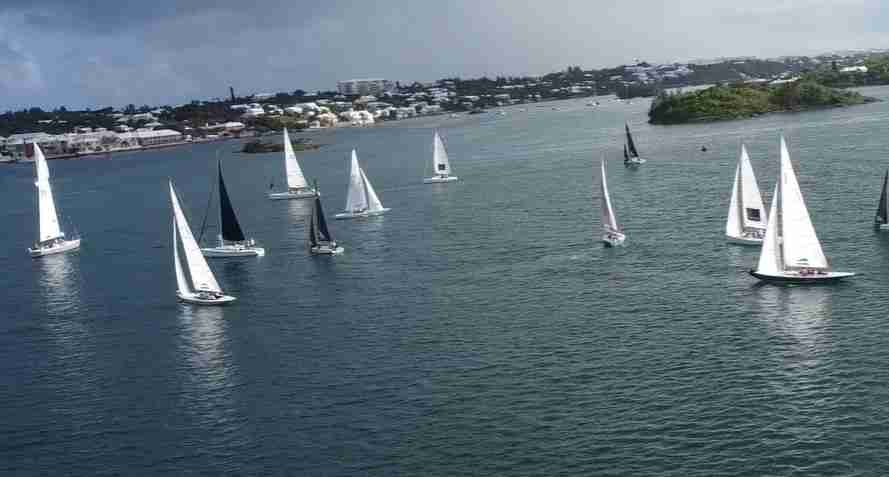
The Wednesday Night Sailing Series continued its vibrant run on the North Shore this week, with 25 boats battling it out for Race Day 15 honours. The evening proved a keen display of tactical sailing, where “corrected time” was once again the decisive factor in determining the final standings.
Scatteraction was the first boat across the line with an elapsed time of 1 hour, 20 minutes, and 44 seconds (1:20:44). However, it was their calculated corrected time of 1 hour, 16 minutes, and 24 seconds (1:16:24) that ultimately secured them a well-deserved victory.
Airforce followed closely, finishing second on corrected time with 1 hour, 16 minutes, and 49 seconds (1:16:49), after an elapsed time of 1:21:10. Menace rounded out the podium, securing third with a corrected time of 1 hour, 17 minutes, and 11 seconds (1:17:11).
The top five was completed by Tiburon (1:17:14 corrected time) and Solna II (1:17:19 corrected time). These incredibly close finishes underscore the competitive nature of the Wednesday Night Sailing Series, where precision and strategy are paramount.
It is Britain’s biggest trade deal since it left the European Union in 2020
International News via Reuters:
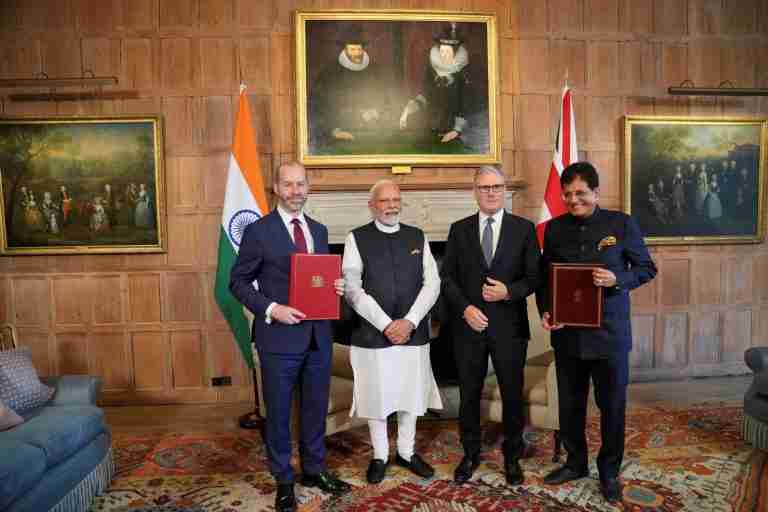
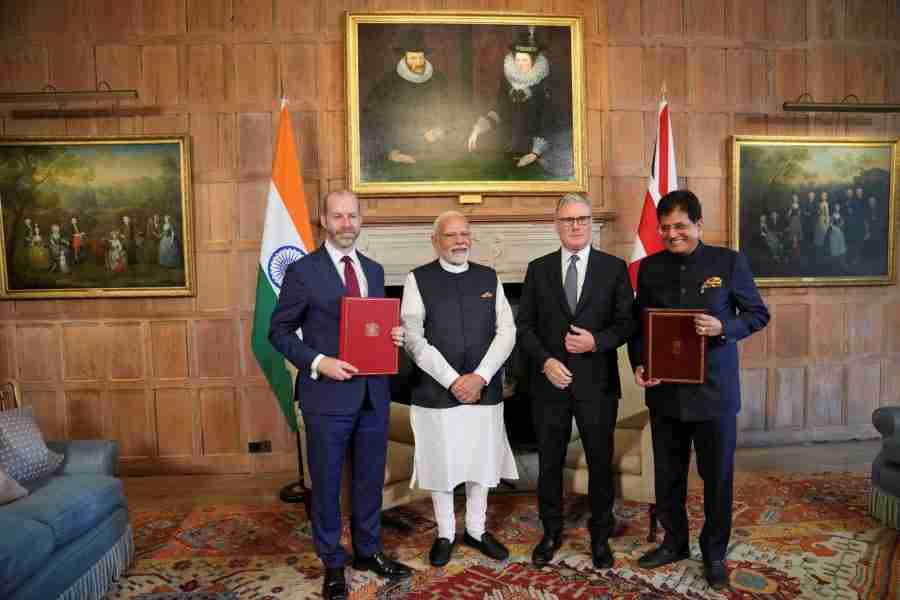
Britain and India signed a free trade agreement on Thursday during a visit by Indian Prime Minister Narendra Modi, sealing a deal to cut tariffs on goods from textiles to whisky and cars and allow more market access for businesses.
Talks on the trade pact were concluded in May after three years of stop-start negotiations, with both sides hastening efforts to clinch a deal in the shadow of tariff turmoil unleashed by U.S. President Donald Trump.
The agreement between the world’s fifth and sixth largest economies aims to increase bilateral trade by a further 25.5 billion pounds ($34 billion) by 2040.
It is Britain’s biggest trade deal since it left the European Union in 2020 but its impact will be a fraction of the effect of leaving the orbit of its closest trading partner.
It is India’s biggest strategic partnership with an advanced economy, and it could provide a template for a long-mooted deal with the EU and for talks with other regions.
Both sides hailed as historic a deal which will take effect following a ratification process, likely within a year, after which firms such as whisky distiller Diageo and carmakers including BMW, Nissan, Aston Martin and Tata-owned Jaguar Land Rover could benefit from lower duties.
British Prime Minister Keir Starmer said there would be huge benefits for both countries, making trade cheaper, quicker and easier.
“We’ve entered a new global era, and that is one that requires us to step up, not to stand aside… by building deeper partnerships and alliances,” Starmer said in a statement next to Modi at his Chequers country residence.
Modi called the agreement “a blueprint for our shared prosperity,” highlighting how Indian goods from textiles to jewelry and seafood would secure better market access.
The countries also agreed a partnership covering areas such as defence and climate, and aim to strengthen co-operation on tackling crime. Modi spent nearly three hours with Starmer before going to meet King Charles at his Sandringham Estate.
WHISKY AND CARS
Under the trade agreement, tariffs on Scotch whisky will drop to 75% from 150% immediately, and slide to 40% over the next decade. Tariffs on drinks such as brandy and rum will be cut to 110% initially and end up at 75%.
On cars, India will cut duties to 10% within five years from current levels of up to 110% under a quota system that will be gradually liberalised.
In return, Indian manufacturers will gain access to the British market for electric and hybrid vehicles, also under a quota system.
Under the deal, 99% of Indian exports to Britain will benefit from zero duties, including textiles, and Britain will have reductions on 90% of its tariff lines, with the average tariff UK firms face dropping to 3% from 15%.
But the projected boost to British economic output, of 4.8 billion pounds a year by 2040, is small compared to Britain’s gross domestic product of 2.6 trillion pounds in 2024.
The Office for Budget Responsibility (OBR) has forecast that UK exports and imports will be about 15% lower in the long run than if Britain had stayed in the EU.
Britain’s Labour government, in power for a year, has launched a reset of ties with the EU to smooth trade friction and won some tariff relief from the United States.
“In an era of rising protectionism, today’s announcement sends a powerful signal,” said Rain Newton-Smith, chief executive of the Confederation of British Industry.
The Confederation of Indian Industry called it a “strong foundation for deeper market access.”
The deal will facilitate easier access for temporary business visitors although visas are not covered. The sides also agreed that workers will no longer have to make social security contributions in both India and Britain while on temporary postings to the other.
British firms will be able to access India’s procurement market for projects in sectors such as clean energy, and the trade deal also covers services sectors such as insurance.
India did not manage to secure an exemption from Britain’s Carbon Border Adjustment Mechanism – which could levy higher taxes on polluters from 2027 – as part of the deal.
Reporting by Alistair Smout in London and Manoj Kumar in New Delhi; additional reporting by Muvija M in Luton and Aditi Shah in New Delhi; editing by Philippa Fletcher
Football: Up and coming talent took centre stage at the National Sports Centre
The 2025 Bermuda Triangle Cup burst into action at the National Sports Center, delivering a thrilling double-header that saw eight goals scored across two captivating matches.
In the opener, the Bermuda Brazilian Football School Select secured a solid 2-0 victory over the National Academy Under 17 Select. Xave Smith opened the scoring in the 36th minute, with Jahzion Taylor doubling their lead in the 60th, ensuring a comfortable win and a clean sheet.
Following this, Premier League giants Everton FC showcased their class against the National Academy Under 15 Select, clinching a commanding 6-0 victory. Ray Robert netted twice early on, followed by goals from Malik Olayiwola and a brace from Jonathan Nsangou, giving Everton a dominant 5-0 halftime lead. The National Academy Under 15 Select showed resilience in the second half, restricting Everton to just one more goal, scored by Jake Doughty.
The opening day provided valuable experience for the young Bermudian academy sides against strong international and local opposition.
Amazon argued that the Competition Appeal Tribunal should certify the cases to proceed
International News via Reuters:
Amazon faces two mass lawsuits from retailers and consumers worth up to 4 billion pounds ($5.4 billion) for allegedly abusing its dominant position, after a London tribunal on Thursday certified the cases could proceed.
Andreas Stephan, a competition law academic, is bringing one of the cases on behalf of over 200,000 third-party retailers, worth up to 2.7 billion pounds.
His lawyers allege that Amazon manipulates the “Buy Box” feature on its website to its own advantage and favours products that use Amazon’s own logistics centres and delivery network.
Consumer advocate Robert Hammond is separately bringing a case valued at up to 1.3 billion pounds on behalf of millions of Amazon customers for similar alleged abuses of dominance.
Amazon argued that the Competition Appeal Tribunal should certify the cases to proceed, an early step in the proceedings, including because the economic methodology for proving the cases was flawed.
But the tribunal certified both cases on an opt-out basis, meaning members of the claimant class will be part of the case unless they decide otherwise.
An Amazon spokesperson said: “These claims are without merit and we’re confident that will become clear through the legal process.
“Amazon has always focused on supporting the 100,000 businesses that sell their products on our UK store, and more than half of all physical product sales on our UK store are from independent selling partners.”
Reporting by Sam Tobin; Editing by Sachin Ravikumar
Bavarian Nordic has a market capitalisation of close to $3.0 billion following Thursday’s share price rally
International News via Reuters:
Danish biotech Bavarian Nordic said on Thursday it is in discussions with a consortium of Nordic Capital and Permira regarding a potential takeover offer from the two private equity groups, sending its share price up 24%.
“As these discussions are continuing, there can be no certainty as to whether any offer for Bavarian Nordic A/S by Nordic Capital and Permira will be made, or the timing or the terms of such offer,” the vaccine maker said in a statement.
Bavarian Nordic, which specialises in vaccines for mpox, smallpox and other infectious diseases, has a market capitalisation of close to $3.0 billion following Thursday’s share price rally, a Reuters calculation showed.
The company did not disclose how much the private equity groups might offer for its shares.
Bavarian is a key supplier to governments globally, including the United States, where it contributes to public health preparedness programmes.
(Reporting by Stine Jacobsen, editing by Terje Solsvik, Kirsten Donovan)Danish biotech Bavarian Nordic said on Thursday it is in discussions with a consortium of Nordic Capital and Permira regarding a potential takeover offer from the two private equity groups, sending its share price up 24%.
“As these discussions are continuing, there can be no certainty as to whether any offer for Bavarian Nordic A/S by Nordic Capital and Permira will be made, or the timing or the terms of such offer,” the vaccine maker said in a statement.
Bavarian Nordic, which specialises in vaccines for mpox, smallpox and other infectious diseases, has a market capitalisation of close to $3.0 billion following Thursday’s share price rally, a Reuters calculation showed.
The company did not disclose how much the private equity groups might offer for its shares.
Bavarian is a key supplier to governments globally, including the United States, where it contributes to public health preparedness programmes.
Reporting by Stine Jacobsen, editing by Terje Solsvik, Kirsten Donovan
The country has put offshore wind at the heart of its plans to decarbonise its electricity sector by 2030
International News via Reuters:
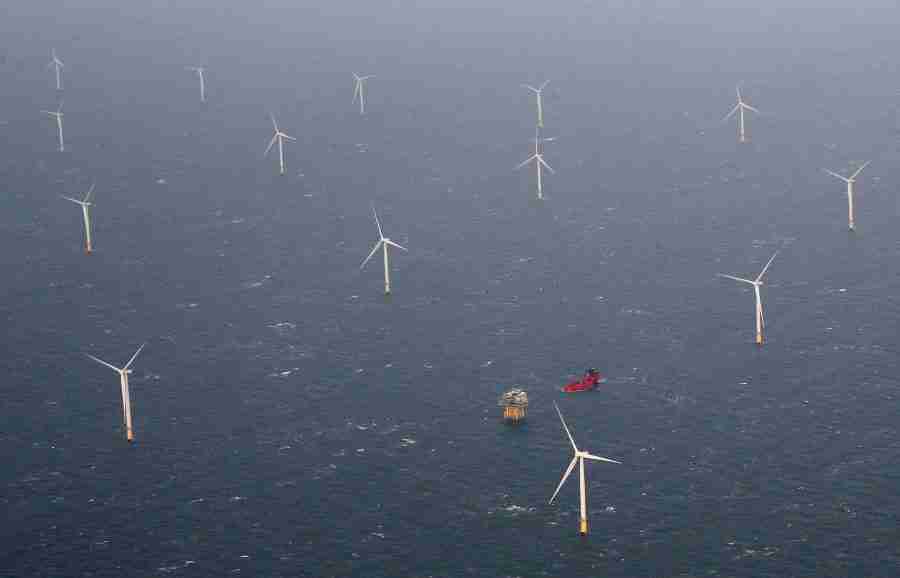
Britain will increase the guaranteed price offered for offshore wind projects in this year’s renewables auction by 11%, government documents showed, amid rising costs for projects due to inflation and supply chain bottlenecks.
The Labour government is facing mounting pressure from opposition parties over the affordability of its net-zero plan and following a 66% rise in the prices offered for offshore wind during last year’s auction.
“Renewable technologies continue to face macroeconomic uncertainty and supply chain constraints – this is particularly true for wind technologies,” the Department for Energy Security and Net Zero said in a document published late on Wednesday.
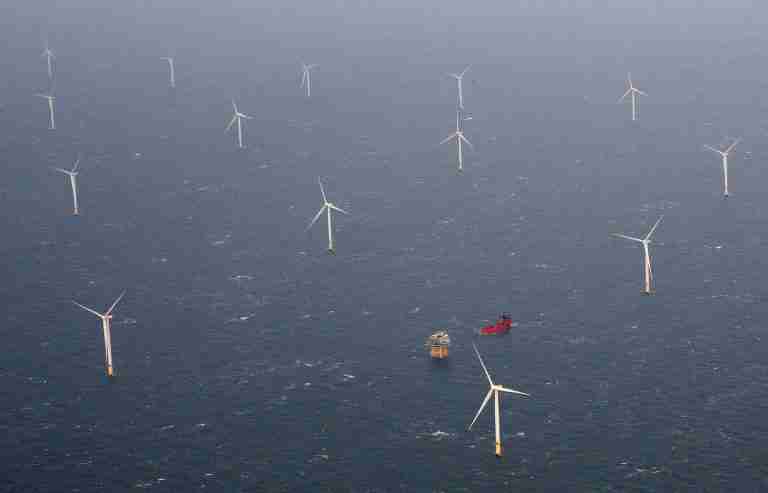
The country has put offshore wind at the heart of its plans to decarbonise its electricity sector by 2030. It aims to boost capacity to 43-50 gigawatts (GW) by the end of the decade, from around 15 GW currently.
In Britain’s annual renewables auctions project, developers bid for contracts-for-difference (CfD), which offer them a guaranteed price for their electricity.
If wholesale prices go below the guaranteed level, or strike price, the government makes up the difference with this cost ultimately recovered by levies on consumer bills. If wholesale prices are below the strike price, the developers pay back the difference.
Offshore wind projects will be offered a strike price of 81 pounds per megawatt hour (MWh) in 2012 prices, up from the 73 pounds per MWh offered in last year’s auction.
Floating wind projects, the technology for which is at an earlier stage of development, will be offered at 194 pounds per MWh, up from 176 pounds previously.
“Whilst construction costs have increased over recent years, this has also been felt across major infrastructure projects… This is the case for gas-fired power plants, as it is for wind turbines,” Adam Berman, director of policy and advocacy at industry group Energy UK, said in a separate statement.
Application rounds for the auction, called AR7, will begin in August with the results announced between December and the end of February 2026.
Reporting by Susanna Twidale, editing by Ed Osmond
Such figures are likely to add to speculation about a Bank of England interest rate cut next month
International News via Reuters:
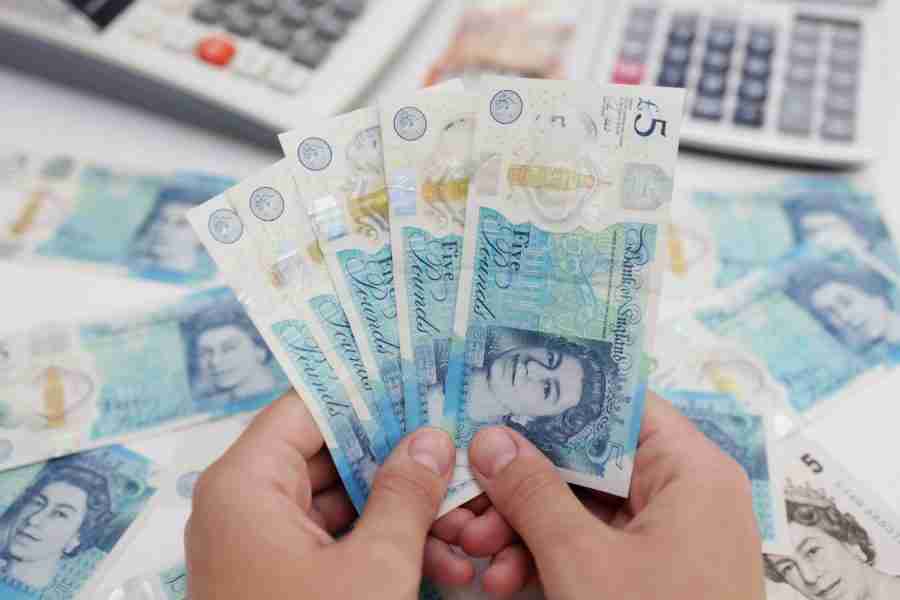
Sterling was set to snap a three-day winning streak against the dollar on Thursday, pressured by concerns over the UK economy and potential tax hikes.
Progress in U.S. trade talks with key partners eased investor worries about a global trade war, sparking a rally in risk assets and lifting the pound earlier this week.
However, UK PMI data showed that business activity grew only weakly in July and employers cut jobs at the fastest pace in five months, according to a survey.
Such figures are likely to add to speculation about a Bank of England interest rate cut next month.
Markets are currently pricing an 80% chance of a rate cut in August and two easing moves by year-end.
The pound dropped 0.28% to $1.3544, after hitting a fresh two-week high early in the session at $1.3588.
The dollar edged up versus the euro and the yen after progress in trade negotiations.
Sterling weakened against the single currency, which was down 0.16% at 86.81 pence.. The euro hit 86.98 pence last week, its highest level since April 11.
The rate differential between the UK and the euro area has been affecting the cross.
Markets are pricing in a European Central Bank terminal rate of 1.75%, down from the current 2%, while expecting the Bank of England to cut rates by 85 basis points by the end of next year.
“Fears over strained public finances, the growing likelihood of more tax bumps and its implications for the UK economy are weighing on the pound against the euro,” said Matthew Ryan, head of market strategy at global financial services firm Ebury, after mentioning June data on government borrowing released on Tuesday.
Britain’s government borrowed £20.68 billion ($27.86 billion) in June. A Reuters poll forecast had pegged public sector net borrowing at a median of £16.5 billion.
Reporting by Stefano RebaudoEditing by Frances Kerry
The trend reflects shifting political priorities in Europe as some member countries have scaled back green measures
International News via Reuters:
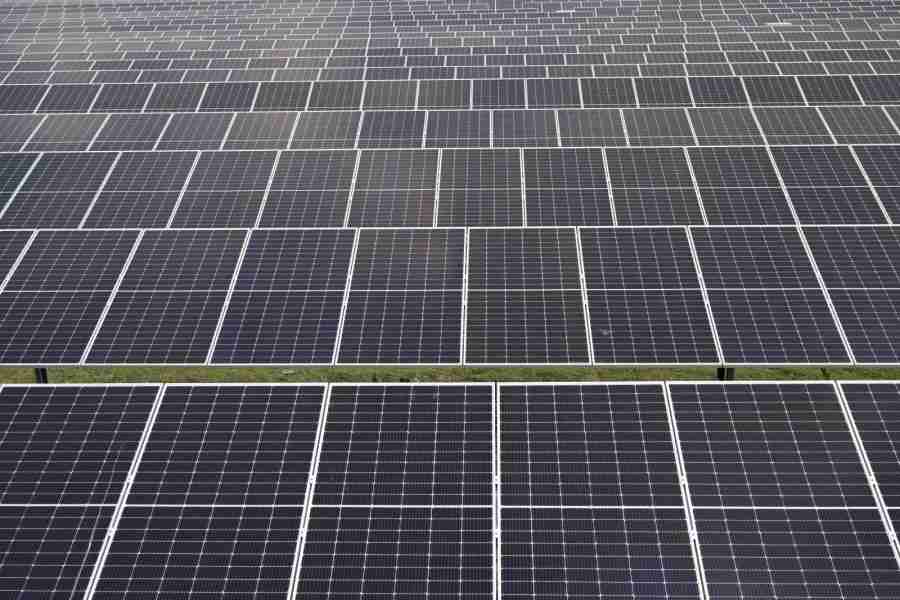
The European Union’s expansion of solar energy is on track for its first annual downturn in more than a decade, industry data showed on Thursday, as some governments reduce subsidies for rooftop solar panels.
The trend reflects shifting political priorities in Europe as some member countries have scaled back green measures or support for clean energy from budgets stretched by spending on defence and local industries.
The EU is on track to install 64.2 gigawatts of new solar energy capacity in 2025, a 1.4% decrease compared with the 65.1GW installed last year, industry association SolarPower Europe said.
The drop would mark the first time since 2015 that the growth of Europe’s solar market has slowed year on year – denting an area of fast progress in Europe’s shift to clean energy. Solar capacity growth soared by 51% in 2023, although last year growth had already slowed to 3%.
Last month, solar generated 22% of total EU electricity, making it the EU’s largest single source of power generation that month.
But current deployment rates now indicate the EU will fall short, by about 27GW, of the 750GW of solar capacity which SolarPower Europe said is needed by 2030 for the EU’s climate targets and plans to phase out Russian energy.
The main cause of the downturn is fewer residential rooftop solar panel installations – a sector that is set to make up 15% of total new capacity this year, halving the roughly 30% share it held over 2020 to 2023.
Germany and France are among the countries reducing their feed-in tariff payments for rooftop solar energy, while the Netherlands is also reducing support for households that export their excess solar power to the grid.
Brent crude futures gained 79 cents, or 1.15%, to $69.30 a barrel by 0934 GMT. U.S. West Texas Intermediate crude futures climbed 83 cents, or 1.3% to $66.08 per barrel
International News via Reuters:
Oil prices rose more than 1% on Thursday, buoyed by optimism over U.S. trade negotiations that would ease pressure on the global economy and a sharper-than-expected decline in U.S. crude inventories.
Brent crude futures gained 79 cents, or 1.15%, to $69.30 a barrel by 0934 GMT. U.S. West Texas Intermediate crude futures climbed 83 cents, or 1.3% to $66.08 per barrel.
“The U.S. crude inventory draw and the trade efforts are adding some support to prices,” said Janiv Shah, analyst at Rystad.
Two European diplomats said on Wednesday that the EU and the U.S. are moving towards a trade deal that could include a 15% U.S. baseline tariff on EU imports and possible exemptions, potentially paving the way for another major trade agreement following the Japan deal.
On the supply side, U.S. Energy Information Administration data on Wednesday showed U.S. crude inventories fell last week by 3.2 million barrels to 419 million barrels, exceeding analysts’ expectations in a Reuters poll for a 1.6 million-barrel draw. [EIA/S]
Meanwhile, news of issues in loading CPC exports from Kazakhstan through the Black Sea due to Russian administrative interference, along with reports of contamination around loadings for Azeri crude from Ceyhan in Turkey led to some strength, PVM Associates analyst John Evans said in a note.
But follow-through will depend on their longevity, he added.
Kazakhstan’s energy ministry, however, said that the country had not halted oil loadings via the Russian sea ports, the Interfax news agency reported earlier on Thursday.
“Uncertainty over U.S.-China trade talks and peace negotiations between Ukraine and Russia is limiting further gains,” said Hiroyuki Kikukawa, chief strategist of Nissan Securities Investment, a unit of Nissan Securities, predicting WTI would likely remain range-bound between $60 and $70 a barrel.
Russia and Ukraine held peace talks in Istanbul on Wednesday, discussing further prisoner swaps, though the two sides remain far apart on ceasefire terms and a possible meeting of their leaders.
“Next to watch would be the demand indicators as we are in the peak season and any upside or downside would impact refining margins,” Shah added.
Reporting by Seher Dareen in London, Yuka Obayashi in Tokyo and Emily Chow in Singapore; Editing by Jacqueline Wong, Rachna Uppal and Kate Mayberry
To provide the best experiences, we use technologies like cookies to store and/or access device information. Consenting to these technologies will allow us to process data such as browsing behavior or unique IDs on this site. Not consenting or withdrawing consent, may adversely affect certain features and functions.
Functional
Always active
The technical storage or access is strictly necessary for the legitimate purpose of enabling the use of a specific service explicitly requested by the subscriber or user, or for the sole purpose of carrying out the transmission of a communication over an electronic communications network.
Preferences
The technical storage or access is necessary for the legitimate purpose of storing preferences that are not requested by the subscriber or user.
Statistics
The technical storage or access that is used exclusively for statistical purposes.The technical storage or access that is used exclusively for anonymous statistical purposes. Without a subpoena, voluntary compliance on the part of your Internet Service Provider, or additional records from a third party, information stored or retrieved for this purpose alone cannot usually be used to identify you.
Marketing
The technical storage or access is required to create user profiles to send advertising, or to track the user on a website or across several websites for similar marketing purposes.