Thursday, October 29, 2026
Home Blog Page 858

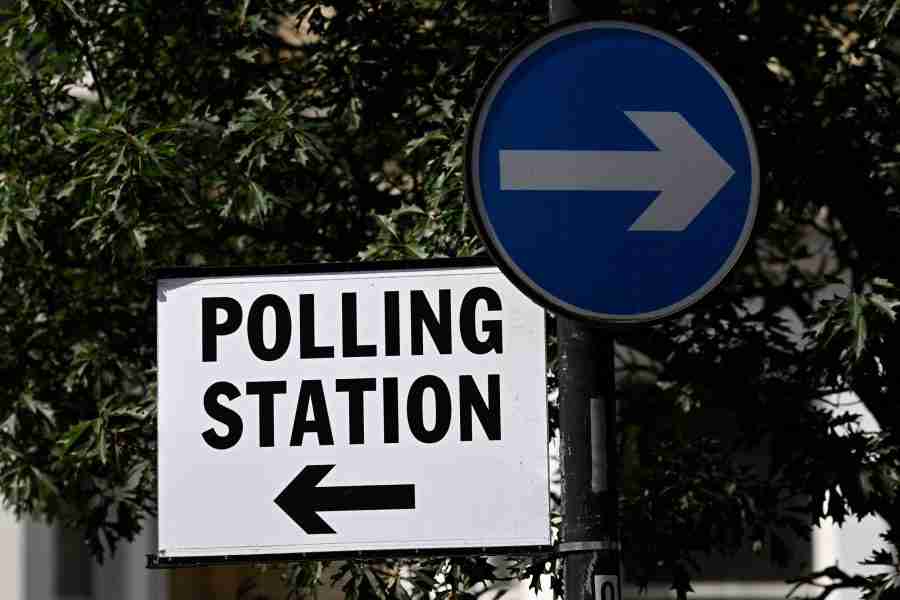
Cut to UK voting age puts new group in political spotlight

A diverse new generation also wants their specific concerns to be heard and addressed
International News via Reuters:

Britain’s move to lower the voting age to 16 launches the political battle for teenagers’ votes, with campaign groups warning no one should make assumptions about their allegiances and parties must address the issues that affect them.

For decades, election trends and polls suggested younger voters tended to lean more to the left in Britain, but recent evidence from Europe shows young voters, particularly men, backing right-wing parties, including the far-right.

“Don’t take them for granted. Don’t assume that their vote has already been cast before an election,” Dan Lawes, co-CEO of youth-led charity My Life, My Say, said of young voters.

“Young people want to be sold policies. But politicians have to reach them.”

A diverse new generation also wants their specific concerns to be heard and addressed.

According to a tracker by pollsters YouGov, the economy is the most important issue concerning the 18-24 age group, followed by housing and immigration. Data for 16- 18-year-olds was not available.

A poll of 500 16-and 17-year-olds last week found that 33% said they would vote for the centre-left Labour Party, led by Prime Minister Keir Starmer, while 20% would support the right-wing Reform UK Party led by Nigel Farage, which leads polls of the wider population.

“We are going to give this Labour government the shock of their lives. We’re going to get 16- and 17-year-olds to vote for us,” Farage said following the move.

The new cohort would add around 1.6 million potential voters to the roughly 48 million eligible to vote at the 2024 election.

In last year’s European Parliament elections, many young voters shifted toward far-right populist parties that used social media highly effectively to address their concerns.

In Germany, where 16- to 18 year-olds voted for the first time in European elections in 2024, their support helped boost the far-right Alternative for Germany (AfD) party.

In Austria, where 16- and 17-year-olds have been able to vote since 2007, polls showed that most voters under 35 voted for the far-right Freedom Party (FPO) in a 2024 parliamentary election, helping it secure first place.

“It’s quite scary how many… people (my age) are following him (Farage). He’s not my favourite person,” said 17-year-old student Matilda Grace.

However, Anki Deo, from campaign group Hope Not Hate, said follows on social media did not directly lead to votes.

“Many young people are mistrustful of the political system and politicians – it’s going to take a lot more than funny TikToks for any political party to win them over,” she said.

“Reform UK can ramp up their social media efforts, but their policy platform is still far out of line with the attitudes of the majority of young people.”

BOOSTING TRUST

Labour pitched the reform as a way to boost participation and trust after the lowest turnout at the 2024 national election since 2001, hoping to encourage a lifelong habit of voting.

Britain’s democratic system has endured a turbulent decade, marked by the divisive Brexit vote and the political upheaval that followed, including an unprecedented turnover of prime ministers and ministers.

Some critics say 16- and 17-year-olds lack the maturity to vote, and the main opposition Conservative Party called the plan inconsistent, noting the new cohort still can’t buy a lottery ticket, drink alcohol, marry, or join the military.

Younger voters have reacted to the announcement with excitement, but also with some caution.

“Young people can be very impressionable. Some people obviously can make their own decisions and they know what propaganda is, but I think education is the most important thing,” said Ana Fonseca, a 17-year-old student, who called for mandatory lessons on politics and democracy.

Rita Patel, vice chair of Operation Black Vote, which advocates for greater political representation, said the reform needed to lead to meaningful democratic participation for groups like young Black voters, who face distinct challenges and want issues like racism tackled.

“Young Black people are politicised from birth because they have no choice in this world and in this country to navigate that system that is often hostile to their needs,” Patel said.

Reporting by Catarina Demony and Marissa Davison, additional reporting by Dave Graham and Francois Murphy, writing by William James, edited by Kate Holton and Alexandra Hudson


VIDEO: Outgoing OBA Leader’s political tenure

From calling the PLP a victor ‘of the ashes’, to condemning wage hikes for MPs & Ministers

Brangman heroics sealed Bailey’s Bay victory

Nail-biting end to thrilling encounter at Lord’s

The First Round of the Eastern County Cup delivered a low-scoring thriller at Lord’s in St. David’s, as cup holders Bailey’s Bay narrowly defeated challengers Flatts Victoria by just 10 runs.
After a rain delay, Flatts Victoria won the toss and elected to bowl, quickly reducing Bailey’s Bay to 6 for 4.
However, a defiant 57 from Derrick Brangman, who faced 87 balls, rescued their innings as they were eventually bowled out for 106.
Flatts’ bowling was spearheaded by Kamau Leverock, who claimed five wickets for 52, supported by Kevin Hordle’s four for 43.
In reply, Flatts Victoria also faltered early and were eventually bowled out for 96, falling just shy of their target. Kamau Leverock was again their top scorer with 22.
But the hero of the day was undoubtedly Derrick Brangman. After his vital batting contribution, he tore through the Flatts batting line-up, taking an exceptional six wickets for 33 runs from 13.2 overs.
Brangman’s all-round masterclass earned him the Man of the Match award and secured a hard-fought victory for Bailey’s Bay, ensuring they retained the coveted Eastern County Cup.
The match was covered live by Bermuda Broadcasting on television, radio and online. 

Men found with drugs and a knife arrested at Astwood Park

Police said the four men were found in an unlicensed vehicle at Astwood Park

Astwood Park sign, Warwick. Photo: Bermuda Yellow Pages

Four men were arrested at the weekend at Astwood Park after being found with an unknown amount of drugs, cash and a knife.


A police spokesperson said officers were on patrol in the Warwick area when the spotted a vehicle with illegible license plates parked at Astwood Park.

It happened around 6.20pm Saturday, July 19, 2025.


One man attempted to flee but was quickly apprehended and officers found the car’s registration had been cancelled.


A search of the car resulted in officers seizing cash, a bag of controlled drugs and a scale, in the glove compartment.

A knife was also recovered from the trunk.


The four men were arrested and taken to the Hamilton Police Station.


They were bailed and are expected to appear in court, according to police.

UK to create new water regulator in plan that gives hope for stricken Thames Water

Environment Secretary Steve Reed said on Monday he had accepted the proposals and that Ofwat would be abolished

International News via Reuters:

Britain said on Monday it would overhaul water regulation to better protect the environment, investors and consumers, after an official report recommended a new structure that could also ease up on pollution fines to prevent companies from collapsing.

The privatised water industry in England and Wales has provoked public fury by releasing record levels of sewage into rivers and lakes, prompting the Labour government to promise major reforms when it was elected last year.

Symbolising the failure of the sector, Thames Water, the country’s biggest water supplier with 16 million customers and 17 billion pounds ($23 billion) of debt, is teetering on the brink of nationalisation, and warning that it cannot pay the sewage fines it owes.

Former Bank of England Deputy Governor Jon Cunliffe, who led a review of the sector published on Monday, said water regulator Ofwat should be scrapped and the work of three other bodies merged into one new powerful regulator.

He also suggested that a formal turnaround regime should be established, giving struggling companies space to recover under so-called “regulatory forbearance”.

Environment Secretary Steve Reed said on Monday he had accepted the proposals and that Ofwat would be abolished, with a new consultation and legislation put forward.

While Cunliffe called his proposals “significant”, critics said they did not go far enough. Environmental campaigners blame water companies for prioritising profits over sewage, and want more radical change such as nationalisation.

“Abolishing Ofwat and replacing it with a shinier regulator won’t stop sewage dumping or profiteering if the finance and ownership structures stay the same,” said Giles Bristow, the CEO of campaign group Surfers Against Sewage.

Cunliffe’s remit was set by the government and did not allow him to consider nationalising the water sector, which has been privately owned by regional water companies since 1989.

INVESTMENT NEEDED

Under plans already set out by Ofwat, British water companies will get more than 100 billion pounds of investment in the next five years to respond to population growth and climate change, funded by an average 36% increase in customer bills.

Cunliffe told the BBC that the major leap in bills would not have been needed if the industry and regulator had steadily increased investment over the years.

The government wants to avoid Thames Water entering special administration, a form of temporary nationalisation, because it does not want its huge debts on the national balance sheet.

Thames Water has warned that under the current regime it is facing 1.4 billion pounds in pollution fines and penalties over the next five years, pushing it towards financial collapse.

In a last ditch attempt to avoid administration, a group of Thames Water senior creditors are trying to take over the company. It welcomed Cunliffe’s report.

“It is in the public interest to recognise that regulatory support is needed to reset struggling companies and return them back to compliance and performance while retaining long-term investor confidence,” a source close to a Thames bondholder said.

Under Cunliffe’s recommendations, the government would direct the new regulator to set out returns, improving investor confidence, while also protecting consumers and the environment, and setting up regional water planning authorities.

($1 = 0.7460 pounds)

Reporting by Sarah Young and Michael Holden. Editing by Kate Holton, Rachna Uppal and Mark Potter

As US wildfires rage, firefighters clean toilets after Trump staff cuts, critics say

The crew leader on an Oregon blaze said her team went hungry for several days

International News via Reuters:

The U.S. Forest Service faced criticism from current and former employees who say federal workforce reductions under the Trump administration have left fire teams understaffed, as the country grapples with decade-high U.S. wildfire numbers this year.

The agency, which oversees the nation’s largest wildland firefighting force, rejected those claims, saying it has sufficient resources.

However, more than a dozen active and retired U.S. Forest Service employees told Reuters that the agency is struggling to fill critical roles after approximately 5,000 employees – roughly 15% of its workforce – quit in the past five months.

Accounts from firefighters in Oregon and New Mexico, as well as a fire chief recruiting support staff in the Pacific Northwest, said the vacancies have led to personnel held back from supporting frontline firefighting because of administrative duties.

The crew leader on an Oregon blaze said her team went hungry for several days, ran short of medical supplies and had to scrounge for chainsaw fuel after support staff quit the agency during two rounds of “fork in the road” buyouts.   

“I had guys who were going to bed hungry after working 16 hours,” said the crew leader on the Alder Springs Fire, who asked not to be named for fear of losing her job.

National and local USFS officials say, however, the force is ready for what is expected to be a worse than average fire year in California, the Pacific Northwest and the northern Rockies, according to National Interagency Fire Center forecasts. 

“Our fire staff feels very confident in our staffing levels going into this fire season,” said USFS Public Affairs Officer Isabella Isaksen, who represents USFS operations in central Oregon.

Isaksen said food problems on the Alder Springs Fire were due to a new caterer and were quickly resolved. She said medical, chainsaw and other supplies were available on the 3,400-acre blaze that triggered evacuations in two counties.

‘THEY ARE READY’

The Trump administration pledged not to cut firefighting positions and other public safety jobs in firings, voluntary resignations and early retirements meant to raise efficiency at the USFS which manages 193 million acres of land (78 million hectares), roughly about the size of Texas. 

USFS employees that Reuters interviewed for this story said the loss of thousands of foresters, biologists, trail builders and campground managers was having a knock-on effect on firefighters.

Not only are firefighters having to cover empty positions at ranger stations but they also have lost hundreds of peers who each year switched from regular jobs to take on firefighting support roles during the fire season, which typically runs from spring to fall, these people said.       

USFS Chief Tom Schultz on Wednesday told agency managers to make all of these fire-qualified, so-called “red-carded” staff available for what he called an “extremely challenging” fire year, according to a memo seen by Reuters.

Year to date, wildland firefighters have been called to nearly 41,000 blazes, by far the highest number in federal data going back to at least 2015.

Last month Schultz told a U.S. Senate committee he was trying to temporarily hire back some 1,400 fire-qualified, “red-carded” support staff who took buyouts.

“I do believe they are ready,” Schultz said when asked about preparedness for the 2025 fire year.

FIREFIGHTERS MOW LAWNS

Agriculture Secretary Brooke Rollins, who oversees the USFS, said in June at a meeting of Western state governors in New Mexico that the agency was on target to hire 11,300 firefighters by mid July, outpacing hiring over the past three years.

As of June 29, 11,236 or 99% of that number had been hired, slightly below last year’s level, according to the most recent USDA data.

The USDA disputed claims that staff shortages are endangering communities, forests, and firefighters.

“We are providing the resources needed to ensure the Forest Service has the strongest and most prepared wildland firefighting force in the world,” a USDA spokesperson said.

New Mexico U.S. Senator Martin Heinrich has criticized the Trump administration’s firing and rehiring of 3,400 USFS probationary staff, three-quarters of whom were red-carded, as well as what he called its indiscriminate, agency-wide staff buyouts.

“Wildfire season is well underway, and thanks to DOGE and Donald Trump, the U.S. Forest Service is being gutted, leaving communities ill equipped to fight deadly wildfires,” Heinrich said in a emailed statement on July 11.

The Forest Service says it does not have enough wildland firefighters for the country’s “wildfire crisis” and relies on red-carded staff to “boost wildland firefighting capacity.”

Yet, not everyone close to the Forest Service sees problems.

Steve Ellis, chairman of the National Association of Forest Service Retirees, said his checks with fire staff in Oregon turned up no reports of firefighters going hungry or other support issues.    

But Riva Duncan, a fire duty officer on a New Mexico blaze, said even firefighters were being used to plug gaps left by job losses, exacerbating longstanding shortages of personnel to operate fire engines.

“They’re answering phones at the front desk, or cleaning toilets at campgrounds or mowing the lawn at administrative sites,” said Duncan, a retired USFS fire chief who reenlists during fire season and helps run Grassroots Wildland Firefighters, a federal firefighter advocacy group. 

The fire staff officer in the Pacific Northwest said support staff had been told by managers they had to meet the Trump administration’s increased timber sales and oil and gas production targets, with fewer employees, before helping firefighters.

“They can claim we get all the support we need, but in reality, it isn’t even close,” said the fire chief, who asked not to be named for fear of retaliation.

Reporting By Andrew Hay; editing by Donna Bryson and Diane Craft

Sterling inches up against euro, dollar but remains near multi-week lows

The pound was up 0.3% against the dollar at $1.3452, just above last week’s eight-week low of $1.33655

International News via Reuters:

The British pound edged higher against the dollar and euro on Monday, but remained close to the multi-week lows it reached against both currencies last week as investor attention remains on Bank of England policy and the deteriorating fiscal picture.

The pound was up 0.3% against the dollar at $1.3452, just above last week’s eight-week low of $1.33655.

Britain’s economic data was mixed on balance last week – the labour market showed signs of a further cooling, while consumer price inflation unexpectedly rose to its highest in more than a year.

A quarter-point rate cut from the Bank of England at its meeting on August 7 remained almost fully priced after the data, with about 50 basis points of easing priced in by the end of the year.

The pound was also up about 0.2% at 86.575 pence per euro, having touched a 14-week low last week.

“We think a rising fiscal risk premium is the main driver of the recent outperformance of EUR/GBP,” said Goldman Sachs FX strategists in a note.

Britain remains in a precarious fiscal position, exacerbated earlier this month after the government suffered a major rebellion against welfare reforms which fed doubts about its ability to cut spending.

Many economists and analysts believe the government will have to raise billions of pounds in taxes later this year to meet its fiscal rules as growth remains elusive.

“The pound’s struggle to keep pace with the euro this year reflects a shift in market optimism in favour of Germany and the euro zone,” said Rabobank senior FX strategist Jane Foley.

“In view of the UK’s fiscal concerns, we continue to favour buying EUR/GBP on dips,” Foley added.

Deloitte on Monday said its consumer confidence index dropped to its lowest since the first quarter of 2024, reflecting increased worries about job security and income growth.

Retail sales data due on Friday could give a clearer picture on the state of the consumer, while a preliminary survey of purchasing managers on business activity is set for release on Thursday.

Reporting by Samuel Indyk; Editing by David Holmes

Musk’s X accuses French prosecutors of “politically motivated” probe

The French probe could deepen a rift between Washington and European capitals

International News via Reuters:

Elon Musk’s social media platform X on Monday accused French prosecutors of launching a “politically-motivated criminal investigation” that threatens its users’ free speech, denying all allegations and saying it would not comply with the probe.

Earlier this month, Paris prosecutors stepped up a preliminary probe into X for suspected algorithmic bias and fraudulent data extraction, enlisting police to investigate alleged wrongdoing by the company or its executives.

“Based on what we know so far, X believes that this investigation is distorting French law in order to serve a political agenda and, ultimately, restrict free speech,” the social network posted on its Global Government Affairs account.

“For these reasons, X has not acceded to the French authorities’ demands, as we have a legal right to do.”

In the blistering attack, X also said the probe had been instigated by Eric Bothorel, a French lawmaker, who had accused “X of manipulating its algorithm for ‘foreign interference’ purposes, an allegation which is completely false”.

The Paris prosecutors’ office did not immediately respond to a request for comment. Neither did Bothorel.

Musk, a former ally of U.S. President Donald Trump, has accused European governments of attacking free speech and has voiced support for some of the region’s far-right parties.

The French probe could deepen a rift between Washington and European capitals over what sort of discourse is permitted online, with senior officials from Trump’s administration alleging the censoring of right-wing voices around the world.

X said Paris prosecutors had requested it hand over “recommendation algorithm and real-time data about all user posts on the platform”, for analysis by researchers David Chavalarias and Maziyar Panahi, who it said had both exhibited “open hostility towards X”, calling into question the impartiality of the investigation.

Neither Chavalarias nor Panahi immediately responded to a request for comment.

X also chafed at the fact that it was being investigated under organised crime charges, which it said would grant the police measures including wiretapping its employees’ personal devices.

Pavel Durov, the Russian-born founder of the Telegram messaging app, is also under judicial supervision in France after being arrested last year and placed under formal investigation for alleged organised crime on the app. He denies guilt.

Early in July, Musk responded “true” to a post on X in which Durov said the French “bureaucrats” investigating X were “waging a crusade against free speech and tech progress”.

Reporting by Gursimran Kaur in Bengaluru and Dominique Vidalon in ParisWriting by Gabriel StargardterEditing by Sharon Singleton, Kirsten Donovan

Oil prices edge down on expected minimal sanctions impact

The EU sanctions followed U.S. President Donald Trump’s threats last week to impose sanctions on buyers of Russian exports

International News via Reuters:

Oil prices dipped slightly on Monday, with the latest European sanctions on Russian oil expected to have minimal impact on supplies while U.S. tariffs ensure demand concerns remain.

Brent crude futures dropped 38 cents, or 0.55%, to $68.90 a barrel by 0925 GMT after settling 0.35% down on Friday. U.S. West Texas Intermediate crude declined 30 cents, or 0.45%, to $67.04 after a 0.3% decline in the previous session.

The European Union on Friday approved the 18th package of sanctions against Russia over the war in Ukraine, which also targeted India’s Nayara Energy, an exporter of oil products refined from Russian crude.

“The latest round of EU sanctions aren’t necessarily going to change the oil balance. That’s why the market is not reacting much,” said Harry Tchiliguirian at Onyx Capital Group. “Russians have been very good at circumventing these kinds of sanctions.”

Kremlin spokesperson Dmitry Peskov said on Friday that Russia had built up a certain immunity to Western sanctions.

The EU sanctions followed U.S. President Donald Trump’s threats last week to impose sanctions on buyers of Russian exports unless Russia agrees to a peace deal within 50 days.

ING analysts said the part of the package likely to have an impact is the EU import ban on refined oil products processed from Russian oil in third countries, though it said it could prove difficult to monitor and enforce.

Iran, another sanctioned oil producer, is due to hold nuclear talks with Britain, France and Germany in Istanbul on Friday, an Iranian Foreign Ministry spokesperson said on Monday. That follows warnings by the three European countries that a failure to resume negotiations would lead to international sanctions being reimposed on Iran.

In the U.S., the number of operating oil rigs fell by two to 422 last week, the lowest total since September 2021, Baker Hughes said on Friday.

U.S. tariffs on European Union imports are set to kick in on August 1, though U.S. Commerce Secretary Howard Lutnick said on Sunday that he was confident the United States could secure a trade deal with the bloc.

“Tariff concerns will continue to weigh in the lead up to the August 1 deadline, while some support may come from oil inventory data if it shows tight supply,” said IG market analyst Tony Sycamore.

“It feels very much like a $64-$70 range in play for the week ahead.”

Brent crude futures have traded between a low of $66.34 a barrel and a high of $71.53 after a ceasefire deal on June 24 halted the 12-day Israel-Iran war.

Reporting by Anna Hirtenstein in LondonAdditional reporting by Florence Tan in Singapore and Sam Li in BeijingEditing by David Goodman

Factbox-What are the key recommendations for reforming UK’s water sector?

The privatised water industry in England and Wales has sparked widespread anger by releasing record levels of sewage into rivers and lakes

International News via Reuters:

An official report released on Monday outlined a plan to overhaul Britain’s water sector, seeking to better protect the environment, investors, and consumers.

The privatised water industry in England and Wales has sparked widespread anger by releasing record levels of sewage into rivers and lakes, prompting the Labour government to promise major reforms when it was elected last year.

Below are the highlights of the report’s 88 recommendations by the Independent Water Commission:

SINGLE WATER REGULATOR

The report recommends a single water regulator in England and one in Wales to replace the current fragmented regulatory system. This would streamline oversight, close regulatory gaps, and boost investor confidence as the sector faces major challenges from climate change and population growth, the report said.

OVERSIGHT OF OWNERSHIP

The Commission recommended tighter oversight of water company ownership and governance, including powers for the regulator to block changes in ownership if investors are not seen to be prioritising the long-term interests of the company and its customers. It recommended that the regulator set “minimum capital” requirements so that companies are less reliant on debt and more financially resilient.

ECONOMIC REGULATION

The Commission called for a reset of economic regulation with a new “supervisory” approach for tailored oversight and earlier interventions. It also recommended changes to the Price Review process to ensure proper investment and attract long-term, low-risk funding.

NEW REGIONAL AUTHORITIES

The report proposed creating eight new regional water planning authorities in England and one national authority in Wales. They would be responsible for developing water investment plans, streamlining existing planning processes, directing funding and ensuring accountability from all sectors that impact water.

LONG-TERM NATIONAL STRATEGY

The Commission called for a National Water Strategy covering at least 25 years and with regular milestones. The strategy should guide cross-sector water use and be supported by ministerial priorities to guide regulation.

NATIONAL SOCIAL TARIFF

The report recommended a national social tariff to ensure consistent support for low-income customers who need help to pay their bills, addressing current regional disparities.

STRONGER ENVIRONMENTAL REGULATION

The report urged stronger environmental regulation, including improved monitoring, stricter rules on abstraction, sludge, drinking water standards and water supply. It recommended compulsory water metering, revised tariffs for industrial users, expanded water reuse and rainwater harvesting schemes. It also set out where environmental legislation needs updating.

INFRASTRUCTURE

The report called for reforms in how water infrastructure is managed, monitored and delivered, including new requirements for companies to map and assess their assets.

Reporting by Catarina Demony.Editing by Mark Potter

China confirms Xi meeting with EU’s von der Leyen, Costa

The meeting comes as global trade frictions heat up

International News via Reuters:

China confirmed on Monday it will hold a top-level summit with the European Union in Beijing this week marking 50 years of diplomatic ties as both sides seek to navigate trade disputes amid broader global trade uncertainties.

European Commission President Ursula von der Leyen and European Council President Antonio Costa will visit China on Thursday and meet Chinese President Xi Jinping, the Chinese foreign ministry said on Monday.

China’s Premier Li Qiang will be co-chairing the 25th China-EU summit with the EU leaders the same day.

The meeting comes as global trade frictions heat up, with Beijing seeking to secure closer economic and political ties with the bloc to hedge against uncertainties in its relations with the United States.

EU-China relations deteriorated sharply in 2021 when Brussels sanctioned Chinese officials over alleged human rights abuses in the Xinjiang region, a move that saw swift retaliatory sanctions from Beijing, halting much of bilateral exchanges.

Relations have also been marred by various trade disputes in recent years, including those over Chinese-made electric vehicles, European brandy and pork, government purchases of medical devices, and rare earths.

The summit comes at a key time for these relations, Chinese foreign ministry spokesperson Guo Jiakun told reporters at a regular press briefing.

China looked forward to the bloc working together, Guo said.

“China has always believed that after 50 years of development, China-EU relations…can cope with the changing difficulties and challenges,” he said, characterising ties between the pair as mature and stable but facing issues.

In a recent speech, von der Leyen praised China’s economic progress but said the country had flooded global markets with its overcapacity, limited access to its market, and de-facto enabled Russia’s war economy.

The bloc, which calls China “a partner for cooperation, an economic competitor and a systemic rival,” has also said it saw the need to thaw ties amid global trade uncertainties.

After U.S. President Donald Trump announced sweeping tariffs in April, von der Leyen told China’s Premier Li in a phone call that it was EU and China’s responsibility “to support a strong reformed trading system, free, fair and founded on a level playing field.”

Reporting by Liz Lee, Xiuhao Chen and Shanghai newsroom; Editing by Muralikumar Anantharaman and Raju Gopalakrishnan

British stocks inch higher as China stimulus hopes buoy miners

Banks and financial services were down 0.3%

Signage is seen outside the LSEG (London Stock Exchange Group) headquarters in Paternoster Square, London, Britain, April 25, 2025. REUTERS/Toby Melville/File Photo

International News via Reuters:

London’s main stock indexes nudged higher on Monday, supported by industrial metal mining stocks that jumped on hopes of a stimulus from the world’s largest commodity consumer, China.

The internationally-oriented FTSE 100 was up 0.1% as of 0929 GMT, after logging its fourth straight week of gains on Friday, while the domestically-oriented midcap FTSE 250 index rose 0.3%.

The blue-chip index had surged to all-time highs last week as investors took comfort in a relatively U.S. tariff-shielded market, higher commodity prices and hopes of a Bank of England rate cut.

On the day, the UK industrial metal mining stocks index led sectoral gains with a 3.3% rise, tracking a rise in metal prices after China vowed to stabilise its industrial growth, and on hopes for more stimulus from the world’s largest commodity consumer.

Miners Glencore gained 3.7%, Anglo American rose 3.5%, Antofagasta advanced 3.3%, and Rio Tinto up 2.8%.

Banks and financial services were down 0.3%, with Standard Chartered losing 0.9%, while Barclays fell 0.6%.

The Bank of England has asked some lenders to test their resilience to potential U.S. dollar shocks, three sources told Reuters.

Aerospace and defence index lost 1.1%, led by a 2.1% fall in BAE Systems.

The UK’s personal goods index lost 1.6%, dragged down by Burberry that lost 1.9% after surging to a near 17-month high on Friday.

Meanwhile, a Deloitte survey showed British consumer sentiment had a marked fall for the first time in nearly three years last month, reflecting increased worries about job security.

Property site Rightmove said that asking prices for newly advertised British houses and apartments recorded their biggest July fall in more than 20 years this month.

In corporate updates, BP named Albert Manifold, the former boss of building materials producer CRH, as its new chairman on Monday.

The Financial Times reported on Sunday that London Stock Exchange Group is weighing whether to launch 24-hour trading and is looking into the practicalities of increasing its trading hours.

Reporting by Sukriti Gupta in Bengaluru; Editing by Leroy Leo