Wednesday, October 28, 2026
Home Blog Page 862

Dollar drops but maintains modest weekly gains

The labor market is showing signs of weakness even as headline job gains and the unemployment rate remain relatively solid
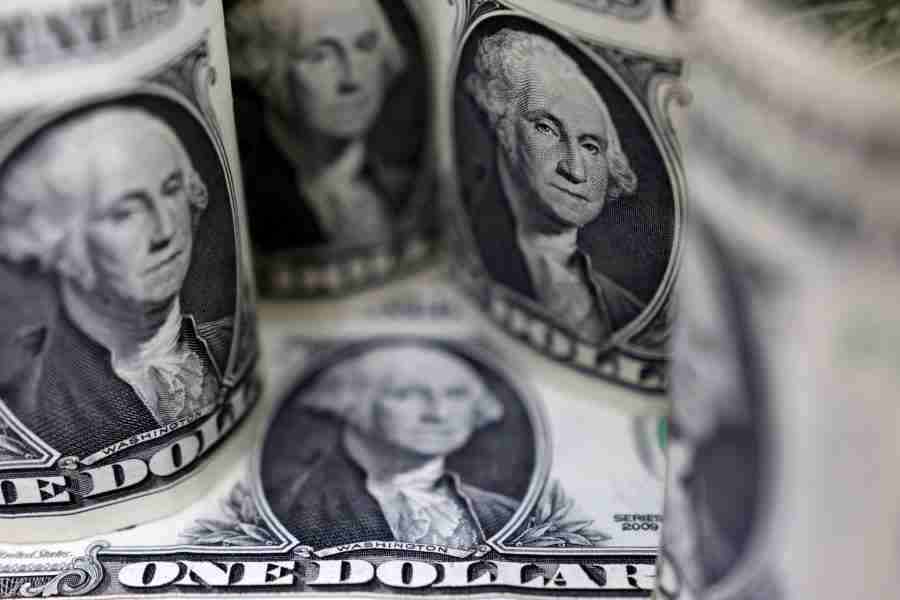
FILE PHOTO: U.S. Dollar banknotes are seen in this illustration taken July 17, 2022. REUTERS/Dado Ruvic/Illustration/File Photo

International News via Reuters:

The U.S. dollar slipped on Friday but held onto weekly gains, as investors weighed signs that tariffs may be starting to increase some inflation pressures along with expected Federal Reserve policy as U.S. President Donald Trump increases pressure on Chair Jerome Powell.

Data on Tuesday showed that consumer prices rose in June, though the increase was seen as moderate. Wednesday’s producer price inflation report, meanwhile, showed that prices were steady last month.

Powell has said he expects inflation to rise this summer as a result of Trump’s tariff policies, which has pushed out expectations on when the U.S. central bank is likely to cut rates.

But the labor market is showing signs of weakness even as headline job gains and the unemployment rate remain relatively solid.

“We’re waiting on the tariffs to become real and not just a negotiating ploy and waiting on the labor market to reveal itself,” said Lou Brien, strategist at DRW Trading in Chicago.

“Layoffs are at a lower level than they were pre-pandemic, but the hiring is terrible. And if, all of a sudden, the layoffs come up, we’re going to get a significant increase in the unemployment rate very quickly,” Brien said.

Fed governor Chris Waller said on Friday that he favors a rate cut at the July meeting because he feels the tariffs are likely to have a limited impact on inflation. He added that underlying data “are not indicating a super healthy private sector labor market,” and the Fed should “get ahead” of a possible hiring slowdown.

Waller’s comments come amid near daily criticism by Trump of Powell over the Fed’s reluctance to cut rates. The dollar tumbled on Wednesday on reports that Trump was planning to fire the Fed Chair, but rebounded after Trump denied the reports. Powell’s term will end in May.

Fed funds futures traders are pricing in 45 basis points of cuts by year-end, implying that two 25 basis point cuts are seen as most likely, with the first coming in September.

The dollar index was last down 0.26% on the day at 98.25, and is on track for a 0.39% weekly gain.

The euro gained 0.49% to $1.1652 but is headed for a weekly drop of 0.31%.

Sterling rose 0.27% to $1.3451 and is heading for a weekly decline of 0.32%.

The Japanese yen, meanwhile, was slightly higher against the greenback heading into Sunday’s upper house election in which Japan’s ruling party looks vulnerable.

The dollar weakened 0.09% to 148.46 yen, but is on track for a weekly gain of 0.71%.

Polls suggest Japan’s ruling coalition is at risk of losing its majority, which would stir policy uncertainty at home and complicate tariff negotiations with the United States.

U.S. Treasury Secretary Scott Bessent told Japanese Prime Minister Shigeru Ishiba that their countries can reach a “good agreement” on tariffs, Ishiba said on Friday after meeting Bessent in Tokyo.

In cryptocurrencies, bitcoin fell 0.78% to $118,552, holding below a record $123,153 reached on Monday.

The U.S. House of Representatives on Thursday passed a bill to create a regulatory framework for U.S.-dollar-pegged cryptocurrency tokens known as stablecoins, sending the bill to Trump, who is expected to sign it into law.

Reporting by Karen Brettell. Additional reporting by Kevin Buckland and Alun John. Editing by Mark Potter


More knives seized through stop and search operations

Police say Section 315F powers help keep weapons off the streets

In the first two quarters of this year, there have been fourteen confirmed incidents involving bladed articles.

And police tell us they are likely to recover more knives through stop and search operations as the tactic helps reduce opportunities for crime.

Acting Deputy Commissioner of Police Antoine Daniels, says Section 315F of the Criminal Code Act 1907 is delivering proactive results in the fight against violence.

WATCH the full report above.

Teen dies in crash

His death marks the 5th road traffic fatality for 2025

Credit: Bermuda Police Service

Media release:

The Bermuda Police Service can now confirm that the 16-year-old male auxiliary cycle rider, injured in a road traffic collision that occurred around 6:30 p.m. on Thursday, July 17, 2025, has succumbed to his injures. 

The incident involving the auxiliary cycle and a motorcar occurred on Parsons Lane in Devonshire, near Watlington Waterworks. 

Police and Emergency Medical Services personnel attended the scene and observed an unresponsive male with a serious head injury, lying on the roadway. 

EMTs immediately began life saving measures which continued as the victim was transported to King Edward VII Memorial Hopsital. 

Sadly, he was pronounced dead shortly after arriving at hospital. 

The male motorcar driver, was not injured. 

An investigation into this incident has now commenced and anyone with information is asked to contact Police Constable Kevin Medeiros on 717-2402 or via e-mail kmedeiros@bps.bm 

This is the fifth person lost as a result of a road traffic collision on our roads this year.

Shorelink to offer real-time transit updates

New feature goes live August 5 as part of Government’s digital fare initiative

It won’t be long before residents can access real-time information on buses and ferries.

Transport Minister Owen Darrell announced today that a new feature on the Shorelink app will launch on August 5th.

It’s part of the second phase of Government’s digital fare media initiative, which has already enabled more than 22,000 users to purchase public transport fares using their smartphones.

Minister Darrell described the new update as a “gamechanger” for commuters.

“This launch represents a major leap forward in how we serve the public,” he said. “It brings to life a vision of smarter, more connected, and more responsive public transportation.”

“With the introduction of real-time updates, Bermuda’s commuters will, for the first time, have immediate, accurate information at their fingertips, allowing them to plan their journeys with confidence, reduce waiting times, and experience public transport the way it should be: modern, efficient, and reliable.”

As of mid-June, Minister Darrell said the project had generated sales of more than $800,000.

He added that work is steadily advancing on the third phase, which will introduce contactless card payments on board ferries and buses.

You can read the Minister’s full statement below.

BBC Radio News: Friday Noon – 18 July 2025

16-year-old boy dies following road traffic collision, minimum wage set to increase by 73 cents per hour says Economy and Labour Minister, public transport app to display real-time arrival information next month plus the latest from the sports desk

Water delivery waitlist tops 10 days for east end residents

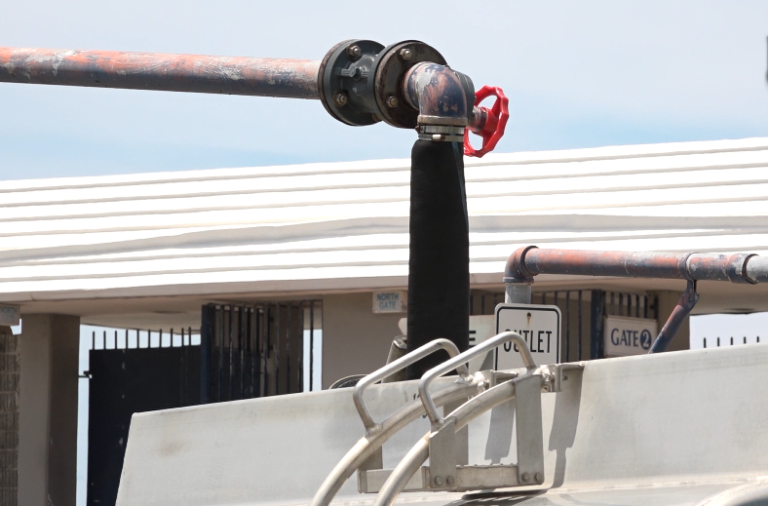
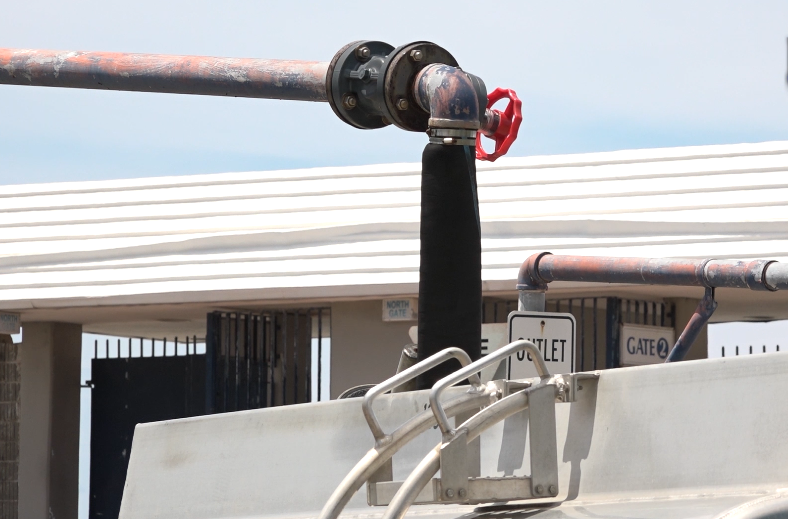
One water truck delivery service says wait times for water delivery has extended during the summer dry spell and encourages residents to conserve household water

Public water supply system on Frog Lane, Devonshire. Photo: Bermuda Broadcasting Company

Save water and expect a long wait if you need a delivery to top up your tank.

Dry conditions have prompted both government and truckers to urge islanders to keep an eye on supplies – and not to be wasteful.

Minsiter of Public Works and Environment, Jache Adams advised, ““As we navigate a dry stretch this summer, we want to ensure residents are thinking ahead. Now is the time to check your water situation and make sensible choices.

“This is not about alarm. This is about preparation. A bit of planning today can prevent unnecessary disruption tomorrow.”

According to forecasters at the Bermuda Weather Service, the island has seen 1.68 inches of rain so far this month while the normal precipitation up to the current date is 2.36 inches.

Factbox-What’s in the EU’s 18th sanctions package against Russia?

The package of sanctions on Russia is the EU’s 18th since Moscow’s full-scale invasion of Ukraine in 2022

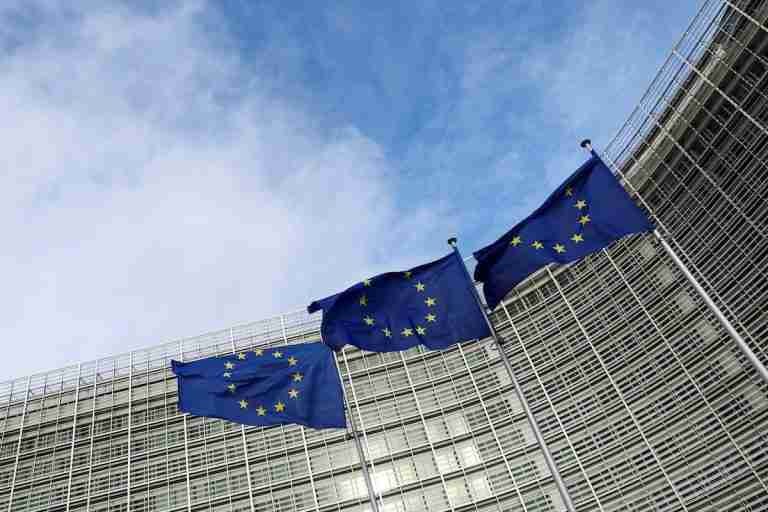
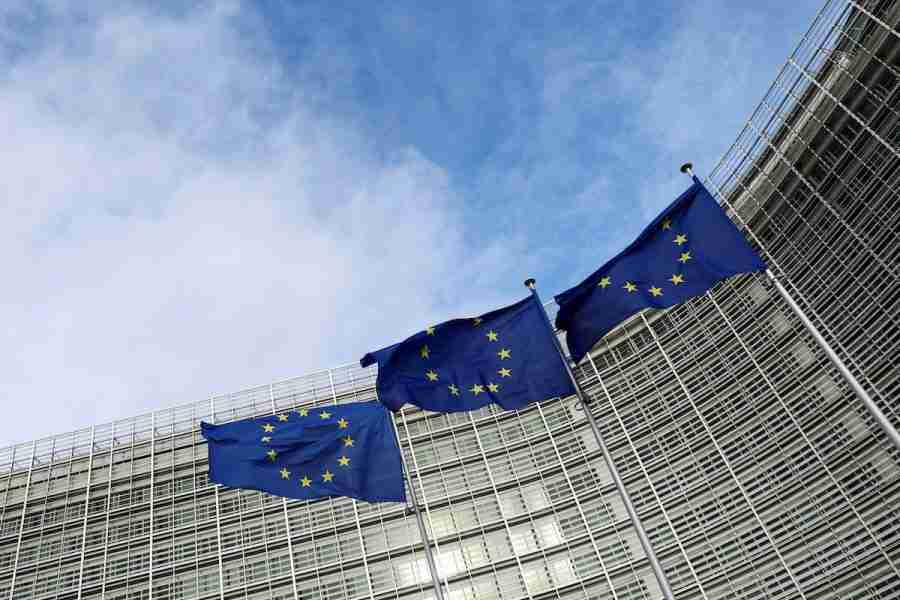
FILE PHOTO: European Union flags fly outside the European Commission in Brussels, Belgium November 8, 2023. REUTERS/Yves Herman/File Photo

International News via Reuters:

European Union countries on Friday approved an 18th sanctions package against Russia over its war in Ukraine, aimed at dealing further blows to Russia’s oil and energy industry.

Here’s what you need to know:

OIL PRICE CAP

Central to the package is a lower price cap on Russian oil – a move designed to shrink Moscow’s energy revenues without disrupting global markets by severing Russian supply entirely.

The EU will impose a moving price cap on Russian crude at 15% below its average market price, EU diplomats said.

That means a cap of roughly $47.60 per barrel at present, well below the $60 maximum that the Group of Seven major economies have tried to impose since December 2022.

The measure aims to ban trade in Russian crude bought at a higher price by prohibiting shipping, insurance and reinsurance companies from handling tankers carrying such crude.

The European Union and Britain have been pushing the G7 to lower the cap since a fall in oil futures made the $60 cap largely irrelevant.

However, the United States has resisted, leaving the EU to move forward on its own, with only limited power to enforce the measure because oil is largely traded in dollars, for which payment clearing is controlled by U.S. banks.

SHADOW FLEET AND ENERGY TRADE

The EU will no longer import any petroleum products made from Russian crude, although the ban will not apply to imports from Norway, Britain, the U.S., Canada and Switzerland, EU diplomats said.

An additional 105 vessels are banned from accessing EU ports and locks, or undertaking ship-to-ship transfers of oil – an effort to shut down the so-called “shadow fleet” of older oil tankers used to transport Russian oil and circumvent sanctions.

In total, the EU has now imposed sanctions on more than 400 shadow fleet ships.

NORD STREAM

Transactions related to Russia’s Nord Stream gas pipelines under the Baltic Sea will be banned, including any provision of goods or services to these projects.

FINANCIAL SECTOR

The EU will ban all transactions with Russian financial institutions – already excluded from the global financial messaging system SWIFT.

The ban will include transactions with Russia’s sovereign wealth fund – the Russian Direct Investment Fund (RDIF) – as well as its investments.

This aims to further restrict Russia’s access to international financial markets and foreign currency.

EU countries also agreed to lower the threshold for imposing further sanctions on foreign financial and credit institutions that undermine the sanctions or support Russia’s war effort – for example, by circumventing the oil price cap.

EXPORT BANS, NEW BLACKLIST ENTRIES

The EU will blacklist 26 new entities for circumventing sanctions, including seven in China, three in Hong Kong and four in Turkey, diplomats said.

A number of chemicals, plastics and items of machinery have been added to the list of goods EU countries cannot export to Russia.

DELAYED APPROVAL

The package of sanctions on Russia is the EU’s 18th since Moscow’s full-scale invasion of Ukraine in 2022.

Approval was held up for weeks by repeated Slovakian and Maltese vetoes.

Slovakia had demanded guarantees against potential losses from a separate EU plan to ban imports of Russian gas by 2028, and only dropped its veto once Prime Minister Robert Fico said it had achieved as much as it could at this point.

Reporting by Kate Abnett, Milan Strahm; Editing by Kevin Liffey

Burberry’s focus on British heritage wins back US, European shoppers

Shares in Burberry, which have more than doubled since September, rose 4% in early trade

International News via Reuters:

Burberry’s sales fell by a less-than-expected 1% in the first quarter, as it benefited in the Americas and Europe from clearer brand positioning leaning on its British heritage, the luxury group said on Friday.

Shares in Burberry, which have more than doubled since September, rose 4% in early trade.

Known for its trench coats and check pattern scarves, Burberry is using its British heritage to win back customers under the leadership of CEO Josh Schulman, who took over exactly a year ago, and the company said its summer campaigns had broadened its appeal.

“Highgrove”, inspired by the garden of the private residence of King Charles, resonated with luxury customers, Schulman said, while “Festival”, based on music festivals like Glastonbury and featuring bucket hats and boots, targeted young customers.

Comparable sales returned to growth in Europe, the company said, while trading in the Americas strengthened. Sales fell in China and in the rest of Asia, but the rate of decline was around half that seen in the previous quarter.

“The improvement in our first-quarter comparable sales, strength in our core categories, and uptick in brand desirability give us conviction in the path ahead,” Schulman said, adding that the autumn collection was being “well received”.

Burberry said it was seeing reduced activity from tourists, but stronger demand from new and existing customers helped offset the impact.

“We are really pleased with the sequential improvement that we are seeing across the regions and particularly the shift to positive comps in America and EMEA,” he told reporters.

“It’s a tough macro out there and we’re taking things step by step but we are optimistic about the quarters ahead.”

Burberry, which has issued several profit warnings in recent years, is cutting a fifth of its global workforce, a radical cost-cutting measure that investors have welcomed.

The 1% drop in overall comparable retail sales in the first quarter, which ended on June 28, beat analysts’ forecasts for a 3% decline in a company-compiled consensus, and improved on a 6% fall in the previous quarter.

Analysts at Citi said the brand had reported its third consecutive quarter of improvement since Schulman launched its new strategy last November, implying comparable sales could turn positive in the current quarter.

“In a quarter marked by further macro and geopolitical pressures and weaker tourist spending in Europe and Japan, Burberry has likely held up better than peers quarter-on-quarter,” they said.

Reporting by Pushkala Aripaka in Bengaluru and Helen Reid and Paul Sandle in London; Editing by Subhranshu Sahu, Susan Fenton, Elaine Hardcastle

Russian lawmaker says WhatsApp is a security threat and should prepare to leave the Russian market

The company’s Facebook and Instagram social media platforms have been banned in Russia since 2022

International News via Reuters:

WhatsApp should prepare to leave the Russian market, a lawmaker who regulates the IT sector said on Friday, warning that the messaging app owned by Meta Platforms is very likely to be put on a list of restricted software.

Russian President Vladimir Putin last month signed a law authorising the development of a state-backed messaging app integrated with government services, as Moscow strives to reduce its dependence on platforms like WhatsApp and Telegram.

Anton Gorelkin, deputy head of the lower house of parliament’s information technology committee, said in a statement on Telegram that the state-backed app, MAX, could gain market share should WhatsApp, used by 68% of Russians each day, leave.

“It’s time for WhatsApp to prepare to leave the Russian market,” Gorelkin said, noting that Meta is designated as an extremist organisation in Russia.

The company’s Facebook and Instagram social media platforms have been banned in Russia since 2022 when Moscow sent tens of thousands of troops into Ukraine.

Meta did not immediately respond to a request for comment.

NATIONAL SECURITY THREAT

Anton Nemkin, a member of the parliament’s IT committee, said WhatsApp’s fate in Russia was predetermined.

“The presence of such a service in Russia’s digital space is, in fact, a legal breach of national security,” the TASS news agency quoted Nemkin as saying.

Asked if WhatsApp might leave Russia, Kremlin spokesman Dmitry Peskov said all services must abide by Russian law.

Russia has long sought to establish what it calls digital sovereignty by promoting home-grown services. Its push to replace foreign tech platforms became more urgent as some Western companies pulled out of the Russian market after 2022.

The Kremlin this week published a list of instructions from Putin, including an order to introduce additional restrictions on the use in Russia of software, including communication services, produced in so-called “unfriendly countries” that have imposed sanctions against Russia.

Putin gave a deadline of September 1. Gorelkin, referring to Putin’s order, said WhatsApp was likely to be among those communication services restricted.

Gorelkin said he expected Telegram, founded by Russian-born Pavel Durov, to avoid being banned, provided it complies with Russian law.

Telegram has started the procedure for creating a Russian legal entity, according to an update from state communications regulator Roskomnadzor this week.

Reporting by Reuters; Writing by Alexander MarrowEditing by Andrew Osborn and Elaine Hardcastle

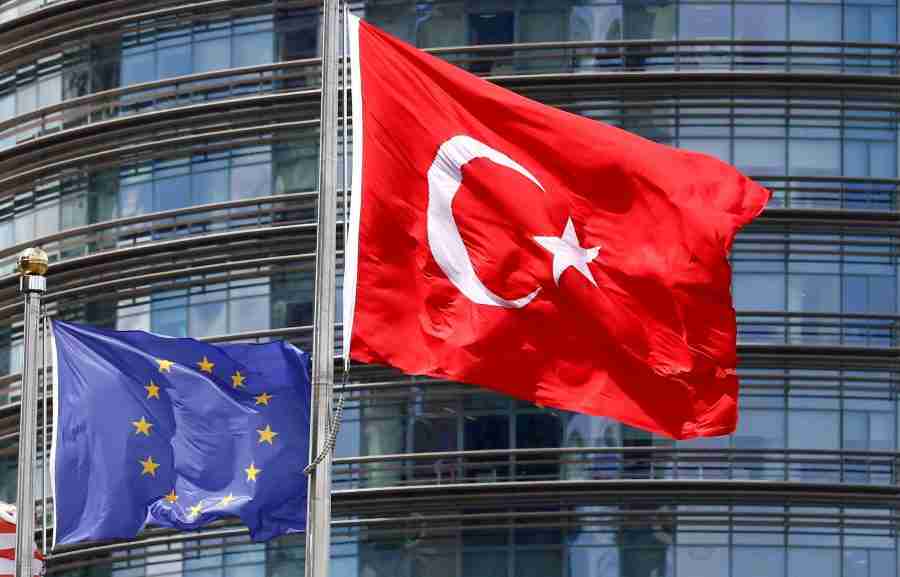
EU eases Schengen visa rules for Turks; envoy urges further moves

Ambassador Thomas Hans Ossowski said the new rules would help address Turks’ complaints over long bureaucratic processes

International News via Reuters:

The European Union has eased rules for Turks to use its open-border Schengen area, the bloc’s ambassador to Ankara said on Friday, calling for the urgent revival of negotiations on visa-free travel for Turks.

For years, Turks have complained about the EU’s visa system. The EU has said the processes – managed by accredited visa agencies – have been slow due to the high number of applications and that it is discussing possible workarounds with Ankara.

Ambassador Thomas Hans Ossowski said the new rules would help address Turks’ complaints over long bureaucratic processes, but warned it was not enough to permanently solve the problems.

“It will be much easier and much faster for Turkish citizens,” Ossowski told reporters in Ankara, referring to the European Commission’s new decision, in effect since July 15, simplifying the path to multiple-entry visas for Turks.

Turks who previously used visas correctly will be eligible for a six-month visa as early as their second application, followed by one-year, three-year and five-year multiple-entry visas.

Turkey has been an EU membership candidate since 1999 but its accession process has been frozen for years over issues ranging from human rights to democratic backsliding. There have recently been signs of increased engagement and economic cooperation.

Ossowski said the EU had for more than a decade offered Turkey the prospect of visa-free travel and stressed the need to return to the liberalisation process.

“Every other candidate country has visa-free travel except Turkey,” he said. “It is urgent to re-engage in this process of visa-free travel in the Schengen space and the EU,” he added.

The Commission is ready to restart formal negotiations after the summer and work with Ankara on fulfilling the six remaining benchmarks required by the visa liberalisation roadmap, he said.

“We are ready, the Commission is ready to work closely with Turkish authorities,” he said.

Reporting by Tuvan Gumrukcu. Writing by Ece Toksabay. Editing by Daren Butler and Mark Potter

Oil edges higher after EU new sanctions on Russia

Investors are awaiting news from the U.S. on possible further sanctions

International News via Reuters:

Oil prices edged higher on Friday, heading for a small weekly loss, as investors weighed new European Union sanctions against Russia.

Brent crude futures climbed 50 cents, or 0.72%, to $70.02 a barrel as of 0912 GMT, U.S. West Texas Intermediate crude futures gained 61 cents, or 0.9%, to $68.15 a barrel.

At those levels, the contracts were headed for a marginal weekly loss of 0.5% and 0.4% respectively.

Investors mulled the potential impact on global oil balances of the EU’s agreement on an 18th sanctions package against Russia over its war in Ukraine, which includes measures aimed at dealing further blows to Russia’s oil and energy industries.

Its latest sanctions package will lower the G7’s price cap for buying Russian crude oil to $47.6 per barrel, diplomats told Reuters.

“Neither the price cap for Russian oil nor adding shadow fleet tankers on a sanction list managed to disrupt Russian oil exports so far, so the market remains sceptical of the impact of the latest sanctions,” UBS analyst Giovanni Staunovo said.

Investors are awaiting news from the U.S. on possible further sanctions, after President Donald Trump earlier this week threatened sanctions on buyers of Russian exports unless Moscow agrees a peace deal in 50 days.

“Ultimately, it is now a matter of waiting for possible major changes in U.S. sanctions and tariff policy,” Commerzbank analysts said in a note.

Four days of drone attacks on oilfields in Iraqi Kurdistan that shut down half the region’s output have supported prices, pushing both contracts up by $1 on Thursday.

The attacks “are bound to take their toll as the region’s output has been slashed from 280,000 bpd to around 130,000 barrels per day,” said PVM analyst Tamas Varga.

Officials pointed to Iran-backed militias as the likely source of attacks this week on the region’s oilfields, although no group has claimed responsibility.

Despite the attack, Iraq’s federal government said on Thursday that Iraqi Kurdistan will resume oil exports through a pipeline to Turkey after a two-year halt.   

Reporting by Robert Harvey in London, Siyi Liu in Singapore; Editing by Kate Mayberry, Sharon Singleton and Emelia Sithole-Matarise

Institutional investors warm to crypto but demand still nascent

Some large U.S. lenders, including Bank of America and Citigroup, are also working on launching stablecoins

International News via Reuters:

Bitcoin’s surge to a record this week has reignited questions about the role institutional investors are playing in pushing it higher, with analysts suggesting their role is still in its infancy.

The world’s largest cryptocurrency earlier this week surged to a record above $123,000, receiving a boost on the expectation of pro-crypto policies from Washington. While buzz around digital assets has increased, there is room for demand from institutional investors to grow as pension funds and other long-term buyers add bitcoin to their portfolios, analysts say.

On Thursday, the U.S. House of Representatives voted in favor of creating a regulatory framework for the U.S. dollar-pegged cryptocurrency tokens referred to as stablecoins. President Donald Trump is expected to sign that legislation into law on Friday. The House also passed two other key bills related to cryptocurrencies, both of which will now go to the U.S. Senate.

“We’re still in the early innings when it comes to institutional ownership,” said Adrian Fritz, head of research at 21Shares, a digital assets investment firm, adding that retail investors still dominate crypto markets.

Less than 5% of all spot bitcoin Exchange Traded Fund assets are held by long-term investors such as pension funds and endowments, with another 10% to 15% owned by hedge funds or wealth management firms, Fritz calculates.

The latter group of wealth managers, however, often buy these funds on behalf of high-net worth retail clients, and the bulk of ETF ownership remains retail, he said. 

There is a correlation between soaring retail purchases of crypto ETFs and crypto-related stocks and a run-up in prices, according to estimates from Vanda, a financial research firm. The data shows retail buyers bought heavily in late 2024 when prices surged after Donald Trump – who has vowed to be a “crypto president” won the U.S. election – as well as during the recent rally.

Crypto buyers have been aided by a series of bills U.S. lawmakers are expected to pass this week, the most consequential of which – known as the Genius Act – will define the rules around stablecoins, a fast-growing area of the crypto market.

The passage of the crypto legislation on Thursday by the Republican-controlled U.S. House of Representatives paves the way for the first U.S. federal law for digital assets.

Some large U.S. lenders, including Bank of America and Citigroup, are also working on launching stablecoins.

Another bill will provide regulatory clarity by formally establishing definitions of digital commodities and spelling out the roles of agencies in overseeing digital assets. This could make it easier for institutions that have long avoided the sector to invest.

Simon Forster, global co-head of digital assets at trading platform operator and data provider TP ICAP, predicts the number of institutions active in crypto will grow by 2026, including pensions and other buy-and-hold firms.

“By definition, they will be the slowest (to enter crypto),” Fritz said.

BITCOIN TREASURY BUYING

Analysts say data, although patchy given how opaque crypto markets remain, points to the growing role of bitcoin treasury companies in boosting demand.

These are listed companies such as Strategy and GameStop, that initially focused on software and videogame retailing respectively but now emphasize owning and making money on bitcoin positions held on their balance sheets in place of cash, gold or ultra-short Treasury securities.

Strategy’s shares have soared in the past year, far outpacing the rise in bitcoin, with many investors seeing the stock as a way to get exposure to crypto while investing in mainstream financial markets.

Juan Leon, research analyst at Bitwise Asset Management, said these companies’ ability to buy bitcoin suggests they represent a bigger source of recent demand than pension, endowment and hedge funds that are major players in stock and bond markets.

Strategy and GameStop did not respond to requests for comment.

Since July last year, public companies worldwide collectively have increased their bitcoin holdings by 120% and now hold just over 859,000, or 4%, of the total 21 million bitcoin that will ever be in existence, said Simon Peters, crypto analyst at investment platform eToro.

Companies are also selling common stock, preferred shares and convertible securities to raise funds to spend on boosting their bitcoin holdings, in a bid to replicate Strategy’s outsized stock gains. 

The new wave of U.S. legislation could also pave the way for more listed companies to allocate a portion of their cash reserves to crypto tokens, said Susannah Streeter, head of money and markets at Hargreaves Lansdown. 

Analysts warn, however, that a drop below $90,000 for bitcoin could put half of these corporate treasuries underwater.

Demand for crypto ETFs has also been rising in recent months.

Global net inflows into crypto exchange-traded products hit $4 billion last week, the highest so far this year, according to data from crypto firm Bitwise.

Among the big institutional investors to have made public their investments in crypto ETFs in the past 18 months are the State of Wisconsin Investment Board, Abu Dhabi’s Mubadala sovereign wealth fund and hedge fund Millennium Management, regulatory filings show.

So far this year, bitcoin has gained around 25%, compared with the S&P 500 index’s 6.5% gain. Ether, another cryptocurrency has climbed 2%, while XRP is up nearly 40%.

The crypto sector’s market capitalization now stands at $3.8 trillion, up nearly 66% since before the U.S. election in November, according to CoinMarketCap.

Reporting by Suzanne McGee in New York and Niket Nishant and Manya Saini in Bengaluru; Editing by Tommy Reggiori Wilkes, Megan Davies and Deepa Babington