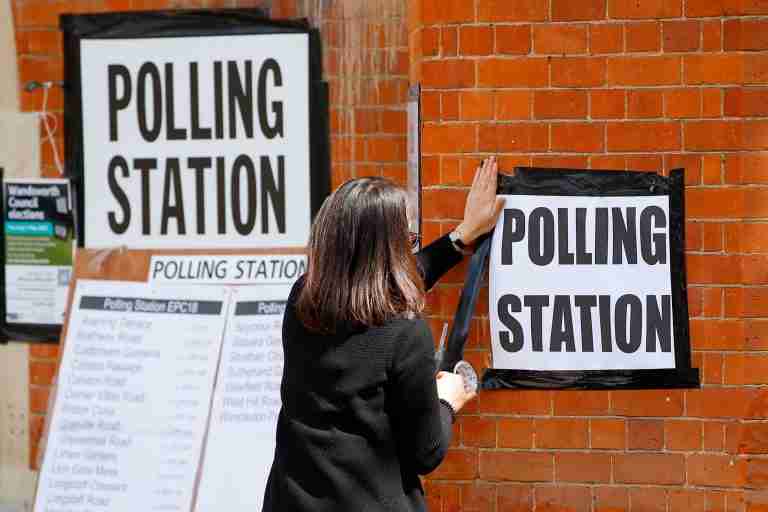
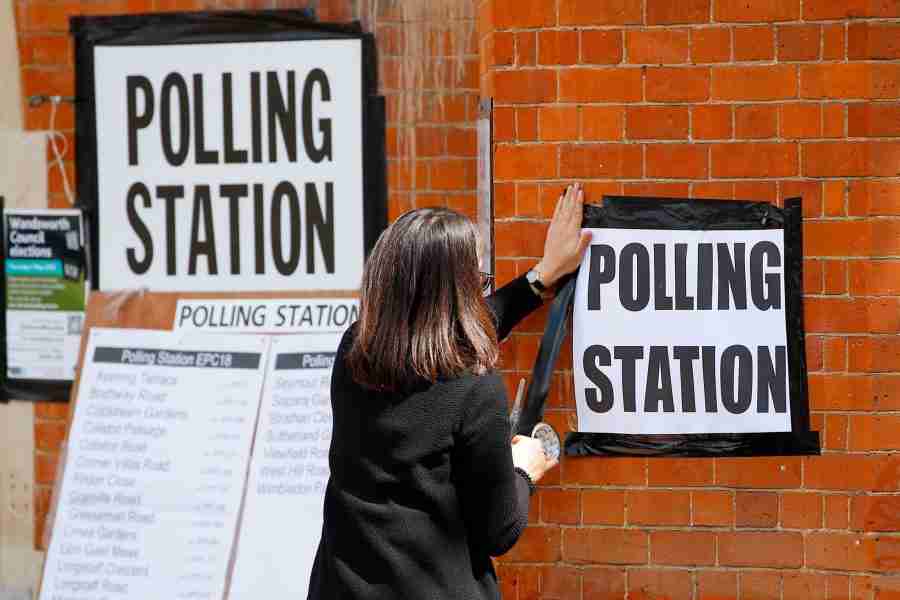
Labour had said it would lower the voting age if elected
International News via Reuters:
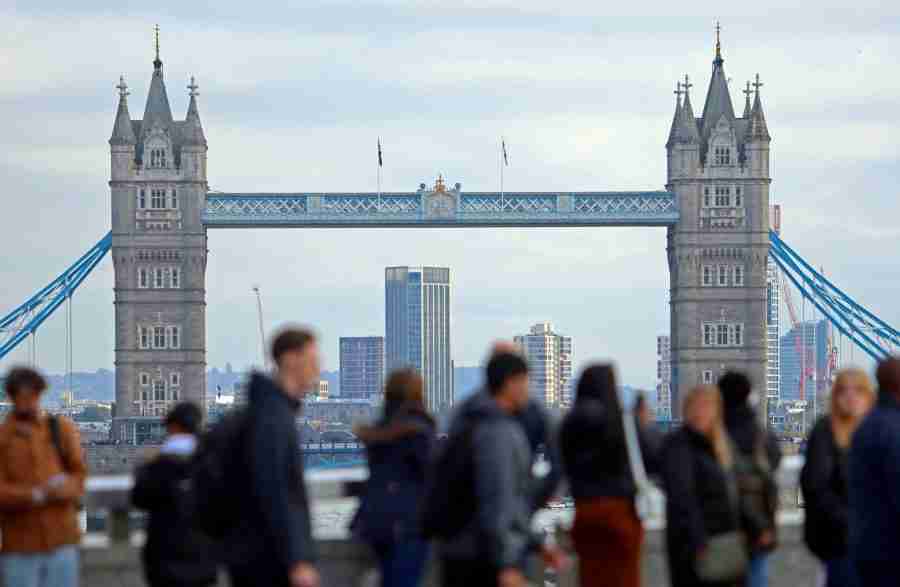
The British government said on Thursday it planned to give 16 and 17-year-olds the right to vote in all UK elections in a major overhaul of the country’s democratic system.
The government said the proposed changes, which are subject to parliament approvals, would align voting rights across the UK with Scotland and Wales, where younger voters already participate in devolved elections.
“We are taking action to break down barriers to participation that will ensure more people have the opportunity to engage in UK democracy,” Deputy Prime Minister Angela Rayner said in a statement.
Turnout at the 2024 general election was 59.7%, the lowest at a general election since 2001, according to a parliamentary report.
According to the House of Commons library, research from countries that have lowered the voting age to 16 shows it has had no impact on election outcomes, and that 16-year-olds were more likely to vote than those first eligible at 18.
Labour, whose popularity has fallen sharply in government after being elected by a landslide a year ago, had said it would lower the voting age if elected.
The reforms would also expand acceptable voter ID to include UK-issued bank cards and digital formats of existing IDs, such as driving licences and Veteran Cards.
To tackle foreign interference, the government said it also planned to tighten rules on political donations, including checks on contributions over 500 pounds ($670) from unincorporated associations and closing loopholes used by shell companies.
($1 = 0.7462 pounds)
Reporting by Sam Tabahriti and Muvija M; Editing by Kate Holton
Data showing a 109,000 drop in the number of employees on company payrolls in May was revised to show just a 25,000 decline
International News via Reuters:
The pound strengthened against the euro on Thursday, after data showed that a cooling in the British labour market, which had alarmed some policymakers, now appears less acute than the previous report had suggested.
The euro was last down 0.22% on the pound at 86.52 pence, as the data reduced pressure on the Bank of England to accelerate the pace of its rate cuts, supporting sterling.
The labour market numbers presented a mixed picture. Annual wage growth in the three months to May was 5.0%, its lowest since the second quarter of 2022, but was still slightly higher than the 4.9% median forecast from economists in a Reuters poll.
In addition, data from the previous month showing a dramatic 109,000 drop in the number of employees on company payrolls in May was revised to show just a 25,000 decline.
“Today’s labour market report continues to paint a picture of a loosening jobs market. That said, the labour market picture looks better than it did last month,” said Sanjay Raja, Deutsche Bank’s chief UK economist, in emailed comments.
In combination with Wednesday’s hotter than expected British inflation data, the jobs numbers leave the Bank of England in a somewhat tricky situation, balancing sticky inflation, and slowing, if not collapsing employment.
However, for this year, “this takes some of the pressure off the Bank of England to cut rates more quickly”, said James Smith, developed markets economist, UK, at ING in a note.
As well as the euro, the pound was stronger on most other currencies including the yen, and Swiss franc.
Versus the dollar, however the pound was down 0.15% at $1.1340, as the U.S. currency strengthened across the board, recovering from its Wednesday selloff.
On Wednesday, media reports saying U.S. President Donald Trump was likely to soon fire Federal Reserve Chair Jerome Powell sparked a drop in the dollar.
Trump said later that day he was not planning on firing Powell, but kept the door open to the possibility and renewed his criticism of the central bank chief for not lowering interest rates.
The computer will be named Magne, inspired by Norse mythology
International News via Reuters:
The Novo Nordisk Foundation and Denmark’s state-owned credit fund said on Thursday they will invest in what they say will be the world’s most powerful quantum computer, aiming to revolutionize areas such as drug discovery and materials science.Quantum computing holds the promise of carrying out calculations that would take today’s systems millions of years and could unlock discoveries in medicine, chemistry and many other fields where near-infinite seas of possible combinations of molecules confound classical computers.
The Novo Nordisk Foundation, the non-profit which controls pharmaceutical giant Novo Nordisk, and Denmark’s Export and Investment Fund (EIFO), said in a statement they would invest 80 million euros ($92.93 million) in the initiative called QuNorth.
Microsoft, which has its largest quantum lab in Denmark, will provide software and Atom Computing will build the quantum computer.
The computer will be named Magne, inspired by Norse mythology where Magne, the son of Thor, is known for his immense strength.
Construction will begin in autumn and the computer is expected to be ready by the end of next year.
The quantum computer will start operating with 50 logical qubits, Jason Zander, Microsoft’s executive vice president, told Reuters.
A qubit, short for quantum bit, is the basic unit of information in a quantum computer and a logical qubit is a virtual qubit built from many physical qubits to reliably process quantum information.
Last November, Microsoft and Atom created 24 logical qubits, the highest number ever created.
“When we get to about 50 logical qubits, that’s when we start hitting true quantum advantage,” Zander said.
“I get to the point where I can run something on a quantum computer that I could not run on a classic computer.”
“When the machine gets up to 100 (logical qubits), we can start doing science problems, get up to a couple 100s, we can start doing some chemistry and starting to answer things, and then when all the way up to 1,000, now you are solving everything,” Zander said.
($1 = 0.8606 euros)
Reporting by Supantha Mukherjee in Stockholm and Stine Jacobsen in CopenhagenEditing by Frances Kerry
The number of employees on company payrolls dropped by a provisional 41,000 in June after a 25,000 decline in May
International News via Reuters:
British pay growth slowed in May and employee numbers dropped further last month, but the cooling in the labour market which had alarmed some policymakers appeared less acute than previous data had suggested, official figures showed on Thursday.
Annual wage growth, excluding bonuses, slowed to its lowest since the second quarter of 2022 in the three months to May at 5.0%. But the figure was still slightly higher than the 4.9% median forecast from economists in a Reuters poll and April’s pay growth was revised up to 5.3% from 5.2%.
The number of employees on company payrolls dropped by a provisional 41,000 in June after a 25,000 decline in May.
However, the May decline was far less sharp than the originally reported reading of 109,000, which represented the biggest decline since early in the COVID-19 pandemic and had triggered concern that businesses were retrenching rapidly in the face of higher labour costs and a weak growth outlook.
“The latest figures ease immediate pressure on the Bank of England to accelerate interest rate cuts. Though the labour market continues to soften, the hefty revision to May’s payrolled employees figure paints a less alarming picture than previously,” said Jack Kennedy, senior economist at recruitment site Indeed.
Five-year British government bond yields rose to a one-month high after the data and financial market expectations for an August rate cut softened marginally.
The ONS said May’s initial estimate of the fall in payroll numbers had been more provisional than usual due to an earlier-than-usual publication date for the labour market data last month.
INFLATION PRESSURE
The Bank of England is closely watching wage growth and employee numbers for signs of how persistent domestic price pressures are likely to prove, especially after data on Wednesday showed inflation in June rose to its highest since January 2024 at 3.6%.
Most BoE policymakers view annual wage growth of around 3% as desirable for consumer price inflation to stay near its 2% target over the medium term.
In May, the BoE forecast that annual private-sector wage growth, excluding bonuses, would be 5.2% in the three months to June and slow to 3.8% in the final quarter of this year.
Thursday’s data showed that this measure of pay growth slowed to 4.9% in the three months to May.
Despite the above-target inflation – which the BoE does not forecast to be back on track until early 2027 – most economists expect the BoE to cut rates by a quarter point next month and again later this year.
A combination of fewer job vacancies and more people looking for work is one of the key reasons why the BoE thinks it needs to keep cutting interest rates at a gradual pace to stop inflation falling too far below target in the longer term.
Some employers have been saying that they expect to scale back hiring due to an increase in the minimum wage and employers’ social security contributions that took effect in April, as well as a planned tightening of employment laws.
Thursday’s data showed that the number of job vacancies fell by 56,000 in the second quarter to 727,000, the lowest number since the three months to April 2021.
There was also potentially concerning news on unemployment, though long-standing problems with the response rate to the ONS’ labour force survey means the BoE places less weight on it and related employment and inactivity numbers than in the past.
Britain’s unemployment rate in the three months to May rose from 4.6% to 4.7%, its highest since the second quarter of 2021, in contrast to economists’ expectations in a Reuters poll for it to stay unchanged.
The increase appears to reflect more people entering the labour market to look for work.
The number of people in work rose by 134,000 on the quarter – far above economists’ forecasts for a 46,000 rise – while there was a 139,000 drop in “economic inactivity”, a category that includes the long-term sick, students and unpaid carers but not unemployed people looking for work.
Higher inactivity since the COVID-19 pandemic has been a major concern of British governments and this fall reduced the inactivity rate to its lowest since April 2020 at 21.0%, down from 21.4% in the three months to February.
“The LFS data suggest the labour market is easing in a positive way, with the inactivity rate falling as employment continues to growth. That could be disinflationary if it continues,” said Rob Wood, chief UK economist at Pantheon Macroeconomics.
Reporting by David Milliken and Suban Abdulla; Editing by Catarina Demony and Toby Chopra
Merz’s day trip follows a three-day state visit to Britain by French President Emmanuel Macron
International News via Reuters:
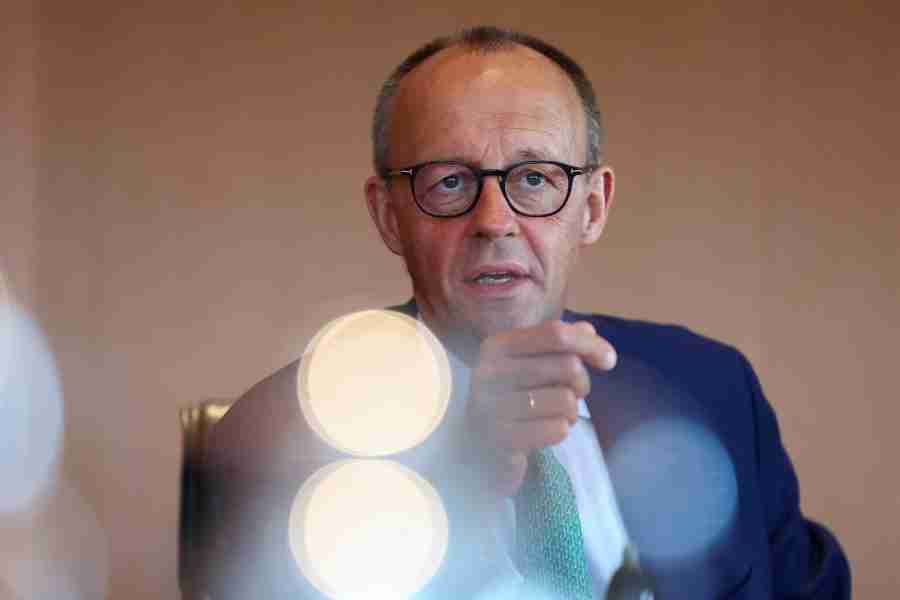
Friedrich Merz embarks on his first trip to London as German chancellor on Thursday to sign a wide-ranging friendship treaty with British Prime Minister Keir Starmer, part of a broader push to reset the EU’s relationship with Britain.
Merz’s day trip follows a three-day state visit to Britain by French President Emmanuel Macron, signalling greater cooperation between Europe’s top three powers at a time of threats to the continent and uncertainty about their U.S. ally.
Europe has been confronted with new U.S. tariffs since President Donald Trump returned to the White House as well as questions about the U.S. commitment to defend its European allies, including Ukraine in the face of Russia’s invasion.
“The agreement comes at a time when, as Europeans, we are particularly challenged in terms of security policy,” a German government official said in a briefing ahead of the trip.
“Not stated in the preamble is that transatlantic matters are also — let’s put it this way — in flux. This too is part of the context.”
Germany has such friendship treaties with just a handful of countries like France, symbolizing the closeness of their ties.
Coming nearly a decade after Britain voted to leave the European Union, the treaty includes a clause on mutual assistance which, “in light of the Russian war of aggression against Ukraine, is highly significant”, the official said.
It builds on a defence deal agreed last year that included the joint development of long-range strike weapons, and comes after France and Britain agreed last week to reinforce cooperation over their respective nuclear arsenals.
As part of the announcement on Thursday, Britain and Germany will pledge to “pursue joint export campaigns” to drum up orders from other countries for equipment they make jointly, such as the Typhoon Eurofighter jet and the Boxer armoured vehicle.
That could help boost sales, and represents a significant reversal from the previous ten years, when Germany blocked Saudi Arabia and Turkey from buying Typhoons.
Typhoons are made by a consortium of European companies, including BAE Systems in Britain and Airbus in Germany, with the different partner governments responsible for orders to different countries; the Boxer is made by a German-British joint venture, Rheinmetall BAE Systems Land.
Further deepening ties, a German defence tech company, Stark, has also agreed to build a new factory in Britain, the first production facility outside of Germany, to create AI-powered unmanned systems.
Beyond defence, the treaty will also include an agreement to jointly combat smuggling and human trafficking, the German official said – addressing a key demand of Starmer’s government which is under pressure to show it can control migration.
The British government said Germany would make a landmark commitment to outlaw the facilitation of illegal migration to Britain, with a law change to be adopted by the end of the year.
That would give law enforcement the tools to investigate warehouses and storage facilities used by migrant smugglers to conceal dangerous small boats intended for illegal crossings to Britain, it said in a statement.
Reporting by Sarah Marsh in Berlin and Elizabeth Piper and Sarah Young in London;Editing by Ros Russell
Shares of rivals Siemens and Schneider Electric drove the European industrials index to a new record high, up 2%
International News via Reuters:
European shares rose on Thursday after four consecutive sessions of losses, supported by strong quarterly results from Switzerland’s ABB and optimism over a potential U.S. trade deal.
The pan-European STOXX 600 index was up 0.7% as of 0854 GMT. All the major regional indexes traded higher, with Germany’s trade-sensitive DAX up 1%, leading the pack.
ABB jumped 7.2% after the engineering firm posted a record quarterly order intake, driven by strong U.S. demand and for products used in data centres to support artificial intelligence.
Shares of rivals Siemens and Schneider Electric added 2.9% and 5.5%, respectively, and drove the European industrials index to a new record high, up 2%.
The sector also led broader market gains in the European benchmark index.
European chipmakers recouped some losses from the previous session as TSMC, the world’s main producer of advanced AI chips, posted a record profit in the second quarter. ASML rose 1.5%, following an 11% drop on Wednesday.
“European markets today are bouncing back … the earnings, of course, have an impact on the stock market, but also everything to do with President Trump seems to still be at the forefront,” said Axel Rudolph, senior technical analyst at IG Group.
Rudolph added that Trump would likely strike a deal with EU by August 1 despite tough talk on tariffs, noting “EU’s threat will be taken seriously by the U.S. because it would definitely hamper their trade”.
Meanwhile, investors awaited for clarity on U.S.-EU trade talks as the bloc readied retaliatory measures if ongoing negotiations with Washington failed.
On Wednesday, U.S. President Donald Trump eased market anxiety after denying reports that said he was planning to fire Federal Reserve Chair Jerome Powell soon.
He, however, confirmed that he had floated the idea with Republican lawmakers and renewed his criticism of the Fed chief for not cutting interest rates.
Among individual stocks, Ocado rose 12.7%, to the top of the STOXX 600, after the British online supermarket and technology firm said it targets positive cash flow in its next financial year.
Evolution gained 7% after the Swedish gaming technology company reported its second-quarter results.
Conversely, UK’s Wise slumped 9.4% after the money transfer firm missed its quarterly income estimates.
British budget airline EasyJet fell 6% after warning that French air traffic strikes and rising fuel costs would weigh on annual profit.
Reporting by Sanchayaita Roy in Bengaluru; Editing by Nivedita Bhattacharjee and Sonia Cheema
We should have a roadmap to digitisation during Q3 2025, according to Minister Jason Hayward
The time it takes to process work permits has long been a bone of contention between Government and the business sector.
However, a timeline on getting a fully digitized permit application process may be right around the corner.
Jason Hayward, Labour and Economy Minister, expects an update from his team this month, and says Government also wants to do the same for passport applications.
Gary Foster Skelton recently sat down with the Minister to discuss proposed amendments to the Work Permit process.
XC60’s sales in the United States rose by almost 23% in the first six months of 2025
International News via Reuters:
Sweden’s Volvo Cars said on Wednesday it would start producing its XC60 mid-size SUV in its plant in South Carolina, United States from late 2026.
XC60’s sales in the United States rose by almost 23% in the first six months of 2025, the Gothenburg-based company said, adding that the model was most popular among U.S. customers.
Volvo Cars, which is owned by China’s Geely Holding, had said earlier this week that it was booking an impairment charge of 11.4 billion crowns ($1.17 billion) in the second quarter related to its ES90 and EX90 models due to tariffs and launch delays.
Most of Volvo Cars’ vehicles for the U.S. market, which last year accounted for 16% of group sales, are imported from Europe. The company only produces its high-end SUV EX90, at the Charleston, South Carolina factory. CEO Hakan Samuelsson has earlier said that a popular hybrid model was needed to be added to the plant.
($1 = 9.7057 Swedish crowns)
Reporting by Chandni Shah in Bengaluru and Marie Mannes in Gothenburg; Editing by Shilpi Majumdar and Shailesh Kuber
The appointments are part of Citi’s broader strategy to grow its investment banking division
International News via Reuters:
Citigroup has hired two senior executives from JPMorgan to strengthen its leadership team and expand its financing business, according to an internal memo seen by Reuters on Wednesday.
Aloke Gupte, previously co-head of international equity capital markets (ECM) at JPMorgan, will join Citi as global co-head of ECM alongside Doug Adams.
Alex Watkins, who held the same role as Gupte at JPMorgan, will take over as head of technology financing.
The appointments are part of Citi’s broader strategy to grow its investment banking division, following the recruitment of Viswas Raghavan from JPMorgan as head of banking in February last year.
JPMorgan has also been strengthening its ranks, recently hiring Anthony Diamandakis from Citi as vice chair of its strategic investors group, and former HSBC dealmaker Kamal Jabre as vice chair of mergers & acquisitions for Europe, the Middle East, and Africa.
Bloomberg was the first to report the news.
Reporting by Aatrayee Chatterjee in Bengaluru and Andres Gonzalez in London; Editing by Mohammed Safi Shamsi
Charity marks 10 years educating and inspiring Bermudian youth
More than half of Endeavour’s Maritime Career Springboard Programme alumni are now working in the maritime industry, according to new figures from the charity.
The course offers professional training, internationally recognised certifications, and career exposure for Bermudian youth.
This year, Endeavour is celebrating its tenth anniversary, and since its inception has engaged more than 8,000 young people.
Alisa Bernardo spoke to a sibling duo who have risen through the ranks, from student to instructor.
Germany issued six arrest warrants, five of them public, and Spain issued another
International News via Reuters:
Germany and Spain issued arrest warrants for seven suspected members of a pro-Russian hacking group accused of carrying out cyber attacks against critical infrastructure, arms makers, power companies and public authorities.
The warrants resulted from an international operation involving law enforcement and judicial authorities including the U.S., France, Sweden, Italy, the Netherlands and Switzerland, German prosecutors and pan-European police agency Europol said in separate statements on Wednesday.
German prosecutors said they had helped to coordinate the swoop on Tuesday in multiple countries in which 24 premises linked to the hacking group – which calls itself NoName057(16) – were searched, including one in Berlin and two in Bavaria in southeastern Germany.
Germany issued six arrest warrants, five of them public, and Spain issued another.
The NoName group had used the Telegram messaging app to enlist over 4,000 volunteers who made their systems available for swamping critical institutions’ servers with so-called distributed denial of service attacks, the German prosecutors said.
The premises searched included those linked to volunteers in the Telegram group, they said.
In the past years the NoName collective, known for promoting Russian interests, has allegedly carried out successful cyberattacks in Ukraine and on government, infrastructure, banking, health services and telecom websites in European countries that have backed it against Russia.
European authorities are increasingly concerned at the scale of the hybrid threats they say emanate from Russia, which is in the third year of its invasion of Western ally Ukraine.
Those threats, which have included killings and alleged bomb plots against institutions and cargo aircraft, have largely been attributed to state actors. Russia has denied the accusation.
In this case, prosecutors did not specifically link the suspects to the state.
MEDIA ATTENTION
“The aim of the attacks on German targets was to garner media attention and thereby influence political and social decision-making in Germany,” prosecutors said in the statement.
The prosecutors and Europol published names and pictures of five of the people they were seeking, all of them Russian citizens and presumed to be residing in Russia. A further German arrest warrant remains sealed.
Prosecutors identified one of the Russian citizens as one of two leading figures in the group it was seeking.
Europol said volunteers were recruited through Russian channels, chat groups, social media and messaging apps and that they often invited contacts from gaming and hacking forums.
Italian authorities added in a separate statement that sympathisers were given lists of Western targets to hit and provided with the software needed to participate.
They added that the organisation – which paid with cryptocurrencies – had a “central line of command and control in the Russian Federation”.
The group also ran its own botnet – a network of private computers infected with malware and controlled by hackers – of several hundred servers to amplify the impact, they said.
Authorities in the Czech Republic, Finland, Lithuania and Poland contributed to the investigation, said Europol, which helped to coordinate it.
Reporting by Thomas Escritt in Berlin and Giulia Segreti in Rome; Editing by Miranda Murray and Emelia Sithole-Matarise
To provide the best experiences, we use technologies like cookies to store and/or access device information. Consenting to these technologies will allow us to process data such as browsing behavior or unique IDs on this site. Not consenting or withdrawing consent, may adversely affect certain features and functions.
Functional
Always active
The technical storage or access is strictly necessary for the legitimate purpose of enabling the use of a specific service explicitly requested by the subscriber or user, or for the sole purpose of carrying out the transmission of a communication over an electronic communications network.
Preferences
The technical storage or access is necessary for the legitimate purpose of storing preferences that are not requested by the subscriber or user.
Statistics
The technical storage or access that is used exclusively for statistical purposes.The technical storage or access that is used exclusively for anonymous statistical purposes. Without a subpoena, voluntary compliance on the part of your Internet Service Provider, or additional records from a third party, information stored or retrieved for this purpose alone cannot usually be used to identify you.
Marketing
The technical storage or access is required to create user profiles to send advertising, or to track the user on a website or across several websites for similar marketing purposes.