Wednesday, October 28, 2026
Home Blog Page 869

ECB to test banks’ resilience to political risk amid war, tariffs

In addition to the stress test, supervisors have been telling banks for months to prepare for politically motivated disruption

International News via Reuters:

The European Central Bank will test banks’ resilience to geopolitical turmoil next year, chief ECB supervisor Claudia Buch said on Tuesday, as part of a growing focus on risks, from tariffs to sanctions.

The ECB has long warned that geopolitics is one of the biggest risks for euro zone banks amid conflicts in Ukraine and Gaza, as well as the trade war stoked by U.S. President Donald Trump. It will now assess banks’ preparedness to that type of risk, but with a twist.

In typical stress tests, banks are given scenarios and must calculate how much capital would be wiped out under each. In this exercise, however, the ECB will hand out levels of capital depletion and tell banks to come up with scenarios that could cause them.

“In the 2026 thematic stress test exercise, we will follow up on this year’s stress test by asking banks to assess which firm-specific geopolitical risk scenarios could severely impact their solvency,” Buch told the European Parliament.

In addition to the stress test, supervisors have been telling banks for months to prepare for politically motivated disruption, including a global dollar drought if the Federal Reserve withdraws its lifelines.

As part of the ECB’s regular supervisory work, banks have been told to watch their exposure to other countries, both via operations abroad and through credit to exporters, central bank sources have told Reuters.

Cyber attacks are seen as a risk too, particularly in Baltic countries, which have previously been the targets of Russian hackers, the sources said.

Supervisors are not telling banks to cut their exposures and they are not making specific recommendations at this stage, but rather urging banks to tighten their controls and think about contingency plans.

An ECB spokesperson declined to comment.

Next year’s ECB exercise will be part of banks’ self-evaluation of their capital needs, known in regulatory jargon as the Internal Capital Adequacy Assessment Process.

The ECB runs thematic health checks on euro zone banks every other year, when there is no European Union-wide stress test by the European Banking Authority.

Its latest, in 2024, was about cyber-resilience.

The results of the EBA’s latest stress test, which includes some U.S. tariffs in its adverse scenario, will be announced in early August.

Editing by Kirsten Donovan and Mark Porter

Trump lands Indonesia trade deal as EU readies retaliation

Trump had threatened the southeast Asian country with a 32% tariff rate effective August 1 in a letter sent to its president last week

International News via Reuters:

U.S. President Donald Trump on Tuesday announced a trade deal with Indonesia, the latest pact in a bid to cement better terms with trading partners and reduce a massive trade deficit, even as the European Union readied retaliatory measures should talks between Washington and its top trading partner fail.

“Great deal, for everybody, just made with Indonesia. I dealt directly with their highly respected President. DETAILS TO FOLLOW!!!” Trump said in a post on Truth Social.

Indonesia’s total trade with the U.S. – totalling just under $40 billion in 2024 – does not rank in the top 15, but it has been growing. U.S. exports to Indonesia rose 3.7% last year, while imports from there were up 4.8%, leaving the U.S. with a goods trade deficit of nearly $18 billion.

The top U.S. import categories from Indonesia, according to U.S. Census Bureau data retrieved on the International Trade Centre’s TradeMap tool, last year were palm oil, electronics equipment including data routers and switches, footwear, car tires, natural rubber and frozen shrimp.

Susiwijono Moegiarso, a senior official with Indonesia’s Coordinating Ministry for Economic Affairs, told Reuters in a text message: “We are preparing a joint statement between U.S. and Indonesia that will explain the size of reciprocal tariff for Indonesia including the tariff deal, non-tariff and commercial arrangements. We will inform (the public) soon.”

Trump had threatened the southeast Asian country with a 32% tariff rate effective August 1 in a letter sent to its president last week. 

Trump sent similar letters to roughly two dozen trading partners this month, including Canada, Japan and Brazil, setting blanket tariff rates ranging from 20% up to 50%, as well as a 50% tariff on copper.

The August 1 deadline gives the targeted countries time to negotiate agreements that could lower the threatened tariffs. Some investors and economists have also noted Trump’s pattern of backing off his tariff threats.

Since launching his tariff policy, Trump has clinched only a few deals despite his team touting an effort to bring home “90 deals in 90 days.” So far, framework agreements have been reached with the United Kingdom and Vietnam, and an interim deal has been struck with China to forestall the steepest of Trump’s tariffs while negotiations continue between Washington and Beijing.

EU READIES RETALIATION 

The breakthrough with Indonesia came as the European Commission, the EU’s governing body, gets set to target 72 billion euros ($84.1 billion) worth of U.S. goods – from Boeing aircraft and bourbon whiskey to cars – for possible tariffs if trade talks with Washington fail.

Trump is threatening a 30% tariff on imports from the EU from August 1, a level European officials say is unacceptable and would end normal trade between two of the world’s largest markets. 

The list, sent to EU member states and seen by Reuters on Tuesday, pre-dates Trump’s move over the weekend to ramp up pressure on the 27-nation bloc and responds instead to U.S. duties on cars and car parts and a 10% baseline tariff.

The package also covers chemicals, medical devices, electrical and precision equipment as well as agriculture and food products – a range of fruits and vegetables, along with wine, beer and spirits – valued at 6.35 billion euros.

Following a meeting of EU ministers in Brussels on Monday, officials said they were still seeking a deal to avoid Trump’s heavy tariff blow.

But EU trade chief Maros Sefcovic said those at the meeting expressed unprecedented resolve to protect EU businesses using European countermeasures if negotiations with Washington fail to produce a deal.

Reporting by Philip Blenkinsop in Brussels and David Lawder in Washington; Additional reporting by Richard Lough in Paris; Amanda Teresia, Stefanno Sulaiman and Gayatri Suroyo in Jakarta; Editing by Daniel Wallis

UK’s BAE Systems confident on winning new Typhoon orders

Trade unions in Britain have raised concerns that without the new orders, some BAE final assembly production lines would run out of work in the 2030s

International News via Reuters:

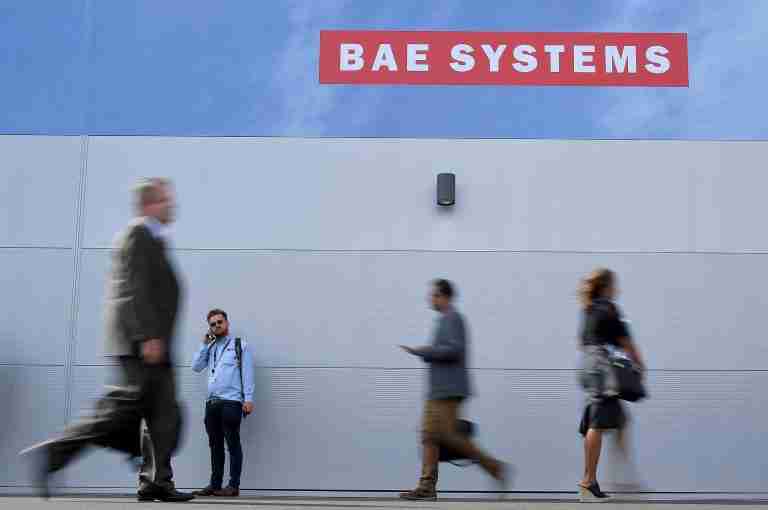
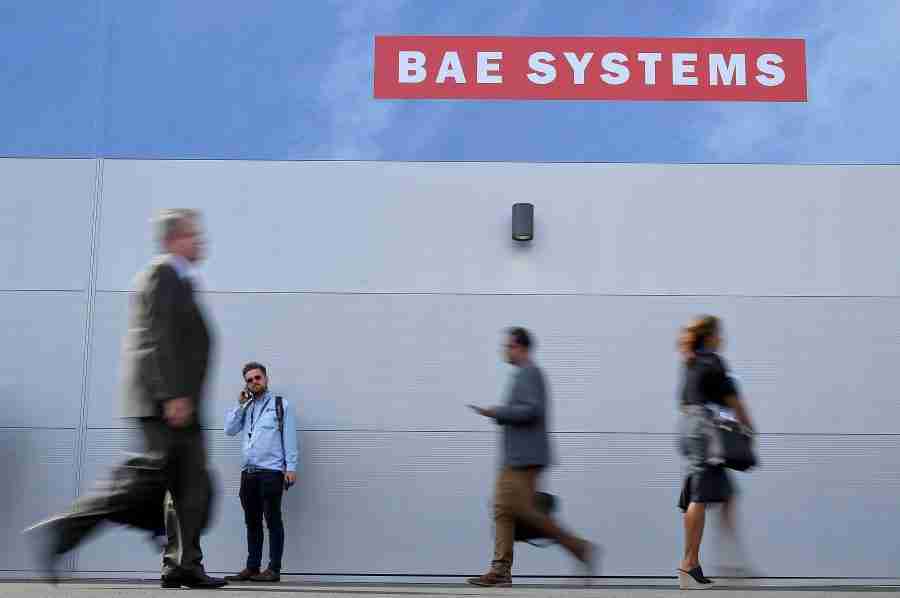
British defence company BAE Systems is confident on winning new orders for Typhoon military jets from countries such as Qatar, Saudi Arabia and Turkey, its European air sector boss told reporters on Tuesday.

“We’re working with the UK government on a number of those campaigns presently,” Richard Hamilton, Managing Director for Europe and International in BAE Systems Air sector, said at the group’s facility in Warton, northern England.

Asked whether he was confident that those sales campaigns would result in new orders for the aircraft, he said: “yeah, absolutely”, adding that there was potential for new orders of up to 150 new Typhoons.

Underpinning that confidence in the new export order, he said, was Britain’s commitment to funding upgrades to Typhoon’s capabilities, which extends the aircraft’s lifespan.

“The confidence it gives the export partner, you know, with the Saudis, with the Turkish, when they see that this thing has a life, it just makes the whole conversation so much easier,” he said.

Trade unions in Britain have raised concerns that without the new orders, some BAE final assembly production lines would run out of work in the 2030s.

Reporting by Sarah Young; Editing by Catarina Demony

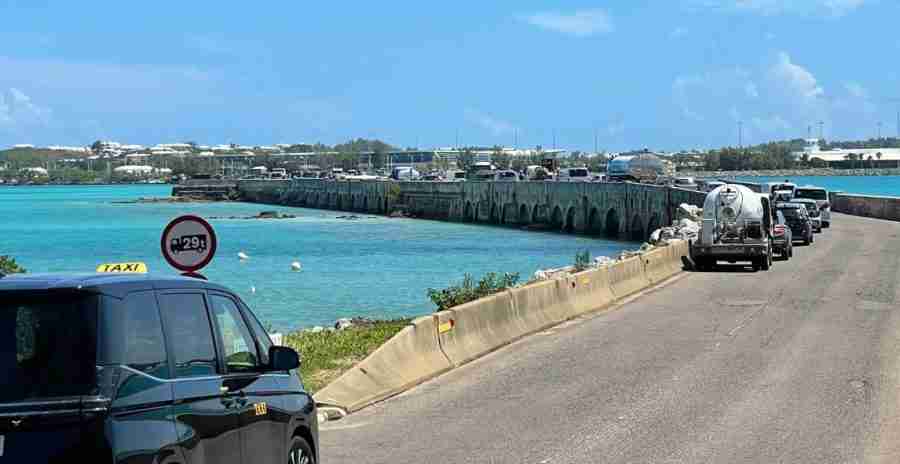
Multi-vehicle crash on the Causeway

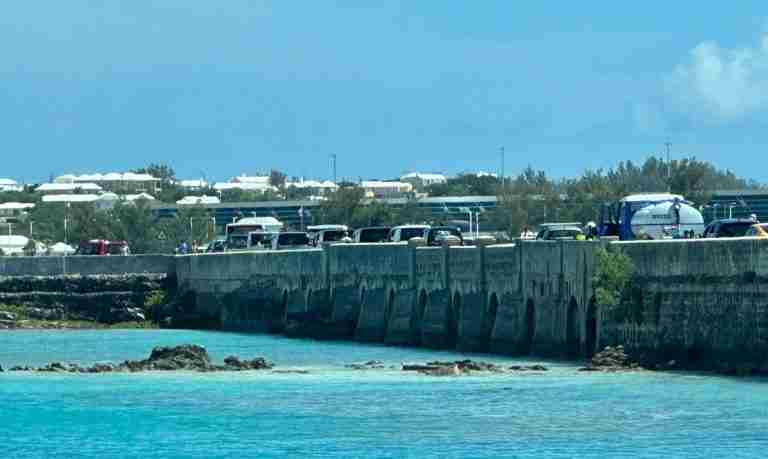
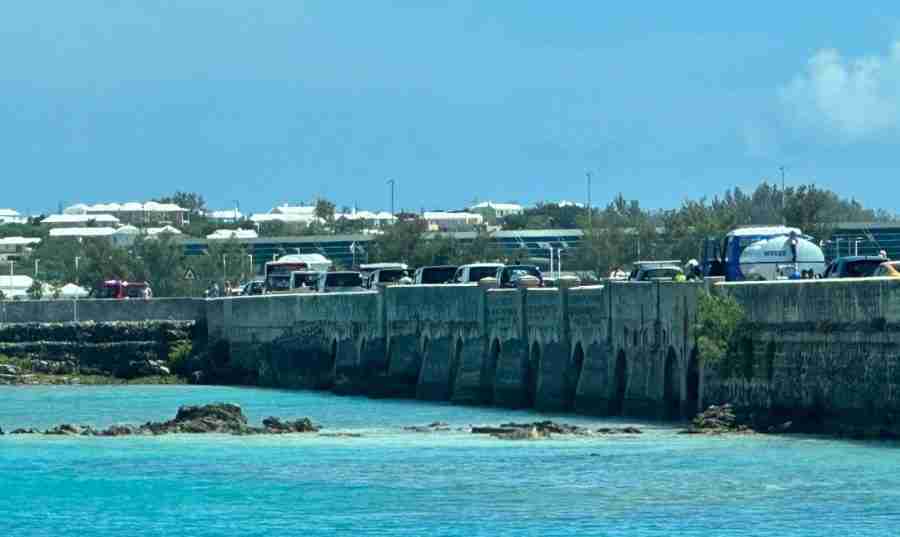
Long tailbacks as traffic diversions are in place on both sides of the Causeway

Traffic is at a standstill on the Causeway after a major collision.

Update 5:00pm: From police: “The driver and passenger of one of the cars, understood to be a 56-year-old Hamilton parish woman and an 81-year-old Hamilton parish woman respectively, were hurt.

“Both women were transported to King Edward VII Memorial Hospital via ambulance for treatment of injuries that at last check, were described as non-life threatening.

“At this time, it is unconfirmed whether or not the occupant(s) of the water truck, or the other car involved, sustained any injuries.”

Update 1:30pm: From police: “Please be advised the Causeway has been re-opened to regular traffic flow.”

Update 12:36pm: From police: “The eastbound lane of the Causeway is now open to traffic. Motorists are urged to use caution as the roadway is gradually fully reopened.”

Update 12:30pm: Traffic is now moving across the Causeway in one lane.

Police press release: “Emergency medical services and police officers are responding to a reported three vehicle collision on the Causeway.

“Details are limited at this time. However, two of the vehicles involved are understood to be a water truck and a car.


Traffic diversions are in effect on either side of the Causeway and motorists in the area should expect delays, until the scene is processed.

Further updates are anticipated in due course. Any witnesses are encouraged to call 211.

Update 11:40am: Motorists are encouraged to delay travel to the east end of the island until further notice, to help reduce traffic congestion in the vicinity of the Causeway. 


Paradise Mobile nurtures future tech leaders

Summer interns given the chance to explore career pathways in the telecommunications sector

Left to right: Nicholas Weikl, Natalia Dill, Najae Swan, Musa Abdul-Jabbar, Dunnajai O’Mara with Nico Gonzalez standing behind them. 

Media release:

Paradise Mobile proudly welcomed four new talented Bermudian students to its 2025 Summer Internship Program, along with a returning intern from the 2024 cohort. 

The 2025 cohort of Paradise Mobile interns is as follows:

  • Musa Abdul-Jabbar, 17, from The Berkeley Institute, explored marketing and deepened his understanding of consumer behaviour.
  • Natalia Dill, 17, a Berkeley Institute graduate, will be heading to Carleton University to study business administration, bringing a keen interest in business and technology.
  • Dunnajai O’Mara, 17, from The Berkeley Institute, joined to gain experience and enjoyed learning the fundamentals of agile teamwork.
  • Najae Swan, 23, a student of Nottingham Trent University, enjoyed hands-on experience with programming in his work supporting the digital team. 

Returning intern Nicholas Weikl brought valuable experience to the team and undertook more senior responsibilities in the store. Currently studying Computer Science at Nova Southeastern University, he embraced leadership responsibilities this year: guiding new interns in applying their tech skills and collaborating in an innovative environment.

Over the course of their internships, interns gained deep insight into Paradise Mobile’s culture, particularly its agility methodology, mindset and set of behaviours that shape the way the company works. They gained hands-on experience, the interns participated in a simulation using digital work management tools. This exercise allowed them to replicate the end-to-end process of running a software delivery business. Through this simulation, they learned how to apply agile project management principles and generate meaningful agile metrics to track performance and progress.

Paradise prides itself on providing a rare opportunity to explore career pathways in the vibrant Bermuda telecommunications sector. The initiative underscores Paradise Mobile’s commitment to supporting local talent and fostering innovation on island.

‘We’re committed to helping build a tech-savvy workforce in Bermuda,’ said Nico Gonzalez, Chief Digital Officer at Paradise Mobile. ‘Through this programme, we want to give interns the tools and experiences that allow them to innovate, grow, and envision brighter career paths. The creativity and drive they’ve shown this summer have been a real inspiration.’

Paradise Mobile remains committed to nurturing Bermuda’s future tech leaders and accelerating the island’s digital growth story. Those interested in career opportunities with Paradise Mobile are encouraged to email Careers@ParadiseMobile.bm. 

German investor morale rises more than expected in July, ZEW finds

The economic sentiment index rose to 52.7 points from 47.5 points in June

International News via Reuters:

German investor morale rose more than expected in July, the ZEW economic research institute said on Tuesday, but economists warned that optimism would vanish if the EU does not reach a trade deal with the United States.

The economic sentiment index rose to 52.7 points from 47.5 points in June, while analysts polled by Reuters had on average expected a reading of 50.3.

“After the strong improvements of the past two months, the positive sentiment among respondents is becoming more firmly established,” said ZEW President Achim Wambach.

The survey’s assessment of the current economic situation also rose significantly, with the indicator rising to minus 59.5 points from minus 72 points.

Thomas Gitzel, chief economist at VP Bank, said economic confidence was boosted by the German government’s recently announced tax relief and spending packages, with the European Central Bank’s interest rate cuts also supporting consumer confidence.

Despite the recent upheaval in global trade policy, nearly two-thirds of the experts polled expected Europe’s biggest economy to improve, Wambach said. 

Hopes for a quick resolution to the U.S.-EU tariff dispute, along with potential economic stimulus from the German government’s planned immediate investment programme, appear to be shaping overall sentiment, according to Wambach.

The German parliament last week approved a 46 billion euro ($54 billion) tax relief package to support companies and revive the sluggish economy from this year through 2029.

It also approved plans in March for a massive spending surge, creating a 500 billion euro infrastructure fund and ringfencing most defence investment from the rules that otherwise cap borrowing.

The threat of tariffs made economists more cautious about the outlook, however.

“We are not so upbeat,” said Melanie Debono, senior Europe economist at Pantheon Macroeconomics, saying she expects GDP growth slowed sharply in the second quarter, after front loading of exports to beat tariffs in the first quarter.

“Now, higher tariffs will mean net trade becomes a drag on growth and trade uncertainty will likely continue to weigh on investment,” Debono said.

Some 200 analysts and institutional investors took part in ZEW’s survey, which was conducted between July 7 and 14.

That meant the majority of the survey responses likely came in before U.S. President Donald Trump threatened a 30% tariff on EU imports to the United States.

“If the U.S. follows through with the new higher tariff, investor sentiment will likely retreat next month,” Debono said.

($1 = 0.8557 euros)

Reporting by Maria Martinez, Writing by Miranda Murray, additional reporting by Reinhard Becker, editing by Kirsti Knolle, Hugh Lawson and Susan Fenton

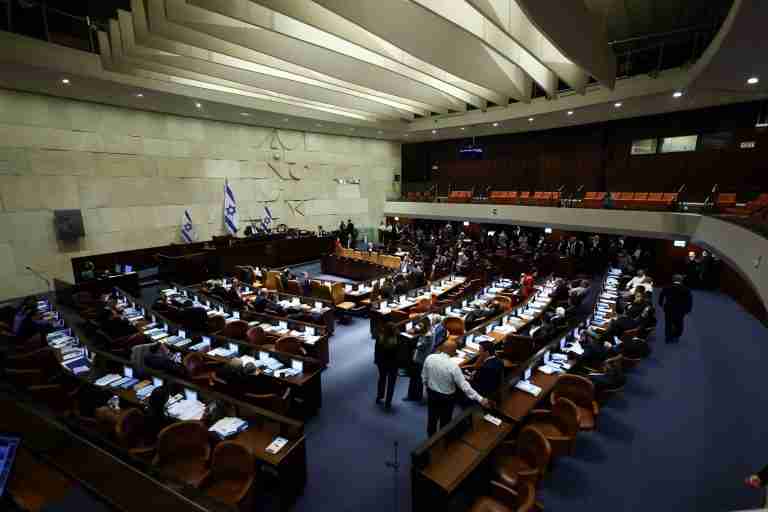
Netanyahu under mounting political pressure after party quits

The UTJ lawmakers said their walkout would come into effect after 48 hours

International News via Reuters:

A religious party has quit Israel’s ruling coalition in a dispute over military service, leaving Prime Minister Benjamin Netanyahu with a razor-thin majority in parliament but still enough political support to secure a potential Gaza ceasefire.

Six members of United Torah Judaism (UTJ) handed in resignation letters overnight from posts in parliamentary committees and government ministries, in protest against lawmakers’ failure to guarantee future exemption from military conscription for ultra-Orthodox religious students.

Shas, a second ultra-Orthodox party closely allied with UTJ, may follow and leave the government with no parliament majority.

The UTJ lawmakers said their walkout would come into effect after 48 hours, giving Netanyahu two days to try and resolve the crisis which has dogged his coalition for months.

Even if that fails, parliament goes on summer break at the end of July, which would give the prime minister a further three months to seek a solution before any loss of his majority could threaten his position.

Netanyahu is also facing pressure from far-right parties in his coalition over ceasefire talks underway in Qatar.

The indirect negotiations between Israel and Palestinian militant group Hamas aim to halt fighting in Gaza for 60 days to allow half of remaining hostages held by Hamas to be released and aid to flow into the battered enclave.

It would also open a further phase of talks on ending the war entirely.

National Security Minister Itamar Ben-Gvir and Finance Minister Bezalel Smotrich want Israel to press on with the war, but Netanyahu would still be likely to have enough cabinet votes to secure a ceasefire without them.

“As soon as the right deal is on the table, the prime minister will be able to pass it through,” a close aide to Netanyahu, Topaz Luk, told Army Radio on Tuesday.

MILITARY EXEMPTIONS

Israelis have become increasingly weary of the 21-month war in Gaza, which began with a surprise attack by Hamas on October 7, 2023 that led to Israel’s single deadliest day with 1,200 killed and 251 taken hostage by the Palestinian militants.

Israel’s subsequent offensive against Hamas has since killed more than 58,000 Palestinians, according to health officials, displaced almost the entire population of Gaza, led to a humanitarian crisis and left much of the enclave in ruins.

It has also exacted Israel’s highest military death toll in decades, with around 450 soldiers killed so far in Gaza combat. This has added fuel to an already explosive debate over a new conscription bill at the center of Netanyahu’s political crisis.

Ultra-Orthodox seminary students have long been exempt from mandatory military service. Many Israelis are angered by what they see as an unfair burden carried by the mainstream who serve.

Ultra-Orthodox Jewish leaders say full-time devotion to holy scriptures study is sacrosanct and fear their young men will steer away from religious life if they are drafted into the military.

Last year the Supreme Court ordered an end to the exemption. Parliament has been trying to work out a new conscription bill, which has so far failed to meet UTJ demands.

Reporting by Steven Scheer and Maayan LubellEditing by Stephen Coates, Crispian Balmer, Peter Graff

EU targets Boeing, bourbon for potential tariffs on US goods

EU members will need to approve the package before it is implemented, and there is no specific date set for a vote

International News via Reuters:

The European Commission is targeting 72 billion euros ($84.1 billion) worth of U.S. goods – from Boeing aircraft and bourbon whiskey to cars – for possible tariffs if trade talks with Washington fail.

U.S. President Donald Trump is threatening a 30% tariff on imports from the EU from August 1, a level European officials say is unacceptable and would end normal trade between two of the world’s largest markets.

The list, sent to EU member states and seen by Reuters on Tuesday, pre-dates Trump’s move over the weekend to ramp up pressure on the 27-nation bloc and responds instead to U.S. duties on cars and car parts and a 10% baseline tariff.

The package also covers chemicals, medical devices, electrical and precision equipment as well as agriculture and food products – a range of fruits and vegetables, along with wine, beer and spirits – valued at 6.35 billion euros.

Following a meeting of EU ministers in Brussels on Monday, officials said they were still seeking a deal to avoid Trump’s heavy tariff blow.

But EU trade chief Maros Sefcovic said those at the meeting expressed unprecedented resolve to protect EU businesses using European countermeasures if negotiations with Washington fail to produce a deal.

“The message was (the) strongest I’ve witnessed since we started the discussion with the U.S.. And therefore we’ll negotiate first, but we’ll prepare at the same time,” he said at a press conference.

French Foreign Minister Jean-Noel Barrot said on Tuesday that Trump’s new threat had “the appearance of blackmail”, adding the priority was to find a trade agreement but not at the cost of becoming a “a vassal of the United States”.

Trump has warned Brussels against retaliation, stating that the U.S. would match any new European levies by simply adding them to the 30% rate.

The European Commission, which oversees EU trade policy, has not yet specified a tariff rate for the products on its list.

EU members will need to approve the package before it is implemented, and there is no specific date set for a vote.

The Commission would typically hear concerns from EU governments and then proceed with the countermeasures unless 15 countries oppose them.

Europe’s drinks industry, which is heavily dependent upon the U.S. market, has been lobbying governments to exclude bourbon or any wine and spirits from the EU’s list due to fear of retaliation by Washington. France, Spain and Italy have expressed concern over the potential impact on their economies.

Alcoholic drinks were removed from the EU’s first package of tariffs approved in April. That package on 21 billion euros worth of U.S. goods was immediately suspended to allow room for negotiations. Its suspension has now been extended to August 6.

European shares traded slightly higher on Tuesday, buoyed by automotive stocks, after Trump said on Monday he was open to talks with the EU and other trading partners.

The Commission initially put forward the second package in May for a public consultation, earmarking some 95 billion euros worth of U.S. goods for countermeasures. It has since been whittled down, though most of the main items have remained.

($1 = 0.8558 euros)

Reporting by Philip Blenkinsop; Additional reporting by Richard Lough in Paris; Editing by Joe Bavier

Kremlin says Trump statements on Russia and Putin are serious, require analysis

Russia was ready to continue direct negotiations with Ukraine

International News via Reuters:

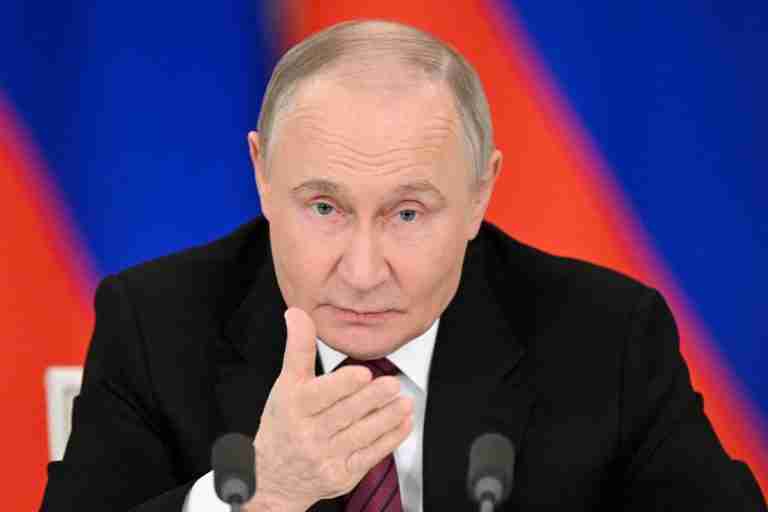
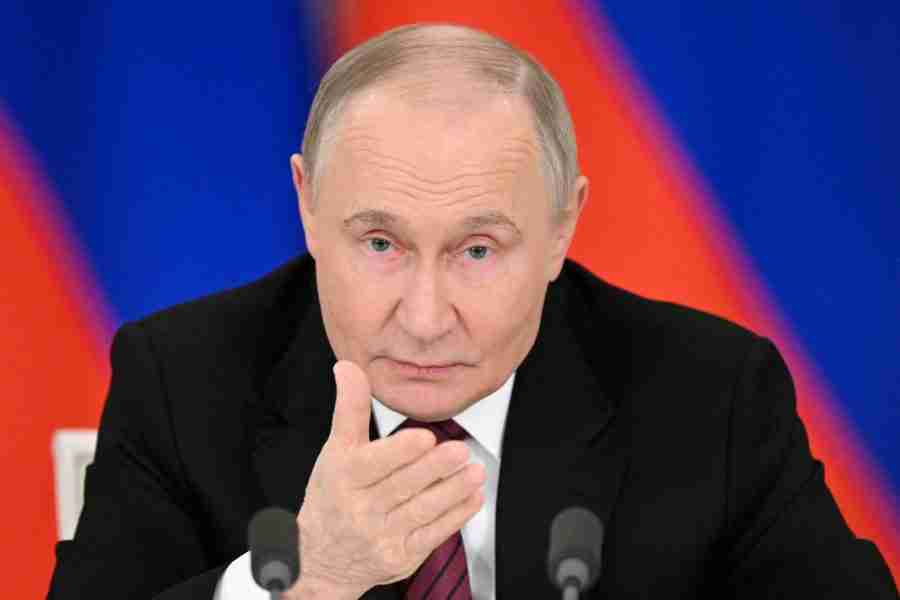
The Kremlin said on Tuesday that U.S. President Donald Trump’s recent statements, including a threat of sanctions on buyers of Russian exports, are serious and require analysis.

In a major policy shift underscoring his growing frustration with President Vladimir Putin, Trump on Monday announced new deliveries of weapons to Ukraine and warned that buyers of Russian exports could face sanctions unless Russia agrees to a peace deal on Ukraine.

Trump, who has said he wants to be remembered as a peacemaker, later told the BBC, referring to Putin: “I’m disappointed in him, but I’m not done with him. But I’m disappointed in him.”

Asked about Trump’s recent statements, Kremlin spokesman Dmitry Peskov said: “The U.S. president’s statements are very serious. Some of them are addressed personally to President Putin.”

“We certainly need time to analyse what was said in Washington. And if and when President Putin deems it necessary, he will definitely comment.”

Peskov continued, apparently referring to news of fresh weapons deliveries to Kyiv: “Decisions which are being made in Washington, in NATO countries, and squarely in Brussels, are perceived by the Ukrainian side not as a signal for peace, but as a signal to continue the war.”

He reiterated that Russia was ready to continue direct negotiations with Ukraine and was still waiting for a signal from Kyiv on when the next talks could take place.

Reporting by Gleb Stolyarov; Writing by Lucy Papachristou; Editing by Gleb Bryanski

Britain, Czech Republic to work together on small nuclear plants

Britain last month pledged 2.5 billion pounds to build small modular nuclear reactors (SMRs)

International News via Reuters:

Britain and the Czech Republic said on Monday they would work to explore opportunities for small modular nuclear reactors (SMRs), a partnership that could see Rolls-Royce’s SMR business export up to six units to the central European country.

Britain last month pledged 2.5 billion pounds to build SMRs, which it hopes can help increase energy security and help the country meet its climate targets while also creating export opportunities and jobs.

SMRs can be made in factories, with parts small enough to be transported on trucks and barges and assembled more quickly and cheaply than large-scale nuclear plants. 

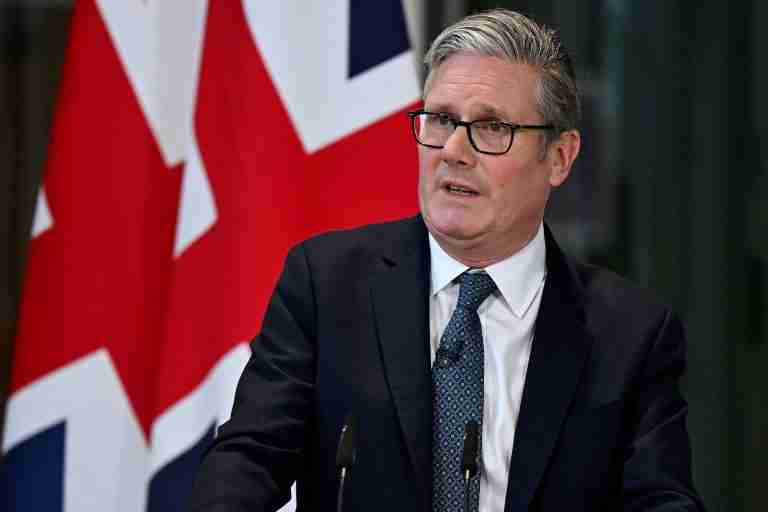
“By working with our Czech partners on small modular reactors, we’re backing British engineering, strengthening our industrial base, and putting the UK in a leading position to export the technologies of the future,” UK Prime Minister Kier Starmer said in a statement from Britain’s Department for Energy Security and Net Zero that also quoted his Czech counterpart.

Rolls-Royce was selected last month to build Britain’s first SMRs. Britain’s state-owned energy company, Great British Energy – expected to sign a contract for the new plants and pick a site later this year, subject to regulatory approval.

Czech electricity producer CEZ last year said it would take a stake of about 20% in Rolls-Royce’s SMR business and planned to deploy up to 3 gigawatts of the SMR plants in the country, equivalent to six units, with each unit capable of powering around 1 million homes.

Starmer and Czech Prime Minister Peter Fiala will host a business roundtable as part of the Czech premier’s visit to London, to drive closer trade and investment links between the two countries.

Reporting by Susanna Twidale; Editing by Aidan Lewis

Pound edges up ahead of US data and Bailey speech

The pound is still up 7.6% against the dollar this year, but it has lost over 5% in value against the euro

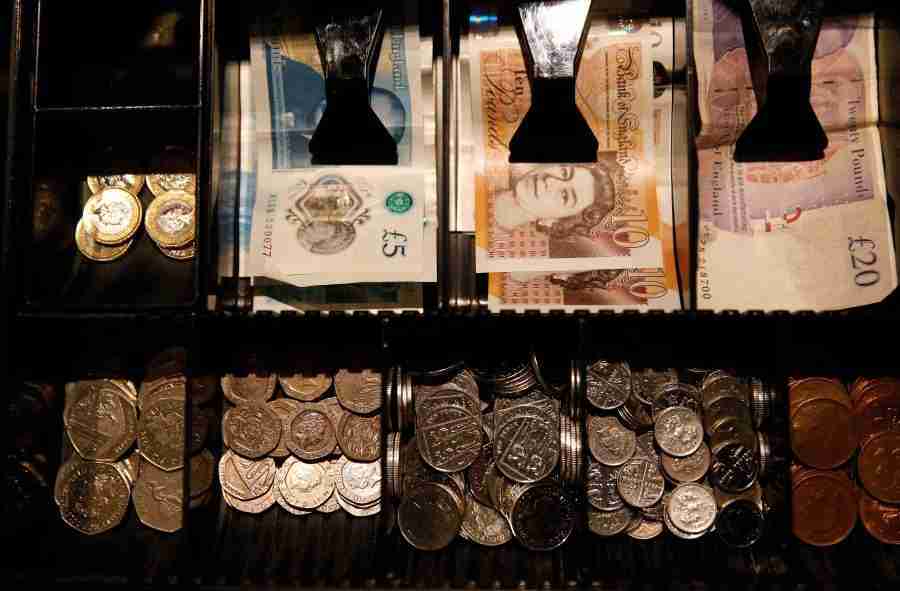
FILE PHOTO: Pound Sterling notes and change are seen inside a cash resgister in a coffee shop in Manchester, Britain, Septem,ber 21, 2018. REUTERS/Phil Noble/File Photo

International News via Reuters:

The pound steadied on Tuesday, following the previous day’s slide, in line with a more upbeat tone across the broader markets, ahead of U.S. inflation data and a speech by Bank of England Governor Andrew Bailey later on.

Sterling was last at $1.3435, little changed on the day and was similarly steady against the euro, which traded at 86.92 pence.

Bailey will give his annual “Mansion House” address to London’s financial sector on Tuesday, along with finance minister Rachel Reeves.

The pound is still up 7.6% against the dollar this year, but it has lost over 5% in value against the euro, set for its weakest annual performance since 2022, when UK markets were hit by a crisis triggered by an interim budget from former Prime Minister Liz Truss.

Losses against the euro have accelerated in recent weeks. In the last two months, sterling has lost over 3.5%.

Investor concern over the outlook for the UK economy, which contracted unexpectedly for a second month in a row in May, is building, especially in light of the shrinking fiscal headroom that Reeves has after the government watered down a landmark reform to welfare benefits and passed a bill that blew a hole in its finances.

“That round of cuts left a 5 billion-pound ($6.72 billion) hole in public finances, one which the government seems unconfident in fixing with more cuts. All of this means that the pound is under pressure on the fiscal credibility front, not Liz Truss by any means, but a serious drag on sterling’s value,” Caxton FX strategist David Stritch said. 

Money markets show traders are looking for at least two quarter-point rate cuts this year from 4.25%, which implies rates at 3.6% by December. Just two months ago, markets showed the implied rate for December was closer to 4%.

“Expect Governor Bailey to reiterate a position – similar to the Fed – that faster easing is possible if the labour market deteriorates,” ING strategist Chris Turner said in a note.

Investors are waiting for U.S. consumer inflation later on Tuesday that could be key in setting expectations for where U.S. rates will head over the coming Federal Reserve meetings.

There is also UK consumer inflation on Wednesday that is expected to show price pressures continued to accelerate in June.

($1 = 0.7437 pounds)

Reporting by Amanda Cooper; Editing by Tomasz Janowski

Astronauts from India, Poland, Hungary return with NASA veteran from space station

The return was carried live by a joint SpaceX-Axiom webcast

International News via Reuters:

NASA retiree turned private astronaut Peggy Whitson splashed down safely in the Pacific early on Tuesday after her fifth trip to the International Space Station, joined by crewmates from India, Poland and Hungary returning from their countries’ first ISS mission.

A SpaceX Crew Dragon capsule carrying the four-member team parachuted into calm seas off the Southern California coast at around 2:30 a.m. PDT (0930 GMT) following a fiery reentry through Earth’s atmosphere that capped a 22-hour descent from orbit.

The return flight concluded the fourth ISS mission organized by Texas-based startup Axiom Space in collaboration with SpaceX, the private rocket venture of billionaire Elon Musk headquartered near Los Angeles.

The return was carried live by a joint SpaceX-Axiom webcast.

Two sets of parachutes, visible through the darkness and light fog with infrared cameras, slowed the capsule’s final descent to about 15 mph (24 kph) moments before its splashdown off San Diego.

Minutes earlier, the spacecraft had been streaking like a mechanical meteor through Earth’s lower atmosphere, generating enough frictional heat to send temperatures outside the capsule soaring to 3,500 degrees Fahrenheit (1,927 degrees Celsius). The astronauts’ flight suits are designed to keep them cool as the cabin heats up.

The Axiom-4 crew was led by Whitson, 65, who retired from NASA in 2018 after a pioneering career that included becoming the U.S. space agency’s first female chief astronaut and the first woman ever to command an ISS expedition.

She radioed to mission control that the crew was “happy to be back” moments after their return. A recovery ship was immediately dispatched to secure the capsule and hoist it from the ocean onto the deck of the vessel.

The crew members were to be extricated from the capsule one by one and undergo medical checkups before the recovery vessel ferries them to shore, a process expected to take about an hour.

FOUR ASTRONAUTS, FOUR NATIONS

Now director of human spaceflight for Axiom, Whitson has now logged 695 days in space, a U.S. record, during three previous NASA missions, a fourth flight to orbit as commander of the Axiom-2 crew in 2023 and her fifth mission to the ISS commanding Axiom-4.

Rounding out the Axiom-4 crew were Shubhanshu Shukla, 39, of India, Slawosz Uznanski-Wisniewski, 41, of Poland, and Tibor Kapu, 33, of Hungary.

They returned with a cargo of science samples from more than 60 microgravity experiments conducted during their 18-day visit to the ISS and due for shipment to researchers back on Earth for final analysis.

For India, Poland and Hungary, the launch marked the first human spaceflight of each country in more than 40 years and the first mission ever to send astronauts from their government’s respective space programs to the ISS.

The participation of Shukla, an Indian air force pilot, is seen by India’s space program as a precursor of sorts to the debut crewed mission of its Gaganyaan orbital spacecraft, planned for 2027.

Uznanski-Wisniewski is a Polish astronaut assigned to the European Space Agency, while Kapu is part of his country’s Hungarian to Orbit (HUNOR) program, though he is not the first person of Hungarian descent to board the space station.

Billionaire Charles Simonyi, a Hungarian-born software designer who became a U.S. citizen in 1982, has twice visited the ISS as a space tourist, in 2007 and 2009, hitching rides aboard Russian Soyuz capsules.

But like many wealthy individuals from various countries who have paid their own way for joyrides to space, Simonyi was not flying on behalf of his homeland or any government.

Dubbed “Grace” by its crew, the newly commissioned capsule flown for Axiom-4 was launched from NASA’s Kennedy Space Center in Cape Canaveral in Florida on June 25, becoming the fifth vehicle in SpaceX’s Crew Dragon fleet.

The Ax-4 team arrived at the ISS on June 26, welcomed aboard by the station’s latest rotating crew of seven occupants – three U.S. astronauts, one Japanese crewmate and three Russian cosmonauts. The two crews parted company again early on Monday when Crew Dragon Grace undocked to begin its voyage home.

Axiom-4 also marks the 18th crewed spaceflight logged by SpaceX since 2020, when Musk’s rocket company ushered in a new NASA era by providing American astronauts their first rides to space from U.S. soil since the end of the space shuttle program nine years earlier.

For Axiom, a 9-year-old venture co-founded by NASA’s former ISS program manager, the mission builds on its business of putting astronauts sponsored by private companies and foreign governments into low-Earth orbit.

Axiom also is one of a handful of companies developing a commercial space station of its own intended to eventually replace the ISS, which NASA expects to retire around 2030.

Reporting by Steve Gorman in Los Angeles; Editing by Jamie Freed and Kim Coghill