Tuesday, October 27, 2026
Home Blog Page 903

Event to explore emerging technologies

Fintech webinar on Friday will focus on the intersection of data privacy and AI

Image supplied

Government press release:
The Economic Development Department (EDD) is pleased to announce the upcoming Fintech Webinar Series 2025 session, scheduled for Friday, 27 June 2025, at 12:00 pm. This instalment will feature Dr. Marisa Stones and Lovette Tannock and focus on the intersection of data privacy and artificial intelligence.
The speakers will explore how the Personal Information Protection Act (PIPA) supports innovation in Bermuda’s digital economy.
The virtual session will explore key topics, including:
– PIPA and emerging technologies
– Enabling the digital economy and cross-border data transfers
– The implications of AI-driven decision-making under PIPA
– Responsible AI use in the space.
Dr. Marisa Stones says, “This event supports Bermuda’s Economic Development Strategy by promoting informed engagement with emerging technologies, supporting regulatory clarity, and driving the adoption of ethical innovation.”
Lovette Tannock says: “Companies in the digital asset space must protect the personal information collected during their business. As Bermudians who are keen to see how Bermuda is going to develop in both the privacy and fintech space, we are excited to explore how digital asset businesses are grappling with managing personal information and data, both in compliance with the Personal Information Protection Act (PIPA) and with the laws of other jurisdictions.”
The webinar is open to the public, and those interested are encouraged to register early via the following link: EDD Webinar Series.

About the Economic Development Department (EDD):
The EDD is dedicated to advancing Bermuda’s economy through innovation, policy development, and industry support. By fostering an environment for digital transformation, the Department plays a key role in ensuring Bermuda remains at the forefront of global economic trends.
For more information, visit: www.gov.bm/department/economic-development-department


Opinion: Empowering Bermuda’s girls starts with us

NAB Third Sector Spotlight: Phenomenal People

By Margaret Giloth, Founder and President, Phenomenal People

Too often, girls are underestimated and overlooked. Phenomenal People was founded in 2006 with a fierce determination to flip that narrative. We are more than just a girls’ club; we are a movement to foster strong, caring relationships and pass on the strength and values of Bermuda’s heritage to the next generation.

In Bermuda, our girls are over twice as likely to report elevated symptoms of anxiety compared to their male counterparts. (Cavanagh et al., 2025). This can happen because girls often go through puberty earlier, worry more about fitting in, and have fewer resources to handle stress. Without the proper support, these challenges can harm their confidence, health and future opportunities. There is a pressing need for gender-responsive programmes that build self-esteem, confidence, and emotional resilience – critical protective factors for positive youth development. We need programs made just for girls—programs that build self-esteem, courage, and emotional strength.

That’s where Phenomenal People’s DREAM Girls Club comes in. We create a safe space for girls ages 9 to 17 to be seen, heard, and supported. Through educational workshops, talks, and fun events, girls come together to grow and dream big. Our DREAM Girls Mentoring and Scholarship Programs help guide them toward brighter futures with the scaffolding they need. We are empowering the next generation of female Bermudian leaders.
Last year, we reached over 278 girls.

Five of our DREAM Girls earned scholarships to Bermuda College and universities overseas. But our impact goes beyond numbers.

DREAM Girl Daniela Buglione, now a digital marketing expert, said: “I first came to Girls Club just to pick up a friend. I never expected it would change my life. I learned so much that still helps me today, especially as a woman. Coming back now as a mentor helps me grow even more and give back to others….I want to support the other girls the way I was supported.”

Another DREAM Girl, Mackenzie Costa, now a professional graphic designer, shared: “I want to thank the Phenomenal People / Dream Girls Club for supporting my career goals and believing in me.”

When we invest in girls, they rise-and they bring others with them.

Our vision is bold: to serve the community by fostering and nurturing the next generation of female leaders. Our goal is to help even more girls find their voice and purpose. But we cannot do this work alone. We need help from the whole community—parents, volunteers, donors, teachers, and professionals.

Here’s how you can help: volunteer your time or skills, sponsor a workshop or event, donate to support a girl’s education or just spread the word about our work.

Phenomenal girls don’t just happen – they’re nurtured by phenomenal communities. They grow when we believe in them, stand by them, and lift them up.

Let’s work together to create a brighter future, one girl at a time.

For more information about Phenomenal People, please visit: www.phenomenalpeoplebda.com


This op-ed is part of the Third Sector Spotlight Series, a collective media campaign coordinated by the Nonprofit Alliance of Bermuda. This campaign aims to raise awareness of the value, impact and contributions of Bermuda’s nonprofit sector.

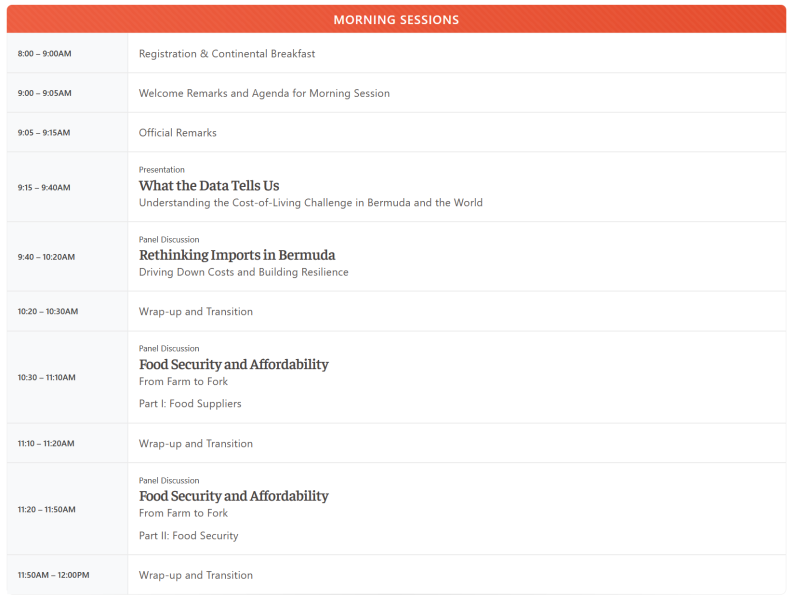
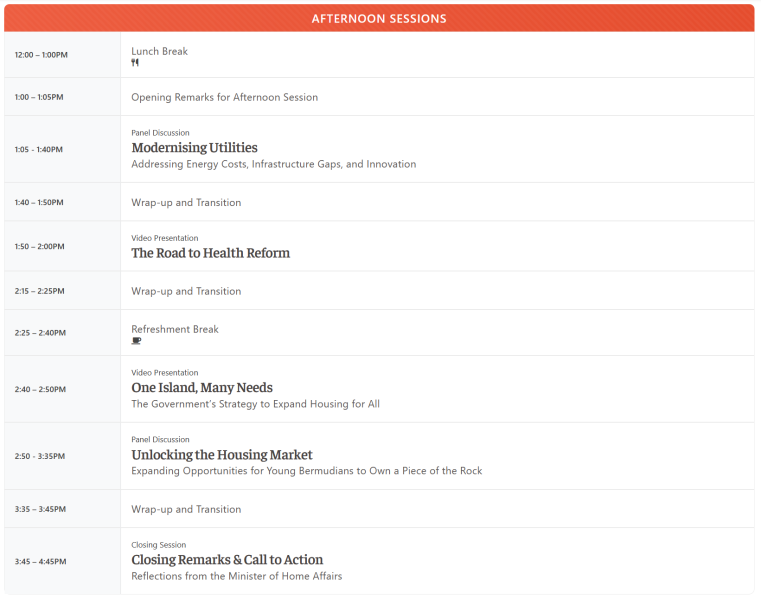
LIVE: Cost of Living Summit

Live from Hamilton Princess Ballroom, courtesy of CITV

Afternoon Sessions:

Morning Sessions:

Opening Comments & beginning of first session:

Australia regulator and YouTube spar over under-16s social media ban

FILE PHOTO: A smartphone with a displayed YouTube logo is placed on a computer motherboard in this illustration taken February 23, 2023. REUTERS/Dado Ruvic/Illustration/File Photo

International news via Reuters:

Australia’s internet watchdog and YouTube exchanged barbs on Tuesday after the regulator urged the government to reverse a planned exemption for the Alphabet-owned video-sharing platform from its world-first teen social media ban.

The quarrel adds an element of uncertainty to the December rollout of a law being watched by governments and tech leaders around the world as Australia seeks to become the first country to fine social media firms if they fail to block users aged under 16.

The centre-left Labor government of Anthony Albanese has previously said it would give YouTube a waiver, citing the platform’s use for education and health. Other social media companies such as Meta’s Facebook and Instagram, Snapchat, and TikTok have argued such an exemption would be unfair.

eSafety Commissioner Julie Inman Grant said she wrote to the government last week to say there should be no exemptions when the law takes effect. She added that the regulator’s research found 37% of children aged 10 to 15 reported seeing harmful content on YouTube – the most of any social media site.

“This is not a fair fight where our kids are concerned, vis-a-vis social media sites,” Inman Grant told the National Press Club in Sydney.

She said social media companies deployed “persuasive design features” like recommendation-based algorithms and notifications to keep users online and “YouTube has mastered those, opaque algorithms driving users down rabbit holes they’re powerless to fight against”.

YouTube, in a blog post, accused Inman Grant of giving inconsistent and contradictory advice, which discounted the government’s own research which found 69% of parents considered the video platform suitable for people under 15.

“The eSafety commissioner chose to ignore this data, the decision of the Australian Government and other clear evidence from teachers and parents that YouTube is suitable for younger users,” wrote Rachel Lord, YouTube’s public policy manager for Australia and New Zealand.

Inman Grant, asked about surveys supporting a YouTube exemption, said she was more concerned “about the safety of children and that’s always going to surpass any concerns I have about politics or being liked or bringing the public onside”.

A spokesperson for Communications Minister Anika Wells said the minister was considering the online regulator’s advice and her “top priority is making sure the draft rules fulfil the objective of the Act and protect children from the harms of social media”.

Reporting by Byron Kaye; Editing by Kate Mayberry

Australia cashes in on record sheep prices as meat exports surge

Major buyers include China, the United States, Britain, the European Union and the Middle East

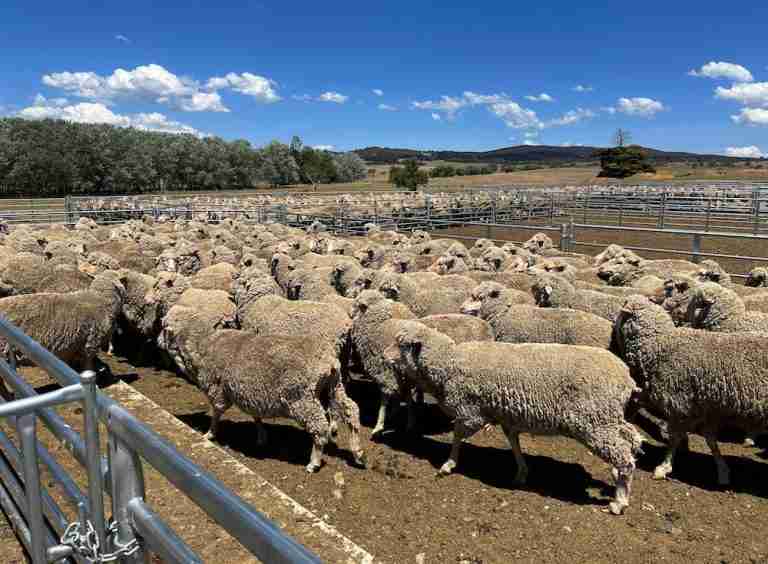
FILE PHOTO: Sheep run into a holding pen at a farm near Delegate, in New South Wales, Australia, November 19, 2023. REUTERS/Peter Hobson/File Photo

International news via Reuters:

Australian sheep farmers are cashing in on record-high sheep prices, as rising global demand for lamb and mutton fuels a boom in exports from the world’s top sheep meat supplier. 

Prices are likely to rise further in the coming years as production in New Zealand, Australia’s biggest sheep meat export rival, stagnates, analysts said. 

“We’ve seen waves of higher and higher pricing as export demand and our market share has grown,” said Matt Dalgleish, a livestock and meat analyst at consultants Episode 3. 

While there will be seasonal price volatility, he said, “until the underlying pressure of limited supply and strong growth in demand changes, there should be more good times ahead for Australian producers.” 

Australia last year exported 702,000 metric tons of lamb, mutton and goat meat worth $3.6 billion, almost 200,000 tons more than in 2019, previously the biggest export year.

Shipments in the first four months of this year were 10% higher than during the same period in 2024, Australian trade data show.

Processors’ need for animals pushed the price of heavy lambs to record highs of nearly A$11 ($7.14) a kilogram last week, up 50% from the same time last year, according to a national price indicator compiled by industry body Meat & Livestock Australia (MLA). 

China is the biggest importer of sheep meat. Other major buyers include the United States, Britain, the European Union and the Middle East.

Rising incomes and populations are fuelling demand for sheep meat, and high beef prices, especially in the United States, are encouraging people to switch to lamb and mutton, Dalgleish said. 

Helping Australia take advantage of that growth is an ongoing decline in New Zealand’s sheep industry. The two countries account for more than 80% of global sheep meat exports, according to MLA. 

The number of sheep in Australia grew in recent years, allowing farmers to better supply processors, but New Zealand’s flock has shrunk every year since 2012, according to the country’s statistics agency – something New Zealand farmers say is partly due to the conversion of grazing land to pine forests that earn carbon credits. 

“New Zealand is the other major global exporter,” said Angus Gidley-Baird, an analyst at Rabobank. “Its production is stagnating or retracting. So any growth in global demand is Australia’s opportunity for the taking.”

($1 = 1.5399 Australian dollars)

Reporting by Peter Hobson; Editing by Sonali Paul

UK to buy fighter jets capable of carrying tactical nuclear weapons

Part of a plan for Britain to take on more responsibility for European security

FILE PHOTO: A Lockheed Martin F-35A fighter jet performs during an exhibition flight at the 55th International Paris Airshow at Le Bourget Airport near Paris, France, June 16, 2025. REUTERS/Benoit Tessier/File Photo

International news via Reuters:

Britain said it would buy a dozen F-35A fighter jets capable of firing tactical nuclear weapons in what it described as the biggest expansion of its nuclear deterrent in a generation.

The purchase of the Lockheed Martin jets would allow Britain’s air force to carry nuclear weapons for the first time since the end of the Cold War, Downing Street said.

“In an era of radical uncertainty we can no longer take peace for granted,” Prime Minister Keir Starmer said in a statement.

Britain’s nuclear deterrent is currently limited to the continuous deployment of at least one nuclear-armed submarine patrolling at sea. 

Starmer’s government is increasing defence spending and upgrading its military forces, including its submarine fleet, as it faces increasing hostility from Russia and as the United States retrenches from its traditional role as a defender of Europe. 

The announcement by Britain on expanding its nuclear deterrence was made at a NATO summit in The Hague where European members are set to agree an ambitious new target to spend 5% of national income on defence and security.

The U.S. will supply B61 tactical nuclear weapons for use on the planes as part of a plan for Britain to take on more responsibility for European security, said a British official who declined to be named.

Britain said the purchase of the jets would allow it to contribute so-called dual-capable aircraft to NATO to carry nuclear weapons in the event of a conflict.

NATO Secretary General Mark Rutte said “this is yet another robust British contribution to NATO”.

NEW CAPABILITY

The cost of each F-35A jet is about 80 million pounds ($109 million), putting the total bill for the 12 planes at just under 1 billion pounds, according to another British official, who asked not to be named. 

Britain’s nuclear deterrent currently rests solely on the Trident submarine-based system, which misfired during a test last year, the second successive test failure after one veered off course in 2016.

The last time Britain possessed an independent air-launched nuclear capability was in 1998 when the WE-177 free fall bomb was withdrawn from service, according to Britain’s parliament.

Tactical nuclear weapons are intended for battlefield use, as opposed to strategic weapons designed to be fired across vast distances.

By purchasing the F-35A fighter jets, Britain would be able to diversify its military options and align more closely with NATO allies such as France, and the United States, which maintains land, sea, and air-based nuclear capabilities.

The United States withdrew its last nuclear weapons from Britain in 2008, in a sign at that time that the threat of conflict following the end of the Cold War was receding.

Downing Street said buying the new jets would support about 20,000 jobs in Britain and underline its commitment to NATO.

The government has pledged to boost overall defence and security spending to 5% of economic output by 2035 to meet a NATO target and said on Tuesday it must “actively prepare” for war at home for the first time in years.

($1 = 0.7342 pounds)

Reporting by Andrew MacAskill; Editing by Hugh Lawson and Andrew Heavens

Britain must lower power prices to meet climate goals, advisors say​

Britain aims to reach net zero emissions by 2050

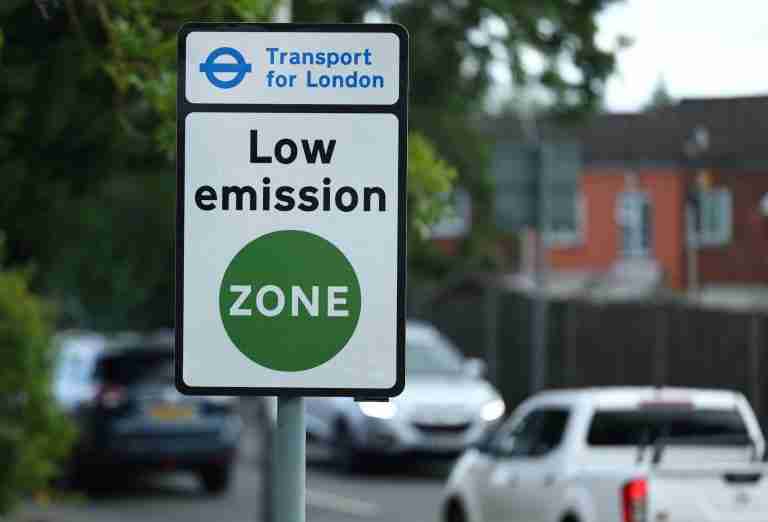
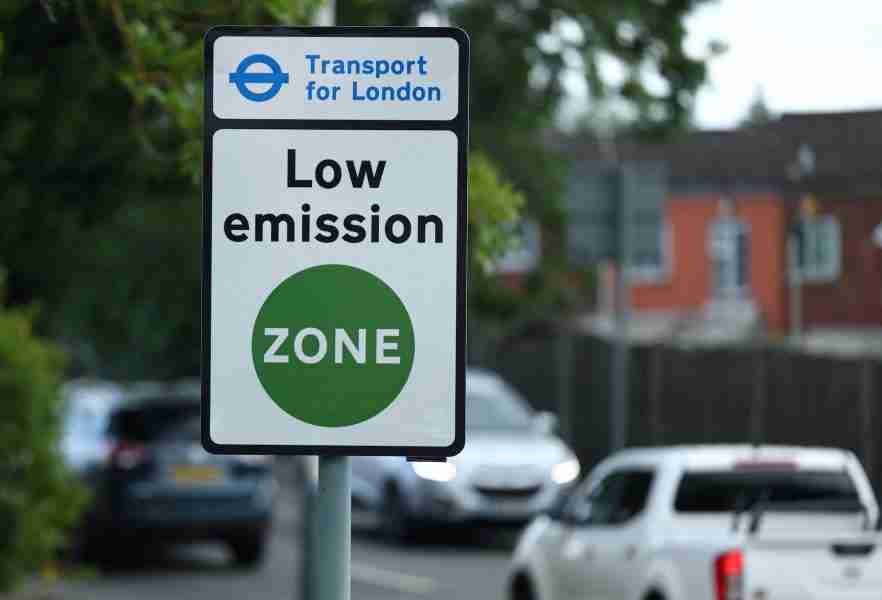
FILE PHOTO: A road users information sign is seen at the new extended boundary of London’s Ultra Low Emissions Zone (ULEZ) zone, in Ickenham, outer London, Britain, August 22, 2023. REUTERS/Toby Melville/File Photo

International news via Reuters:

Britain must cut its electricity prices to speed up the adoption of emission curbing technology, such as electric vehicles and heat pumps, to meet its climate targets, the country’s climate advisers said in a progress report on Wednesday.

Britain aims to reach net zero emissions by 2050, which will require the electrification of sectors such as heat and transport, now mostly powered by fossil fuels, while it is also grappling with high electricity costs.

“By far the most important recommendation we have for the government is to reduce the cost of electricity both for households and businesses,” Piers Forster, interim chair of the Committee on Climate Change said, in a briefing on the annual report.

“If we want the country to benefit from the transition to electrification, we have to see it reflected in the utility bills,” he said.

Britain’s energy regulator Ofgem, which sets a cap on domestic energy prices, reduced the limit by 7% from July. However it remains around 50% above levels in the summer of 2021, before Russia’s invasion of Ukraine sent gas prices soaring and sparked an energy crisis in Europe.

The Committee publishes annual reports about the government’s progress towards its climate targets.

With more action, Britain can achieve a 68% reduction in emissions between 1990 and 2030, it has pledged under the Paris climate agreement, the report said.

It made 43 priority recommendations including lowering energy costs, speeding up grid connections for new clean power projects, introducing regulations mandating only low-carbon heating systems for new homes, and publishing a net zero skills action plan.

Britain’s emissions have already fallen around 54% from 1990 thanks to increased renewable power capacity and the closure of its coal-fired power plants.

​

Reporting By Susanna TwidaleEditing by Tomasz Janowski

Japan protests against new Chinese structure in East China Sea

Japan’s requests that China cease its unilateral development falls on deaf ears

FILE PHOTO: Printed Chinese and Japanese flags are seen in this illustration, July 21, 2022. REUTERS/Dado Ruvic/Illustration/File Photo

International news via Reuters:

China has begun construction of a new structure in waters between China and Japan in the disputed East China Sea, the Japanese foreign ministry said on Tuesday, adding it has lodged a protest with China. 

The ministry said in a statement “it is extremely regrettable” that China is pressing ahead with unilateral development when the exclusive economic zone and the continental shelf in the East China Sea have not yet been delimited.

Japan requests that China cease its unilateral development and to resume talks on the implementation of a 2008 agreement, in which the two countries agreed to cooperate on natural resources development in the East China Sea, it also said.

Asked about Japan’s protest, China’s foreign ministry said on Wednesday that its oil and gas development activities in the East China Sea were located in undisputed waters under Chinese jurisdiction.

“China does not accept Japan’s groundless accusations,” ministry spokesperson Guo Jiakun told a regular news conference, adding that Beijing was committed to fully implementing the principled consensus on the East China Sea issue.

Japan’s ties with China have been plagued by a territorial dispute over a group of Japanese-administered islands in the East China Sea, called the Senkaku in Japan and Diaoyu in China, as well as the legacy of Japan’s past military aggression.  

Reporting by Kiyoshi Takenaka in Tokyo, Liz Lee and Xiuhao Chen in Beijing; Editing by Chizu Nomiyama and Michael Perry

Greek PM says all NATO members should commit to defence spending target

NATO members agreed on Sunday to boost their defence spending target to 5% of GDP

FILE PHOTO: Greek Prime Minister Kyriakos Mitsotakis arrives at a dinner for NATO heads of states and government hosted by Dutch King Willem-Alexander and Dutch Queen Maxima, on the sidelines of a NATO Summit, at Huis ten Bosch Palace in The Hague, Netherlands June 24, 2025. REUTERS/Christian Hartmann/File Photo

International news via Reuters:

Greek Prime Minister Kyriakos Mitsotakis said on Wednesday that all 32 members of the NATO alliance should do their part in defence spending and commit to the agreed target so that there would be no sense of “free-riding”.

NATO members agreed in principle on Sunday to boost their defence spending target to 5% of gross domestic product, as demanded by U.S. President Donald Trump, but Spain said it could meet its commitments without spending so much.

“The point of an alliance is to make sure that there is a fair burden-sharing and that there is no sense that certain countries are sort of free-riding on the defence commitment of other countries,” Mitsotakis said as a NATO summit began in The Hague.

“So I think it is important to understand that these targets…should be binding and they should be binding for all 32 members of the alliance.”

Greece is now spending about 3% of its gross domestic product on defence – nearly double the average in the EU.

It has asked the European Commission to exempt its 2026 defence spending from the EU’s budget rules as part of the so-called fiscal escape clause as it aims to spend 25 billion euros ($29 billion) by 2036 under a multi-year defence plan to modernise its armed forces and as it tries to keep pace with its eastern neighbour and historical rival Turkey.

Mitsotakis says this will help Greece reach the 5% target by 2035.

($1 = 0.8613 euros)

Reporting by Angeliki Koutantou; Editing by Alison Williams and Kevin Liffey

China, reeling from floods, braces for second tropical cyclone in two weeks

Storm will test the flood defences of densely populated Guangdong, Guangxi and Hunan

Rescue workers evacuate a resident from a flood-affected area with a boat in Rongjiang county, Guizhou province, China June 24, 2025. China Daily via REUTERS ATTENTION EDITORS – THIS IMAGE WAS PROVIDED BY A THIRD PARTY. CHINA OUT. NO COMMERCIAL OR EDITORIAL SALES IN CHINA. TPX IMAGES OF THE DAY

International news via Reuters:

A tropical depression may hit southern China as early as Thursday, meteorologists cautioned, bringing rain and gales to a flood-hit region still recovering from the impact of Typhoon Wutip two weeks ago. 

The tropical depression could make landfall somewhere between the island province of Hainan and Guangdong on the mainland on Thursday morning, China’s National Meteorological Centre said in an online bulletin on Wednesday. 

The storm will again test the flood defences of densely populated Guangdong as well as Guangxi and Hunan further inland. 

Hundreds of thousands of people were evacuated when Wutip tore through the region from June 13 to 15, dumping record rains and damaging roads and cropland. Five people died. 

China has battled with summer floods for millennia, but some scientists say climate change is resulting in heavier and more frequent rain. Massive flooding could set off unforeseen “black swan” events with dire consequences such as dam collapses, Chinese officials say.

Heavy precipitation caused by typhoons will also aggravate seasonal rainfall from June to July, causing bigger-than-expected floods, Chinese meteorologists say.

On Wednesday, unusually heavy rains struck Rongjiang in southwestern Guizhou province, half-submerging the city of 300,000 people as fast-rising flood-waters swept away cars, roared into underground garages and malls, and damaged vital infrastructure including its power grid. 

Affected by the rainfall in Guizhou, rivers in Guangxi downstream remained swollen on Wednesday, state media reported, with one waterway more than 9 metres (30 feet) above levels that are considered safe. 

China’s economic planning agency in Beijing on Wednesday said it had urgently allocated 100 million yuan ($14 million) to assist disaster relief work in Guizhou, and an additional 100 million yuan to Guangdong and Hunan. 

($1 = 7.1715 Chinese yuan renminbi)

Reporting by Ryan WooEditing by Bernadette Baum

Switzerland to explore defence procurement pact with EU

Switzerland could be eligible to apply for the bloc’s 150-billion-euro ($173.99 billion) arms fund

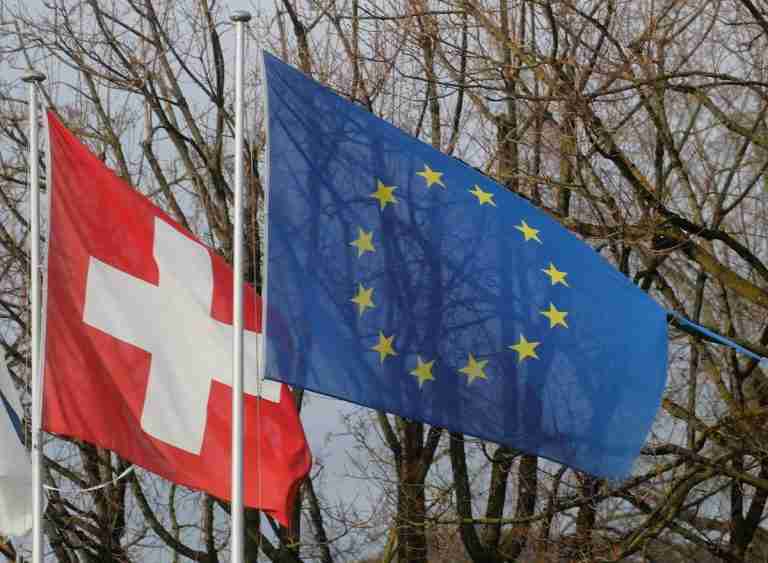
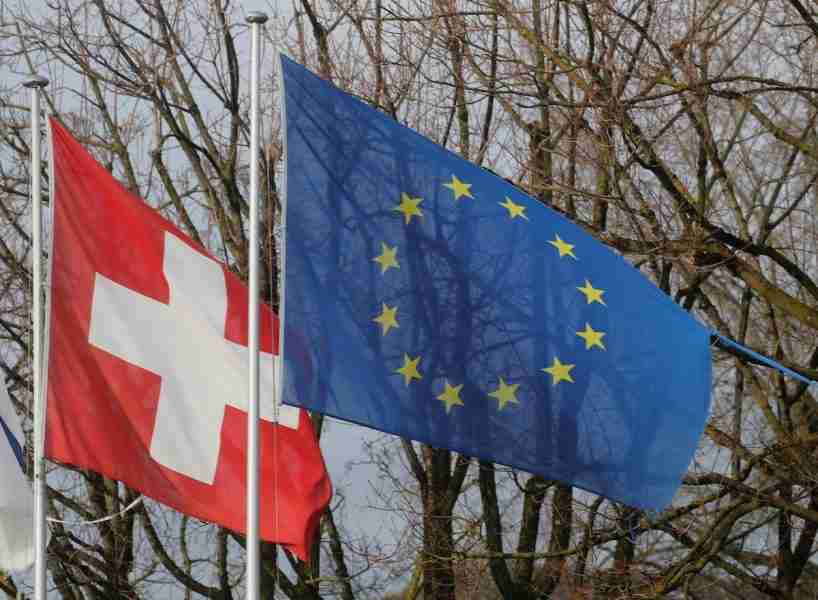
FILE PHOTO: Switzerland’s national flag flies beside the one of the European Union in Steinhausen, Switzerland February 11, 2020. REUTERS/Arnd Wiegmann/ File Photo

International news via Reuters:

Switzerland will enter into exploratory talks with the European Union on a non-binding partnership to take part in arms procurement projects, the government said on Wednesday, as the neutral alpine nation seeks closer EU security ties.

Such partnerships are a prerequisite for non-EU countries to become involved with the bloc’s cooperation projects, said the government, adding that the move was compatible with neutrality and would help strengthen its defence capabilities.

“Switzerland has an interest in greater cooperation with the EU, particularly in relation to armaments,” it said, adding that the talks should be launched as soon as possible.

A partnership would allow Switzerland to negotiate better conditions for its industry’s participation in EU defence procurement projects, it said.

“To date, the EU has concluded such partnerships with a number of countries, and further partnerships are in the pipeline,” added the government.

Companies from countries that have signed such a pact with the EU are eligible to apply for the bloc’s 150-billion-euro ($173.99 billion) arms fund, if they meet further conditions. 

The Swiss government on Wednesday also approved a draft cooperation agreement with Ukraine on the reconstruction of the besieged country that would establish a legal basis for the Swiss private sector to become more closely involved. 

($1 = 0.8621 euros)

Reporting by Miranda MurrayEditing by Ludwig Burger