Sunday, October 25, 2026
Home Blog Page 967

UK’s Starmer says net migration will fall significantly

Automatic settlement and citizenship for people who move to Britain will apply after 10 years

British Prime Minister Keir Starmer visits the Economic Crime Team at the City of London Police HQ where he will meet police officers and representatives from different law enforcement teams and set out details of the government’s new sanctions regime, January 9, 2025. Paul Grover/Pool via REUTERS/File Photo

International news via Reuters:

Prime Minister Keir Starmer promised on Monday to cut net migration to Britain significantly over the next four years, saying greater control was needed to maintain social cohesion and drive investment in the local workforce. 

Controlling immigration was a key factor in Britain’s 2016 vote to leave the European Union, yet net arrivals have quadrupled since it left the bloc, helping boost the popularity of Nigel Farage’s right-wing, anti-immigration Reform UK party. 

Starmer said nations depend on rules that set out rights, responsibilities and obligations, and that without them Britain risked “becoming an island of strangers”.

He said his new plan meant migration would fall sharply by the end of this parliament in 2029, though he gave no numerical targets. 

“That’s a promise, but I want to be very clear on this, if we do need to take further steps, if we do need to do more to release pressure on housing and our public services, then mark my words, we will,” he told a press conference at his Downing Street office.

Among the measures announced on Monday was a move to restrict skilled worker visas to graduate-level applicants, to prevent care sector firms from recruiting abroad and to require businesses to increase training for local workers. 

Automatic settlement and citizenship for people who move to Britain will apply after 10 years, up from five years now, although highly skilled workers – such as nurses, doctors, engineers and AI experts – would be fast-tracked.

The government also said it planned to raise English language requirements to include all adult dependents who will have to show a basic understanding of English. It said the change would help integration and reduce the risks of exploitation.

HOT TOPIC

Migration has long been a hot political issue in Britain, with critics arguing that social cohesion can be damaged if the government does not build enough houses or public services to accommodate a larger population. 

But many business sectors, including the adult care sector, argue they cannot hire enough staff locally, and employers in science, technology and other areas warn that tough restrictions will damage their potential and hit overall economic growth. 

The number of European Union migrants to Britain fell sharply after Brexit but new visa rules, higher net numbers of foreign students, and a rise in people arriving from Ukraine and Hong Kong led to an overall surge in recent years.

Net migration – the number of people coming to Britain minus the number leaving – hit a record 906,000 in the year to June 2023, up from 184,000 who arrived in the same period during 2019, when Britain was still in the EU.

Neil Carberry, chief executive of the Recruitment and Employment Confederation (REC), said Starmer’s “major intervention” would spark alarm among bosses. 

Asked about concerns of business, Starmer said Britain had endured largely stagnant growth when immigration was high, adding “so that link doesn’t hold on that evidence”.

Writing by Kate Holton and William SchombergEditing by Giles Elgood and Gareth Jones

Global perceptions of US fall below China, survey says

The survey also ranked the perception of countries from -100% to +100%

People walk over Brooklyn Bridge in New York City, U.S., December 30, 2024. REUTERS/Marko Djurica/File Photo

International news via Reuters:

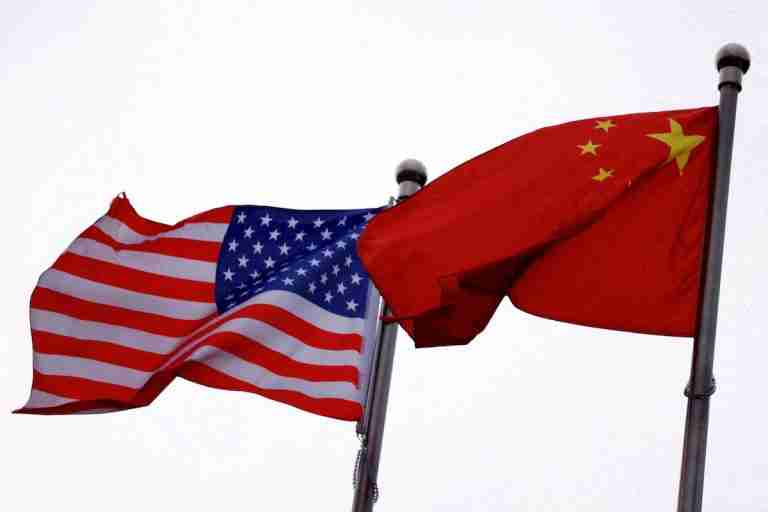
Global perceptions of the United States have deteriorated across the world over the past year and are now worse than views of China, according to an annual study of perceptions of democracy published on Monday.

The survey did not go into details on the criteria used, but the Alliance of Democracies Foundation which commissioned it says its aim is to defend and advance democratic values.

When asked why perceptions of the U.S. had slipped, Alliance founder and former NATO Secretary General Anders Fogh Rasmussen said: “President Trump has triggered a trade war, scolded Ukraine’s president in the Oval Office, left allies feeling vulnerable and enemies emboldened.”

“It’s no surprise that opinions have slipped even among people like me who spent their lives admiring the United States and what it stood for,” he added.

Trump has said he is pushing for a peace deal between Russia and Ukraine and on Thursday called for a 30-day unconditional ceasefire between the two countries.

He has also said that tariffs are defending the U.S. economy against what his administration sees as unfair trade conditions. 

The conclusions in the Democracy Perception Index survey, conducted between April 9 and 23 with polling firm Nira Data, were based on more than 111,000 respondents worldwide, the Alliance said.

The perception of Trump was negative in 82 of the 100 countries surveyed, higher than Russian President Vladimir Putin and Chinese President Xi Jinping, who were viewed negatively in 61 and 44 countries, respectively.

The survey also ranked the perception of countries from -100% to +100%.

The net perception rating of the United States fell to -5% from +22% last year, indicating a greater number of respondents with a negative view of the country compared with those with a positive view.

The share of countries with a positive image of the U.S. dropped to 45% from 76% last year, the survey showed. 

For China, the net perception rose to +14% this year from +5% last year, the survey found.

The report was published ahead of the Copenhagen Democracy Summit, which takes place on May 13-14.

Reporting by Louise Breusch Rasmussen and Jacob Gronholt-Pedersen; Editing by Andrew Heavens

Foreign investment in Germany fell for the third year in a row in 2024

The U.S. remained the most important foreign investor with Switzerland in second

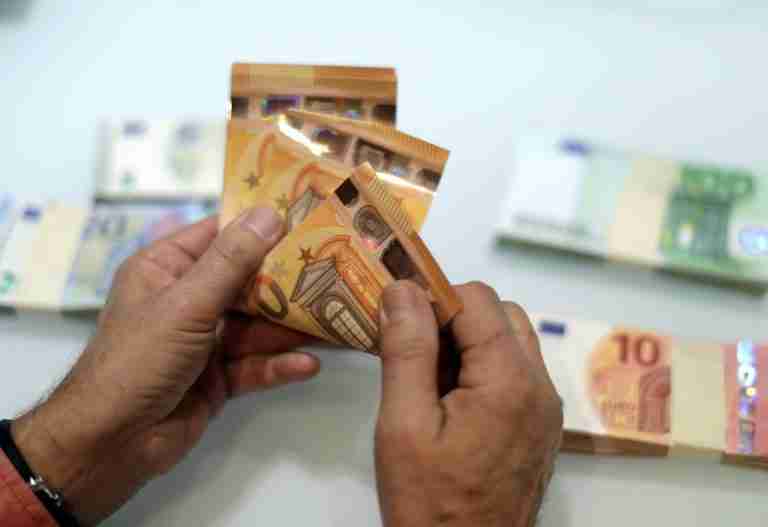
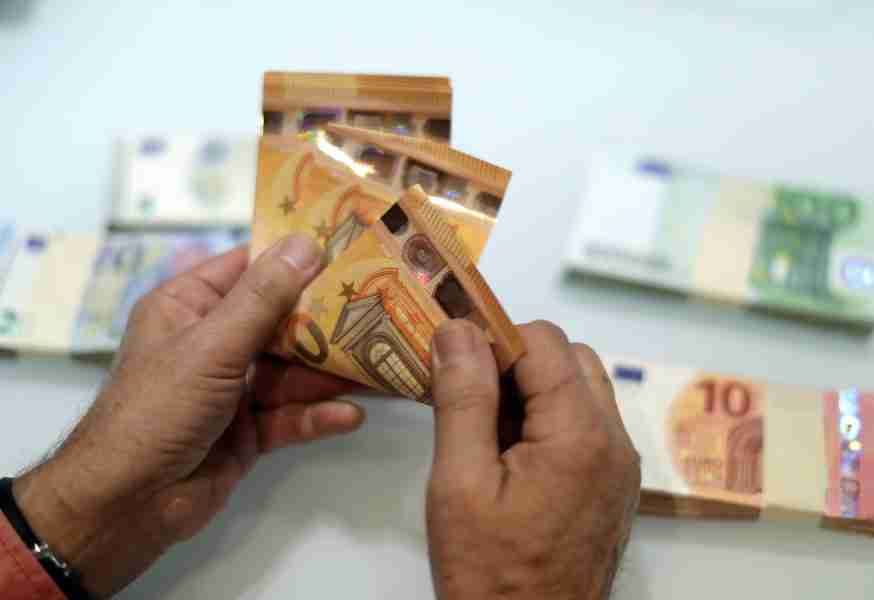
FILE PHOTO: A money changer counts Euro banknotes at a currency exchange office in Nice, France November 17, 2017. REUTERS/Eric Gaillard/File Photo

International news via Reuters:

The number of foreign investments in Germany fell for the third year in a row in 2024, international economic promotion agency Germany Trade & Invest (GTAI) said on Monday.

Last year there were 1,724 new establishments and expansions, down from 1,759 projects in 2023 – a 2% year-on-year decline – 1,783 in 2022 and 1,806 in 2021. 

Foreign direct investment fell much more sharply in Europe last year, by 4.6%, and by almost 6% in Western Europe, GTAI data showed.

Foreign companies announced investments totalling 23.2 billion euros ($25.83 billion) in 2024, down from the record sums of 34.8 billion euros in 2023 and 25.3 billion euros in 2022, due to catch-up effects following the pandemic.

The United States has remained the most important foreign investor with three big projects from Amazon, Microsoft and Apple in 2024 and a total of 229 projects for relocation or expansion. 

Switzerland followed in second place with 202 projects, ahead of China with 199, the U.K. with 137 and the Netherlands with 97, according to GTAI data. 

($1 = 0.8981 euros)

Reporting by Rene Wagner, writing by Maria Martinez, editing by Friederike Heine

UK employers stay downbeat on hiring plans, surveys show

The CIPD’s survey of 2,000 employers has run since 2014

FILE PHOTO: Signs are seen outside a job centre in Borough, in London, Britain, December 1, 2024. REUTERS/Mina Kim/File Photo

International news via Reuters:

Gloom surrounds British employers’ hiring plans after recent tax hikes and surging uncertainty in the global economy, according to surveys on Monday that chimed with the Bank of England’s forecasts for a weakening labour market.

The Chartered Institute of Personnel and Development, a professional body for human resources, said its gauge of employment intentions for the next three months fell in the latest quarter from +13 to +8 – a record low, excluding the COVID-19 pandemic.

The CIPD’s survey of 2,000 employers has run since 2014.

Large private-sector employers – which account for roughly half of all private-sector employment, according to official data – drove the drop in the latest quarter, the CIPD said. 

A separate survey from accountants KPMG and the Recruitment and Employment Confederation showed another drop in job placements by recruiters last month, albeit less than in March. Overall demand for staff, however, contracted at a faster pace. 

Both surveys reinforced the picture of a cooling labour market, emphasised by the BoE last week as it cut interest rates. It remains concerned about the strength of wage growth as a source of inflation pressure.

First-quarter official data due on Tuesday is likely to show annual wage growth of nearly 6%.

The CIPD survey showed annual pay settlements, which are typically somewhat lower than headline pay growth, holding at 3% in the latest quarter – below the 3.5%-4% range for settlements which BoE staff had found during recent company visits.

“Employer confidence is low which is being reflected in their hiring plans,” said James Cockett, senior labour market economist at the CIPD.

Jon Holt, group chief executive of KPMG, said the slight easing of the downturn in recruitment signalled in the REC report did not amount to “green shoots” as the number of job-seekers continued to rise.

“This is unsurprising. With businesses facing several pressures due to current global economic uncertainty and rising costs, it is unlikely to lead to a sudden turnaround in the market in the near term,” Holt said.

A gauge of employment from accountants BDO which aggregates previously-released business surveys fell to a 12-year low in April.

Reporting by Andy Bruce; editing by David Milliken

Global pharma shares drop as Trump targets US drug prices

Pharma stocks across Europe, UK, Australia, India and Japan also declined

FILE PHOTO: Used blister packets that contained medicines, tablets and pills are seen, in this picture illustration taken June 30, 2018. REUTERS/Russell Boyce/Illustration/File Photo

International news via Reuters:

Global pharmaceutical stocks took a hit on Monday after U.S. President Donald Trump pledged to slash prescription prices by about 30%–80%, which aligns with price levels paid by other wealthy nations.

Shares of major U.S. drugmakers AbbVie, Amgen, Pfizer, Eli Lilly and Merck fell between 2.1% and 3.6% in premarket trading.

Trump revealed he would sign an executive order on Monday morning to pursue “most favored nation” pricing, which is also called international reference pricing. 

The U.S. pays the highest prices for prescription drugs, often nearly three times more than other developed nations. Trump has pledged to close the gap but has yet to outline how he will implement it.

Pharma stocks across Europe, UK, Australia, India and Japan also declined.

In Europe, a basket of healthcare stocks fell 2.9%, with AstraZeneca, GSK and Roche Holding down between 3.3% and 6.8%.

“This announcement could impact EU/US tariff talks,” said Kathleen Brooks, research director at trading platform XTB.

“Will the U.S. president use price caps on pharma imports rather than tariffs to reduce the cost for U.S. patients? If yes, this could have big ramifications for pharma companies and their profits in Europe and elsewhere.”

Indian pharma stocks including Biocon and Lupin also saw declines. India sends a third of its total pharmaceutical exports to the United States.

Australian healthcare stocks fell 1.4% to their lowest since late April, with CSL Ltd and Mayne Pharma Group particularly vulnerable to U.S. pricing pressures as a significant portion of their revenue comes from the American market.

In Asia, Japan’s pharmaceutical sector closed 6.5% lower and was the worst performer among the Tokyo Stock Exchange’s 33 industry sub-indexes. Shares of Daiichi Sankyo sank over 8%.

Shares of Alphamab Oncology plunged 14.4% to HK$6.28, leading declines in Hong Kong-listed pharmaceutical stocks.Meanwhile, the U.S. and China said they have agreed to slash reciprocal tariffs, aiming to ease a trade war that has unsettled global markets.

Reporting by Joel Jose and Siddarth S in Bengaluru and Danilo Masoni in London; Editing by Amanda Cooper and Krishna Chandra Eluri

US and China reach deal to slash tariffs, lifting dollar

The U.S. to cut extra tariffs imposed on Chinese imports in April this year to 30% from 145%

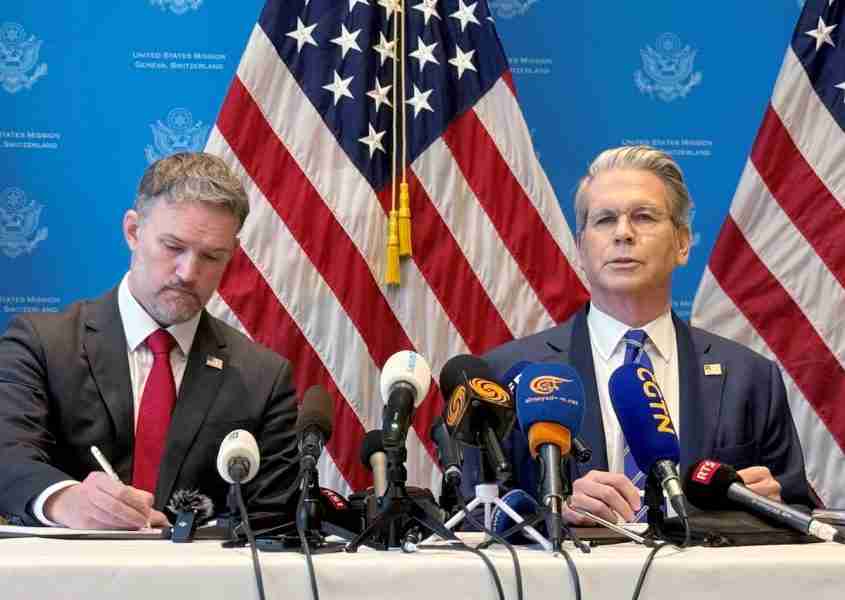
U.S. Secretary of the Treasury Scott Bessent and U.S. Trade Representative Jamieson Greer attend a news conference after trade talks with China in Geneva, Switzerland, May 12, 2025. REUTERS/Olivia Le Poidevin

International news via Reuters:

The United States and China have agreed to temporarily slash reciprocal tariffs in a deal that surpassed expectations as the world’s two biggest economies seek to end a damaging trade war that has stoked fears of recession and roiled financial markets.

The U.S. will cut extra tariffs it imposed on Chinese imports in April this year to 30% from 145% and Chinese duties on U.S. imports will fall to 10% from 125%, the two countries said on Monday. The new measures are effective for 90 days.

The dollar rose against other major currencies and stock markets lifted following the news, which helped allay concerns about a downturn triggered last month by U.S. President Donald Trump’s escalation of tariff measures aimed at narrowing the U.S. trade deficit. 

“Both countries represented their national interest very well,” U.S. Treasury Secretary Scott Bessent said after talks with Chinese officials in Geneva. “We both have an interest in balanced trade, the U.S. will continue moving towards that.”

Bessent was speaking alongside U.S. Trade Representative Jamieson Greer after the weekend talks in Switzerland in which both sides had hailed progress on narrowing differences.

“The consensus from both delegations this weekend is neither side wants a decoupling,” Bessent said. “And what had occurred with these very high tariffs … was the equivalent of an embargo, and neither side wants that. We do want trade.”

The Geneva meetings were the first face-to-face interactions between senior U.S. and Chinese economic officials since Trump returned to power and launched a global tariff blitz, imposing particularly hefty duties on China.

Bessent said the deal did not include sector-specific tariffs and that the U.S. would continue strategic rebalancing in areas including medicines, semiconductors and steel where it had identified supply chain vulnerabilities.

Since taking office in January, Trump had hiked the tariffs paid by U.S. importers for goods from China to 145%, in addition to those he imposed on many Chinese goods during his first term and the duties levied by the Biden administration.

China hit back by putting export curbs on some rare earth elements, vital for U.S. manufacturers of weapons and electronic consumer goods, and raising tariffs on U.S. goods to 125%.

REPRIEVE

Shares in European companies hit hard by the escalating trade war rallied on Monday. Maersk was the biggest gainer in Europe, up more than 12% after the deal. It warned last week that container volumes between the world’s top two economies had plunged due to the trade war.

Shares in luxury firms LVMH and Gucci-owner Kering were up 7.4% and 6.7% respectively.

“This is better than I expected. I thought tariffs would be cut to somewhere around 50%,” said Zhiwei Zhang, chief economist at Pinpoint Asset Management in Hong Kong.

“Obviously, this is very positive news for economies in both countries and for the global economy, and makes investors much less concerned about the damage to global supply chains in the short term,” Zhang added.

The tariff dispute brought nearly $600 billion in two-way trade to a standstill, disrupting supply chains, sparking fears of stagflation and triggering some layoffs.

Wall Street stock futures climbed as the talks boosted hopes a global recession might be avoided.

Trump gave a positive reading of the talks before they had concluded, saying that the two sides had negotiated “a total reset… in a friendly, but constructive, manner.”

He levied the tariffs in part after declaring a national emergency over fentanyl entering the United States, and Greer said conversations over curbing the deadly opioid were “very constructive” though on a separate track.

Reporting by Emma Farge and Olivia Le Poidevin;Writing by Dave Graham and Emelia Sithole-Matarise; Editing by Sharon Singleton

Royal Bermuda Regiment giving back in Jamaica

Project culminated with a special musical performance by the RBR

Royal Bermuda Regiment update via press release:

Police: be mindful when sharing information on social media

Irresponsible activity online could negatively impact the investigation process

Bermuda Police Service update via press release:

The Bermuda Police Service (BPS) is aware of a number of social media posts making allegations in relation to an ongoing police investigation, involving an unresponsive female found near Warwick playground.

The BPS is requesting that should you receive these messages or posts, you do not forward them on and instead, delete them from your device.

This social media activity could hamper the ongoing investigation, as well as negatively impact any possible future prosecution.

Also of concern is the risk to the safety and wellbeing of persons identified.

Please allow us to complete our investigations and do not intervene against any persons identified in those posts. Doing so, could result in your arrest and or prosecution.

If you have information, you feel is important to his investigation please contactDetective Sergeant Kendy Swainson on, 717-2355 or via e-mail at, kswainson@bps.bm.

You may also call 211, the main police number, 295-0011 or, use the community reporting portal at, portal.police.bm

Friday Sports Round-Up

From hockey to sailing, from Bermudians shine at home and abroad

In field hockey after Wednesday’s narrow loss to Puerto Rico, Team Bermuda bounced back yesterday in style. The Lady Gombey Warriors stormed to a dominant 9–nil win over Panama, keeping their CAC Games qualifying hopes alive. 

Bermuda Tonight – 9 May 2025

In tonight’s news (starting at 7pm)…

  • Police confirm sudden death of a woman found unconscious yesterday
  • Budget Reply: OBA cites struggling local economy, says PLP’s claims of fairness are hollow
  • A.I. scam impersonates Gov’t MPs to lure residents
  • BermudAir is world’s first international airline to accept stablecoin

BermudAir adopts stablecoin payment for airfare

The airline has partnered with tech firm, Zero Hash, to launch the new options for travelers later this year

Adam Scott, CEO and Founder of BermudAir with Edward Woodford, founder and CEO of Zero Hash on announcing their new partnership. Photo: Bermuda Broadcasting Company

Travelers looking to vacation or do business in Bermuda may just have it a little easier now.


BermudAir has hit another major milestone becoming the world’s first international airline to accept Fintech stablecoin, a type of cryptocurrency, as payment for airfare.


Zero Hash and BermudAir have partnered to allow customers to purchase flights through online bookings.

BermudAir will be accepting stablecoin for customers around the world to purchase fare instantly with no foreign currency transaction fees.  

The announcement coincided with yesterday’s Bermuda Digital Finance Forum focused on empowering local Bermudian businesses through cutting-edge digital finance innovation.  

CEO and Founder of BermudAir Adam Scott calls the move a ‘game changer.’

Founder and CEO of Zero Hash, Edward Woodford said support for the Alternative Payment Method is on track for mass adoption in everyday use.  

In the last 30 days alone, they said 29.2 million unique wallets processed 705 million stablecoin transactions totaling $3.3 trillion dollars in volume.

Nearly 750 million people accessing stablecoin and crypto through platforms Revolut, NuBank, Robinhood, PayPal. Stripe and Venmo.  

Stablecoin payments at BermudAir will be accepted by the end of the year.  

‘Without IB, PLP’s economic plan has failed’

OBA’s De Couto says their Budget reply “gives a lie to the Premier’s messages about economic growth”

ABOVE: Shadow Finance Minister Dr Douglas De Couto spoke to Gary Foster Skelton about his Budget reply. He suggests their statistics give the lie to the Premier’s claims of economic growth.

Get a fuller picture of the OBA’s reply to the Budget HERE.