Dr. Neilson-William replaces Dr. Wesley Miller who retired last April
Dr. Anna Neilson-Williams has been appointed the new Chief of Staff of the Bermuda Hospitals Board after acting in the role Bermuda Hospitals Board for over a year.
She replaces Dr. Wesley Miller following his retirement in April 2024.
Dr. Neilson-Williams was previously the chief of psychiatry and recruitment to fill the post will begin.
She remarked, “A year acting in this role has given me a solid grounding in the issues we face at BHB, and I’m really looking forward to continuing some of the great programmes that are in motion, such as the integrated pathways for trauma, burns and the hospitalist service.”
Scott Pearman, CEO and President of the BHB said Dr. Neilson Williams has proven herself in this role for the last year and brings to it great leadership skills and a very well-rounded physician experience in mental health and primary care.
Dr.Neilson-Williams joined BHB in 2000 and served as acting chief of psychiatry from 2021. She is also a consultant psychiatrist, managing clients with a range of mental health conditions and patients on the psychogeriatric unit at MWI.
Dr Neilson-Williams is a graduate of The University of Glasgow and has a master’s degree in transcultural mental health with distinction through Queen Mary’s The University of London, UK.
She was recognised as a Fellow of the Royal College of Psychiatrists in 2022 for contributions to the field of Psychiatry.
She also has a diploma in leadership and management, and certifications in value-based healthcare through Johns Hopkins School of Medicine and Public Mental Health Leadership through the Royal College of Psychiatrists.
Dr. Neilson-Williams will report to CEO & President Scott Pearman.
Police urge the public not to spread unverified claims and ask for help locating injured suspect
The Bermuda Police Service issued the following media release.
The Bermuda Police Service (BPS) is aware of rumours circulating in the community, that a suspect believed to have been injured in the shooting incident at the Legends bar, Somerset Road, Sandys, on Thursday, May 1, 2025, has succumbed to their injuries.
Our investigations have found no evidence to substantiate these claims.
However, we urge that if anyone has been injured that the individual, or those who may be looking after them, contact us so that we might assist in helping that person obtain any medical care they require.
Alternatively, the individual should be taken directly to hospital, if their injuries are believed to be serious or life-threatening.
We are appealing to the public, should you have any information as to where the injured person is located or who might be assisting them, to please get in contact with Acting Detective Superintendent, (ADS) Jason Smith on, 717-0864 or, via e-mail at, jsmith2@bps.bm.
You may also provide the information anonymously by calling the independent and confidential Crime Stoppers number, 800-8477. Another option would be to provide the information via the Community reporting portal at, portal.police.bm
Further, we ask that should you have any information about anyone you believe may have been involved in the incident at the Legends bar, that you do not share it on social media, especially with accompanying images.
Instead, please get in contact with ADS Smith or, share the information anonymously via Crime Stoppers or, at portal.police.bm
We again wish to thank the public for the assistance provided thus far as we continue to progress our investigations.
The United States has been under pressure from investors to strike deals to de-escalate its tariffs
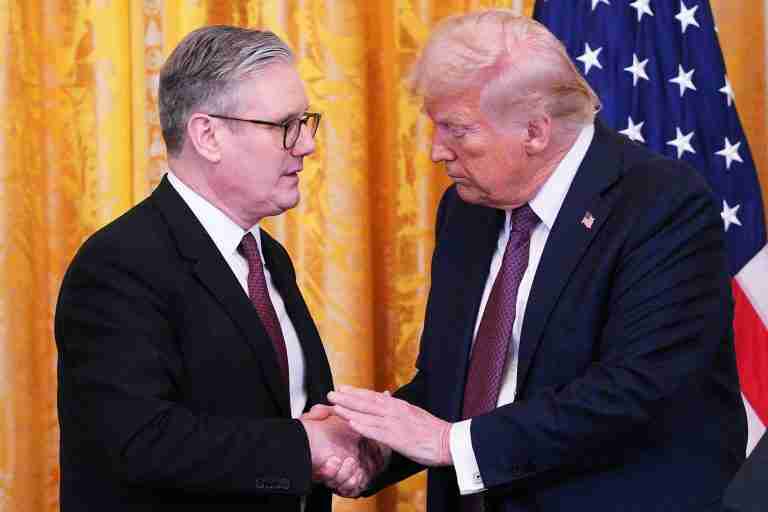
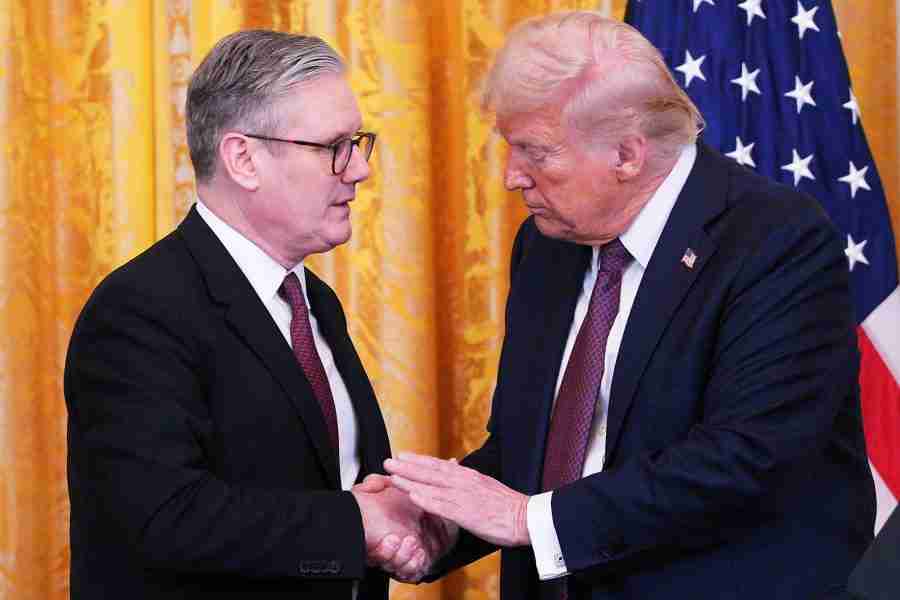
British Prime Minister Keir Starmer and U.S. President Donald Trump shake hands during a joint press conference in the East Room at the White House, February 27, 2025 in Washington, D.C., U.S. Carl Court/Pool via REUTERS/File Photo
International news via Reuters:
The United States and Britain will announce a deal to lower tariffs on some goods on Thursday, the first such agreement since U.S. President Donald Trump sparked a global trade war with universal levies.
In posts on Truth Social, Trump said he would hold an Oval Office news conference at 10 a.m. EDT (1400 GMT) on Thursday about a “full and comprehensive” trade agreement with Britain.
Prime Minister Keir Starmer, who describes the U.S. as an indispensable ally, is due to provide an update later on Thursday. The deal is likely to be narrow, with Britain securing lower tariffs on cars and steel, the two sectors hardest hit.
“Because of our long time history and allegiance together, it is a great honor to have the United Kingdom as our FIRST announcement,” Trump said. “Many other deals, which are in serious stages of negotiation, to follow!”
The United States has been under pressure from investors to strike deals to de-escalate its tariff war after Trump’s often chaotic policymaking upended global trade with friends and foe alike, threatening to stoke inflation and start a recession.
Top U.S. officials have engaged in a flurry of meetings with trading partners since the president on April 2 imposed a 10% tariff on most countries, along with higher tariff rates for many trading partners that were then suspended for 90 days.
The U.S. has also imposed 25% tariffs on autos, steel and aluminium, 25% tariffs on Canada and Mexico, and 145% tariffs on China. U.S. and Chinese officials are due to hold talks in Switzerland on Saturday.
Starmer, who has struggled in government since he was elected last July with his centre-left Labour Party, has struck up a warm relationship with Trump and his government will celebrate becoming the first country to agree a deal.
Britain’s car industry exports luxury brands to the U.S. and the 25% tariffs had hit the industry hard. Jaguar Land Rover paused shipments of its cars to the U.S. for a month while it considered how to mitigate the impact. Shares in Aston Martin, which said it would split the cost of tariffs with its customers and limit shipments to the U.S., rose 8% on Thursday.
NARROW SCOPE
A British official had said that the scope of any agreement was likely to be narrow, with Britain expected to secure lower tariffs on a tranche of steel and autos exports.
In return, Britain is likely to agree to lower its own tariffs on U.S. cars and cut a digital sales tax that affects U.S. tech giants.
It had refused to lower its food standards, which are closely aligned with the European Union, however Britain’s farming trade union has said that some U.S. producers do meet British standards by not using growth hormones or antimicrobial washes, and could be given greater market access.
Starmer’s government has been walking a tightrope on trade, seeking as an independent country after Brexit to build new ties with the U.S., China and the EU without moving so far towards one bloc that it angers the others.
There are also political threats on the domestic front.
Polling shows the government remains deeply unpopular after it cut support for pensioner’s energy bills and hiked taxes on households and companies, making any move to cut taxes on multi-national tech companies a big risk.
POLITICAL RISK
Britain’s digital service tax, levied at 2% of UK revenue for online marketplaces, search engines and social media platforms, was introduced in 2020 in response to an outcry about tax avoidance by big tech.
It was expected to raise about 800 million pounds ($1.1 billion) this year, with more than 90% coming from five big tech firms, according to a 2023 report by lawmakers.
The status of the 10% “baseline” tariff imposed by Trump on most countries including Britain, or any threatened tariffs on the pharmaceutical industry, was unclear.
Parliament has said that Britain exported 7.2 billion pounds ($9.6 billion) worth of medicinal and pharmaceutical products to the U.S. in the year to September 2024, the second largest sector behind cars.
Economists and one FTSE 100 chief executive said the immediate impact of a tariff deal was likely to be limited for Britain but that trade agreements in general – it struck a free trade agreement with India earlier this week – would help to produce growth in the long run.
“The American, Indian and other deals we can do will be really important to the long-term economic health of the UK but don’t expect them to result in overnight euphoria,” the CEO said, speaking on the condition of anonymity.
JPMorgan economist Allan Monks said the upside would be limited if the 10% tariff stayed in place.
“With the UK having broadly balanced goods trade with the U.S., a reasonably good political relationship, no real threat of retaliation from Westminster and extensive bilateral negotiations having taken place, it is not clear where the UK can go from here,” he said.
Additional reporting by James Davey and Paul Sandle; writing by Kate Holton; Editing by Toby Chopra
China is Russia’s biggest trading partner and has thrown Moscow an economic lifeline
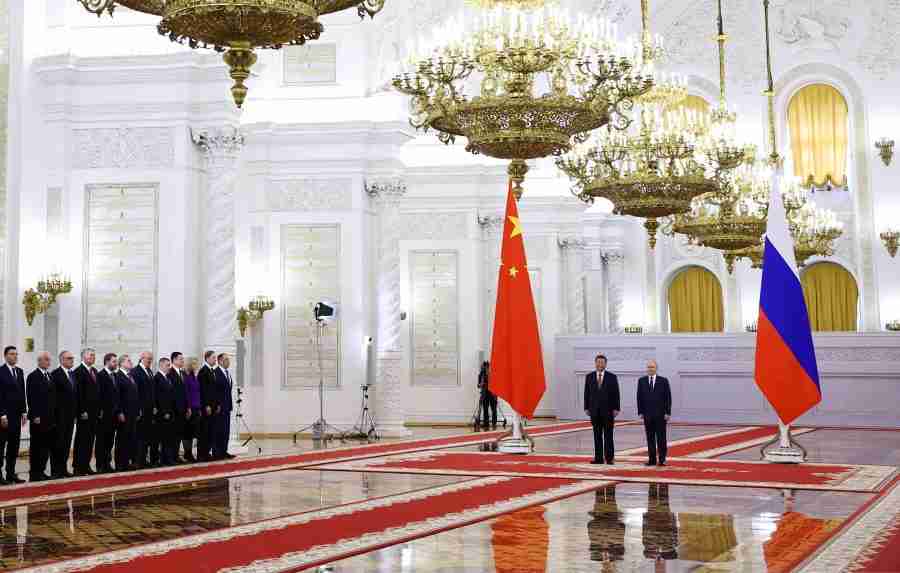
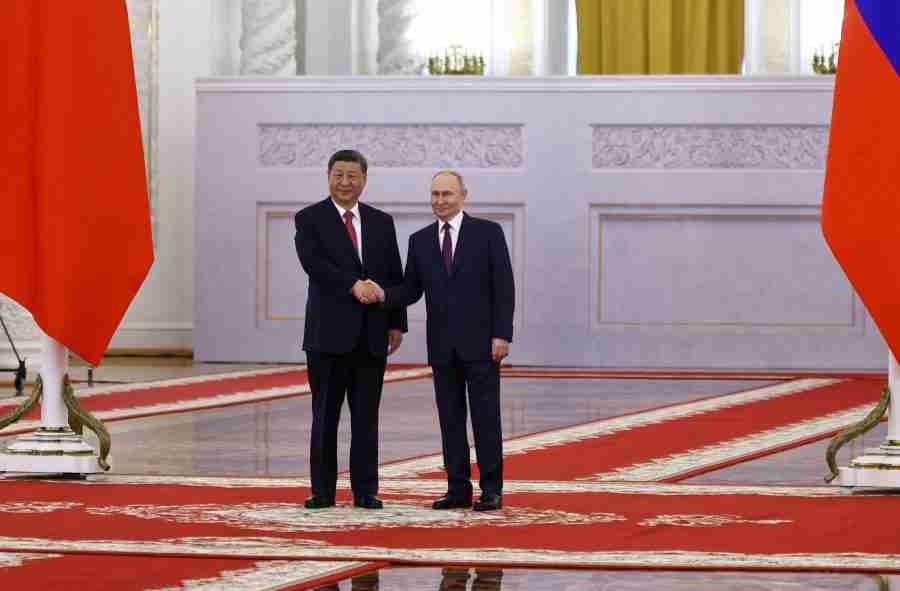
Members of the delegations, led by Russian President Vladimir Putin and Chinese President Xi Jinping, attend a welcoming ceremony before their talks at the Kremlin in Moscow, Russia, May 8, 2025. REUTERS/Evgenia Novozhenina/Pool
International news via Reuters:
Russian President Vladimir Putin thanked Chinese President Xi Jinping for joining celebrations to mark 80 years since the “sacred” victory over Adolf Hitler in World War Two, and said the two countries stood together now against “neo-Nazism”.
Xi’s presence at this week’s anniversary celebrations provides an important boost for the Kremlin leader, who has portrayed his war in Ukraine as a struggle against modern-day Nazis from the start.
Ukraine and its allies reject that characterisation as a grotesque falsehood, accusing Moscow of conducting an imperial-style invasion.
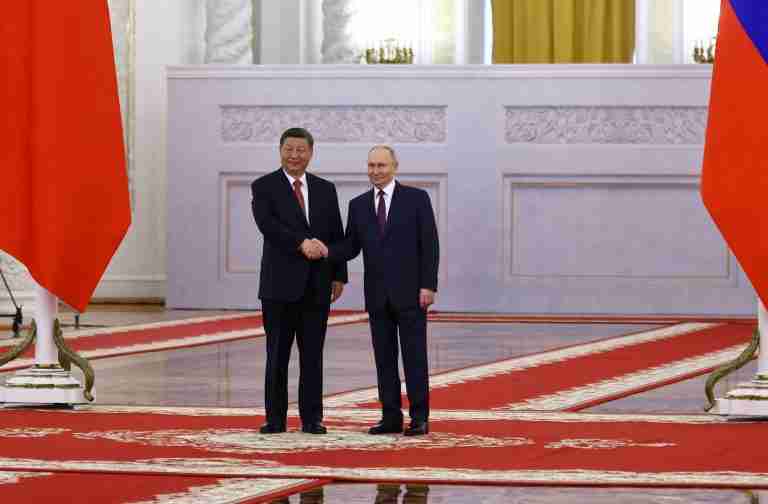
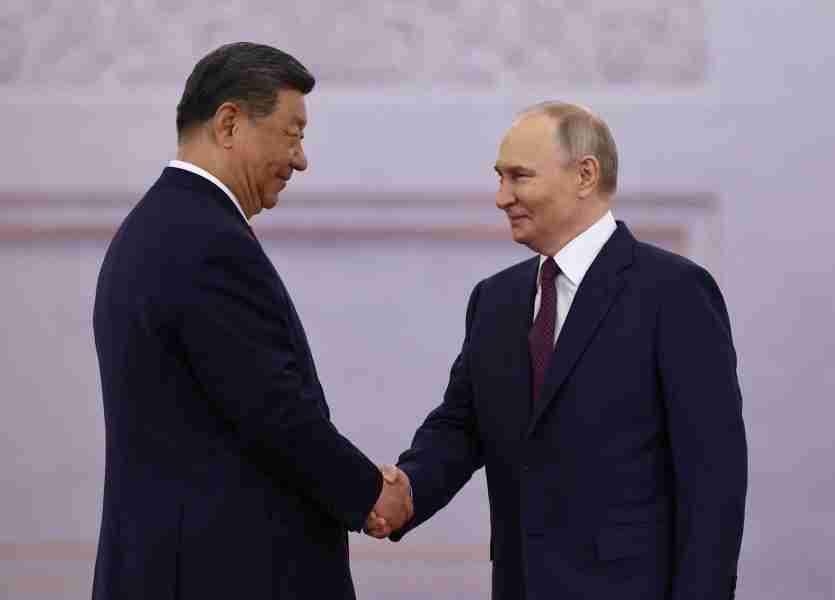
Russian President Vladimir Putin shakes hands with his Chinese counterpart Xi Jinping during a welcoming ceremony before their talks at the Kremlin in Moscow, Russia, May 8, 2025. REUTERS/Evgenia Novozhenina/Pool
“The victory over fascism, achieved at the cost of enormous sacrifices, is of lasting significance,” Putin told Xi on Thursday.
“Together with our Chinese friends, we firmly stand guard over historical truth, protect the memory of the events of the war years, and counteract modern manifestations of neo-Nazism and militarism.”
Xi said the two countries, as world powers and permanent members of the U.N. Security Council, would work together to counter “unilateralism and bullying” – an implied reference to the United States.
He said they would “jointly promote the correct view of the history of World War Two, safeguard the authority and status of the United Nations, resolutely defend the rights and interests of China, Russia and the vast majority of developing countries, and work together to promote an equal, orderly, multipolar, and inclusive economic globalisation”.
The two men spoke after approaching each other along a red carpet from opposite ends of one of the Kremlin’s most opulent halls and shaking hands in front of the cameras. Each greeted the other as “dear friend”.
POWERFUL GUEST
Xi is the most powerful of more than two dozen foreign leaders who are visiting Moscow this week to mark Thursday’s 80th anniversary of the end of World War Two – a celebration of huge significance for Putin.
Domestically, it offers him a chance to rally Russians in remembrance of a historic feat that is central to the country’s national identity. The Soviet Union lost 27 million people in World War Two, including many millions in Ukraine, which was also devastated.
On the world stage, Putin aims to cast himself alongside Xi as a defender of the international order, and to demonstrate that years of Western sanctions have failed to isolate Russia.
Putin last week announced a unilateral three-day ceasefire in the war with Ukraine, beginning on Thursday. Ukraine has not committed to abide by it, calling it a ruse by Putin to create the impression he wants to end the war. Instead, it has declared its willingness to join a ceasefire lasting at least 30 days.
Both countries are under pressure from U.S. President Donald Trump to reach a peace deal, and Washington has threatened repeatedly to walk away from talks unless there is clear progress.
Ukraine targeted Moscow with drones for three days earlier this week, but the skies above the capital were calm on Thursday. With so many foreign leaders present, any attacks during the May 9 events could embarrass Putin and would likely draw a tough response from Moscow.
A Ukrainian military spokesperson told Reuters that Russian troops had continued to conduct assaults in several areas on the eastern front, despite the ceasefire. The air force said Russian aircraft had launched guided bombs on the Sumy region of northern Ukraine three times.
But the air force also said there had been no Russian missiles or drones in Ukrainian airspace since the Kremlin-sponsored ceasefire kicked in.
Russian President Vladimir Putin shakes hands with his Chinese counterpart Xi Jinping during a welcoming ceremony before their talks at the Kremlin in Moscow, Russia, May 8, 2025. REUTERS/Evgenia Novozhenina/Pool
Chinese troops will take part in Friday’s military parade on Red Square, the centrepiece of the commemorations. Ukraine’s Foreign Ministry on Tuesday urged countries not to send their militaries to participate, saying it would go against some countries’ declared neutrality in the war.
Xi has called for talks to end the conflict in Ukraine and has accused the U.S. of stoking it with weapons supplies to Kyiv. Ukrainian President Volodymyr Zelenskiy has in the past urged him to try to persuade Putin to halt the war.
Xi, whose country is locked in a tariff war with the United States, is expected to sign numerous agreements to deepen the “no limits” strategic partnership that Russia and China signed in 2022, less than three weeks before Putin sent his army into Ukraine.
China is Russia’s biggest trading partner and has thrown Moscow an economic lifeline that has helped it navigate Western sanctions. China buys more Russian oil and gas than any other country.
Reporting by Dmitry Antonov in Moscow, Kyiv and Beijing newsroom and Maxim Rodionov, Filipp Lebedev and Alexander Marrow in London, writing by Mark Trevelyan
Foreigners accounted for half of the bloc’s labour force growth in the past three years
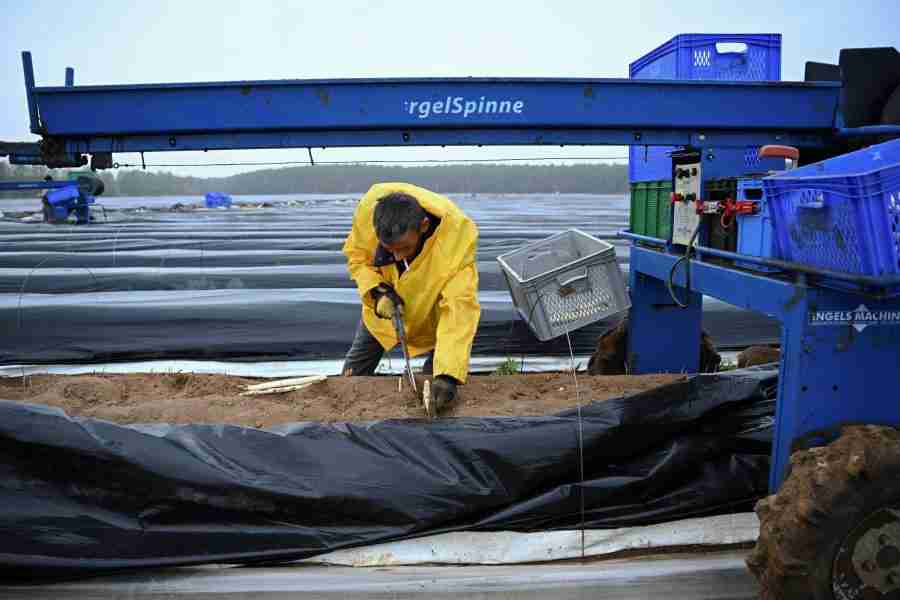
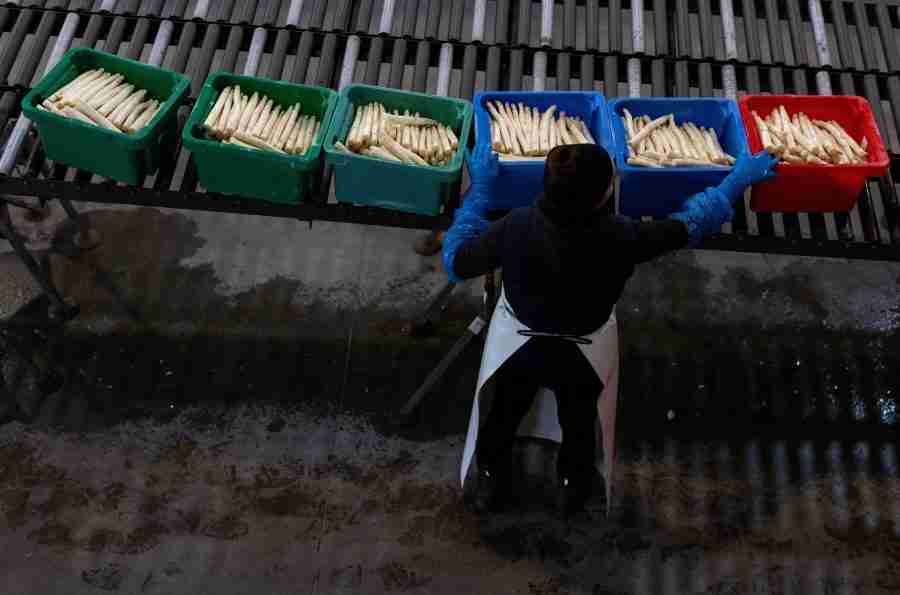
FILE PHOTO: A worker harvests white asparagus from a field in Salzbrunn near Beelitz, Germany, April 18, 2025. REUTERS/Annegret Hilse/File Photo
International news via Reuters:
Foreign workers accounted for much of the euro zone’s economic growth since the pandemic and could help the bloc overcome the economic constraints of an ageing and shrinking labour market, a European Central Bank study concluded on Thursday.
Foreigners accounted for half of the bloc’s labour force growth in the past three years, helping to alleviate labour shortages and starting to make a greater contribution in higher skills jobs, too, as their education levels are improving, the ECB said in a blog post.
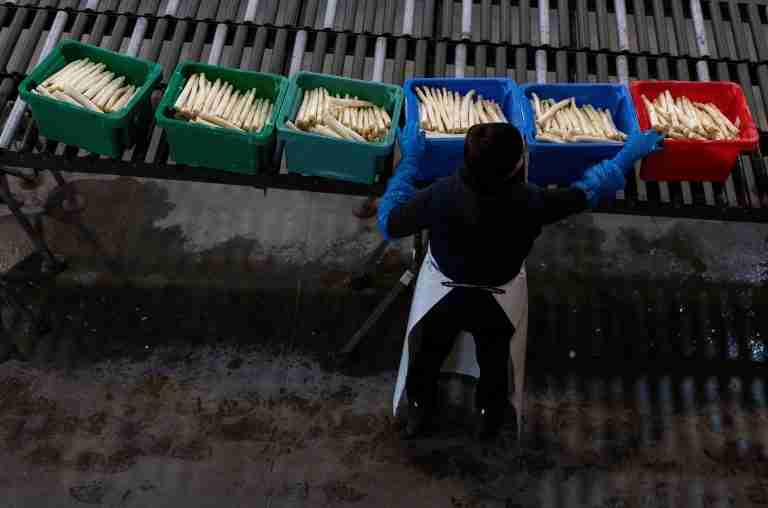
FILE PHOTO: A worker moves baskets with assorted white asparagus in Schaepe near Beelitz, Germany, April 3, 2024. REUTERS/Lisi Niesner/File Photo
“The influx of foreign workers in recent years has secured a robust growth in the euro area labour force, which has somewhat offset the negative demographic trends,” the blog post, authored by some of the ECB’s most senior economists, argued.
The ECB’s analysis runs counter to the political trends in much of Europe where parties seeking to cut immigration have seen a surge in voter support.
As the 20 nation bloc’s population continues to age and birth rates remain low, the labour force and thus economic growth is constrained, an issue foreign workers could help to address, the ECB blog added.
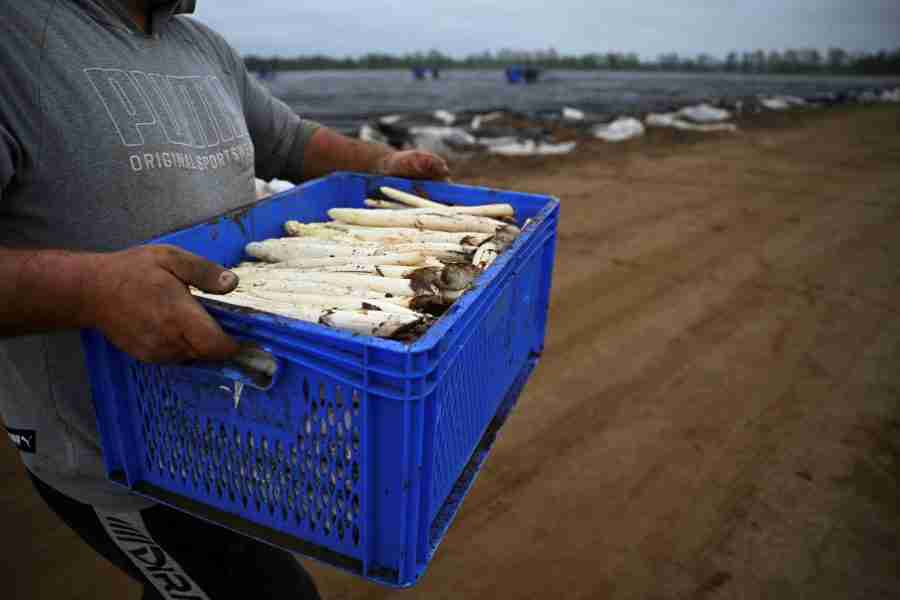
FILE PHOTO: A worker carries a box of freshly harvested white asparagus from a field in Salzbrunn near Beelitz, Germany, April 18, 2025. REUTERS/Annegret Hilse/File Photo
Among the euro zone’s biggest economies, an influx of foreign workers made key contributions to labour force growth in places like Germany and Spain, while in France and the Netherlands, the contribution was notable but at a lower level.
In Italy, however, which has a relatively low labour participation rate, a greater use of domestic labour helped the economy, the ECB concluded.
While there has been a notable rise in foreign workers, unemployment among them has also declined and this is primarily due to improving education levels, the ECB added.
Reporting by Balazs Koranyi; Editing by Toby Chopra
The Saudi partnership with the United States remains central to its security
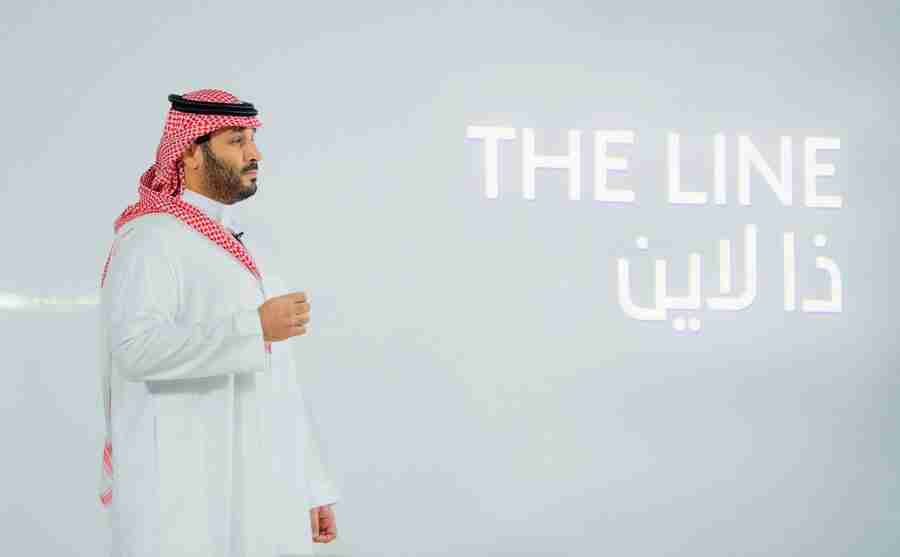
FILE PHOTO: Saudi Crown Prince Mohammed Bin Salman announces a zero-carbon city called “The Line” to be built at NEOM in northwestern Saudi Arabia, January 10, 2021. Bandar Algaloud/Courtesy of Saudi Royal Court/Handout via REUTERS
International news via Reuters:
Saudi Arabia has held off formally joining the BRICS bloc of nations despite attending a meeting in Brazil last week, two sources said, finessing an issue that could upset Washington as Riyadh seeks to seal deals with its U.S. ally.
The issue of BRICS membership has been diplomatically sensitive for Saudi Arabia since it was first invited to join in 2023, and remains so with President Donald Trump due to visit next week and Riyadh negotiating nuclear and technology deals.
BRICS, founded as a grouping of Brazil, Russia, India, China and South Africa to counter Western dominance of the world order, has grown in recent years to include emerging economies such as the United Arab Emirates, Egypt and Indonesia.
But while the BRICS website shows Saudi Arabia – the world’s largest oil exporter – as a member, it has yet to join, according to the two sources, both with direct knowledge of Saudi policy.
Saudi Arabia’s government communications office did not immediately respond to a request for comment.
Brazil’s foreign ministry referred Reuters to the Saudi government when asked about the kingdom’s listed status as a member on the website. Brazil is currently presiding over BRICS.
Riyadh does not want to risk U.S. anger as negotiations are underway with Washington, one of the sources and a diplomat said.
Saudi Arabia sent its deputy foreign minister to the April 29 meeting in Rio de Janeiro, where ministers from the fast-expanding bloc failed to agree a joint communique.
The kingdom’s ambivalence about BRICS membership lays bare its high-stakes balancing act between China, its biggest oil export customer, and Washington, its indispensable security and technology partner – a tightrope walk made ever more precarious by the deepening U.S.-Chinese divide.
“The Saudis still see tons of value in engaging with BRICS and its member states. They will keep double-dipping – or multi-dipping – with global partnerships as long as they can,” said Robert Mogielnicki, senior resident scholar at the Arab Gulf States Institute in Washington.
“I think the Saudi calculation is that what they may be able to get out of the U.S. outweighs what they could get from BRICS membership, at least over the short term.”
In January, Trump demanded that BRICS commit to not creating a new currency or supporting another currency that would replace the U.S. dollar, or face 100% tariffs against BRICS nations.
SEEKING ALLIES
While the kingdom still favors its historic ally the United States, it is also seeking to nurture trade ties with China, the largest importer of Saudi crude.
In February, Saudi Arabia exported goods worth 15.2 billion riyals ($4.05 billion) to China, marking a 20.6% increase from a year earlier, when trade amounted to 12.6 billion riyals, data from the Observatory of Economic Complexity show. Over the past five years, trade has grown at an annualised rate of 50.3%.
Total Chinese investment and construction contracts in Saudi Arabia between 2005 and mid-2024 reached nearly $71 billion, according to the China Global Investment Tracker, reflecting Beijing’s growing role in the kingdom’s economic transformation.
The Saudi partnership with the United States remains central to its security, investment and technology ambitions, even as it expands relations with rival powers like China and Russia.
The U.S. is poised to offer Saudi Arabia an arms package worth well over $100 billion, sources told Reuters last month, saying the proposal was being lined up for announcement during Trump’s visit.
BRICS has sought to shift away from the dollar into other currencies. But a study by the Atlantic Council’s GeoEconomics Center last year showed the greenback remains the world’s primary reserve currency, and neither the euro nor the BRICS countries have managed to reduce global reliance on the dollar.
“While BRICS is a useful forum for airing grievances over American behaviour, it is not yet a body coherent enough to provide public goods on key issues like currency cooperation, security, or economic integration,” said Steffen Hertog, associate professor in comparative politics at the London School of Economics.
“Saudi feels like they have the leverage and they are enjoying the position,” said Saudi analyst Aziz Alghashian.
“They see it that the United States is still the main actor, but there are others that could also provide utility,” he added.
($1 = 3.7509 riyals)
Reporting by Pesha Magid in Riyad, Maha El Dahan and Manya Saini in Dubai; additional reporting by Lisandra Paraguassu in Brasilia; editing by Tom Perry and Mark Heinrich
India revoked most of its visas that have been issued to Pakistani nationals
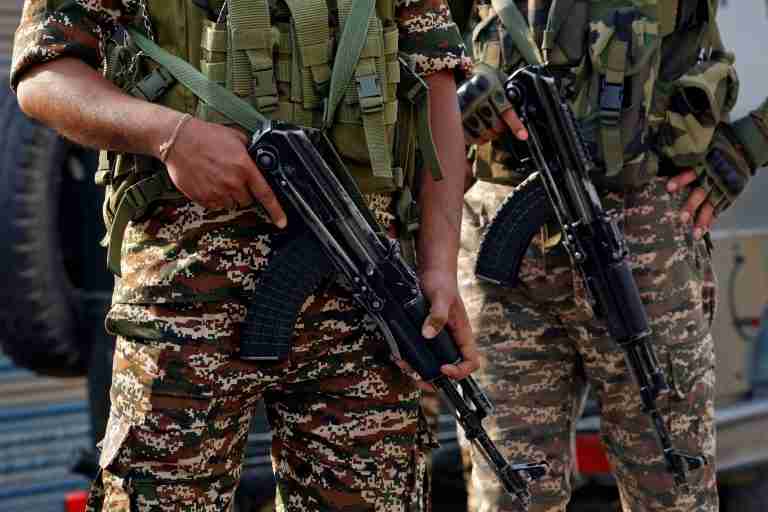
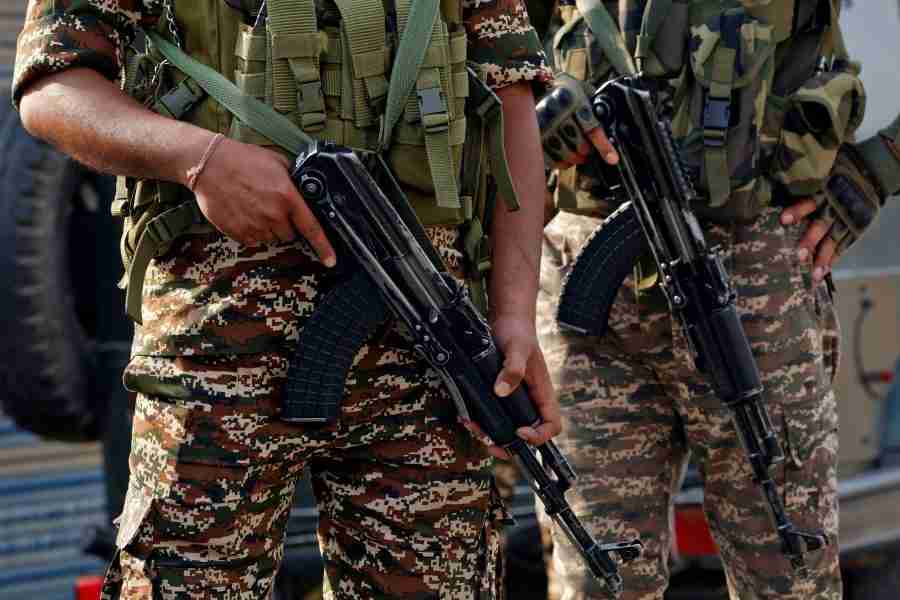
Indian security force personnel stand guard near the site of a fighter jet crash in Wuyan in India-administered Kashmir’s Pulwama district May 7, 2025. REUTERS/Sharafat Ali
International news via Reuters:
India struck nine Pakistani sites on Wednesday that it said comprised “terrorist infrastructure”, two weeks after 26 people were killed in an attack in Indian Kashmir, which New Delhi blamed Islamabad for.
Islamabad says six locations were targeted and eight people killed.
As the nuclear-armed rivals, who have fought three wars in the past, intensify firing and shelling across their de-facto border in Kashmir, here is a chronology of major military and diplomatic escalations in their troubled relationship since 1999.
May–July 1999:
India and Pakistan fight an undeclared war in the Kargil region of Kashmir after Pakistani army-backed irregulars occupy Indian posts on the Line of Control (LoC) or the ceasefire line. India pushes back after intense fighting. The U.S. pressures Pakistan to withdraw.
December 2001:
Heavily armed attackers target India’s parliament building in New Delhi, killing nine people. India blames Pakistan-based Islamist groups Jaish-e-Mohammed and Lashkar-e-Taiba. The two countries come to the brink of a fourth war.
November 2008:
Ten heavily armed attackers target major landmarks across Mumbai, including two luxury hotels, a Jewish centre and the main train station, killing 166 people. India pauses all dialogue with Pakistan, resuming them briefly years later under a structured peace process.
January 2016:
Attackers disguised as soldiers storm an Indian Air Force base near the Pakistan border, exchanging fire with Indian forces who, backed by tanks and helicopters, battle for more than 15 hours before wresting back control of the compound.
All five assailants and at least two guards are killed in the attack.
India says the attackers came from Pakistan, while Pakistani authorities condemned the raid. Peace talks, briefly revived in 2015, stall again.
September 2016:
Eighteen Indian soldiers are killed in an attack on an army base in Uri in Indian Kashmir. India blames Pakistan for the attack and responds with “surgical strikes” across the LoC on what it calls terrorist launchpads.
Pakistan denies that any incursion had occurred on its territory.
February 2019:
A suicide bomber kills 40 Indian paramilitary police in Kashmir. India conducts air strikes in Balakot, Pakistan.
Pakistan responds with air strikes of its own and shoots down an Indian aircraft. India also claims to have shot down a Pakistan plane but this was not confirmed. The standoff de-escalates following international pressure.
August 2019:
India revokes Kashmir’s special status, scrapping a constitutional provision that allowed the state of Jammu and Kashmir to make its own laws. Pakistan downgrades diplomatic ties and suspends trade.
April 2025:
Twenty-six men are killed after Islamist assailants target Hindu tourists in Indian Kashmir. India blames Pakistan-backed groups; Pakistan denies involvement and calls for a neutral probe.
India suspends the 1960 Indus Waters Treaty that regulates water-sharing from the Indus river and its tributaries, while Pakistan suspends all trade with India including through third countries.
Both countries close airspace to each others’ airlines and India revokes most visas issued to Pakistani nationals.
Complied by Surbhi Misra; Editing by YP Rajesh and Raju Gopalakrishnan
The 17th Caribbean Renewable Energy Forum runs from the 7th-9th of this month
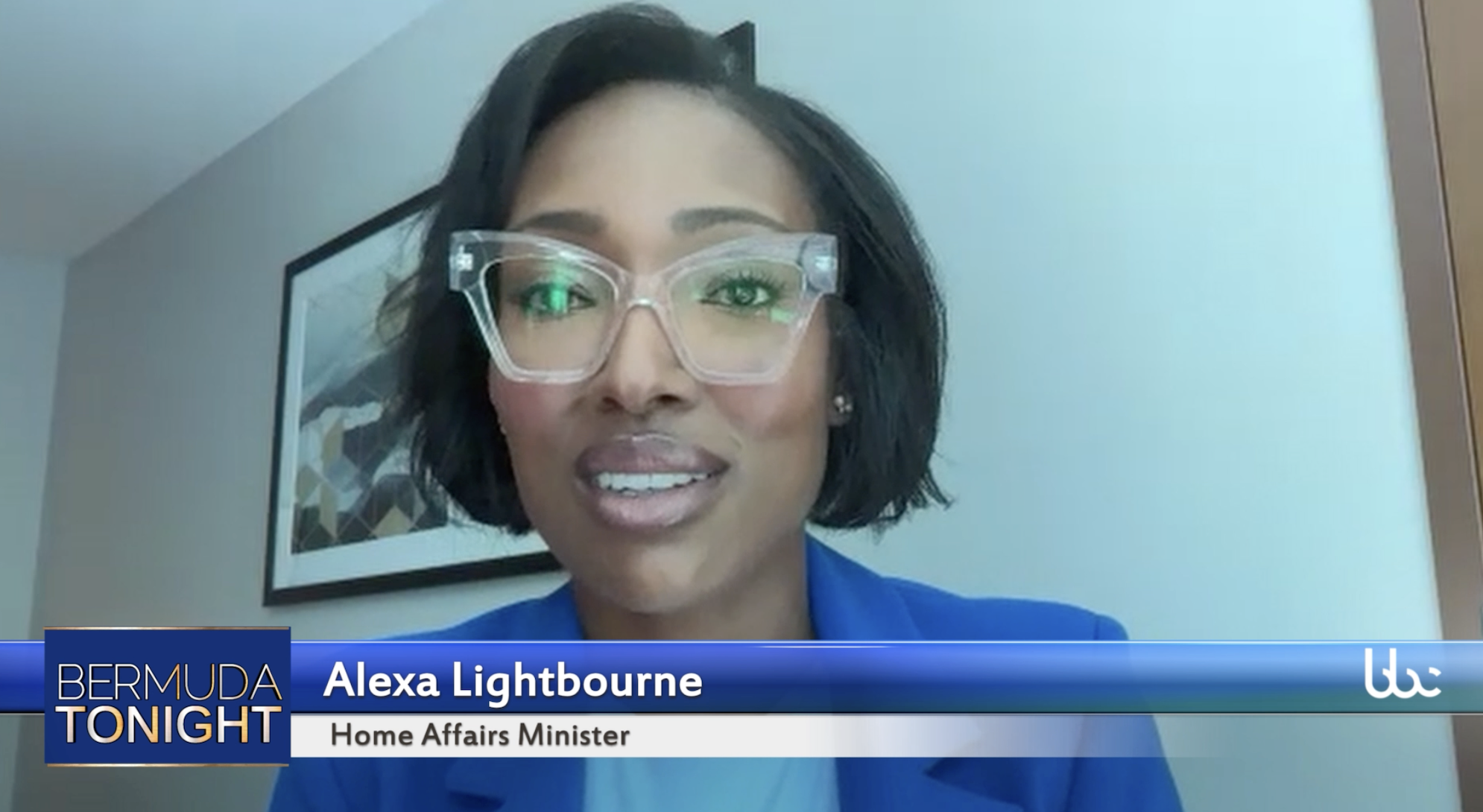
Clean energy is a hot button issue, globally—especially in the Caribbean region. Bermuda joins island nations and territories to our south in a meeting of the minds… This week’s Caribbean Renewable Energy Forum in Miami, Florida brings together policymakers, developers, and investors across the energy, climate, finance and technology sectors.
Minister of Home Affairs Alexa Lightbourne is in attendance, and says that she looks forward to sharing knowledge with regional government ministers.
Speaking with Bermuda Broadcasting on the first day of the event, Minister Lightbourne also shared what’s coming down the proverbial pipeline for Bermuda with regard to renewable energy.
The Ministry of Education agreed to a near $1million increase to their budget this year which includes costs of travel, accommodation insurance and printing/design
Overseas consultants are costing the taxpayer 2.5-million this year with the ongoing public education reform.
However, Innovation Unit have pointed to ‘capability gaps’ in the Education Reform Unit, and that the local reform body needs “more not less support”.
I.U. also states that each of the Signature Transformation Teams has had instability or changes in leadership.
During a post-budget briefing yesterday, Education Minister Senator Crystal Caesar was pressed by media on their progress in implementing a new curriculum as part of wider education reform on the island – a process which began in 2020.
Innovation Unit Australia and New Zealand, the company hired by the government to lead public education reform, saw their budget increased substantially for this year to $2.5million – up from $1.6 million last year.
Since starting their consultancy in March 2020, Innovation Unit will have been paid more than $8.3 million by the end of this year.
Bermuda Broadcasting asked why such a significant increase to the Innovation Unit’s contract to justify the revised fee.
Minister of Education, Senator Crystal Caesar told media during a post-budget briefing, “It was what was specifically called for when the contract negotiations happened at that time.
“We needed their services and that was what was negotiated so, that we could get value for money.”
In I.U.’s agreed statement of work for the period January to December this year, they noted,“the IU has consistently been asked to undertake more delivery work than proposed.
“This proposal considers an approach that focuses more heavily on preparing the system to be able to govern, lead and deliver continuing transformation at the proposed date for the Educational Authority to be fully operational.”
The development and implementation of an Education Authority was priced at $69,500.
However, that figure pales in comparison to the single highest line item – $523,000 for travel, accommodation insurance, design and printing costs, none of which have previously been paid for by the Government.
The IU also will receive ‘a small increase’ to day rates for each team member.
These rates, they claim, are still that of a registered charity and significantly lower than that of a commercial consulting agency.
Listing contextual factors, the I.U. explained, “An Education Reform Unit that, whilst growing, has not been at full capacity or stability since its inception, has continued to have capability gaps and has new members that have had little or nothing to do with reform to date and are at the stage of needing more not less support.”
Furthermore, they noted, “no school is yet to complete a full cycle of transformation and each of the Signature Transformation Teams has had instability or changes in leadership.”
The other highest costs of the agreement are attached to Parish Primary School Transformation at just over $450,000, Signature school transformation at $343,000 and Project Management at $290,000.
The IU agreement also lists detailed objectives to reach within the next two years with continued sustainability.
The PLP platform initiative said it aims to transition away from overseas consultants and for Bermudian educators to fill those roles in future – an objective the Ministry states it intends to work towards.
Meantime, the Education Reform Unit has facilitated a new course with Middle and senior school teachers on develop the new Senior Seminar course for Year 9 students to help prepare them for senior education teaching a blend of hard and soft skills.
Education Reform Team Leader Lisa DeSilva recently said, “This initiative, still a work in progress, reflects a shared commitment with teachers and school leaders to provide students with a strong foundation of transferable skills that support both academic success and personal growth.”
The Education Reform is considered a major overhaul of the public schools system including the consolidation of primary schools, one per parish and three senior school signature schools plus a school for exceptionalities.
For the full ‘Education Reform in Bermuda’ agreement, view below:
Harness Racing: Bermudian takes 3rd in Pace Class in Indiana
Kiwon Waldron made his return to the sulky at Harrah’s Hoosier Park in Indiana, participating in a busy schedule of qualifying races across both the Trot and Pace disciplines, as well as a regular race.
Waldron participated in Race 9, in the Pace Class. Driving Miki’s Big Guy, he secured a solid third-place finish, crossing the line in 1 minute, 54 and two-fifths of a second.
Waldron’s return to racing at Hoosier Park saw him gain valuable experience across a range of horses and classes, marking a positive step back into competitive action.
800m: Middle-distance runner Shayla Cann raced to a PB of 2:08:58 to take gold
Shayla Cann spearheaded a night of impressive performances for the Elon University Women’s Track and Field team at the Duke Twilight meet, held at the Morris Williams Stadium. Several personal bests were shattered as the Phoenix athletes shone brightly.
In the highly competitive 800-meters event, Cann, etched her name into the record books with new personal best time. Cann led the Elon charge, crossing the finish line in a blistering 2 minutes and 8.58 seconds.
This remarkable time not only secured a strong finish in the event but also stands as the second-fastest 800-meter performance in the history of the Elon University program.
To provide the best experiences, we use technologies like cookies to store and/or access device information. Consenting to these technologies will allow us to process data such as browsing behavior or unique IDs on this site. Not consenting or withdrawing consent, may adversely affect certain features and functions.
Functional
Always active
The technical storage or access is strictly necessary for the legitimate purpose of enabling the use of a specific service explicitly requested by the subscriber or user, or for the sole purpose of carrying out the transmission of a communication over an electronic communications network.
Preferences
The technical storage or access is necessary for the legitimate purpose of storing preferences that are not requested by the subscriber or user.
Statistics
The technical storage or access that is used exclusively for statistical purposes.The technical storage or access that is used exclusively for anonymous statistical purposes. Without a subpoena, voluntary compliance on the part of your Internet Service Provider, or additional records from a third party, information stored or retrieved for this purpose alone cannot usually be used to identify you.
Marketing
The technical storage or access is required to create user profiles to send advertising, or to track the user on a website or across several websites for similar marketing purposes.