
Government cites impact of “collective voices”; local shipper says “we remain cautious”
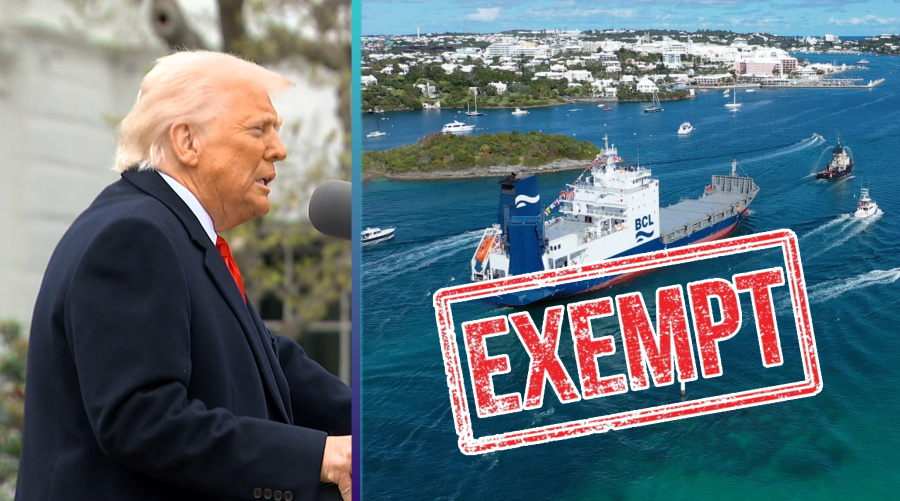
The cargo ships serving Bermuda are too small to be affected by the US port fees being implemented by the Trump Administration.
The MV Oleander, the Bermuda Islander and the Somers Isle are all far below 55,000 deadweight tons, which is the minimum capacity at which China-built vessels will be subject to fees when entering a US port.
The journey from Bermuda to the US is also shorter than the minimum 2,000 nautical mile voyage on which the new fees would apply.
Today, Premier David Burt stated in a release, “This is a welcome and important outcome for Bermuda and the region, which is the result of direct engagement with the US and collaboration with CARICOM.”
“It shows that when we raise our collective voices through coordinated diplomacy, they can be heard and acted on.”
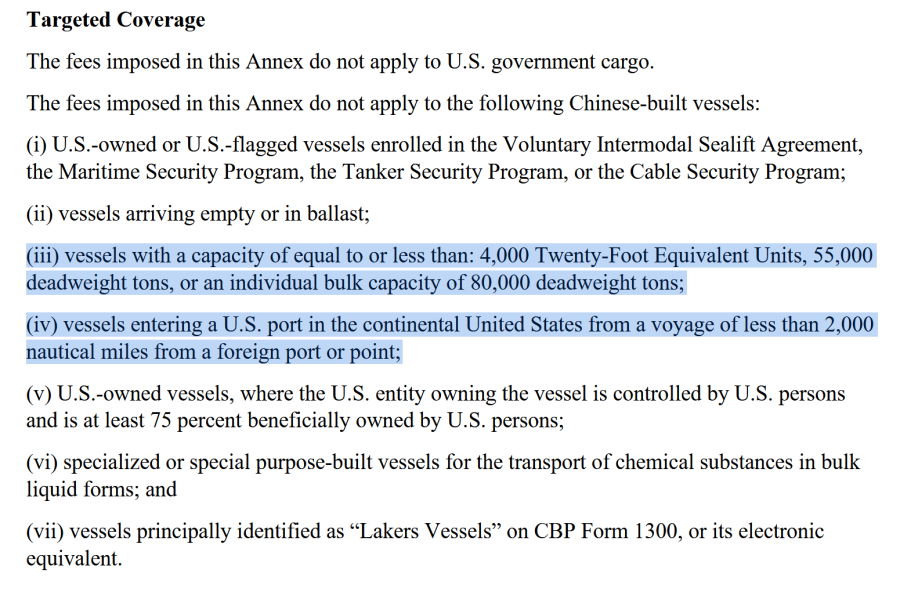
Image: Page 33 of the USTR notice of action shows that Bermuda’s cargo vessels are exempt from the fees on Chinese-built ships (view the full document HERE)
Remaining Cautious
A local shipper says the news is welcome, but they remain cautious.
Howard Pitcher, VP of Operations at Container Ship Management which operates the Somers Isle, said “the executive order from the president could lead to future actions that may harm our trade.”
“At least the immediate threat has been negated.”
“It has been a long process to get here, but it has been encouraging to see the Bermuda Government, fellow shipping line execs, and CARICOM come together to make our voices heard.”
Mr Pitcher and John Wight, Chairman of Bermuda Container Line (BCL), had warned of the potential impact of the original proposed fees at a USTR public hearing in March.
Mr Wight told the USTR officials that the original plan could have tripled shipping costs, and they may have been forced to terminate business operations.
Softened fee structure
The impact of US plans on Bermuda’s transshipment partners remains to be seen, although the fees are far lower than originally planned, and are limited to five total charges per year.
The United States Trade Representative published the revised fee structure on Thursday.
The fees are much less severe than the the USTR’s original proposals, which included fees of up-to $1.5 million on any Chinese-built vessel entering a US port.
The purpose of the USTR’s was to weaken China’s dominance of the global shipbuilding industry, while reviving the industry in the US.
However, there was widespread backlash across the global shipping industry, warning of price increases along the supply chain and job losses.
Premier David Burt told US officials that the proposals as written would have severe consequences for the island.
Of Bermuda’s vessels, only the Oleander was fully constructed in China, although the Somers Isle was partially built in China and completed in Europe.
Government of Bermuda Press Release:
The Government of Bermuda welcomes the decision by the United States Government confirming that proposed shipping fees will not apply to short sea routes or small vessels, including the routes and cargo vessels that supply Bermuda.
This outcome means there is not expected to be any impact on Bermuda’s shipping operations or import costs from this new US rule.
Following this announcement, the Premier, the Hon. E David Burt, JP, MP, said, “This is a welcome and important outcome for Bermuda and the region, which is the result of direct engagement with the US and collaboration with CARICOM. It shows that when we raise our collective voices through coordinated diplomacy, they can be heard and acted on.
“The Government is grateful for the work of our public officers, the Government of Bermuda’s Washington, D.C. Office, Government House, our CARICOM partners, and representatives of Bermuda’s shipping industry. We appreciate the responsiveness of the United States Government on this important issue, and we will continue to work with them on matters of shared interest.
“This decision is a positive step as the Government continues its broader work to ease the cost of living for families and the cost of doing business in Bermuda.”