Families in Bermuda and Canada are dealing with the loss of loved ones on a missing air ambulance. A U.S. marine scientist says the search for the aircraft may take time, but he is confident it will be found
Families in Bermuda and Canada are trying to come to terms with the loss of their loved ones on a medical flight that went missing en route from Bermuda to Boston.
Canadian and U.S. Transport safety investigators have been deployed to determine exactly what happened that led to the disappearance of the Latitude Air Ambulance on October 3rd.
While debris was found some 20 miles south of Nantucket Island, the aircraft is yet to be located. According to an expert in the field, that search may take some time.
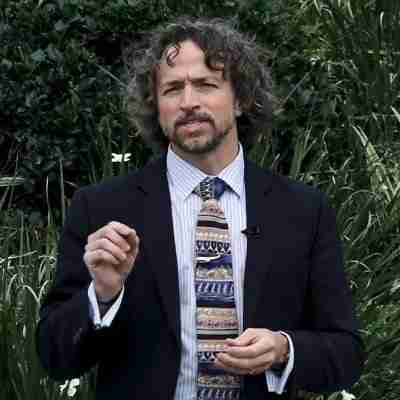
Professor Mark Moline is an oceanographer, Marine Science Director at the University of Delaware, and a developer of underwater robotic tools for research. He recently spoke with our Coastal ABC affiliates, WJAR news.
Over the last decade and a half he has traveled the world looking for aircraft that went missing in World War 2, in the hope of returning fallen soldiers to their families.
“I have a lot of experience looking for aircraft underwater”, he says, “trying to look for their small signature on the seafloor.”
He told Jake Baum at WJAR that the aircraft in this circumstance is relatively small. Multibeam sonar from a ship on the surface, which is what is used to map an ocean floor, would be unlikely to find parts of the aircraft.
Professor Moline said, “they have to use what’s called side scan sonar, or synthetic aperture sonar… either a towed system or an autonomous system close to the seafloor, and [it] pushes sound out to the side of the instrument.”
He adds that the ocean in the area of the search is relatively shallow, but we don’t know how wide it may be.
“…within seconds, you can get miles with an aircraft traveling at those speeds”, he says. “If you don’t have an idea about maybe plus or minus five miles, you have to search an area of 25 square miles.”
“It’s not surprising that it’s going to take a few weeks to find this aircraft.”
The Latitude Air Ambulance flight was lost en route from Bermuda to Boston on Saturday October 3rd.
The aircraft reported electrical difficulties sometime after 1am, after which it descended rapidly, and contact with air traffic control was lost south of Nantucket Island, Massachusetts.
Bermudian patient Marilyn Lavonne Bean and her son Sergio Wayne Lottimore, Canadian Pilot Captain Philip Gregory Childerhose and First Officer Thomas Henry Farquhar, flight nurse Sarah Jane Paton and respiratory therapist Jolene Beth Weir were on the flight, and are presumed to have died.
Professor Mark Moline says he is fairly certain that the investigators will, eventually, be able to find the aircraft and its black box recorder, which may be able to provide answers as to what led to the flight’s descent and disappearance.
“It’s hard to work in the ocean”, he says, “these vast areas, it does take time.”
“I have a high confidence it’s going to be found.”