Butterfield & Vallis CEO says ‘we’re fighting to earn 1-3% net profit margin’
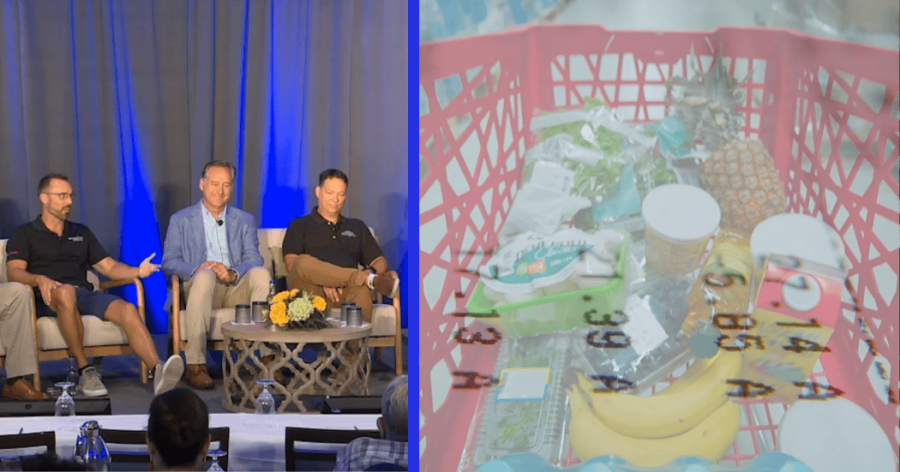
What percentage of a food item’s price is the landed cost on island?
It’s a question that emerged during the Government’s Cost of Living Summit this morning during a panel discussion on Food Security and Affordability.
In his response, Spencer Butterfield, CEO of Butterfield & Vallis revealed: “Roughly 55% of every dollar that we sell is the cost on the East Coast so it’s actually 75% – there’s an additional 20% in getting it here. So, by the time it lands in Bermuda, we’re at about 75% of what we sell.”
He added that it leaves them with 25% to pay other expenses that go toward running a business, of which labour is the largest additional cost.
“There’s a very, very small amount left for us to manage all of those costs,” he said. “At the end of the day, we’re fighting to earn 1 to 3 % net profit margin.”
Without the benefits of economies of scale to get the first cost down from overseas suppliers, Zach Moniz, Manager of the Lindo’s Group of Companies suggested that one solution to lower prices on local shelves for consumers could be to tackle the freight side of imports.
He explained: “The first cost is the price that we’re paying to the supplier abroad or locally. Or, we’d be importing it so then you’ve got the freight, then you have the tax and then you have the markup.
“My opinion would be that you would tackle the freight part of that. We have no leverage on the first cost … we’re too small – we just don’t have any leverage. We’re price takers, we’re not price makers. And if we’re going to try to tackle it anywhere, it has to be on the freight side.”
Mr Moniz added that there are four components that make up the retail price of food items – cost, freight, tax and markup.
“Built into that markup are indirect expenses that go toward running the business … and like Spencer said, we’re dealing in very small percentages of profit.”
For more on this discussion, watch the Cost of Living Summit live stream, here.