Sunday, October 25, 2026
Home Blog Page 101

Bank of England to hold rates for remainder of year despite inflation risks: Reuters poll

The UK economy has remained mostly resilient since then, with little evidence of any spillover from higher energy prices into the broader economy

International News via Reuters:

The Bank of England will leave interest rates unchanged at 3.75% for the rest of the year, according to a strong majority of economists polled by Reuters, clinging to a view they’ve held since the U.S.-Israeli war on Iran began in late February.

The UK economy has remained mostly resilient since then, with little evidence of any spillover from higher energy prices into the broader economy. That has given the central bank room to stay on the sidelines.

But three of the nine Monetary Policy Committee members voted for an immediate rate rise to 4.0% at the July meeting, up from two in the previous meeting.

Inflation likely rose to 2.9% in July from 2.6% in June, further above the BOE’s 2% target, according to a separate Reuters poll ahead of official data due on Wednesday. But in its latest set of quarterly forecasts, the BOE expects inflation to rise above 3% later this year.

Still, nearly 90% of economists polled by Reuters, 56 of 64, expect the Monetary Policy Committee to leave rates unchanged at 3.75% this year, up from 83% last month. Six expected a hike by then, and another two forecast a cut. The poll was conducted August 13-18.

No economist forecast a rate change at the next MPC meeting in September. Financial markets are still pricing in one quarter-point rate rise by year-end.

Elizabeth Martins, UK economist at HSBC, said “a big rebound in energy prices would certainly change things. But the real game changer for the MPC, I think, is around second-round effects.”

Crude oil prices, trading at about $91 a barrel, are still about 25% above pre-war levels as the Strait of Hormuz, a key shipping route for Middle Eastern oil, is still closed.

The most recent set of labour market data showed weak hiring and pay growth within the MPC’s tolerance range, which economists said is likely to keep policymakers on the sidelines for now.

“This data, we think, is in line with the BoE’s read of the labour market – loose and as such a firm barrier to second-round effects from the energy shock,” noted Bruna Skarica, chief UK economist at Morgan Stanley.

“With that, the core of the MPC can continue to signal that the anticipated inflation overshoot stemming from fuel and gas prices is unlikely to extend beyond the policy-relevant (18-24-month) horizon,” she wrote.

Even though inflation is forecast to remain above 2% until late next year, a narrow majority of economists expect at least one cut in Bank Rate by the middle of 2027.

Economic growth will average 1.1% and 1.2% in 2026 and 2027, respectively, before accelerating to 1.5% in 2028, according to the survey.(Other stories from the Reuters global economic poll)

Polling by Aman Kumar Soni and Nushaiba Iqbal; Editing by Hari Kishan, Ross Finley, William Maclean


EU sees Iceland vote as potential boost for enlargement optics

Iceland, a NATO member which already enjoys access to the EU’s single market through ​the European Economic Area, will vote on August 29 on whether to reopen negotiations

International News via Reuters:

European Union officials are hoping a referendum in Iceland on whether to restart membership talks will help boost support within Europe for other less wealthy states to join the bloc, diplomats told Reuters ahead of a public ‌vote this month.

Iceland, a NATO member which already enjoys access to the EU’s single market through ​the European Economic Area, will vote on August 29 on whether to reopen negotiations.

The referendum comes as Europe faces major decisions on enlargement, with Montenegro hoping to join the EU in 2028 and aspiring members Albania, Ukraine and Moldova pushing to make progress on their bids.

Iceland’s referendum is not a vote on membership itself and any deal would require a second referendum. Supporters say membership could help the island address its high living costs, stand up to larger trade partners and withstand shifting geopolitics in the Arctic, such as U.S. President Donald Trump’s designs on Greenland.

A yes vote is not guaranteed. A Gallup poll this month found voters split on restarting talks: 46% said they would vote yes and 46% no, with 8% undecided. Polls show a majority against actually joining the bloc.

BOOST FOR ‘ATTRACTIVENESS OF THE EU’, DIPLOMAT SAYS 

But EU diplomats say that restarting talks with a wealthy country that would be easy to integrate – albeit one with a population of just 400,000 people – could help improve the optics of enlargement among those European citizens who are wary about welcoming new members.

A positive vote in Iceland “would show the attractiveness of the EU in general and thus boost morale in the EU”, said a senior EU diplomat, adding that it “would make it easier for sceptical countries to swallow the accession of Montenegro” — also a country with a small population but with a much lower GDP per capita.

If Iceland joined the bloc, it would have “a positive impact on enlargement as a political tool”, a second EU diplomat said. “There is hesitation on the Western Balkans, Moldova and Ukraine, with Iceland I only see positive aspects … it has a modern economy, it’s dynamic and small,” they said. 

A tandem of the two countries – Iceland and Montenegro – could help overcome potential hurdles in EU members where some voters fear the possible impact of EU enlargement on their economies, officials say. 

“Tying up Iceland with Montenegro, that would probably be more successful – (that) is the perception, at least at this point – than moving Montenegro alone,” said Steven Blockmans, deputy director of the Tallinn-based International Centre for Defence and Security.

A 2025 Eurobarometer poll found 56% of EU citizens are in favour of further EU enlargement, but support varies in different countries across the bloc.

CHANGING GEOPOLITICS

Reykjavik abandoned previous negotiations in 2013 when ​a Eurosceptic government took power, but Russia’s war in Ukraine and Trump’s statements about Greenland have put a spotlight on Iceland’s geostrategic position.

“The erosion of international law and the rules-based international system is a concern for us. Security and defence-related issues also — nobody was talking about that back in 2009 or 2013,” a source familiar with Iceland’s position said.

EU officials have sought to stay out of Iceland’s internal debate. But if Icelanders vote in favour of restarting talks, officials expect the country to make quick progress.    

“It speaks to the growing attractiveness of the EU in a world that is rapidly changing,” EU Enlargement Commissioner Marta Kos told Reuters when asked about the significance of Iceland’s referendum.

“We see that practically all European countries seek accession or closer association to the EU. And it would undoubtedly add to growing momentum for the EU to accept new members.”

FISHERIES WOULD BE TOUGHEST POINT OF NEGOTIATION 

If the “yes” vote wins, Kos said she would expect accession negotiations to take one to two years, with the timing of membership dependent on a second referendum in Iceland and ratification by the EU’s 27 members.

Officials say fisheries – one of the pillars of Iceland’s economy and national identity – is set to be the toughest point of negotiation if talks did restart. 

“The EU has to ask itself, does it want to make fisheries the point that the potential accession of Iceland would break on – which has very limited value in the GDP of the EU, compared to the geopolitical importance of having a country like Iceland join?” said the source familiar with Iceland’s position.

Brussels has signalled openness to compromise, with Kos saying: “Iceland’s unique specificities on fisheries and agriculture are well known.”

“I’m confident that, together with EU member states, we would find creative solutions that respect the sensitivities of both Iceland and our member states,” she said. 

Reporting by Lili Bayer in Brussels and Stine Jacobsen in Copenhagen; Editing by Alison Williams

US judge allows Trump to end thousands of Ethiopians’ deportation protections

The Supreme Court’s ruling, powered by its 6-3 conservative majority, curtailed the ability of judges to review DHS efforts under Trump to end TPS designations for 13 countries that provided humanitarian immigration protection to eligible migrants from those nations

International News via Reuters:

A federal judge on Tuesday allowed U.S. President Donald Trump’s administration to end legal protections granted to over 5,000 Ethiopians that have allowed them to live and work in the United States.

U.S. District Judge Brian Murphy in Boston lifted the last remaining judicial block on the U.S. Department of Homeland Security terminating the Temporary Protected Status designation for individual countries after the U.S. Supreme Court ​in June allowed the administration to end similar protections for thousands of ​people from Haiti and Syria.

The Supreme Court’s ruling, powered by its 6-3 conservative majority, curtailed the ability of judges to review DHS efforts under Trump to end TPS designations for 13 countries that provided humanitarian immigration protection to eligible migrants from those nations.

The plaintiffs did not immediately respond to a request for comment.

James Percival, DHS’s general counsel, in a social media post hailed the decision. “All TPS terminations are in effect!” he wrote.

TPS under federal law is available to people whose home countries have experienced natural disasters, armed conflicts or other extraordinary events. It provides eligible migrants with work authorization and temporary protection from deportation.

Former Democratic President Joe Biden’s administration first granted Ethiopians already in the United States that status beginning in 2022, citing the need to protect the African nation’s citizens from armed conflict and humanitarian suffering.

DHS under former Homeland Security Secretary Kristi Noem announced in December it would end those protections on the grounds that conditions no longer posed a serious threat to Ethiopians returning safely.

At the request of several Ethiopian nationals and the group African Communities Together, Murphy in April blocked DHS’s action, saying it disregarded statutory procedures and provided a “pretextual” rationale for ending the protections.

After the Supreme Court ruled, Murphy issued a new order that continued to temporarily block the end of the Ethiopians’ TPS while he considered whether to continue to halt DHS’s action on grounds that the Supreme Court’s ruling did not address.

Those arguments included that the 1990 statute creating TPS gave only the attorney general authority to extend or terminate the deportation protections, not DHS, which was established later after the September 11, 2001, attacks.

Judges in similar cases involving people from South Sudan, Myanmar and Somalia have rejected that argument in recent days, and Murphy did as well on Tuesday.

He dismissed that and other claims, but he said he would allow the plaintiffs to continue to litigate over whether DHS’s action was motivated by racial or national origin animus in violation of the U.S. Constitution’s Fifth Amendment.

The plaintiffs argued that the administration ignored how dangerous conditions persist in Ethiopia and that the termination of its TPS designation was part of a practice of eliminating deportation protections for people who are non-white and non-European.

Reporting by Nate Raymond in Boston; Editing by Aurora Ellis

Duperreault Fellowship announces 2026 recipient

The Duperreault Fellowship has announced Camily O. Lovell as the recipient of this year’s award.

The Duperreault Fellowship, established in 2004 by the Duperreault family and the former ACE Group, is a scholarship fund that provides financial support for those studying or training to provide substance-use or disorder prevention and intervention services. 

The fellowship will support Ms. Lovell’s doctoral studies in Community Care and Counselling – with a specialisation in Traumatology – at Liberty University in Virginia. Her academic and professional goals include advancing trauma-informed and culturally responsive addiction care, contributing research focused on addiction and recovery in Bermuda, expanding community education and supporting the development of future counselling professionals.

The 2026 award is valued at $25,000 for the upcoming academic terms. As a Duperreault Fellow, Ms. Lovell has committed to continuing her work in Bermuda’s substance use disorder field.

Ms Lovell was selected following a competitive application and interview process. The Committee recognised her sustained commitment to Bermuda’s substance use disorder prevention, treatment and recovery sector, as well as her demonstrated leadership, professional experience, academic preparation and vision for strengthening addiction services in Bermuda.

Ms. Lovell currently serves as Clinical Manager at Pathways Bermuda. Over the past decade, she has worked across a range of Bermuda’s substance use disorder treatment services, including correctional facilities, residential treatment programmes, outpatient care and medication-assisted treatment. Her experience includes individual, family and group counselling, community education, prevention programming, and the development of trauma-informed services.

She is an Internationally Certified Alcohol and Drug Counselor and serves on the Board of Addiction Counsellors. She was also recognized as Bermuda’s 2025 Substance Abuse Counselor of the Year.

Dr Julita Peniston, Chairperson of the Duperreault Fellowship Committee, said: ‘On behalf of the Duperreault Fellowship Committee, I congratulate Camily Lovell on being selected as the 2026 Duperreault Fellow.

‘Ms. Lovell was selected from an extensive group of dedicated candidates committed to supporting individuals navigating substance abuse challenges in Bermuda. She brings deep, sustained experience in the substance use disorder field, proven clinical and organisational leadership and a clear plan to translate her advanced study into benefits for the community.

‘Her work across correctional, residential, and outpatient settings, her leadership at Pathways Bermuda, her professional service, and her commitment to trauma-informed care and development reflect the character, responsibility and community impact the Duperreault Fellowship is intended to support.’

Camily O. Lovell, the 2026 Duperreault Fellow, said: ‘Being selected as a Duperreault Fellow is deeply meaningful to me. It has long been an aspiration of mine to be counted among this community, as I have always held the Fellowship’s commitment to and investment in Bermuda’s recovery community in such high regard. I see this support of my education as a tangible continuation of that commitment, and I am incredibly honoured that they have chosen to invest in my professional development.

‘As I enter the later stages of my doctorate, I am excited about how my continued training and Bermuda-based research can further strengthen the support available to individuals and families seeking recovery, particularly through my role as Clinical Manager at Pathways Bermuda. This Fellowship allows me to deepen my own development while, more importantly, deepening my investment in Bermuda’s recovery community.’

Fresh Air Films announces new date

The City of Hamilton is pleased to announce that Fresh Air Films: Sunset Cinema, originally postponed due to inclement weather, has been rescheduled for Saturday, August 29, 2026, at Albouy’s Point.

Set against the backdrop of Hamilton Harbour, the free outdoor cinema event will feature two blockbuster films under the stars. Families can blast off on an intergalactic adventure with Disney and Pixar’s Elio (rated PG) at 6:00 p.m., before turning up the action with Mission: Impossible – The Final Reckoning (rated PG-13) at 8:30 p.m.

Gates open at 5:00 p.m., and attendees are encouraged to bring blankets, chairs, and friends and family for a memorable evening by the water.

City Senior Events Coordinator Lorna Hayward said, “While we were disappointed to postpone the original June event due to the weather, we’re thrilled to welcome everyone back on August 29. As families prepare for the return to school, Fresh Air Films offers the perfect opportunity to slow down, spend quality time together, and enjoy one last summer evening on the waterfront.”

Admission remains free with proof of purchase from a City business. To gain entry, moviegoers must present a receipt totalling $25 or more from any City of Hamilton business. Receipts dated between May 1 and August 29, 2026, will be accepted. Each receipt permits entry for up to four people, and guests are welcome to remain for both films.

Receipts will also serve as raffle entries, and attendees are asked to write their name and phone number on the back prior to arrival. Guests wishing to participate in raffle draws for both films are encouraged to bring an additional receipt. The first movie’s raffle prize is a flatscreen TV,

while the second movie’s prize is a scenic flight for two with Blue Sky Flights, featuring breathtaking aerial views of Bermuda.

Fresh Air Films is designed not only to provide a free and enjoyable community event, but also to encourage residents and visitors to shop, dine, and support businesses throughout the City. By linking admission to purchases made at Hamilton businesses, the event helps drive economic activity while showcasing the City as a vibrant destination for entertainment and nightlife.

In addition to the films, the evening will include family-friendly entertainment and activities ahead of showtime, including a live game of Kahoot where participants can compete for fantastic prizes.

Food and refreshments will be available for purchase throughout the evening from a variety of vendors, including:

· Hot Dog Delight

· Speciality Cinema

· Blissful Delights

· Ashley’s Lemonade

· Duch Pops

· Sousa’s Spring Rolls

· Big Al’s Jerk Pit

Attendees are also encouraged to support nearby City restaurants and businesses before or during the event.

For additional details, visit www.cityofhamilton.bm.

Family Centre thanks community for Cup Match Tag Day support

Family Centre extends its heartfelt thanks to the volunteers, businesses, donors, community partners and members of the public who helped make the 2026 Family Centre Cup Match Tag Day a success.

This year marked Clarien Bank’s 25th year of sponsoring Family Centre’s Cup Match Tag Day. The charity is deeply grateful to Clarien for its longstanding partnership and continued commitment to strengthening Bermuda’s children, teens and families.

Despite periods of heavy rain on July 29, volunteers across the island demonstrated adaptability and commitment, adjusting to changing weather conditions and continued to collect critical donations throughout the day.

Dr. Sandy De Silva, Executive Director of Family Centre, said, “We were inspired by the commitment of our volunteers. Resilience and adaptability are qualities we work to foster in the children and teens we serve, and on Tag Day our volunteers demonstrated those same qualities in action. We are extremely grateful to every person who gave of their time.”

Family Centre also thanks the 15 businesses that welcomed volunteers and accommodated taggers indoors during the rain.

2026 Tagging Locations included:

· Clarien Bank, Point House

· Butterfield Bank, Front Street

· HSBC Bank, Front Street and Reid Street

· Lindo’s Family Foods, Warwick and Lindo’s Market, Devonshire

· The MarketPlace Somerset, Heron Bay, Modern Mart, and Victoria Street Shopping Centre

· The English Market, Front Street

· Gibbons Company Home Store

· LiveNet

· People’s Pharmacy

· The Phoenix Centre

· Hamilton Pharmacy

Special thanks to Tag Day Station Takeovers by PwC, Deloitte, Government House, and the Bermuda Conference Women’s Missionary Society of the AME Church.

Family Centre is also grateful to the 28 businesses that hosted Cup Match ribbons static stations throughout July:

A.F. Smith; Belvin’s Shelly Bay; Divots, Duty Free Shops at L.F. Wade, Esso City Center; Esso BIU Gas Station; Esso Crawl; Esso Port Royal; Esso St. George’s English Market; Esso Terceira’s North Shore; Esso Terceira’s South Shore Warwick; Esso Middle Road Warwick; Eye Health Clinic; Goslings

Dundonald Street and Front Street; Jazzy Boutique; Mailboxes; Raynor’s Rubis Gas Station; Rubis Boaz Island; Rubis Causeway; Rubis Dowling’s St. George’s; Rubis East Broadway; Rubis Paget Service Station; Rubis Robinson’s Marina; Rubis St John’s Road; Salon Pink; Speciality Inn; and The Snug.

Thank you to Miles Market, John Barritt and Son, and SOL for their in-kind support.

Family Centre also thanks Metal & String, the mother-and-son team of Shae and Ean Welch. After the cancellation of Harbour Nights prevented Family Centre from hosting its planned Cup Match table, the dynamic duo collected Tag Day donations from their vendor table at Somerset Cricket Club throughout the two-day Cup Match holiday. Their generosity is deeply appreciated.

Thania Redman, Family Centre’s Relationship Development Director, said, “Tag Day is truly a community effort. Every volunteer, business, donor and member of the public who contributed played an important part in its success. We also appreciate Family Centre staff, who helped with volunteers, replenished supplies, and filled ribbon orders throughout the campaign. We are incredibly thankful to everyone who continues to support Family Centre’s mission.”

Cup Match Tag Day is Family Centre’s major annual fundraiser and is dedicated in memory of Family Centre founder and former Executive Director, the late Martha Dismont. Funds raised support therapeutic counselling services, therapeutic community youth programmes and collective action initiatives for children, teens and families in Bermuda.

Hannah Collins de la Cruz, Family Centre’s Fund Development Specialist and Cup Match Tag Day Lead stated, “To everyone who volunteered, donated, welcomed us into your business or supported Tag Day in any way, thank you. Your support helps Family Centre continue to create opportunities for healing, hope and connection for generations to come.”

BPS work with overseas law enforcement to detain Filipino national

A 27-year-old woman from the Phillipines residing in Bermuda was brought into police custody

Police have confirmed a 27-year-old Filipino national is in custody following an alert issued by INTERPOL.


A spokesperson for the Bermuda Police Service said he matter is being progressed in close liaison with overseas law enforcement and international policing partners.

Jasmine Patterson tells us what we know so far.

MP joins fellowship founded by former New Zealand PM

Home Affairs Minister Alexa Lightbourne joined the 2026 cohort of the Field Fellowship, a year-long international programme for senior political leaders

Minister of Home Affairs, Alexa N. H. Lightbourne has joined the 2026 cohort of the Field Fellowship, a year-long international programme for senior political leaders founded by former Prime Minister of New Zealand, Dame Jacinda Ardern.

Fellows are identified and invited by the programme, and Minister Lightbourne is the first Minister of the Government of Bermuda to receive the invitation.

Field supports senior political leaders practising empathetic leadership, the approach Dame Jacinda applied as Prime Minister from 2017 to 2023. The fellowship runs for a full year and combines structured development, peer exchange, and direct engagement with senior practitioners in government, public communication, and international affairs.

The 2026 cohort gathered for a retreat over the Cup Match holiday. The cohort comprises 13 women leaders from countries across the Caribbean, Latin America, Europe, and North America. Its members include serving national Ministers, a Deputy Premier and Attorney General, a Deputy Minister of Foreign Affairs, Members of the European Parliament, a Mayor, and former Ministers of Foreign Affairs and of Health. 

The retreat combined facilitated sessions, structured peer exchange, and individual advisory time. The cohort also held a conversation with the Hon. Dr. Michelle Bachelet, former President of Chile and former United Nations High Commissioner for Human Rights. 

Minister Lightbourne’s selection places Bermuda within a working network of governments managing pressures central to the Ministry of Home Affairs’ mandate; household affordability, energy transition, housing, and public trust in institutions. 

Minister Lightbourne said, “Different countries, different politics, and the same dedication to serve people better and prove it in results. I return with working relationships across four regions, and a stronger network of women in government who measure leadership by what reaches people. I thank Dame Jacinda Ardern and the Field team for the invitation.”

Media release supplied by the Government of Bermuda

Bonds, stocks jolted as Middle East tensions shatter market calm

Oil prices were in positive territory for the third consecutive day, with Brent crude hitting its highest since late last month after the latest signals from Washington and Tehran crushed hopes of an imminent end to the conflict

International News via Reuters:

A selloff in U.S. government bonds picked up pace on Tuesday, sending the 30-year Treasury yield to a near two-decade high as fears of an escalation in the Middle East war fuelled inflation worries and pressured stocks.

Oil prices were in positive territory for the third consecutive day, with Brent crude hitting its highest since late last month after the latest signals from Washington and Tehran crushed hopes of an imminent end to the conflict.

The market’s reaction shows that tensions in the Middle East remain a potent source of risk, with a renewed escalation capable of reverberating across oil, bonds, currencies and equities.

It has also shattered the calm after a recent run of soft data in the U.S. eased jitters about rate hikes by the Federal Reserve.

Traders see a 34.6% chance of a hike at the Fed’s September meeting, lower than 48.4% a week ago, according to the CME FedWatch tool.

But “if things unravel and the conflict escalates, a mid-cycle adjustment would be necessary,” said George Bory, chief investment strategist for fixed income at Allspring Global Investments.

The yield on the U.S. 30-year Treasury bond rose 1.42 basis points to 5.3232%, its highest in almost 20 years. Its 10-year counterpart traded up 0.99 basis points at 4.7339%. [US/]

The pressure also spread to other major government bond markets. Yields on Japan’s 10-year government bond were on the brink of hitting 3% for the first time since the mid-1990s, while euro zone bond yields were hovering at multi-year highs.

MARKETS TURN CAUTIOUS

Europe’s STOXX 600 fell 0.52% to 653.01. On Wall Street, futures tracking the S&P 500 and the Nasdaq 100 slipped 0.50% and 1.22%, respectively.

MSCI’s gauge of stocks across the globe dipped 0.26% to 1,153.64.

High bond yields can weigh on equities by making stocks less attractive and raising borrowing costs for capital-intensive companies investing heavily in AI infrastructure.

The CBOE Volatility Index, Wall Street’s fear gauge, hit its highest in more than a week.

“The unresolved standoff argues for maintaining hedges against renewed oil and inflation volatility,” strategists at Gramercy Funds Management wrote.

Investors are also awaiting minutes of the Fed’s most recent policy meeting, scheduled to be released on Wednesday. The central bank’s Jackson Hole symposium next week will also be scrutinised for clues on policymakers’ interpretation of the latest economic data.

“Given the reduced information content of the FOMC’s policy statement and Fed chair (Kevin) Warsh’s press conferences, the minutes from the FOMC meetings arguably have become more important in conveying the balance of views among policymakers,” said Jonas Goltermann, chief markets economist at Capital Economics.

The Federal Open Market Committee is the Fed’s interest-rate-setting body.

Reporting by Niket Nishant in Bengaluru and Gregor Stuart Hunter in Singapore; Editing by Sonali Paul, Clarence Fernandez, Muralikumar Anantharaman, Gareth Jones and Sharon Singleton

Climate damage: the next hit to Europe’s public finances

This year’s wildfires in southwestern Europe and the severe flooding that hit Spain in 2024 and Germany and its neighbours in 2021 show how climate damage is adding to a list of strains on Europe’s finances

International News via Reuters:

Someone will have to pick up the tab for the damage wrought by Europe’s increasingly volatile weather, and with the bulk of those economic losses uninsured, that will be the public purse unless immediate action is taken.

This year’s wildfires in southwestern Europe and the severe flooding that hit Spain in 2024 and Germany and its neighbours in 2021 show how climate damage is adding to a list of strains on Europe’s finances that already includes higher defence spending and rising costs associated with an ageing population.

“The problem is that they’re becoming more recurrent,” Federico Barriga-Salazar, head of Western Europe sovereign ratings at Fitch, said of catastrophes until now largely viewed as costly budget one-offs rather than as a regular expense.

“If a government is already fiscally tight, it means that it does create some policy trade-offs,” he said of the pressure that such economic losses put on other spending items.

If the current scale of the fiscal hit is arguably quite small, there is a growing acceptance it will only get bigger in a region which is the world’s fastest-warming continent.

Weather- and climate-related extremes caused economic losses of an estimated €822 billion ($953 billion) in the European Union between 1980 and 2024, according to the European Environment Agency — with a quarter of that damage inflicted in just the last four years.

Public deficits across the euro zone already average around 3% of GDP. Barriga-Salazar cited estimates that the Spanish 2024 floods — Europe’s worst flooding event in five decades — imply reconstruction costs of 0.7 percentage points of output from 2024 to 2026.

Moreover, only a quarter of climate-linked catastrophe losses are insured in the EU, with coverage in some countries below 5%, the EU estimates. Some fear that level of insurance coverage will only get smaller as a proportion of overall costs as extreme weather events occur more regularly.

“I do think this just means the more you have these risks, the less they will be insured,” said David Zahn, head of European fixed income at Franklin Templeton. “This is a big issue, and it will impact some of the countries by 1% to 2% of GDP.”

Economic think tank Bruegel calculated that, while most of the 2021 flood damage was covered by insurance in Belgium, the low level of insurance coverage in Germany meant it had to draw on public funds of €30 billion for the bulk of damages.

ADAPTING AND SHARING RISKS

With the European Union due to release proposals for climate resilience and risk management this autumn, attention is focused on possible solutions.

Greece, whose tourism-dependent economy is notably exposed to the risk of heatwaves and wildfires, is looking at ways to boost insurance coverage while making water and energy infrastructure more robust in tourist hotspots.

Following huge floods in early 2026, Portugal has announced plans to introduce mandatory home insurance backed by a natural disaster and earthquake disaster fund and a solidarity mechanism to guarantee universal access.

A possible stopgap measure for some could be recourse to so-called catastrophe bonds under which investors can receive handsome returns but also lose part or all of their principal if a predefined event, such as a hurricane or earthquake, occurs.

Franklin Templeton’s Zahn noted that for the sovereign, this could amount to an expensive gamble: “If the event happens, it pays off immediately. But you could also have five years with nothing, and you just paid out 8% per year.”

Heather Grabbe, senior fellow at Bruegel, said governments needed to put in place arrangements more systematic than one-off emergency spending, which risks creating the perverse incentive for households and businesses not to take out insurance.

“All governments across Europe need to assess their exposure and make comprehensive plans to reduce future damage through adaptation investments, as well as pooling risks across borders,” Grabbe said.

Numerous studies highlight how early investments in making economies more resilient to climate change can over time save money – and avoid what a 2025 Oxford University study called an “adaptation investment trap”, where repeated climate disasters raise debt and so leave less money for protection measures.

Spanish Prime Minister Pedro Sanchez has argued that green investments worth 0.1% of GDP could prevent economic losses totalling eight times that, and avoid tax revenue losses amounting to three times the original investment.

The ECB has proposed a joint EU public-private reinsurance scheme pooling private risks from natural catastrophes, backed up by an EU fund for public disaster financing.

But the question is whether this summer’s heatwaves will generate the political will to take on some of the upfront costs of such action — both at government and EU level.

A European Commission spokesperson said the EU executive was looking into ways to address the climate insurance protection gap as part of a package of measures due to be adopted by the end of the year.

($1 = 0.8624 euros)

Additional reporting by Kate Abnett in Brussels, Aislinn Laing in Madrid, Andrei Khalip in Lisbon, Johann M Cherian in Bengaluru, Francesco Canepa in Frankfurt; Writing by Mark John; Editing by Hugh Lawson

UK labour market loses more momentum in second quarter

Private sector regular earnings — watched by the BoE as a gauge of domestic inflation pressure — rose by 2.8% in annual terms during the three months to June, marking the weakest growth since the three months to October 2020

International News via Reuters:

Britain’s labour market cooled further in the second quarter, marked by slowing earnings growth in the private sector and the smallest number of vacancies in more than five years, official data showed on Tuesday.

Private sector regular earnings — watched by the BoE as a gauge of domestic inflation pressure — rose by 2.8% in annual terms during the three months to June, marking the weakest growth since the three months to October 2020.

While that matched the BoE’s own forecast published last month, sterling fell slightly on the data, which also showed the unemployment rate holding at 4.9%, against expectations in a Reuters poll of economists for a drop to 4.8%.

The data is likely to make most BoE policymakers happy to keep interest rates on hold for now, though the central bank has said it may take until the end of the year before it can tell whether higher energy prices from the Iran war are translating into bigger pay settlements.

VACANCIES WEAKEST SINCE LATE 2014 EXCLUDING PANDEMIC

“The slightly weaker jobs picture than expected suggests the labour market is still easing, but only very gradually now,” said Rob Wood, chief UK economist at Pantheon Macroeconomics.

The number of open job vacancies edged down to 707,000 in the three months to July, down from 711,000 in the three months to June, the Office for National Statistics said.

It was the smallest total since the three months to April 2021. Excluding the pandemic, vacancies are at their lowest since late 2014.

While the earnings and unemployment data mostly predate Andy Burnham’s rise to prime minister last month, economists said they point to a labour market that is losing momentum — an unpromising sign for the months ahead.

“Looking ahead, ongoing uncertainty over the U.S.-Iran conflict and the possibility of another round of tax hikes in the October budget suggest the risks to employment remain skewed to the downside,” said Andrew Hunter, senior economist at Moody’s Analytics.

Employment rose by 83,000 in the second quarter, a much smaller increase than the median forecast of 129,000 in the Reuters poll and the weakest reading for five months.

Separate data from the tax office showed the number of payrolled employees fell by 12,850 in July, marking a sixth straight month of decline.

EARNINGS GROWTH SKEWED BY NHS PAY RISE

Even slightly stronger pay growth across the wider economy looked anomalous.

Overall earnings growth, excluding bonuses, was 3.5% in the second quarter. While up slightly from 3.4% in the three months to June, the reading was skewed higher by the timing of National Health Service pay awards that lifted public sector pay growth to 6.1%, its highest this year.

After adjusting for inflation, earnings excluding bonuses rose by 0.7% in annual terms in the three months to June, the highest reading this year but reflecting a fall in inflation that economists regard as temporary.

The BoE is closely watching whether the energy price jump caused by the Iran war is turning into longer-term inflation pressures in the economy.

Financial markets on Tuesday showed one 0.25 percentage-point interest rate hike priced by the end of 2026.

Reporting by Andy Bruce and David Milliken; Graphics by Pasit Kongkunakornkul; Editing by William James and David Holmes

Colombia’s president pegs early quake losses at $9.6 billion

De La Espriella said the impact included roughly 24.5 trillion pesos in buildings and 5.5 trillion pesos in infrastructure

International News via Reuters:

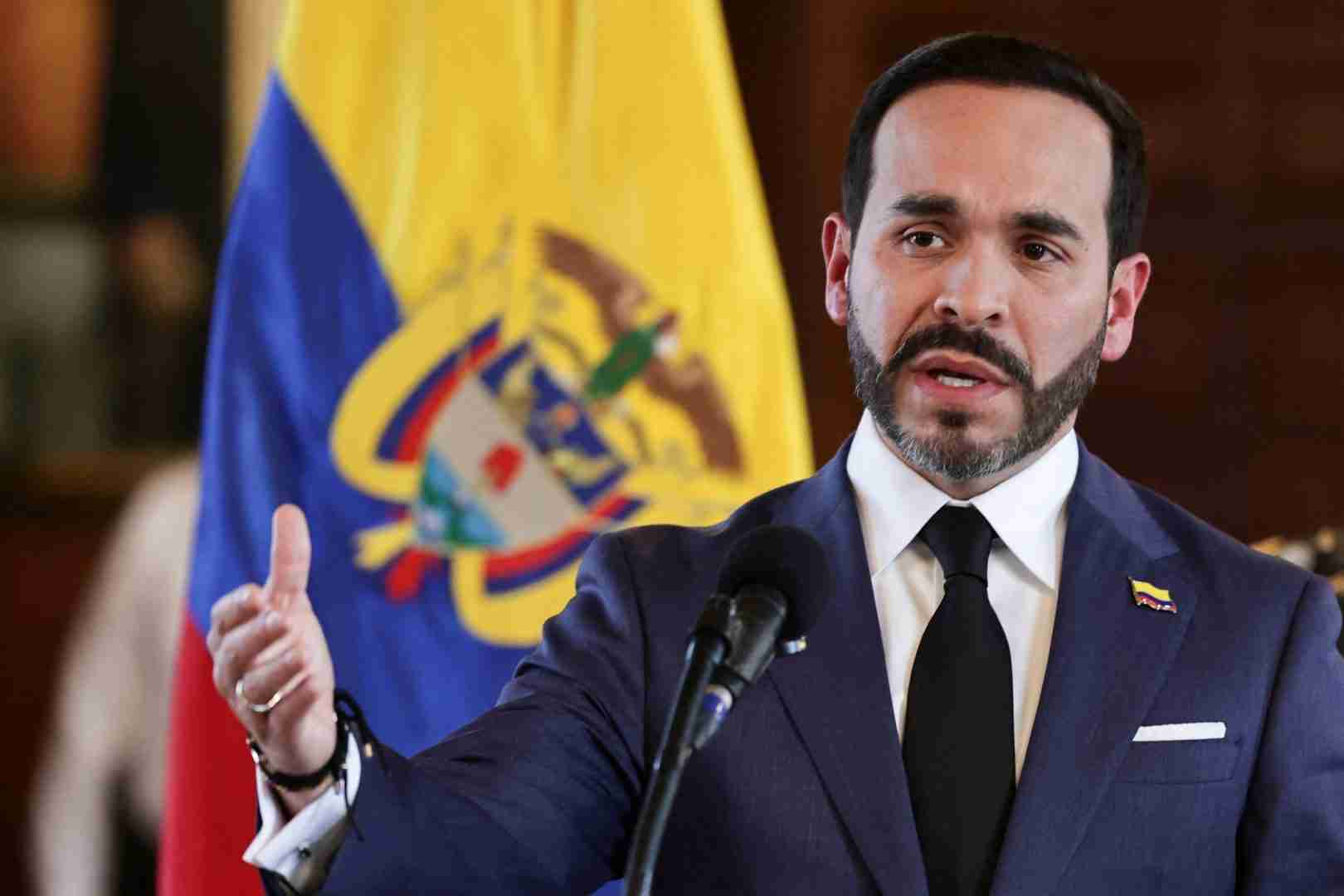
The economic losses from a powerful earthquake that struck Colombia last week are expected to reach 30 trillion pesos ($9.58 billion), Colombia’s President Abelardo De La Espriella said on Monday.

De La Espriella said the impact included roughly 24.5 trillion pesos in buildings and 5.5 trillion pesos in infrastructure.

“Just imagine the scale of the disaster,” De La Espriella said, noting that the figures were likely to change. “This is a preliminary figure that will be adjusted as we obtain more information and as the damage caused by this earthquake is assessed in each of the regions.”

The 7.4-magnitude quake toppled buildings in various parts of western Colombia, including the major cities of Cali and Pereira, killing 280 people, injuring more than 4,000, and leaving another 143 people missing. 

By comparison, the earthquakes that struck neighboring Venezuela on June 24 caused damage to housing and infrastructure estimated at $37 billion, according to an initial assessment by the United Nations Office for Disaster Risk Reduction published last month.

The Colombia quake is the first major crisis facing De La Espriella, who took office just days before and now must oversee relief and reconstruction efforts.

($1 = 3,131.6400 Colombian pesos)

Reporting by Luis Jaime Acosta and Nelson Bocanegra, Writing by Natalia Siniawski, Editing by Daina Beth Solomon