Tuesday, October 27, 2026
Home Blog Page 152

Wildfires, drought and storms hound Europe even as heatwave recedes

Successive early summer heatwaves, which many scientists blame on human-driven climate change, have pushed temperatures to unprecedented levels in large swathes of the continent

International News via Reuters:

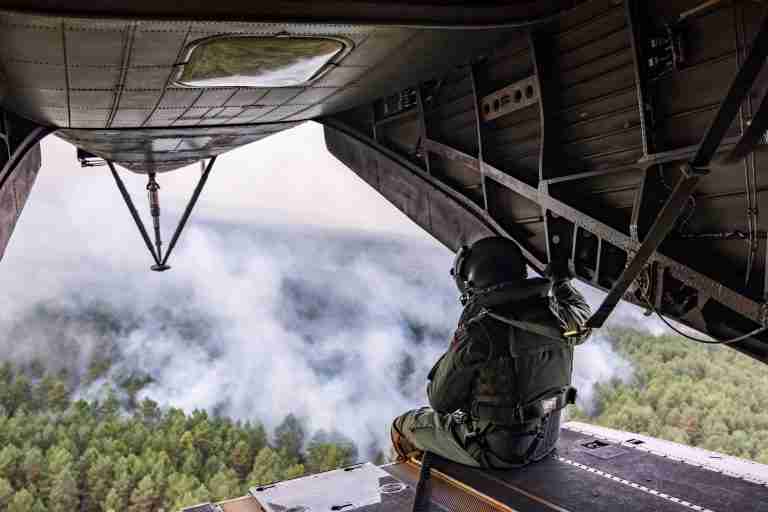
Firefighters backed by 30 aircraft struggled on Friday to contain a wildfire in northeastern Spain that has ripped through an area the size of San Francisco, forcing the evacuation of more than 1,000 people, as recent heatwaves left vegetation tinder-dry across much of Europe.

Successive early summer heatwaves, which many scientists blame on human-driven climate change, have pushed temperatures to unprecedented levels in large swathes of the continent, causing water shortages, crop damage, wildfires, and thousands more deaths than normal.

According to the Reuters Climate Monitor, the average high across Western Europe on Friday was forecast to be 27.5 degrees Celsius (81.5 degrees Fahrenheit), which is 4.2 C above the normal high for July 17 from 1961-1990.

In France, a drought has worsened day after day since the end of May, even as the latest heatwave continued to recede, with high temperatures expected to be mostly confined to the southeast by the weekend, according to MeteoFrance.

A gas-fired power plant in southern France was at risk of going offline as high temperatures in the Mediterranean Sea limited access to cooling water, piling further pressure on an energy system already facing reduced nuclear output due to warmer river waters.

In Germany, shallow water on the key Rhine River has hindered shipping, leading to rising transport costs, though rain has helped bump up levels, with more expected in the coming days.

STORMS ADD TO WORRIES

As the heat receded, giving way to violent storms in some places, two people died in central and eastern France and one in Germany’s southern state of Baden-Wuerttemberg as a result of falling trees or a lightning strike.

A “supercell” thunderstorm brought strong winds and hailstones measuring up to 5 cm (2 inches), with drivers seeking shelter under a motorway bridge outside Stuttgart due to the hail. Residents in the state were told to continue to expect severe weather on Friday.

In northeast Germany, firefighters were hoping for rain to help quell a wildfire at the Mueritz National Park that has been burning for nearly a week, their efforts hindered by unexploded ammunition at a former military training facility.

SPAIN BURNING

Spain’s weather agency AEMET warned temperatures would start rising again on Saturday, with highs potentially reaching 42-44 C in parts of the Andalusia and La Mancha regions next week. Forecasters also warned of an extreme wildfire risk as hot, dry air from North Africa advances across much of the country.

The wildfire near Ores in the northeastern region of Aragon expanded overnight to more than 12,000 hectares (46 square miles), with 300 military emergency responders deployed to contain the fire and helicopters operating in continuous rotations, at times with up to five aircraft loading water simultaneously.

“The houses have been saved, as have the people, but everything else has gone up in flames,” evacuee Maria Pilar Arregui told Reuters outside a sports centre turned into a temporary shelter in Ejea de los Caballeros.

Firefighters were also tackling wildfires near Madrid and in Guadalajara province, where around 1,500 hectares have burned and a summer camp was evacuated as a precaution. A week ago, one of Spain’s deadliest wildfires on record killed at least 13 people, mostly foreigners, in the southern province of Almeria.

In Greece’s metropolitan area of Athens, authorities went on high alert for wildfire risks, with drones equipped with thermal cameras patrolling over forests and water cannons stationed outside campsites.

EXCESS DEATHS

Earlier this month, the World Health Organization warned that Europe could face “more deadly weeks ahead” from new heatwaves forming over the Atlantic.

Scientists monitoring so-called excess deaths said there were thousands more fatalities recorded than normal during a heatwave that swept through Europe and Britain at the end of June.

“Nearly 10,000 excess deaths, and the summer is not yet over,” said Dr Hans Henri P. Kluge, WHO Regional Director for Europe, criticising governments for “still treating heat as a weather event rather than a health emergency”, despite existing tools and WHO guidance to prevent most of these deaths.

Reporting by Emma Pinedo in Madrid, Miranda Murray in Germany, Dominique Vidalon and Forrest Crellinin in Paris, Jennifer Rigby in London and Angeliki Koutantou in Athens, Writing by Andrei Khalip; Editing by Alexandra Hudson


UK finance firms sharpen staff scrutiny as new misconduct regime looms

The Financial Conduct Authority (FCA) is amending conduct rules and fitness-for-office tests to add serious, work-related bullying, harassment and violence against colleagues in 37,000 non-bank firms

International News via Reuters:

Financial firms in Britain are sharpening their focus on employee conduct, with some weeding out staff suspected of misconduct such as harassment and bullying ahead of new rules designed to curb an industry lawmakers have called a hotbed of abuse and bullying, lawyers told Reuters.

Lawyers at three firms in London said some companies were dismissing such employees before new rules increase scrutiny, reporting requirements and the potential consequences of mishandling non-financial misconduct cases on September 1. 

The Financial Conduct Authority (FCA) is amending conduct rules and fitness-for-office tests to add serious, work-related bullying, harassment and violence against colleagues in 37,000 non-bank firms such as asset managers, hedge funds and insurers.

The amended rules and guidance clarify how firms should take non-financial misconduct into account when assessing employees’ fitness and propriety and put the onus on managers, rather than human resources departments, to identify, investigate and report potentially serious cases.

The changes are designed to bring non-bank finance rules into line with those already in place for banks, although new guidance spells out more explicitly the misconduct all firms are expected to tackle.

The three lawyers said companies were setting a low bar for dismissals, and in some cases, human resources departments might even be using the upcoming rules as a pretext to part with those not meeting expectations. 

Wendy Saunders, a partner at law firm Lewis Silkin, said she had seen two or three cases where firms appeared to “dress up a minor conduct issue as non-financial misconduct” to dismiss an underperformer.

Three lawyers from different firms said they were running scenario-based training courses for executives, managers and even interns on the new rules — which include manager accountability for failures to address conduct rule breaches.

TACKLING RAINMAKER BULLIES

The FCA’s rules, published alongside extensive guidance and detailed illustrative scenarios and flowcharts, go beyond employment law by separating conduct such as bullying from legal protections against discrimination based on characteristics such as race, sex, disability or religious belief.

David Cummings, an employment lawyer at KPMG, said the rules would allow firms to tackle poorly behaved star performers by providing a regulatory consequence for bullying that does not exist under employment law.

“The FCA is trying to capture the high-performing bully, who organizations may have traditionally held their nose or been prepared to turn a blind eye to because they’re a rainmaker, but they’re toxic for the workplace environment,” he said.

Reuters spoke with lawyers at seven mid-sized law firms with sizeable legal practices and one of the big four professional services firms.

Of those, lawyers at two firms said they were not aware of staff being let go because of conduct allegations ahead of the new rules. The rest either reported a small number of dismissals or confirmed that conduct was increasingly in managers’ focus.

Asked for comment, the FCA did not directly address the examples of how a greater focus on misconduct could be abused, but stressed the new rules created more clarity.

“Our rules and guidance will help industry take a more consistent approach to tackling non-financial misconduct – however primary responsibility for preventing and dealing with it lies with firms,” the watchdog said in a statement.

The Association of British Insurers, the Alternative Investment Management Association and the Managed Funds Association did not immediately respond to Reuters requests for comment.

CHALLENGING CULTURE

Culture in Britain’s financial services industry has long been in the spotlight.

Lawmakers on the influential parliamentary Treasury Committee voiced shock at the prevalence of sexual harassment and bullying — and at how poorly such allegations were handled — in a 2024 report on sexism in London’s financial centre.

An FCA study that year showed that reports of misconduct such as bullying had surged over 70% over three years to 2023, with more than one third of firms not reporting cases to their boards.

Under the new rules, conduct breaches need to be disclosed to future employers under regulatory references or formal fitness-for-office assessments, designed to prevent “rolling bad apples” from avoiding consequences by moving from job to job. Instead, offenders risk a potentially career-ending regulatory investigation. 

The guidance also covers social media activity.

Lawyers now worry the rules might be applied inconsistently, partly because firms are worried about ending up in regulatory crosshairs.

“Based on what I am seeing, many employers are still likely to reach knee-jerk conclusions in relatively minor cases, often opting to exit individuals rather than risk potential criticism from the regulator,” said Claire Cross, a partner at law firm Corker Binning. 

Reporting by Kirstin Ridley and Phoebe Seers; Editing by Tommy Reggiori Wilkes and Tomasz Janowski

Global stocks drop on growing semiconductor rout; oil set for weekly gain

Renewed military strikes in the Middle East were also weighing on risk sentiment, keeping oil prices elevated and reigniting concerns about inflation and growth

International News via Reuters:

A prolonged selloff for chipmakers continued to ripple through global stock markets on Friday, triggering losses in Asia and Europe and setting up steep falls in the United States as investors abruptly reassessed the durability of the artificial-intelligence-driven rally.

Renewed military strikes in the Middle East were also weighing on risk sentiment, keeping oil prices elevated and reigniting concerns about inflation and growth. 

In Europe, the STOXX 600 fell 0.5%, with major bourses in Paris, Frankfurt and London all trading lower.  

In the U.S., Nasdaq futures slumped 1.7% while S&P 500 futures fell 0.8%. 

Losses were starker across Asia, with MSCI’s broadest index of Asia-Pacific shares excluding Japan down more than 3%, while the Nikkei tumbled 4%, leaving it down 12% from a recent peak.

Taiwan’s stock market bore the brunt of the selloff, plunging more than 6% for its worst day since U.S. President Donald Trump’s “Liberation Day” tariffs, while China’s blue-chip index fell 3.6%.

In Hong Kong, the Hang Seng Index was down 1.8%, and a 4.4% slide in the Hang Seng Tech Index marked its sharpest fall since April 2025.

Europe’s relative lack of a technology hardware sector has meant it tends to be more insulated than other markets from a sharp selloff in tech stocks.

“From a European perspective, there’s less exposure towards tech and more exposure to defensives and staples and that is why it looks a little better,” said Lars Skovgaard, investment strategist at Danske Bank. 

The selloff came even as Taiwan’s TSMC said second-quarter profit blew past forecasts. And ASML, the world’s dominant supplier of equipment needed to make high-tech computer chips, raised its 2026 sales forecasts earlier this week.

“Retail investors have borrowed to trade in this really impressive AI rally, so I think the unwinding of leveraged positions will definitely exaggerate the decline as well. It will feed into the market,” said Fabien Yip, a market analyst at IG.

Markets in South Korea were closed on Friday for a holiday, a day after authorities said they would temporarily ban new listings of exchange-traded funds (ETFs) that are tied to certain major technology firms, while raising minimum required deposits for retail investors to invest in such products, in an effort to curb volatility.

OIL CLIMBS AGAIN    

In commodities, oil prices were on the rise, with Brent crude futures up 2% at $86.01 a barrel, while U.S. crude advanced 2.5% to $80.92 per barrel. For the week, Brent and U.S. crude futures were set to rise more than 11% each, marking their largest gains since April.

Iran said it launched fresh attacks on U.S. facilities in the Gulf on Friday after a sixth consecutive night of U.S. strikes on Iranian military facilities. 

“You don’t see appetite for adding risk right now,” said Danske Bank’s Skovgaard.

“As long as there is no progress on oil price developments, then you don’t need to buy into the market. For that, it’s just another negative.”

ASSESSING THE FED RATE PATH

The dollar held steady on Friday and was set to end the week little changed as receding expectations of Federal Reserve rate increases this year were offset by renewed safe-haven demand.

Investors are now pricing in roughly 27 basis points worth of Fed hikes by December, following benign U.S. CPI and PPI readings this week.

The euro was flat at $1.1438, while sterling fetched $1.3451 as Andy Burnham was confirmed as the new leader of Britain’s governing Labour Party on Friday, replacing Keir Starmer. Burnham will formally become prime minister on Monday, with markets closely watching his pick for finance minister.

The yen, meanwhile, languished near a 40-year low and last stood at 162.31 per dollar, prompting renewed jawboning from Japanese Finance Minister Satsuki Katayama to try to support the currency.

Reporting by Samuel Indyk and Rae Wee; Editing by Thomas Derpinghaus, Kirsten Donovan

UK’s FTSE 100 flat as energy gains offset banks; Burnham set to become prime minister

The blue-chip FTSE 100 index rose 0.04% to 10,576.97 by 1043 GMT, while the midcap FTSE 250 slipped 0.4%

International News via Reuters:

London’s FTSE 100 was little changed on Friday as gains in energy stocks, driven by higher oil prices amid escalating Middle East tensions, offset weakness in financial shares, with Andy Burnham set to become Britain’s next prime minister.

The blue-chip FTSE 100 index rose 0.04% to 10,576.97 by 1043 GMT, while the midcap FTSE 250 slipped 0.4%.

• The United States escalated its renewed bombing campaign on Iran by hitting bridges and an airport, and Tehran responded with strikes on U.S. bases across the Middle East.

• Energy stocks gained 1.7% as oil prices edged higher on concerns over supply disruptions after the United States and Iran stepped up attacks across the Gulf, fuelling fears over exports through the Strait of Hormuz and the Red Sea. [O/R]

• Utilities, rose 2%, leading sectoral gains.

• On the flip side, banks fell, pressuring the index, with Barclays, Lloyds Banking Group and Standard Chartered down between 1% and 1.6%.

• Personal goods also fell 4.3% after Burberry warned that the conflict in the Middle East was hurting tourist spending in Europe, sending shares in the British luxury brand down more than 5.6% despite strong sales growth in the United States and China during the April-June quarter.

• On the political front, Andy Burnham, nicknamed the ‘King of the North’, will become leader of Britain’s governing Labour Party, the final step before becoming its seventh prime minister in a decade on a pledge to thwart the rise of the populist Reform UK.

• Among other stocks, GSK fell 3.8% after the drugmaker said it would halt development of its experimental treatment for refractory chronic cough after the therapy failed a late-stage trial and missed key efficacy goals across multiple dosages.

• BP and ConocoPhillips rose 1% and 1.2%, respectively, after CNBC reported that the energy companies are set to announce billions of dollars in new investments in Iraq as Washington seeks to strengthen the country’s energy sector and reduce reliance on export routes vulnerable to disruption from regional conflict.

Reporting by Tharuniyaa Lakshmi in Bengaluru; Editing by Shinjini Ganguli

Nation building threads new Senator’s maiden speech

The newly appointed National Security Minister, Senator Ryan Robinson Perinchief, detailed his academic and politically minded family upbringing in his first speech in the Upper House

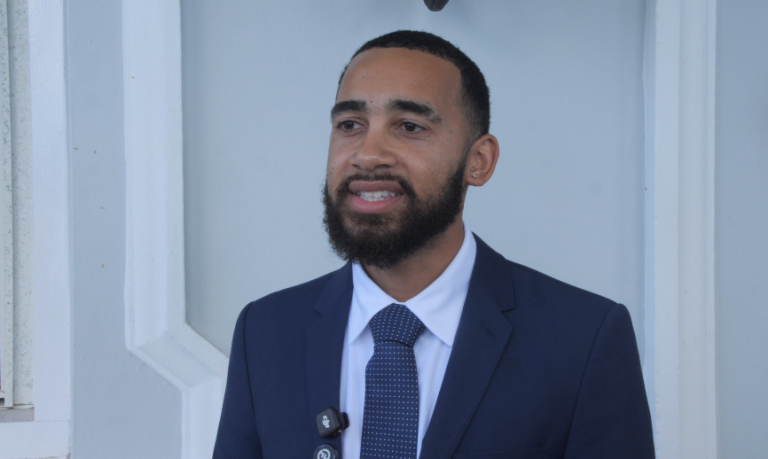
Nation building was theme of Senator Ryan Robinson Perinchief’s maiden speech in the Senate yesterday.


The newly appointed National Security Minister detailed his academic and politically minded family upbringing.


He says he anticipated the call to public service, although it arrived sooner than expected.

Senator Robinson Perinchief commented on the feedback on his age.


At age 29, he explained why now is the time to hear from the next generation of leaders.

Centre that helps adults with intellectual disabilities relocates

The K. Margaret Carter Centre is now at the former Prospect Primary School

Minister of Youth, Social Development and Seniors, the Hon. Tinee Furbert’s remarks presented at the press conference held today at the K. Margaret Carter Centre. 

Good morning, and thank you for joining me today.
Today marks a meaningful new chapter for the K. Margaret Carter Centreand, more importantly, for the 44individuals and their families who call it their community. Iam proud to announce that the Centre has successfully relocated to its new interim home at the former Prospect Primary School: a space where our clients can once again learn, connect, work, and thrive.
This journey began out of necessity. Mould andair quality concerns atour Roberts Avenue facility meant wecould not, in good conscience, ask our clientsand staff toremainthere. But what could have been a setback became something else entirely – a testament tow h a t our community can accomplish when it comes together.
The K. Margaret Carter Centre has always been far more than a building. Everyday, ithelps adults with intellectual disabilities build life and social skills, form friendships, care for their health, explore their creativity, and take part in meaningful work alongside our charity, business, and government partners. Our purpose is both simple and profound: to help every person we serve live a full life on their own terms – shaped by their own interests, strengths, and abilities.
And through every step of this transition, that work never stopped- because of people. Iwant to sincerely thank the Mid-Atlantic Wellness Institute and Windreach Recreational Facility for opening their doors and allowing us to use their sites as temporary homes while the Prospect building was being prepared. I want to thank our staff, who worked tirelessly to re-establish programming in those temporary spaces, to accommodate our clients andtheir families, and to look out for one another every single day. And I want to personally thank the parents and
caregivers who came to meet with me to share their concerns – I heard you, and your voices helped shape howw e carried out this move.
Behind the scenes, the Ministry of Public Works and the Environment and our Ageing and Disability Services team transformed the Prospect site into a space that is safe; accessible, and
welcoming – from air quality testing to new accessibility features throughout. Thanks to their dedication, every one of our clients hasnow returned and is fully back intheir programs.
Iam also pleased to confirm that our operating hours remain unchanged, including all the early- morning and late-afternoon programs that so many families depend on. To our families and caregivers: thank you for your patience, your trust, and your partnership. We look forward to watching our clients thrive in this renewed space.

Luxury staycations for blood donors who won draw prize

Hamilton Princess provides luxury staycations to blood donors

Thursday 16 July 2026:  Bermuda Hospitals Board (BHB) is pleased to announce that two lucky winners get to relax and enjoy themselves for two nights at the Hamilton Princess & Beach Club, all because they donated blood. 

“As a proud prize sponsor of the Blood Donor Centre’s annual blood drive, Hamilton Princess is honoured to support an initiative that helps save lives every day,” said the hotel’s manager, Roydell Neverson.

“We are especially proud of our colleagues who participate in the drive each year, reflecting our shared commitment to community well-being and helping others in need. Together, we celebrate the generosity of all donors whose contributions make a lasting and meaningful difference,” she added.

Dr Eyitayo Fakunle, BHB chief of pathology and consultant haematologist, said: “We are so grateful to the Hamilton Princess & Beach Club for providing two, two-night stays for two people with breakfast as prize opportunities for our donors. This is the sixth year that Hamilton Princess has sponsored us in this way and every year is significant. These prizes really do entice people to donate, which greatly assists us in meeting the needs of the community.”

There were 1,333 blood donors from July 2025 to June 2026, and each was entered in the staycation draw.

“Our lucky winners this year were Renee Parker and Donna Foggo,” said Blood Donor Centre nurse phlebotomist Alma Lou Polinar-Swainson. “Both are long-term donors and winning helps us reward their commitment.”

Pathology Manager Giselle Ming said: “Donating blood to our supply is completely voluntary. This is the gold standard for safety and quality around the world. 

“We doubly thank the Hamilton Princess because in addition to providing these prizes, they also regularly participate in the annual Corporate Blood Drive Competition, directly encouraging their staff to provide life-saving blood.”

People considering becoming blood donors can call 236-5067, WhatsApp 533-9553 or email blood.donor@bhb.bm. Information about blood donation is available on bermudahospitals.bm/be-a-donor/. 

AES celebrates Class of 2026

The Adult Education School today celebrates the success of 16 new graduates in the Class of 2026

Adult Education School Class of 2026: Tajae Browne-Dill, Teresa-Rose Burchall, Oral Daley, Matthew Davidson, Kemi Davis, Noah Edwards, Kalahni Fishenden, Nori Jones, Catalina Lewis, Savannah Lewis, Chris Pacheco, Jaden Place, Claire Rewan, Ayshalay Simons, Josiah Smith and Satinka Smith. Photo supplied

Adult Education School press release:

The young men and women received their GED certificates at a ceremony at Bermuda College’s Athene Lecture Hall, attended by more than 100 family members, friends and supporters.

Guest speaker Puisne Judge Juan Wolffe congratulated graduates and urged them to make a difference in their community.

The young men and women received their GED certificates at a ceremony at Bermuda College’s Athene Lecture Hall, attended by more than 100 family members, friends and supporters.

Guest speaker Puisne Judge Juan Wolffe congratulated graduates and urged them to make a difference in their community.

“With all that you have learnt at the Adult Education School, it is your duty to assist those who are voiceless and who are defenceless,” Mr Justice Wolffe said.

“Take your rightful place in the social, economic, financial and political landscape and rebuke those who dare to stop you.”

The ceremony included addresses from Bermuda College President Dr David Sam, AES Board Chairman Dr Ernest Peets, Managing Director Arlene Brock, AES Programme Director Thaao Dill, and Class of 2026 graduates Savannah Lewis and Jaden Place.

Trailblazing Bermudian footballer Clyde Best congratulated graduates in a video presentation.

Mr Best told graduates: “It’s an unbelievable achievement and I wish you all the best. Now that you have got the first one, go on to the next one.”

Dr Sam congratulated graduates for overcoming challenges to pass their exams and told them they had earned a place at Bermuda College.

Ms Brock said: “We are delighted that these 16 young men and women were able to flourish at the Adult Education School. Each of them has an exciting future and it has been an honour to help them on their path to success.

“Our school has a wonderful history of helping people succeed when the traditional classroom has not worked for them. This service has never been more critical for the future success of Bermuda, and we look forward to supporting our community for many years to come.”

Mr Dill said: “We are intensely proud of our community of graduates for the work they have put in, the challenges they have overcome, and this marvellous accomplishment they have earned.”

The Adult Education School was founded in 1958 by Merle Brock Swan Williams. Since then, the school’s inclusive, judgement-free atmosphere has given more than 4,000 Bermudians the platform to build a brighter future for themselves and their families.

ATM burglary attempt fails

Footage of the mess left after a failed ATM burglary at Somerset Bridge has circulated on social media

Police attended the scene on Monday morning.

According to a BPS spokesperson, indications are that sometime between 2:25 a.m. and 3:45 a.m. that day, an unknown suspect or suspects entered the area in the old post office where the Clarien Bank ATM is located.

They reportedly obstructed the CCTV cameras, before unsuccessfully attempting to break into the ATM machine.

No money was stolen.

An investigation remains ongoing, and anyone with information is asked to call the main police number, 295-0011.

Ontario asks for federal support for wildfire evacuations as smoke spreads

Canada has more active wildfires than it had as of mid July for the past two years and a larger area has burned compared to 2025

International News via Reuters:

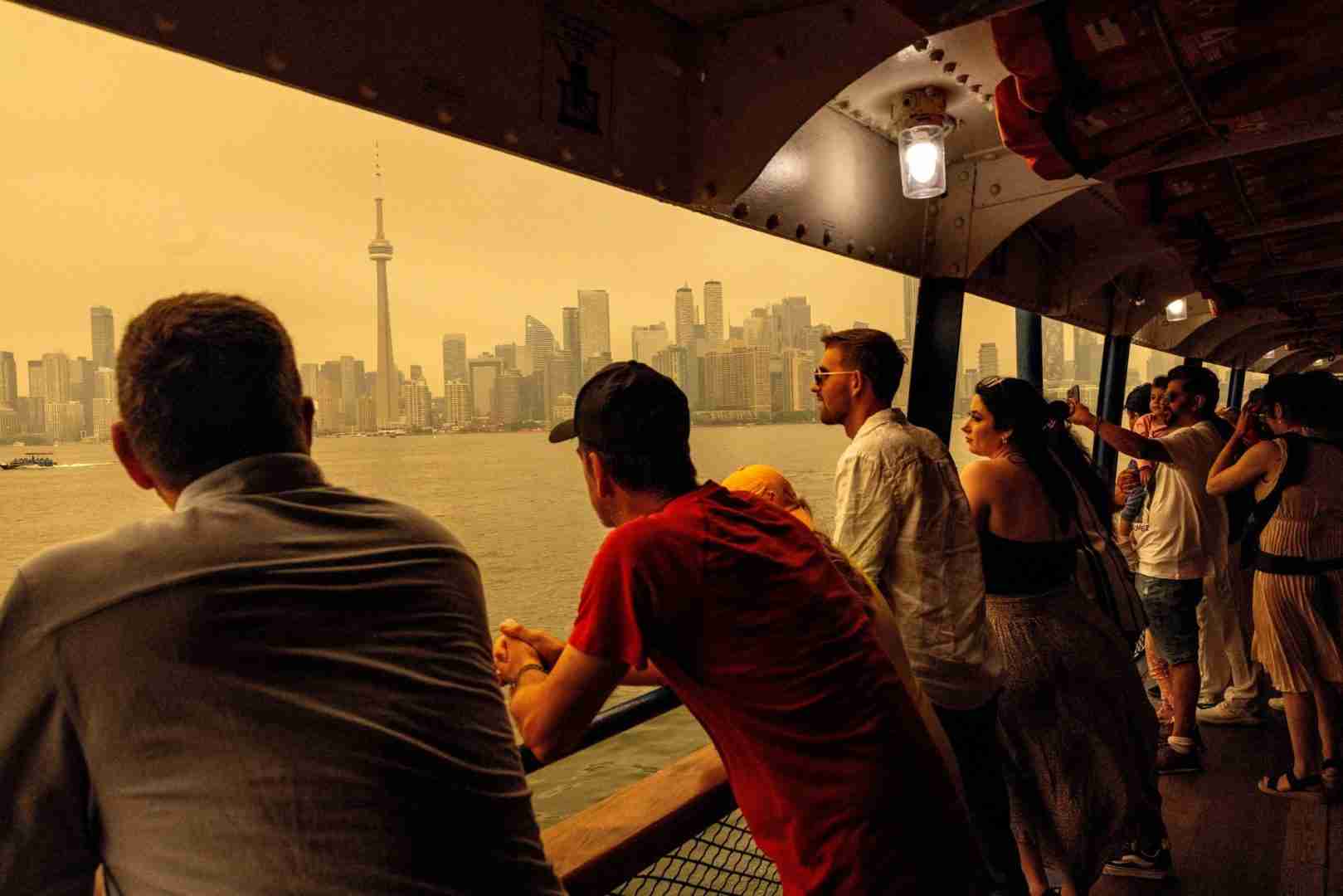
Ontario requested federal assistance to evacuate people from remote northern communities ravaged by wildfires on Thursday, as smoke brought poor air quality to Toronto and much of the Northeastern U.S.

Canada has more active wildfires than it had as of mid July for the past two years and a larger area has burned compared to 2025. Most of the fires are in remote areas of the central provinces of Manitoba, Saskatchewan and Ontario.

“In response to the significant threat of wildland fire activity in northern Ontario, the province has issued a formal Request for Assistance to the Government of Canada to be prepared to expedite the deployment of federal resources to support evacuations,” Ontario’s minister of emergency preparedness, Jill Dunlop, said on X. She said help sought included Canadian Armed Forces deployments.

Prime Minister Mark Carney said in prepared remarks that the federal government is in close communication with provincial and municipal counterparts and will provide additional assistance as needed.

Wildfires in recent years have overwhelmingly impacted remote indigenous communities. Indigenous Services Canada said 1,600 individuals had been evacuated from First Nations communities due to fires this season, as of July 15.

Some 859 active fires were burning in the country on Thursday, and 113 were considered out of control, according to the government. So far, 2.384 million hectares (5.89 million acres) have burned.

“The wildfire situation has escalated significantly over the last three weeks across the country, and particularly in Northwestern Ontario,” Carney said on Wednesday night. “Thousands of people have been forced to evacuate their communities, not knowing if their homes will survive.”

Canadian National Railway said employees in the area and residents of the town of Armstrong were evacuated on Monday night after a viral video shared on social media showed a CN train surrounded by fire in the area.

CN said it had suspended rail operations near Armstrong, more than 500 kilometers (310 miles) north of Toronto, as a precaution due to the wildfires.

Vancouver-based Fury Gold Mines said on Wednesday that it had temporarily suspended exploration and drilling at its Eau Claire project in northern Quebec after evacuating all personnel due to a nearby forest fire.

Australia-listed Green Technology Metals, which is focused on lithium exploration, has a mine located near Armstrong. Green Technology did not respond to an email query by Reuters on whether it had evacuated its staff.

Most northern Ontario gold mines are located far from the current fires.

Reporting by Wa Lone, David Ljunggren, Nivedita Balu and Divya Rajagopal; Writing by Caroline Stauffer; Editing by Mark Porter

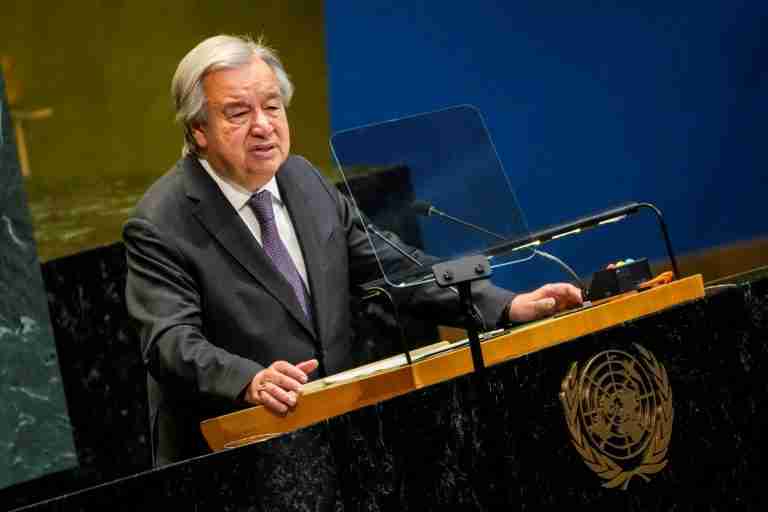
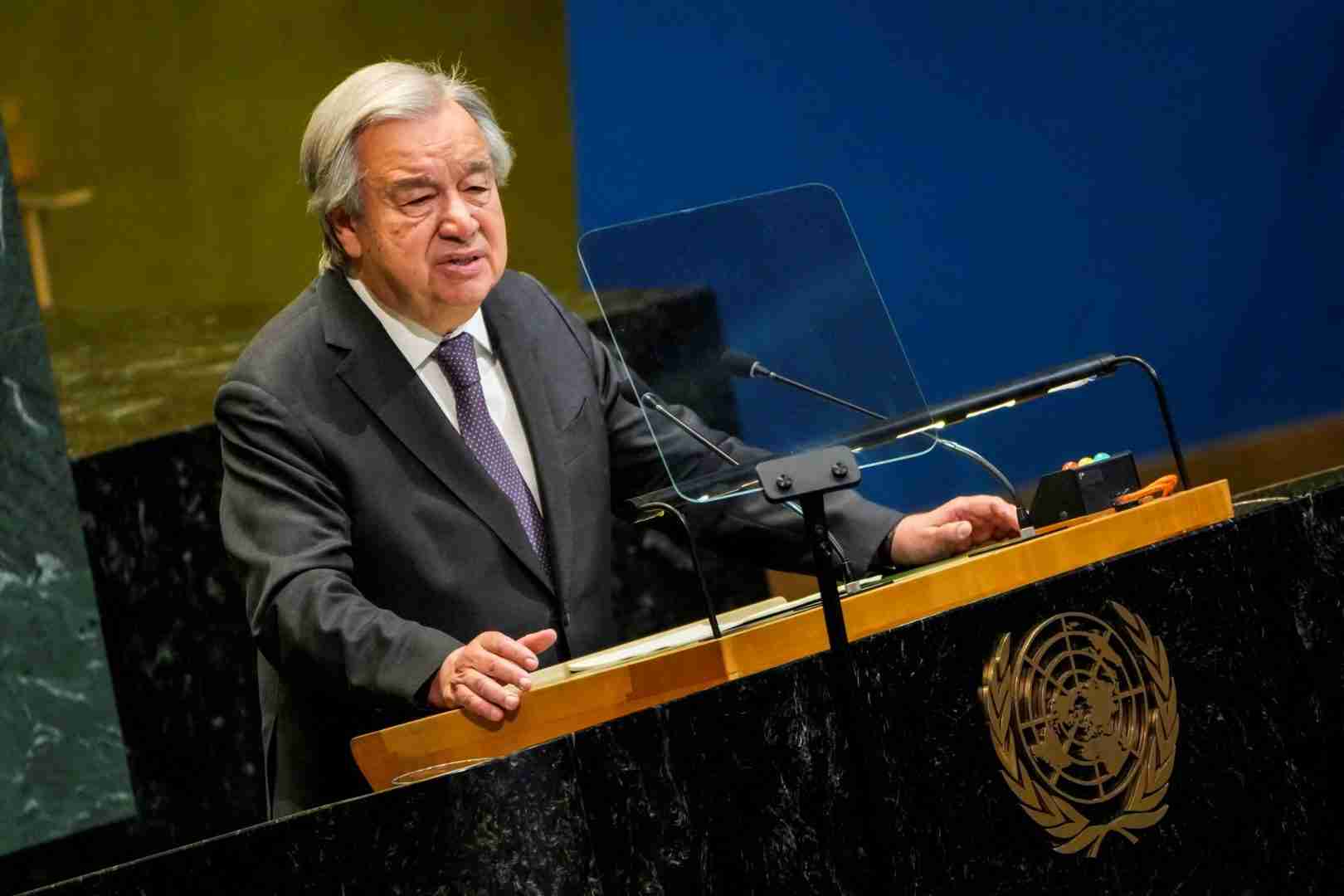
Guterres to travel to Cyprus to advance peace efforts, UN says

The visit comes against the backdrop of growing speculation the United Nations will launch a fresh push to resolve the decades-old split of Cyprus before his term expires at the end of the year

International News via Reuters:

United Nations Secretary-General Antonio Guterres will travel to divided Cyprus at the end of July to discuss peacebuilding efforts between the Greek and Turkish Cypriots, a U.N. spokesperson said on Thursday.

• The visit comes against the backdrop of growing speculation the United Nations will launch a fresh push to resolve the decades-old split of Cyprus before his term expires at the end of the year.

• Guterres was due to meet with the Greek and Turkish Cypriot community leaders during his visit from July 27 to 29, spokesperson Stephane Dujarric said, underlining his “strong demonstrated commitment to the Cyprus issue”.

• “He will meet with the Greek Cypriot and Turkish Cypriot leaders, as well as other stakeholders, and discuss efforts to advance the peace process and support stability on the island, including through the work of the U.N. peacekeeping mission on the ground there, UNFICYP,” Dujarric said.

• A diplomatic source in Nicosia said the itinerary included a joint meeting with the two leaders in a U.N.-administered buffer zone which has separated the two communities for decades.

• Cyprus was divided in 1974 after Turkey invaded parts of the island’s north following a Greek-backed coup. Seeds of division were sown shortly after independence from Britain in 1960, when a power-sharing administration of Greek Cypriots and Turkish Cypriots collapsed amid violence.

• Greek Cypriots run Cyprus’s internationally recognised government in the south with Turkish Cypriots administering the north.

• The last meaningful negotiations on Cyprus collapsed in 2017 amid disagreements on whether Turkey should have a role in a future federated Cyprus with two self-governing regions linked by a strong central government.

Reporting by David Brunnstrom; Writing by Michele Kambas; Editing by Ros Russell