Tuesday, October 27, 2026
Home Blog Page 179

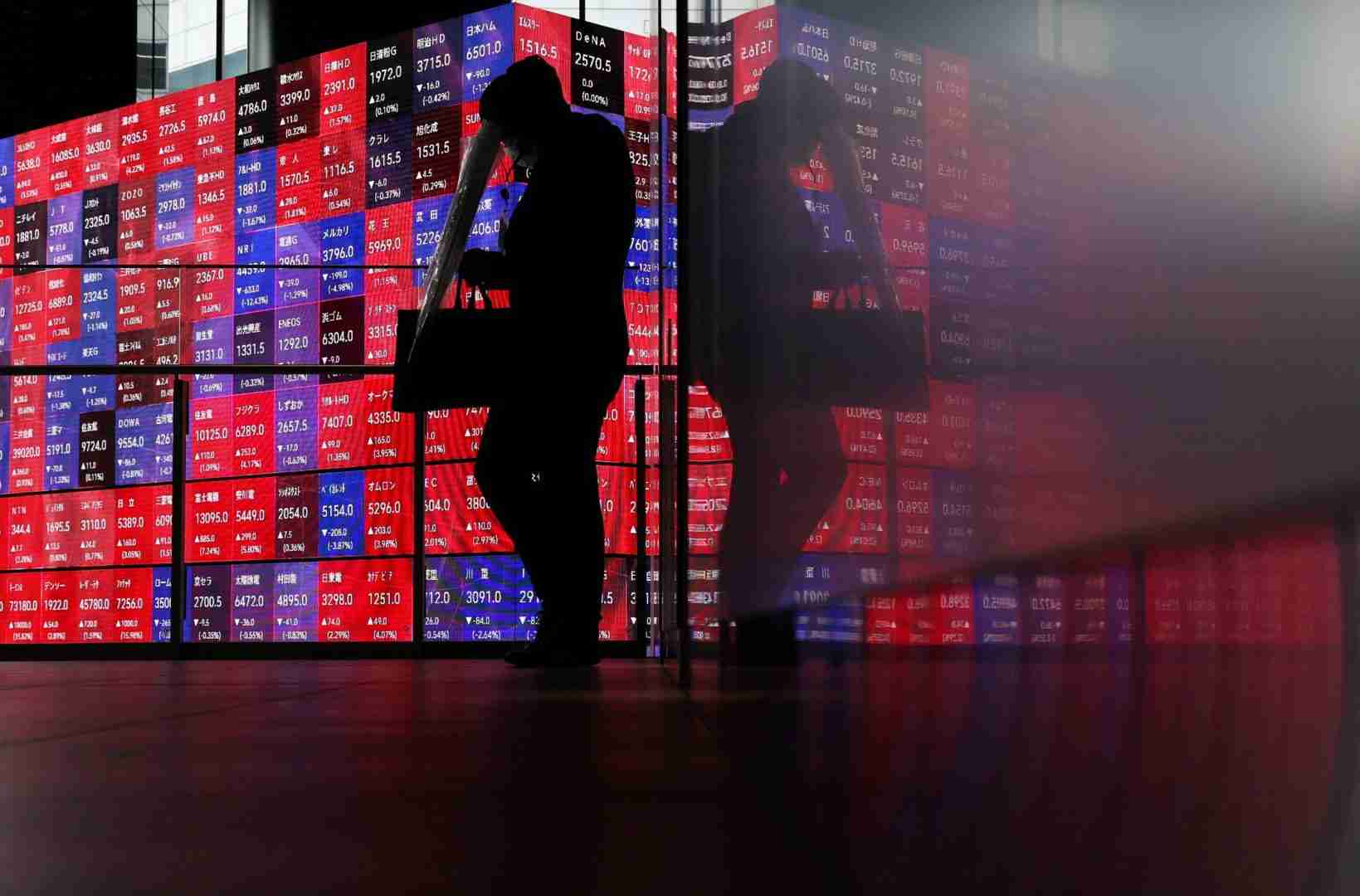
Global stocks climb as US jobs data cools Fed hike fears

Europe’s broadest index hit a record high on Friday, and was set for its biggest weekly gain in over a month
International News via Reuters:

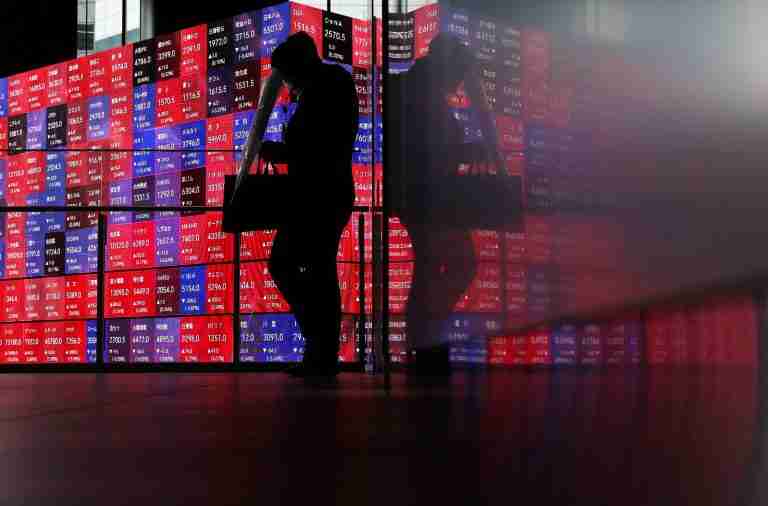
Global stocks climbed on Friday after a lukewarm U.S. jobs report softened expectations for an imminent rate hike from the Federal Reserve and regional activity gauges pointed to an economic expansion during June.

Europe’s broadest index hit a record high on Friday, and was set for its biggest weekly gain in over a month. 

The pan-European STOXX 600 reached 651.77 before settling to a steadied 648.74. Germany’s DAX index rose 0.1% while the French and UK indices were a touch lower on the day. 

MSCI’s broadest index of world shares rose 0.4%. 

“Europe’s Stoxx 600 ended the week with a bang as investors lapped up utilities, industrials and basic materials stocks,” Dan Coatsworth, at investment platform AJ Bell, said in a note. 

“While these movements imply a more upbeat investor, it’s important to keep watching the U.S. tech stocks, as many are coming off the boil,” he added.     

South Korea’s Kospi swung between gains and losses before closing around 6% higher, as buyers pounced on battered chipmaker stocks. 

Purchasing Managers’ Index (PMI) data released on Friday indicated increased activity across Asia.

Japan’s services sector returned to expansion in June after stalling the previous month. China’s services activity expanded at a slightly slower pace, but overseas demand rose at the fastest rate in 20 months.

“The PMIs remain healthy by recent standards and still imply stronger economic momentum across Q2 as a whole,” analysts from Capital Economics said of the Chinese data.

U.S. LABOUR MARKET COOLING

U.S. job growth slowed sharply in June and payroll gains for the prior two months were revised lower, according to data released on Thursday, pointing to a cooling labour market.

The unemployment rate dropped to 4.2% last month from 4.3% in May as workers left the labour force, pushing the participation rate to the lowest level in more than five years. 

The tepid jobs data doused traders’ expectations of an imminent rate hike and raised the chances that the Fed will keep rates on hold until October. 

Fed funds futures are pricing an implied 46.8% probability that the U.S. central bank will keep rates steady at its meeting on September 15 to 16, compared to a 35.8% chance a day earlier, according to the CME Group’s FedWatch tool.

Inflation remained a concern.

“Our biggest anticipated risk this year, even before the Iran war, was shipping,” said James Rossiter, head of global economics at TD Securities.

“Ships have been rerouted all over the world because of the Hormuz Strait closure, leading to less shipping capacity globally,” he told Reuters in a phone call, suggesting the price effects of this were still working their way through the global economy.

U.S. futures remained buoyant, with S&P 500 and Nasdaq futures up 0.3% and 1% respectively. The U.S. market will be closed on Friday to celebrate Independence Day.

Against the yen, the U.S. dollar held steady around 161, with the greenback having given up earlier gains as market liquidity was thinned by the holiday and traders remained on watch for intervention. 

The Japanese currency has been choppy this week after Reuters reported on Thursday authorities may have adopted a new approach to their forays into the market. 

The U.S. dollar index, which measures the greenback’s strength against a basket of six currencies, was down 0.3% at 100.71.

In commodities, Brent crude futures steadied at $71.80. Gold was up 1.3% at $4,176.

In cryptocurrencies, bitcoin ticked up 0.1% to $61,604.53.

Reporting by Nell Mackenzie and Gregor Stuart Hunter; Editing by Thomas Derpinghaus and Jan Harvey
EU trade with US hits record high despite tariff tensions, study shows

The research by the German Economic Institute, or IW, found a 7.7% rise in EU exports to the U.S. to €580 billion, while U.S. imports into the EU climbed 2.2% to €295 billion

International News via Reuters:

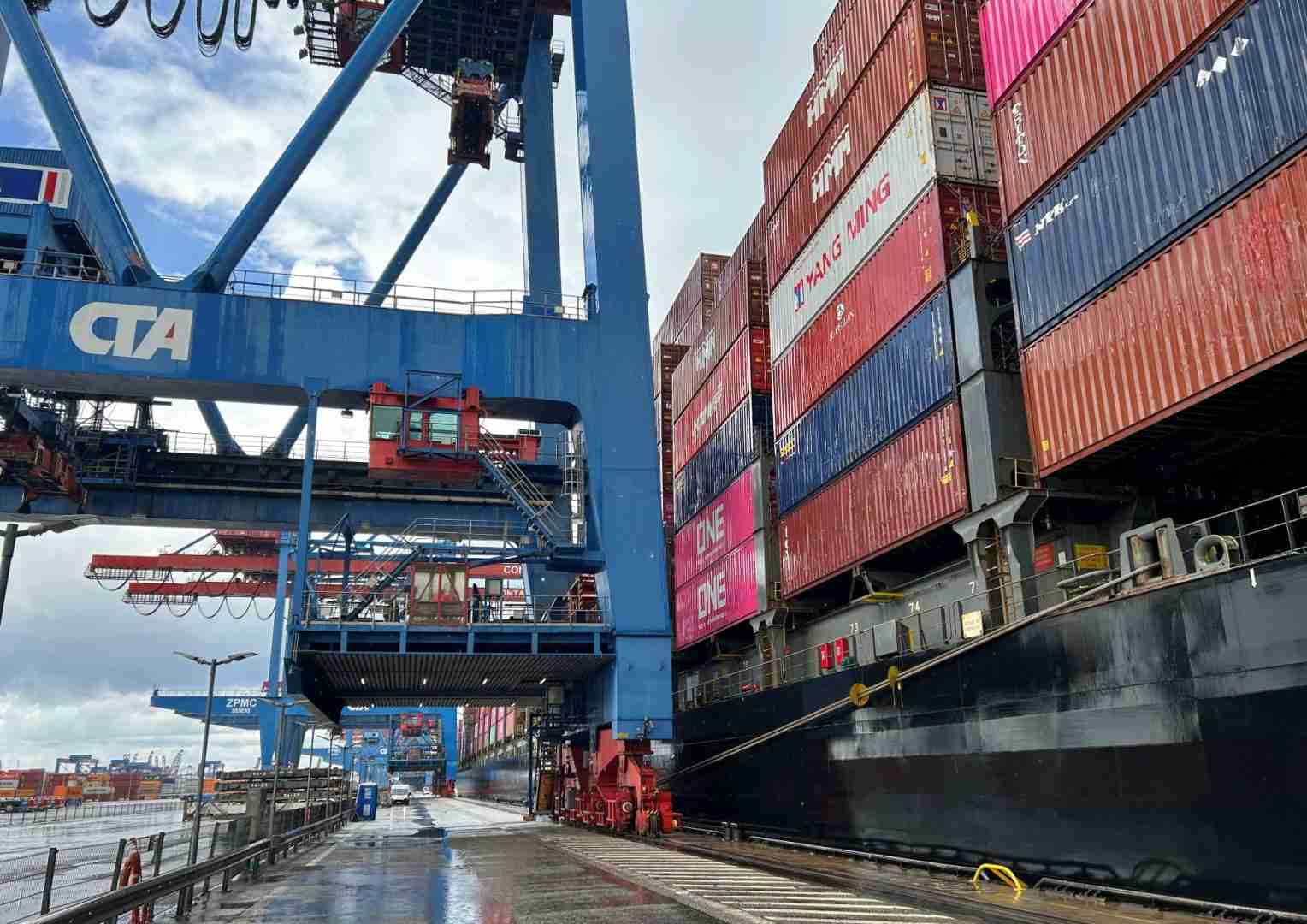
Trade in goods between the European Union and the U.S. reached a record €875 billion ($1.00 trillion) last year despite tariffs, but the figures mask significant economic damage, notably to Germany’s auto sector, a study published on Friday found.

The research by the German Economic Institute, or IW, found a 7.7% rise in EU exports to the U.S. to €580 billion, while U.S. imports into the EU climbed 2.2% to €295 billion, pushing the EU’s trade surplus to nearly €285 billion.

The report attributed some of the increase to front-loading of exports ahead of tariffs that took effect in April and said European manufacturing had suffered.

“This first impression is misleading,” said IW economist Samina Sultan.

EU car and parts exports to the U.S. fell 20.4% in 2025, with Germany, which accounts for nearly two-thirds of EU auto exports to the United States, posting an 18.9% drop.

Ireland bucked the trend with a 52.7% surge in exports, driven by tariff-exempt pharmaceutical and chemical products.

Most EU member states recorded a decline in their goods exports to the U.S. Apart from Ireland only the Czech Republic (+5.1%), Italy (+7.2%), Denmark (+10.6%) and Finland (+10.8%) reported growth.

TRANSATLANTIC SERVICES ALSO HIT A RECORD

Transatlantic services trade also hit a record €865 billion, though the EU ran a €178 billion deficit in that category.

“The transatlantic trade relationship is therefore much more balanced, when considering both goods and service trade,” the study said, contrasting the EU deficit in services and the surplus in goods.

Intellectual property fees – covering software licences, patents and trademarks – accounted for more than 40% of EU service imports from the U.S., rising 13.7%.

Although the services sector has so far avoided the impact of U.S. tariffs, the trade conflict has had a negative effect.

EU imports of travel services from the U.S. fell by around 8%. “This decline is likely attributable to the reduced number of European tourists in the U.S. last year,” said co-author Galina Kolev-Schaefer.

The study said the Turnberry trade deal between the EU and the U.S. asymmetrically benefited the U.S., but still it was a workable solution that should be honoured by both sides. 

“New tariff threats would cause new uncertainty that only hampers business activities on both sides of the Atlantic,” the IW said. 

($1 = 0.8730 euros)

Reporting by Maria Martinez and Rene WagnerEditing by Miranda Murray and Barbara Lewis

Sterling set for biggest weekly jump in 12 weeks on easing political risk, soft dollar

Sterling was up 0.1% at $1.3357, taking its weekly gain to 1.2%, its biggest weekly jump against the dollar since early April

International News via Reuters:

The British pound was headed for its biggest weekly jump in 12 weeks against the U.S. dollar on Friday, helped by easing domestic political risk and soft U.S. labour market data. 

Sterling was up 0.1% at $1.3357, taking its weekly gain to 1.2%, its biggest weekly jump against the dollar since early April. The dollar retreated after the U.S. added fewer jobs than expected last month, cooling expectations for rate hikes from the Federal Reserve.   

British markets had shown signs of unease when Andy Burnham, the only Labour lawmaker to say he wants to replace outgoing Prime Minister Keir Starmer, gained support for a possible leadership challenge.

Burnham had previously stated that the country had to get “beyond this thing of being in hock to the bond markets”, worrying some investors that thought he would abandon the government’s borrowing pledges. 

But markets have taken comfort from Burnham’s commitment to the country’s existing fiscal rules, which include balancing day-to-day spending with tax revenues and reducing debt as a share of output.  

“There’s a bit of risk premia leaving sterling and therefore the currency is strengthening,” said Karl Steiner, head of analysis at SEB. 

Against the euro, the pound was down slightly at 85.73 pence. On Thursday it touched its strongest level against the single currency in a year at 85.47 pence. 

BOE IN FOCUS

Markets are still pricing in a greater chance of a rate hike than a rate cut from the Bank of England this year, despite the easing of hostilities in Iran and the slow resumption of oil supplies from the Middle East.

On Thursday, BoE rate-setter Catherine Mann said looser financial conditions since the last rate meeting in June will be a key factor in her decision on rates at the July meeting.     

In Thursday’s speech, Mann said she would be ready to vote for a rate rise if higher inflation expectations in the wake of the U.S.-Iran war make it less likely that inflation will return to its 2% target.

“Mann signalled a readiness to make an ‘activist’ increase in the policy interest rate if H2 2026 data disappoint on inflation expectations,” said Commonwealth Bank of Australia currency strategist Carol Kong, adding that sterling was underpinned by Mann’s comments.

Money market futures imply around a 70% chance of a rate hike by year-end. Prior to the Middle East conflict, investors had expected the BoE to cut rates twice in 2026. 

Reporting by Samuel Indyk; Editing by Jan Harvey

Crystal Caesar resigns as Education Minister and Senator

Ms. Caesar said she tendered her resignation with the Progressive Labour Party citing concerns of being ‘unable to discharge’ those responsibilities as Minister of Education

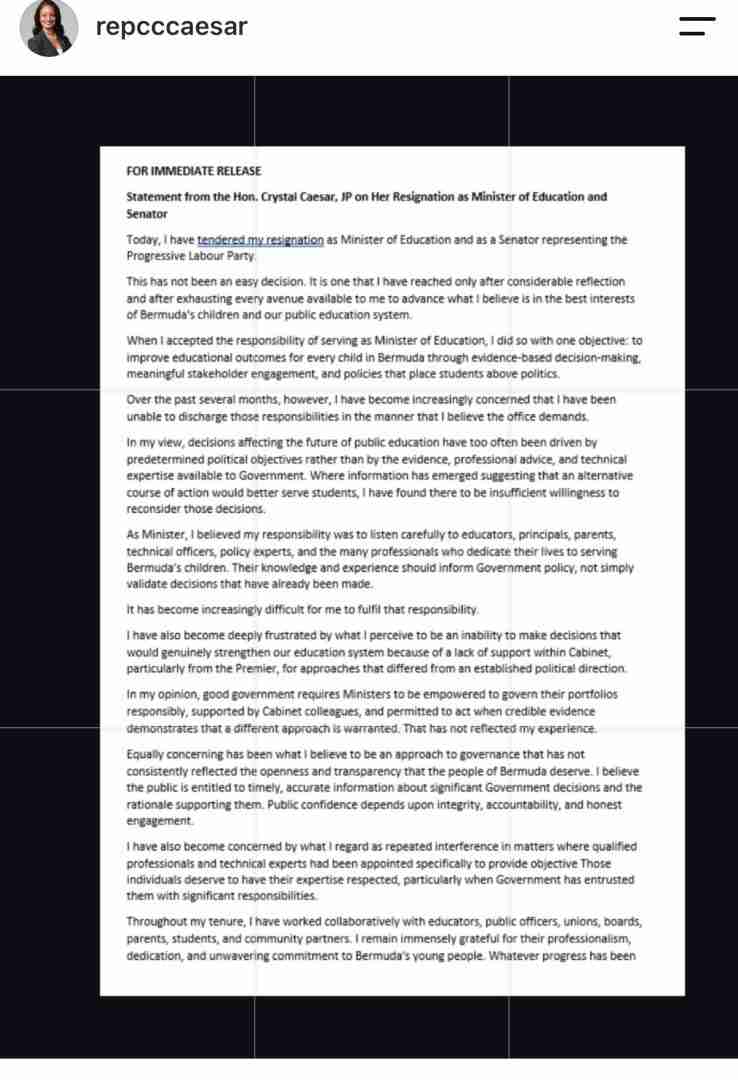
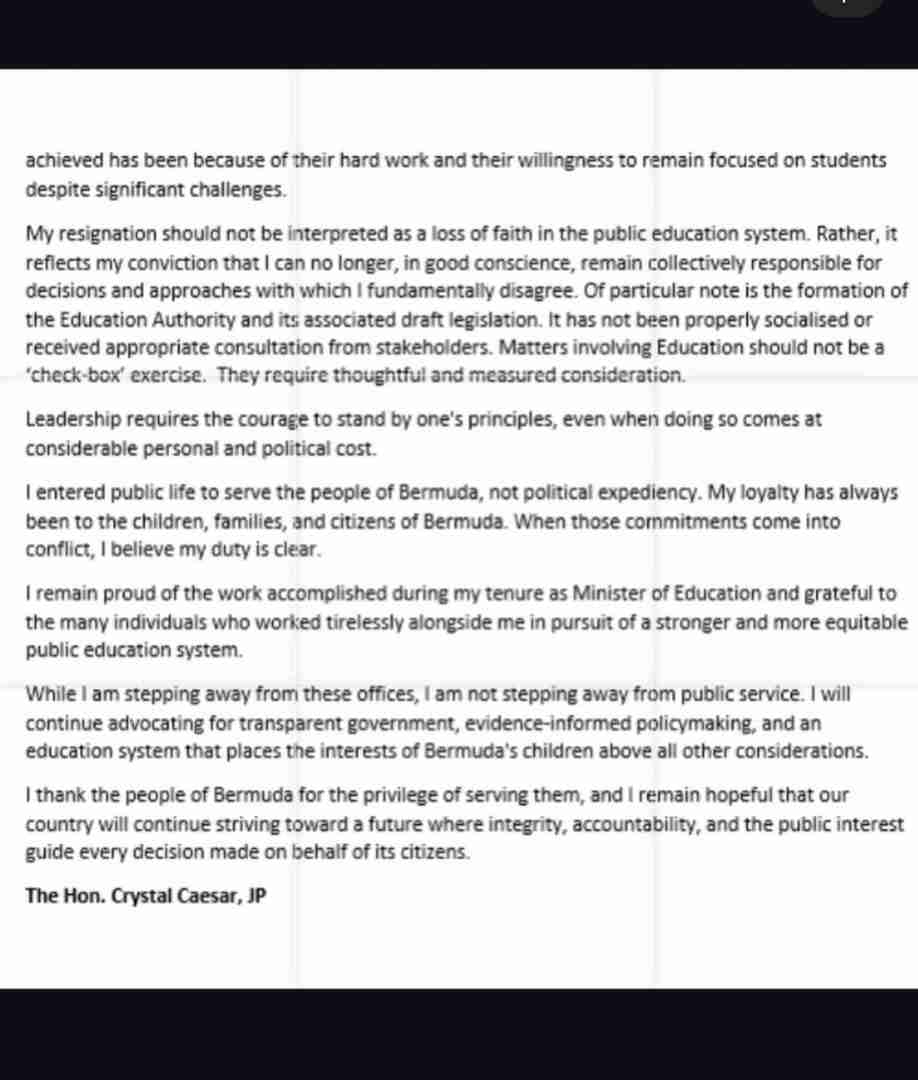
Crystal Caesar has tendered her resignation as government Minister of Education and Government Senator, Thursday evening.

Ms. Caesar posted a lengthy statement on her social media page explaining her decision to step down from the role after taking over from MP Diallo Rabain in February 2025.

She said in the statement, “This has not been an easy decision. It is one that I have reached only after considerable reflection and after exhausting every avenue available to me to advance what I believe is in the best interests of Bermuda’s children and our public education system.”

“Over the past several months, however, I have become increasingly concerned that I have been unable to discharge those responsibilities in the manner that I believe the office demands,” she explained.

Ms. Caesar was responsible for continuing the Government’s transition under education reform from a three-tier to a two-tier system which has been marred by delays this year.

The statement alluded to disagreements with the future direction in rolling out education reform under her mandate as Minister.

She said, “In my view, decisions affecting the future of public education have too often been driven by predetermined political objectives rather than by evidence, professional advice, and technical expertise available to government.

“Where information has emerged suggesting that an alternative course of action would better serve students, I have found there to be insufficient willingness to reconsider those decisions.”

” I have also become deeply frustrated by what I perceive to be an inability to make decisions that would genuinely strengthen our education system because of lack of support within Cabinet, particularly from the Premier, for approaches that differed from an established political direction.”

Premier and leader of the ruling Progressive Labour Party David Burt issued a statement on Thursday night confirming that he met with Ms. Caesar’s and accepted her resignation from the Cabinet and Senate.

He said, “Ms. Caesar is entitled to her views. But I consider her comments on her former Cabinet colleagues surprising and unfortunate. 

 “The Premier’s responsibility is to ensure that the Government is best positioned to deliver on its Throne Speech commitments, advance the legislative agenda, and keep the work of Government moving as we near the end of this Legislative session.

“I respect Crystal’s decision to resign. Collective responsibility is a fundamental principle of our system of government and Ministers express their frank and honest views on every issue before Cabinet, but decisions made by the body must be supported and executed by all.

The full statement from Ms. Caesar can be viewed below.

Expert says snake knows how to stay hidden

The head of a snake conservation group in the US says an Eastern Diamondback Rattlesnake, one of which is thought to be loose in Bermuda, blends well into environments

An unexpected snake sighting has left some Bermudians… well, rattled.

There has been no further sighting or reported evidence of the Eastern Diamondback Rattlesnake since a photo first alerted Government to the potential invader last Friday.

However, the head of a snake conservation body in the US says keeping out of sight is a speciality of the species.

Tiffany Bright is the Executive Director of the Rattlesnake Conservancy in Jacksonville, Florida. She told us more about the species, and the challenges of both locating and capturing it.

WATCH the interview above…

Scared but staying: Some migrants dig in as South Africa turns hostile

While thousands of immigrants packed up and left South Africa ahead of the June 30 protests, many more feel their best option is to stay, even though the country has turned hostile

International News via Reuters:

Ethiopian refugee Helana Wolde locked his home and watched on television as thousands of angry demonstrators marched through South Africa this week calling for foreigners like him to leave.

His wife and their three South African-born children were terrified, he said in the shop in downtown Durban where he sells coffee and lentils.

But after leaving Ethiopia 21 years ago to escape political persecution, he does not see going back as an option.

While thousands of immigrants packed up and left South Africa ahead of the June 30 protests, many more feel their best option is to stay, even though the country has turned hostile.

“I have no place, no property, no family” in Ethiopia, said Wolde, adding his brothers there had been jailed. He reopened his shop, which unlike others wasn’t looted, the morning after the protest and was hoping for the best.

Although Tuesday’s nationwide marches were largely peaceful, there were several pockets of attacks on foreigners and looting of migrant-owned businesses.

“We’re all extra-scared,” Wolde said.

PROTESTERS BLAME IMMIGRANTS FOR ECONOMIC WOES

South Africa hosts over 167,000 refugees and asylum-seekers, according to the United Nations, a small number compared to many African countries — Uganda has 1.8 million, according to the U.N. refugee agency; Chad has 1.2 million; Kenya, 850,000.

The overall immigrant population in South Africa stands at about 3 million, or 4% of the total, low by global standards.

The main group behind the protests, March and March, says it only objects to illegal immigration and is not xenophobic.

But the vigilantes it has riled up often target foreigners indiscriminately, and their frequent demands that immigrants show their documents are themselves illegal — as the government has pointed out in several statements — as only police have the authority to ask for them.

Several South African protesters said that what really bothered them was seeing foreign-owned shops on their streets, while they were struggling to make a living.

“This economy belongs to our people and it has been hijacked,” the group’s leader, Jacinta Ngobese, a former radio presenter, said in a speech on Tuesday.

She has called for marches every Thursday until its demands — including mass deportation — are met.

A third of South Africans are unemployed and frustration with overstretched public services and rampant crime has boiled over, although researchers say that immigration is not to blame for these problems.

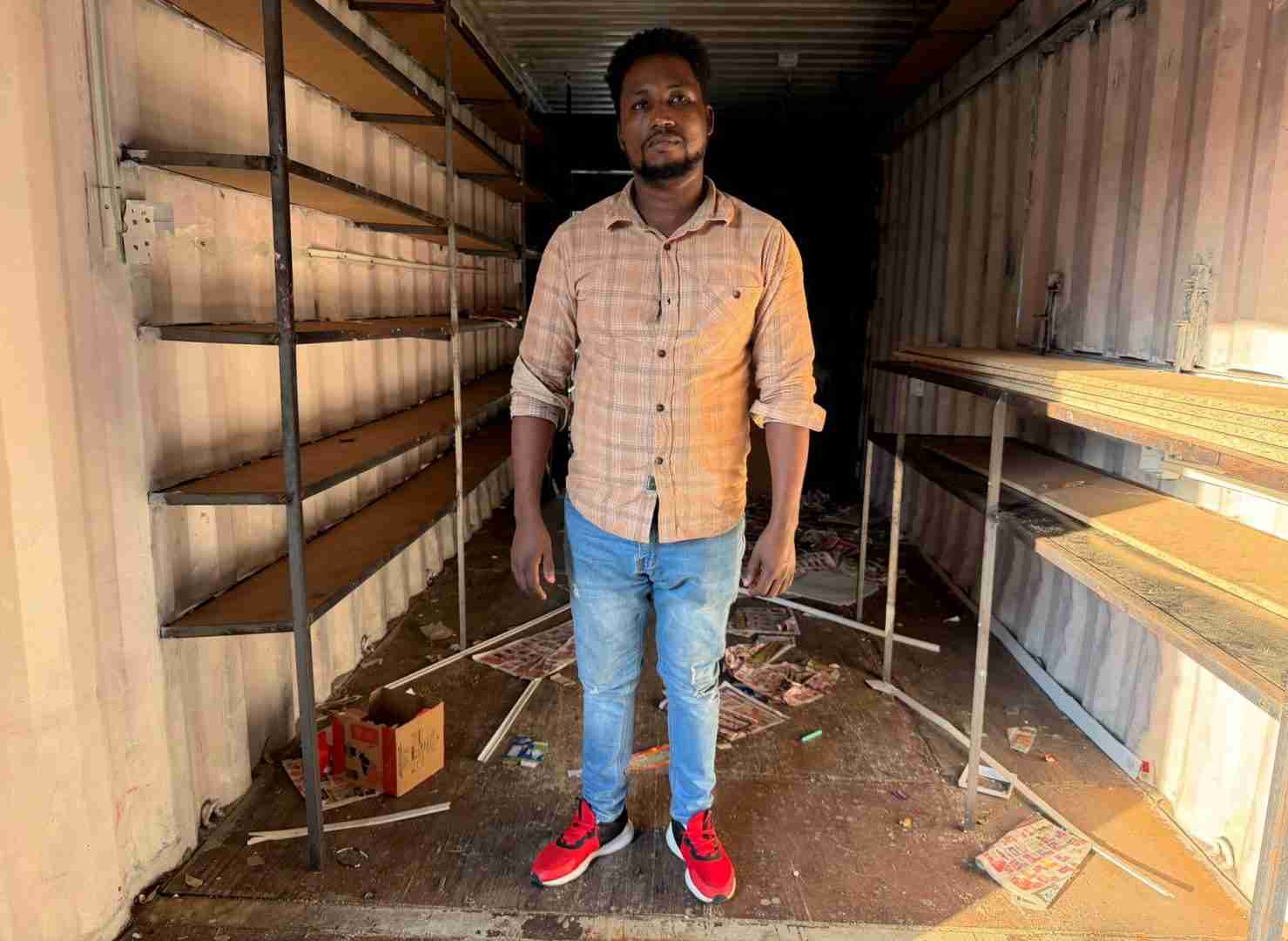
“Foreigners are not taking jobs from South Africans. We are starting some small jobs here in South Africa. We are paying rent,” said Daniel Abide, 33, whose small convenience store in Clermont, a township near Durban, was looted on Tuesday night.

“If you want to open a shop, you must open a shop like us,” he said.

BUSINESS DOWN FOR FOREIGN SHOP OWNERS

Abide came from Ethiopia a decade ago and has two shops, one of which was not targeted. He hopes to eventually re-open the other one, which was broken into and emptied out by looters. He employs one South African in his small business.

Other shops that were looted in Clermont were run by people from Somalia and Pakistan, locals told Reuters.

Outside one, men were working to fix the broken doors before nightfall, when they were afraid looters might come back.

Wolde keeps a laminated stack of documents — his refugee certificate, tax and bank statements — on hand to show anyone who questions his legal status.

Sometimes he has to show them two or three times a day to police or other people who come into his shop, which is on a bustling street with mostly Ethiopian businesses.

“Now business is no good,” Wolde said. “Everybody is scared to come here.”

He has soured on South Africa. But having already survived a shooting in 2008, and xenophobic looting in 2015 and 2021, he plans to stick it out anyway.

“I make business here. I don’t know why they’re angry.”

Reporting by Nellie Peyton;Editing by Tim Cocks, William Maclean

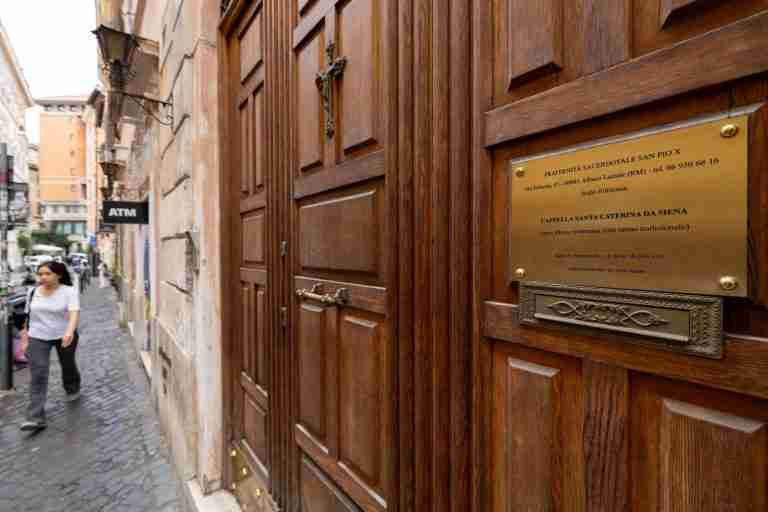
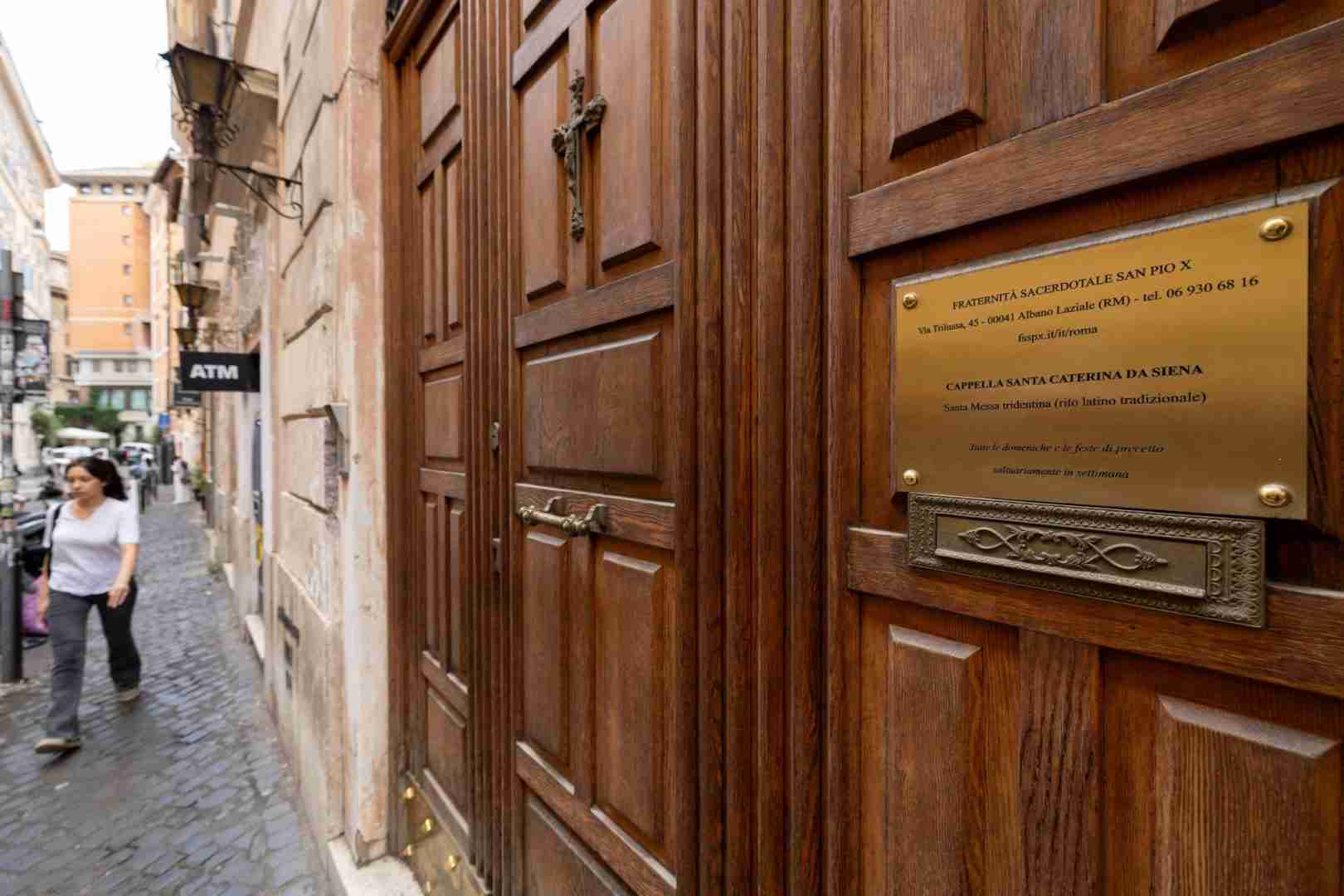
Members of rebel Catholic group are excommunicated, Vatican says

In a strong decree, the Dicastery for the Doctrine of the Faith, the top watchdog authority for the 1.4-billion-member Church, also warned Catholics globally that the Swiss-based Society ​of St. Pius X now celebrated the sacraments illicitly

International News via Reuters:

The Vatican said on Thursday that priests and lay Catholics who are part of a breakaway right-wing Catholic group that ordained bishops without Pope Leo’s approval were in schism with the wider Church and now excommunicated.

In a strong decree, the Dicastery for the Doctrine of the Faith, the top watchdog authority for the 1.4-billion-member Church, also warned Catholics globally that the Swiss-based Society ​of St. Pius X now celebrated the sacraments illicitly.

The ultra-traditionalist group, which denies key Church teachings, cannot officiate marriages or hear confessions validly, the decree said.

It is a strict teaching of the Church that only the pope can authorize the consecration of new ⁠bishops, in ​order to maintain the Church’s ties to Jesus’ 12 ​apostles, who are considered the first priests and bishops.

The Society was not available for immediate comment on the Vatican decree. One member of the group, who said he was not authorized to speak but identified himself as Father Benedict, told Reuters after a Mass in Econe, Switzerland he expected the group would just continue on as before.

“We (will) just keep going,” he said. “We do respect the pope. We will keep praying for him.”

He also criticised the Vatican’s response.

“This sanction shows that, I mean, we did not close the door to the Holy Father, to the Holy See,” Benedict added. “They shut it in our face. So that’s the sad reality.”

VATICAN DECREE GOES FURTHER THAN EXPECTED

The Church considers unauthorized ordination of bishops as so serious that it causes those taking part in the ceremony to be automatically excommunicated, or “out of communion” with the wider Church, and unable to receive sacraments until they repent and ask for forgiveness.

Thursday’s decree said the two bishops leading the unauthorized ordination, held in Switzerland on Wednesday, had been excommunicated, along with the four priests who had become new bishops, which was widely expected.

However, the Vatican went further than expected and said that all priests of the Society ​of St. Pius X and all Catholics who “adhere formally” to the group were now in schism and excommunicated.       

A schism is a term to indicate a severe, formal rupture inside the Catholic community.

The Vatican said later on Thursday that lay Catholics affected by the excommunication could reenter full communion with the Church by meeting with their bishop and signing two documents, a profession of faith and adherence to official Church teaching.

Priests of the Society wishing to repent have to take similar steps, but also have to write a letter to the pope asking for forgiveness and declaring their belief in the validity of Church reforms since the 1960s.

POPE FIRMLY BACKS CHURCH REFORMS OF 1960s

The Society of St. Pius X denies the central teachings of the Second Vatican Council, a landmark Vatican gathering of bishops in the 1960s that pursued a range of reforms for the global Church and sought to repair its relations with Jews and other Christian denominations.

The Council also allowed for the Mass, until then said only in Latin, to be celebrated in local languages. The society rejected that change, citing a desire for the Latin rite’s sense of mystery and formality.

Massimo Faggioli, an expert on the papacy, told Reuters that Leo believed very firmly in the reforms of the Council, often referred to by Catholics as “Vatican II”.

“He has no regrets, no doubts about the fact that this is the Church of Vatican II,” said Faggioli, a professor at Villanova University, outside Philadelphia. “He has shown that he doesn’t want to compromise on that.”

Leo told journalists in June that the divisions with the Society of St. Pius X were “painful” but called the reforms of Vatican II “fundamental elements” of Church teaching. “We must move forward,” the pope said.    

The Society, whose followers are sometimes known as Lefebvrists after their founder, Archbishop Marcel Lefebvre, says it counts 733 priests worldwide. Its leadership, which has long had tense relations with the Vatican, says it needed to ordain new bishops to have enough prelates to lead the group.

Lefebvre was excommunicated in 1988 after ⁠ordaining four bishops without permission from then-Pope John Paul II. Benedict XVI, John Paul’s successor, sought to renew dialogue with the society and lifted four remaining excommunications.

Reporting by Joshua McElwee, Additional reporting by Dave Graham in Zurich and Emma Farge in Econe, Switzerland; Editing by Crispian Balmer, Alex Richardson and Andrew Heavens

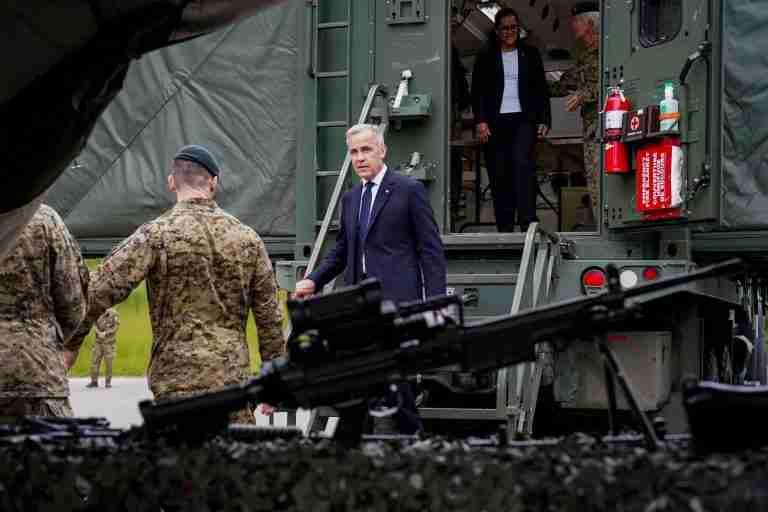
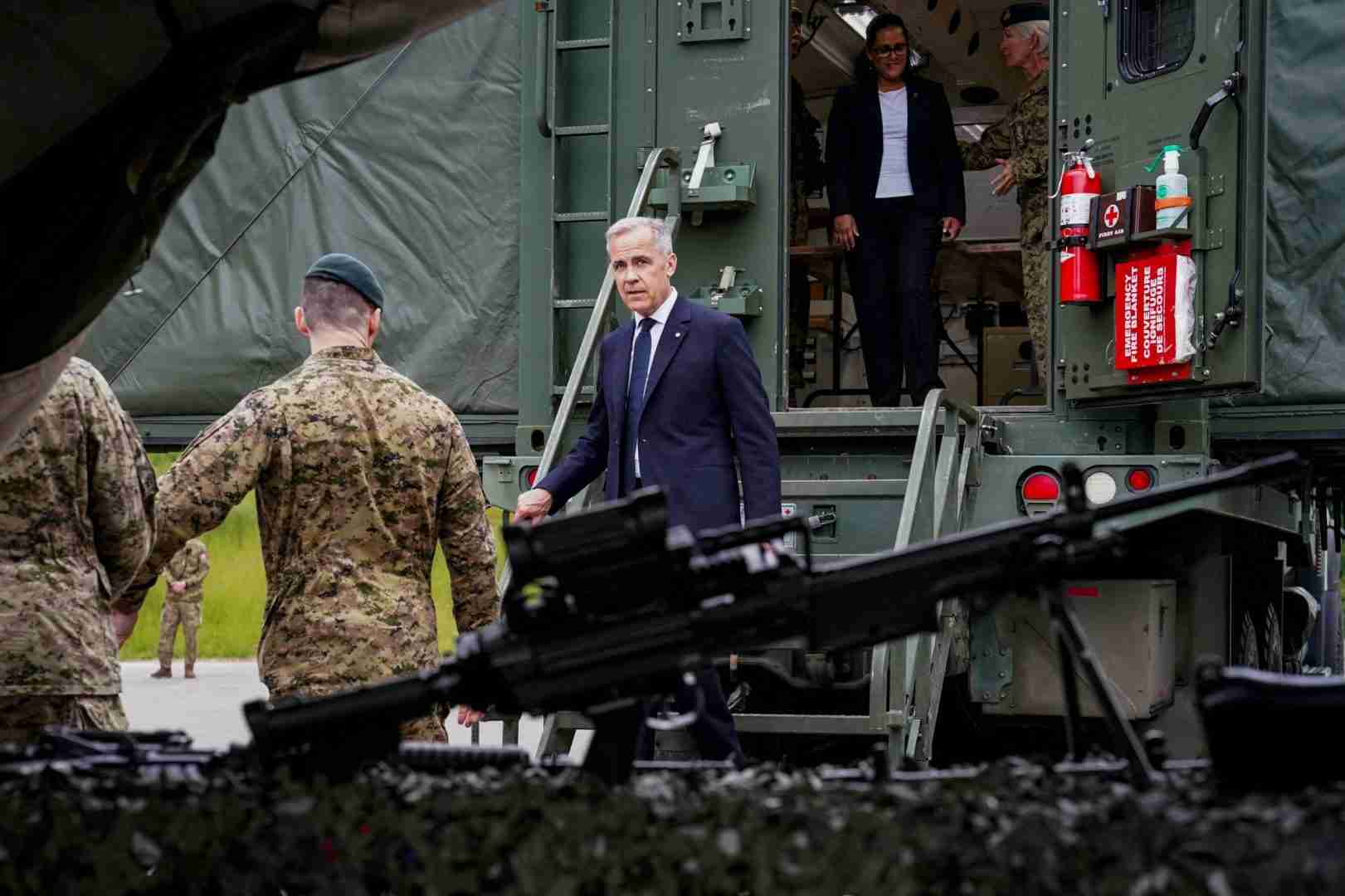
Exclusive-Canada aims to announce 10 countries backing global defence bank at NATO summit

Canadian Prime Minister Mark Carney is promoting the Defence, Security and Resilience Bank (DSRB) as part of his call this year for an alliance of “middle powers” to combat what he sees as the fracturing of the traditional U.S.-led world order

International News via Reuters:

Canada is aiming to announce around 10 founding nations for a global defence bank at next week’s NATO summit in Turkey, the lead Canadian negotiator told Reuters on Thursday.

Canadian Prime Minister Mark Carney is promoting the Defence, Security and Resilience Bank (DSRB) as part of his call this year for an alliance of “middle powers” to combat what he sees as the fracturing of the traditional U.S.-led world order.

“We gave ourselves the NATO summit as a deadline … What we are aiming to announce is the list of founding members,” Isabelle Hudon, Canada’s top negotiator in the launch of the multilateral initiative and CEO of the Business Development Bank of Canada, said in an interview.

The bank’s purpose is to bolster the defence of allied nations by raising up to £100 billion ($133 billion) in cheap finance.

Hudon said the initial roster of countries would likely all be European, besides Canada, but declined to name them. She cautioned the announcement was not guaranteed and depended on final negotiations with allies, including over their capital commitments, but said the project had momentum.

“My prime minister said we should not aim for perfection before launching this initiative, that we should rally the countries that are ready to be called founding members, and then the membership will stay open,” Hudon said.

The project’s fate remains uncertain without the backing of nations crucial to it securing a triple-A credit rating.

The DSRB has had productive talks with South Korea and there was a 50-50 chance of it joining, potentially later, Hudon said, adding that no other G7 nations were close to signing up for now. South Korea’s Finance Ministry has previously told Reuters it was reviewing the proposal. It could not be immediately reached outside normal office hours.

“We’re trying to hopefully tee something up for the NATO summit, but there are a lot of moving pieces,” said John Fragos, press secretary for Canada’s finance minister, adding that the merits of the bank were “widely understood.”

POTENTIAL HURDLES

So far, Canada has been joined publicly only by Luxembourg, which will become the bank’s European base. Carney said on Friday, “a critical mass” of countries intended to join, without naming them.

“Ankara will be an important milestone to see whether there’s critical enough momentum to make this idea work,” said Linus Terhorst, an analyst at defence think tank Royal United Services Institute.

It faces potential hurdles in Europe, as it competes with defence initiatives such as the European Union’s SAFE programme.

The DSRB is asking anchor nations to pay in proportion to their economies’ size, Hudon said. “The capital is the most challenging part of the decision,” she added.

The proportional contributions could result in Canada contributing up to €1.5 billion ($1.7 billion), with smaller nations paying between €500 million and €750 million, a source familiar with the matter said.

IN THE MIX

Britain has resisted joining the DSRB — preferring to pursue its own defence financing project known as MDM with the Netherlands and Finland — but has explored possibilities to align or merge it with the DSRB, two sources said.

Carney told reporters on Friday he looked forward to discussing the bank with the incoming British prime minister. Former Manchester Mayor Andy Burnham is the favourite to replace Keir Starmer. Burnham was not immediately available for comment.

“We’re in constant conversation with London and London today means … different stakeholders,” said Hudon.

Germany has also previously distanced itself, but a Finance Ministry spokesperson said it had since joined DSRB talks as an observer and was reviewing the outcome.

G7 nation Italy, as well as Spain, Turkey, Belgium, and Ukraine, have analysed the proposals, multiple sources said. They declined to be named, discussing private information. Turkey’s Foreign Ministry did not immediately comment on its participation, but sources have said it is interested.

The Netherlands said it was not participating, with a government spokesperson saying it was fully focused on its MDM initiative with the UK and Finland.

COMPETING INITIATIVES

A group of former NATO security advisers, senior ex-military personnel and bankers proposed the DSRB in 2024.

NATO nations and their allies are grappling with rising defence demands linked to the war in Ukraine, growing tensions with Russia, and concerns about China’s military expansion.  

NATO leaders agreed in June 2025 to spend 5% of GDP on defence and security-related investments by 2035.

Hudon said it was unlikely Canada would announce a host city for the DSRB next week, with five in contention — Toronto, Montreal, Ottawa, Halifax and Vancouver.

Top banks, including JPMorgan, Deutsche Bank, Commerzbank and ING, have joined the project alongside Canada’s RBC, BMO, CIBC, National Bank of Canada, Scotiabank and TD Bank.

($1 = 0.7516 pounds) ($1 = 0.8773 euros)

Reporting by Jonathan Spicer in Ankara and Iain Withers and Marc Jones in London, Additional reporting by Caroline Stauffer, Andrew Gray, Promit Mukherjee, Maria Cheng, Maria Martinez, Elizabeth Piper, Giuseppe Fonte, Anthony Deutsch, Jihoon Lee, Jan Strupczewski, Jesus Aguado, Lili Bayer; Editing by Rod Nickel

Iran prepares to bury slain supreme leader with week of mass mourning

Iran’s supreme leader was killed by U.S. and Israeli strikes in their first attack of the war and the funeral events will begin over the weekend in Tehran, with mass processions planned next week in Qom and Mashhad and ceremonies in Iraq

International News via Reuters:

Iran’s ruling clerics are preparing days of mass funeral rites for Ayatollah Ali Khamenei as a show of public devotion to the Islamic Republic and proof that its revolutionary fervor still burns strong.

Iran’s supreme leader was killed by U.S. and Israeli strikes in their first attack of the war and the funeral events will begin over the weekend in Tehran, with mass processions planned next week in Qom and Mashhad and ceremonies in Iraq.

“The large public turnout at the funeral procession of the martyred leader and the other martyrs will, in effect, be another referendum for the Islamic Republic,” Qom Friday prayer leader Ayatollah Mohammad Saidi declared to state media. 

If they do see it as a referendum, authorities are not leaving the result to chance.

They hope to mobilise millions of supporters to flood Iran’s cities, laying on transport, accommodation and food, to proclaim the might of their theocratic state after it survived what they saw as an existential war.

Khamenei’s death, and the succession of his son Mojtaba as Iran’s third supreme leader, in a conflict with its greatest foes, mark an epochal moment in the Islamic Republic’s 47-year history. Mojtaba, dangerously wounded in the strike that killed his father, has not been seen in any new image since the war began. 

But behind the veneer of unity and devotion, public support for the Islamic Republic has worn paper thin, analysts say. 

Across the country, many Iranians are tired of decades of sanctions throttling their economy and angry at the repression meted out in the name of a 1979 revolution that only older people in a mostly young population can remember.

When people poured onto the streets in December and January in demonstrations triggered by inflation, many were chanting for the death of Khamenei and authorities could only crush the unrest by shooting thousands of protesters.

After news of Khamenei’s killing began to circulate in the first days of the war, Tehran residents reported sounds of cheering erupting from behind the windows of houses and apartments in parts of the city. 

Now Tehran is tense and quiet, a sharp contrast with the emotional last burial of a supreme leader — the father of the revolution Ayatollah Ruhollah Khomeini. 

Then, millions of sobbing people mobbed Khomeini’s funeral procession and some climbed on the ambulance, the dead leader’s naked leg spilling from his shroud as Revolutionary Guards battled to push back the crowd. 

Samira, 35, whose husband owns a restaurant in Tehran, said her family did not plan to attend any funeral events and was leaving Tehran for the week. “It is like life has stopped and there are Basijis everywhere,” she said, referring to the voluntary militia organisation affiliated with the Revolutionary Guards. 

MASS PROCESSIONS PLANNED ACROSS SEVERAL CITIES

In Iran’s theocratic system, Khamenei was not only head of state and leader of a revolutionary movement, but the representative on earth for Shi’ite Islam’s 12th imam who disappeared in the ninth century. 

Khamenei’s death in an enemy attack plays into a powerful Shi’ite tradition of martyrdom and mourning, in which processions of black-clad flagellants beat their chests or backs during annual religious commemorations. 

That potent symbolism has been evident in the black funeral flags hanging over city streets since his death and in mourning ceremonies for him referencing the martyrdom of Shi’ism’s third imam, Hossein. 

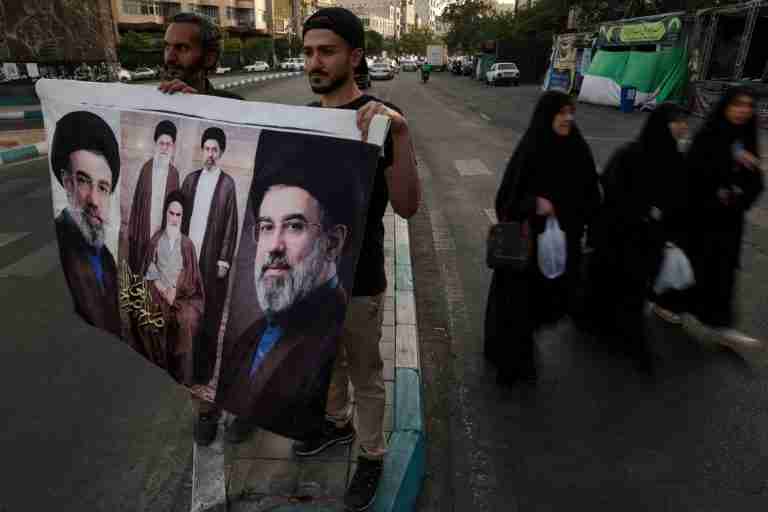
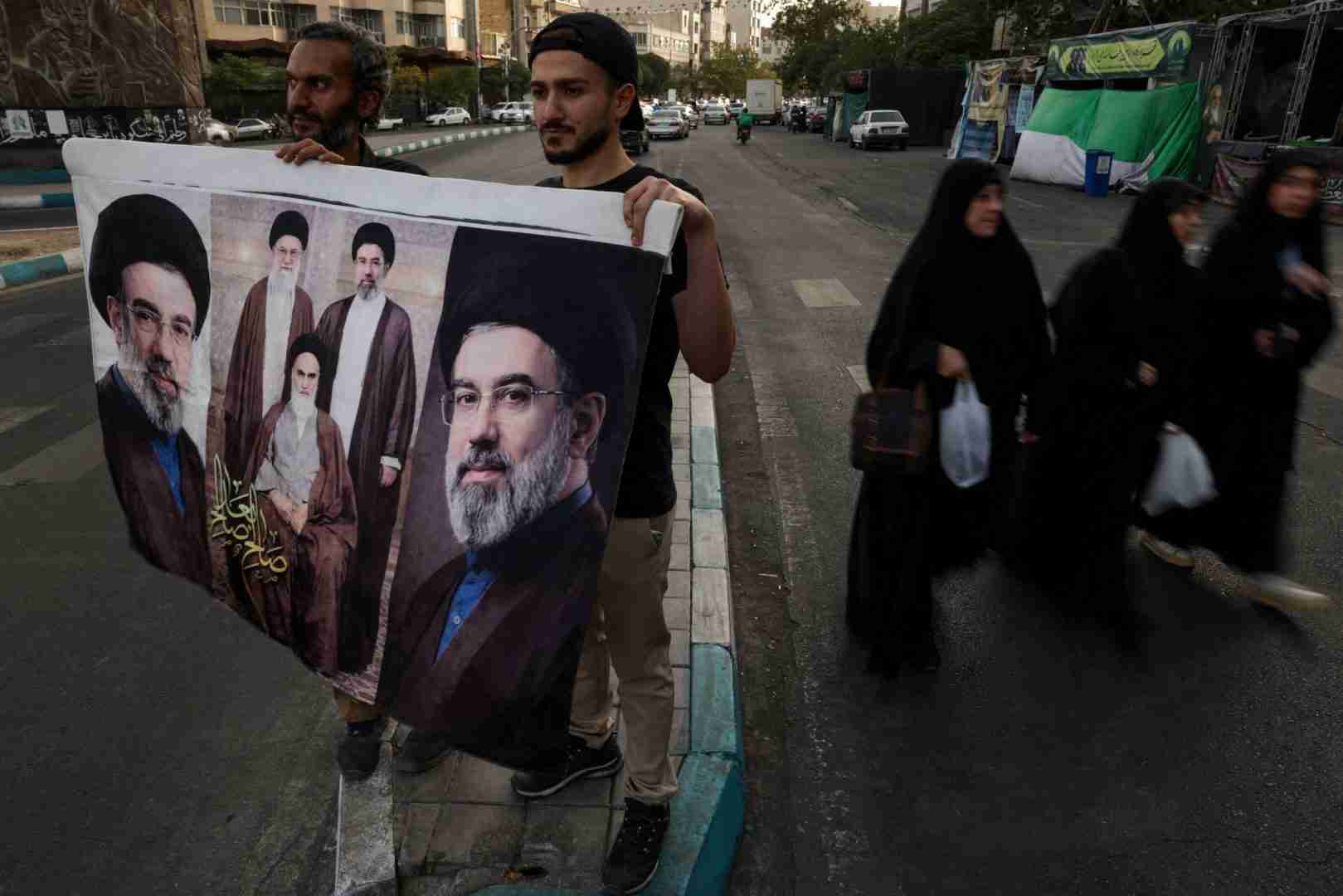
On Thursday, workers were stringing up new posters in Tehran proclaiming support for the new leader Mojtaba, with the images of the late Khamenei and a raised revolutionary fist behind him. 

For supporters of the Islamic Republic, the talk of martyrdom is no mere rhetoric.

“These are the hardest days of my life,” said Mohsen, 24, a Basij member in Tehran who asked not to give his family name. 

“I do not remember the time when Imam Khomeini passed away but my father says the entire country was engulfed in grief and mourning. Today, too, people are in mourning, especially because our leader was martyred,” he added.

Officials and foreign dignitaries, including from Russia and China, will offer condolences in events on Friday. 

On Saturday, Khamenei’s remains will be taken to a Tehran mosque for the first stop in a national funerary tour. The bodies of his daughter, son-in-law and granddaughter, as well as the widow of the new leader, his son Mojtaba, who were all killed in the same strike, will be carried alongside. 

Hotels are offering 50% discounts, schools, mosques and sports halls have been prepared to house mourners, and bus and rail networks are being diverted to serve the main events. 

After what authorities are billing as a massive procession in central Tehran on Monday, the remains will be taken to the seminary city of Qom, the centre of Iran’s Shi’ite hierarchy, for ceremonies on Tuesday. 

Ceremonies will then be held in Iraq’s shrine cities of Najaf and Kerbala on Wednesday with prominent attendees from Iran’s regional network of Shi’ite proxies. He will be buried on Thursday, after another procession, in Mashhad near the tomb of the Imam Reza, a figure of great devotion in Iran. 

Security will be tight, with temporary airspace restrictions in place over Tehran and other cities and threats of a powerful response if either the United States or Israel resumes attacks.

“We are showing our power to America and others in our own way,” said Hossein Kheiri, 63, a veteran of the 1980-88 war with Iraq, standing under a poster of Khamenei in Tehran. 

By Parisa Hafezi and Angus McDowall; editing by Philippa Fletcher

‘It’s the language of business’

Minister highlights career opportunities in accounting

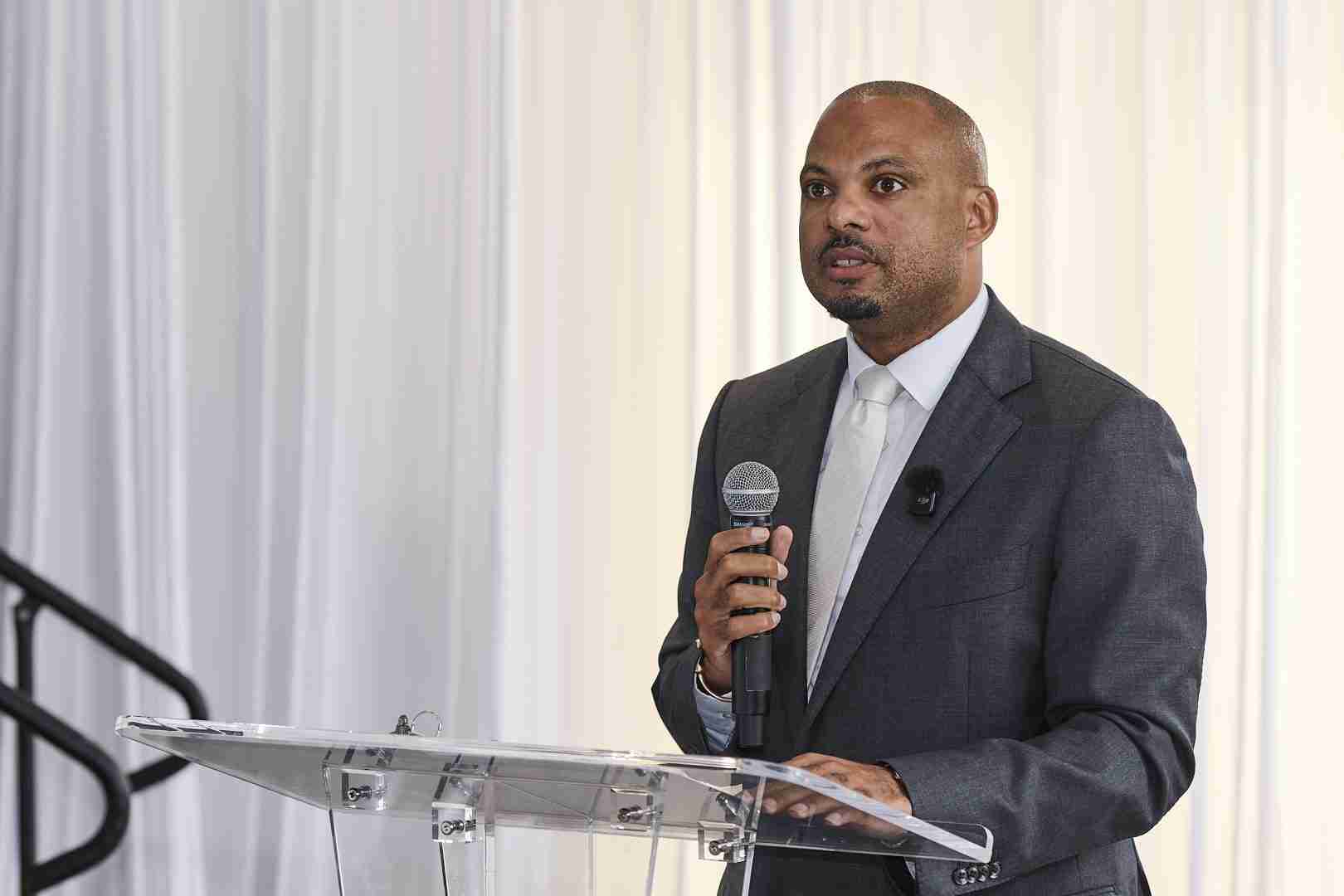
The Minister of Economy and Labour, the Hon. Jason Hayward, JP, MP, gave opening remarks at the CPA Bermuda Accounting Career Fair, where he highlighted the importance of developing Bermuda’s future accounting professionals and commended CPA Bermuda for its continued investment in local talent.

Addressing the audience, Minister Hayward explained how the career fair offers students, young professionals, employers, and educators an important opportunity to connect and explore the diverse career pathways within the accounting profession.

“Accounting is far more than numbers; it is the language of business,” said Minister Hayward. “It equips professionals with the skills to solve complex problems, make informed decisions, and help organisations grow and succeed.”

Minister Hayward highlighted how advances in artificial intelligence, data analytics, digital reporting, and automation are transforming the accounting profession, increasing demand for professionals who can think critically, exercise sound judgement, communicate effectively, and provide strategic advice.

Encouraging students and aspiring accountants to approach the career fair with curiosity, confidence, and ambition, the Minister noted that every conversation could lead to an internship, mentorship, professional qualification, or rewarding career.

Minister Hayward reaffirmed the Government’s commitment to preparing Bermudians for careers in professions that are essential to our economic success, stating, “Through investments in education, workforce development, internships, apprenticeships, and partnerships with industry, we are working to ensure Bermudians are equipped with the knowledge, experience, and qualifications needed to compete and succeed in a rapidly evolving global economy.”

Minister Hayward also congratulated the recipients of the 2026 CPA Bermuda awards, recognising their academic achievement, leadership, community involvement, and commitment to pursuing careers in accounting and business.

The 2026 CPA Bermuda Award recipients are:

  • Callum Adams – Mount Saint Agnes Academy
  • Lily Butler – Bermuda High School
  • Shakirah DeGuzman – The Berkeley Institute
  • Hudson Ferris – Warwick Academy
  • Kiara-Ma’Lie Sana Ronel Weeks-George – Somersfield Academy
  • Evie Hook – Saltus Grammar School
  • Kyrah Mendes – Bermuda College
  • Dasia-Nae Scott – CedarBridge Academy
  • Ciaran Smyth – Bermuda Institute

In closing, the Minister thanked CPA Bermuda for its continued leadership in developing Bermuda’s future accounting professionals and the participating employers for investing their time in mentoring and inspiring Bermuda’s future workforce. He also wished all participants a productive and successful career fair.

Minister Hayward said, “Together, we can continue building a highly skilled Bermudian workforce that supports economic growth, strengthens our international competitiveness, and creates opportunities for generations to come.”

Emergency services attend incident at Admiralty House

Bermuda Broadcasting News understands one man was taken to King Edward VII Memorial Hospital with injuries

Emergency responders attended the Admiralty House Park in Pembroke this afternoon after an apparent cliff jumping incident.
Bermuda Broadcasting News understands one man was transported to hospital via ambulance this afternoon .

A BFRS spokesperson confirmed that a call came in from a member of the public of a swimmer in distress. Emergency staff arrived at the scene shortly after 1pm where members of the public were assisting the man in the water until help arrived.
The park was busy with campers, visitors and swimmers near the cliffs where the reported incident occurred.
We’re told no further details would be provided.