

In this episode, Shara is joined by Dr. Eloïse Pitts Crick – Solstice Bermuda to explore the complex relationship between stress, pain, and anxiety. They discuss how these systems are interconnected, how pain can be both a cause and effect of stress, and practical strategies for managing these challenges.
Bermudian midfielder Nesbeth leaves Chicago Stars FC by mutual consent


Bermudian international midfielder Leilanni Nesbeth has parted ways with National Women’s Soccer League side Chicago Stars FC ahead of the expiration of her contract.
The 24-year-old, whose agreement was due to run until the end of the 2026 season, is now a free agent as she seeks fresh career opportunities.
Nesbeth arrived in Illinois as a highly rated tenth-overall pick in the 2024 NWSL Draft following a stellar, two-time NCAA championship-winning collegiate career with the Florida State Seminoles.
Upon making her professional debut, she created history by becoming the first-ever Bermudian native to feature in the NWSL.
During her two-and-a-half seasons with the Stars, the midfielder accumulated 1,275 minutes on the pitch across 33 first-team appearances, recording one goal and one assist.
In an emotional farewell statement, Nesbeth said: “Chicago will always hold a special place in my heart. This team brought my biggest dream to life, and I will always be grateful for the lessons, the challenges, the laughs, and the unimaginable growth.
“I want to thank the club for this amazing opportunity, my teammates for pushing me to be my best every day, and the fans for their unwavering support over the years.”
Chicago Stars FC club president Karen Leetzow paid tribute to the midfielder’s impact, adding: “We’re grateful for everything that Leilanni has brought to the club during her seasons in Chicago.
“She has shown the utmost dedication to our club and the Chicago community and we wish her all the best and continued success in her next opportunity.”
Schools saluted for linking academics, nutrition and health

2026 Healthy School Awards announced

The Department of Health recently held its annual Healthy Schools Awards Ceremony at the Bermuda Society of Arts, City Hall. These awards are for schools that consistently promote healthy nutrition, eating, and wellness among their students and staff.
Eleven (11) public and private schools and 4 government preschools were reviewed as part of the Healthy Schools programme. This year, three components were submitted by schools and reviewed: one component that each school chose to either improve or highlight, and the Nutrition Environment & Services and Counseling, Social, & Psychological Services components.

Minister of Health, Kim Wilson, said: “Good nutrition starts early, and now more than ever our young people need a safe, nurturing environment where they can learn, grow, and thrive. Schools are the ideal place to teach our young people about the relationship between academics and nutrition, health, and wellness. I am pleased to see our schools providing supportive spaces where students can learn about healthy eating, physical activity, hygiene, mental health, and overall wellbeing. When children understand the importance of health and wellness, they are empowered to make informed choices that support their future.

“The collaboration between the Departments of Education and Health to manage the Healthy Schools Programme strengthens our shared goal of ensuring that students are healthy and positioned for success. This programme fosters a culture of wellness that benefits not only our schools, but our entire community. I want to thank and congratulate everyone who is instrumental in making this possible.”

A complete list of the award recipients and photos from the event are here: Healthy Schools Awards 2026 | Government of Bermuda – Government of Bermuda
Vaping emerges as new pregnancy concern

Drug control report highlights emerging e-cigarette use in Bermuda
The Department for National Drug Control (DNDC) has released its 2025 Survey of Pregnant Women, revealing a significant increase in reported vaping among pregnant women in Bermuda.
The anonymous survey of 60 pregnant women found that 16.7 per cent reported using an e-cigarette or other electronic nicotine product, up from 3.1 per cent in 2020, making vaping an emerging public health concern.
The report also found that 15 per cent of respondents consumed alcohol during pregnancy, while 18.4 per cent reported having six or more drinks on one occasion, indicating a likelihood of hazardous drinking. Tobacco use continued to decline, with no respondents reporting current cigarette use, while 23.3 per cent said they had used marijuana in the past year.
The survey, conducted for the fifth time since 2005, also includes a 20-year trend analysis showing rising maternal age, declining tobacco use, and persistent concerns around binge drinking during pregnancy.
Minister of National Security Michael Weeks said the findings provide valuable insight into the health risks and support needs of pregnant women, encouraging the public and healthcare professionals to use the report to strengthen prevention and education efforts.
The DNDC said the findings will help guide future public education campaigns and support evidence-based policies aimed at improving the health of mothers and babies in Bermuda.
OBA wants ‘procedural gap’ closed in order to safeguard children

The Attorney General and Minister of Justice said, “We recognise the strength of public feeling on these matters, and where there are constructive recommendations about improving communication, the Ministry is prepared to consider them.”

The Opposition One Bermuda Alliance wants a ‘procedural gap’ closed so that schools are directly notified before convicted sex offenders are released back into the community.
The call was made after the Ministry of Justice notified the public about the release of 66-year-old convicted sex offender, Kevin L Goater.
However, the AG has stated that the appropriate legal steps were taken in this case.
Jasmine Patterson has more.
Ministry urges residents to ‘Trim It Back’ ahead of hurricane season

Property owners encouraged to cut overgrown vegetation to reduce storm risks
The Ministry of Public Works and Environment is urging property owners to trim back overhanging trees and hedges extending onto Bermuda’s roads as part of its “Trim It Back” campaign.
The initiative encourages residents to routinely manage vegetation to improve road safety, protect essential workers, and strengthen the island’s preparedness ahead of the 2026 Atlantic hurricane season.
A Ministry spokesperson said keeping roadside vegetation under control is a shared responsibility that benefits the entire community.
“Keeping hedges and trees properly trimmed is an important responsibility for all property owners,” the spokesperson said. “It helps keep our roads safe, protects public officers while carrying out essential services, and ensures those services can continue without unnecessary disruption.”
The spokesperson added that maintaining vegetation is especially important as hurricane season approaches.
“In the lead up to hurricane season, managing vegetation also plays a key role in reducing potential damage and supporting effective response and recovery efforts. Residents are encouraged to act now as part of their contribution to a safer and more prepared community.”
The Ministry warned that overgrown trees and hedges can cause significant disruption to essential public services. Branches extending into roadways can strike waste collection trucks and other government vehicles, resulting in broken windscreens, costly repairs and service interruptions.
Dense vegetation can also create hazards for sanitation workers and other vehicle operators, increasing the risk of injury when travelling along narrow or obstructed roads.
Residents are being encouraged to remember the campaign’s message: “Trim it back. Keep our roads safe and our workers protected.”
EU says it held ‘constructive’ talks with Apple CEO Cook after Siri AI clash

EU regulators and Apple traded barbs last month over competition rules that the U.S. company says have stopped it releasing its upgraded assistant Siri AI in the bloc, making it unavailable for iPhone and iPad users in the region

International News via Reuters:
European technology chief Henna Virkkunen held “constructive” talks with Apple CEO Tim Cook this week, a European Commission spokesperson said on Wednesday, after the two sides clashed over the roll-out of Siri AI in Europe.
EU regulators and Apple traded barbs last month over competition rules that the U.S. company says have stopped it releasing its upgraded assistant Siri AI in the bloc, making it unavailable for iPhone and iPad users in the region.
“We can confirm that the call between EVP Virkkunen and Mr Tim Cook took place. It was a constructive exchange on topics of common interest, on which the work continues,” the European Union spokesperson said in a statement.
More stringent European tech regulation has become a bone of contention between EU capitals and Washington, where U.S. President Donald Trump has criticized the tougher rules and steep fines as damaging the interests of U.S. Big Tech.
The iPhone maker has said its Siri AI would not be available initially in the EU on iPhones or iPads and faulted the Commission for refusing to engage constructively to ensure privacy and security on Apple’s devices.
The Commission has blamed Apple, saying it had been unable to develop “interoperability” to meet EU standards. Europe accounted for nearly 27% of Apple’s total sales in its last fiscal year. The company does not break out sales for the EU.
Apple has said that Europe’s Digital Markets Act has forced it to postpone the roll-out of several features in the EU, including iPhone mirroring to Mac and live translation with AirPods as well as location-based features in Maps.
The DMA aims to rein in Big Tech, give rivals more leeway to compete and consumers more choice. DMA breaches can lead to fines of as much as 10% of a company’s global annual turnover.
Reporting by Inti Landauro; Editing by Sudip Kar-Gupta and Alexander Smith
Wayve courts automakers with AI driving system that learns like humans
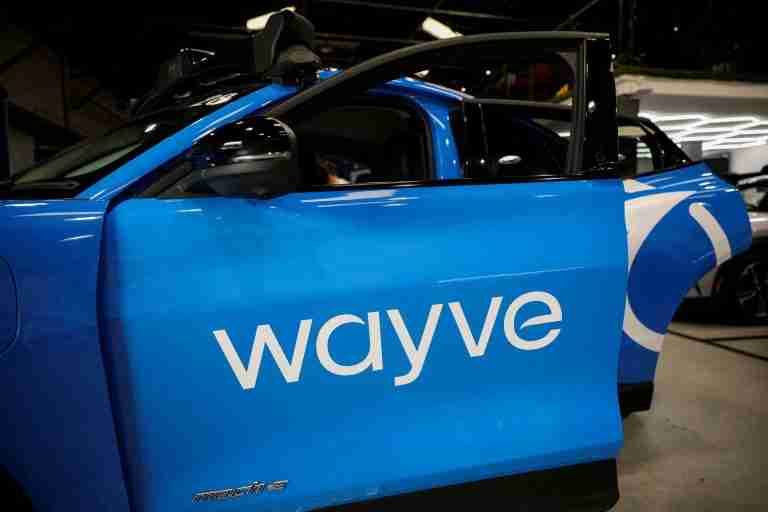
The London-based company has pulled in $2.8 billion from a roster of investors and strategic partners that includes big names across the technology and automotive sectors, from Nvidia to Mercedes-Benz and Nissan
International News via Reuters:
Autonomous-driving startup Wayve is riding a tide of investor interest.
The London-based company has pulled in $2.8 billion from a roster of investors and strategic partners that includes big names across the technology and automotive sectors, from Nvidia to Mercedes-Benz and Nissan. In June, Wayve said it will deploy its system in robotaxis from Jeep maker Stellantis, to go on Uber’s ride-hailing network.
Wayve uses an artificial-intelligence technology called end-to-end machine learning to navigate roadways, which is supposed to instantly translate sensor-generated data into driving decisions, much like a human driver. That differs from a more traditional approach, which melds AI with software coding and high-definition maps to create preset rules for how the car should respond in different scenarios, including unforeseen events.
Wayve’s approach is similar to another big autonomous-driving player — Tesla, which moved to an end-to-end model a few years ago. Unlike Tesla’s approach, though, which uses cameras as its only onboard sensor set, Wayve’s system is designed to work with a wide array of sensors and AI chips.
That means it could license the technology to practically any driverless-car developer, said Wayve CEO Alex Kendall, a 33-year-old New Zealander who co-founded the company in 2017, the year he completed his doctorate in AI deep learning at Cambridge University in England.
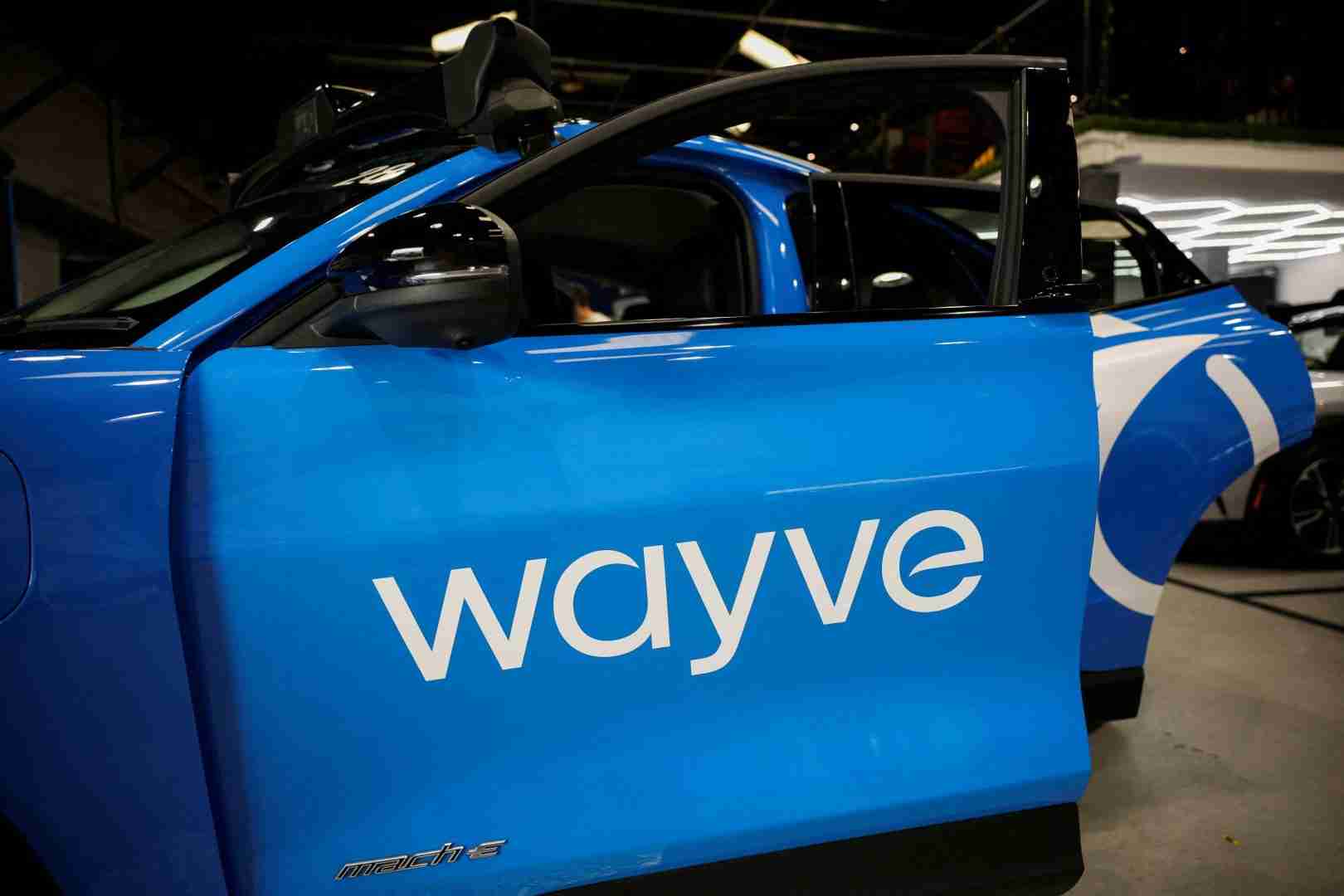
“We want to make full self-driving possible for any vehicle, any brand, and anywhere around the world,” Kendall told Reuters earlier this year, while sitting in the driver’s seat as a Ford Mustang Mach-E outfitted with Wayve’s driverless tech autonomously navigated San Francisco Bay Area neighborhoods where the company has a key tech center.
WAYMO EXPANSION FUELS INDUSTRY MOMENTUM
Competition in the autonomous-driving industry is intensifying after years of missed deadlines and inflated promises. The rapid expansion of Alphabet’s Waymo over the past two years — it now offers paid rides to the public in about a dozen cities, after more than a decade of development — has in part rekindled investor interest in driverless-car developers.
A decade ago, end-to-end AI was an obscure experiment being pursued by a small number of upstream researchers, like Kendall himself. Now, many autonomous-driving developers are deploying at least some aspects of end-to-end learning into their systems.
But the AI-centric approach raises a conundrum: the ambiguous, “black box”-like way that end-to-end systems navigate makes it difficult to interpret the vehicle’s driving decisions. On earlier iterations of driverless cars, which relied on software coding to help vehicles navigate roadways safely, it was easier to determine why the car chose a certain path.
Wayve’s end-to-end AI driving engine produces a safety map of unfolding traffic situations and identifies safe paths for the vehicle. Wayve engineers believe the conventional, programming-intensive safety approach hinders an AI driving system’s ability to stay safe in unusual cases because it is hard to write rules to prepare for very unusual situations.
When such hard-to-predict scenarios happen, the safety logic of a pre-programmed system “becomes brittle,” Wayve’s vice president of AI, Vijay Badrinarayanan, told Reuters. “Human drivers remain safe because they adapt conservatively when they do not know what comes next.”
SHOOTING FOR SAFETY AT SCALE
Waymo uses end-to-end AI now, but also relies on a more conventional, rules-based approach achieved through software coding and maps, which the company says is still needed to ensure safety.
“End-to-end models aren’t enough to guarantee safety at scale,” the company told Reuters.
One of Wayve’s customers, Nissan, is still trying to get comfortable with the system’s safety approach.
Nissan’s tech chief, Eiichi Akashi, said his team is closely assessing Wayve’s tech ahead of the automaker’s plan to deploy it in Japan on a people-mover van called Elgrand during the year ending March 2028. He calls the startup’s system the “most advanced,” but says it is “difficult to peer into it and see how it makes decisions.”
Kendall believes that Wayve, with major operations in Tokyo, Stuttgart and Vancouver, should be able to expand into new markets quickly because it does not need to take the tedious step of mapping roads and writing code to navigate local road quirks. Wayve says it has successfully tested its AI driving system in hundreds of cities around the world without that initial prep work.
Siddartha Khastgir, a professor of safe autonomy at the University of Warwick in England, said end-to-end models should be faster to develop and deploy commercially than more traditional approaches. However, he said, “I wouldn’t say that one technology is safer than the other.”
Phil Koopman, a Carnegie Mellon University computer-engineering professor and autonomous-technology expert, said Wayve’s method for handling unusual traffic situations is but one approach, and others may also prove successful. But he still sees it taking at least a decade to deploy driverless systems safely across the U.S.
“It will most likely demand new innovations to get us there.”
Reporting by Nori Shirouzu in Sunnyvale, California, and Daniel Leussink in Tokyo; Editing by Mike Colias and Matthew Lewis
UK manufacturing activity cools despite stockpiling boost to output, PMI shows

The final version of S&P Global’s UK Manufacturing Purchasing Managers’ Index for June fell to 52.5, below a preliminary estimate of 53.1 and May’s 53.9

International News via Reuters:
British manufacturing activity cooled in June despite a boost to output from stockpiling ahead of price hikes and supply chain problems stemming from the Middle East conflict, a closely watched industry survey showed on Wednesday.
The final version of S&P Global’s UK Manufacturing Purchasing Managers’ Index for June fell to 52.5, below a preliminary estimate of 53.1 and May’s 53.9.
Readings above 50 denote an expansion in activity.
The survey’s output index was the highest since September 2024 at 52.6, up from 52.2.
However, growth in new orders slowed sharply — chiming with a Confederation of British Industry survey published last week.
“The UK manufacturing sector ended the second quarter of the year on a positive note,” Rob Dobson, director at S&P Global Market Intelligence, said.
“Sustaining the upturn is becoming a bigger concern. Manufacturers are currently benefiting from client strategic stockpiling, as they safeguard against supply chain disruptions and expected price rises. A drop in the rate of growth of new work intakes suggests this boost is already starting to fade.”
Manufacturers’ input costs rose at the slowest pace since March, just after the start of the conflict in the Middle East.
The Bank of England, which held interest rates steady in June, is closely watching how higher energy prices caused by the closure of the Strait of Hormuz feed into the economy.
Supplier delivery times lengthened by the smallest amount since February, the survey showed.
The manufacturing PMI’s employment index in June signalled growth for a third month running but at a slower pace than in May. Firms turned slightly less optimistic about the year ahead.
Reporting by Suban Abdulla; Editing by Hugh Lawson
France sets presidential election dates

The race to succeed President Emmanuel Macron — who cannot run again after two terms — is shaping up as a fragmented contest

International News via Reuters:
France will hold the first round of its next presidential election on April 18, 2027, with a run-off set for May 2, the government spokeswoman, Maud Bregeon, said on Wednesday following a cabinet meeting to officially approve the dates.
• The race to succeed President Emmanuel Macron — who cannot run again after two terms — is shaping up as a fragmented contest, with polls placing the far-right National Rally in a leading position, and a crowded field raising the prospect of a run-off dominated by political extremes.
Reporting by Dominique Vidalon; Editing by Alex Richardson
EU slaps €3 fee on cheap ecommerce parcels in blow to Shein, Temu, AliExpress

The move is another setback for platforms that used customs exemptions to sell goods at ultra-low prices, fuelling rapid growth and prompting complaints from retailers and policymakers

International News via Reuters:
Europe on Wednesday took a first step towards curbing what it calls unfair competition from online retailers such as Shein, Temu and AliExpress by imposing a €3 fee on low-value e-commerce imports from China that previously entered the bloc duty-free.
The move is another setback for platforms that used customs exemptions to sell goods at ultra-low prices, fuelling rapid growth and prompting complaints from retailers and policymakers. The U.S., their biggest market, ended its “de minimis” exemption for imports from China in May and for all imports at the end of August.
The fees, which take effect on Wednesday, will be charged for each customs classification in a shipment. A parcel containing three different types of item would incur a total charge of €9, while a parcel containing multiple dresses or multiple toys would be charged €3.
Duty exemptions on low-value imports have been in place for decades, with the current threshold of €150 introduced in 2008. But the number of e-commerce parcels entering the European Union under the exemption has surged, reaching 5.8 billion in 2025 from 1.4 billion in 2022.
“In a different trading world this made a lot of sense, but that world doesn’t exist anymore. It’s been turned on its head by e-commerce, especially from China,” EU lawmaker Dirk Gotink, who leads the customs reform topic in the European Parliament, said in an interview.
“The exemption was abused and misused on an industrial scale to create a competitive advantage at the expense of EU businesses.”
E-COMMERCE AIR CARGO VOLUMES SET TO DROP
Derek Lossing, an e-commerce and air cargo consultant who runs Cirrus Global Advisors, said he expects air shipments of e-commerce goods into the EU to fall by 10% to 35% in the weeks after the fees take effect, with likely repercussions for global air cargo volumes.
“The question is how effective the platforms are in pivoting to other markets,” said Lossing. “When the U.S. ended de minimis, Europe was a really good alternative that platforms could shift to – but now there’s not a really clear alternative to Europe.”
Lossing said platforms may pressure suppliers to absorb some of the additional costs to limit price increases for consumers and protect profitability.
Shein has been preparing for the change by expanding warehouse space in Wroclaw, Poland, and shipping more products to the EU in bulk.
Neither Shein nor Temu responded to requests for comment.
CONSUMER PRICES LIKELY TO RISE AS PLATFORMS PASS DUTIES ON
The €3 charge is a temporary measure that is due to be replaced by category-specific duties from July 1, 2028, when the new EU Customs Authority is scheduled to begin operations.
The fees are likely to increase consumer prices as platforms pass on at least some of the additional costs.
AliExpress, owned by Chinese e-commerce giant Alibaba, said in a statement that product listings would carry a “Price includes duties and VAT” label where applicable. For other items, customers would be shown a breakdown of import charges before completing a purchase.
Amazon, which launched its Amazon Haul ultra-cheap service after Temu and Shein’s rapid growth, said 97% of its EU shipments last year were fulfilled from warehouses within the bloc. For products shipped from outside the EU, customers would also be shown import charges before checking out, it said.
Reporting by Helen Reid in London and Philip Blenkinsop in Brussels. Additional reporting by Bart Maijer in Brussels. Editing by Mark Potter
Iran insists on keeping control over Hormuz, senior Iranian sources say

Under this month’s interim deal with the U.S. to end their three-month conflict, Iran agreed to let ships pass through the Strait for 60 days without charge

International News via Reuters:
Iran is determined to win international recognition of its control over the Strait of Hormuz and ability to levy fees on ships entering or leaving the Gulf even if it has to do so by force, two senior Iranian sources said.
Under this month’s interim deal with the U.S. to end their three-month conflict, Iran agreed to let ships pass through the Strait for 60 days without charge. But it believes the wording of the agreement allows it to keep control of which ships may pass and which route they take through the narrow waterway.
It is also determined to secure lasting formal acceptance of this control once the interim phase expires, and its negotiators will not move to other areas of dispute in ongoing peace talks with Washington until that has been agreed, the sources said.
If the interim deal ends without being extended, Iran would start charging ships for passage in mid-August, though it has not yet laid out any list of what fees it will charge or how. Iran closed the Strait when the war began and Iranian officials have said authorities charged some vessels navigation or other fees to leave the Gulf.
IRAN WANTS PERPETUAL CONTROL OF HORMUZ
Any lasting Iranian control over the Strait of Hormuz, with formalities and fees for ships, would add costs, delays and risks to all shipping through a waterway that before the war transported a fifth of global energy supplies plus other critical goods.
Passage through the Strait was never previously subject to fees and Tehran’s position runs directly counter to U.S. interpretations of the interim Memorandum of Understanding agreed on June 17, and to Washington’s stance on what the ultimate post-war arrangements will be.
U.S. President Donald Trump said last week that there would be no tolls charged for passage through the Strait unless Washington decided to impose them itself. Secretary of State Marco Rubio said during a meeting with Gulf states that no country had the right to block shipping or impose fees or tolls for passage through an international waterway.
Iran interprets the interim deal as meaning it can maintain control over all passage through the Strait, though without collecting fees during the interim phase of the deal, and that while it has to discuss arrangements with Gulf states, it is not obliged to reach an agreement with them, the sources said.
Oman stretches along the southern coast of the Strait and Iran is planning talks with the sultanate to define transit paths through the waterway, Tehran said on Monday.
However, Iran shot at four ships over the weekend that tried to traverse the Strait on the Omani side without first getting Iranian permission, triggering a brief but intense exchange of fire with the United States.
One of the senior officials said Iran would not let the situation return to the pre-war status quo. Instead, it believes new arrangements must govern Hormuz including Iran choosing how vessels enter and leave the Strait, holding the right to deny entry to any it suspects of threatening Iranian security, and charging fees for compulsory services it provides.
IRAN BELIEVES IT HAS A HISTORIC OPPORTUNITY, SOURCE SAYS
Iran is ready to impose its demands on the Strait through force if there is no agreement by other countries to accept its terms, the official added, saying Tehran would not back down even if it led to renewed – and intensified – confrontation with the U.S.
The second senior Iranian official said that having survived what Tehran had seen as its biggest potential threat – a war with the U.S. and Israel – Iran believed it had a “historic opportunity” to secure a long-term advantage.
Ship-owning countries would eventually accept Iranian management of the Strait because of the growing cost of the dispute, and Washington would accept it to ensure uninterrupted global energy supplies, the official added.
‘NEITHER SIDE THINKS THEY HAVE LOST’
However, Iran may be overplaying its hand and miscalculating how far Washington would be willing to accept what would be seen as an enormous concession, said Ali Ansari, professor of modern history at St Andrews University.
“The prospect of this conflict reigniting is much higher than people think because neither side thinks they’ve lost,” he said.
Neither Iran nor the U.S. is a signatory of the U.N. Convention on the Law of the Sea that designates Hormuz as an international strait, although Oman, which stretches along its southern coast, is.
While the waterway is split between the territorial waters of Iran and Oman, its status as an international strait under the convention requires free passage.
The convention is widely regarded, including by the U.S., as customary international law.
It is also the agreement under which Iran could claim its territorial waters extend 12 miles rather than the mere 3 miles off its shore under other maritime conventions, said Chris O’Flaherty, a former British navy captain and specialist in naval warfare and law. The Strait of Hormuz is just over 20 miles wide at its narrowest point.
“This is an intensely political matter in which most people think international law is settled. However, Iran has decided to challenge that,” O’Flaherty said.
Reporting by Parisa Hafezi and Jonathan Saul; Writing by Angus McDowall; Editing by Alexandra Hudson
