Excitement is building ahead of the Butterfield Bermuda Championship, which tees off tomorrow.
Adam Schenk will be looking to make history as he aims to become the first player to successfully defend his title.
Schenk captured his first PGA Tour victory at Port Royal Golf Course last year at the age of 33.
While the 2026 season has presented its share of challenges, returning to Bermuda as the defending champion could provide the spark he needs to regain momentum.
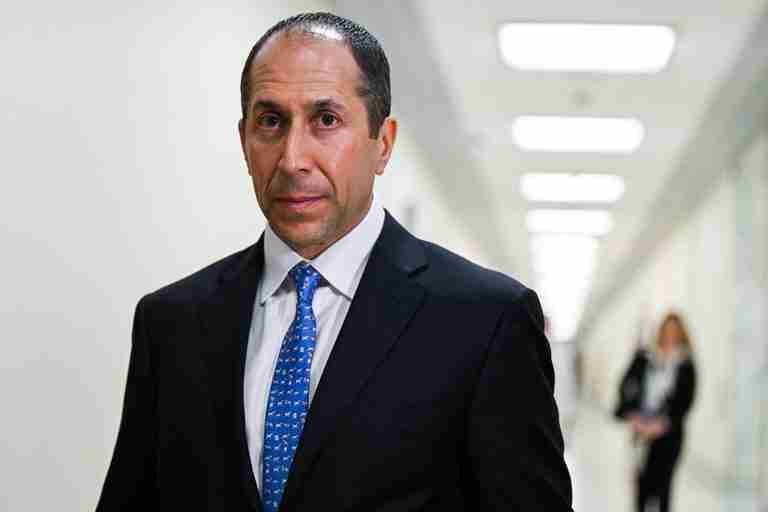
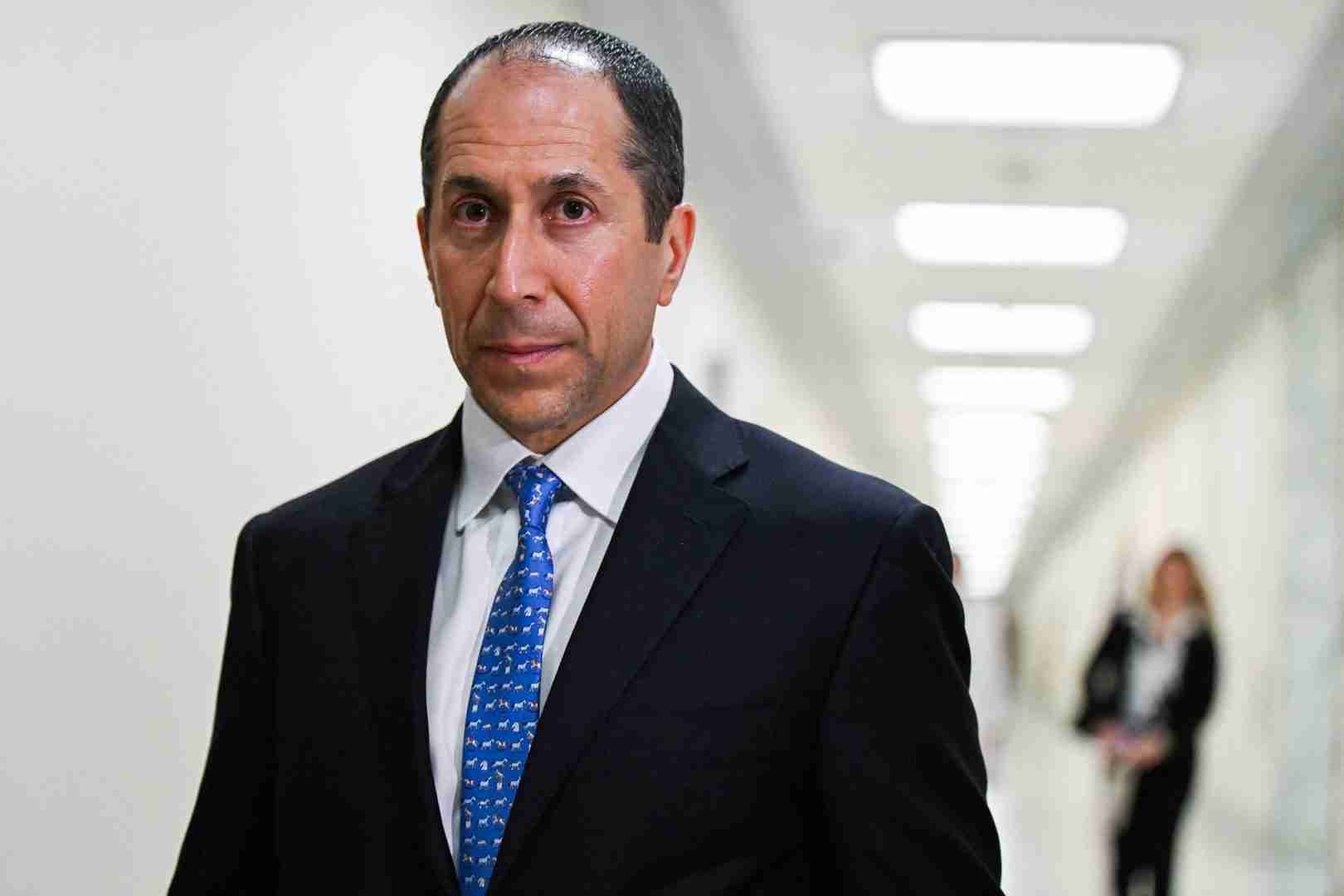
The suit is the first law enforcement action against Epstein’s longtime personal attorney Darren Indyke and accountant Richard Kahn, according to a statement from New Mexico Attorney General Raul Torrez
Richard Kahn, former accountant to the late sex offender and financier Jeffrey Epstein and co-executor of the Epstein estate, is seen on Capitol Hill in Washington, D.C., U.S., March 11, 2026. REUTERS/Annabelle Gordon/File Photo
International News via Reuters:
New Mexico has filed a civil lawsuit against the former lawyer and accountant of Jeffrey Epstein to block payments by the late sex offender’s estate and recover damages for survivors of his alleged sexual abuse, the state’s top law enforcement official said on Wednesday.
The suit is the first law enforcement action against Epstein’s longtime personal attorney Darren Indyke and accountant Richard Kahn, according to a statement from New Mexico Attorney General Raul Torrez.
The lawsuit alleges that Indyke and Kahn facilitated, financed, and concealed Epstein’s sex trafficking operation, including at Zorro Ranch, 30 miles south of the state capital of Santa Fe. It also names the estate of Jeffrey Epstein and aims to prohibit his private trust — created days before his death by suicide in a Manhattan jail cell — from spending any of the more than $100 million it holds. Indyke and Kahn are co-executors of Epstein’s estate.
Daniel Weiner, a lawyer representing Indyke and Kahn, rejected allegations the two “knowingly” facilitated Epstein’s abuse of women, saying the crimes took place “behind closed doors, in secluded locations” when neither was present.
The suit will test whether authorities are able to pin down allegations that a network of people and financial arrangements helped sustain and conceal Epstein’s operations.
“Jeffrey Epstein did not operate alone, and his death does not end the pursuit of accountability for the people who helped make his crimes possible,” Torrez said at a press conference in Albuquerque. He was joined by two survivors of Epstein’s alleged abuse, Julia Molchanova and Anouska De Georgiou.
Indyke and Kahn have already been named in civil lawsuits against the Epstein estate, including a complaint last month seeking damages for people pictured in the sex offender’s collection of child sexual abuse material.
“Not a single woman has ever accused Mr. Indyke or Mr. Kahn of committing sexual abuse or witnessing sexual abuse,” Weiner said in a statement, adding that the New Mexico attorney general’s office had made no effort to interview the men before filing the lawsuit.
New Mexico’s lawsuit comes after the Democratic-run state in February reopened an investigation into activities at Epstein’s former New Mexico ranch, where he is accused of abusing women and girls for nearly three decades.
New Mexico has sued the US Department of Justice for access to unredacted files on Epstein, accusing the Trump administration of stonewalling its investigation.
The DOJ said it provided some files but was prevented from handing over most material due to privacy protections.
Reporting by Andrew Hay in New Mexico; Editing by Jesse Mesner-Hage and Aurora Ellis
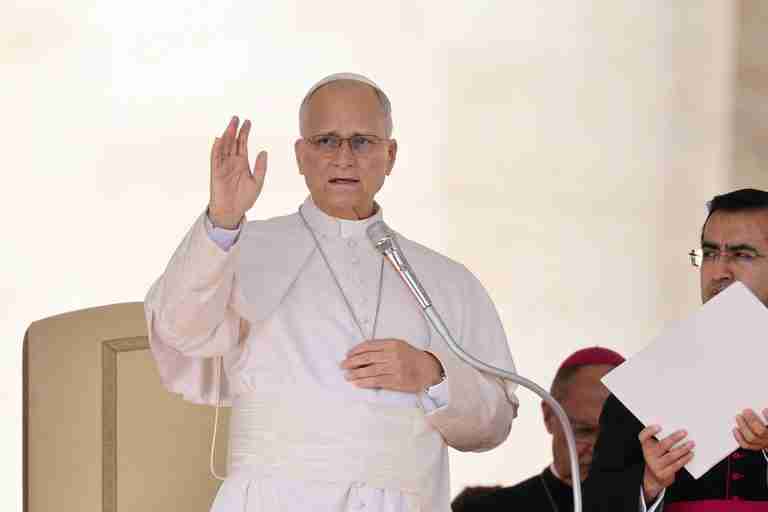
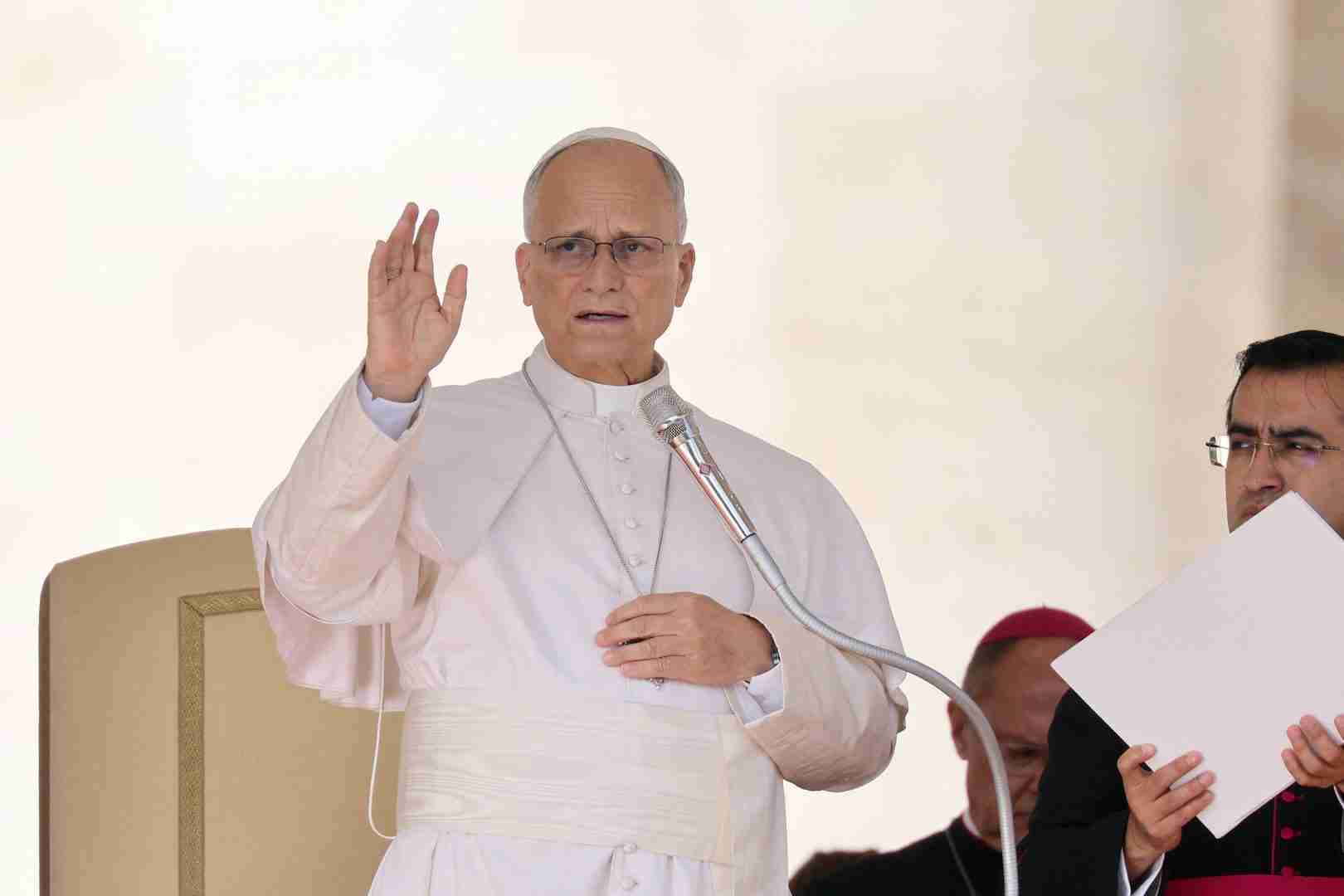
The announcement came as it was still unclear whether the US-born pope would proceed with a planned trip to Uruguay, Argentina and Peru, scheduled for November 6-17
Pope Leo holds his first weekly general audience in St. Peter’s Square since cancer surgery, at the Vatican, October 21, 2026. REUTERS/Yara Nardi
International News via Reuters:
Pope Leo will not need any further therapy after undergoing lung cancer surgery last week, his doctors said on Wednesday, indicating that his tumor had not spread.
The announcement came as it was still unclear whether the US-born pope would proceed with a planned trip to Uruguay, Argentina and Peru, scheduled for November 6-17.
The 71-year-old pontiff had the lower lobe of his right lung removed in surgery on October 13 and was diagnosed with lung adenocarcinoma, the most common form of lung cancer.
Final histological examinations and molecular biology analyses of the tissue removed confirmed the diagnosis, with the disease remaining localized, the doctors said in a statement released by the Vatican.
“A subsequent oncological evaluation has confirmed that no further therapy is required,” the pope’s lead surgeon, Stefano Margaritora, and his personal physician, Luigi Carbone, said.
Leo was discharged from hospital on Saturday and is gradually resuming his normal duties. On Wednesday, he returned to St Peter’s Square for his weekly audience with pilgrims.
Margaritora said last week there were “no clinical reasons” preventing the pope from travelling to South America, but the Vatican’s secretary of state has indicated the pontiff may need to adjust the pace of his schedule to aid his recovery.
Reporting by Alvise Armellini, Editing by Franklin Paul and Gavin Jones
Ukraine, which has fought a Russian invasion since 2022, needs clarity on how to cover its financing gap for next year
FILE PHOTO: Ukraine’s President Volodymyr Zelenskiy, European Commission President Ursula von der Leyen and European Council President Antonio Costa speak to members of the media as they arrive at a European Union leaders summit in Brussels, Belgium October 16, 2026. REUTERS/Stephanie Lecocq/File Photo
International News via Reuters:
European leaders will seek to agree on how to finance Ukraine’s €70 billion unmet needs in 2027 at a special summit on November 26 and 27 where they will also discuss the EU’s next long-term budget, an official from the bloc involved in preparations said.
Ukraine, which has fought a Russian invasion since 2022, needs clarity on how to cover its financing gap for next year.
EU governments, meanwhile, need to agree on the bloc’s 2028-2034 budget this year before campaigns for elections next year in France, Italy, Poland, Greece, Estonia, Finland and Slovakia politicise the issue.
Ukraine’s 2026 funding is already covered, with some €31 billion from the EU still awaiting disbursement this year as soon as Kyiv votes through agreed reforms. The money comes from a total of €45 billion that the EU has for Ukraine this year, €14 billion of which has already been disbursed.
There is another €45 billion ($50 billion) from the EU for Ukraine for 2027, but Ukraine’s needs will be much higher because the war with Russia is dragging on. The 27-nation EU had been counting on non-members such as Norway, Switzerland, Canada, Japan and Britain to contribute a total of yet another €45 billion spread over 2026 and 2027.
But EU officials say not all of that money has materialised and with Ukraine’s funding gap for 2027 now estimated at around €70 billion despite the planned EU contribution, EU countries will have to agree on some new form of financing, possibly another loan.
Reporting by Jan Strupczewski; Editing by Andrew Cawthorne and Nia Williams
Police tape cordons off the site, following an explosion at a building in central Athens, in which police officers and members of the public were injured, in Athens, Greece, October 21, 2026. REUTERS/Stelios Misinas
International News via Reuters:
Two police officers and two members of the public were injured in an explosion at a building in central Athens, Greek police said on Wednesday.
All four were taken away in ambulances, police said in a statement.
A police official who declined to be named said the explosion occurred when officers reached the building in the area of Kolonos and picked up a backpack thought to contain drugs.
Police had earlier received a call from a resident and the manager of the building notifying them of the suspected drugs at the building’s entrance. They later found parts of an explosive device.
The bomb went off as police inspected the backpack and was potentially activated remotely, a second police official said.
The manager was also injured in the blast, which police are not treating as a terrorist act, the first police official added. The homicide unit is leading the investigation.
Reporting by Angeliki Koutantou and Yannis Souliotis; Writing by Ivana Sekularac; Editing by Hugh Lawson and David Goodman
Inquiries are ongoing, regarding the circumstances of a collision involving a truck and a Department of Public Transportation bus that occurred along Somerset Road in Sandys parish, near the junction with Sound View Road, Tuesday morning.
Apparently, around 8:55am, 20th October 2026, the bus was stationary, at a Somerset Road bus stop, next to Sound View Road.
A truck driver, also travelling on Somerset Road, then collided with the back of the stopped bus, damaging both vehicles.
Police, Bermuda Fire & Rescue Service, as well as ambulance personnel responded.
It appears that the 37-year-old male truck driver and the 56-year-old female bus driver were not hurt.
However, it is understood that eight bus passengers, men and women ranging in age from 30 to 83, sustained injuries.
It’s believed seven were not seriously hurt. Emergency medical personnel provided initial treatment on site.
Afterward, all injured passengers were transported to King Edward VII Memorial Hospital, for further medical assessment.
One passenger, a 68-year-old man, was later admitted into the Intensive Care Unit. At last check, he was listed in stable condition.
Traffic in the immediate area was disrupted for approximately three hours, while police processed the collision scene.
As part of this investigation, area CCTV footage has been reviewed.
Any witnesses to this collision, or members of the public with relevant information, are encouraged to call Constable Lilla Szobek on 211, or e-mail iszobek@bps.bm, as soon as possible.
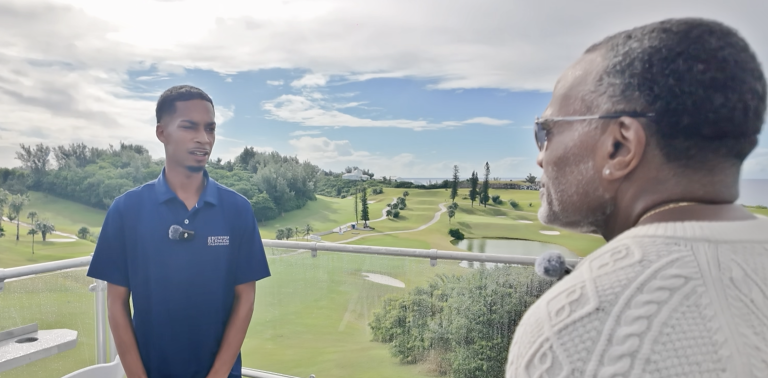
As a football player studying Sports Entertainment and Event Management at university, a career in golf administration was never part of the plan for Diaje Hart.
Fortunately, his journey led him to gain valuable experience and exposure on the PGA Tour.
Today, he oversees his department at a major international golf event, the Butterfield Bermuda Championship.
Ian Rawlins talked to him about his remarkable career journey.
CURB has read with deep disappointment the remarks of Uma Kumaran, the UK Minister for the Overseas Territories. Speaking to The Royal Gazette after signing the Hamilton II Declaration in Bermuda this week, she said the United Kingdom “doesn’t pay reparations.” The Minister said Britain is aware of the painful history. Awareness is not justice. Acknowledgement without repair is simply a more polished form of refusal.
The Minister’s answer is not new. It is the settled line of successive British governments. In 2015, David Cameron told Jamaica’s Parliament that slavery was “abhorrent in all its forms,” and in the same visit ruled out reparations. In 2023, Rishi Sunak refused both an apology and reparations. In 2024, ahead of the Commonwealth summit in Samoa, Sir Keir Starmer’s spokesman declared, “We do not pay reparations.” The Prime Minister himself dismissed the matter as “very, very long endless discussions about reparations in the past.” Prime ministers change. The answer does not.
The Royal Family’s own words expose the contradiction. In Barbados in 2021, the then Prince of Wales called slavery an appalling atrocity that forever stains Britain’s history. In Kingston in 2022, during the Caribbean tour that also took him to The Bahamas, Prince William expressed his profound sorrow and said: “Slavery was abhorrent, and it should never have happened.” We welcome those words. But if something is abhorrent, should never have happened, and forever stains a nation’s history, then that nation owes more than sorrow.
The Crown has now moved further than the British Government. Last month, King Charles III referred Jamaica’s reparations petition to the Judicial Committee of the Privy Council. The petition asks three questions: whether the enslavement of Africans was lawful, whether it breached international law, and whether the United Kingdom has a legal obligation to provide a remedy. A minister’s “no” now sits alongside a live legal question before Britain’s own highest Commonwealth court.
We must be clear about what slavery was. Millions of Africans were seized, shipped in chains and worked to death in the Americas. Families were sold apart. Men, women and children were branded, flogged and treated in law as property. Britain was not a bystander. It was a leading slave-trading nation, and its ports, banks, insurers and industries grew rich on the trade and on slave-grown sugar and cotton. Bermuda was part of that system. Our ancestors were enslaved here, under British law.
Then came emancipation, and with it the most revealing act of all. Under the Slavery Abolition Act of 1833, Britain paid £20 million, about 40 per cent of its national budget, to compensate slave owners for the loss of their “property.” Slave owners in Bermuda were among those paid. The enslaved received nothing. Instead, they had to keep working almost for nothing for years to come. Essentially, they paid for their own freedom.
The loan raised to fund that compensation was not finally paid off until 2015. For 180 years, British taxpayers serviced a debt incurred to pay enslavers. Among those taxpayers were descendants of the enslaved: the Windrush generation and their children, who came from the Caribbean to help rebuild Britain. Within living memory, the grandchildren of the enslaved were helping to pay the compensation given to those who had owned their ancestors. And clearly, in the words of Dr. Martin Luther King, “the time is always right to do the right thing” and, we might add, no matter how long it takes!
This is the heart of the matter. Britain has already accepted that the end of slavery created a loss deserving compensation. It applied that principle generously to the slave owner. Justice demands that the same principle now be applied to the descendants of the enslaved. If Britain could find the means to compensate those who held human beings as property, it can find the means to repair the harm done to the descendants of the enslaved.
Britain’s established church has already shown its Government the way. The Church of England was deeply implicated in slavery. Its endowment fund, Queen Anne’s Bounty, invested heavily in the slave-trading South Sea Company. The Church apologised in 2006. In 2023, after investigating its own history, the Church Commissioners committed £100 million to a fund for healing, repair and justice. Their independent oversight group judged even that sum insufficient, and the Commissioners have accepted a £1 billion target. They have held to that commitment in the face of fierce political opposition.
Here at home, the Anglican Church of Bermuda has also begun to face its history. In 2007 its Synod unanimously resolved that the Church “benefited from the evil trade in African peoples over an extended period.” The Synod also expressed remorse for the discrimination it practised after emancipation. On 13 September this year, beneath the Rubber Tree in Warwick, Bishop Nicholas Dill presided over a Service of Remembrance, Lament and Dedication. It honoured the free and enslaved Black Bermudians buried at a site opposite St Mary the Virgin Church, where they had been laid to rest because they were barred from the churchyard. Their graves were later disturbed, their remains moved to a common grave, and the land given over to other uses.
Through the research of historian Andrew Bermingham and parish administrator Janet Bento, 78 people buried there have been identified by name. They range from infants a day old to elders in their eighties, and their names were read aloud at the service. Bishop Dill spoke plainly. The legacy of slavery, he said, did not end in 1834. It continued through segregation and still shows itself today in “inequality, multi-generational trauma, prejudice, imbalance and bias.” The Government of Bermuda has since restored the Rubber Tree memorial.
These are acts of truth-telling and repair by Bermudian institutions confronting their own past. A church with no tax base can accept that benefiting from slavery creates an obligation. A parish can recover the names of its dead. A local government can restore their resting place. The British state legislated for slavery, protected it, profited from it and paid its owners, yet it alone still says no. Will the British Government do the right thing, or will it choose to remain on the side of the slave owners it once compensated?
Reparatory justice is not a demand for a cheque. The CARICOM Reparations Commission’s Ten-Point Plan calls for a full formal apology, debt relief, investment in public health and education, cultural restitution and technology transfer to address slavery’s lasting damage. Whatever form repair takes, it must be acceptable to the descendants of the enslaved, decided with them through genuine dialogue, not imposed or dismissed from London.
Ms Kumaran noted that the Commonwealth Heads of Government Meeting is approaching and that discussions are ongoing. CURB calls on the United Kingdom to use that meeting to move beyond sorrow. It should open a serious, good-faith conversation with the Caribbean and the Overseas Territories, including Bermuda, on a framework for reparatory justice. We also call on the Government of Bermuda to state its position clearly and to stand with our CARICOM neighbours.
Britain says it sees Bermuda as a partner. Partners do not tell each other that the past is closed when its debts were only settled in 2015, and when even the Church of England has accepted that those debts are not yet paid.
Andre Cannonier and his team work year-round to ensure Port Royal stays in pristine condition
The Port Royal Golf Course is widely regarded as one of the most pristine venues on the PGA Tour.
Praised by players, visitors and local golf enthusiasts alike, the course’s tip-top condition is no accident.
Behind the scenes, the agronomy team works tirelessly year-round to ensure every inch of the property meets the highest standards.
Ian Rawlins caught up with Andre Cannonier, Assistant Superintendent, to learn more about the team’s day-to-day operations and the work that goes into maintaining a world-class championship venue.
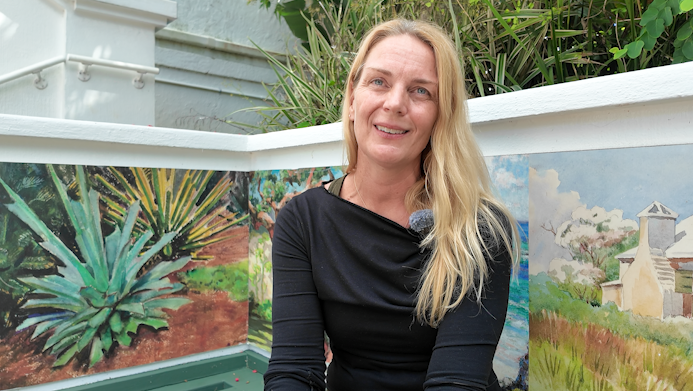
Bermuda’s Art Month celebrations continue throughout October, with a variety of events designed to encouraging creativity.
Kendal Trott spoke with Black Pearl Art Academy founder Sarah Pierroz at the Masterworks Museum of Bermuda Art, where she highlighted opportunities for the public to get involved, including the upcoming Art by the Sea initiative taking place on Saturday.
The US tech giant said on Monday it remained committed to its partnership with Nscale, including work to build digital infrastructure and support AI growth globally
FILE PHOTO: A view shows a Microsoft logo at Microsoft offices in Issy-les-Moulineaux near Paris, France, March 21, 2025. REUTERS/Gonzalo Fuentes/File Photo
International News via Reuters:
Microsoft has pulled out of a deal to anchor a flagship data centre for Nvidia-backed Nscale after power connection delays pushed its expected supply date into the 2030s, highlighting a major obstacle to Britain’s AI ambitions.
The US tech giant said on Monday it remained committed to its partnership with Nscale, including work to build digital infrastructure and support AI growth globally.
“This decision relates to a single site,” a Microsoft spokesperson said of its termination of an agreement for the data centre in Loughton, Essex, where Nscale had faced delays, with electricity grid officials telling the AI company they did not expect to supply power to the site until the 2030s.
“Our relationship with Microsoft remains strong and long-term, and this unfortunate London-wide grid issue has no impact on our other contracts,” a spokesperson for Nscale told Reuters.
“We remain committed to both the Loughton project and the UK, and we are exploring alternative power sources for the site, as well as other expansion sites in the UK,” they added.
Microsoft’s move was first reported by the Telegraph newspaper.
The project was among technology deals announced during US President Donald Trump’s visit in September 2025 and intended to showcase Britain’s ambition to become a global AI leader.
But that faces a major constraint in the form of electricity supply, with bottlenecks in grid connection queues delaying data centre projects by as long as 13 years.
The Loughton site was due to begin operating early next year, with 23,040 Nvidia GB300 GPUs providing 50 megawatts of AI computing capacity to help power Microsoft’s Azure services in Britain, the companies said last year.
Nscale filed for an initial public offering in the United States last month, with Microsoft and Anthropic expected to be among its major customers, according to its prospectus.
The group provides infrastructure, including computing capacity, power and data centres, as well as software for training and running AI models.
Nscale has grown rapidly since launch, increasing its total contracted value from $100 million to more than $103 billion in two-and-a-half years. It competes with AI infrastructure providers CoreWeave, Nebius, Crusoe and Lambda.
Reporting by Nethra Sailesh and Gnaneshwar Rajan in Bengaluru and Paul Sandle in London; Editing by Joe Bavier and Alexander Smith
Economists said the figures added to the likelihood of Healey delivering a cautious set of spending, tax and borrowing plans on October 28
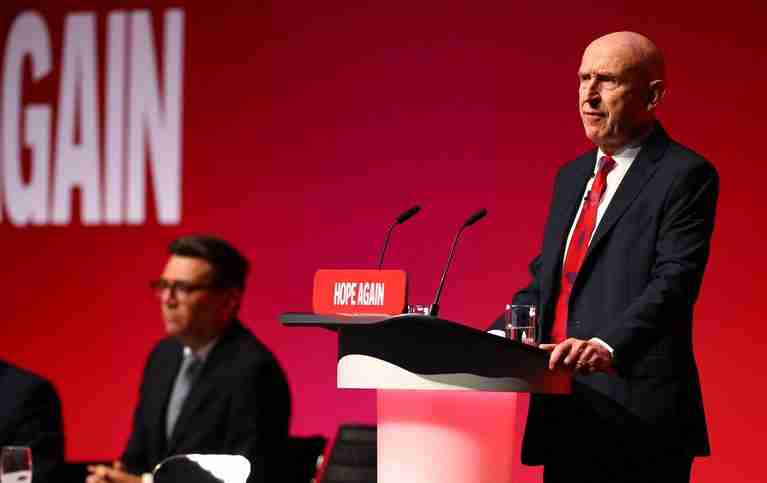
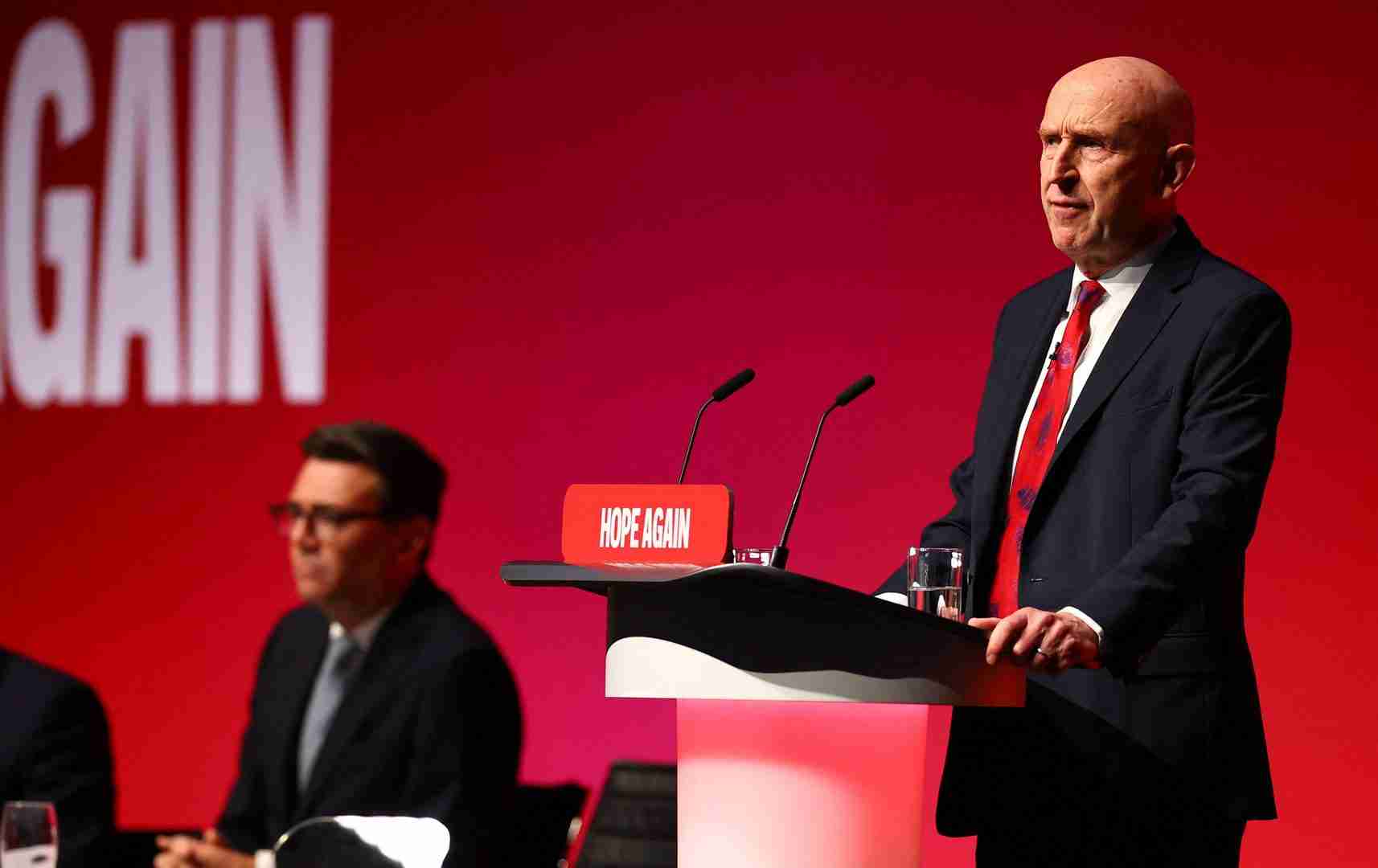
British Finance Minister John Healey speaks during the Labour Party’s annual conference in Liverpool, Britain, September 28, 2026. REUTERS/Phil Noble
International News via Reuters:
Britain’s government borrowed more than expected again in September and public debt surpassed £3 trillion ($4.01 trillion), according to official data that underscored finance minister John Healey’s challenge in his first budget next week.
Economists said the figures added to the likelihood of Healey delivering a cautious set of spending, tax and borrowing plans on October 28.
Borrowing hit £24.52 billion last month, up from £22.76 billion in the same month last year, as spending on debt interest rose. It was also higher than a median forecast of £23.85 billion in a Reuters poll of economists.
Over the first six months of the 2026/27 fiscal year, the deficit stood at £97.8 billion, down by £4.4 billion from a year earlier but £6 billion above the forecast made by the Office for Budget Responsibility, which was made before the Iran war began.
Healey is expected to raise taxes on banks among other measures next week to stay on track to meet his fiscal rules.
Separate data published by the Office for National Statistics on Wednesday showed inflation rose by more than expected in September, which is likely to add to calls for more support for poorer households in his budget.
But analysts at Capital Economics said the higher-than-expected borrowing in recent months “reinforces our view that the chancellor will deliver a cautious budget on 28th October that has little net impact on the economy and leaves the toughest fiscal choices for next year.”
Healey’s margin for error to stay on course to meet his main budget target is expected to have narrowed sharply in large part due to the rise in borrowing costs for government debt around the world since the start of the conflict in the Gulf.
UK government debt interest costs – which are pushed up when inflation rises – jumped by almost 17% in September to almost £11 billion and were up by nearly 4% over the April-to-September period at £60.8 billion pounds.
Overall government spending was up by 7% in September when tax receipts rose by 5.2%, the ONS said. But over the first six months of the tax year, spending grew by slightly less than tax income.
Healey’s main target is to balance day-to-day spending with tax revenue by the 2029/30 tax year.
The ONS said the current budget was bigger in September than in the same month last year. Over the first six months of the tax year it stood at £64 billion, down by more than 8%.
Public sector debt was estimated to have exceeded £3 trillion for the first time. However, as a proportion of the economy, debt was lower than a year earlier, the ONS said.
($1 = 0.7481 pounds)
Writing by William Schomberg; Editing by Paul Sandle and Kate Mayberry
To provide the best experiences, we use technologies like cookies to store and/or access device information. Consenting to these technologies will allow us to process data such as browsing behavior or unique IDs on this site. Not consenting or withdrawing consent, may adversely affect certain features and functions.
Functional
Always active
The technical storage or access is strictly necessary for the legitimate purpose of enabling the use of a specific service explicitly requested by the subscriber or user, or for the sole purpose of carrying out the transmission of a communication over an electronic communications network.
Preferences
The technical storage or access is necessary for the legitimate purpose of storing preferences that are not requested by the subscriber or user.
Statistics
The technical storage or access that is used exclusively for statistical purposes.The technical storage or access that is used exclusively for anonymous statistical purposes. Without a subpoena, voluntary compliance on the part of your Internet Service Provider, or additional records from a third party, information stored or retrieved for this purpose alone cannot usually be used to identify you.
Marketing
The technical storage or access is required to create user profiles to send advertising, or to track the user on a website or across several websites for similar marketing purposes.