

In this powerful opening episode of Season 1: The Regulated Life, Shara Francesa explores why the real issue is not stress — but dysregulation. Through personal stories, science-informed education, and practical insight, we unpack how chronic stress changes the nervous system, hormones, pain patterns, sleep, digestion, recovery, and overall health.
Rescuers in Laos say more oxygen needed to save 7 divers trapped in cave

The seven Lao nationals entered the cave in central Laos’s Xaisomboun province last week to look for gold, but a landslide triggered by heavy rain blocked their exit

International News via Reuters:
The leader of a Thai volunteer group helping to extract seven divers trapped in a cave in Laos said on Thursday that more oxygen tanks would be needed to complete the rescue mission.
The seven Lao nationals entered the cave in central Laos’s Xaisomboun province last week to look for gold, but a landslide triggered by heavy rain blocked their exit, according to a local volunteer group and the state-run Lao Phattha News.
At least five have been found alive so far, but none of them has yet been rescued from the chambers of the cave.
“We need to borrow as many oxygen tanks as possible and want to set up an oxygen refilling station in front of the cave,” Kengkard Bongkawong wrote on social media.
Volunteer groups gave differing accounts of how many of the stricken divers had been located.
Thai volunteer groups said on Wednesday that five had been found while the Laos “Rescue Volunteer for People” organisation said all seven had been located and were safe.
The reports could not immediately be verified.
Thai volunteers joined the rescue operation on Sunday, including a diver who took part in the 2018 rescue of 12 boys and their soccer coach from a flooded cave in northern Thailand.
That operation drew global attention and involved British and other foreign divers, U.S. military personnel and other international support.
Reporting by Chayut Setboonsarng, Editing by David Stanway
Countries tighten travel rules as Ebola risk rises
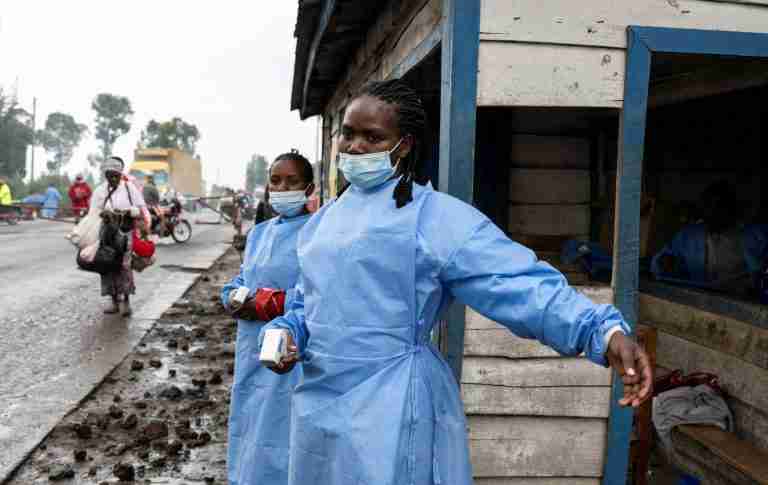
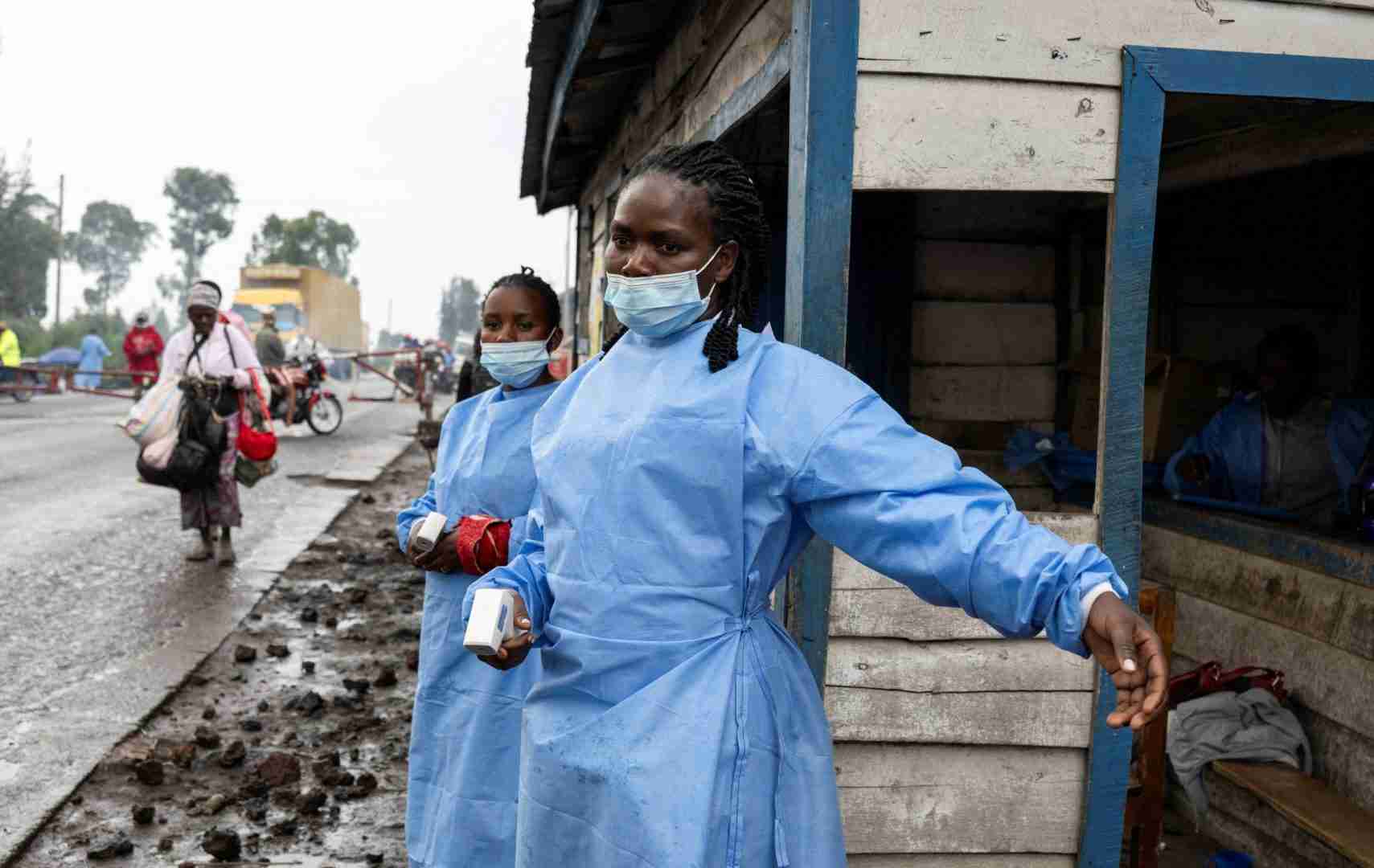
The World Health Organization on Sunday, May 17, declared an Ebola outbreak in the Democratic Republic of Congo a Public Health Emergency of International Concern
International News via Reuters:
The World Health Organization on Sunday, May 17, declared an Ebola outbreak in the Democratic Republic of Congo a Public Health Emergency of International Concern and said there was a high risk it could spread to neighbouring countries.
The decision has prompted governments to step up travel-related containment measures. Here is a list of screening steps and travel restrictions announced by different countries.
UNITED STATES
Last week, Washington banned non-citizens who had travelled to the DRC, Uganda or South Sudan in recent weeks from entering the United States. On Friday, the ban was extended by the Centers for Disease Control and Prevention (CDC) to green card holders who have been in those countries in the previous 21 days.
The CDC on Saturday added Hartsfield-Jackson Atlanta International Airport to its travel funnelling list, alongside Washington Dulles. U.S. passport holders returning from affected regions are escorted to designated screening areas for temperature checks, travel history verification, and symptom tracking by the CDC.
CANADA
The Canadian government said on Tuesday that residents from the DRC, Uganda and South Sudan will be banned from entering Canada for 90 days starting Wednesday.
Canadian citizens, permanent residents and other foreign nationals who have been in affected areas in recent weeks and do not have symptoms will have to quarantine for 21 days from May 30, according to a statement from Canada’s public health agency.
THE BAHAMAS
The Bahamian government said on Tuesday a ban on residents from the DRC, Uganda and South Sudan will take immediate effect and remain in place for 30 days.
The Bahamas also announced enhanced health screenings and possible quarantines for foreigners who were present in those countries within 30 days of arriving in the Caribbean country.
INDIA
India has launched screening and surveillance measures at airports and other entry points, issued advisories on precautions, and urged citizens to avoid non-essential travel to Congo, Uganda and South Sudan.
JORDAN
The Jordanian government on May 19 suspended the entry of travellers arriving from the DRC and Uganda, according to the Jordanian state agency.
BAHRAIN
Bahrain said on May 19 it was suspending for 30 days the entry of foreign travellers arriving from South Sudan, the Democratic Republic of Congo and Uganda.
CAYMAN ISLANDS
The Cayman Islands government said on May 20 it would implement enhanced screening measures as a precaution after a flight landed carrying two passengers with recent travel history to the DRC.
THAILANDThailand’s Public Health Ministry said on Tuesday that passengers arriving from the DRC and Uganda will only be allowed to enter the country through Suvarnabhumi Airport, where they will undergo screening.
Travellers from or through those countries will be required to quarantine for at least 21 days if they do not have symptoms, and will be referred to isolation for at least 21 days if they have symptoms compatible with Ebola virus disease.
KENYA
The Kenyan Ministry of Health said on Monday it has enhanced screening of travellers at high-risk points of entry, coordinated through the Kenya National Public Health Institute (KNPHI) under the fully activated National Incident Management System. Isolation and holding facilities have been activated in designated border locations to support potential containment efforts, the ministry added.
EUROPEAN UNION The European Union’s Health Security Committee said on Friday entry screenings were not necessary for passengers arriving from the DRC and Uganda, citing low risk to the population.
MEXICO
Mexico’s Health Secretary David Kershenovich addressed the media on Monday, outlining tighter Ebola screening measures at airports, urging the public to avoid travel to Congo and asking arrivals from the country to observe a 21-day quarantine.
Compiled by Mirko Miorelli, Alexander Klyve Gudbrandsen, Arda Dipova; Editing by Matt Scuffham
Italy busts money-laundering ring tied to mafia boss Messina Denaro

Messina Denaro was arrested in 2023 after spending 30 years on the run for his role in the Sicilian Cosa Nostra mafia’s war against the state between the 1980s and 1990s, which included the killing of top prosecutor Giovanni Falcone

International News via Reuters:
Italy’s finance police on Thursday said they had seized assets and companies worth more than €200 million ($232 million) in an investigation into the laundering of drug trafficking proceeds linked to late mafia boss Matteo Messina Denaro.
Messina Denaro was arrested in 2023 after spending 30 years on the run for his role in the Sicilian Cosa Nostra mafia’s war against the state between the 1980s and 1990s, which included the killing of top prosecutor Giovanni Falcone.
Nicknamed “U Siccu” (the skinny one), Messina Denaro died of cancer a few months after his arrest, leaving prosecutors with the task of tracking down the proceeds of his criminal empire and those who helped him evade justice.
Police said the operation capped a complex investigation that traced a vast pool of assets generated by the reinvestment of drug trafficking proceeds accumulated since the 1980s across multiple European and non-European countries.
“We believe we have identified a significant portion of the investments made by the mafia, including abroad,” Palermo chief prosecutor Maurizio de Lucia said.
GOLD AND LUXURY PROPERTIES
The son of a mafia boss, Messina Denaro came from the western Sicilian town of Castelvetrano, near Trapani, and headed the local Cosa Nostra clan.
Closely linked to powerful boss Salvatore “Toto” Riina, he played a role in bomb attacks in Florence, Rome and Milan that killed 10 people in 1993 and was believed to be responsible for numerous murders in the 1990s.
Three people were arrested in the investigation, which involved locations including Switzerland, Luxembourg and the Cayman Islands but centred on Andorra, the small principality in the Pyrenees.
Police said they tracked funds there to a woman from Campobello di Mazara, the Sicilian town where Messina Denaro had his final hideout, who had been married to a man with a history of drug offences.
“Based on these findings, investigators came to suspect that the funds in Andorra were linked to drug trafficking,” the statement said.
Prosecutors identified eight companies tied to the money laundering network – five in Spain, two in Gibraltar and one in the Cayman Islands. The group owned a “very significant” stake in a Lebanese bank, as well as gold and luxury real estate.
Giovanni Melillo, Italy’s national anti-mafia prosecutor, said it was crucial to target the mob’s wealth.
“(It) means continuing the dismantling process needed to prevent the emergence of structures once again capable of projecting, on a global scale, Cosa Nostra’s full intimidating power and economic influence.”
($1 = 0.8615 euros)
Reporting by Angelo Amante; Editing by Crispian Balmer and David Holmes
Ousted BP Chair says he may have ‘pushed hard’, but denies misconduct

In the latest leadership turmoil at BP, the board dismissed Manifold on Tuesday after just eight months in the job, citing serious concerns over his governance standards

International News via Reuters:
Ousted BP Chair Albert Manifold said on Thursday that not everyone at the oil major shared his priorities to cut costs and boost efficiency and acknowledged he may have “pushed hard” for change, but again denied any misconduct.
He also described newly appointed CEO Meg O’Neill and finance chief Kate Thomson, along with their executive colleagues, as “brimming with integrity”.
In the latest leadership turmoil at BP, the board dismissed Manifold on Tuesday after just eight months in the job, citing serious concerns over his governance standards.
Four sources with knowledge of the matter told Reuters that Manifold had acted aggressively towards colleagues across the company, which was one reason for his removal.
A BP spokesperson said on Thursday the group stood by its statements and had a duty of care to all its employees.
‘DETERMINATION TO DRIVE CHANGE’
“Is it possible that in my determination to drive change on costs, performance, the balance sheet and shareholder communications, I pushed hard and challenged people directly? Yes, it is,” Manifold said in a statement.
“What I do not accept is that lies can be told about me, nor that anyone should be allowed to hide behind anonymity when commenting on my time at BP,” he added.
A source with knowledge of the matter told Reuters on Wednesday that Manifold had hired law firm Mishcon de Reya to represent him after his dismissal.
A spokesperson for Manifold declined to comment on Thursday on any potential action he may take against BP.
Reporting by Shadia Nasralla. Editing by Joe Bavier and Mark Potter
Temu fined $232 million for breaching EU rules on sale of illegal products

Further penalties could follow in the coming months as a result of a nearly two-year investigation under the Digital Services Act that requires large online companies to do more to tackle illegal and harmful content on their platforms

International News via Reuters:
Chinese online retailer Temu has been fined €200 million ($232 million) for not doing enough to stop the sale of illegal products, European Union tech regulators said on Thursday, following the first part of a wide investigation.
Further penalties could follow in the coming months as a result of a nearly two-year investigation under the Digital Services Act that requires large online companies to do more to tackle illegal and harmful content on their platforms.
EU regulators investigated Temu following complaints by pan-European consumers’ organisation BEUC and 17 of its national members.
The European Commission, the EU executive, said the company failed to diligently identify, analyse, and assess the systemic risks of illegal products sold on its platform and the resulting harm to consumers in the European Union.
It criticised Temu for not properly assessing how its recommender systems and product promotion programmes by affiliated influencers could amplify the risks of sales of illegal products.
“Temu respects the objectives of the Digital Services Act and the need for clear, consistent rules across the digital economy. However, we disagree with the European Commission’s decision and consider the fine to be disproportionate,” said Temu in a statement.
“The decision relates to our first DSA assessment in 2024 and does not reflect the current state of our systems. Temu engaged constructively with the Commission throughout the process and has since taken further steps to strengthen risk assessment, platform governance, and user protection,” added Temu, which also said it would continue to engage with regulators and that it was considering all its options on the matter.
COMMISSION WILL ASSESS A TEMU ACTION PLAN
The Commission gave Temu until August 28 to deliver an action plan that regulators will assess, with a decision on whether the company has done enough to comply with the DSA due in two months’ time.
“This is about risk management. It is very much a cornerstone of our DSA,” EU tech chief Henna Virkkunen told reporters. “With this decision we are sending a very strong message to Temu.”
She said regulators will continue their investigation into whether the design of Temu’s service is addictive and the broader assessment of whether it is selling illegal products as well as its recommenders’ and researchers’ access to data.
Companies face fines of as much as 6% of their global annual turnover for DSA breaches.
The Temu penalty is the second under the DSA, after Elon Musk’s social media network X was fined €120 million last December.
($1 = 0.8613 euros)
Reporting by Foo Yun Chee; editing by Barbara Lewis/Sudip Kar-Gupta
EU says jet fuel market to get tighter if Hormuz situation does not improve
The European Commission’s energy department issued an update on Thursday following the latest meetings of its oil and gas co-ordination groups
International News via Reuters:
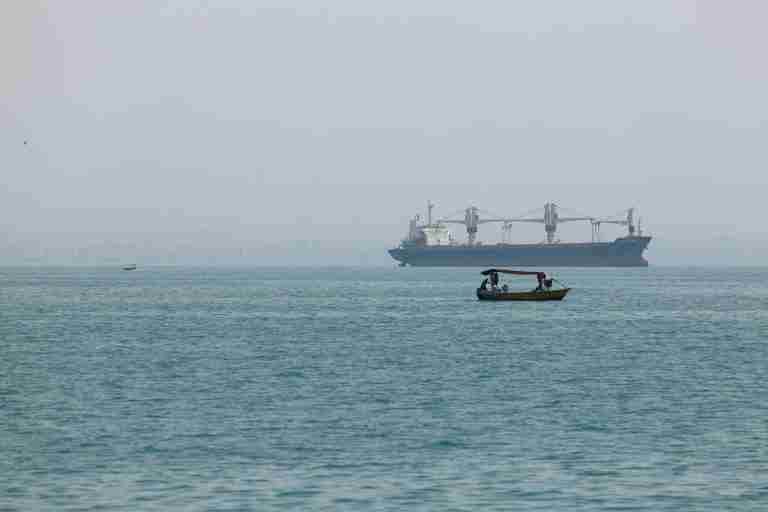
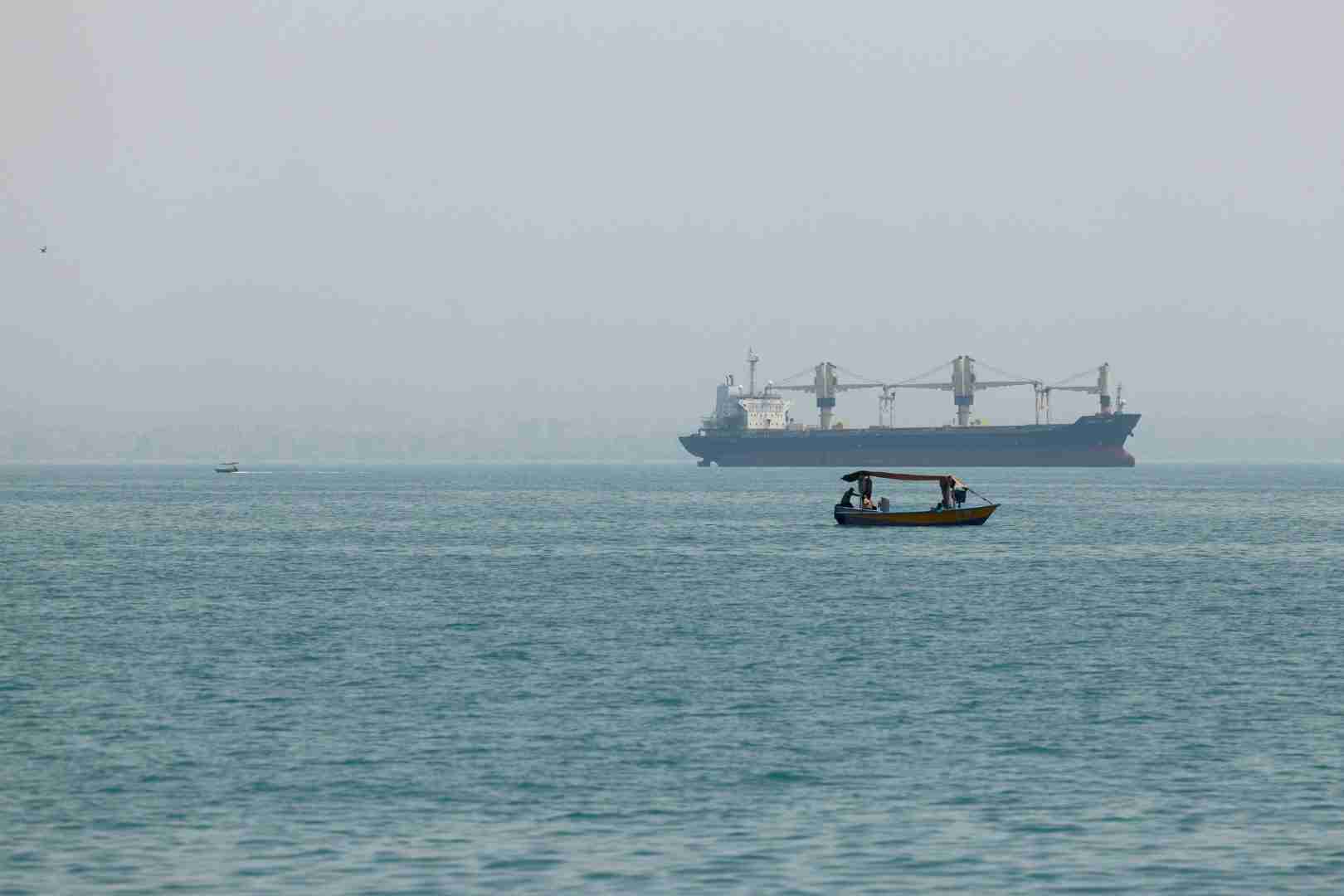
The market for jet fuel in the European Union could get tighter if the situation in the Strait of Hormuz does not improve within weeks, said the European Commission on Thursday.
The European Commission’s energy department issued an update on Thursday following the latest meetings of its oil and gas co-ordination groups.
“The Oil Coordination Group signalled that the closure of the Strait of Hormuz impacts both crude oil and all major petroleum products, and that all EU countries are affected by the dynamics. So far, the EU has been experiencing price effects, with no physical supply disruptions at consumer level,” it said.
“However, if the situation does not improve in the next weeks, markets are expected to become increasingly tighter, especially for jet fuel,” it added.
Reporting by Kate Abnett;Editing by Sudip Kar-Gupta
One in six UK young people risk falling outside job market or education, report warns

In recent decades Britain has had fairly low youth unemployment by European standards
International News via Reuters:
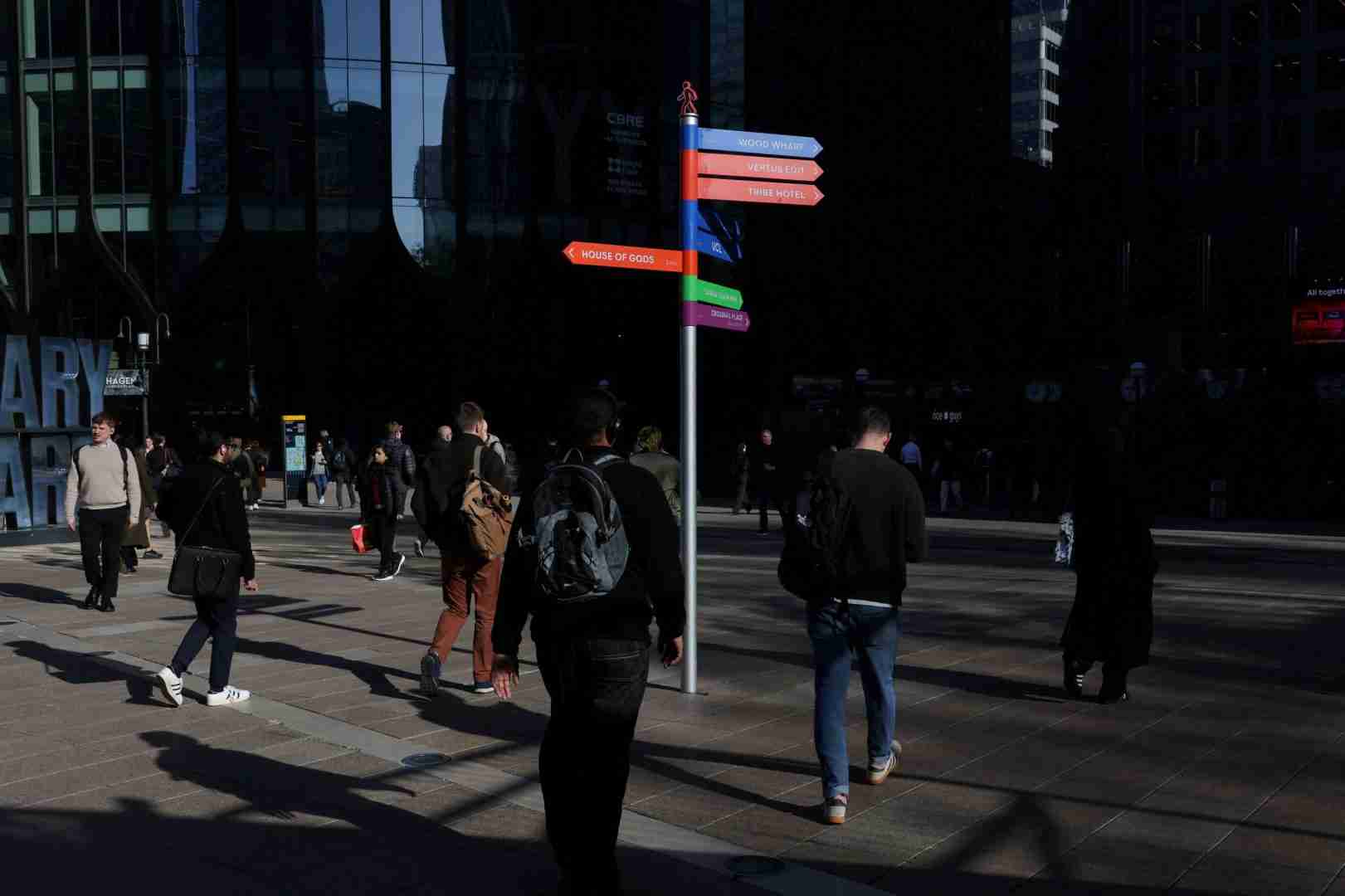
One in six young people in Britain may find themselves not in employment, education or training (NEETs) within five years, up from one in eight now, according to a new government-commissioned report that warns of a “lost generation”.
In recent decades Britain has had fairly low youth unemployment by European standards. But since the COVID-19 pandemic, the proportion of 16-24 year-olds outside the job market or education has risen to one of the highest in Europe.
The number of NEETs reached its highest since late 2013 in the first quarter of this year at just over 1 million, or 13.5% of the age group, up from 12.5% a year earlier, new official figures on Thursday showed.
“Detachment is no longer temporary. For too many young people it is becoming permanent. We are at risk of a lost generation,” former health minister Alan Milburn, who led the report, said.
WELFARE SYSTEM ‘EXACERBATING INACTIVITY’
Milburn’s report blamed the welfare system for “exacerbating inactivity”. But it also highlighted a sharp drop in the number of low- and medium-skilled entry-level jobs – including part-time Saturday jobs for schoolchildren – despite buoyancy in the broader labour market for much of the past decade.
Six in 10 NEETs have never had a job, up from four in 10 two decades ago. Over 70% lack good school grades – though 15% have a university degree – and 44% say poor health limits their ability to work, up from 26% 10 years ago, driven by a rise in mental health problems, learning difficulties and autism.
While the direct cost of NEETs in terms of welfare benefits is £3.2 billion ($4.3 billion) a year, getting them all into work full-time work would boost the economy by £38 billion while the annual cost of foregone growth could be as high as £125 billion if it marked the start of a lifetime of joblessness.
Milburn plans to set out detailed policy proposals later this year.
Work and pensions minister Pat McFadden said the report showed “the scale of the challenge and the root causes of youth unemployment we now need to confront”.
FEWER OPPORTUNITIES FOR WORK EXPERIENCE
While 84% of NEETs wanted a job or training, only £1 was spent on employment support for every £25 in welfare payments for that age group, the report said.
Work experience opportunities have narrowed or vanished and entry-level roles are more demanding than in the past, it added.
British governments have sought to expand apprenticeships, which play a much smaller role than in countries such as Germany or the Netherlands.
The chief executive of retailer Marks & Spencer, Stuart Machin, said the report’s findings were “shocking but not surprising” and matched the concerns of his staff and customers.
Many employers blame higher employment costs including a minimum wage which has risen sharply as successive governments sought to lift it to two thirds of median earnings, with the biggest rises for younger workers.
“When the cost of entry-level labour rises, the case for taking on someone inexperienced becomes harder unless employers are given support to offset the risk,” the report said, although it noted disagreement that the minimum wage was to blame.
($1 = 0.7462 pounds)
Reporting by David Milliken; editing by William Schomberg
FTSE 100 set to snap seven-day win streak as renewed US-Iran conflict weighs
The blue-chip FTSE 100 index fell 0.8% to 10,418.33 points by 1013 GMT while the midcap FTSE 250 dipped 0.4% as it eased from a near three-month high
International News via Reuters:
Britain’s FTSE 100 slipped on Thursday following a seven-day winning streak, as renewed U.S.-Iran hostilities clouded prospects for reopening the Strait of Hormuz.
The blue-chip FTSE 100 index fell 0.8% to 10,418.33 points by 1013 GMT while the midcap FTSE 250 dipped 0.4% as it eased from a near three-month high.
• BT slumped about 4.7%, leading losses on the FTSE 100 after a report said the British government will oppose any attempt from Indian billionaire Sunil Bharti Mittal to increase his stake in the telecoms group.
• Energy and defence stocks were the only bright spots after Iran and the U.S. traded air strikes, highlighting the fragility of negotiations aimed at turning the tenuous ceasefire that took effect in early April.
• Hopes of an eventual reopening of the Strait, a vital gateway for global energy, along with easing bets of domestic interest rate hikes have buoyed the recent rally in UK stocks.
• In company news, PPHE Hotel Group soared 23% after the hospitality real estate firm said it has received a £920.9 million ($1.24 billion) takeover proposal from Israel’s Fattal Hotel Group.
• IQE dropped 3.3% after the chipmaker reported a drop in full-year adjusted core profit.
• Ousted BP Chair Albert Manifold acknowledged he may have “pushed hard” for change, but again denied any misconduct, days after he was dismissed from the role. BP shares were largely flat.
Reporting by Medha Singh in Bengaluru
Man shot in Cedar Park area in Prospect

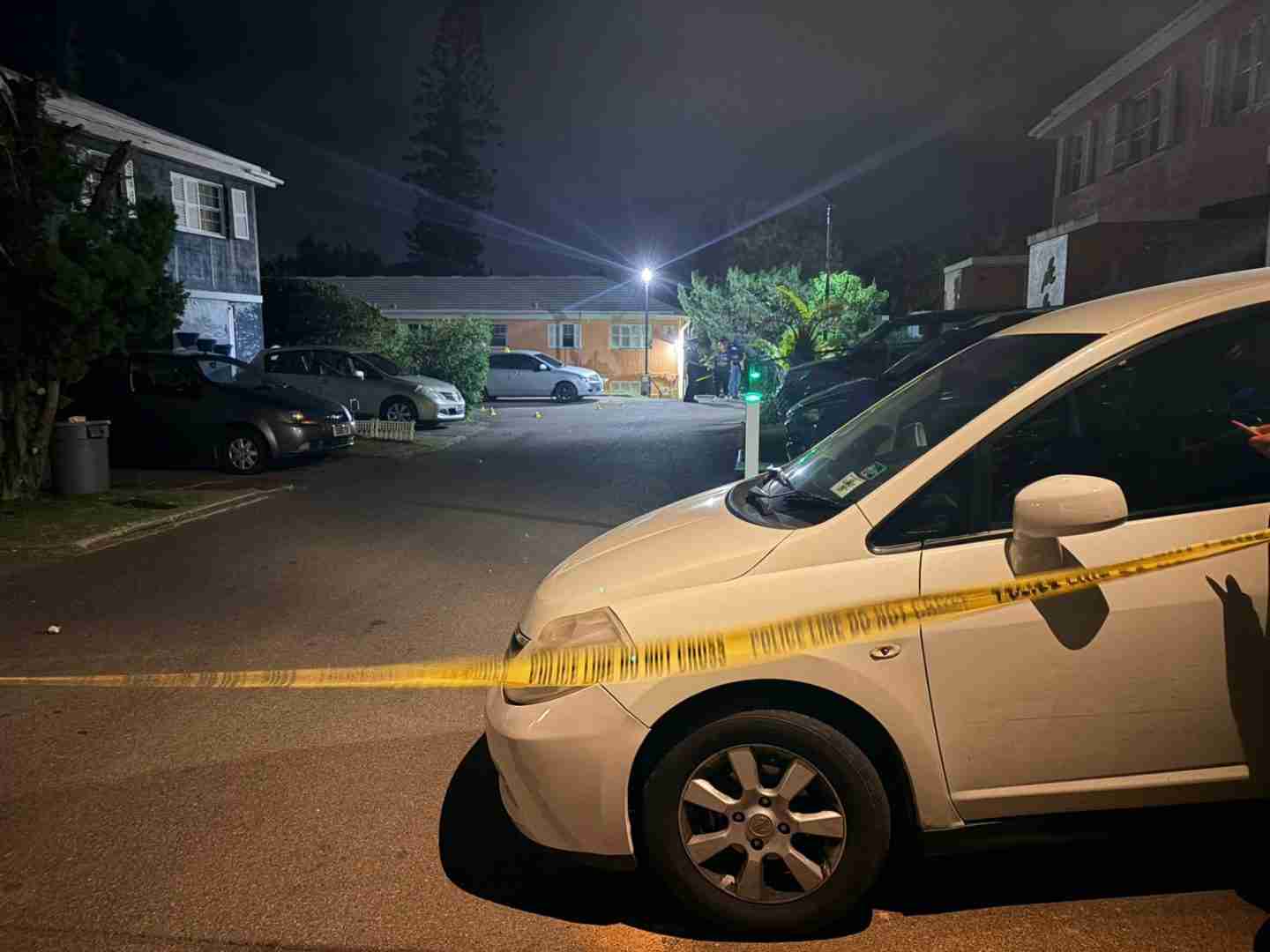
Police investigators are on the scene at Cedar Park Road, Devonshire

Police Statement:
Shortly after 10:30 p.m. on Wednesday, May 27, 2026, police received reports of gunshots at Cedar Park,Prospect.
Officers and Emergency Medical Services were immediately despatched to that location
Initial investigations confirmed a firearm had been discharged outside a nearby residence and one person shot.
The victim, a male was transported to King Edward VII Memorial Hospital via private vehicle for treatment of his injuries.
The extent of those injuries are not known at this time.
As the investigation into this incident continues, police are asking for anyone with information to immediately contact Detectives Inspector Nidol Barker on 717-2176 or via e-mail, nbarker@bps.bm. You may also call 211, the main police number 295-0011 or, the independent and confidential Crime Stoppers number, 800-8477.
Alternatively please provide the information via the Bermuda Police Service reporting portal at portal.police.bm
We are particularly interested in hearing from area residents who may have Ring cameras, or CCTV systems. We ask that they please check their devices for any suspicious activity that may have been captured in the lead-up to, or in the aftermath of this incident and make contact with us.

Warwick Academy dethrone Sandys in last-over Middle School Super 8 thriller


Warwick Academy have been crowned the Bermuda School Sports Federation’s Middle School Girls Super 8 Cricket champions after dethroning defending champions Sandys Secondary Middle School in a breathless final.
Setting a daunting target of 74 in their allotted six overs, Warwick’s innings was anchored by a blistering display from Adriana Dyer. Dyer smashed two sixes and three fours on her way to a mandatory retirement score of 30, while teammate Lee Terceira added a crucial 14 runs.
Sandys mounted a spectacular chase, ignited by a boundary-laden 30 from Jerzi Smith and a late surge alongside Yara Muhammad. However, with the West Enders needing just four runs for victory, Warwick’s Evie Brogden turned hero in the final over, snatching two quick wickets to dash Sandys’ hopes and leave them three runs agonizingly short on 71.
Earlier in the tournament, both finalists showcased their heavy-hitting pedigree in the semi-finals. Warwick Academy punched their ticket to the showcase match with a convincing 31-run victory over Saltus Grammar School, driven by an unbeaten 30 from Terceira. Sandys, meanwhile, booked their final spot by relentlessly chasing down 67 against the Whitney Institute without losing a single wicket and with a full six balls to spare.
