Saturday, October 31, 2026
Home Blog Page 274

Hantavirus-hit liner reaches Rotterdam, crew quarantined and ship to be disinfected

It had been ​carrying around 150 passengers and crew from ⁠23 countries when a cluster of severe respiratory illnesses was first reported to the World Health Organization on May 2

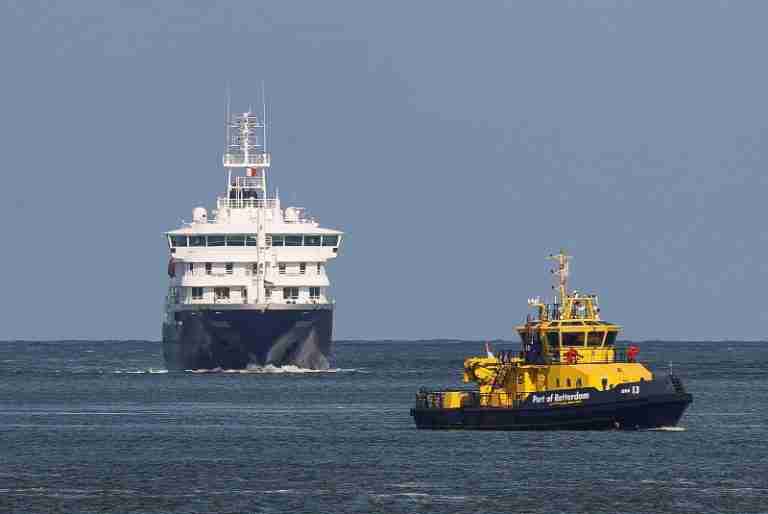
A patrol vessel sails near the cruise ship MV Hondius, which was affected by a hantavirus outbreak, as it arrives for disinfection at the Port of Rotterdam, Netherlands, May 18, 2026. REUTERS/Yves Herman

International News via Reuters:

A luxury polar explorer at the centre of an outbreak of hantavirus docked at the Dutch port of Rotterdam on Monday, where authorities were quarantining the last 27 people to disembark and planned to cremate a German who died.

The Dutch-flagged MV Hondius cruise was to be disinfected.

It had been ​carrying around 150 passengers and crew from ⁠23 countries when a cluster of severe respiratory illnesses was first reported to the World Health Organization on May 2. 

Three people have died. The bodies of a Dutch couple have been repatriated, while a German victim was to be cremated in the Netherlands with her ashes then sent home.

Including the three deaths, there have been eight confirmed and two probable cases on board, according to WHO.

Hantavirus is primarily spread by rodents but can be transmitted between people ​in rare cases and after prolonged, close contact. Incubation can last about six weeks. 

There is no specific treatment for infection.

The WHO insists the wider threat to public health remains low and there is no comparison with the COVID epidemic.

“There is no risk for Rotterdam and no risk in that sense,” said Tjalling Leenstra, head of the Dutch coordination centre for communicable disease control at the National Institute for Public Health and the Environment (RIVM).

All those exposed are under monitoring and quarantine, he added.

The vessel, operated by Oceanwide Expeditions, had been stranded off Cape Verde, its intended final destination, earlier this month after authorities barred remaining passengers from going ashore.

The WHO and EU asked Spain to manage the evacuation at the Canary Islands, after which the ship departed for Rotterdam with a skeleton crew of 25 people and two additional medical staff.

Two Dutch crew members were going home for quarantine, with other mainly Filipino staff to quarantine in mobile home units in the Rotterdam area, said Yvonne van Duijnhoven, director of the GGD Rotterdam-Rijnmond municipal health service.

Cleaning of the vessel by a specialized company could take up to a week, RIVM said. 

“They wear protective clothing and clean all surfaces in the ship, including the ventilation systems, and each room is assessed individually,” said RIVM spokesperson Coen Berends, noting that cabins of people who tested positive would be considered high-risk areas.

The outbreak involves ​the so-called Andes virus,  a strain which has circulated in Argentina and Chile for decades.

Other crew, passengers and ⁠people in contact with them have also been quarantined in several other countries.

Reporting by Charlotte Van Campenhout and Bart Meijer in Rotterdam; Writing by Michele Kambas; Editing by Andrew Cawthorne


US states reject anti-vaccine bills as public health groups fight MAHA

The failures show a limit to the political power of the MAHA coalition groups that had set out this year to pass laws against mandatory vaccinations in at least 10 states

International News via Reuters:

Dozens of state anti-vaccine bills backed by “Make America Healthy Again” supporters have failed after public health groups won over Republican state lawmakers, marking a series of defeats for the backers of Health Secretary Robert F. Kennedy Jr.

The failures show a limit to the political power of the MAHA coalition groups that had set out this year to pass laws against mandatory vaccinations in at least 10 states, hoping to capitalize on a rise in anti-vaccine sentiment and their role in helping elect President Donald Trump.

Pro-vaccine groups and medical associations including American Families for Vaccines, the American Academy of Pediatrics and others lobbied in statehouses against bills seeking to end policies like school vaccine mandates, according to Reuters interviews with seven organizations.

Vaccine advocates used polling data and personal appeals to convince lawmakers in Republican-controlled states such as West Virginia, Louisiana and Florida that their constituents support vaccination and that the MAHA-backed bills posed a threat to public health.

“Even though this is an increasingly partisan space, Republicans across the board are not anti-vaccine and there are lawmakers that really just want sensible, transparent vaccine policy,” said Dr. Erin Abramsohn, executive director of the Infectious Disease Prevention Network, which fought anti-vaccine bills in 10 states this year. 

A February Reuters/Ipsos poll found that a bipartisan majority of Americans support school vaccination requirements and think vaccines are safe for children.

Kennedy, a long-time anti-vaccine activist, has used his post to advance several actions against mandatory inoculations including removing some shots from the childhood immunization schedule.

The childhood vaccine schedule changes were put on hold as part of a lawsuit addressing the overhaul of vaccine policies under Kennedy, who has a history of making claims about vaccines contrary to scientific evidence.

The White House has directed Kennedy not to take further steps against vaccines ahead of the November midterm elections, when Republicans will defend a slim majority in Congress. 

A Department of Health and Human Services official said the agency does not comment on legislation.

ANTI-VACCINE BILLS ON THE RISE

While anti-vaccine bills have been proposed before, more emerged this year due to the coordinated efforts of MAHA groups, the groups told Reuters.

“In the past where you might have seen a couple of bills, now there’s hundreds of anti-vaccine bills in the state legislatures,” said Lecia Imbery, government affairs director of Vaccinate Your Family. VYF names some vaccine makers as donors in its annual report, including Pfizer and Moderna.

Those states include Idaho, which saw six bills introduced; West Virginia, which saw nine; Tennessee, which saw eight; and South Dakota, which saw five – none of which passed, said Abramsohn.

Idaho last year passed a first-in-the-nation ban on vaccine mandates, but failed to advance further anti-vaccine legislation this session. Florida, too, discussed doing away with vaccine mandates but did not pass bills to do so during its legislative session. 

To convince Republican lawmakers to oppose the bills, the pro-vaccine groups pointed to polling that showed constituents value vaccine mandates as a public health tool and said the elected officials could face political consequences if they supported anti-vaccine legislation. 

“There’s a lot of people running for office, so this could potentially hurt them… in future elections if they were to vote against public health,” said Elizabeth Faber, director of programs at the Iowa Public Health Association.

Iowa public lobbying records give a snapshot of the advocacy push. Faber said advocates there were monitoring 18 anti-vaccine bills, one of which would have removed vaccine requirements for primary and secondary school students.

Nearly three dozen organizations lobbied against the bill, including the Iowa Nurses Association, Iowa Academy of Family Physicians, and the Iowa Association of School Boards, the records show. Just two groups, Iowans for Freedom and Inspired Life, lobbied for the bill. The records did not show how much money was spent on the lobbying effort. 

BILLS ‘NOT GOING AWAY’

Both public health and anti-vaccine advocates say they expect to see more debate over vaccine policy in statehouses. 

Leah Wilson, founder of Stand for Health Freedom, which promoted what it calls “medical freedom” legislation such as anti-vaccine mandate bills in a dozen states this year, said she is encouraged by the momentum those bills have seen, including hearings in five states.

“It’s definitely an issue that’s rising,” Wilson said. “It’s quite encouraging to see the civic engagement that we’re seeing right now.”

In Iowa, more legislators have joined caucuses to pursue anti-vaccine legislation, signaling more bills will be introduced down the road, said Iowa’s Faber.

“We definitely know that this is not going away,” she said.

Reporting by Leah Douglas in Washington; Editing by Caroline Humer and Bill Berkrot

Global stocks retreat and bonds wilt as oil climbs

A drone strike caused a fire at a nuclear power plant in the United Arab Emirates, while Saudi Arabia reported intercepting three drones, as U.S. President Donald Trump warned that Iran must act “fast” to reach a deal

A man walks in front of an electronic screen displaying Japan’s Nikkei stock prices quotation board inside a conference hall in Tokyo, Japan, April 27, 2026. REUTERS/Issei Kato

International News via Reuters:

Global share markets slipped on Monday as fresh drone attacks in the Gulf shoved oil prices and bond yields higher, stoking inflation worries in a week when the tech bull run will be tested by earnings from Nvidia.

A drone strike caused a fire at a nuclear power plant in the United Arab Emirates, while Saudi Arabia reported intercepting three drones, as U.S. President Donald Trump warned that Iran must act “fast” to reach a deal.

Meanwhile, the vital Strait of Hormuz remains closed to all but a trickle of shipping as Tehran tries to formalise its control of the waterway that during normal times carries 20% of the world’s oil and gas trade.

“Right now, markets are panicking as they are pricing the possibility that the Strait of Hormuz remains closed,” said George Lagarias, chief economist at Forvis Mazars. 

Brent was trading up 1% at about $110.50 a barrel, while U.S. crude climbed 1.2% to $106.72 a barrel. Crucially, futures for September climbed above $100 and December hit a contract high as markets braced for protracted shortages. [O/R]

G7 finance ministers are scheduled to gather in Paris on Monday to discuss the Strait of Hormuz and critical raw material supplies, though geopolitical differences threaten to test the group’s cohesion.

Global bond markets were hit again on Monday by concerns that energy costs would stay high and thus continue to drive inflation. 

Yields on U.S. 10-year notes hit a 15-month top of 4.631%, having surged 23 basis points last week. Yields on 30-year bonds reached 5.159% after jumping 18 basis points last week.

Japan’s 10-year yield hit a peak not seen since 1996 as the government proposed to issue fresh debt to fund a planned extra budget to cushion the economic blow from the Iran war. Germany’s 10-year bond yield rose to a level not seen in 15 years.  

“As long as this is not a credit event, and we have no evidence to call this a credit event, then beyond the normal volatility seen for a market at all-time highs, I would be surprised if it causes a big rout in equities as well,” Forvis Mazars’ Lagarias said. 

“It can be an excuse for some investors to take some money off the table, but I’d be surprised if we saw a proper correction on the back of this bond volatility.”

STOCKS SKID

European stocks fell 0.5%, with major markets in Frankfurt, Paris and London flat to down 1.1%. 

Overnight, Japan’s Nikkei eased 1%, having fallen 2% last week from record highs. South Korean stocks rose 0.3%, as Samsung Electronics gained almost 4% after a court issued a partial injunction against a union strike.

MSCI’s broadest index of Asia-Pacific shares outside Japan lost 0.7%. Chinese blue chips lost 0.6%, as economic data disappointed. China’s April retail sales edged up 0.2% when analysts had looked for growth of 2.0%, while industrial output rose a sluggish 4.1%. 

S&P 500 futures fell 0.4% and Nasdaq futures lost 0.2%. 

AI, RETAIL EARNINGS TO TEST THE BULL RUN 

Rising yields push up borrowing costs and mean a higher discount for future company earnings, challenging stock valuations.

The AI trade will be tested by earnings from Nvidia that are due on Wednesday, with expectations sky-high for the world’s most valuable company.

Nvidia shares are up 36% since a March low, while the Philadelphia SE semiconductor index has surged more than 60%, amid voracious demand for chips as tech companies spend massively to build AI-related infrastructure.

Also due this week are results from a host of retailers led by Walmart, which will provide an insight into how consumers are faring with high energy prices.

In forex markets, risk aversion has tended to benefit the greenback as the world’s most liquid currency. The U.S. is also a net energy exporter, giving it a relative advantage over Europe and much of Asia.

The euro was little changed at $1.1630 after losing 1.4% last week. The pound was steady at $1.3353, having dived 2.3% last week as political instability in Britain added to already intense pressure on the gilt market.

The dollar held firm against the yen at 158.91, with only the threat of Japanese intervention preventing another speculative assault on the 160.00 chart barrier.

In commodity markets, gold was near flat at $4,544 an ounce, having drawn little support so far as a safe haven or as a hedge against inflation risks. [GOL/]   

Reporting by Samuel Indyk and Wayne Cole; Editing by Gus Trompiz and Sonali Desai

WHO declares Ebola outbreak in Congo, Uganda an emergency of international concern

The WHO said the outbreak, caused by the Bundibugyo virus, did not meet the criteria of a pandemic emergency but there was a high risk the disease could spread further to countries sharing land borders with the DRC

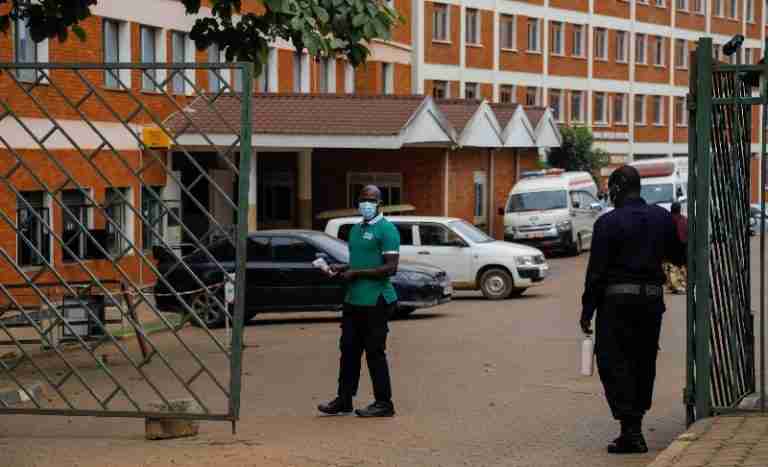
Workers stand guard at the gate of the Kibuli Muslim Hospital where a Congolese man died of Ebola Bundibugyo virus in Kibuli suburb of Kampala, Uganda May 16, 2026. REUTERS/Abubaker Lubowa

International News via Reuters:

An Ebola outbreak in the Democratic Republic of Congo and Uganda has been declared a public health emergency of international concern by the World Health Organization, after 80 deaths were attributed to the disease.

The WHO said the outbreak, caused by the Bundibugyo virus, did not meet the criteria of a pandemic emergency but there was a high risk the disease could spread further to countries sharing land borders with the DRC.

On Sunday, the U.N. health agency said in a statement that 80 suspected deaths, eight laboratory-confirmed cases and 246 suspected cases had been reported as of Saturday in the DRC’s Ituri province across at least three health zones, including Bunia, Rwampara and Mongbwalu.

One case was confirmed in the eastern Congolese city of Goma, a statement by M23 rebels said.

At least six Americans in the DRC have been exposed to the Ebola virus, with three exposures deemed high risk, CBS News reported, citing unnamed sources with international aid organizations. STAT News said one American may have developed symptoms. Reuters could not immediately verify the reports.

STAT News, which also cited unnamed sources, said the U.S. government was trying to transport the individuals out of the country, possibly to a military base in Germany.

Satish Pillai, Ebola response incident manager at the U.S. Centers for Disease Control and Prevention, declined at a Sunday briefing to say whether any Americans were among those who had been infected but stressed to reporters that the risk to the U.S. remains low.

CDC officials told reporters the agency has activated its emergency response center for the outbreak and plans to send more people to its offices in the DRC and Uganda.

The U.S. Embassy in the DRC issued a health alert on Sunday reminding U.S. citizens that the State Department advises Americans not to travel to the Ituri province and that the U.S. government is “extremely limited in its ability to provide emergency services to U.S. citizens” in the area. 

“Do not travel to this area for any reason,” the alert said.

INTERNATIONAL SPREAD DOCUMENTED, WHO SAYS

The DRC health ministry had said on Friday that 80 people had died in the new outbreak in the eastern province.

The 17th outbreak in the country, where Ebola was first identified in 1976, could in fact be much larger, given the high positivity rate of the initial samples and the increasing number of suspected cases being reported, the WHO said.

The outbreak is “extraordinary” as there are no approved Bundibugyo virus-specific therapeutics or vaccines, unlike for Ebola-Zaire strains, it said. All but one of the country’s previous outbreaks were caused by the Zaire strain.

The DRC-Uganda outbreak poses a public health risk to other countries, with some cases of an international spread already documented, the agency said, advising countries to activate their national disaster and emergency-management mechanisms and undertake cross-border screening and screening at main internal roads.

In Uganda’s capital, Kampala, two apparently unrelated laboratory-confirmed cases, including one death, were reported on Friday and Saturday, from people travelling from the DRC, the WHO said.

The WHO said on Sunday that a previously reported laboratory-confirmed case in Kinshasa, the DRC capital, had tested negative after secondary testing.

Those who have had contact with or cases of the Bundibugyo virus should not travel internationally, unless as part of a medical evacuation, the WHO said.

The agency advised isolating confirmed cases immediately and monitoring contacts daily, with restricted national travel and no international travel until 21 days after exposure. 

At the same time, the WHO urged countries not to close their borders or restrict travel and trade out of fear, as this could lead to people and goods making informal border crossings that are not monitored.

The DRC’s dense tropical forests are a natural reservoir for the Ebola virus.

Jean Kaseya, director general of the Africa Centres for Disease Control and Prevention, said in a statement that he had requested technical guidance and recommendations on the potential need to declare the outbreak a public health emergency of continental security.

The often-fatal virus, which causes fever, body aches, vomiting and diarrhoea, spreads through direct contact with the bodily fluids of infected persons, contaminated materials or persons who have died from the disease, according to the Africa Centres for Disease Control and Prevention.

Reporting by Disha Mishra and Akanksha Khushi in Bengaluru, additional reporting by Kopano Gumbi in Johannesburg, and Yasmeen Abutaleb and Daphne Psaledakis in Washington; Editing by William Mallard, Peter Graff, Nick Zieminski and Neil Fullick

Earthquake hits southwest China; thousands evacuate, buildings collapse

There were two confirmed deaths with one still missing, and four people were sent to the hospital, although none of them had life-threatening injuries, CCTV and state news agency Xinhua said

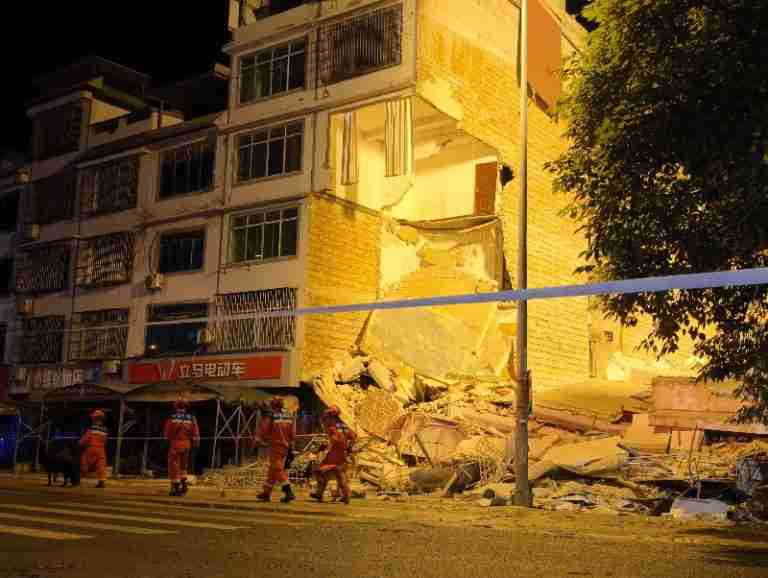
Rescue workers walk past a damaged building following an earthquake at Taiyang village in Liuzhou, Guangxi Zhuang Autonomous Region, China May 18, 2026. cnsphoto via REUTERS

International News via Reuters:

A magnitude 5.2 earthquake in China’s southwest region of Guangxi early on Monday killed two and forced more than 7,000 in the city of Liuzhou to evacuate as search and rescue operations continue and authorities warn of transport disruptions.

• There were two confirmed deaths with one still missing, and four people were sent to the hospital, although none of them had life-threatening injuries, CCTV and state news agency Xinhua said.

• Thirteen buildings collapsed in the early hours of Monday, state broadcaster CCTV reported.

• Transportation disruptions were also flagged by railway authorities as they inspected the integrity of rail line infrastructure.

• Communication and power lines, water and gas supply, and traffic in the affected area were operating normally, state media reported.

Reporting by Liz Lee and Shanghai newsroom; Editing by Tom Hogue

EU to force companies to buy components from non-Chinese suppliers, FT reports

The new rules would affect businesses in a handful of key sectors like chemicals and industrial machinery, the report added, citing two EU officials familiar with the matter

Steel scrap is loaded into a converter for its refinement with raw iron to steel at Germany’s largest steel factory of industrial conglomerate ThyssenKrupp AG which holds it’s annual shareholders meeting on Friday February 1, 2019, in Duisburg, Germany, January 28, 2019. Picture taken January 28, 2019. REUTERS/Wolfgang Rattay REFILE – CORRECTING INFORMATION FROM “STEEL CRAP” TO “STEEL SCRAP”.

International News via Reuters:

The European Union is drawing up plans to force companies in the bloc to buy critical components from at least three different suppliers in an attempt to reduce reliance on China, the Financial Times reported on Monday.

The new rules would affect businesses in a handful of key sectors like chemicals and industrial machinery, the report added, citing two EU officials familiar with the matter.  

Under the new legislation companies would be limited to buying about 30% to 40% of components from a single supplier and would have to source the rest from at least three different suppliers not coming from the same country, the FT said.

This comes as China continues to use its chokehold on the processing of many minerals as leverage, at times curbing exports, suppressing prices and undercutting other countries’ ability to diversify their sources of the materials used to make semiconductors, electric vehicles and advanced weapons.

European Union Trade Commissioner Maros Sefcovic is planning a series of punitive tariffs on Chinese chemicals and machinery in a bid to tackle the bloc’s 1 billion euro ($1.16 billion) a day trade deficit and insulate companies from China’s “weaponisation of trade,” the newspaper said.

Last month, Sefcovic signed a memorandum of understanding with U.S. Secretary of State Marco Rubio for a partnership on producing and securing critical minerals, as part of a push to loosen China’s grip on materials crucial to advanced manufacturing.

According to the FT report, these early-stage plans will be presented to a commission meeting dedicated to China on May 29 and could then be endorsed by EU leaders in late June. 

A European Commission spokesperson confirmed to Reuters that it will hold an orientation debate on EU–China relations on May 29 but declined to comment on internal discussions, adding that such debates do not involve the adoption of formal proposals.

($1 = 0.8607 euros)

Reporting by Rhea Rose Abraham and Akanksha Khushi in Bengaluru; additional reporting by Preetika Parashuraman; Editing by Christian Schmollinger and Thomas Derpinghaus

Dollar dips; rising oil and bond yields temper losses

The euro was last up 0.1% at $1.1635 and sterling was up 0.2% at $1.3351

U.S. dollar banknotes are seen in this illustration taken March 24, 2026. REUTERS/Dado Ruvic/Illustration

International News via Reuters:

The dollar dipped against a range of major currencies on Monday, but held near last week’s highs, as fresh tensions in the Middle East pushed up global bond yields, while weakness in the yen kept traders watching out for possible intervention.

The euro was last up 0.1% at $1.1635 and sterling was up 0.2% at $1.3351.

The dollar index, which tracks the U.S. currency against six others, was a touch softer at 99.12, having posted its strongest weekly performance in three months last week. 

“It appears conditions for risk and bonds are deteriorating and conditions for the dollar rally to extend this week are ripe,” analysts at Barclays wrote in a note. 

Signs that the Strait of Hormuz will remain closed for longer are also exerting upward pressure, with the dollar gaining 0.5% to 1% for every 10% rise in oil prices, they added.

Oil prices climbed on Monday, with Brent crude futures rising more than 1% to over $110 a barrel, after a nuclear power plant in the United Arab Emirates came under attack and efforts to end the U.S.-Israeli war on Iran appear to have stalled.

Further denting risk appetite, a global bond rout deepened on Monday as rising energy prices fanned inflation fears and stoked wagers on rate hikes from global central banks.

Benchmark 10-year U.S. Treasury yields jumped to 4.6310% and the two-year yield hit a high of 4.1020%, both near their highest points since February 2025.

Commerzbank strategist Michael Pfister said shifting expectations for interest rates – and the subsequent rise in bond yields – were at the heart of the dollar’s relative resilience.

“Although expectations regarding the Fed had shifted significantly towards a more restrictive monetary policy from the outset, market participants were still reluctant to bet on interest rate hikes. This changed last week, with expectations regarding the Fed shifting most markedly among the G10,” he said.

Minutes from the Federal Reserve’s last meeting and U.S. flash purchasing managers’ surveys later this week should help clarify how concerned the central bank is about persistent inflation and whether activity momentum is holding up, Christopher Wong, FX strategist at OCBC, said in a note.

Markets are now pricing in a more than 50% chance that the Fed would raise rates by December, according to the CME FedWatch tool.

Investors are also watching as the Group of Seven finance ministers and central bankers meet in Paris on Monday and Tuesday to discuss how to bring a lasting end to the war in Iran.

The yen last traded at 158.9, around its weakest since April 29, which put investors on alert for a possible intervention.

Officials in Tokyo intervened a couple of times in late April and into early May, which saw the yen strengthen by around 3.5% in the days that followed, but the currency has given up roughly 7% of that rally already.

Japan’s government is likely to issue fresh debt as part of funding for a planned extra budget to cushion the economic blow from the Middle East war, a government source with direct knowledge of the deliberations told Reuters on Monday.

Meanwhile, the offshore yuan weakened to 6.808 yuan per dollar. The meetings between U.S. President Donald Trump and Chinese President Xi Jinping last week offered no major breakthroughs, while data released on Monday showed China’s growth lost momentum in April. 

Additional reporting by Jiaxing Li in Hong Kong; Editing by Jacqueline Wong, Thomas Derpinghaus and Susan Fenton

Swiss Double: Lewis Smashes 400m Record Again

Bermudian para-athlete Jessica Lewis has continued her sensational run of form in Switzerland, shattering her personal best for the second time in a week at the 52nd Swiss National Championships.

Competing at the renowned Stacherholz track in Arbon, Lewis proved that her record-breaking performance at the Daniela Jutzeler Memorial was no fluke. In a world-class T53 Women’s 400m field, she once again lowered her career-best mark, signaling a significant leap in her mid-distance speed.

Lewis crossed the line in a blistering 55.80 seconds, securing a second-place finish and a silver medal. The time represents a remarkable improvement over her previous best set just days ago, as she continues to refine her power output on the elite European circuit.

The race was dominated by local favorite Catherine Debrunner. The Swiss star utilised her home-track advantage to clock an extraordinary winning time of 50.70, while Japan’s Kazumi Takimura completed the podium in third with a time of 60.30.

The result in Arbon further cements Lewis’s status as a top-tier contender on the global stage. By consistently lowering her times in both the 100m and 400m, the Bermudian is demonstrating a level of tactical maturity and physical conditioning that bodes well for her upcoming international engagements.

Sea Cadets complete sponsored row and trashathon fundraiser

The Bermuda Sea Cadet Corps completed its annual Sponsored Row and Trashathon community fundraiser over the weekend, with cadets taking part in a long-distance row, kayak challenge, and island clean-up in St. George’s.

Held on Friday and Saturday, the event saw Cadets and Junior Cadets row and kayak around St. George’s Harbour before carrying out a trash clean-up in public areas, highlighting the organisation’s focus on teamwork, maritime training, and environmental responsibility.

The fundraiser aims to raise $20,000 to support the ongoing operation of the volunteer-led programme, including training, equipment, safety gear, and youth development opportunities.

Lieutenant Commander (SCC) Michael Frith, RNR, Commander of the Bermuda Sea Cadet Corps, said the event reflects the organisation’s core values of teamwork, service, and care for Bermuda’s marine environment.

He added that community support remains vital, noting that every pledge is an investment in Bermuda’s young people and the continued success of the programme.

The Bermuda Sea Cadet Corps is encouraging members of the public to support the fundraiser through donations, sponsorships, or in-kind contributions.

OBA to host golf fundraiser

The One Bermuda Alliance is inviting members of the public to participate in its Drive For Change golf tournament on Saturday, June 13, 2026 at the Port Royal golf course.

Registration for teams of four is $1,000. Participants do not have to be members of the One Bermuda Alliance.

Tournament committee member Vance Campbell says the event is an opportunity for residents from across the island to have fun for a worthy cause.

“Part proceeds will be donated to HOME. We have chosen this wonderful organisation as we support its commitment to ending homelessness in Bermuda. This tournament will be a great opportunity for individuals or organisations to come together to enjoy a great day of golf.”

The registration fee includes the tournament, dinner and prize ceremony.

The event begins at 1.30pm with shotgun start at 2pm.

Anyone interested in registering a team, volunteering or sponsoring the event can do so by calling 294-3264 or visit www.oba.bm/golf.

Individual players without a team are also welcome to register.

Minister Weeks briefed on Regiment readiness

Ahead of UK training camp

The Minister of National Security, Michael Weeks, visited Warwick Camp on Wednesday to receive a briefing on the operational readiness of the Royal Bermuda Regiment ahead of the unit’s upcoming overseas training camp in the UK.

Minister Weeks, accompanied by Permanent Secretary Lt. Col. Edward Lamb, toured the facility with Commanding Officer Lt. Col. Duncan Simons as part of an ongoing series of visits to departments under the Ministry of National Security.

During the visit, Regiment leadership provided updates on training, staffing, recruitment, infrastructure and youth development, as well as preparations for public order and weapons training scheduled to take place in the UK.

Discussions also focused on the work of the Royal Bermuda Regiment Coast Guard as Bermuda enters the busy boating and hurricane seasons.

Minister Weeks said the Regiment continues to play a critical role in supporting Bermuda through disaster response, maritime safety, ceremonial duties and community service.

He thanked Regiment personnel for their continued service, adding that their contribution to Bermuda remains “significant, impactful and valued.”

Road in Devonshire will close for community parade 

The Ministry of Public Works and Environment advises the motoring public that a temporary road closure will take place on Loyal Hill Road in Devonshire to accommodate a community parade event.

The closure will be in effect on Sunday, 17 May 2026, from 2:00 p.m. to 4:00 p.m.

The affected section of Loyal Hill Road will be between North Shore Road and the Railway Trail. Motorists are advised to use Loyal Hill Pass and Foothills Road to access North Shore Road during this time.

The Ministry encourages the full cooperation of the motoring public and apologises for any inconvenience caused.

For questions about this road closure, please contact Mrs Ronee Benjamin at (441) 747-4805.