Saturday, October 31, 2026
Home Blog Page 310

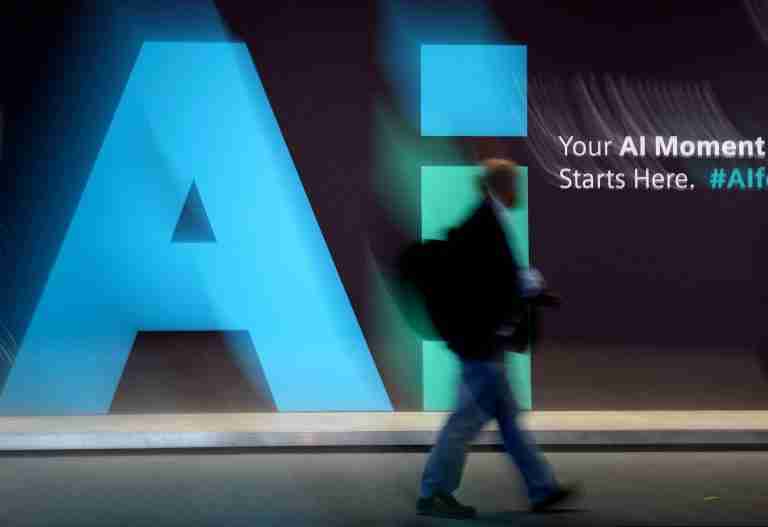
AI training series returns to boost workforce skills

Department of Workforce Development relaunches 2026 programme to help Bermudians build practical AI skills for work and everyday productivity

Back by popular demand, the Department of Workforce Development is pleased to reintroduce its AI Education Series 2026 to equip Bermuda’s workforce with essential skills for the future of work.

Delivered in partnership with AI expert and educator Amrita Bhalla of A.B. Consulting, the virtual training initiative will provide participants with practical, immediately applicable skills to improve productivity, build digital confidence and enhance competitiveness in today’s evolving workplace.

The programme features two distinct training streams to support both personal and professional development:

Stream 1: Foundational AI for Personal Productivity
Designed for individuals seeking to use AI tools to improve daily tasks, increase efficiency and build confidence with emerging technology.

Stream 2: AI Upskilling for Professional Productivity
Designed for working professionals seeking to integrate AI into their job functions, enhance workplace efficiency and support improved business results.

Each stream consists of three weekly modules. Participants must complete all three modules within their chosen stream to receive an AI Training Certificate. Individuals may also enrol in both streams to build broader AI competency.

Minister of Economy and Labour, the Hon. Jason P. Hayward, JP, MP, said, “As the world of work continues to evolve, it is essential that Bermudians are equipped with the skills needed to remain competitive. This initiative ensures that our workforce is prepared to engage with emerging technologies in practical and accessible ways, supporting both individual growth and national productivity.”

Amrita Bhalla, Managing Director of A.B. Consulting, added, “We are pleased to continue partnering with the Department to deliver practical AI training that helps individuals build confidence and apply these tools effectively in their daily work.”

To fully engage in the programme’s hands-on learning approach, participants must create a free account with AI platform tools such as ChatGPT, Claude, or Gemini before the first session.

The basic free versions of these tools are all that is needed to participate in the training.

Registration details, programme dates and additional information are available at dwd.bm/courses/.

For more information, contact the Department of Workforce Development at dwdlearning@gov.bm.

Media release supplied by the Government of Bermuda.
Traffic restrictions announced for Royal Visit

Road closures and delays expected across Hamilton, St. George’s and Dockyard as King Charles III visits Bermuda May 1–2

Members of the public are advised that traffic restrictions will be in place from May 1st & 2nd, in connection with events associated with the Royal Visit of His Majesty King Charles III.

Road restrictions and temporary traffic controls are expected in parts of Hamilton, St. George’s and Dockyard during the visit.

In addition, King’s Square, St. George’s, will be closed from 7.00 am to 12.00 pm on Friday, 1 May.

Motorists, commuters and pedestrians should expect possible delays in and around these areas and are encouraged to plan ahead, allow extra travel time and follow the instructions of Police Officers and traffic marshals on site.

Members of the public are encouraged to come out to King’s Square as well as to City Hall and Dockyard to welcome His Majesty to Bermuda.

The Government thanks commuters and the public in advance for their patience and cooperation as Bermuda hosts the historical visit of His Majesty The King. The public is encouraged to stay follow updates via the Government of Bermuda’s official Royal Visit webpage.

Media release supplied by the Government of Bermuda.

Royal visit marked with limited-edition stamp

Bermuda Post Office releases $35 overprint Express Stamp to commemorate King Charles III’s April 30–May 2 visit to the island

The Bermuda Post Office is pleased to announce the release of a special overprint Express Stamp commemorating the official visit of His Majesty King Charles III to Bermuda from April 30 to May 2, 2026.

This limited-edition issue celebrates the enduring relationship between Bermuda and the British Crown and marks a significant moment in the island’s history.

As both a functional postal item and a collector’s keepsake, the stamp honors His Majesty’s visit and its importance to the people of Bermuda.

The overprint Express Stamp will be available starting April 30, 2026, at a cost of $35.00. Orders may be prepaid for collection or mailing on the day of issue at the Bermuda Post Office and all sub-post offices.

For more information, please visit https://philatelic.bermudapost.bm/ or contact Mrs. Ideleia Fox at imfox@gov.bm.

The public is encouraged to follow updates via the Government of Bermuda’s official Royal Visit webpage.

EU countries, lawmakers fail to reach deal on watered-down AI rules

The changes to the AI Act, which entered into force in August 2024 with key elements set to be enforced in stages starting this year, are part of the European Commission’s Digital Omnibus

International News via Reuters:

EU countries and European Parliament lawmakers failed to reach a deal on watered-down landmark artificial intelligence rules after 12 hours of negotiations on Tuesday and will resume talks next month. 

The changes to the AI Act, which entered into force in August 2024 with key elements set to be enforced in stages starting this year, are part of the European Commission’s Digital Omnibus, which aims to simplify a slew of regulations in the digital sector to help businesses catch up with U.S. and Asian rivals.

Europe’s AI rules, considered to be the strictest in the world, came amid concerns about the impact of the technology on children, workers, companies and cybersecurity.

“It was not possible to reach an agreement with the European Parliament,” a Cypriot official said. Cyprus currently holds the rotating EU Council presidency.

Dutch lawmaker Kim van Sparrentak criticised the failure to reach a deal.

“Big Tech is probably popping champagne. While European companies that care about safety and did their homework now face regulatory chaos,” she said in a statement.

People with direct knowledge of the negotiations said the next round of discussions will likely be in two weeks’ time.

They said the negotiations which started at 1100 GMT on Tuesday were stymied by some countries and some lawmakers’ insistence that industries already subject to sectoral regulations, such as product safety rules, should be exempted from the AI legislation.

The AI regulation sets out stricter requirements on the use of the technology in “high-risk” areas such as biometric identification, utilities supply, health, creditworthiness and law enforcement.

The Omnibus package also includes the General Data Protection Regulation (GDPR), the e-Privacy Directive and the Data Act, among others. 

Proposed changes to these regulations and the AI Act have drawn criticism from privacy activists and civil rights groups about caving to Big Tech.

Reporting by Foo Yun Chee; Editing by Stephen Coates

Dollar gains after Fed keeps rates unchanged and yen weakens past 160

The Fed’s 8–4 vote marked its most divided decision since 1992, underscoring the challenge incoming Fed Chair Kevin Warsh will face in pushing for rate cuts

International News via Reuters:

The dollar strengthened against major currencies on Wednesday after the U.S. Federal Reserve left interest rates unchanged, with investors also on edge as the U.S.-Israel war with Iran shows little sign of easing.

The Fed’s 8–4 vote marked its most divided decision since 1992, underscoring the challenge incoming Fed Chair Kevin Warsh will face in pushing for rate cuts. Current Chair Jerome Powell’s term ends on May 15.

Speaking at a press conference, Powell said that despite dissent from four officials who opposed maintaining an easing bias, he does not see the Fed tilting toward raising interest rates.

The euro slipped 0.35% to $1.167150, while sterling fell 0.36% to $1.34705.

“The main thing is that announcement revealed that there are three people thinking that we should be hiking interest rates or should not have an easing bias and that we should be worried about inflation,” said Juan Perez, director of trading at Monex USA in Washington.

“Kevin Warsh seems a lot like Powell and is likely not going to be a dove. He’s also not entering a Fed that is thinking of stimulus; they’re actually thinking hawkishly. And then more importantly, in the global perspective, central banking has a lack of consensus, which is actually helping the U.S. dollar,” Perez said.

The dollar rose 0.23% to 0.7911 Swiss francs, while the dollar index gained 0.35% to 98.938.

Markets are also eyeing decisions from major central banks including the European Central Bank and the Bank of England. Bank of Canada had on Wednesday kept its ​key interest rate unchanged.

 U.S. President Donald Trump discussed how to mitigate the impact of a possible months-long U.S. blockade of Iran’s ports with U.S. oil companies, a White House official said on Wednesday.

Oil prices climbed for an eighth straight session — the longest run since May 2022, following Russia’s invasion of Ukraine — with the front-month June contract, which expires on Wednesday, rising 6% to settle at $118.03 a barrel.

“Oil prices moved higher based on latest developments; and when oil prices move, yields tend to move higher and at the same time long-term inflation expectations haven’t moved,” said Axel Merk, president and chief investment officer at Merk Investments in Palo Alto, California.

“Taking it together, this is a tightening of financial conditions and a raising of real interest rates, which is supportive for the dollar – meaning all else being equal that weakens other currencies,” he said.

YEN INTERVENTION WATCH

  The yen weakened above 160 per dollar, edging closer to levels that have previously triggered intervention, despite the Bank of Japan signaling after its policy meeting on Tuesday that it could raise rates in coming months.

The Japanese currency has fallen about 0.6% against the dollar and more than 2% since the war began, partly reflecting Japan’s vulnerability to higher imported energy costs.

“The trade-weighted yen has reached its lowest level since the early 1990s, and the MoF (Ministry of Finance) has become increasingly vocal about yen weakness, emphasizing the administration’s readiness to respond and “close coordination with the US” on the currency. Naturally, these developments have prompted renewed concerns of imminent intervention,” Goldman Sachs analyst Karen Fishman said in an investor note.

The yen was last down 0.49% at 160.40 per dollar and down 0.12% at 187.22 per euro.

Reporting by Chibuike Oguh in New York; Editing by Alison Williams, Lisa Shumaker and Nick Zieminski

U.S. war in Iran has cost $25 billion so far, says Pentagon official

With just six months before mid-term elections in which Trump’s Republicans may face an uphill battle to keep their House majority, Democrats are riding high in public opinion polls

International News via Reuters:

The United States’ war in Iran has cost $25 billion so far, a senior Pentagon official said on Wednesday, providing the first official estimate of the military’s price tag for the conflict.

With just six months before mid-term elections in which Trump’s Republicans may face an uphill battle to keep their House majority, Democrats are riding high in public opinion polls as they attempt to link the unpopular Iran war with affordability.

Jules Hurst, who is performing the duties of the comptroller, told lawmakers on the House Armed Services Committee that most of that money was for munitions.

Hurst did not detail what that cost estimate included and whether it took into account the projected costs of rebuilding and repairing base infrastructure in the Middle East damaged in the conflict.

Rep. Adam Smith, the top Democrat on the House Armed Services Committee, responded to Hurst: “I’m glad you answered that question. Because we’ve been asking for a hell of a long time, and no one’s given us the number.”

The United States started carrying out strikes against Iran on Feb.28 and the two sides are currently maintaining a fragile ceasefire.  The Pentagon has poured tens of thousands of additional forces into the Middle East, including keeping three aircraft carriers in the region.

Thirteen U.S. troops have been killed in the conflict and hundreds wounded.

Disruptions in shipments of oil and natural gas since the war started have caused a run-up in U.S. gasoline prices and agricultural products such as fertilizers, on top of the long list of other high consumer prices.

Trump’s popularity has taken a beating ​since the U.S. and Israel launched a war against Iran on February 28 that has led to a surge in gasoline prices.

Just 34% of Americans approve of the U.S. conflict with Iran, down from 36% in mid-April and 38% in mid-March, a recent Reuters/Ipsos poll ⁠found.

Reporting by Phil Stewart, Idrees Ali and Ismail Shakil; editing by Michelle Nichols and Caitlin Webber

King Charles commemorates 9/11 victims in New York visit

The royal visit to lower Manhattan came at a time of tensions between Britain and the U.S., with President Donald Trump having criticized Prime Minister Keir Starmer

International News via Reuters:

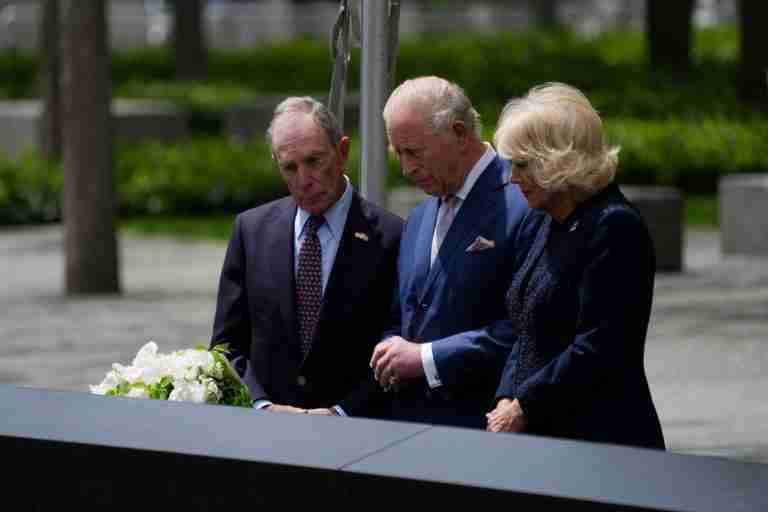
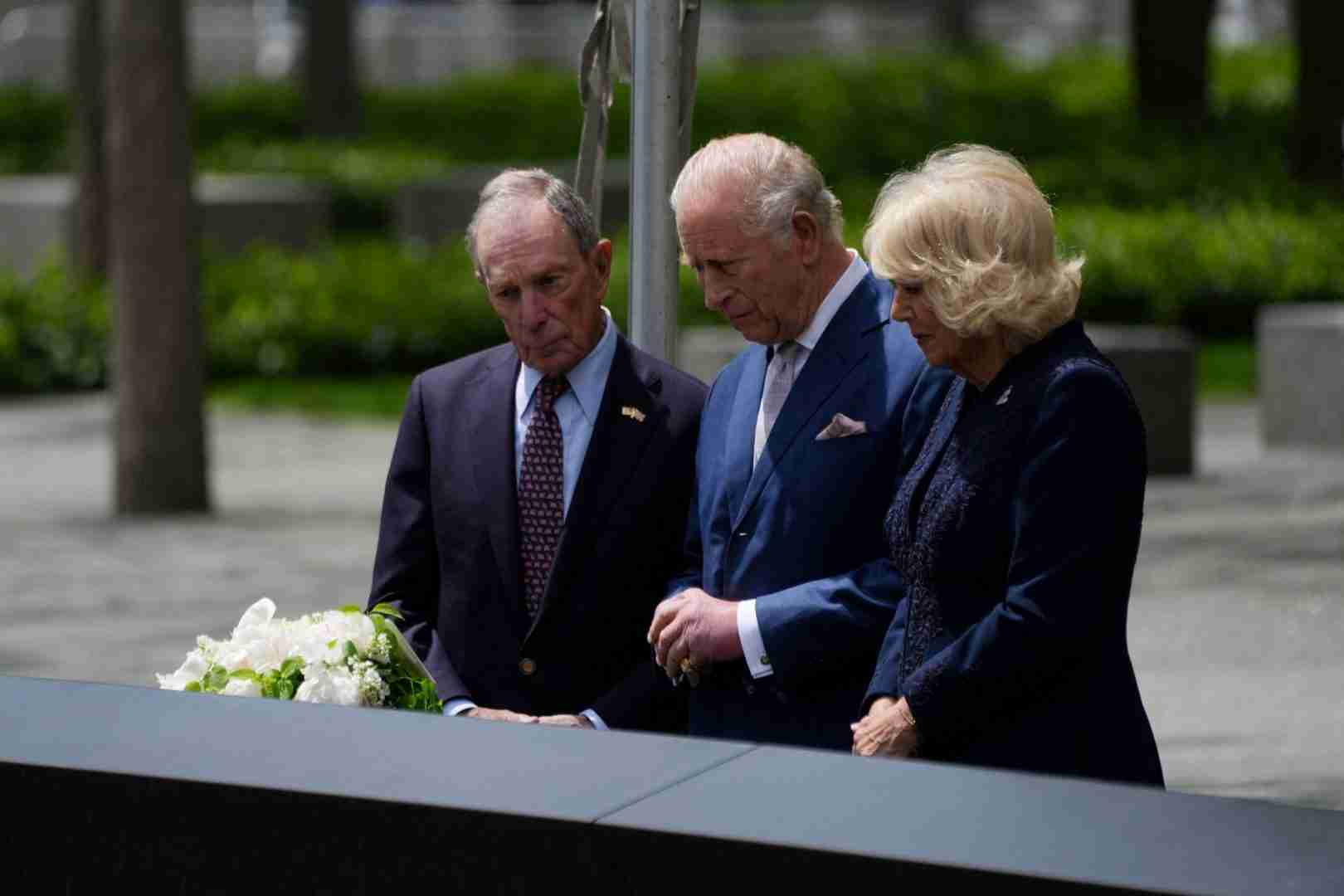
Britain’s King Charles and Queen Camilla commemorated victims of the September 11, 2001, al Qaeda attack on New York City on Wednesday, laying a floral bouquet at the memorial where the World Trade Center’s twin towers once stood.

The royal visit to lower Manhattan came at a time of tensions between Britain and the U.S., with President Donald Trump having criticized Prime Minister Keir Starmer for the UK to declining to join the U.S. and Israel’s war with Iran.

Michael Bloomberg, a former New York City mayor, walked the king and queen to one of the reflecting pools that outline the footprints of the 110-story towers destroyed when al Qaeda militants flew two planes into the skyscrapers.

Charles laid a bouquet of white lilacs, daffodils and peonies on the bronze parapet surrounding the pool, engraved with the names of those killed in the attack.

‘SOLIDARITY’

A note accompanying the flowers, in the king’s handwriting, read: “We honour the memory of all those who so tragically lost their lives on 11th September 2001, and stand in enduring solidarity with the American people in the face of such profound loss. Charles R Camilla R.”

The three stood silently before heading into a canopy to meet with guests including relatives of some of the nearly 2,800 people killed in New York that day. 

The king also spoke with New York City Mayor Zohran Mamdani at the ceremony and met the governors of New York and New Jersey.

Britain was an immediate and staunch supporter of the U.S. response to the 9/11 attacks, which also included a plane crashed into the Pentagon and another downed in a Pennsylvania field by passengers who battled hijackers, launching a years-long “war on terror.” King Charles referred to September 11 during his speech to the U.S. Congress on Tuesday, saying “we answered the call together.” 

Charles stressed the historical military and cultural ties between Britain and the U.S., as well as the importance of NATO at a time when Trump has been critical of the Western military alliance’s reluctance to provide military assistance in the U.S.-Israeli war on Iran.    

IRAN TENSIONS

At a White House state dinner on Tuesday night, Trump said Charles agreed with him that Iran should not have a nuclear weapon. The king is not a spokesman for the UK government and it could not be confirmed that Charles made the statement to Trump.

Buckingham Palace said in a statement on Wednesday that “The King is naturally mindful of his government’s longstanding and well-known position on the prevention of nuclear proliferation.”

Britain was one of the countries alongside the U.S. that negotiated the 2015 nuclear agreement with Iran, which sharply limited Tehran’s nuclear programs and opened them to inspectors, until Trump unilaterally withdrew the U.S. from the agreement during his first White House term.

Iran insists its nuclear program is for peaceful civilian purposes.

CHICKENS IN HARLEM

The royal couple’s four-day state visit to the U.S. celebrates the 250th anniversary of America’s declaration of independence from British rule.

After the 9/11 memorial, King Charles fed chickens and spoke with young children in Harlem during a visit to a grassroots community group that created a sustainable after-school urban farming initiative to combat food insecurity. Such projects have been a passion of the king for decades.

“Do you like eggs?” Charles asked with a smile, leaning down to hear a child’s soft response.

One employee asked Charles if he would like to feed the chickens.

“Yes please,” the king responded.

Meanwhile, Camilla greeted another group of children at a New York Public Library event celebrating the 100th birthday of A.A. Milne’s fictional character Winnie-the-Pooh on behalf of her charity, The Queen’s Reading Room.

The queen’s library visit will include 100 guests from the British and U.S. literary, cultural and publishing worlds, the palace said. Camilla will then meet with representatives of domestic violence charities in the area.

Reporting by Jonathan Allen, Tim Reid and Maria Tsvetkova, Additonal reporting by Michael Holden in London; Writing by Doina Chiacu and Tim Reid; Editing by Scott Malone, Lincoln Feast, Keith Weir, Chris Reese, Alistair Bell and Nick Zieminski

‘What people want is progress, not politics’

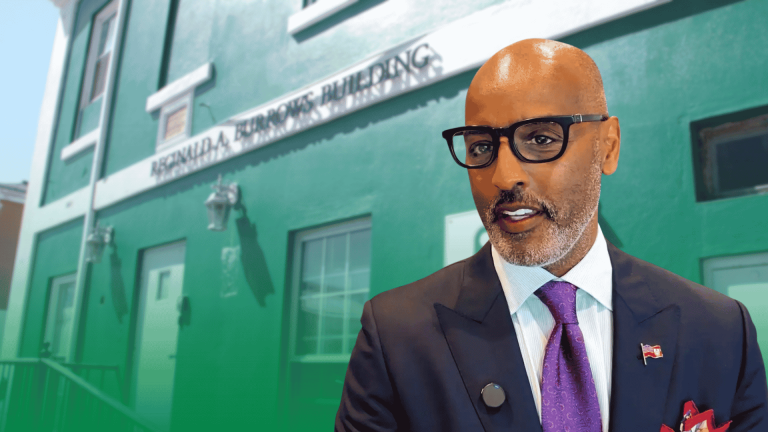
At a press conference today, Curtis Dickinson announced his bid to lead the PLP

Curtis Dickinson has officially declared his candidacy for leadership of the Progressive Labour Party.

He says he is entering the race because he believes he is “prepared to lead with clarity, discipline and purpose”.

Mr Dickinson described his vision for the party as “simple but powerful” – a united PLP, a trusted government, and a Bermuda that is not only stable but full of opportunity.

He added that the next general election will not be won on history alone, but on voters’ confidence in leadership, direction, and readiness to govern.

Mr. Dickinson thanked Premier David Burt for his service and acknowledged fellow candidate Jason Hayward, saying his decision to run is “a sign of a healthy party …one that is thinking about its future”.

The former finance minister also pointed to his experience, noting he was entrusted with guiding the country through crisis during his time in the post.

He said his qualifications for leadership include disciplined and thoughtful decision-making, an unwavering commitment to integrity, and an ambitious vision for the country’s future.

Media were limited to one question each during the announcement.

The former Finance Minister came up short when he challenged David Burt for the party leadership in October 2022.

Mr Dickinson claimed just over a third of the ballot, with PLP MPs and delegates voting 97 to 56 in favour of the Premier.

We will have more details in subsequent reports.

You can watch the full press conference below.

Attacks on hospitals and medics rising, driven by Middle East conflict, says World Health Organization

Before the U.S. and Israel launched airstrikes on Iran at the end of February, attacks globally on such facilities and staff averaged about 3.7 per day, but that has now increased to 4.3, the WHO said

International News via Reuters:

The World Health Organization said on Wednesday that attacks on healthcare facilities and staff are increasing globally, with a notable uptick recorded since the recent conflict in the Middle East began. 

Before the U.S. and Israel launched airstrikes on Iran at the end of February, attacks globally on such facilities and staff averaged about 3.7 per day, but that has now increased to 4.3, the WHO said. 

“This is clearly showing that healthcare is the target,” Altaf Musani, the Director of Emergency Health Interventions at the WHO, told reporters in Geneva.

The attacks include airstrikes and shelling of hospitals and clinics as well as arrests and intimidation of healthcare workers.

“When healthcare is needed most, it is being attacked… These attacks are having a deep impact on functionality,” Musani said.

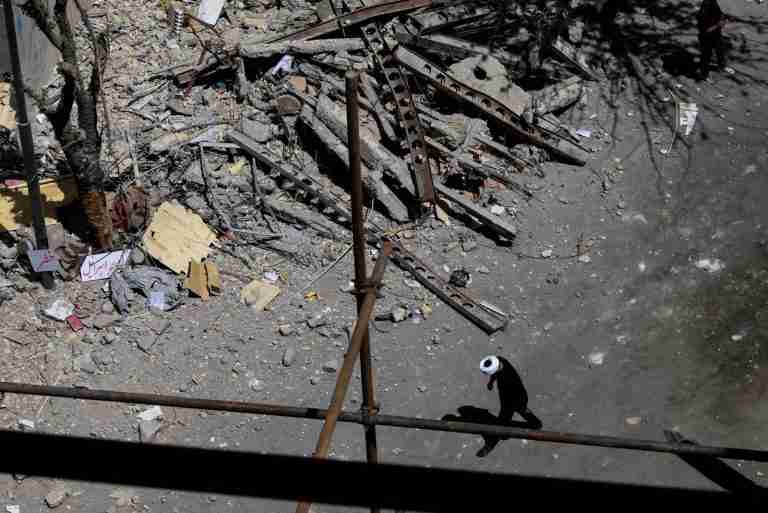
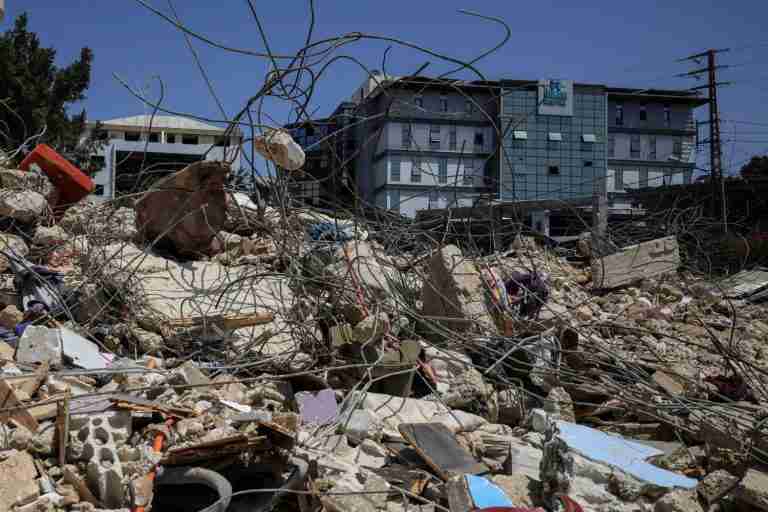
Since the recent conflict in the Middle East began, 50 hospitals and private healthcare centres have been closed and 16 hospitals have been damaged across the region, according to the WHO.

WHO Director-General Tedros Adhanom Ghebreyesus, who has repeatedly denounced the attacks and has called for accountability, highlighted the case of Lebanon where 149 attacks on healthcare have been identified. 

More than 2,500 people have been killed ​in Israeli airstrikes across Lebanon since March 2, when Iran-backed militant group Hezbollah fired on ​Israeli positions and triggered a retaliatory Israeli air and ground campaign. The United Nations Human Rights office said last month that Israeli strikes on civilians including healthcare workers in Lebanon may amount to war crimes.

Israel has repeatedly denied that it targets healthcare workers and says it is targeting Hezbollah sites.

There have also been 26 reported attacks on healthcare sites in Iran since the end of February, Ghebreyesus added.

Attacks on healthcare sites have also deeply impacted healthcare provision in Gaza, which currently has only one fully functioning hospital, and in Sudan, where only 54% of hospitals are fully operational, the WHO said.

Reporting by Olivia Le Poidevin; Editing by Hugh Lawson

Two Jewish men stabbed in London, police treat attack as terrorism

Police said the two victims, one in his 70s and one in his 30s, were both in a stable condition in hospital

International News via Reuters:

Two Jewish men were stabbed in north London on Wednesday by an attacker who ran down a street targeting Jews in what police said was being treated as a terrorist incident.

Police said the two victims, one in his 70s and one in his 30s, were both in a stable condition in hospital, and officers, some of whom were also attacked, had arrested a 45-year-old man after stopping him by using a Taser stun gun.

The latest in a spate of UK antisemitic attacks has drawn demands for urgent action from Jewish community leaders in London and from Israel’s Prime Minister Benjamin Netanyahu and the Israeli president amid concerns about the safety of Britain’s 290,000 Jews.

The suspect, who is being questioned on suspicion of attempted murder, had a history of serious violence and mental health issues, London’s police chief Mark Rowley said in a statement at the scene.

More resources have been promised across the country to protect communities, but in a sign of the anger and fear, Rowley was heckled by a crowd at the scene who called for him to resign, shouting “you’ve failed”.

ISRAEL’S PRESIDENT CALLS FOR ACTION

Unverified footage of Wednesday’s incident posted on social media appeared to show a man in a traditional Jewish skullcap being attacked by an assailant with a knife as he stood at a bus stop.

The suspect had tried to stab police officers, police said, although none were injured. The social media footage later showed officers repeatedly kicking the suspect as they attempted to take the knife away from him.

The stabbings follow a series of arson attacks on Jewish targets in recent weeks in the capital, while last October two people and an attacker were killed after a man drove at a synagogue in the northern English city of Manchester.

Britain’s Chief Rabbi Ephraim Mirvis said the British government needed more than just words to face down such “hatred”, while Israeli President Isaac Herzog said urgent action was needed after it became “dangerous to openly walk the streets as a Jew” in London.

Starmer, whose government has previously promised extra funding to boost security for Jewish communities, said: “The antisemitic attack in Golders Green is utterly appalling”.

A spokesperson for King Charles said the monarch was “being kept fully informed and is naturally deeply concerned, in particular about the impact for the Jewish community”.

‘UNDERSTANDABLE WHY JEWISH LONDONERS FEEL AFRAID’

Rowley said he would discuss with the government what more help could be made available.

“It is completely understandable why Jewish Londoners feel afraid. Jewish communities are understandably angry. There’s been too many attacks,” he said.

Detectives are examining whether the arson incidents over the last month have possible Iranian links, amid warnings from security officials that Iran has sought to use criminal proxies to carry out hostile activity in the UK.

On Tuesday, Britain summoned the Iranian ambassador over what it called the Iranian embassy’s “unacceptable and inflammatory” comments on social media.

The pro-Iranian group Harakat Ashab al-Yamin al-Islamiyya (HAYI), which has said it was behind some of the London arson attacks and other similar ones across Europe, claimed responsibility on social media for Wednesday’s stabbings.

Police have previously said they were assessing such online claims but have not confirmed their authenticity.

“We know that some individuals are being encouraged, persuaded or paid to commit acts of violence on behalf of foreign organisations and hostile states,” Rowley said.

SPATE OF ANTISEMITIC ATTACKS

Over the last month, officers have arrested more than two dozen people as part of investigations into attacks on Jewish-linked premises, including the torching of Jewish ambulances, in an area close to where Wednesday’s stabbings took place, and attempted arson attacks on synagogues.

Golders Green in north London is home to a large Jewish population and has been the location of several of the attacks, along with sites near to the Israeli embassy in west London.

Antisemitic attacks have risen around the world since the October 2023 Hamas assault on Israel that triggered the war in Gaza, including a mass shooting at a Hanukkah celebration on Bondi Beach that killed 15 people in December last year.

Britain has seen a similar rise and since the Manchester attack in England, Jewish communities have stepped up their private security.

Reporting by Sarah Young, Sam Tabahriti and Michael Holden; Additional reporting by Muvija M; Editing by William James, Kate Holton and Alison Williams

Oil prices jump to the highest in weeks as global supply worries mount

U.S. government data showed a bigger weekly draw in crude inventories than expected, which also put upward pressure on U.S. crude

International News via Reuters:

Oil prices rose more than 6% on Wednesday to the highest in nearly a month, as deadlocked U.S.-Iran negotiations made investors more concerned about prolonged disruptions to Middle Eastern supply.

U.S. government data showed a bigger weekly draw in crude inventories than expected, which also put upward pressure on U.S. crude.

Brent crude futures for June rose $7.07, or 6.4%, to $118.33 a barrel by 12:08 a.m. ET, climbing for an eighth day to the highest level since March 31. U.S. West Texas Intermediate futures for June rose $6.34, or 6.3%, to $105.19 a barrel, the highest since April 13.

A White House official said on Wednesday that U.S. President Donald Trump had asked U.S. oil companies about ways to mitigate the impact of a potentially months-long U.S. blockade of Iranian ports, adding to concerns that disruptions to Middle Eastern oil supply could be prolonged.

Over $50 billion worth of crude oil supply had been lost since the start of the Iran war, according to Reuters calculations as of mid-April.

“If Trump is prepared to extend the blockade, supply disruptions would worsen further and continue to push oil prices higher,” said Haitong Futures analyst Yang An.

Signs of tightening supply have started to show in the United States. Energy Information Administration data showed U.S. crude stocks fell over 6 million barrels last week, versus analysts’ estimate of just over 200,000 barrels. [EIA/S]

Elsewhere, Abu Dhabi National Oil Company has notified some customers they could load two crude grades outside of the Gulf next month because the Strait of Hormuz remains closed, according to two people with knowledge of the matter and a notice seen by Reuters.

INVESTORS ASSESS UAE LEAVING OPEC

Investors were also assessing ramifications of the United Arab Emirates’ decision to quit OPEC, though analysts did not expect any major near-term impact on the market. 

“Producers in the region will continue to bring whatever they can to market, and production limits are not, in practice, constraining output currently,” said Investec head of commodities Callum Macpherson.

“Looking further ahead, it is well known that there has been tension over the UAE’s production limits, and the possibility of leaving OPEC+ has been there for some time. In that sense, the move is not surprising, but the timing is notable given the wider backdrop in the region.”

Reporting by Stephanie Kelly in London, Sam Li in Beijing and Siyi Liu in SingaporeEditing by David Goodman, David Gregorio and Chris Reese