The funding will support border management, search-and-rescue and anti-smuggling activities in eastern Libya
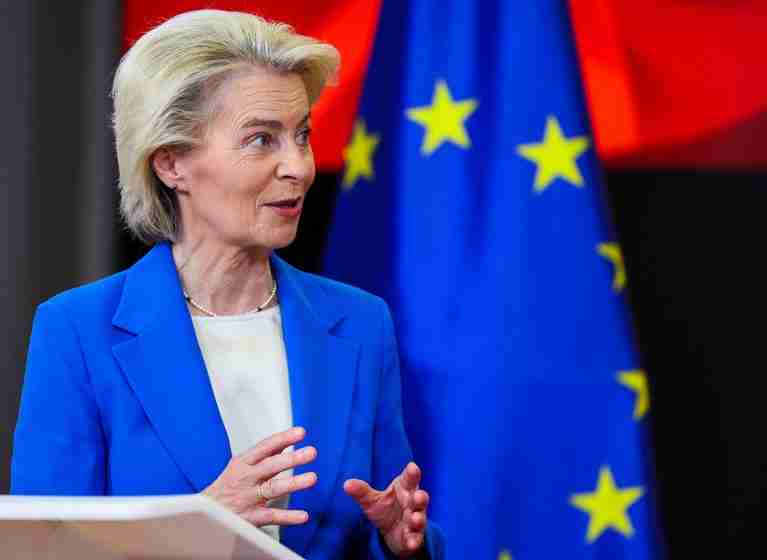
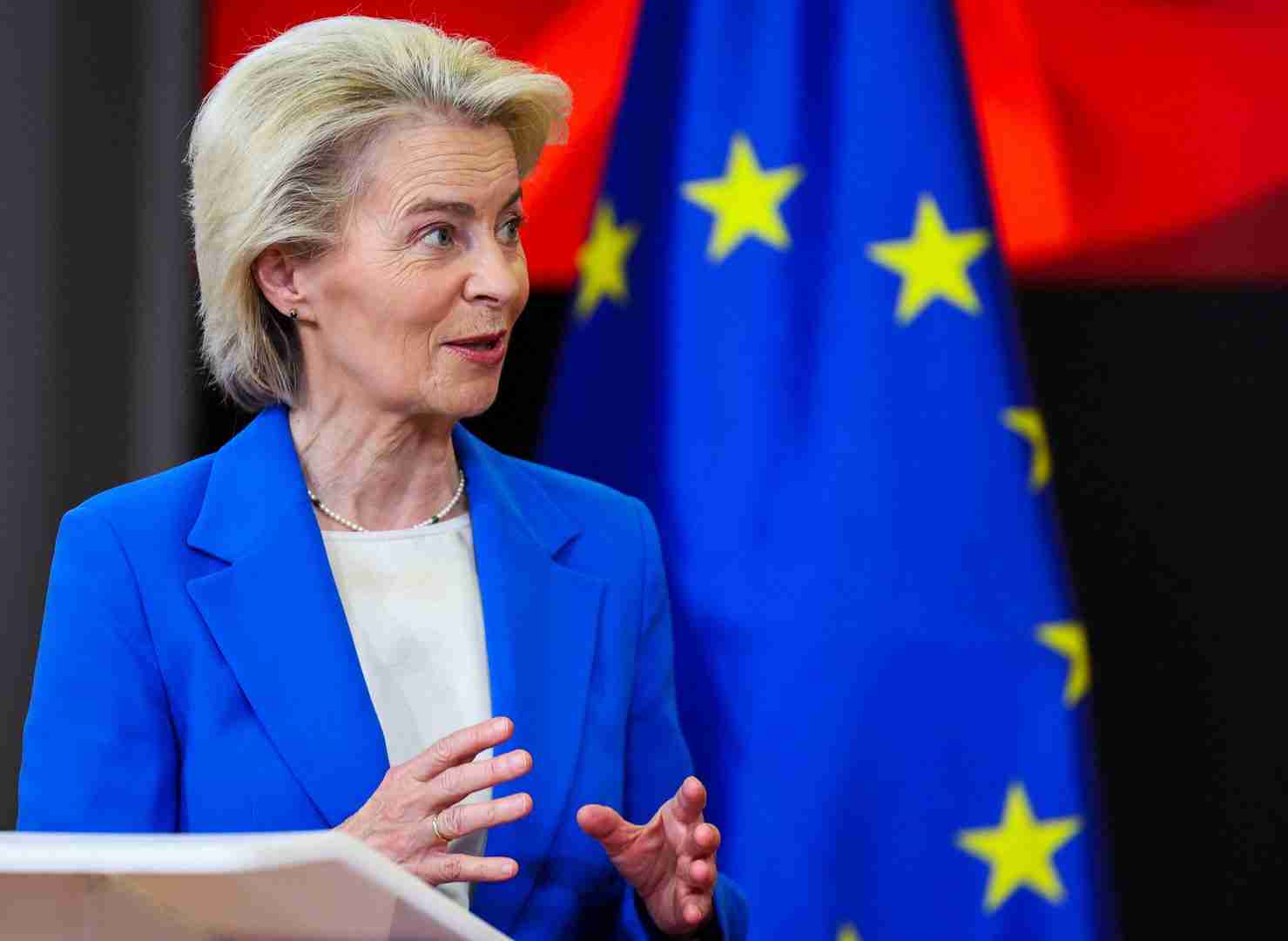
European Commission President Ursula von der Leyen attends a press conference, during her visit to Skopje, North Macedonia, October 2, 2026. REUTERS/Ognen Teofilovski
International News via Reuters:
The European Union has signed an additional €25 million ($29 million) in funding to expand migration cooperation into eastern Libya, according to a letter from European Commission President Ursula von der Leyen to EU leaders seen by Reuters.
The funding will support border management, search-and-rescue and anti-smuggling activities in eastern Libya. It is a further sign of deepening EU engagement with the region controlled by military commander Khalifa Haftar as Brussels seeks to curb irregular migration across the Mediterranean.
Libya, where control is split between rival western and eastern administrations, has been a major transit route for migrants attempting the dangerous sea crossing to Europe since the 2011 NATO-backed uprising that toppled Muammar Gaddafi.
The EU and its member states have long supported and trained the Libyan coastguard, which intercepts migrants at sea. While the EU formally recognises only the Tripoli-based government, it has stepped up contacts with authorities in eastern Libya since last year as migrant departures from areas controlled by Haftar in eastern Libya have risen.
The move follows the July announcement by the EU that it would establish a Maritime Rescue Coordination Centre in the eastern Libyan city of Benghazi, further expanding cooperation with authorities in the east.
“Libya remains the top country of departure for illegal crossings to the EU,” von der Leyen wrote, describing an upcoming EU-Libya meeting as a way to keep cooperation going.
She said the EU and the International Organization for Migration were supporting voluntary returns from Libya to countries of origin.
“We are equally focused on reducing the number of migrants arriving to Libya with the sole intention to cross illegally into the EU,” she added.
Reporting by Amina Ismail, Editing by Charlotte Van Campenhout and Alex Richardson
In his annual speech on wide-ranging threats to Britain, MI5 Director General Ken McCallum also said the greatest concern about the misuse of AI was terrorists being able to develop bioweapons or even create new pathogens
Director General of MI5 Ken McCallum speaks at Thames House, the headquarters of the UK’s Security Service in London, Britain, October 13, 2026. Jonathan Brady/Pool via REUTERS
International News via Reuters:
Iran is stepping up attempts to hit harder targets such as military sites in Britain and Russia is increasing its hybrid warfare against Ukraine’s allies, the UK’s domestic spy chief said on Tuesday.
In his annual speech on wide-ranging threats to Britain, MI5 Director General Ken McCallum also said the greatest concern about the misuse of AI was terrorists being able to develop bioweapons or even create new pathogens.
McCallum said state threats had quadrupled over the last decade, and his organisation now devoted more resources to the issue than during the Cold War.
On Monday, British Prime Minister Andy Burnham said Tehran was “highly likely” behind a suspected plot against RAF Fairford, an airbase used by US bombers to carry out strikes on Iran. It prompted a security alert and led to US President Trump withdrawing planes from the air base.
Tehran has rejected accusations of involvement in the Fairford incident or any other accusations of malign activity in Britain where the authorities have for a number of years accused it of being involved in plots and attempted assassinations against dissidents and Israeli and Jewish targets.
Russia also denies involvement in hostile acts in Britain and other Western countries, but McCallum said it remained the “aggressor number one”.
MORE THAN 50 ARRESTS LINKED TO IRAN, MCCALLUM SAYS
McCallum said he could not speak about the Fairford incident because of an ongoing investigation, but he said there had been a major shift this year in “Iranian ambitions to come at harder targets, like military sites”.
“The RAF Fairford incident … is not unique. There have been other examples, not just in the UK but around the world,” he said.
McCallum said over the past year Iran-linked operations had led to more than 50 arrests.
Asked if Iran had the capability to launch complex attacks perhaps using explosive drones, McCallum said it was limited by the sophistication of the criminals and proxies it used for operations in Britain.
“Given what we’ve actually seen in practice in the UK in recent years, that has not been anywhere near (that) level of capability,” he said.
“That said, clearly it is the case that in countries closer to its own homeland, the IRGC (Islamic Revolutionary Guard Corps) has quite deep experience of using more conventional and hybrid technology in a more aggressive and sophisticated way.”
AI ‘SUPERCHARGING’ THREAT
McCallum echoed comments from other European spy agencies that Russia was using tactics just short of conventional conflict, citing the attempted drone attack on a cargo plane at a German airport and a cyber attack on Polish energy infrastructure.
“It’s no accident that Russian aggressors are trying to unsettle other European homelands at a time when their military progress in Ukraine is minimal and horrifically costly.”
Russia has rejected Germany’s accusations over the incident at Leipzig/Halle Airport in August as “entirely fabricated”.
Speaking about AI, McCallum said the technology was “supercharging the cybersecurity contest between attackers and defenders” and terrorists were exploiting it to improve reconnaissance and attack methodologies.
“Not yet realised – the misuse case to which I’d attach greatest weight – is AI’s potential to change the stakes on existing or even new bioweapons,” he said, adding it was the area on which he and his colleagues were “particularly focused”.
“These risks are real.”
Reporting by Michael Holden; Editing by Kate Holton and Alison Williams
Investors have ridden the AI wave in the past four years as massive spending powered corporate profits and economic growth
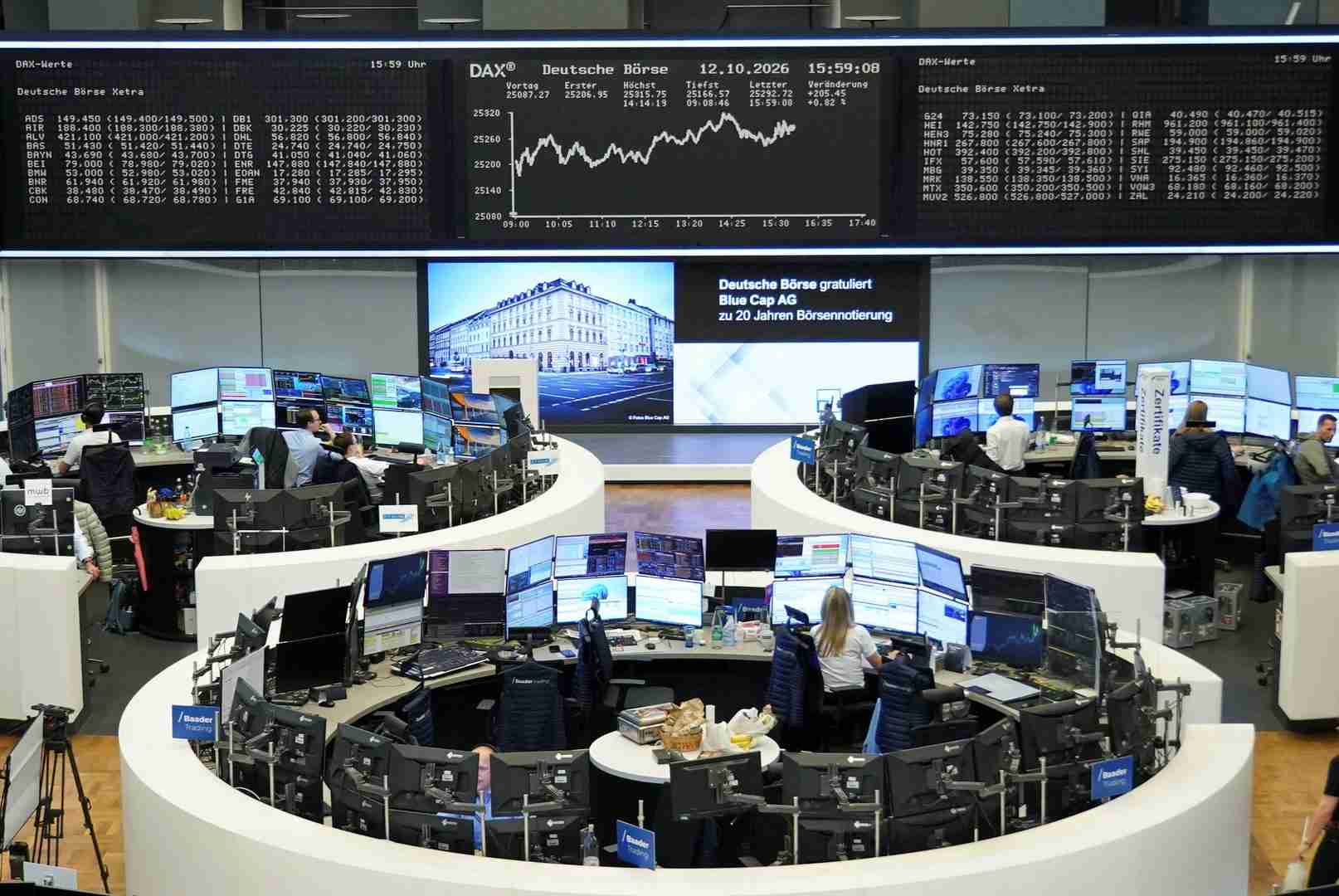
The chart of the German share price index DAX (Deutscher Aktienindex) at the stock exchange in Frankfurt, Germany, October 12, 2026. REUTERS/Staff
International News via Reuters:
World stocks dipped on Tuesday as renewed AI concerns hit high-flying chipmakers and drove investors to the safety of government bonds, while big Wall Street banks kicked off the US quarterly reporting season.
Reports of progress by Chinese memory chip maker CXMT fuelled concerns about increased competition from China’s AI players, while Broadcom CEO Hock Tan likened some of the flows into the broader AI sector to “casino gambling”.
The MSCI’s main world stocks index dipped 0.13%, with tech-heavy stock markets of Asia and the United States feeling the brunt of the selloff.
Investors have ridden the AI wave in the past four years as massive spending powered corporate profits and economic growth, although worries over concentration risks and whether a payoff will come soon enough have weighed.
US Nasdaq futures fell 0.7%, with memory chipmaker Micron Technology down 3.8% in premarket trading and Nvidia dropping 0.8%.
South Korea’s KOSPI, a market at the heart of the global AI boom, sank more than 5%, in its sharpest one-day drop since mid-August.
European stocks bucked the trend, helped by limited exposure to the tech sector as well as a drop in oil prices. The pan-European STOXX 600 rose 0.4% to a one-week high.
“Markets have become increasingly aware of the fact that the chip industry, especially on the memory side, is ultimately a cyclical industry,” said Julien Lafargue, chief market strategist at Barclays Private Bank.
“People were potentially expecting the sector to remain undisrupted maybe for another couple of years. It looks like the news overnight means that maybe this timeline has to shrink and the competition could be more fierce as soon as next year.”
STEADYING BOND YIELDS
The benchmark 10-year yield dipped to 5.187%, inching away from the 24-year high of 5.364% it hit last week.
A toxic mix of inflationary pressure from elevated energy prices and worries about ballooning government debt has triggered several bond selloffs in recent weeks, pushing borrowing costs to multi-decade highs across the globe.
Charu Chanana, chief investment strategist at Saxo Bank, said investors were moving back into Treasuries after the recent sharp rise in yields, but she saw it as “a tactical rally”.
“Sticky inflation, elevated oil prices and heavy government borrowing remain obstacles to a sustained bond recovery,” she said.
Traders are awaiting US inflation data on Wednesday for clues on the Federal Reserve’s policy path. They are pricing in an 80.6% chance that it holds rates steady later this month, up from 51% a month earlier, the CME FedWatch tool showed.
EARNINGS TEST AWAITS
Investor attention was on US bank earnings to get a gauge on the impact of the recent surge in Treasury yields on dealmaking, lending growth and funding costs.
JPMorgan Chase inched up 1% in early trading after it reported a profit increase in the third quarter, driven by investment banking and trading performances. Wells Fargo dropped 0.8%, while Goldman Sachs climbed 3% after their results.
Oil prices eased as traders assessed supply risks from attacks on Saudi Arabia while weighing the prospect of additional diesel supplies from Russia. Brent crude futures dipped 1.8% to $104.76 per barrel, holding just below a two-week high touched a day earlier. [O/R]
The dollar eased from 18-month highs, along with a drop in yields and oil prices. The euro last bought $1.1188, while the Japanese yen was at 158.12 per dollar. [FRX/]
Reporting by Ankur Banerjee in Singapore and Sruthi Shankar in Bengaluru; Editing by Saad Sayeed, Kate Mayberry and Alexander Smith
No final agreement has been reached and no transaction is guaranteed
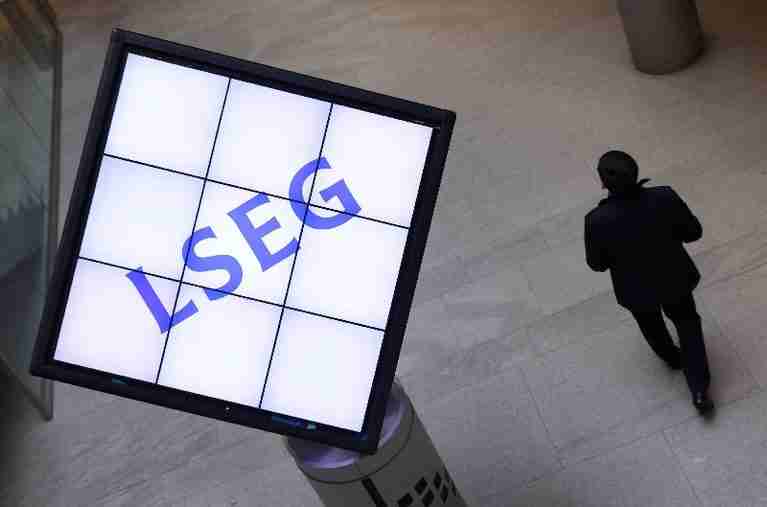
A worker walks near an LSEG (London Stock Exchange Group) branded cube inside the LSEG headquarters in Paternoster Square, London, Britain, September 8, 2026. REUTERS/Toby Melville
International News via Reuters:
The London Stock Exchange Group is in talks with private equity firm Permira to acquire Octus for about $3.5 billion, the London-listed group said Tuesday, confirming a Reuters report.
No final agreement has been reached and no transaction is guaranteed, LSEG said, adding that the New York-headquartered financial data group has a strong track record of double-digit revenue growth based on a high-retention subscription model.
LSEG shares, which had dipped more than 2% on the Reuters report earlier on Tuesday, extended losses to fall 4.7% by 1342 GMT.
“Octus’ coverage and solutions are highly complementary to LSEG’s existing fixed income data & analytics and private markets solutions,” LSEG said, adding that a deal would be immediately accretive to LSEG’s Data & Analytics and group revenue growth.
PERMIRA BOUGHT CONTROLLING STAKE IN OCTUS IN 2022
London-based Permira is working with advisers to evaluate interest in Octus, two people with knowledge of the situation said. Permira declined to comment.
The private equity firm, which has been planning a sale of Octus since last year, has also held talks with other potential buyers, one of the people said. It acquired a controlling stake in Octus at a valuation of $1.3 billion from Warburg Pincus in 2022.
Octus provides information on credit markets, with a focus on companies in financial distress, for banks and investors. It employs journalists, analysts and legal experts, using technology to scour regulatory and court filings.
A potential Octus transaction, if it went ahead, would mark a further uptick in dealmaking in the data analytics sector, despite a selloff in listed stocks earlier this year.
YipitData, backed by investors including Carlyle Group, is exploring a sale that could value the data analytics provider at more than $2.5 billion, while Vista Equity Partners is exploring a sale of private markets data provider Allvue.
LSEG has been under pressure to improve its performance from activist investor Elliott Management, which disclosed a stake in the exchange operator in February.
LSEG is the largest customer of Reuters, which provides news for its Workspace news and data platform and other products.
Reporting by Amy-Jo Crowley in London; Additional reporting by Milana Vinn in New York and Tommy Reggiori Wilkes in London; Editing by Anousha Sakoui, Elisa Martinuzzi, Alexander Smith and Jan Harvey
International tennis is set to make a high-profile return to Bermuda later this month, with the W.E.R. Joell Tennis Stadium is confirmed to host consecutive International Tennis Federation (ITF) M15 tournaments.
The Pembroke venue will welcome a competitive global field across back-to-back weeks as rising stars on the men’s professional circuit battle for crucial ATP ranking points and silverware.
Action serves off with the opening tournament from Monday, 26 October to 1 November, before the second leg takes centre stage from 2 November to 8 November.
Both tournaments feature a $15,000 purse, providing an important stepping stone for emerging international talent looking to climb the ladder of the professional game.
For Bermuda, the double-header marks a welcome boost to the island’s sporting calendar, offering local fans courtside seats to elite tour action while delivering vital exposure to top-tier competition on home soil.
The Paris prosecutor’s office said on Monday that a “large-scale” attack was “affecting connected refrigerators in several major food retailers across France”, leading to food losses and fires
View of the closed frozen food aisle at a supermarket near Nantes after a cyberattack targeted refrigeration systems at French supermarket chains, causing food losses and fires at several stores, France, October 12, 2026. REUTERS/Stephane Mahe
International News via Reuters:
Hackers raised the temperature of refrigerators and freezers at hundreds of French supermarkets to as high as 50 degrees Celsius (122 degrees Fahrenheit) overnight, causing fires and spoiling food.
The Paris prosecutor’s office said on Monday that a “large-scale” attack was “affecting connected refrigerators in several major food retailers across France”, leading to food losses and fires.
Prime Minister Sebastien Lecornu has instructed France’s National Cybersecurity Agency (ANSSI) to investigate, a person in his office said.
France was coordinating with European counterparts because other countries could also be affected, the person said, adding that authorities were assessing whether other French companies were at risk.
Felix Aime, a senior cyber threat intelligence analyst at Sekoia Threat Detection and Research, said Spain, Portugal, Poland, Germany and Belgium had also been affected.
Carrefour said 80 of its supermarkets were hit, while Monoprix, which operates about 490 stores in France, said 5% of its stores were affected.
Les Mousquetaires, owner of retailer Intermarche, said fridges at around 150 of its stores were heated up to 50 C for six hours overnight. A spokesperson said all affected food had been discarded to eliminate health risks.
Paris resident Geert de Clercq witnessed staff at an Intermarche in central Paris throwing cartfuls of defrosted frozen foods into a giant trash container, with molten ice cream sloshing out of broken tubs on the street.
Cooperative U CEO Dominique Schelcher said his supermarket group had also been targeted.
“Targeting equipment essential to the preservation of fresh products and to the food supply of the French people is of extreme gravity and is unprecedented,” he wrote on X.
Food retailers E.Leclerc and Auchan did not respond to requests for comment.
There was no immediate estimate of industry-wide losses, but Intermarche CEO Thierry Cotillard told BFM TV the “unprecedented” attack would represent losses amounting to “tens of millions of euros nationwide in a single day.”
Christel Delberghe, director general at European retail association Eurocommerce, said, “This incident underlines the importance of resilience across the entire supply chain.”
COLD AISLES CONTROLLED OVER INTERNET
Supermarket cold aisles are typically run by control panels that manage an entire store’s fridges and freezers and can be accessed over the internet, which lets maintenance companies adjust them from anywhere.
The source close to Lecornu said ANSSI had identified a vulnerability in software supplied by Danish company Danfoss.
Danfoss said it was “aware of incidents in France affecting a limited number of refrigeration management systems”.
The affected units “were running outdated firmware”, Danfoss said, adding that it had “long advised customers to keep supported systems updated with the latest firmware and to migrate legacy systems to current-generation solutions”.
On August 9, cybersecurity firm Claroty’s Team82 published research detailing vulnerabilities in the Danfoss AK-SM 800A controller. According to the report, software updates issued by Danfoss addressed issues that could have allowed attackers to bypass authentication controls and execute code on compromised devices.
The attacks resemble disruptions reported at about a dozen US military commissaries in late August that led to food losses after fridges were affected.
In a statement, French retail association Fédération du Commerce et de la Distribution called for “full transparency” from Danfoss about the incident. It said supermarkets aimed to protect consumers and return to normal operations as soon as possible. The FCD said some impacted stores were already back up and running.
DUTCH SECURITY ISSUE
Dutch retailer Ahold Delhaize, which operates the Netherlands’ largest supermarket chain Albert Heijn and has major operations in the US, said it was dealing with a “security issue” on its network and had taken several systems offline as a precaution.
A message on the retailer’s smartphone app said it was unable to deliver groceries because of a “cybersecurity incident”.
Online orders account for about 10% of Albert Heijn sales. Physical stores remained open, while Dutch news agency ANP reported that rival retailers had seen a surge in delivery orders.
Ahold Delhaize said there was no reason to see a link between the incidents in France and its supermarkets.
Ahold is the fourth-largest grocery retailer in the US. Websites for its Stop & Shop, Giant, Hannaford and Food Lion chains displayed notices saying “site temporarily down”.
It was unclear whether other operations had been affected.
Reporting by Leo Marchandon, Helen Reid, AJ Vincens, Makini Brice, Toby Sterling; Writing by Gabriel Stargardter; Editing by Richard Lough, Alexander Smith, Mark Potter and Cynthia Osterman
Oil and gas companies have reaped bumper profits this year, as energy prices have surged during the US-Israeli war with Iran, amid disruptions to shipping through the Strait of Hormuz and Iranian attacks on Gulf neighbours
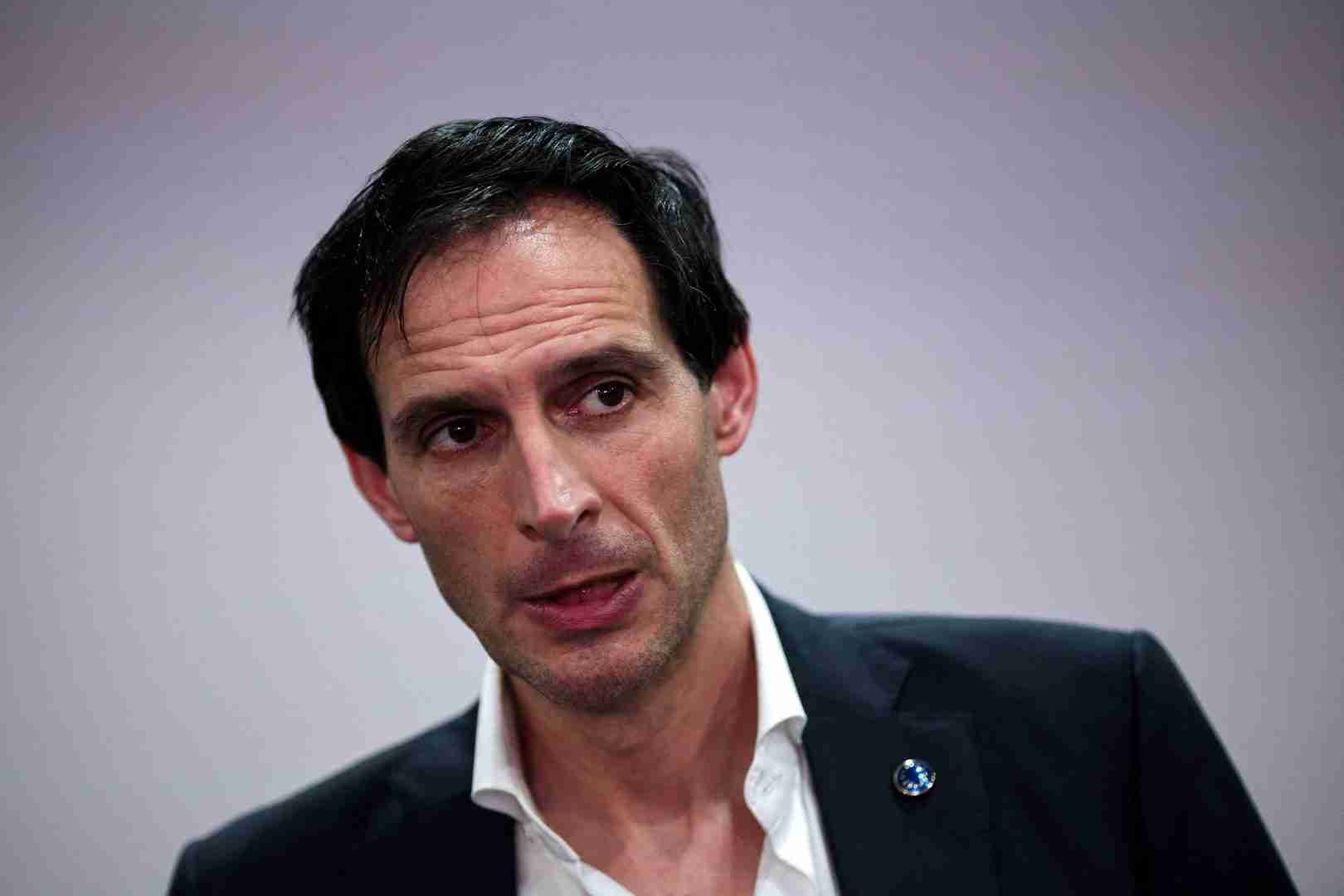
FILE PHOTO: Wopke Hoekstra stands before the plenary session during the UN Climate Change Conference (COP30), in Belem, Brazil, November 22, 2025. REUTERS/Adriano Machado/File Photo
International News via Reuters:
The European Union is examining a bloc-wide windfall profit tax on oil and gas companies, the EU’s tax chief told Reuters on Monday, as governments scramble for funds to help citizens with soaring energy bills.
Oil and gas companies have reaped bumper profits this year, as energy prices have surged during the US-Israeli war with Iran, amid disruptions to shipping through the Strait of Hormuz and Iranian attacks on Gulf neighbours.
Wopke Hoekstra, the European Commissioner responsible for climate and taxation, said the Commission was setting up a working group to examine the merits and drawbacks of a levy and assess whether such a measure would be viable.
“Citizens, and particularly vulnerable citizens, are confronted with dramatic increases in their energy bills. And some companies are reaping truly excessive benefits without delivering any additional service or any additional products. They’re reaping the benefits from the world being in turmoil,” Hoekstra said in an interview.
“To many citizens and many politicians, that feels off… I think we all have sympathy for the underlying logic, regardless of where we exactly take the conversation,” he said.
Benchmark Brent crude futures prices climbed to multi‑year highs near $120 a barrel in late April and remain more than 70% above their level at the start of the year, boosting profits for oil refiners and producers.
Germany, Spain, Portugal, Italy, Poland and Austria have urged the EU to examine a bloc-wide windfall profit tax.
Hoekstra said Brussels would carefully assess the legal status of any potential measure.
The EU introduced a windfall profit levy on oil, gas, coal and refining companies in 2022 after Russia’s full-scale invasion of Ukraine sent energy prices soaring. Legal challenges are still pending after companies including ExxonMobil argued the measure was unlawful.
“We’re still litigating court cases from the decision in 2022 to do something similar,” Hoekstra said. “So that is something that we need to take into account as well.”
The 2022 scheme imposed a minimum 33% levy on surplus profits, defined as profits more than 20% above a company’s average earnings in previous years. It raised nearly €29 billion ($32 billion), according to a Commission report.
Some EU countries have already introduced national windfall levies. Portugal, for example, imposed a 33% tax on extraordinary profits earned in 2026 by oil and refining companies.
The Maia 300, as the chip is called, is the third generation of the company’s custom chips designed to handle AI data crunching such as coding and carrying out complex business tasks on a user’s behalf
Microsoft CEO Satya Madella speaks at Microsoft Windows & Surface event where new on-device AI capabilities for Windows PCs using Nvidia’s new RTX Spark chips were announced, in San Francisco, California, US, October 7, 2026. REUTERS/Manuel Orbegozo
International News via Reuters:
Microsoft announced the next generation of its custom AI chip on Monday and said it plans to deploy potentially more than a million of them next year to back its internal AI services.
The Maia 300, as the chip is called, is the third generation of the company’s custom chips designed to handle AI data crunching such as coding and carrying out complex business tasks on a user’s behalf. Its predecessor is already running Microsoft’s in-house AI models, as well as models from OpenAI delivered on Microsoft’s Azure cloud computing service.
The new version comes amid a flurry of custom chips from both cloud computing rivals and AI firms such as OpenAI aimed at loosening the hold of Nvidia on the AI computing market.
To construct the chip, Microsoft took a different technical path from Nvidia whose AI accelerators use one massive computing chip surrounded by high-bandwidth memory chips.
The central computing processor in Microsoft’s Maia 300 silicon is composed of “chiplets” — typically specialized chips bonded together — that use 2-nanometer technology from Taiwan Semiconductor Manufacturing Co for key computing functions.
Other chiplets included in the design use cheaper 3-nanometer tech for functions such as moving data off the processor and elsewhere inside the system.
The Maia 300 processors will go into racks that contain 96 chips and use about 167 kilowatts of power, compared with the 142 kilowatts used by Nvidia’s most recent GB300 AI server racks with 72 of its graphics processing units (GPUs).
Microsoft said the Maia 300 chips will get about 40% more useful computing done per megawatt than “leading GPU-based systems,” though it did not name the systems it used for a comparison.
“It’s basically delivering more intelligence for every watt, every dollar, and every byte of memory by optimizing across the entire system,” Rani Borkar, president of Azure hardware systems and infrastructure at Microsoft, told Reuters in an interview.
Microsoft said it plans to roll out “multi-gigawatt deployments” of the Maia 300 chip starting next year. Microsoft has said it expects to spend more than $175 billion in capital expenditures this calendar year.
Reporting by Stephen Nellis and Max Cherney in San Francisco; Editing by Sanjeev Miglani
The US National Hurricane Center said Simon was about 55 miles (90 km) west-southwest of Cabo Corrientes in Jalisco state at 8 a.m.
People watch waves crash against the waterfront promenade as Hurricane Simon approaches Mexico’s Pacific coast in Puerto Vallarta, Mexico, October 11, 2026. REUTERS/Christian Ruano
International News via Reuters:
Hurricane Simon crept northwest just off Mexico’s Pacific coast on Monday, lashing western states with dangerous winds, heavy rain and flooding that put riverside communities on alert for possible evacuations.
The US National Hurricane Center said Simon was about 55 miles (90 km) west-southwest of Cabo Corrientes in Jalisco state at 8 a.m. (1400 GMT), packing maximum sustained winds of 110 mph (175 kph), making it a Category 2 hurricane.
Simon has weakened since Saturday when it was a Category 4 system.
“Simon is slowly losing wind intensity and could ultimately stall this week and never make a true landfall as an organized storm,” said Alex DaSilva, a hurricane expert at private forecaster AccuWeather.
Simon is forecast to make landfall on Thursday in Mexico’s Sinaloa state.
“The slower Simon moves, the more rain potential the storm carries, but right now most of that rain is offshore and to the south of the storm’s center ultimately sparing the feet of rain we thought this storm could initially bring,” said DaSilva.
Simon was moving northwest at just 3 mph (6 kph) and was expected to continue along that track before turning northeast and moving inland across west-central Mexico around midweek.
Authorities said that Simon could bring life-threatening flooding and mudslides to parts of the Pacific coast and nearby mountains.
The hurricane is forecast to dump an additional 2 to 4 inches (5 to 10 cm) of rain across coastal areas of southwest and west-central Mexico, with isolated amounts of 6 to 8 inches (15 to 20 cm) in parts of Jalisco and Sinaloa. The National Hurricane Center said isolated storm totals could reach 30 inches (76 cm) in parts of Michoacan, Colima and Jalisco.
The head of Mexico’s civil protection agency, Laura Velazquez, said one person was reported to have died due to the storm in Guerrero state, home to the popular tourist destination of Acapulco.
In the coastal town of Cihuatlan in southwestern Jalisco, patrols warned residents to prepare for potential evacuation as the Marabasco River rose. Floodwater inundated streets and low-lying areas of the town overnight.
In the port city of Manzanillo in Colima state, residents waded through flooded homes and streets as navy personnel helped remove water.
“Everything got flooded,” said resident Maria Elena Vazquez from inside her home, pants rolled up as the water came up to her ankles.
The National Hurricane Center said Simon was expected to produce dangerous storm surge and large destructive waves close to where it approaches the coast. Swells from the hurricane are also forecast to create life-threatening surf and rip current conditions along southwestern and west-central Mexico over the next few days.
Following weeks of storms that have battered Mexico, at least 10 people are missing in the state of Baja California and one minor was killed in the coastal city of Ensenada.
Reporting by Alberto Fajardo and Daniel Becerril in Manzanillo, Mexico; Writing by Kylie Madry and Paolo Laudani in Mexico City; Editing by Will Dunham and Cynthia Osterman
To provide the best experiences, we use technologies like cookies to store and/or access device information. Consenting to these technologies will allow us to process data such as browsing behavior or unique IDs on this site. Not consenting or withdrawing consent, may adversely affect certain features and functions.
Functional
Always active
The technical storage or access is strictly necessary for the legitimate purpose of enabling the use of a specific service explicitly requested by the subscriber or user, or for the sole purpose of carrying out the transmission of a communication over an electronic communications network.
Preferences
The technical storage or access is necessary for the legitimate purpose of storing preferences that are not requested by the subscriber or user.
Statistics
The technical storage or access that is used exclusively for statistical purposes.The technical storage or access that is used exclusively for anonymous statistical purposes. Without a subpoena, voluntary compliance on the part of your Internet Service Provider, or additional records from a third party, information stored or retrieved for this purpose alone cannot usually be used to identify you.
Marketing
The technical storage or access is required to create user profiles to send advertising, or to track the user on a website or across several websites for similar marketing purposes.