Netanyahu’s trial was set to resume on Sunday, after Israel lifted a state of emergency imposed over its war with Iran following Wednesday’s ceasefire announcement
International News via Reuters:
Prime Minister Benjamin Netanyahu has asked to postpone giving testimony in his long-running corruption trial that was set to resume next week, citing the ongoing security situation in the region, Netanyahu’s lawyer said in a court filing on Friday.
Netanyahu’s trial was set to resume on Sunday, after Israel lifted a state of emergency imposed over its war with Iran following Wednesday’s ceasefire announcement. The defence said it was prepared to continue hearing the testimony of a prosecution witness.
“Due to classified security and diplomatic reasons connected … to the dramatic events that have taken place in the State of Israel and throughout the Middle East in recent times, the Prime Minister will not be able to testify in the proceeding for at least the next two weeks,” the filing to the Jerusalem District Court said.
It said that a sealed envelope detailing the classified reasons was delivered to the court, which will rule once the prosecution submits its response.
Netanyahu, the first sitting Israeli prime minister to be charged with a crime, denies charges of bribery, fraud and breach of trust brought in 2019 after years of investigations.
His trial, which began in 2020 and could lead to jail terms, has been repeatedly delayed due to his official commitments, with no end date in sight.
The charges against Netanyahu, along with the Hamas attacks on Israel in October 2023, have damaged his standing. Israel is due to hold an election in October that Netanyahu’s coalition, the most right-wing in Israel’s history, is likely to lose, according to polls.
Reporting by Steven Scheer; Editing by Alex Richardson
Motorists in Paget and Smith’s are advised to plan ahead as the RenaissanceRe MAAC 5 Mile and 10 Mile Races take place this Sunday morning
The Ministry of Public Works and Environment has advised the public that the RenaissanceRe MAAC 5 Mile and 10 Mile Races will be held on Sunday, 12 April 2026, between 7.30am and 11.00am along South Road in Paget and Smith’s.
The races will begin at the South Gate of the Botanical Gardens. Traffic controls will be in place throughout the event to protect participants and assist the safe flow of traffic.
The Ministry confirmed there will be no road closures as a result of the event, but motorists are encouraged to use caution and plan their journeys accordingly during the event period.
Media release supplied by the Government of Bermuda Department of Communications.
The City of Hamilton expands its smart parking initiative to City Hall Car Park from Monday, 13 April 2026, replacing physical tickets with automated licence plate recognition technology
The City of Hamilton has announced that City Hall Car Park will transition to a Licence Plate Recognition (LPR) system on Monday, 13 April 2026, marking the fourth phase of the city’s broader smart parking rollout.
The upgrade follows the deployment of the same system at Number 1 Car Park in February 2026, Par-la-Ville Car Park in 2025, and Number 5 Car Park in 2024.
The LPR system, developed by Mobile Smart City, uses cameras at entry and exit points to scan vehicle licence plates, automatically calculate parking duration, and request payment — eliminating the need for paper tickets. The system is cashless; payment is made by swiping or tapping a credit or debit card at the exit screen. Stays of under 10 minutes will not incur a charge.
Drivers may also use the free Pango Parking app as an alternative payment method. Users scan an individual QR code at the entry and exit barriers, with payment processed automatically through the app.
Parking is free on Sundays and public holidays. Users must still select a payment option upon entry, but no fee will be charged on exit.
Monthly, annual, and commercial permit holders will benefit from seamless automatic access, with the system recognising registered licence plates without requiring any interaction with the machine. Vehicles on pre-approved access lists — including emergency services and Corporation of Hamilton vehicles — will also receive automatic entry.
Bike parking at City Hall Car Park is not affected by the transition.
Traffic Manager Fred Richardson said: “Switching to digital is a big step toward smarter parking in Hamilton. No paper, fewer headaches, and a much quicker process for drivers. We’re committed to creating a car park system that feels modern, reliable, and efficient for all.”
The City said the LPR platform allows for flexible updates and future technology integrations as part of its wider Smart City programme.
Drivers requiring assistance with the new system can contact the City’s Parking Management team on 531-5254.
Media release and image supplied by the City of Hamilton.
Bermuda’s David Maycock has achieved a career milestone after being hand-selected by the Professional Bowlers Association (PBA) to compete in the main field of the upcoming World Series of Bowling XVII.
Maycock confirmed the news via social media, revealing he is one of only nine international players to receive a prestigious exemption. This selection follows a rigorous review of his professional resume and international rankings, allowing him to bypass the high-pressure Pre-Tournament Qualifier.
“I found out on Saturday night after putting my resume into the PBA,” Maycock confirmed. “I’m in the main field, so that’s less pressure on me.”
The exemption provides a significant tactical advantage as Maycock prepares for the grueling “animal” oil patterns that define the series. Players must master drastically different conditions, including the Cheetah, Scorpion, Chameleon, and Shark patterns.
“I just have to go there, have my mind focused, and hopefully make a run,” Maycock added.
His selection underscores his standing as a premier bowler in the region, and his journey through the XVII edition of the World Series will be closely watched by the Bermudian sporting community as he takes on the world’s elite.
Bermuda’s Taylor Carrick faced a brutal litmus test in his final warm-up for the Starr Bermuda Open, falling to world number one seed Shahjahan Khan in the opening round of the Men’s World Championship Qualifiers in St. Louis.
Competing at the historic Missouri Athletic Club, Carrick entered the Pan-American event looking to secure a spot on the sport’s biggest stage in Giza. However, the draw was anything but kind to the island’s leading professional, pitting him against the top-ranked American in a high-stakes encounter.
Khan, a seasoned campaigner on the PSA World Tour, demonstrated why he was the bracket’s gold standard. From the opening serve, the top seed applied relentless pressure, utilizing a clinical length and deceptive front-court game to keep the Bermudian on the defensive.
Despite the scoreline, Carrick was far from a passenger in the 25-minute battle. He showed flashes of the resilience that saw him reach the national finals last month, pushing Khan in extended rallies and testing the American’s movement. Ultimately, the gap in experience proved decisive, with Khan closing out a straight-sets victory 11-4, 11-5, 11-5.
While the result marks an early exit from the Missouri showpiece, the intensity of the match serves as the perfect preparation for Carrick’s return to home soil. The 24-year-old now shifts his focus back to the Atlantic, where he is set to lead the local charge at the Starr Bermuda Open beginning this Tuesday at the Devonshire courts.
Carrick enters the Bermuda draw as a local favorite, buoyed by the experience of competing against the world’s best. With a home crowd behind him and the lessons from St. Louis fresh in his mind, he remains the island’s best hope for a deep run in the professional field.
Bermuda’s running community is set to descend on the Botanical Gardens this Sunday as the annual RenaissanceRe 5-Mile and 10-Mile Challenge returns to the South Shore.
The Ministry of Public Works and Environment has issued a formal notice to motorists to exercise caution, with hundreds of participants expected to take part in one of the most popular fixtures on the local road-running calendar.
The action kicks off early on Sunday, April 12th, with the first wave of 10-mile participants departing at 8:00 am, followed by the official race start at 8:30 am and the 5-mile event at 8:35 am. All competitive activity is expected to conclude by 11:00 am.
Both races utilize a loop format along South Road. The 10-mile athletes will push East toward the turnaround point at Paynter’s Road, while the 5-mile contingent will turn at the Spittal Pond West Carpark. All participants will finish at the Lagoon Property, directly opposite the Botanical Gardens’ South Gate.
While no full road closures have been announced, significant traffic control measures will be in place. Race Marshals and Police Officers will be stationed along the route to manage the flow of vehicles and prioritize athlete safety. Motorists are urged to show consideration and follow all official instructions to avoid delays.
For urgent logistical queries, race representatives Jenny Farrer and Louise Edwards remain on hand to assist the public as the island prepares for a landmark morning of road racing.
Bermuda’s Alexcie Burrows continued her dominant run of form as Virginia State University (VSU) claimed a comprehensive 5-2 victory over Randolph-Macon College this week.
The Trojans laid the foundation for their success in the doubles competition, sweeping all three matches to secure the opening point in emphatic fashion. Burrows, alongside partner Damita Bollers, was once again the standout performer in the number three spot. The duo produced a clinical, flawless display to dismantle the pairing of Madison Barrick and Layla Gaines 6-0.
That momentum carried directly into the singles ties, where Burrows proved to be a mountain too high for Barrick to climb in their individual rematch.
Competing in the number five position, the Bermudian international showcased her superior range and tactical precision. After taking the first set 6-1 with a series of aggressive baseline winners, Burrows refused to let her opponent back into the contest, closing out the match with a 6-2 victory in the second.
The result marks another significant step forward for the VSU program, which appears to be peaking at the right time in the season following their recent sweep of Virginia Union. For Burrows, the individual performance further cements her reputation as one of the most efficient players in the lineup, having dropped only three games across both doubles and singles play during the encounter.
With the team finding their rhythm, the Trojans move forward with high expectations as they navigate the business end of the collegiate calendar, with a home clash against Bowie State up next.
The envisaged revisions would reduce the number of data points across the EU’s harmonised reporting system by about 50% and strengthen proportionality
International News via Reuters:
The European Banking Authority (EBA) on Friday announced a series of measures to significantly simplify supervisory data reporting and reduce the reporting burden for EU banks, and has also opened a public consultation on their implementation.
The move comes at a time when France and Germany have urged the European Commission to bring forward an ambitious “financial services simplification package” to make EU rules easier to navigate and less burdensome for firms.
The envisaged revisions would reduce the number of data points across the EU’s harmonised reporting system by about 50% and strengthen proportionality, particularly for small and non-complex institutions, the EBA said.
The revisions also aim to ensure that supervisory authorities continue to receive the information they need to fulfil their supervisory responsibilities, the EBA added.
A public consultation on revised implementing technical standards (ITS) on supervisory reporting and on supervisory benchmarking reporting is open until 10 July 2026, and until 10 May 2026 for international financial reporting standards 18-related requirements.
EU COORDINATION
EU-level reporting is often supplemented with national reporting requirements and ad hoc information requests by various public authorities.
However, these requests often lack coordination regardless of their relevance, the EBA said, adding that notable coordination initiatives, such as the European Central Bank’s single supervisory mechanism, do not cover the whole spectrum and all member states.
As a first step, the package includes an overview of national supervisory data collection and ongoing simplification efforts by competent authorities.
Separate EU-wide stress test and supervisory benchmarking data collection would be integrated into regular reporting, the EBA said.
This would reduce overlaps, increase consistency, simplify reporting processes and make requirements more stable over time, it added.
The proposed changes would apply from September 2027. In the meantime, the EBA will support implementation through close engagement with stakeholders via the public consultations, related hearings and a workshop.
Last month, the ECB said it aimed to simplify and speed up approvals for changes to banks’ internal credit risk models, easing a supervisory process that can delay capital benefits and trigger lengthy on-site inspections.
Reporting by Jesús Aguado. Editing by Jane Merriman and Janane Venkatraman
Citing government and industry sources, the paper said the German government would be willing to become a key customer of a combined company, part of a push to provide digital public services
International News via Reuters:
Artificial intelligence companies Cohere of Canada and Aleph Alpha of Germany are in talks to merge and have Berlin’s support for a potential deal, newspaper Handelsblatt reported late on Thursday.
Citing government and industry sources, the paper said the German government would be willing to become a key customer of a combined company, part of a push to provide digital public services.
“If leading AI companies from Canada and Germany were to join forces that would send a very strong signal,” German Digital Minister Karsten Wildberger told the paper.
Germany and Canada were already collaborating closely in the field, he was also quoted as saying.
Aleph Alpha told Reuters that regular discussions over strategic partnerships were standard practice in the AI industry and that Aleph Alpha had its own independent strategy, declining to comment further.
Cohere said it meets “with companies and institutions across Germany and Europe and continually evaluates strategic opportunities that support our global growth.”
It also pointed Reuters to its international expansion efforts as well as to the Canadian-German Sovereign Technology Alliance agreed this year, but would not comment further.
Germany’s research and digital ministries did not immediately respond to requests for comment.
Handelsblatt said merger talks started early this year and had reached an advanced stage, with plans for the new entity to be headquartered in both countries.
Germany has been eager to catch up with dominant AI players the U.S. and China in a global race to master a transformational technology and attract high-income jobs. India has also emerged as a contender.
Last month, Berlin unveiled plans to encourage investments to boost AI data processing capacity at least fourfold by 2030.
Microsoft, which is collaborating with Cohere, unveiled $23 billion in AI investments in December, with the bulk earmarked for India and parts for Canada.
That was after Alphabet’s Google said it would spend $15 billion over five years on an AI data centre in India.
Reporting by Ludwig Burger, Kirsti Knolle, Hakan Ersen and Andreas Rinke, Editing by Linda Pasquini and Kate Mayberry
Voters in Hungary could deliver a boon to bond investors, while Peru’s weekend polls will help determine the next step for its economy, the latest in a string of key elections worldwide this year
International News via Reuters:
Voters in Hungary could deliver a boon to bond investors, while Peru’s weekend polls will help determine the next step for its economy, the latest in a string of key elections worldwide this year.
Here’s a look at the races financial markets are watching most closely:
HUNGARY
Sunday elections in Hungary pose the biggest threat so far to nationalist Prime Minister Viktor Orban’s 16-year rule. Centre-right opposition party Tisza is leading in most polls.
Orban has cut taxes and hiked wages to placate voters in an economy where growth has lagged its neighbours. He has also angered much of Europe by blocking loans to Ukraine.
A win for Tisza’s Peter Magyar, investors say, could enable access to some of the 18 billion euros ($21 billion) of EU funding that has been frozen due to concerns over democratic standards.
Goldman Sachs economists say this would “likely lead to a notable appreciation of Hungarian assets.”
PERU
In Peru, two right-wing candidates lead the polls for Sunday’s first-round presidential election, but Bank of America said most contenders “do not seem to represent a major threat” to Peru’s orthodox economic model. Voters will also elect members of Congress.
The country has had eight presidents since 2018, after years of impeachments and corruption scandals, but growth in nearly all sectors has boosted the economy.
Bank of America warned that a chaotic election, like the 2021 race that was marred by turmoil and fraud allegations, could trigger capital flight.
If no candidate clears the 50% threshold, a second round is scheduled for June 7.
UNITED KINGDOM
Local elections don’t usually attract the attention of foreign investors but those in the UK on May 7 might well. Prime Minister Keir Starmer’s Labour Party is trailing the populist Reform UK and the left-wing Green Party in the polls and has struggled to deliver on promises to boost economic growth.
The bond market is especially sensitive to signs that the fiscally restrained Starmer might be replaced, while the pound could weaken.
The Iran war has dampened speculation that Starmer will be ousted soon. Still, online prediction market platform Polymarket gives a 56% chance of such a move by year-end. The next national election must be held by August 2029.
COLOMBIA
Colombia’s presidential race – the first round is scheduled for May 31 – remains open after divided results in March congressional elections.
Current leftist President Gustavo Petro has clashed with the central bank and sought to enact an economic emergency decree. Some investors have cheered the rising fortunes of centre-right candidate Paloma Valencia.
“We are inclined to hold a constructive view, as political conditions still support a swing toward pro-market policies,” Barclays economist Alejandro Arreaza said in a note.
ETHIOPIA AND ZAMBIA
Ethiopia and Zambia, which have both defaulted on their debt, hold summer elections, with the economy a top concern.
Investors have hailed Zambia’s economic reforms and growing copper production, while rising gold and coffee exports and foreign exchange reforms have boosted Ethiopia’s prospects.
Ethiopian Prime Minister Abiy Ahmed’s Prosperity Party is almost certain to win in June amid opposition boycotts and security concerns that could hinder voting.
Zambia’s incumbent President Hakainde Hichilema is also tipped to win in August, but energy and fertiliser price spikes related to the Iran war could hurt. Ratings agency S&P says the election poses a risk to policy continuity, just as the government’s fiscal consolidation efforts start to bear fruit.
ISRAEL
Parliamentary elections in Israel, expected in October, are viewed as a referendum on Prime Minister Benjamin Netanyahu.
Polling before the Iran war suggested that Netanyahu’s right-wing coalition would struggle to win enough seats to form a government, and polls showed the war in Iran has done little to improve his standing.
Israel’s economy had rebounded in 2025, and was expected to further improve in 2026, before the war began. The uncertainty could add to volatility in the shekel currency and government bonds.
BRAZIL
Brazil’s leftist President Luiz Inacio Lula da Silva is tied in an October race against right-wing senator Flavio Bolsonaro, the son of former President Jair Bolsonaro.
Seats in the lower house, two-thirds of the Senate and all 27 state governors are also up for grabs.
Inflation has moderated and joblessness hit a record low in December, but last year’s 2.3% economic growth was the weakest since the COVID pandemic, and household debt service is at its highest since the series began in 2011.
Oxford Economics’ Felipe Camargo said a centre-right government under Bolsonaro could yield a “goldilocks scenario for markets” including a focus on lowering inflation and reversing a growing debt-to-GDP ratio.
UNITED STATES
The November mid-term elections will determine who controls Congress and are shaping up as a major test for U.S. President Donald Trump.
Trump’s approval ratings have hit their lowest level ever, leaving his Republican Party at risk of losing its narrow majorities in Congress. Polls show sizable majorities of Americans are opposed to the war in the Middle East and frustrated by the rising cost of gasoline.
Analysts say uncertainty ahead of the vote could weigh on the dollar and stocks, although for now the election is likely to be overshadowed by Iran.
“If Trump wants a chance to get affordability back down, well in advance of the midterms… the timing is very tight,” said Grant Johnsey, head of market solutions at Northern Trust.
Reporting by Libby George and Dhara Ranasinghe; Editing by Karin Strohecker and Sharon Singleton
Kazakhs in March voted overwhelmingly in favour of adopting a new constitution to streamline the country’s parliament and recreate the office of vice president
International News via Reuters:
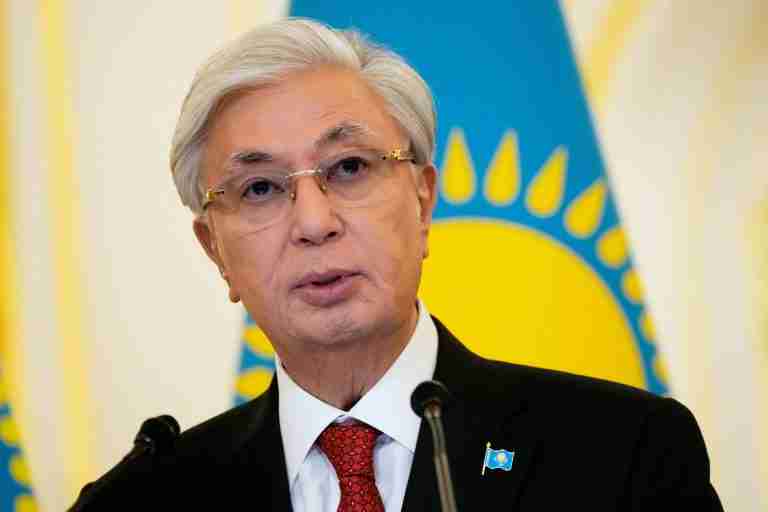
Kassym-Jomart Tokayev, the president of Kazakhstan, said on Friday that a parliamentary election in the resource-rich Central Asian country would take place in August, but stopped short of naming an exact date.
Kazakhs in March voted overwhelmingly in favour of adopting a new constitution to streamline the country’s parliament and recreate the office of vice president.
The changes also reduce the number of chambers in the parliament from two to one.
The new single-chamber parliament will be called the Kurultai, which means “gathering” in Kazakh and is a nod to the country’s steppe traditions. It will host 145 deputies elected for five-year terms.
The current parliament is due to dissolve itself on July 1.
Reporting by Mariya Gordeyeva; Writing by Lucy PapachristouEditing by Andrew Osborn
If all goes well, U.S. astronauts Reid Wiseman, Victor Glover and Christina Koch, along with Canadian astronaut Jeremy Hansen, will end up bobbing safely in the ocean aboard their Orion capsule
International News via Reuters:
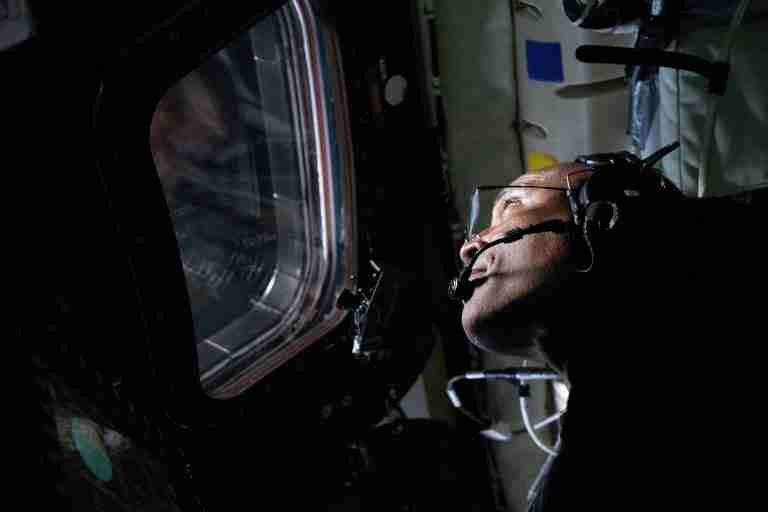
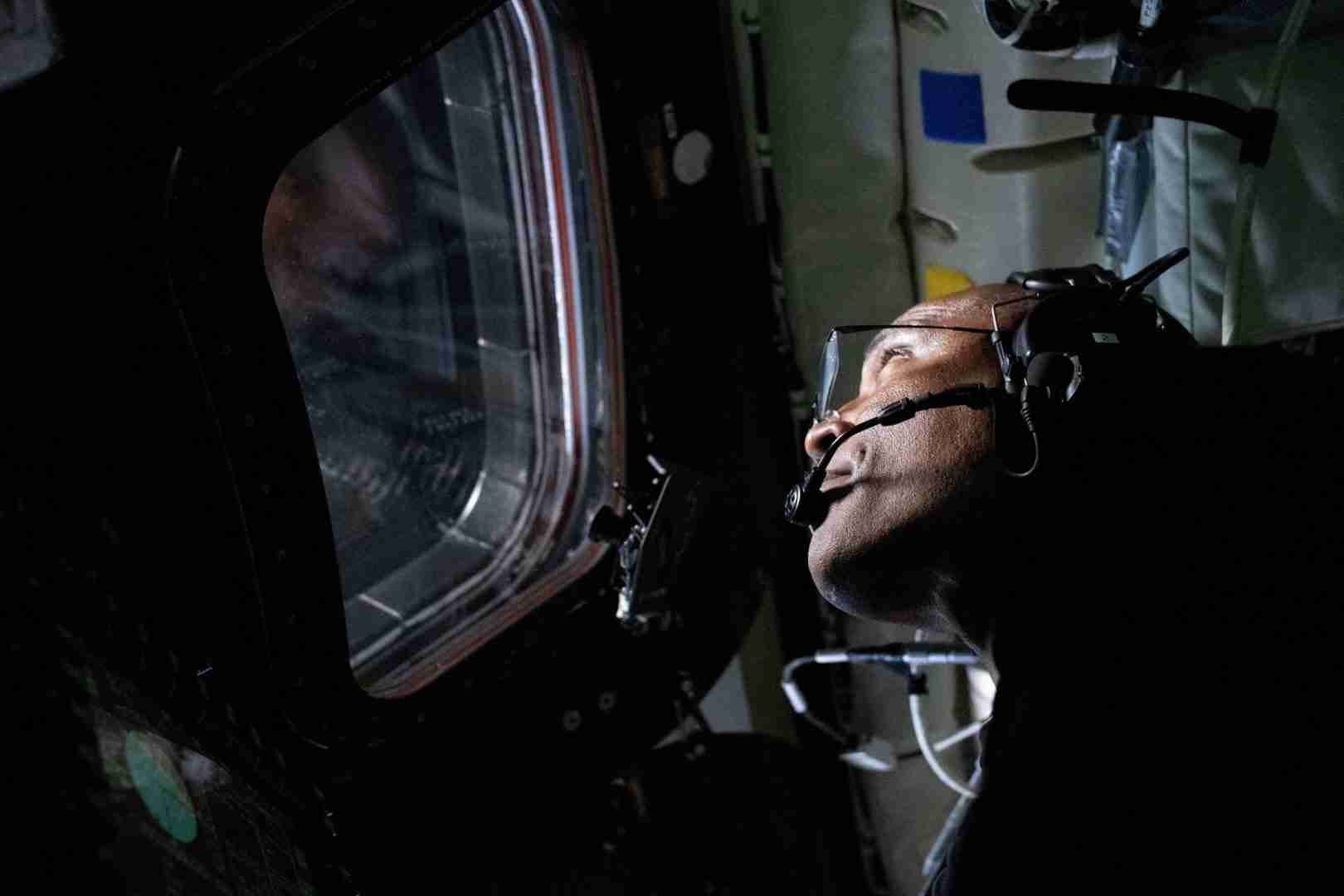
The four Artemis II astronauts, returning from the world’s first crewed moon voyage in over half a century, hurtled back toward Earth on Friday aboard their gumdrop-shaped Orion spacecraft, headed for a splashdown in the Pacific Ocean off Southern California.
The finale to NASA’s celebrated 10-day mission was expected to begin with separation of Orion’s crew capsule from its service module, followed by a fiery re-entry through Earth’s atmosphere and a six-minute radio blackout before the capsule parachutes into the sea.
If all goes well, U.S. astronauts Reid Wiseman, Victor Glover and Christina Koch, along with Canadian astronaut Jeremy Hansen, will end up bobbing safely in the ocean aboard their Orion capsule, dubbed Integrity, shortly after 8 p.m. ET (0000 GMT) off the coast of San Diego.
The quartet blasted off from Cape Canaveral, Florida, on April 1, lofted into an initial Earth orbit by NASA’s giant Space Launch System rocket before sailing on around the far side of the moon, venturing deeper into space than any humans before them.
STEPPING STONE TO MARS
In so doing, they became the first astronauts to fly in the vicinity of the moon since the Apollo program of the 1960s and ’70s. Glover, Koch and Hansen also made history as the first Black astronaut, the first woman and first non-U.S. citizen, respectively, to take part in a lunar mission.
The voyage, following the uncrewed Artemis I test flight around the moon by the Orion spacecraft in 2022, marked a critical dress rehearsal for a planned attempt later this decade to land astronauts on the lunar surface for the first time since Apollo 17 in late 1972.
The ultimate goal of the Artemis program is to establish a long-term presence on the moon as a stepping stone to eventual human exploration of Mars.
In a historical parallel to the Cold War era of Apollo, the Artemis II mission has played out against a backdrop of political and social turmoil, including a U.S. military conflict that has proven unpopular at home.
For many in a global audience captivated by the latest moon shot, it reaffirmed the achievements of science and technology at a time when big tech has become widely distrusted, even feared. Opinion polling showed broad public support for the aims of the mission.
CRITICAL TEST OF HEAT SHIELD
The return to Earth will put the Orion spacecraft through a critical test of its heat shield, which sustained an unexpected level of scorching and stress on re-entry during the 2022 test flight. As a result, NASA engineers altered the descent trajectory for Artemis II in order to reduce heat buildup and lower the risk of the capsule burning up.
Still, with Orion plunging into the atmosphere at some 25,000 miles per hour (40,235 kph), temperatures outside the capsule are expected to soar to around 5,000 degrees Fahrenheit (2,760 degrees Celsius).
The recalibrated final descent path also has narrowed the size of the potential splashdown zone, limiting target landing options in case of foul weather at sea. NASA officials said on Thursday that forecasts for the preferred splashdown zone looked favorable.
Just as critical as the performance of the heat shield are several other factors, including achieving the spacecraft’s precise descent path and re-entry angle through a series of course-correction blasts of its jet guidance thrusters.
The last of three such jet propellant “burns” was scheduled for Friday afternoon, roughly five hours before splashdown.
Once the capsule hits the top of the atmosphere, it takes less than 15 minutes, including a six-minute radio blackout, before two sets of parachutes are deployed and the capsule floats into the sea.
NASA says it will take about another hour for recovery teams to secure Orion, hoist it onto a ship and assist the astronauts in exiting the capsule one by one.
At the flight’s peak, the crew reached a point 252,756 miles from Earth, exceeding the previous record of roughly 248,000 miles set in 1970 by the crew of Apollo 13.
Reporting by Steve Gorman in Los Angeles and Joey Roulette in Houston; Editing by Bill Berkrot
To provide the best experiences, we use technologies like cookies to store and/or access device information. Consenting to these technologies will allow us to process data such as browsing behavior or unique IDs on this site. Not consenting or withdrawing consent, may adversely affect certain features and functions.
Functional
Always active
The technical storage or access is strictly necessary for the legitimate purpose of enabling the use of a specific service explicitly requested by the subscriber or user, or for the sole purpose of carrying out the transmission of a communication over an electronic communications network.
Preferences
The technical storage or access is necessary for the legitimate purpose of storing preferences that are not requested by the subscriber or user.
Statistics
The technical storage or access that is used exclusively for statistical purposes.The technical storage or access that is used exclusively for anonymous statistical purposes. Without a subpoena, voluntary compliance on the part of your Internet Service Provider, or additional records from a third party, information stored or retrieved for this purpose alone cannot usually be used to identify you.
Marketing
The technical storage or access is required to create user profiles to send advertising, or to track the user on a website or across several websites for similar marketing purposes.