The company, part of International Distribution Services, said the changes would be done through natural attrition and voluntary redundancy and would not impact frontline roles, including posties and drivers
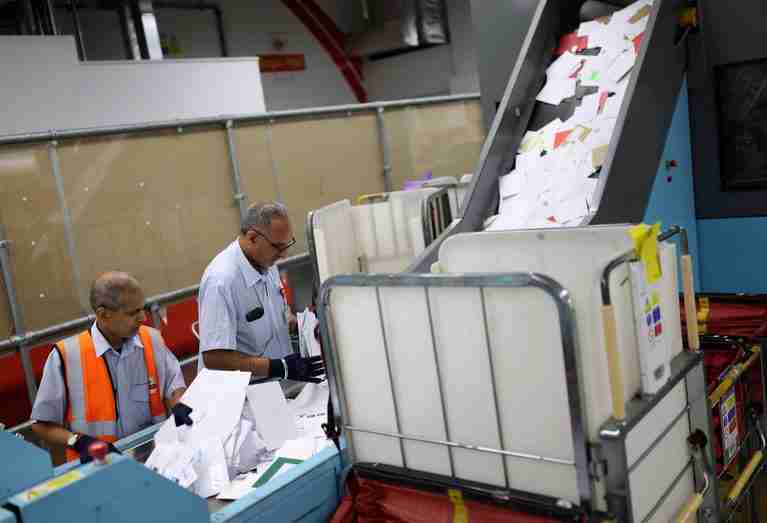
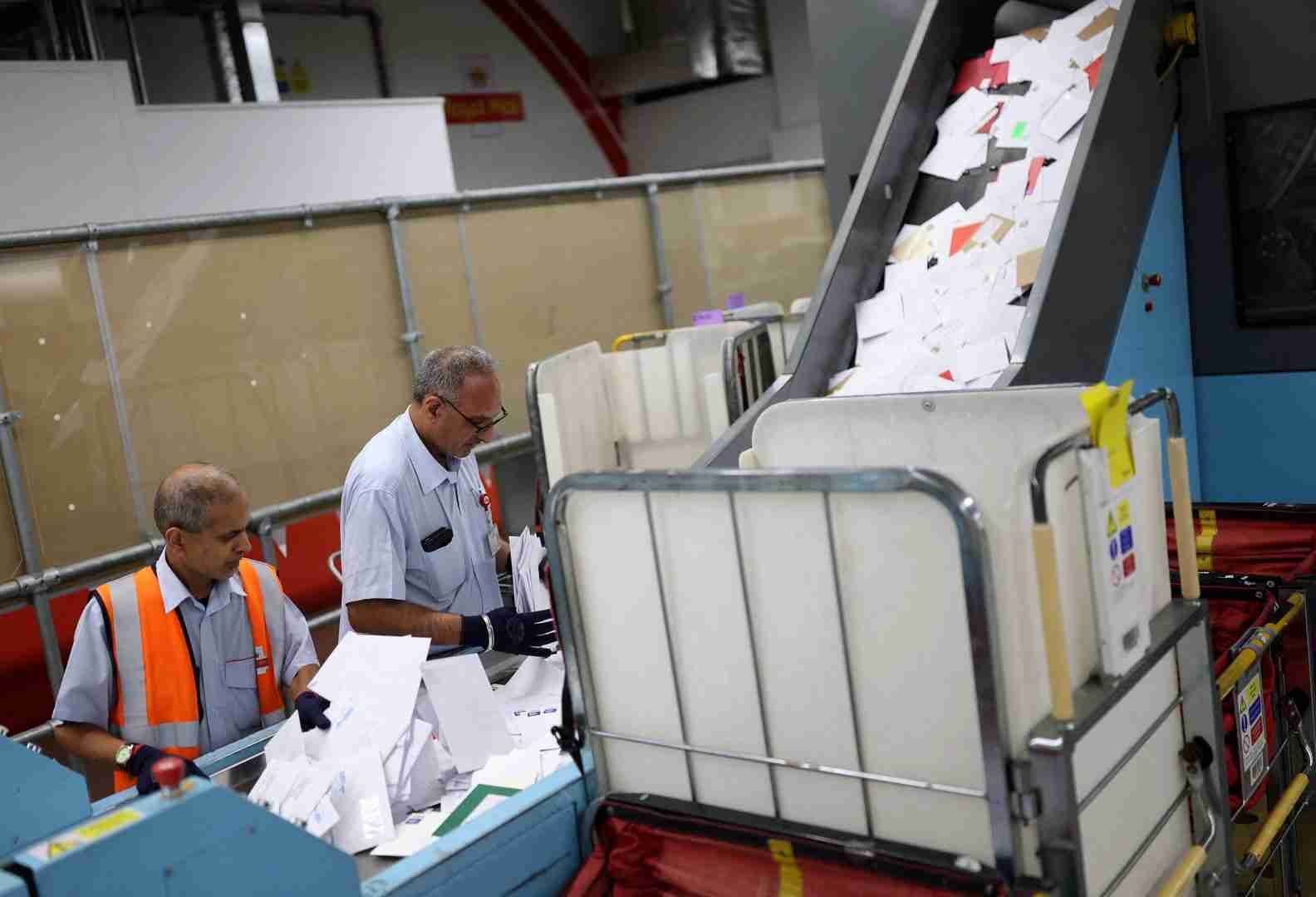
Royal Mail workers sort mail at the processing plant at the Mount Pleasant Mail Centre in London, Britain, December 9, 2025. REUTERS/Hannah McKay
International News via Reuters:
Royal Mail said on Wednesday it plans to cut up to 2,500 head office and support jobs by the end of 2027 as part of a restructuring, affecting less than 2% of its more than 131,000 employees.
The company, part of International Distribution Services, said the changes would be done through natural attrition and voluntary redundancy and would not impact frontline roles, including posties and drivers.
The job cuts come as the group overhauls its operations post regulatory pressure and scrutiny over missed delivery targets.
“These proposed changes remove duplication and allow us to invest further in the service we deliver for our customers,” Chief Executive Alistair Cochrane said in a statement.
Royal Mail said the review aims to speed up decision-making as it implements Universal Service reform amid a decline in letter volumes of more than 70% since their peak.
The more than 500-year-old Royal Mail, whose iconic red post boxes with the Royal Crest dot Britain, said it has briefed unions the Communication Workers Union and Unite CMA, with formal consultation now underway.
Reporting by Raechel Thankam Job in Bengaluru; Editing by Janane Venkatraman and Nivedita Bhattacharjee
Kenya is the fourth country to record a case linked to the Ebola epidemic in eastern Congo, the second largest on record with more than 8,000 cases
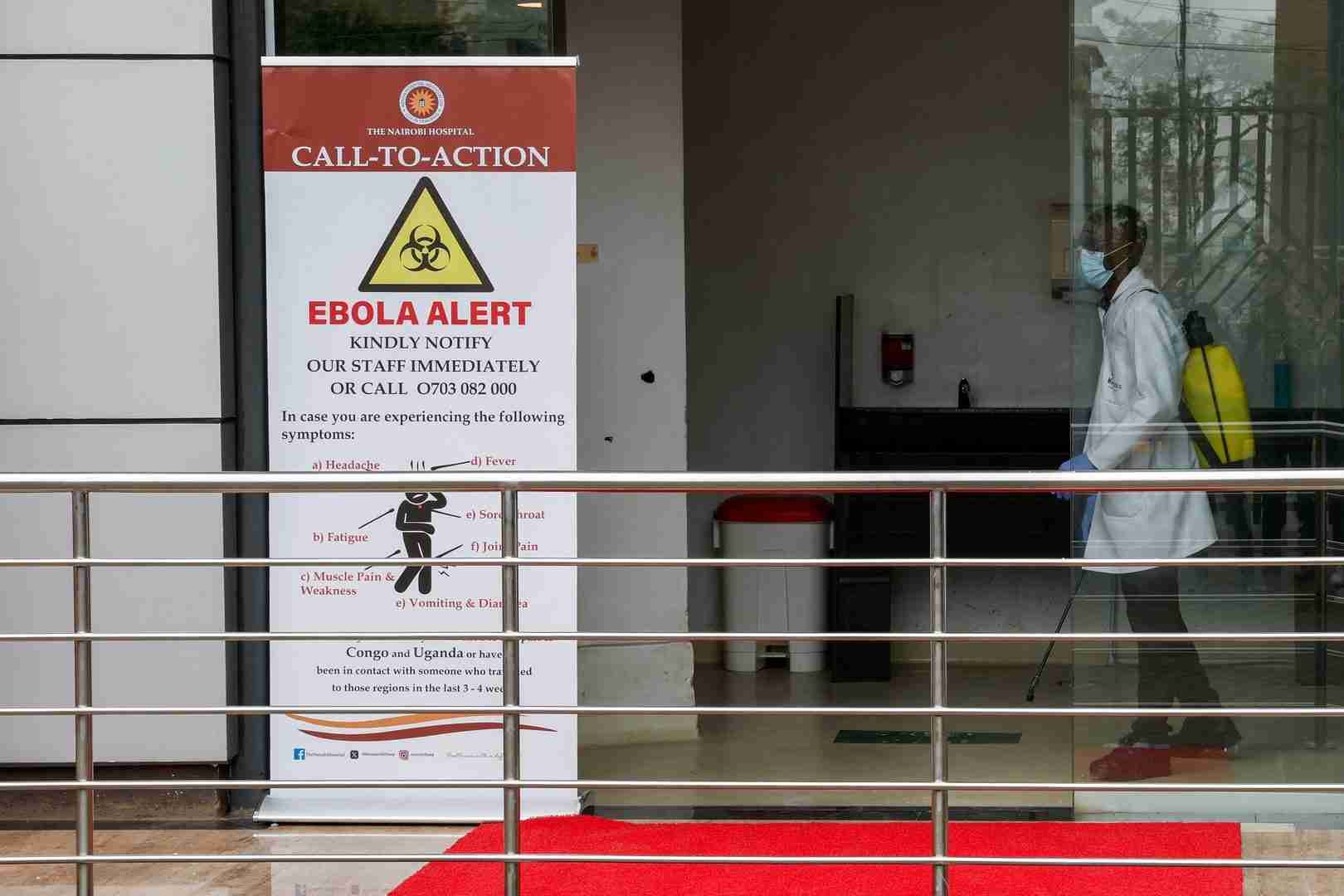
A staff member sanitizes an area at Nairobi Hospital where an Ebola patient was isolated immediately upon arrival and treated at the hospital’s physically separate East Wing Isolation Facility, but later died, in Nairobi, Kenya October 7, 2026. REUTERS/Monicah Mwangi
International News via Reuters:
Kenya confirmed its first Ebola case on Tuesday after a Kenyan citizen who had travelled from Democratic Republic of Congo died in Nairobi.
Kenya is the fourth country to record a case linked to the Ebola epidemic in eastern Congo, the second largest on record with more than 8,000 cases.
Uganda reported 20 cases and two deaths earlier in the year but was declared Ebola-free in August. A doctor who returned to France in June from Congo tested positive but there was no further spread of the virus.
The Kenyan patient, who had lived in Congo for seven years, had been ill for about a month before travelling by road from Congo to Uganda’s capital, Kampala, and then flying to Nairobi on Saturday, Kenya’s Health Minister Aden Duale told a news conference.
After arriving at Nairobi’s international airport, he passed through health screening and was later taken by a relative to Nairobi Hospital. He was admitted with fever, chills and bleeding beneath the skin and was quickly placed in isolation, Duale said.
He died late on Monday.
Eight of his family members and 21 healthcare workers who attended to him have been quarantined and are being monitored, Kenyan President William Ruto’s office said.
PATIENT BURIED UNDER HEALTH PROTOCOLS
The patient was buried under protocols designed to prevent further spread of the virus, Ruto’s office said.
Health authorities are trying to trace 23 passengers and four crew members who were on his Jambojet flight, Duale said.
The health minister said Kenya had trained nearly 5,000 health workers across the country on prevention and management and the UN’s senior Ebola coordinator, Julien Harneis, told Reuters he expected a “solid health response” from Kenya to manage the disease.
The Africa Centres for Disease Control and Prevention (Africa CDC) said in a statement that it was immediately sending a high-level team to Kenya to provide support, adding that the case “underscores the importance of sustained preparedness across the region”.
World Health Organization Director-General Tedros Adhanom Ghebreyesus said on X that the WHO was supporting the Kenyan and Ugandan governments and recommended against any travel restrictions on countries affected by the outbreak.
Nevertheless, the incident raised questions about measures meant to prevent the spread of the virus across borders.
Kenya’s health ministry director-general, Patrick Amoth, said the patient may have passed through airport screening because medication had masked his symptoms.
Uganda’s health ministry said screening teams observed he had a normal temperature at Entebbe airport.
It was also not clear how he had crossed from Congo into Uganda, given that the border has been closed since May. The Africa CDC said he spent a night in Uganda before boarding the flight to Kenya.
Asked about this, Ugandan government spokesperson Alan Kasujja said in a text message: “Leave Uganda out of this conversation … We don’t have Ebola here.”
KENYA HOSTS US EBOLA QUARANTINE FACILITY
After the outbreak was declared in Congo, the United States built a 50-bed Ebola quarantine camp for US citizens on an air force base in central Kenya.
The facility is currently empty and has only housed seven people. Kenyan officials have said it could receive Kenyans and other nationalities, but the US government has not confirmed that.
Ebola spreads through direct contact with the bodily fluids of infected people, whether living or dead. The disease can cause fever, vomiting, diarrhoea and, in severe cases, internal and external bleeding.
The outbreak in Congo was declared in mid-May but may have started months earlier. Caused by the rare Bundibugyo strain, it has been blamed for more than 4,000 deaths.
Reporting by Vincent Mumo Nzilani and Edwin Okoth in Nairobi. Additional reporting by Emma Farge in Geneva and Elias Biryabarema in Kampala, Writing by Aaron Ross, Editing by Alexander Winning, Mark Potter, Susan Fenton and Sanjeev Miglani
Georgieva did not indicate in her prepared remarks whether the IMF’s latest World Economic Outlook would change the overall 2026 global growth forecast from the sluggish 3.0% rate forecast in July
International News via Reuters:
The global economy is under threat from persistently high energy prices, record public debt and risks from the AI investment boom, International Monetary Fund Managing Director Kristalina Georgieva warned on Wednesday, urging governments to implement protective fiscal and monetary policy measures.
In a speech previewing IMF and World Bank Annual Meetings next week in Bangkok, Georgieva said the world was being pulled in two directions — a negative energy supply shock from the Middle East conflicts and a positive demand shock from artificial intelligence that is also fuelling inflation.
“The combined impact of these two forces is highly uneven across the world,” Georgieva said, adding that the AI boom was bypassing many countries.
New IMF growth forecasts to be released during the Bangkok meetings will show the biggest growth downgrades will come in economies ravaged by war, Georgieva said. These include Ukraine, suffering significant damage to civilian and economic infrastructure, and Gulf countries hit by Iranian strikes and sharply reduced energy exports.
Georgieva did not indicate in her prepared remarks whether the IMF’s latest World Economic Outlook would change the overall 2026 global growth forecast from the sluggish 3.0% rate forecast in July.
That forecast, which predicted a rebound to 3.4% growth in 2027, assumed the Strait of Hormuz would start to reopen in mid-July and return to pre-war conditions by March 2027. It assumed oil prices would average $89 a barrel in 2026 and $78 a barrel in 2027.
Georgieva said oil prices remain at $100 a barrel, with impaired refining capacity adding another $100 in “crack-spread” margins per barrel for key products including diesel. The winter heating season will boost demand even as natural gas supplies remain restricted by threats to LNG shipping through the Strait of Hormuz, she added.
“Even if the war in the Gulf were to end soon, the problem of high energy prices will likely persist for some time,” Georgieva said, adding that Brent crude oil futures predict high oil prices through 2027.
Higher energy prices are pushing up inflation, policy rates and benchmark bond yields, she said, noting that US, German and Japanese 10-year sovereign yields are now at their highest levels since 2007, 2009 and 1996, respectively, and still climbing.
GROWING DEBT LOAD
Adding to the worries to be discussed by the IMF’s 191 member countries next week is a growing public debt burden that is sapping growth and adding inflationary pressures, Georgieva said. The IMF says public debt is at the highest level since World War Two and is projected to exceed 100% of GDP before 2030.
Georgieva singled out advanced economies, led by the United States, as the “worst offenders” on debt loads, with debt-to-GDP ratios higher than emerging markets and low income countries.
Policymakers can no longer rely on higher growth rates alone to solve fiscal problems, she said.
“And yet we don’t see decisive action in the high-debt advanced economies where the need of the hour is for credible medium-term fiscal consolidation plans, supported in some cases by upfront fiscal measures, including to take some pressure off monetary policy,” she said.
After five-and-a-half years of above-target inflation, Georgieva said inflationary pressures were persisting, from the AI build-out, energy and food price shocks, tariffs, higher defense spending and higher debt service costs.
“Now may be a good time for a prudently hawkish bias in many countries’ monetary policy,” Georgieva said, adding that rate hikes by the US Federal Reserve, the ECB and the Bank of Japan were “highly appropriate.”
In a fireside chat following her speech, Georgieva added that the “most important task” for monetary policy in the current environment is to focus on price stability and for central banks to communicate their resolve in maintaining it.
“They can only do it when central banks are independent, and when central banks resist pressure that may come from the fiscal side to ease the burden by basically stepping up, buying debt, making it so that the situation from the fiscal side eases,” she said.
“I would call this monetary cowboys, running to the rescue of the fiscal agents, and my message is: please don’t.”
AI RISKS ABOUND
Georgieva highlighted other risks from AI, where investment as a share of GDP is likely to exceed that of railroads, the electricity grids or telecommunications infrastructure.
The rising economic and financial concentration puts pressure on AI companies to deliver productivity and earnings gains to justify lofty valuations, she said, warning that market disappointment could turn into “a far-reaching shock.”
But she said IMF research suggests that AI, done right, could add a half percentage point of extra world growth annually.
AI preparedness is key, she said, including regulatory guardrails that “help manage AI’s substantial perils, which include large-scale labor market fallout, serious cyber and stability risks and frontier models threatening to escape human control and run amok.”
In addition to building fiscal strength, even at difficult political costs, Georgieva said governments should take other steps to boost growth, including reforms that would develop improved workforce skills, make corporate startups and wind-downs easier, boost energy security and streamline regulations.
Reporting by Rae Wee in Singapore ad David Lawder in Washington; Writing by David Lawder, Editing by Lincoln Feast
According to UNICEF data, obesity has surpassed being underweight as the most common form of malnutrition in school children and adolescents worldwide
A selection of injector pens for the Saxenda weight loss drug are shown in this photo illustration in Chicago, Illinois, U.S., March 31, 2023. REUTERS/Jim Vondruska/Illustration
International News via Reuters:
The World Health Organization on Wednesday recommended diet, exercise and counseling over popular weight-loss drugs in its first global guidelines addressing rising obesity among younger children.
According to UNICEF data, obesity has surpassed being underweight as the most common form of malnutrition in school children and adolescents worldwide.
The health agency said weight-loss drugs may be considered for adolescents aged 10 to 19 with obesity but only after supervised interventions have failed. Bariatric surgery could be considered for physically and mentally mature adolescents with severe obesity after six months of unsuccessful treatment, it said.
For children under 10, WHO endorsed diet, physical activity and combined behavioral support instead of obesity medication, surgery or devices because of doubts over their safety and long-term effectiveness.
Luz María De Regil, director of the Department of Nutrition and Food Safety, said there is currently insufficient evidence on GLP-1 drugs, though researchers are monitoring efficacy and safety trials and may revise that assessment as more data emerges.
“The foundation of obesity care for children and adolescents is not medicine or surgery, but access to comprehensive support that enables healthy eating, physical activity and sustainable behaviour change,” De Regil said.
Some GLP-1 medicines are already approved for weight-loss in younger patients. Novo Nordisk’s Wegovy and Saxenda can be used by certain adolescents 12 and older in the United States and the European Union. The EU also allows Saxenda for some children aged six to 11.
For children and adolescents with obesity, WHO strongly suggested tailored diets, physical activity and behavioral programs involving caregivers, with supervised digital support cited as optional.
Healthy diets and physical activity must also be accessible and affordable because treatment alone cannot halt rising obesity, WHO said.
About 400 million people aged 5 to 19 were overweight in 2024, including 170 million living with obesity, WHO said. Obesity prevalence in the group has quadrupled since 1990.
Reporting by Kunal Das and Christy Santhosh in Bengaluru; Editing by Pooja Desai
The moves highlight a new hierarchy in the ever-evolving rankings of European debt
International News via Reuters:
Traders have turned more discerning following a bond market rout, dumping the debt of European countries they deem the riskiest and rushing to safe-haven Germany.
The moves highlight a new hierarchy in the ever-evolving rankings of European debt.
France, once a beneficiary of a flight to safety, has been hit by selling. Previously shunned Italy and Britain are less exposed but still fragile, while Dutch and Swiss debt have rallied alongside Germany.
“We’ve seen bond vigilantes come out in force,” said Man Group Chief Market Strategist Kristina Hooper.
“They are punishing those countries that they do not believe are fiscally disciplined. We can see that in yields across Europe in the past week.”
FRANCE WOBBLES
France is at the centre of a storm on worries about the country’s large budget deficit and looming 2027 presidential election.
Its 10-year bond yield jumped 70 basis points (bps) in September and hit its highest since 2002. That is driving up borrowing costs and making the fiscal maths harder.
France said in September that the deficit will overshoot the government’s 5% target. The government has announced belt-tightening measures to bring some calm, but investors are sceptical that they can be carried out. Meanwhile, France plans to sell a record €340 billion ($381 billion) of bonds in 2027 to fund the government and refinance COVID-era debt.
The spread between French and German 10-year bond yields, a gauge of France’s risk premium, hit almost 160 bps last week, its highest since 2012. While the spread retreated somewhat earlier this week, it is widening again on Wednesday, in a move which many investors expect to continue.
The euro, hurt by the selloff, could weaken to $1.10, analysts say.
Still, the yield gap between Germany and other euro zone countries is far below peaks seen in the European debt crisis, when Italy’s spread topped 500 bps and Greece’s 3,000 bps.
ITALY UNDER PRESSURE
Investors worried about the sustainability of Italy’s public finances fear contagion from the France selloff.
Italy’s 10-year bond yield gap over Germany widened to 130 bps last week from 80 bps a month earlier.
Its bond market could come under more pressure should debt-related worries resurface.
Italy’s cabinet said last week its deficit is set to rise well above the European Union’s 3% ceiling and the country’s massive public debt will start to fall only in 2028. Its debt-to-GDP ratio, currently at 138.6%, is expected to overtake Greece’s this year as the highest in the bloc.
TS Lombard European and global macro director Davide Oneglia said he was also watching politics in Italy, which holds an election next year and could face uncertainty.
The Greek/German bond-yield spread, meanwhile, has hit its highest level in two years, while the Belgian 10-year yield rose 49 bps in September, more than most peers bar France.
BRITAIN, SPAIN DODGE WORST
Previously pressured bond markets in Britain and Spain have dodged the worst of the recent drama.
The turmoil in Britain’s gilt market in 2022 around then Prime Minister Liz Truss’ “mini-budget” has become a case study of how high debt levels can spook bond investors. Gilts underperformed in subsequent global selloffs.
But the 10-year gilt yield rose 36 bps in September to around 5.43%. That was around half the move in France.
Investors are less nervous about an October UK budget, but will be looking for reassurance on fiscal discipline as well as plans to boost long-term economic growth.
Spanish debt was once among the least favoured in the euro zone, but strong economic growth in recent years has driven a rally in its bonds. Its 10-year yield is now 75 bps below France’s; it was 500 bps above during the 2012 euro zone crisis.
Investors say Spain is a test of how much worries about France infect other markets.
“Full-on contagion would involve … a more pronounced widening in other European sovereign spreads, including those of countries with stronger fundamentals, such as Spain and Portugal,” said Jeff Mueller, co-head of fixed income at Morgan Stanley Investment Management.
INVESTOR DARLINGS
Germany is back as Europe’s safe haven. Recent fears it might lose that status due to higher spending on infrastructure and defence have proved overdone for now.
The German 10-year Bund yield fell 17 bps last week, even as France’s jumped 13, as investors sought safety.
Japan’s Sumitomo Mitsui DS Asset Management, for example, said on Tuesday it recently sold some French bonds in favour of German and Japanese debt, describing the decision to buy German bonds as a “flight-to-quality move”.
The debt of other low-debt European countries also rallied last week. Dutch yields fell 11 bps, the Swiss, 12, and the Swedish, 14.
($1 = 0.8929 euros)
Reporting by Alun John, Harry Robertson and Sara Rossi; editing by Dhara Ranasinghe and Xevi Fontdegloria
The blue-chip FTSE 100 index fell 0.4% to 10,498.53 points by 0948 GMT, while the midcap FTSE 250 slipped 0.2%
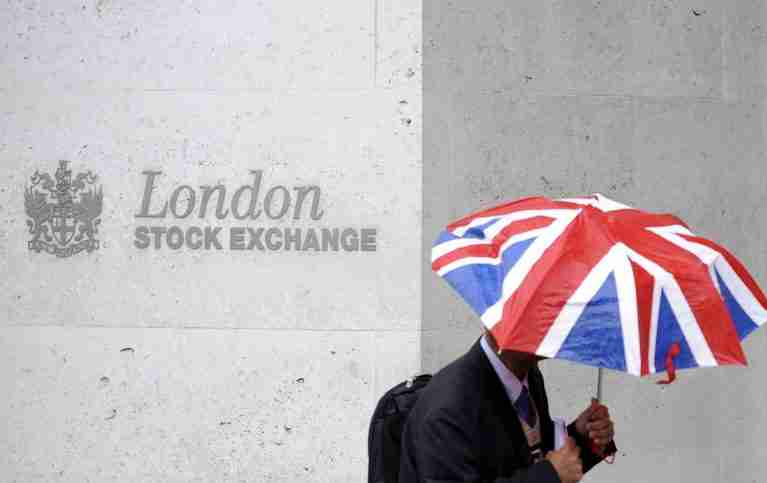
A worker shelters from the rain under a Union Flag umbrella as he passes the London Stock Exchange in London, Britain, October 1, 2008. REUTERS/Toby Melville/File Photo
International News via Reuters:
UK’s FTSE 100 edged lower on Wednesday after three consecutive sessions of gains, weighed down by banking stocks, as rising oil prices and surging bond yields kept investors cautious.
The blue-chip FTSE 100 index fell 0.4% to 10,498.53 points by 0948 GMT, while the midcap FTSE 250 slipped 0.2%.
• Oil prices rose, with Brent futures holding above $100 a barrel, as investors weighed higher Gulf exports against persistent supply risks from the Middle East conflict and a storm approaching US oil-producing regions [O/R]
• Shell expects third-quarter refining margins to jump to a record $42 a barrel, sharply above $24 a barrel in the previous quarter
• Shares in the oil major rose 0.7%
• British 10-year borrowing costs climbed, tracking higher oil prices and US Treasury yields, to reach their highest level since October 1, when they touched a near 20-year high
• Investors also awaited minutes from the Federal Reserve’s latest meeting for further clues on the outlook for US monetary policy and the timing of any future interest-rate cuts
• Heavyweight banking stocks led declines on the benchmark index, with HSBC, Standard Chartered and Barclays falling between 2% and 3%
• The Financial Times reported that HSBC plans deep job cuts in its UK wealth business as part of a broader, AI-driven efficiency push
• Pennon Group tumbled 21%, making it the biggest decliner on the FTSE 250, after the water utility launched a fully underwritten £550 million ($728.5 million) rights issue and cut its dividend
• Shares in protective equipment provider Avon Technologies jumped 14% after it said annual results were expected to beat market expectations
• British house prices were flat in September after recording their first annual decline since 2023 in August, according to Lloyds data, which came in weaker than analysts had expected
Reporting by Darshan Kumar and Ragini Mathur in Bengaluru; Editing by Vijay Kishore
The euro fell 0.27% to 84.49 pence, its lowest level since June 2025, extending its losing streak to a ninth straight session
International News via Reuters:
Sterling scaled a 16-month high against the euro on Wednesday as France’s fiscal concerns continued to weigh on the single currency, although the pound weakened against a broadly stronger dollar.
The euro fell 0.27% to 84.49 pence, its lowest level since June 2025, extending its losing streak to a ninth straight session. Against the dollar, the euro slumped 0.6% to 1.1199, weighed down by worries about France’s fiscal position ahead of the 2027 presidential election.
Euro zone bond-market turmoil has also dampened expectations for further rate hikes from the European Central Bank, even as traders bet that the Bank of England will belatedly resume tightening policy to catch up with other central banks.
Unlike the ECB and the US Federal Reserve, the Bank of England has kept interest rates unchanged since the outbreak of the Iran war, though markets now see an 81% chance of a rate increase at its November meeting, according to LSEG data.
The pound weakened 0.3% to 1.3239 against a broadly firmer dollar as rising oil prices supported the greenback.
British 10-year borrowing costs rose sharply on the back of higher crude oil prices, with the 10-year gilt yield <GB10YT=RR > touching 5.44%.
After the UK’s long-term borrowing costs reached their highest level since the 1990s last week, the focus remains firmly on finance minister John Healey’s first budget on October 28.
“It’s going to be a budget which leans towards fiscal tightening and ultimately impacts growth,” said Dominic Bunning, head of G10 FX strategy at Nomura. If it includes tax increases, such as a rise in capital gains tax, investment could suffer and that could weigh more on sterling’s cyclical outlook than its structural one, he said.
Reporting by Medha Singh in Bengaluru, Editing by Xevi Fontdegloria
Vieira and Rodrigues secure share of top spots for Eckerd College
Bermudian sailors Jordan Vieira and PJ Rodrigues helped Eckerd College claim a share of top honours after mounting a thrilling final-day comeback at the weather-disrupted Charleston Fall Interconference regatta in South Carolina.
Competing across the tricky tidal waters of Crab Bank, the Tritons overcame frustrating delays to finish tied for first alongside hosts College of Charleston in a competitive 15-team fleet.
Saturday’s opening proceedings tested the sailors’ patience, with light breezes forcing a wind hold until 12:30. When racing finally got under way in Club 420s, crews contended with an ebbing current and testing winds of 5 to 6 knots.
Vieira steered Eckerd’s A Division boat alongside crew Angelina Manchuk—later joined by Avery Guck—while Rodrigues paired with Peyton Seidle in the B Division.
Four races were completed before threatening thunderstorms forced an early halt, leaving Eckerd fourth overall overnight on 45 points. With officials racing to beat Sunday’s 15:00 deadline, Eckerd produced an electric start. Vieira and Guck clinched an emphatic bullet in the A Division, matched stride-for-stride by Rodrigues and Seidle, who sailed home to victory in the B Division.
The double triumph ignited Eckerd’s climb up the leaderboard as breezes freshened to gusts of 12 knots.
However, around 13:00 the wind vanished entirely, forcing race committee officials to abandon further action. With Race 9A voided, the standings reverted to the completed rounds, confirming Eckerd level with Charleston at the summit on 76 points.
Secondary schools battle for silverware at National Sports Centre
Saltus Grammar School and Warwick Academy emerged victorious as Bermuda’s leading secondary school talents battled for silverware at the 2026 Senior School Field Hockey Tournaments.
Staged at the National Sports Centre in Devonshire, the competition saw Saltus produce a flawless campaign to secure the senior girls’ crown with three wins from three, while Warwick Academy showcased nerves of steel in two razor-thin encounters to take the senior boys’ title.
Spearheaded by the clinical finishing of Stella Marsh, Saltus Grammar navigated a competitive four-team girls’ division with a 100% record. Saltus dispatched Somersfield Academy 3-0 in their opener courtesy of a Marsh brace and a strike from Leilani Peters, before edging a resilient Warwick Academy Blue 2-1 with Marsh netting twice more to counter Sayla Williams’ reply.
The title decider came down to a fierce showdown against Warwick Academy White, who entered the contest buoyed by a 1-0 win over Somersfield and a 1-1 derby draw against Warwick Blue, with Naina Seth scoring in both fixtures. However, goals from Holly Lathwell and Marsh proved decisive in a 2-1 triumph for Saltus, holding off a late reply from Warwick White’s Hayleigh Cherry. Somersfield picked up their own win in the group, defeating Warwick Blue 2-1 behind strikes from Anya Aeleishe Pearman and Della Masters.
In the senior boys’ tournament, Warwick Academy relied on tactical poise to navigate two nail-biting clashes.
Somersfield Academy had laid down an early marker with a 4-1 cruise over Saltus Grammar behind doubles from Louis Manning and Will Bohus. Warwick Academy quickly seized control, edging Saltus 3-2 in an end-to-end clash through a Michael Schrah double and a Max Kimberley goal, despite Saltus answering via Johny Bart and Ryan McLean.
With the championship on the line against Somersfield, Warwick delivered a disciplined defensive masterclass, with Will Britten striking the lone goal in a 1-0 victory to claim the trophy.
Despite severe injuries to her arms from the insertion of intravenous lines during the attempted execution last Wednesday, Pike, 50, is “still handcuffed and shackled” to her hospital bed while she remains under medical care
FILE PHOTO: A picture taken on December 4, 2007 shows death row inmate Christa Pike entering a Knox County Criminal Court in Knoxville, Tennessee, US., obtained by Reuters on September 30, 2026. J. Miles Cary/ Knoxville News Sentinel/USA TODAY NETWORK via REUTERS/File Photo
International News via Reuters:
Convicted killer Christa Pike, who survived Tennessee’s effort to execute her by lethal injection last week, foiling the state’s first attempt to put a woman to death in two centuries, has regained consciousness and is speaking, her lawyers said in a statement on Tuesday.
Despite severe injuries to her arms from the insertion of intravenous lines during the attempted execution last Wednesday, Pike, 50, is “still handcuffed and shackled” to her hospital bed while she remains under medical care, her team of public defense attorneys wrote.
“Her prognosis remains unclear, but at a minimum we expect a long recovery,” the lawyers’ statement said, adding that a court hearing on Pike’s case was scheduled for Wednesday in Davidson County Chancery Court.
Pike, sentenced to death for her role as a teenager in the torture-murder of a 19-year-old schoolmate Colleen Slemmer three decades ago, survived the botched execution attempt on the night of September 30 at Riverbend Maximum Security Institution in Nashville, the state capital. She has been hospitalized since then.
Her lawyers said on Friday that their client remained unconscious, critically ill and hooked to a ventilator to breathe, as doctors labored to clear the drug pentobarbital from her system.
“Against all odds, Christa Pike is conscious, speaking and continues to receive critical medical care,” they wrote on Tuesday.
Pike’s petition for clemency, denied last week by Governor Bill Lee, argued that her death sentence had failed to properly account for Pike’s own childhood trauma as the victim of sexual abuse, neglect and untreated mental illness.
Pike went from being the first woman Tennessee had tried to put to death since the early 19th century to becoming the first person in the United States known to have survived after execution drugs were administered.
Death penalty opponents said the incident exposed the inherent barbarity of executions. It also highlighted the difficulties of carrying out lethal injections while respecting constitutional prohibitions on cruel and unusual punishment.
‘NONE OF IT WAS NORMAL’
Pike’s attorneys and journalists who witnessed the execution attempt described it as roughly 2-1/2 hours of disarray and prolonged distress for her as Department of Correction personnel struggled to administer two doses of pentobarbital intravenously.
“None of it was normal,” Catherine Sweeney, a reporter for Nashville public broadcaster WPLN, recounted. “It went really poorly.”
Pike was heard gasping, crying, whimpering and breathing loudly through much of the procedure, at one point saying, “my arm feels like it’s about to burst open.”
The bungled attempt to establish intravenous lines left both of Pike’s arms “swollen, burned and blistered,” the apparent result of the pentobarbital, a highly alkaline and caustic substance, seeping into the tissues under her skin, her lawyers said in court filings.
The lawyers accused state officials of having shrugged off prior warnings from Pike’s doctors that her small veins and a blood disorder called thrombocytosis would make placing IV lines especially difficult.
In the midst of the procedure, Pike’s lawyers filed an emergency court motion seeking to halt the procedure. By then, prison officials had ceased their execution efforts and called an ambulance, according to court records.
The night of the execution attempt, the Department of Correction defended its handling of the situation, saying it had “followed every step of the state’s lawful, established execution protocol.” But agency commissioner Frank Strada has resigned and will leave his post this month, the governor announced on Saturday.
Lee had previously ordered a suspension of any scheduled executions for the rest of the year and a third-party review of what happened in Pike’s case.
Two days before Pike was due to meet her fate, Lee rejected a petition seeking to commute her death penalty to a life prison term without the possibility of parole.
Pike was 18 in January 1995 when she, her 17-year-old boyfriend, Tadaryl Shipp, and a third companion lured Slemmer into a wooded area on the University of Tennessee campus in Knoxville and killed her.
The gruesome nature of the slaying, which involved Shipp carving the shape of a pentagram in the victim’s chest and Pike bashing Slemmer in the head with a chunk of asphalt, then taking a piece of her skull as a souvenir, drew intense media coverage at the time. Trial testimony indicated that Pike viewed Slemmer as a rival for her boyfriend’s affections.
Pike and Shipp confessed to the killing, and both were convicted of first-degree murder. Pike was sentenced to death, while Shipp received a life sentence with the possibility of parole.
Their co-defendant, Shadolla Peterson, who was 18 at the time of the murder and had acted as a lookout for the other two, testified for the prosecution and received probation.
Reporting by Ismail Shakil and Daphne Psaledakis; editing by Michelle Nichols, Rosalba O’Brien and Nia Williams
Brent futures rose 26 cents, or 0.3%, to settle at $100.58 a barrel, while US West Texas Intermediate (WTI) crude rose one cent to settle at $89.44
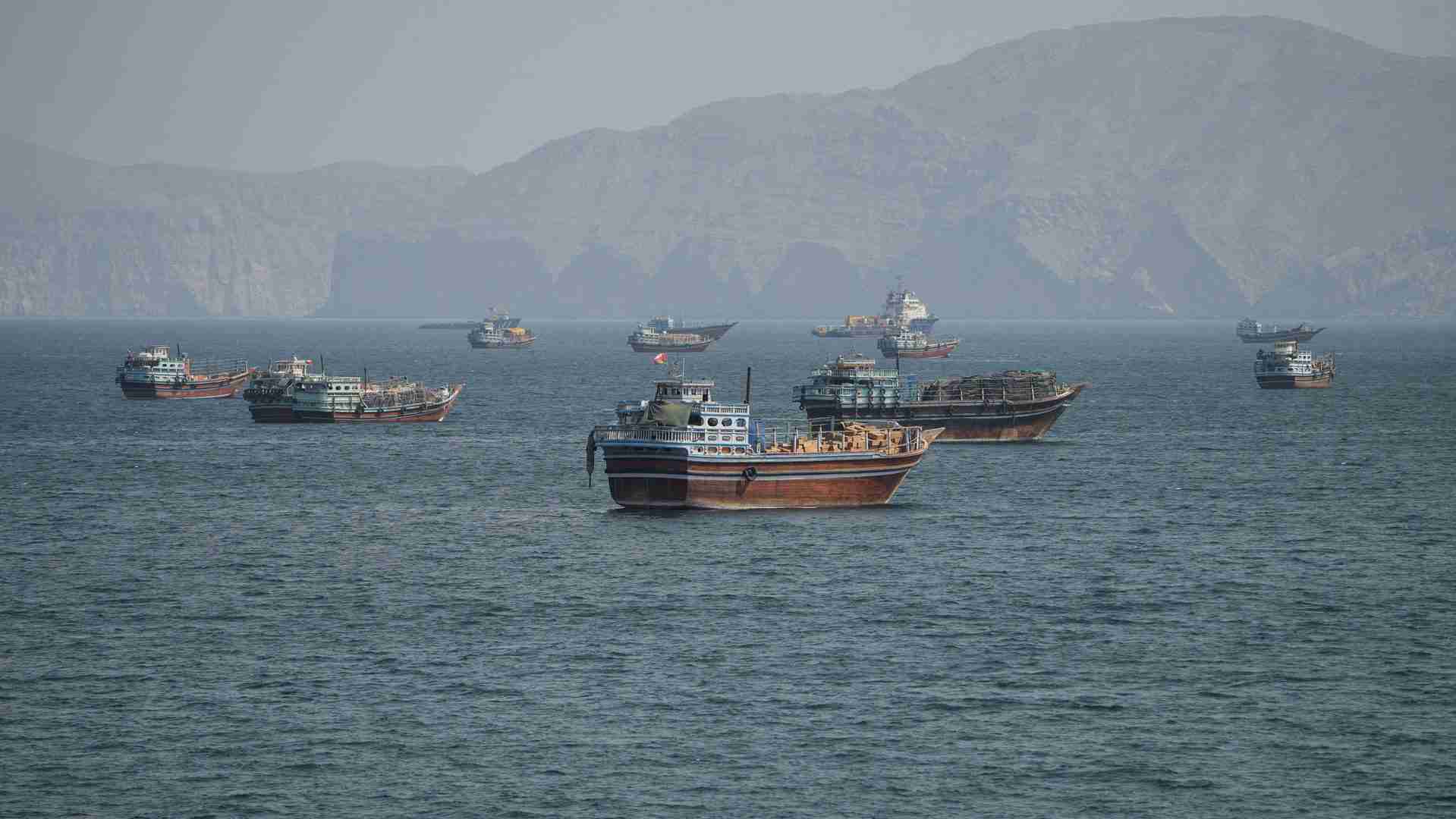
FILE PHOTO: Vessels at the Strait of Hormuz, as seen from Musandam, Oman, October 2, 2026. REUTERS/Stringer/File Photo
International News via Reuters:
Oil prices were little changed on Tuesday after recovering earlier losses, as the market weighed increases in Middle Eastern crude exports and a planned Group of Seven release of emergency diesel and crude stockpiles against supply concerns related to attacks by Yemen’s Iran-backed Houthis.
Brent futures rose 26 cents, or 0.3%, to settle at $100.58 a barrel, while US West Texas Intermediate (WTI) crude rose one cent to settle at $89.44.
Around 12 million barrels per day of crude oil and 2 million bpd of refined products — volumes needed to dampen price pressure — have left the Middle East on tankers in the last seven to 10 days, the CEO of commodity trading giant Vitol said on Tuesday.
Saudi Energy Minister Prince Abdulaziz bin Salman said on Tuesday that oil pumped through the East-West Pipeline, which runs to the kingdom’s Red Sea export hub of Yanbu, had reached 5.8 million barrels as of Tuesday morning.
Oil price declines, however, have been limited by the possibility of further Middle East supply disruptions.
Saudi Arabia’s airports in Jazan and Najran were targeted in two attacks on Monday evening, injuring three people and causing limited damage, the Saudi aviation authority said, as hostilities between the kingdom and Yemen’s Iran-backed Houthis escalated.
The attacks occurred as Saudi-backed Yemeni government forces pressed a major offensive to retake territory from the Houthis, after weeks of rebel advances, with Riyadh stepping up airstrikes in support of the campaign.
Separately, President Volodymyr Zelenskiy of Ukraine said on Tuesday that the latest intelligence suggested Russia was preparing a “massive attack.”
Russia was the world’s third-biggest crude oil producer behind the US and Saudi Arabia in 2025, according to US energy data. Sanctions designed to keep Russian energy out of global markets have helped support oil prices since Russia invaded Ukraine in 2022. A deal to end the Russia-Ukraine war could allow Russia to export more energy.
In the US, meanwhile, the National Hurricane Center said there was a 100% chance a cyclone could form over the next seven days in the Gulf of Mexico. A storm in the US Gulf could boost oil prices by shutting oil and natural gas production and damaging other energy infrastructure.
OIL STOCKS AROUND THE WORLD
The International Energy Agency will meet next week to work out the details of a diesel stock release as market confusion grows over how many barrels Europe and the US plan to make available to address shortages and record-high prices, sources said.
The surge in diesel prices has turned the fuel, which underpins trucking, agriculture and industry, into a global political and economic concern. The wars in Iran and Ukraine have curtailed exports and damaged refineries, helping drive the rise in prices.
Under pressure from US President Donald Trump, the Group of Seven major economies agreed on Friday to release 100 million barrels of diesel and crude oil from emergency reserves and pledged to refrain from imposing energy export restrictions.
With the war in Iran disrupting the flow of Middle East oil supplies, the US Energy Information Administration projected on Tuesday that world petroleum production would drop from a record 106.3 million bpd in 2025 to 101.1 million bpd in 2026, and world oil demand will drop from a record 104.4 million bpd in 2025 to 102.4 million bpd in 2026.
In 2027, however, EIA projected world oil supply and demand would rise back to record highs of 109.6 million bpd of production and 104.6 million bpd of consumption.
In the US, meanwhile, the oil market was watching for weekly storage reports from the American Petroleum Institute trade group on Tuesday and the EIA on Wednesday.
Analysts estimated energy firms added 1.7 million barrels of crude to US storage during the week ended October 2.
If correct, it would mark the first time since August that crude stocks increased for three weeks in a row and compare with an increase of 3.7 million barrels in the same week last year and an average increase of 1.7 million barrels over the past five years (2021 to 2025). [EIA/S] [API/S]
Reporting by Scott DiSavino in New York and Alex Lawler in London; Additional reporting by Sumit Saha in Bengaluru and Emily Chow in Singapore; Editing by Joe Bavier, Paul Simao, Susan Fenton and Cynthia Osterman
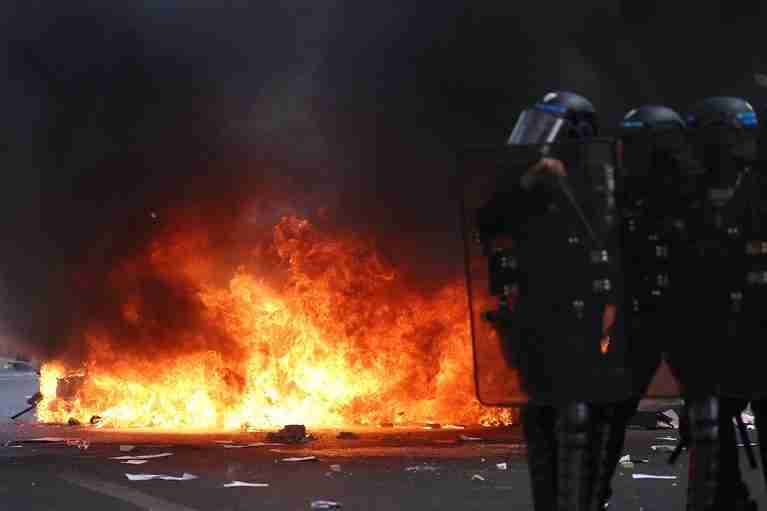
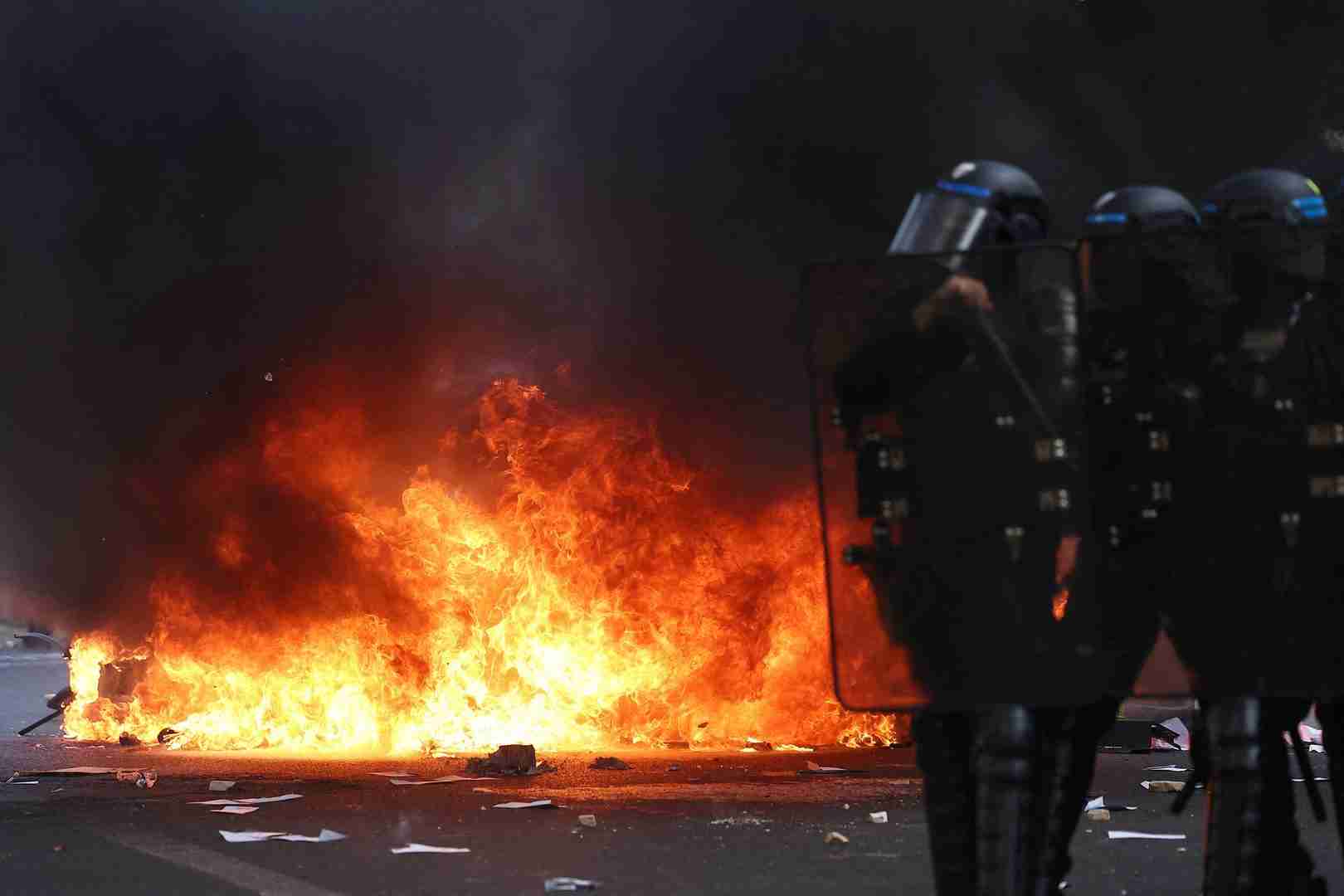
Police fired tear gas and water cannons to disperse violent groups on the fringes of marches in Paris, Strasbourg, Rennes and Toulouse, among other cities
French CRS riot police stand in position near garbage bins and object set on fire amid clashes with protesters during a demonstration by high school and university students, supported by teachers’ union and school parents, in Paris as part of a nationwide day of protests and blockades, voicing anger over overcrowded classrooms, teacher shortages and dilapidated school buildings, which students blame on years of underinvestment, France, October 6, 2026. REUTERS/Abdul Saboor
International News via Reuters:
Demonstrations swept across France on Tuesday as teachers and parents took to the streets with high school pupils on the biggest day of what Prime Minister Sebastien Lecornu described as the most violent student demonstrations in decades.
Police fired tear gas and water cannons to disperse violent groups on the fringes of marches in Paris, Strasbourg, Rennes and Toulouse, among other cities. The marches drew more than 250,000 people in dozens of cities, the interior ministry said, though organisers said 450,000 had participated.
The protests, in which a teenager lost a hand on Monday, were the latest manifestation of public anger in a country where support for populist parties on the far right and far left has surged ahead of a presidential election in the spring.
The government is under pressure to tame public debt amid weak growth, and has struggled with basic tasks such as passing a budget since President Emmanuel Macron’s allies lost their majority in a 2024 parliamentary vote.
Lecornu told lawmakers at least 215 teenagers and 85 school staff had so far been injured in clashes, “the heaviest toll in decades paid by the school system”. His office said more than 700 police officers were also hurt.
Macron has convened Lecornu and other senior ministers at an emergency meeting on Tuesday, broadcaster BFM reported.
US President Donald Trump said the protests were evidence of “out of control” migration in France. “This isn’t about schools, this is about Islam wanting to take over a once great Country,” he posted on Truth Social.
The students’ demands do not concern religion or immigration, but focus instead on understaffing and lack of funding. Marine Le Pen’s far-right National Rally party has not linked the protests to France’s migration policy. Lecornu’s office did not respond to a request for comment.
In Marseille and Nantes, protesters held up handmade signs bearing phrases such as “The state has killed national education”. In Toulouse, parents linked arms at the front of a march through the city.
Paris police said clashes in the capital resulted from some 300 people, most hooded or masked, facing off against security forces, and that the protest generally unfolded without major incident elsewhere. Several storefronts were damaged.
The Interior Ministry said 488 people had been arrested and 48 security personnel were injured on Tuesday.
MAINTENANCE COMPLAINTS
The student protests began in September in the deprived suburbs of Paris before spreading nationwide.
Students complain about schools facing basic maintenance problems, from water leaks to rat infestations.
“There is such a gap between the elites and us,” said Hugo Vetzel, a recent high-school graduate in Strasbourg.
The High School Students Union said more than half of France’s high schools were blockaded or had closed for the day. Some local education authorities have tried to move classes online.
Rights groups, students and parent groups have accused authorities of using disproportionate force against minors. The government says the protest movement has been hijacked by outsiders and in some places deteriorated into urban violence.
More than 1,800 people are being prosecuted for unspecified crimes, including 1,483 minors, the justice ministry said on Monday.
“They want to divide the young people into good and bad protesters,” said Omar Slaouti, a high-school teacher in Argenteuil, a northwestern suburb of Paris. “If there were no trash cans on fire, the government would not have stepped back and become aware of the issues at stake.”
PRIME MINISTER PROMISES A RESPONSE
Lecornu has ordered his ministers to tackle the students’ leading demands. Those include ensuring absent teachers are replaced, reviewing the length of the 8 a.m. to 6 p.m. school day and the need for longer lunch breaks.
The government will also look at repairs needed to ageing school buildings, said Lecornu, who demanded ministers send in their first proposals by the end of October.
Parent Emilie Lhomme said at a protest outside the Helene Boucher school in Paris that the government’s words were not enough: “That’s all fine and dandy, but that’s not what’s going to change the daily lives of our children,” she said.
Finding spare cash to implement educational reforms will be difficult.
The government is under pressure to try to narrow a ballooning budget deficit as investor concerns about France’s growing debt, weak growth and reluctance to rein in spending push the cost of borrowing higher. The yield on France’s 10-year bonds briefly hit a 24-year high of over 5% last week.
The surge in French borrowing costs has started to spill into the broader euro area, with the sliding euro currency the latest alarm bell for policy makers. Finance Minister Roland Lescure said on Tuesday there was no need for the European Central Bank to step in.
Le Pen, the far-right euro-sceptic populist leading the presidential race ahead of next spring’s election, set out plans to slash public spending if elected, seeking to establish her fiscal credibility as the bond market crisis deepens.
French spending on education has lagged inflation and the country’s students are trailing their OECD peers in overall performance, data from the PISA 2025 assessment shows.
Reporting by Tilman Blasshofer in Strasbourg, Cecile Mantovani in Lyon, Lucien Libert, Juliette Jabkhiro, Elizabeth Pineau and Dominique Vidalon in Paris, Layli Foroudi in Argenteuil, Inti Landauro and Sudip Kar-Gupta in Brussels, and Dimitri Rhodes in Gdansk; Writing by Richard Lough and Makini Brice; Editing by Andrew Heavens, Peter Graff, Aidan Lewis
To provide the best experiences, we use technologies like cookies to store and/or access device information. Consenting to these technologies will allow us to process data such as browsing behavior or unique IDs on this site. Not consenting or withdrawing consent, may adversely affect certain features and functions.
Functional
Always active
The technical storage or access is strictly necessary for the legitimate purpose of enabling the use of a specific service explicitly requested by the subscriber or user, or for the sole purpose of carrying out the transmission of a communication over an electronic communications network.
Preferences
The technical storage or access is necessary for the legitimate purpose of storing preferences that are not requested by the subscriber or user.
Statistics
The technical storage or access that is used exclusively for statistical purposes.The technical storage or access that is used exclusively for anonymous statistical purposes. Without a subpoena, voluntary compliance on the part of your Internet Service Provider, or additional records from a third party, information stored or retrieved for this purpose alone cannot usually be used to identify you.
Marketing
The technical storage or access is required to create user profiles to send advertising, or to track the user on a website or across several websites for similar marketing purposes.