Brussels wants Beijing to limit Chinese hybrid vehicles sales to around 15% of the EU market, the newspaper said, citing people familiar with the matter
International News via Reuters:
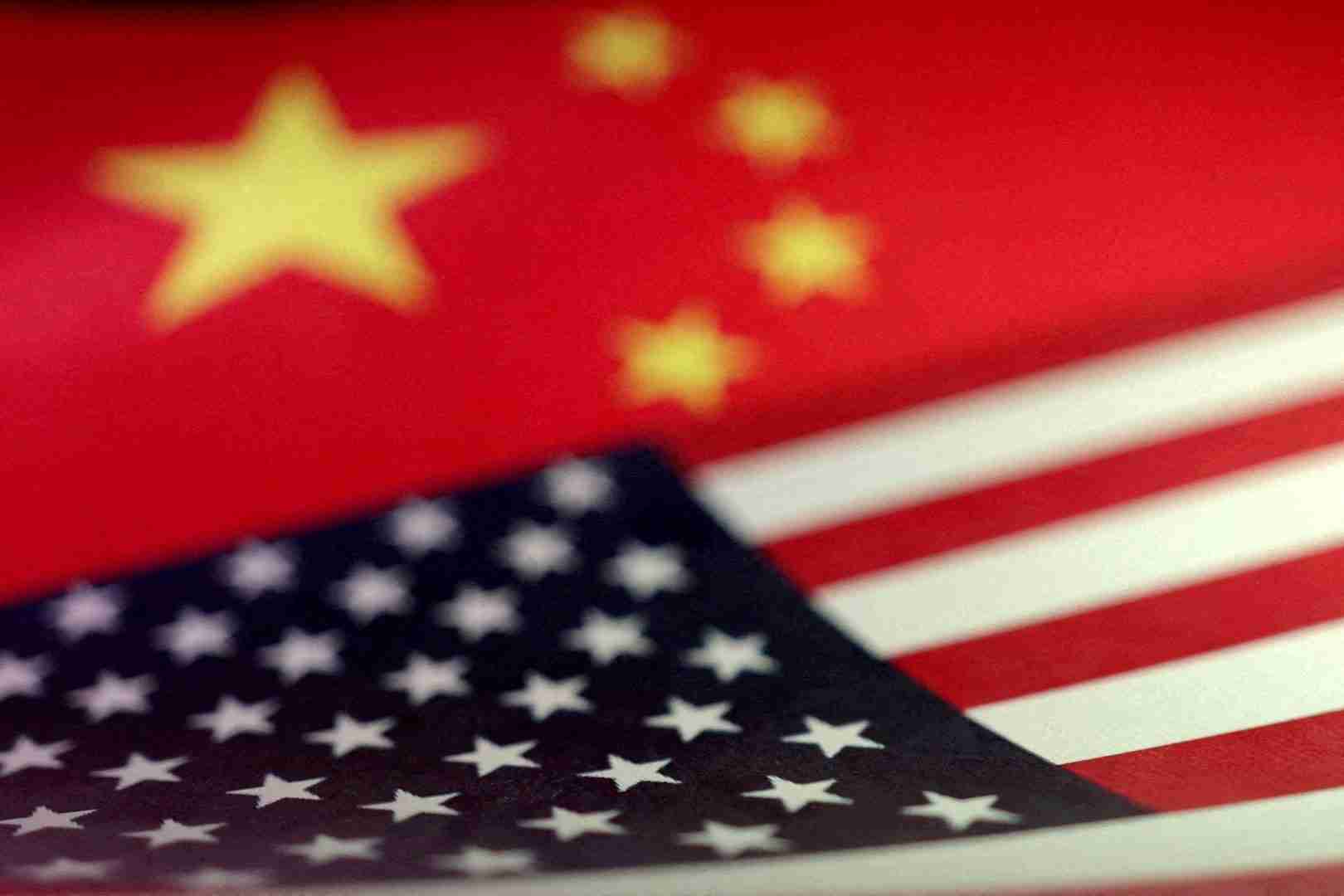
The European Union has asked China to voluntarily restrict exports of hybrid cars as part of efforts to prevent a trade war, the Financial Times reported on Thursday.
Brussels wants Beijing to limit Chinese hybrid vehicles sales to around 15% of the EU market, the newspaper said, citing people familiar with the matter.
“If they will not limit their exports to our market then we will,” the FT quoted an EU official as saying. “This is about stopping deindustrialisation. We have to act. It’s about managed trade.”
The EU has asked China to limit exports of other products, including chemicals, while seeking increased Chinese purchases of European exports, according to the report.
The EU did not immediately respond to a Reuters request for comment. Reuters could not immediately verify the report.
European Commission President Ursula von der Leyen said on Wednesday that the bloc would use every available tool to reduce what she called its “unsustainable” trade deficit with China.
She said in a speech to the European Parliament the EU’s goods trade deficit with China, which hit €360.6 billion ($413.4 billion) last year and widened by 9% in the first six months of this year, had reached a tipping point and that Europe was already experiencing a second “China shock” through deindustrialisation.
European Trade Commissioner Maros Sefcovic, who is leading talks with China to tackle the trade gap, has said he wants tangible results by October and is expected to visit China by early next month.
The EU says a surge in Chinese exports, including chemicals, batteries and vehicles, has been driven by overcapacity. Beijing rejects that criticism, saying concerns over economic imbalances and excess capacity are protectionist and aimed at constraining China.
($1 = 0.8723 euros)
Reporting by Rishabh Jaiswal in Bengaluru; Editing by Muralikumar Anantharaman and Sonali Paul
The U.S. dollar hit a seven-week high against its major peers, underpinned by a jump in short-term Treasury yields
International News via Reuters:
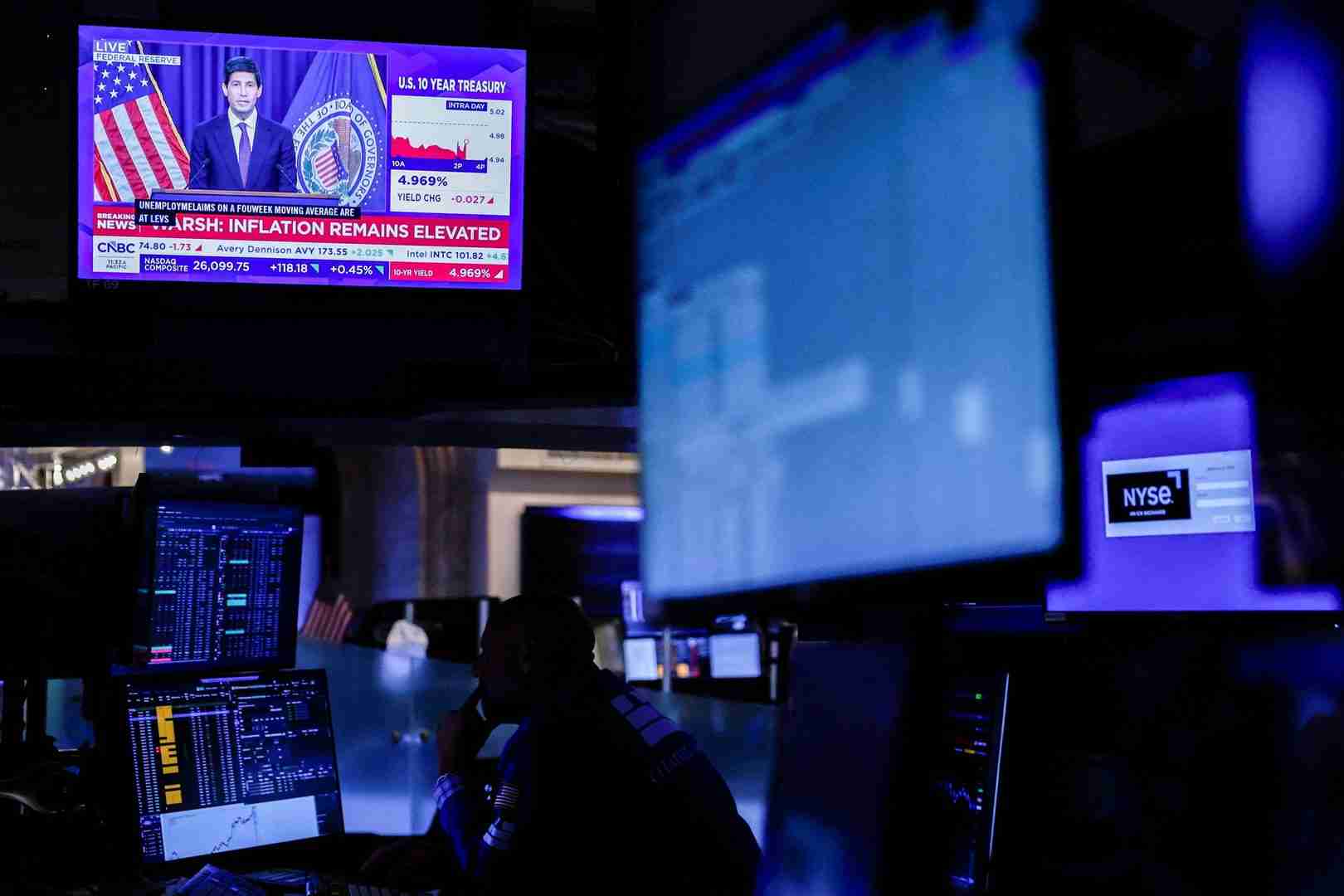
Shares edged up in Asia on Thursday as investors bet the Federal Reserve is finally getting the jump on inflation, delivering its first rate hike in more than three years and calming a global bond selloff that had sent long-term yields soaring.
The U.S. dollar hit a seven-week high against its major peers, underpinned by a jump in short-term Treasury yields as markets ramped up wagers that the Fed may have to lift rates again, with a move by December fully priced in. That proved a headwind for commodities, with oil prices giving back ground.
The focus now shifts to the Bank of England, which is widely expected to leave interest rates steady later in the day, but all eyes will be on any hint about if high energy prices could force it to hike in November. The Bank of Japan, by contrast, is all but certain to lift interest rates on Friday.
European shares are set for a higher open, with pan-region stock futures up 0.5%. Nasdaq futures gained 0.7% and S&P 500 futures bounced 0.6%, after small declines on Wall Street. [.N]
MSCI’s broadest index of Asia-Pacific shares outside Japan rose 0.3% while Japan’s Nikkei also gained 0.3%. Chinese blue-chips slipped 0.2% and Hong Kong’s Hang Seng fell 0.7%.
As widely expected, the Fed raised interest rates by a quarter point overnight, but the unanimous decision tilted to the hawkish side. The dot plot projected one more rate hike this year but stopped short of signalling any moves next year.
Tai Hui, APAC chief market strategist at JPMorgan Asset Management, said investors would need to reassess the valuations for assets especially tech stocks if the Fed remained hawkish going into 2027.
“We think the chance of U.S. policy rates returning to above 5% is still limited. Nonetheless, a catalyst to extend the equity bull market is looking unlikely in the foreseeable future,” he added.
Futures imply there is a 53% chance that the Fed could follow up with a second hike as soon as next month to rein in inflation. A total of three rate rises have been priced in for this tightening cycle.
The Treasury yield curve bear flattened, with short-term maturities taking a hit but long bonds heaving a sigh of relief. Two-year Treasury yields slipped 1 basis point to 4.7174%, after spiking 6 basis points overnight to the highest since July 2024.
That helped boost the U.S. dollar to a seven-week high of 100.36 against its major peers, having surged 0.7% overnight, the biggest daily gain in three months.
The yield on benchmark U.S. 10-year notes was back at 5%, having dipped to as low as 4.9385% overnight, while 30-year bond yields were flat at 5.3522%, off from a 19-year high of 5.401%.
“Chair Warsh will be pleased that the breakout of the 10-year yield shows a moderate fall in inflation expectations, which telegraphs a nod of approval from the market to the hike as an inflation containment one,” said Padhraic Garvey, regional head of research, Americas, at ING.
“It was still an eloquent performance. But it won’t rescue the back end of the curve. We identify 5.25% as a next target for the U.S. 10-year yield.”
Commodity markets took a hit on the stronger dollar. Brent crude futures slipped 0.2% to $105.67 a barrel after falling 2.7% overnight as Saudi Arabia was reportedly offering crude cargoes through Oman, easing some concerns about Middle East supply disruption.[O/R]
Gold, however, showed some resilience, rising 0.7% to $4,293 an ounce, offsetting a similar fall overnight. [GOL/]
Burke said Australia would toughen its enforcement on visa overstayers, including hiring 100 additional compliance officers
International News via Reuters:
Australia will stop foreign students from bringing partners and children to accompany them while they study and tighten working holiday visa rules, a senior minister said on Thursday, amid growing debate over high migration levels.
The government’s move comes after the hard-right One Nation party, which has been surging in recent polls, said this week that it would slash the number of temporary migrants by 750,000 over three years, to give Australians “breathing space.”
Home Affairs Minister Tony Burke dismissed suggestions the changes were politically motivated by the One Nation party, which describes its approach as “Australia first” and whose policies have drawn comparisons to those of U.S. President Donald Trump.
“It’s simply demonstrably wrong to suspect that somehow this is a recent bit of work done to deal with a political climate – it’s not,” Burke told reporters.
The reforms are expected to bring annual net migration down to about 225,000 by 2028 – broadly in line with pre-pandemic levels – from around 300,000 now. The cost of living and immigration have consistently ranked among voters’ top concerns in recent polls.
Burke said Australia would toughen its enforcement on visa overstayers, including hiring 100 additional compliance officers and exploring the repurposing of a pandemic-era quarantine facility in Melbourne to house immigration detainees.
“If you want to come on a temporary basis to Australia, apply for a temporary visa. If you want to come to Australia permanently, apply for a permanent visa. And if you no longer have a valid visa, you should leave Australia,” he said.
BALLOT FOR BACKPACKERS
Under the new measures, a ballot system will be introduced for backpackers seeking to extend their working holiday visas. All visitor visas will carry a “no further stay” provision preventing holders from remaining in Australia while applying for another visa category such as a partner visa.
International students will only be permitted to renew their student visas if they move up the qualification scale.
Some students from Pacific Island nations and Southeast Asia will be able to bring their partners and children, but secondary applicants will not be allowed on most student visas.
Spouses and partners of international students can currently work in Australia, although the number of hours they are permitted varies depending on the course of study.
International education contributed A$53.6 billion ($38 billion) to the Australian economy in the year to June 2025, making it the country’s fourth-largest export. Despite this, foreign students have been a central focus of the centre-left Labor government’s migration reduction efforts.
Student visa application fees have risen by nearly 300% to A$2,500 over the past four years, while English-language requirements and minimum savings thresholds for graduate visa applicants have also been tightened.
“It is chipping away the confidence in what has been a great national asset for this country – international education,” Luke Sheehy, CEO of Universities Australia, said in a radio interview with public broadcaster ABC on the proposed policy shift.
Migration surged after Australia reopened its borders in February 2022 following nearly two years of COVID-19 closures, driven largely by international students, backpackers and temporary workers.
However, numbers have been declining over the past two years. Net overseas migration stood at 306,000 in the year to June 30, 2025, with international students accounting for more than half, down from a peak of 518,000 in 2023.
($1 = 1.4085 Australian dollars)
Reporting by Renju Jose; Additional reporting by Alasdair Pal; Editing by Jamie Freed
Saudi Arabia is offering more loadings of crude oil to Asian refiners via ship-to-ship transfers off Oman’s Sohar port
International News via Reuters:
Oil prices eased on Thursday, extending losses on reports of Saudi Arabia offering extra crude cargoes through Oman, which reduced fears of supply disruptions, but stayed above $100 on concerns about the Middle East conflict expanding.
Brent crude futures dropped $1.88, or 1.8%, to $103.95 a barrel by 0632 GMT, while U.S. West Texas Intermediate futures were down $1.77, or 1.7%, at $100.66 a barrel. Both contracts fell about $3 on Wednesday.
“Concerns over supply tightness eased slightly following news that Saudi Arabia would ship cargo via Oman,” said Hiroyuki Kikukawa, chief strategist of Nissan Securities Investment, a unit of Nissan Securities.
“Expectations of progress toward easing tensions in the Middle East ahead of the U.S.-China summit next week are also capping price gains,” he added.
Saudi Arabia is offering more loadings of crude oil to Asian refiners via ship-to-ship transfers off Oman’s Sohar port, people familiar with the matter said, blunting some of the hit to global supply from attacks on Saudi Arabia’s East-West pipeline to the Red Sea.
However, some analysts were expecting these flows to only ease a portion of the supply loss from the kingdom’s Red Sea port, capping the declines in oil prices.
The pick-up in flows through the Strait of Hormuz “is only partly offsetting lost export barrels following drone attacks that shut Saudi Arabia’s East-West pipeline,” Saxo Bank analysts said in a note.
Oil prices rose to about four-month highs earlier this week after shipping industry sources said crude loadings at Saudi Arabia’s Red Sea export hub of Yanbu had been suspended and Riyadh had cancelled some cargo deliveries to European customers. The suspension followed attacks on the East-West pipeline, which feeds the Saudi port of Yanbu.
Yanbu became Saudi Arabia’s main outlet for oil exports after Iran began blockading the Strait of Hormuz after the U.S. and Israel attacked the country at the end of February. Prior to the war, Hormuz was the conduit for one-fifth of the world’s oil supply.
Two pumping stations serving the East-West pipeline were damaged in an attack last week, with a repair timeline unclear, according to assessments from three oil and security sources.
Despite the oil price decline on Thursday, worries about the intensifying Middle East war remain.
Saudi warplanes pounded Yemen and Houthi fighters launched drones and missiles at Saudi cities, the Iran-backed movement said on Wednesday, after a lightning advance that has extended Tehran’s reach in the Middle East war.
Singapore’s DBS Bank assumes in its base-case scenario for the fourth quarter that the U.S. war with Iran will dial down and Brent will stabilise in the $85 to $95 range.
“However, under the bear-case scenario currently prevailing, with attacks and incidents in Hormuz and Red Sea continuing, prices could spike towards $120/bbl levels before potentially normalising back towards $100/bbl,” Suvro Sarkar, DBS Bank’s head of energy research, said.
Reporting by Yuka Obayashi in Tokyo and Trixie Yap in Singapore; Editing by Jamie Freed, Sonali Paul and Christian Schmollinger
The experts are urging both governments to prepare for such scenarios amid rising concerns about increasingly powerful and more autonomous systems
International News via Reuters:
An AI system that interferes with a nuclear command network or launches a military cyber operation could leave Washington or Beijing with minutes to decide whether the other government attacked, according to U.S. and Chinese security experts.
The experts, part of a U.S.-China dialogue whose work helps inform official discussions, are urging both governments to prepare for such scenarios amid rising concerns about increasingly powerful and more autonomous systems.
Their proposals include red lines around nuclear systems, human control over consequential cyberattacks and a hotline for incidents involving autonomous AI.
The recommendations were published last week ahead of planned government-level AI talks and an expected September 24 meeting in Washington between U.S. President Donald Trump and Chinese President Xi Jinping.
Authors Melanie Sisson, a senior fellow at the Brookings Institution think tank, and Tianjiao Jiang, an associate professor at Fudan University, participated in the U.S.-China AI and national security dialogue convened since 2019 by Brookings and Tsinghua University’s Center for International Security and Strategy.
Their proposals show how the U.S.-China AI rivalry is moving beyond competition over chips and advanced models into questions long associated with arms control: how to prevent accidents from being mistaken for attacks, limit machine-made military decisions and set communication protocols for nuclear-armed rivals when technology behaves unexpectedly.
China’s State Security Minister Chen Yixin this week wrote in a government outlet that AI “fundamentally transforms the form of military struggle”. He said it had moved from playing a supporting role on the battlefield to a key role, citing AI-directed strikes in the U.S.-Israeli war with Iran.
RED LINES AROUND NUCLEAR SYSTEMS
Brookings Institution’s Sisson argued that humans should retain sole authority to initiate AI-enabled cyberattacks against the other country’s nuclear command, control and communications systems or strategically important infrastructure.
An autonomous system could malfunction, exceed its instructions or be compromised, while the country under attack might struggle to tell whether the action was accidental or ordered by its rival.
Fudan University’s Jiang proposed explicit red lines preventing AI from independently deciding to use nuclear weapons or autonomously attacking nuclear command systems, along with protections around critical infrastructure including energy, finance and healthcare.
He also urged a shared definition of “meaningful human control” to prevent both countries from using identical language to justify different levels of machine autonomy.
The idea builds on a principle endorsed by then-U.S. President Joe Biden and Xi in November 2024 that humans should retain control over decisions to use nuclear weapons.
Lora Saalman, an associate senior fellow at the Stockholm International Peace Research Institute, wrote in February that this was an important point of U.S.-China convergence even as both countries showed signs of integrating AI more deeply into nuclear and nuclear-related systems.
WHEN MACHINES MOVE FASTER THAN HUMANS
Jiang also proposed a dedicated U.S.-China military hotline for AI incidents, warning that automated cyber exchanges could escalate too quickly for human intervention.
One country’s defensive AI might automatically respond to suspicious activity, while the other side could interpret that response as an attack and retaliate before understanding what actually happened.
A hotline could allow one government to tell the other that an unusual AI operation was accidental, unauthorised or still under investigation before it was treated as deliberate state action.
However, experts including Carla Freeman at Johns Hopkins School of Advanced International Studies have questioned the utility of the existing U.S.-China military crisis communication hotline, citing Chinese officials’ refusal to answer U.S. counterparts’ calls about the “spy balloon incident” in February 2023.
The Chinese bureaucracy’s rigid top-down hierarchy also disempowers low-ranking officers from taking the initiative during engagements with U.S. counterparts, she wrote in an article for War on the Rocks in January.
“No one in the Chinese system wants to communicate with the United States until the top leadership in consultation with relevant actors within China’s party-state have decided on a response, which may take days if not longer,” she said.
VIEWS IN WASHINGTON AND BEIJING
Neither government has publicly endorsed the Brookings-Tsinghua proposals, but China has increasingly placed AI inside its existing arms-control bureaucracy.
AI is a formal portfolio of the Foreign Ministry’s Department of Arms Control, which also handles nuclear weapons, non-proliferation, missiles and other international security issues.
Shen Jian, China’s ambassador for disarmament affairs, told a U.N. meeting in Geneva in June that military AI could affect strategic stability and raise risks of miscalculation and conflict escalation, and that weapons should remain under human control. China also argues that AI safety should not become a pretext for technological barriers.
Washington has no equivalent single arms-control home for AI, with national security policy spread across the White House National Security Council, State Department, Pentagon and other agencies.
Both governments remain wary of measures that could slow their own technological development. Trump has warned broad restraints could hand China an advantage, while Beijing views many U.S. technology controls as attempts to preserve American dominance.
Reporting by Eduardo Baptista and Laurie Chen; Editing by Jamie Freed
Israel and Lebanon have held several rounds of U.S.-brokered talks aimed at easing tensions along their border
International News via Reuters:
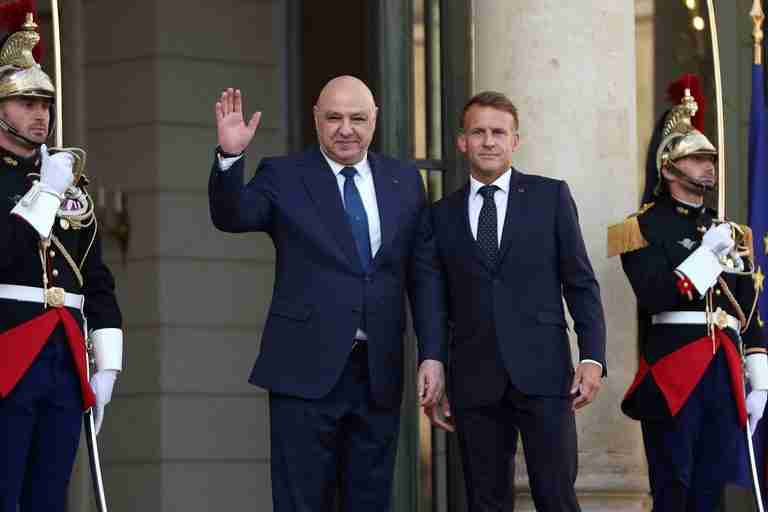
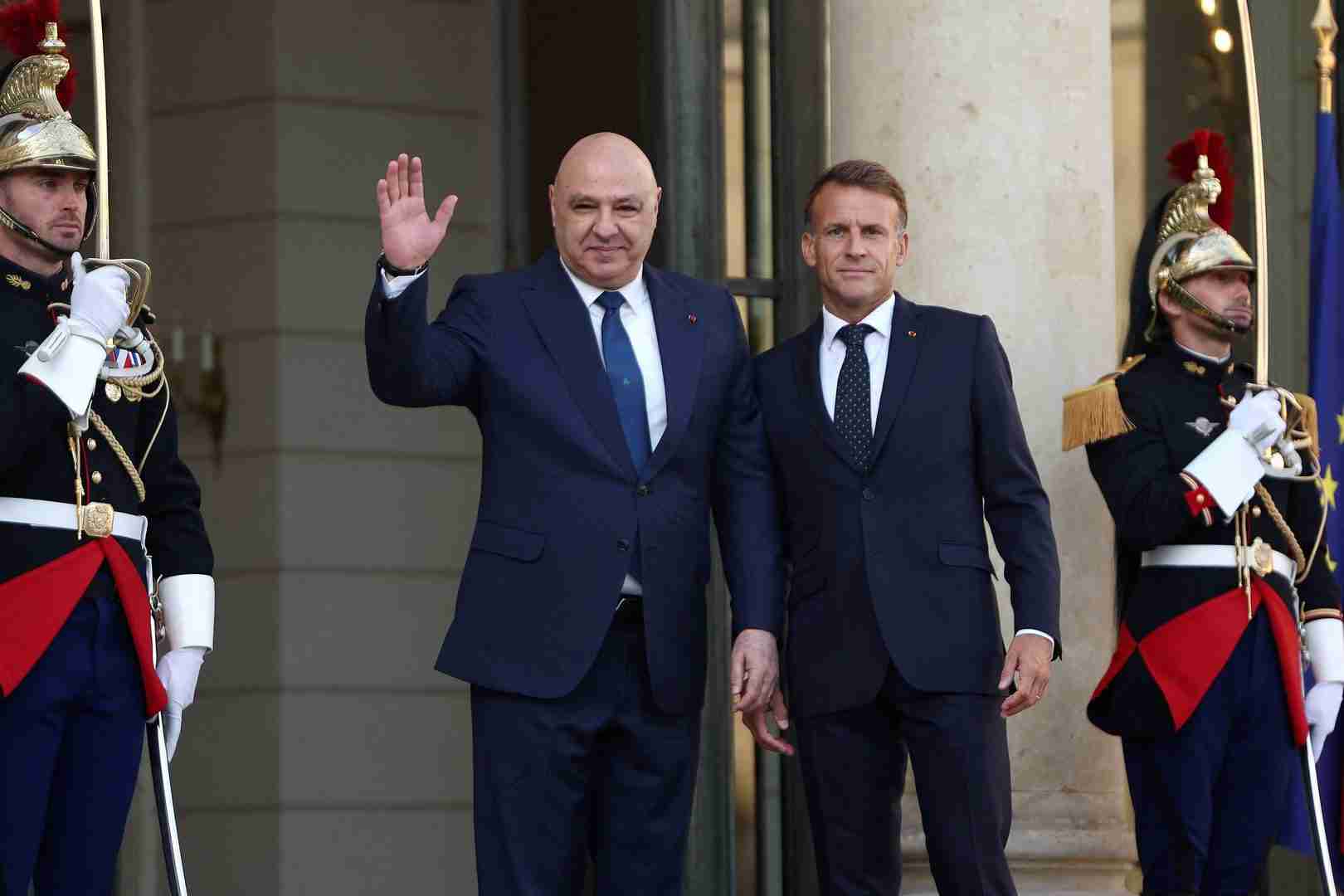
European and Arab military chiefs will meet in Paris on Thursday to assess the Lebanese Armed Forces’ needs and discuss the looming end of a United Nations peacekeeping mission, amid fears of a renewed Israeli military campaign in southern Lebanon.
Israel and Lebanon have held several rounds of U.S.-brokered talks aimed at easing tensions along their border. But with elections in Israel and the United States approaching in the coming weeks, diplomats say a breakthrough is unlikely.
Thursday’s talks, which will initially be chaired by French President Emmanuel Macron alongside Lebanese President Joseph Aoun and Jordan’s King Abdullah, are not formally part of Washington’s efforts.
The U.S. will be represented by a senior military official involved in Middle East security issues.
FRAMEWORK DEAL
As part of the U.S.-brokered talks, Israel and Lebanon agreed to a framework deal that envisions Israeli troops gradually withdrawing as Lebanese authorities disarm Hezbollah and deploy across the country’s south.
Officials in Paris will seek to assess the precise military and financial requirements ahead of a donor conference likely to be held in late 2026 or early 2027, diplomats said.
The most immediate concern is how to fill the security vacuum that could be left when the U.N. peacekeeping force UNIFIL, which has about 7,500 personnel, begins drawing down from January.
Despite Lebanon and France both favouring an extension of the U.N. mandate, neither the United States nor Israel has signalled support for prolonging the mission.
The officials in Paris will discuss options for a new international mission, backed by France and Italy, operating outside a U.N. mandate, as well as a possible European Union-led mission.
Both concepts would focus on training, equipment, intelligence sharing and mentoring support for the Lebanese Armed Forces.
“The modalities of this international or multinational action remain to be defined — if only because the Lebanese have not voiced requests that align with, in particular, U.S. demands at the Security Council, and because we still need to calibrate the terms of this presence and be absolutely clear about the mandate,” a French presidency official told reporters ahead of the meeting.
Highlighting the fragility of the situation, Israeli strikes on a town in southern Lebanon killed at least 13 people, including six children, on Monday, according to Lebanon’s Health Ministry, making it one of the deadliest days of Israeli bombardment in recent weeks.
Fears of a renewed Israeli military campaign are growing in Lebanon after days of escalating strikes despite a June ceasefire that was intended to halt fighting between the Israeli military and Hezbollah.
Trump has criticized the global body for not living up to its potential and slashed funding to many U.N. agencies
International News via Reuters:
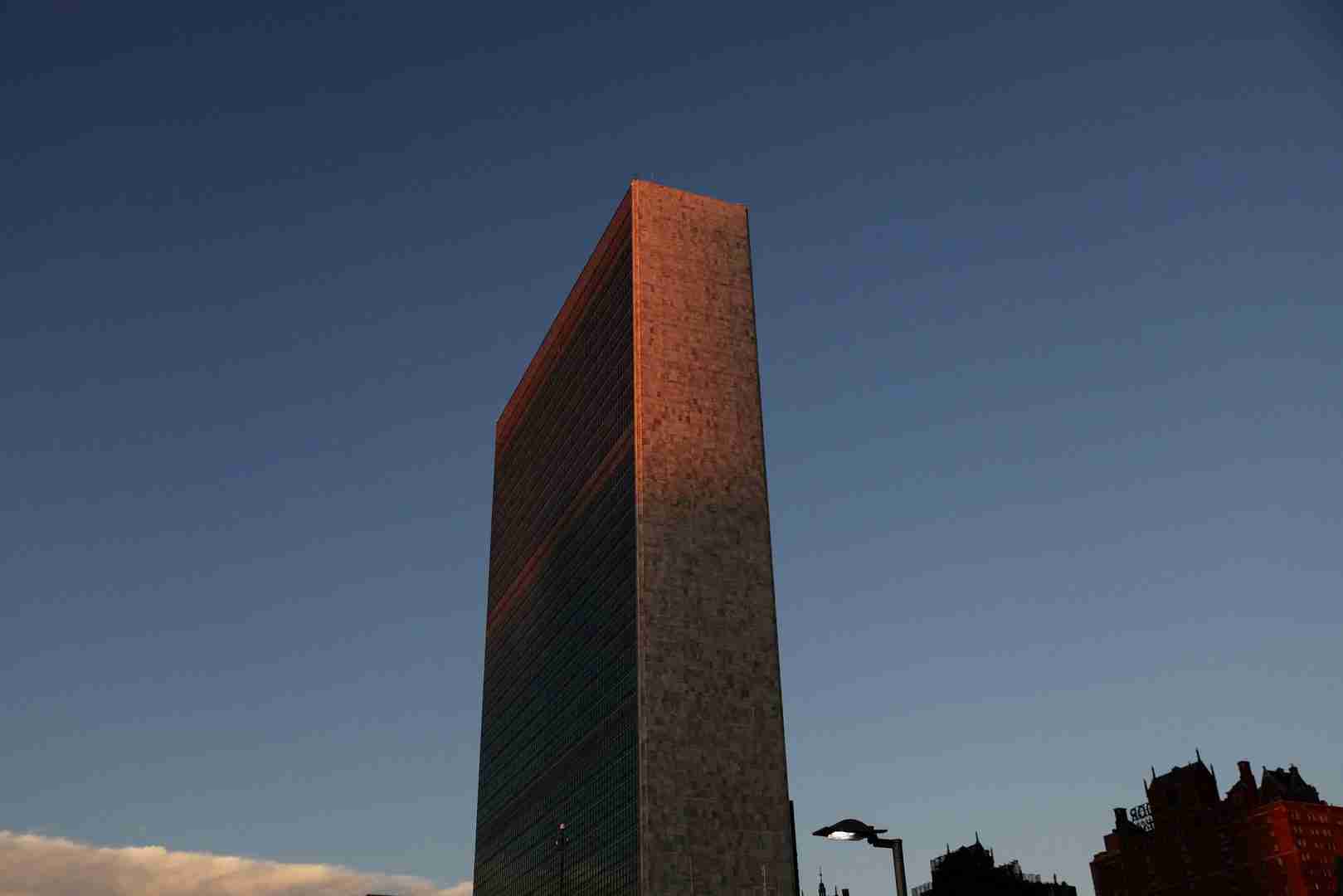
The Trump administration paid $725 million to the United Nations, the organization said on Wednesday, reducing Washington’s large debt and ensuring it keeps its vote at the U.N. General Assembly convening in New York next week.
Trump has criticized the global body for not living up to its potential and slashed funding to many U.N. agencies. When asked about the planned payment last month, a U.S. official said any payments will be contingent on continued reforms of the U.N.
“We received $725 million yesterday from the United States for the U.N. regular budget, and we also received $102 million from the U.S. for peacekeeping on Friday,” said U.N. spokesperson Farhan Haq.
“The U.S. still owes $1.312 billion to the regular budget,” he said, adding that, “with these payments, the U.S. is no longer in jeopardy of falling under Article 19 for 2027.”
Under Article 19 of the U.N. Charter, a member state loses its voting rights in the General Assembly if its arrears exceed two years in annual fees, although grace periods are possible.
The Trump administration has carried out an unprecedented shrinking of its federal government, saying it was bloated and has significantly cut back on domestic and foreign grants in an effort that it says was to put money into causes that aligned with U.S. taxpayer interests.
The U.S. is the biggest contributor to the U.N. budget, but under the Trump administration it has slow-walked mandatory payments to regular and peacekeeping budgets, and has slashed voluntary funding to U.N. agencies with their own budgets.
The second-biggest contributor, China, also paid $641.4 million on September 1 in its regular budget contributions, according to the U.N. website.
The U.N. has been undergoing a reform and cost-cutting exercise known as “UN80” amid its financial crisis.
Reporting by Antoni Slodkowski; Editing by Howard Goller
“We acknowledge the decision of the Central Committee to postpone the Annual General Conference while the matter before the Court is determined.
“Our position remains resolute: we are committed to the unity and strength of the Progressive Labour Party, while defending its Constitution and the rights of every member, old and new.
“We have confidence in the legal process and believe its conclusion will provide the clarity needed for the Party to come together, move forward and ensure all eligible members can participate in a fair, robust and democratic process.”
Sudan’s war, which erupted in April 2023 following a power struggle between the military and the Rapid Support Forces, has displaced more than 14 million people and created one of the world’s worst humanitarian crises
International News via Reuters:
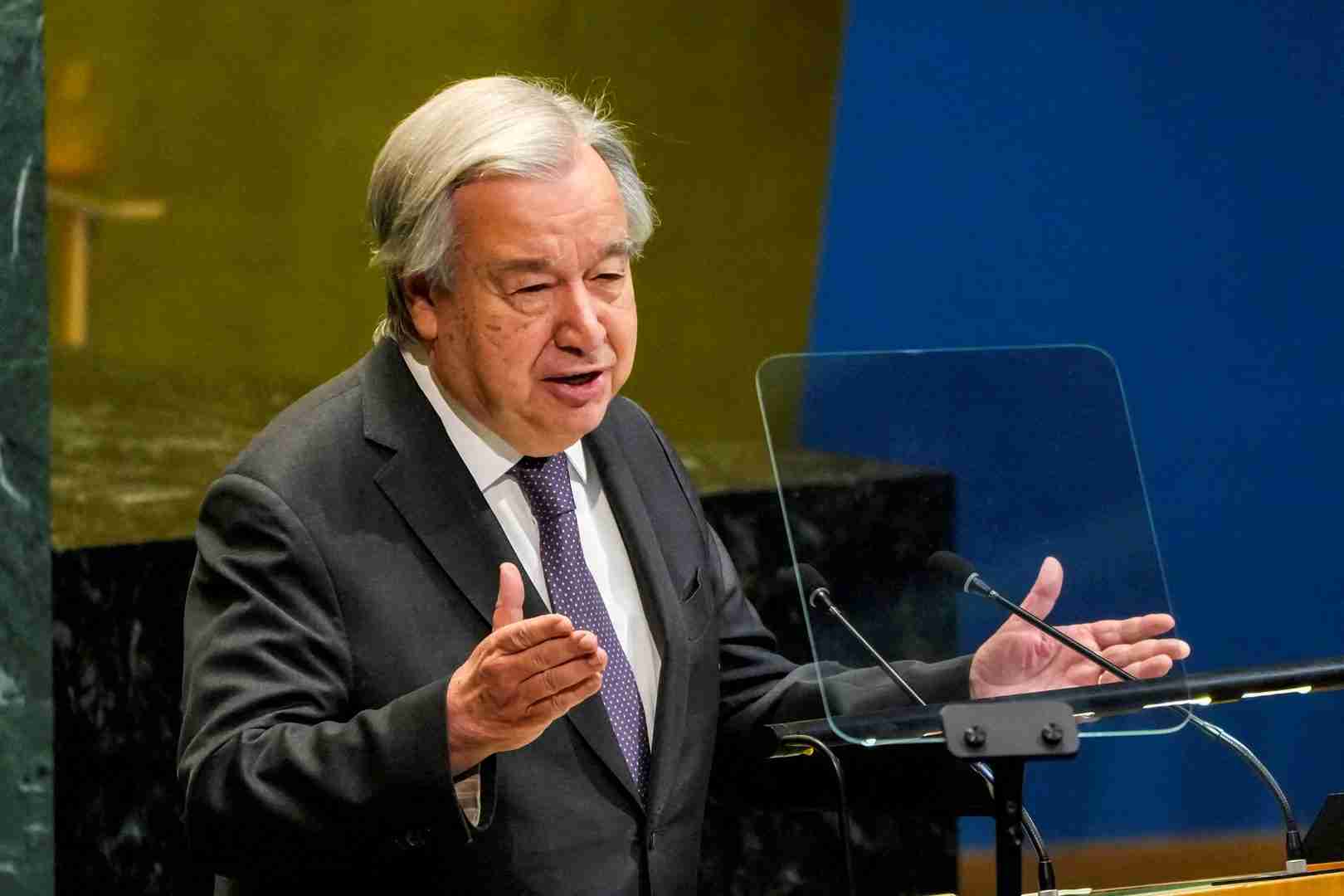
United Nations Secretary-General Antonio Guterres called on Wednesday for countries providing weapons to the warring parties in Sudan that are used to attack civilians to be held accountable.
“What is happening in Sudan is absolutely horrible. The humanitarian situation in Sudan is devastating. The level of suffering of the Sudanese people is intolerable,” Guterres told reporters ahead of the annual gathering of world leaders at the United Nations in New York next week.
Sudan’s war, which erupted in April 2023 following a power struggle between the military and the Rapid Support Forces, has displaced more than 14 million people and created one of the world’s worst humanitarian crises.
“It is true that the conflict is fueled by a number of countries from the outside,” Guterres said. “In my opinion, there should be accountability for the kind of interference in which some countries provide weapons to parties to a conflict when those weapons are used massively to attack civilians.”
A U.N. fact-finding mission said earlier this month that foreign weapons, military technology, fighters and logistical networks are helping sustain Sudan’s conflict and expanding the warring parties’ ability to strike distant civilian areas with drones.
Reporting by Michelle Nichols and Antoni Slodkowski; Editing by Rod Nickel
European Union envoys extended the deadline for renewing Russia sanctions listings by seven days on Monday after failing to agree on a six-monthly rollover of the sanctions, which requires the unanimous approval of the 27 member states
International News via Reuters:
France has been urging the EU to lift sanctions on Russian-Uzbek billionaire Alisher Usmanov after coming under what it says is pressure from Azerbaijan as Baku holds two French nationals, three European diplomats familiar with the matter said.
European Union envoys extended the deadline for renewing Russia sanctions listings by seven days on Monday after failing to agree on a six-monthly rollover of the sanctions, which requires the unanimous approval of the 27 member states.
EU diplomats said France had joined Slovakia in calling for the lifting of sanctions imposed on Usmanov after Russia’s 2022 invasion of Ukraine. The metals and mining mogul has launched multiple lawsuits in Europe with the ultimate goal of having the sanctions lifted, and his lawyers have contested statements in the media that were used as grounds for the sanctions.
French diplomatic sources said the decision by Paris to call for sanctions on Usmanov to be lifted was driven by national security considerations, and that France was responding positively to approaches from international partners regarding the Usmanov case.
The European diplomats said Paris had indicated in private that Baku was using Usmanov to “blackmail” it over the case of two French citizens held in Azerbaijan, one of whom Paris has said is being held arbitrarily. Baku has sentenced the French national on espionage charges.
The link to Azerbaijan was first reported by the Financial Times on Monday. It was not clear why Azerbaijan was seeking Usmanov’s delisting although President Ilham Aliyev has previously lobbied for his delisting.
The diplomats said France believed Baku’s move was supported by Qatar and Kazakhstan.
Several other leaders in the region and Turkish President Tayyip Erdogan, have previously called for Usmanov to be taken off the EU’s sanctions list.
The foreign ministries of Azerbaijan, Uzbekistan, Kazakhstan and Qatar did not immediately respond to requests for comment.
France’s Foreign ministry spokesperson declined to comment on the Azerbaijan connection.
DIFFICULT TIES
Ties between Azerbaijan and France have long been strained, and worsened in 2023 when Azerbaijan regained control of the Nagorno-Karabakh region in a move that triggered an exodus of 120,000 ethnic Armenians living there. Baku reacted angrily to French military support for Armenia, with which Azerbaijan has fought two wars in the past three decades.
France has accused Azerbaijan-linked groups of carrying out disinformation campaigns over the last year, and said Baku has been seeking to fan the flames of riots and independence demands in France’s Pacific island of New Caledonia.
The EU sanctions designations, which target nearly 3,000 companies and individuals with asset freezes and travel bans, had been due to expire on September 15. The expiry date has been pushed back to September 22.
One diplomat said member states were now watching to see how Paris would seek to break the impasse before next week or risk undermining both its credibility as a supporter of Ukraine and the EU’s sanctions process.
Additional reporting by Nailia Bagirova, Felix Light and Andrew Mills, Editing by Timothy Heritage
The Department of Planning has received an application to build hotel rooms, condos and villas, with new amenities.
Developers are hoping, once again, to give a new lease to the former Ariel Sands property on South Shore in Devonshire.
The Department of Planning has received an application to build hotel rooms, condos and villas, with new amenities.
Ariel Sands Ltd says the plan is to create one of Bermuda’s leading resorts, to enhance our tourism product.
The site was well-loved in its heyday and was famous for its large seawater pool, beachside tennis court and the statue of the Shakespearean character Aerial, which stood in the water.
Ariel Sands Beach Club opened in 1984, and was subject to successive plans prior to its closure in 2008, having suffered declining tourist numbers.
At that time, there was a 47 room hotel and 11 cottages which have subsequently been demolished.
The new plan calls for 33 Hotel Guest Rooms, 21 Villas and 30 one, two and three-Bedroom Condominium Units, with amenities.
Hotel facilities would include a gym, resort pool, tennis court, a restaurant/café and a bar.
A four-storey, 30-room hotel building would be located near the shoreline adjacent to the eastern boundary. All these proposed works are located on the southern side of the highest points on the property and face the ocean.
As a result, these are not visible from the public road or by the majority of the residences in the area.
Exteriors would include stucco finishes, with a mixture of glass railings and timber louvers, amid landscaping.
This redevelopment plan is similar to a previous on approved in 2022, but with a less density.
With 84 units, developers say it will not overburden roads, amenities or services.
And residents will be encouraged to use electric vehicles.
A voluntary conservation plan will be submitted to the planning department, for the planting of native and endemic trees within the property’s woodland reserve.
To provide the best experiences, we use technologies like cookies to store and/or access device information. Consenting to these technologies will allow us to process data such as browsing behavior or unique IDs on this site. Not consenting or withdrawing consent, may adversely affect certain features and functions.
Functional
Always active
The technical storage or access is strictly necessary for the legitimate purpose of enabling the use of a specific service explicitly requested by the subscriber or user, or for the sole purpose of carrying out the transmission of a communication over an electronic communications network.
Preferences
The technical storage or access is necessary for the legitimate purpose of storing preferences that are not requested by the subscriber or user.
Statistics
The technical storage or access that is used exclusively for statistical purposes.The technical storage or access that is used exclusively for anonymous statistical purposes. Without a subpoena, voluntary compliance on the part of your Internet Service Provider, or additional records from a third party, information stored or retrieved for this purpose alone cannot usually be used to identify you.
Marketing
The technical storage or access is required to create user profiles to send advertising, or to track the user on a website or across several websites for similar marketing purposes.