Wednesday, October 21, 2026
Home Blog Page 49

Bank of England shifts tone toward rate hikes as inflation set to top 4%

The BoE’s Monetary Policy Committee voted 6-3 to keep rates at 3.75%, in line with July’s vote and matching economists’ median forecast in a Reuters poll

International News via Reuters:

The Bank of England kept interest rates on hold on Thursday but warned they might have to go up if the Iran war drags on, while predicting British inflation will top 4% early next year.

The BoE’s Monetary Policy Committee voted 6-3 to keep rates at 3.75%, in line with July’s vote and matching economists’ median forecast in a Reuters poll.

In a surprise, the committee also paused its sales of government bonds for six months and it began a longer-term overhaul of how it shrinks its debt holdings.

Despite the expected decision on interest rates, the minutes from this week’s meeting marked a clear shift in tone that positions the BoE to follow the European Central Bank and U.S. Federal Reserve by raising borrowing costs. 

The Bank of Japan is expected to raise rates on Friday as the impact of the spreading Middle East conflict adds to inflation pressures around the world.

Governor Andrew Bailey said the key question of whether the energy price surge causes broader inflation pressures remained unanswered.

“That feed-through has been quite subdued, but it is early days,” he told broadcasters. 

“But we’re watching this very carefully, and we will continue to do so. And we’ve given… a very, very clear message today. The longer this goes on, the more difficult this becomes,” Bailey said.

The pound fell by around half a cent against the dollar and British government bond yields dropped sharply after the announcement of no change to rates and the overhaul of the BoE’s bond-selling.

“Interest rates are at a critical cliff-edge moment,” Suren Thiru, chief economist at the Institute of Chartered Accountants in England and Wales, said. “While policy could still remain on hold this year, persistent US-Iran hostilities mean the risk of a rate hike has shifted from a possibility to a probability.”

Some analysts said they expected the BoE to raise rates only once. Asked about the market pricing almost four quarter-point hikes over the next year, Bailey said the outlook was too uncertain to judge.

Chief Economist Huw Pill and external MPC members Megan Greene and Catherine Mann again voted to raise interest rates by a quarter-point.

But this time Bailey and his deputies Sarah Breeden, Clare Lombardelli and Dave Ramsden all signalled they could back a rate rise.

INFLATION RISKS ARE STRENGTHENING

The BoE said inflation risks had tilted further to the upside since its last set of economic forecasts in July, adding the move in energy prices since then bore similarities to its “adverse” scenario that risked entrenching inflation. 

While the BoE noted signs of persistent pressure were not yet showing up in wage demands or pricing by businesses, the risk was growing.

“As we do not expect to see material relief in energy prices by the time of the (next) meeting, this reinforces our conviction that the MPC will deliver an ‘insurance hike’ in November,” said Dani Stoilova, an economist at BNP Paribas.

The warning of rate hikes comes at a difficult time for Prime Minister Andy Burnham and his finance minister John Healey, who are trying to strike a positive tone about the economy before the budget on October 28.

The BoE bumped up its estimate of quarterly economic growth for the third quarter to 0.4% from its previous 0.1% estimate but said inflation — at 3.1% in August — could “now reach slightly over 4% in early 2027,” more than double its 2% target.

Previously, the BoE had forecast peak inflation of 3.2% in late 2026.

Inflation has exceeded the 2% target in all but three months over the past five years.

The BoE hardened its language on price pressures, saying: “Given the lags with which second-round effects appeared, it was not appropriate to wait too long for evidence of such effects before responding with policy.”

BOE REWRITES BOND SALES PLAN

The BoE also announced a new long-term plan to unwind its stock of British government bonds, accumulated in past attempts to stimulate the economy. Active sales of gilts will be paused for the next six months while the details are finalised. 

The MPC will aim to cut its holdings of gilts for monetary policy purposes to zero by 2034, while retaining long-dated gilts only to back the issuance of bank notes.

It said it would sell its gilts that are due to mature between 2035 and 2049 back to the government, with full plans due before April 2027. Short-dated gilts due before 2035 will be held until maturity.

It will effectively leave the government’s Debt Management Office in full control of gilt issuance to the secondary market.

Writing by Andy Bruce; Editing by Catherine Evans

China creates Italy-sized no-fly zone around Beijing after rare crash

The entire airspace, from ground to unlimited altitude, will be closed for all flights except for commercial airline flights, approved business flights and military, customs, police and fire-rescue flights, the notice showed

International News via Reuters:

China is establishing a vast airspace security zone roughly the size of Italy around Beijing, barring all but commercial, approved business and emergency flights, months after a small aircraft crashed ​into the capital’s tallest building.

A permanent 600-kilometre-wide circle of “Special Restricted Area” centred around Beijing will take effect from September 20, an aviation notice attributed to Beijing airspace control authorities and available through the U.S. Federal Aviation Administration’s public NOTAM search system reviewed by Reuters showed.

The entire airspace, from ground to unlimited altitude, will be closed for all flights except for commercial airline flights, approved business flights and military, customs, police and fire-rescue flights, the notice showed.

The over 280,000-square-kilometre zone encompasses Beijing and Tianjin, much of Hebei, and extends into parts of Inner Mongolia, Shanxi, Shandong, Liaoning and the Bohai Sea. By a rough geographic estimate, some 100 million people and dozens of airports and smaller airfields fall within its bounds.

The zone is among the largest permanent airspace restrictions imposed over a capital city. It follows a rare breach of Beijing’s tightly controlled skies that raised questions about security gaps in the airspace around the Chinese capital. 

A light sport aircraft crashed into the 108-storey CITIC Tower in Beijing’s central business district on June 26. Local authorities said the crash ​killed the sole pilot and injured 13 others who were not on board.

The 66-year-old pilot, who authorities said had repeatedly mentioned ending his life in his diary, deviated ‌from ⁠his approved flight area and lost contact with a general aviation airport in Beijing’s suburbs from which he took off, official reports said.

CONTINUOUS SURVEILLANCE

All exempt flights operating inside the new restricted zone must strictly follow the pre-approved flight plan, report and obtain approval for any potential deviation, and maintain continuous two-way radio communication with air traffic control, the notice showed.

Aircraft are required to have surveillance and identification equipment on board that would allow air traffic controllers to identify and track them continuously and electronically.  Pilots must also report “security status” before entering the restricted zone, the notice said.

Chinese state media said over the weekend a “Capital No-Fly Zone” would be established over Beijing from September 20, without specifying the exact size and scope of the restricted area.    

“To strengthen airspace security management in the capital region, maintain order in aerial operations, and protect important targets ​on the ground and the lives and property of the public … China ​will designate a no-fly zone in and around the capital,” the state-run Beijing Daily said on Sunday.

Reporting by Beijing Newsroom; Editing by Sanjeev Miglani

German court rules Meta liable for fake ads on Instagram, Facebook

The lawsuit was brought by the operator of a German financial portal and its founder, whose trademarked logo and image were used without consent in posts recommending investments allegedly with fraudulent intent

International News via Reuters:

A German court has ruled that Meta is liable for fake advertisements posted by third parties on its Instagram and Facebook platforms, and ordered the U.S. tech giant to remove such content and pay damages, the court said on Thursday.

The lawsuit was brought by the operator of a German financial portal and its founder, whose trademarked logo and image were used without consent in posts recommending investments allegedly with fraudulent intent.

• The portal operator reported nearly 260 violations to Meta in August 2024 alone; however, Meta took up to 62 days to remove some content, the court said.

• It ruled Meta could not rely on the Digital Services Act’s lack-of-knowledge defence, because unlike purely chronological feeds, it exercises control over the content through its algorithms and advertising practices.

• The court referred to a precedent set by a June ruling by the European Court of Justice.

• “We respectfully disagree with this decision and are considering next steps,” a Meta spokesperson said in a statement, adding that the company had taken significant action, including proactive detection measures and removal of reported content.

• According to the ruling, dated September 16, Meta must also disclose details of the fake advertisements and revenue generated from them.

• The ruling is not yet final and may be challenged by lodging an appeal, the court said.

Reporting by Linda Pasquini, Editing by Miranda Murray

King Charles warns tech leaders of ‘existential dangers’ from AI

In recent weeks, the debate has centred on whether the industry can and should regulate itself, drawing interventions from figures including Pope Leo, Charles and US President Donald Trump

International News via Reuters:

Britain’s King Charles warned AI leaders on Thursday of the “existential dangers” posed by the technology falling into the wrong hands, saying safeguards were needed before it was too late.

Charles was hosting the co-founders of chipmaker Nvidia and the Google DeepMind AI research laboratory, along with leaders from the AI providers OpenAI and Anthropic, in Scotland as concern grows that safety efforts are lagging behind the development of increasingly powerful systems.

In recent weeks, the debate has centred on whether the industry can and should regulate itself, drawing interventions from figures including Pope Leo, Charles and US President Donald Trump.

CHARLES CALLS FOR CONTROLS ‘BEFORE IT IS TOO LATE’

Charles said artificial intelligence had the potential to improve and save lives, particularly in life sciences and medicine.

But its creators were increasingly warning that it could develop darker capacities, “perhaps even to take life”, he said.

“There seems urgency in adequately considering the existential dangers of such technologies falling into the wrong hands, and being used in potentially catastrophic ways,” he told leaders at his Dumfries House estate.

“Surely we need sufficient means of control before it is all too late?”

The guests included Nvidia founder and chief executive Jensen Huang, Google DeepMind founder and chairman Demis Hassabis, OpenAI Chief Financial Officer Sarah Friar, Anthropic’s Chief Global Affairs Officer Tino Cuéllar and British Minister ​for Artificial Intelligence Kanishka Narayan.

Paolo Benanti, an adviser to the pope who has urged governments to slow AI development, also attended.

The debate over AI was rekindled when two Anthropic researchers warned that its rapid advances could lead to human extinction in the not-too-distant future.

AI firms have also reported their models escaping their testing constraints to hack into outside networks.

NVIDIA BOSS CALLS FOR SELF-REGULATION

Huang said AI had to be built with “responsible optimism”, with the onus on the developers themselves.

He said companies had to become much more rigorous in making sure that their products were ready before releasing them.

“If it’s not ready, just hold it back,” he said to broadcasters on the sidelines of the meeting. “You should go as fast as you can, but no faster than that.”

Anthropic Chief Executive Dario Amodei has also urged companies to slow the pace of AI development.

His call sparked an international debate over whether some executives have ulterior motives such as setting rules that preserve the lead of their firms, pre-empting a broader government backlash, or simply slowing breakneck spending.

Narayan, the British AI minister, said discussions had focused on the responsibilities of companies to make sure they were building AI for people’s interest.

Rather than being a one-off, the meeting was one of a “series of conversations” about the role Britain could play in the responsible development of AI, he said.

“We have some of the best capability in testing, understanding risks, and then mitigating them,” he said.

The meeting in Scotland highlighted how Charles, first as Prince of Wales and now as king, has used his position to convene discussions on a range of global issues.

Huang said Charles had brought up AI safety the first time they had met.

“If there’s anybody who spoke more profoundly and more deeply about responsible optimism, the King was one of the first to express it to me,” he said.

Writing by Kate Holton and Paul Sandle in London; additional reporting by William James in London; Editing by Mark Potter and Kevin Liffey

Canada applies to join UK-led military coalition

The force, a grouping of 10 North Atlantic NATO member states, is a rapid response military partnership

International News via Reuters:

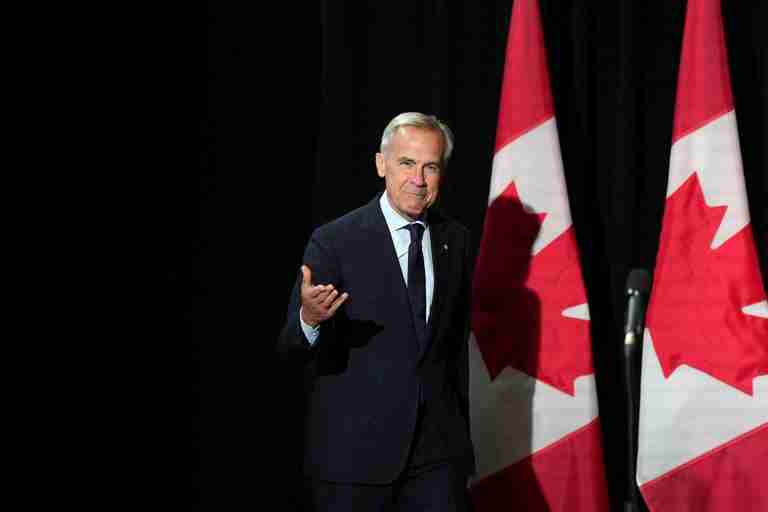
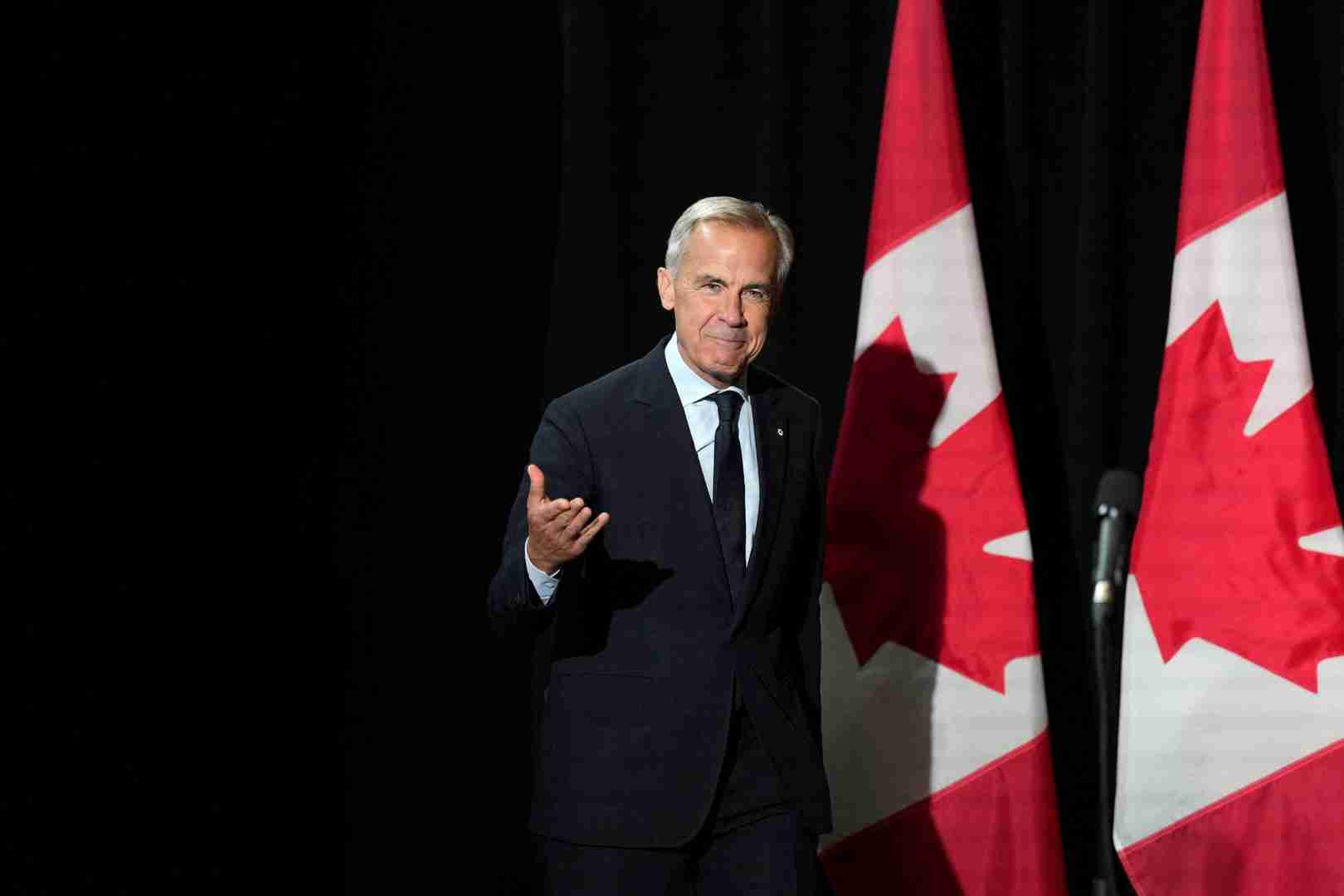
Canada, seeking to diversify its defense ties away from the United States, has formally applied to join the British-led Joint Expeditionary Force military coalition, Prime Minister Mark Carney’s office said on Wednesday.

The force, a grouping of 10 North Atlantic NATO member states, is a rapid response military partnership.

“Prime Minister Carney announced that Canada has formally applied to join the Joint Expeditionary Force and welcomed the UK’s support for Canada’s participation in this important initiative,” Carney’s office said in a statement.

Canada, already a member of NATO, is seeking closer military cooperation with European nations as it tries to reduce its reliance on the United States.

Carney had earlier met British Prime Minister Andy Burnham in northern England.

The two men discussed opportunities for defense industrial cooperation through the Global Combat Air Programme, an advanced fighter jet project that Canada joined as an observer in July 2026, Carney’s office said.

The JEF comprises Denmark, Estonia, Finland, Iceland, Latvia, Lithuania, the Netherlands, Norway, Sweden and the United Kingdom.

Reporting by David Ljunggren; Editing by Caitlin Webber and Costas Pitas

Solstice introduces free caregivers support

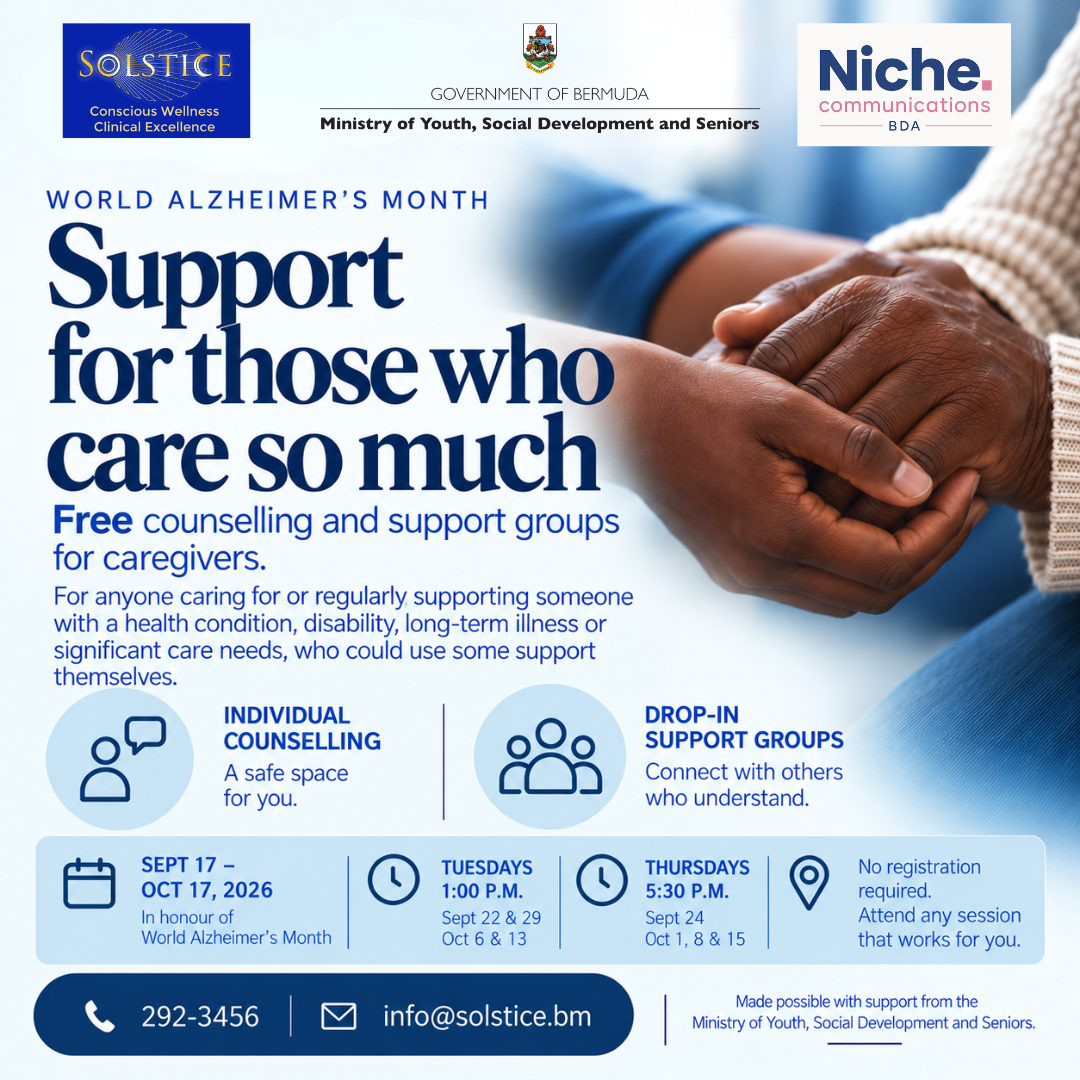
Caregivers across Bermuda will be able to access individual counselling and drop-in support groups at no out-of-pocket cost through a new partnership between the Ministry of Youth, Social Development and Seniors and Solstice.

Launched during World Alzheimer’s Month, the Caregiver Support Initiative recognises the important role caregivers play in supporting family members, friends and loved ones living with significant health conditions, disabilities or changing care needs.

The initiative will run from September 17 to October 17, 2026, providing eligible caregivers with confidential one-to-one supportive counselling and free drop-in caregiver support groups.

While World Alzheimer’s Month provided the catalyst for the initiative, the programme recognises that the emotional and practical demands of caregiving extend across many conditions and circumstances.

The Caregiver Support Initiative is intentionally inclusive and is available to eligible individuals providing regular or significant care or assistance to a family member, friend or loved one because of a health condition, long-term illness, disability or other significant care need.

This may include people caring for someone living with dementia or Alzheimer’s disease, Parkinson’s disease, stroke, kidney disease or receiving dialysis, cancer, heart or respiratory conditions, multiple sclerosis or other neurological conditions, mental health conditions, developmental or intellectual disabilities, chronic illness, physical disabilities, frailty or age-related needs, or recovering from a significant illness or injury.

The list is not intended to be exhaustive. If someone has taken on a meaningful caregiving role and feels they need support, they are encouraged to contact Solstice to discuss whether the initiative may be appropriate for them.

The initiative combines Government funding, applicable health insurance coverage and a significant community contribution from Solstice to make mental health and emotional support more accessible to Bermuda’s caregivers.

As part of its commitment, Solstice has significantly reduced its usual service costs and is contributing additional clinical, administrative and coordination resources, allowing available Government funding and insurance coverage to support more caregivers.

The partnership reflects a shared belief that caregivers, who give so much of themselves to support others, should also be able to access support for their own wellbeing without cost being a barrier.

Supporting the Person Behind the Caregiving Role

The focus of the Caregiver Support Initiative is the caregiver and their wellbeing.

Caregivers can become so focused on their loved one’s appointments, treatment, medications, practical responsibilities and the wellbeing of the person they are supporting that their own emotional health can become secondary.

Through the initiative, eligible caregivers can access free confidential, one-to-one supportive counselling with qualified Solstice clinicians. Sessions will provide a dedicated space to talk about their experiences and may include support around caregiver stress, grief and adjustment, changing relationships and family roles, uncertainty about the future, boundaries, coping strategies and maintaining their own emotional health.

Recognising that finding time can itself be a barrier for caregivers, appointments will be offered flexibly, including in-person and online, during lunchtime breaks, after work and on Saturdays, subject to availability.

Free Drop-In Caregiver Support Groups

Solstice will also provide eight free drop-in caregiver support groups during the initiative.

The groups will provide a welcoming and confidential space for caregivers to connect with others who understand the experience and demands of caring for another person, share experiences, receive emotional support and discuss strategies for maintaining their own wellbeing.

The groups are deliberately not diagnosis-specific. Although participants may be caring for people with very different needs, many of the emotional experiences of caregiving are shared.

There is no requirement to attend the full series. Caregivers are welcome to attend one session or several, depending on what works for them.

Tuesday Afternoon Groups – 1:00 p.m. September 22 and 29 October 6 and 13

Thursday Evening Groups – 5:30 p.m. September 24 October 1, 8 and 15

Offering both afternoon and evening sessions is intended to provide greater flexibility for caregivers managing work, family and caregiving responsibilities.

Minister Furbert: Supporting Those Who Care for Others

The Hon. Tinée Furbert, JP, MP, Minister of Youth, Social Development and Seniors, said: “Caring for a loved one can be both deeply meaningful and incredibly demanding. Whether someone is caring for a family member living with dementia, Parkinson’s disease, recovering from a stroke, managing a mental health condition or facing another ongoing health challenge, we recognise that caregivers need care and support too.

“Through the Caregiver Support Initiative, our partnership with Solstice will provide caregivers with accessible individual counselling and drop-in group support, with no out-of-pocket cost to eligible participants. I encourage caregivers to take advantage of these services and to know that they do not have to navigate the caregiving journey alone.”

Supporting Caregivers Across Bermuda

The launch of the initiative during World Alzheimer’s Month also reflects Solstice’s growing work in older adult mental health, cognitive health, dementia and Alzheimer’s care through its Longevity Centre.

Through the Longevity Centre, Solstice has expanded its services for older adults and their families, including cognitive health and assessment, emotional wellbeing, healthy ageing and maintaining quality of life as needs change.

This work is led by Dr. Shawnee Basden, Consultant Psychologist, and has recently been strengthened by the addition of Dr. Elizabeth Hathaway, Consultant Psychiatrist, whose practice includes a special interest in older adult mental health.

Kelly Madeiros, Managing Director and Co-Founder of Solstice, said: “We are honoured to partner with the Ministry on the Caregiver Support Initiative during World Alzheimer’s Month, particularly around an issue that is impacting so many individuals and families across Bermuda. Caregivers give an enormous amount of themselves to support the people they love, and it is equally important that they have somewhere to turn for support, understanding and connection.”

Madeiros added: “When someone is living with a serious or ongoing health condition, the impact is often felt by the whole family and the wider support system around them. Caregivers give so much of themselves, often while balancing work, family and their own wellbeing. Supporting them has to be part of how we support the person they are caring for.”

Accessing the Caregiver Support Initiative

Caregivers may access the initiative through self-referral or referral from Ageing & Disability Services or Dementia Bermuda.

The Caregiver Support Initiative is open to eligible caregivers supporting loved ones across a range of health conditions and circumstances. If you are unsure whether your caregiving situation is covered by the initiative, you are encouraged to contact Solstice.

Caregivers interested in individual supportive counselling can contact Solstice at 292-3456 or info@solstice.bm for further information, to confirm eligibility and to arrange an appointment.

Caregivers are also welcome to attend the Tuesday 1:00 p.m. or Thursday 5:30 p.m. drop-in support groups, with no requirement to attend every session.

The Caregiver Support Initiative runs from September 17 to October 17, 2026.

Solstice is Bermuda’s leading private mental wellness centre, offering multidisciplinary, evidencebased services for individuals, families, schools and organizations. Through clinical care, public education, partnerships, and community outreach, the organization works to improve access to mental healthcare, provide opportunities for Bermudians to pursue professions in mental health care and reduce stigma across the island. For more information, visit Solstice Bermuda.

Spike in COVID-19 cases prompts health advisory

The Ministry of Health is advising the public to take simple precautions as respiratory illnesses, including COVID‑19, have increased in recent weeks. The Epidemiology and Surveillance Unit has noted a rise in community activity consistent with seasonal trends.

Most people will experience mild symptoms, but reinforcing basic prevention helps protect vulnerable individuals and reduces disruption across workplaces and households.

Members of the public who are feeling unwell, particularly those experiencing fever, cough, sore throat, congestion, body aches, or loss of taste or smell, are encouraged to stay home until symptoms improve and to avoid close contact with others, especially older adults or people with chronic conditions. Anyone with these symptoms should consider testing for COVID‑19. Individuals whose symptoms worsen, who have difficulty breathing, or who are at higher risk of complications should seek medical advice. People who test positive for COVID‑19 or suspect they have influenza should follow the guidance provided by their healthcare provider.

The Ministry is reminding residents that simple actions remain effective in reducing the spread of respiratory infections. Regular handwashing or use of hand sanitiser, covering coughs and sneezes, and keeping distance from those who are visibly ill all help limit transmission. Improving ventilation by opening windows or spending time outdoors can also reduce risk. Those who are vulnerable or recovering from illness may choose to wear a mask in crowded indoor settings. The Ministry also encourages the public to get the seasonal flu vaccine, which remains one of the most effective ways to reduce severe illness and protect those at higher risk.

“As we see the usual seasonal rise in respiratory illnesses, I want to reassure the public that this is something we are prepared for and actively monitoring,” said Minister of Health, Kim Wilson. “These increases are expected at this time of year, and our community has consistently shown that simple, sensible precautions are enough to keep each other safe. I encourage everyone to take care of themselves, look out for those who may be more vulnerable, and stay informed through the Ministry’s health updates. Together, we can manage this period confidently and responsibly.”

For the latest health and wellness information, visit the Health Information page www.gov.bm/health-information.

Opinion: E-bikes should be classified according to their power

Statement by Maurice Foley, Deputy Chair, One Bermuda Alliance:

For almost a year, I have consistently raised concerns about electric bikes on Bermuda’s roads. Electric mobility is part of our transportation future, but our laws must evolve alongside the technology to protect riders and everyone who shares our roads.

I first raised the issue publicly in October 2025 and returned to it in July, calling for clearer classifications, licensing, registration, insurance and enforcement. After a 71-year-old woman was struck on a pedestrian crossing by a 15-year-old e-bike rider, I wrote again about the need for action.

This week, the Government acted, and that should be acknowledged. The Minister of Transport confirmed the application of the Auxiliary Bicycles Act 1954 and announced requirements around TCD registration, licensing, insurance and certified helmets, with owners given until October 31 to take the necessary steps towards compliance.

That is progress, but it leaves another important question unanswered: what power of electric bike should a 16 or 17-year-old actually be permitted to operate?

Bermuda already understands this principle when it comes to conventional motorcycles. A young person can qualify to operate an auxiliary cycle from age 16, while motorcycle licensing begins at 18. We also distinguish a 50cc-or-less auxiliary cycle from progressively more powerful motorcycle categories, including 125cc and 150cc machines.

There is a reason for that. A license and insurance do not mean a 16-year-old can simply climb onto a 125cc or 150cc motorcycle. The capability of the machine matters.

Why should electric vehicles be different? A 16 or 17-year-old could become properly licensed, have their e-bike inspected, registered and insured, and wear an approved helmet. But that still does not answer how powerful a machine that young person should legally be permitted to operate.

Where is the electric equivalent of 50cc? This is the gap I believe Bermuda must now address.

Today’s electric two-wheelers range from modest pedal-assist bicycles to fully self-propelled, throttle-operated machines capable of motorcycle-level performance. They cannot sensibly be treated as though they are all the same simply because they run on batteries.

We should not attempt a simplistic conversion by saying a particular wattage automatically equals 50cc. Electric motor power and engine displacement are different measurements. Instead, classification should consider a combination of motor power, maximum design speed, throttle capability, whether pedalling is required, vehicle construction and actual performance.

That would allow Bermuda to establish an electric equivalent of the graduated system we already apply to conventional motorcycles; including determining what class a 16 or 17-year-old may operate and what should be restricted to riders aged 18 and over.

Interestingly, Bermuda has considered this principle before. The 2019 Transport Green Paper recorded a stakeholder proposal that young people aged 16 to 18 could ride a regulated electric pedal cycle instead of an auxiliary cycle. It was not adopted Government policy, but it demonstrates that the relationship between youth licensing and lower-powered electric transport was being discussed seven years ago.

Technology has advanced considerably since then. Our legislation should do the same.

Not every e-bike is a motorcycle

Modernisation also needs to be proportionate. A modest pedal-assist bicycle is fundamentally different from a high-powered throttle-operated machine. We should therefore distinguish between genuine pedal-assist bicycles, self-propelled e-bikes, higher-powered electric auxiliary cycles or e-mopeds, and electric motorcycles or e-motos.

Clear classifications would help everyone. Parents would know what their teenagers can legally operate. Retailers and importers would know what they can bring into Bermuda and how it will be classified. TCD and Customs would have consistent standards, Police would know what they are enforcing, and insurers would understand the category of vehicle they are covering.

Government’s announcement addresses an important part of the problem: enforcement. The next step should be modernisation.

I have proposed to the OBA leadership that we consider developing legislation during this parliamentary session to modernise Bermuda’s classification and regulation of electric bicycles and other electric two-wheelers. The appropriate power and speed thresholds should be determined through technical consultation rather than arbitrary political numbers.

This does not need to be partisan. It is an opportunity for Government and Opposition to work towards legislation that reflects the technology actually operating on Bermuda’s roads while ensuring that regulation remains proportionate.

If Bermuda already understands why a 50cc auxiliary cycle is different from a 125cc or 150cc motorcycle, our laws should be equally capable of recognising the difference between a modest electric bicycle and a high-powered electric motorcycle.

A licence matters. Insurance matters. But the power of the machine matters too.

Event aims to build stronger communities

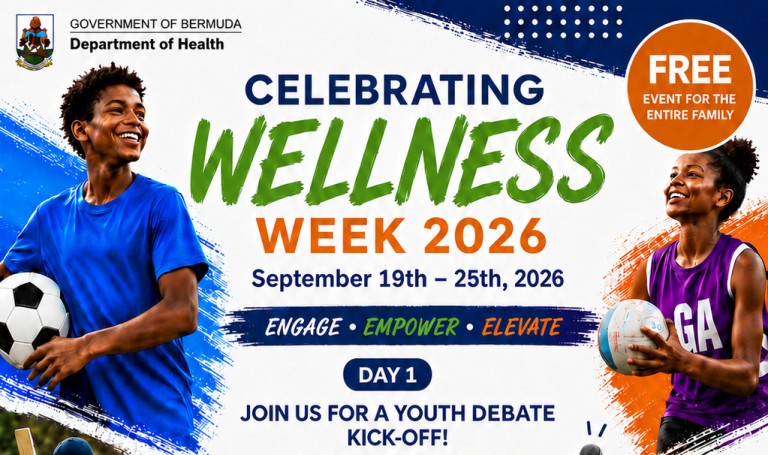
The Ministry of Health invites the community to participate in Celebrating Wellness 2026, a week dedicated to activity, connection and youth empowerment. This year’s theme encourages residents to move from speaking up to showing up, giving young people opportunities to have a voice, be active, build confidence and grow together as a community. The week will feature vendors, giveaways and more.

Celebrating Wellness opens with a youth-led debate on Physical Activity in Schools, providing young people with a platform to share their perspectives, experiences, ideas and solutions on how physical activity supports health and well-being. The Debate is Saturday, September 19th, from 9 am – 5 pm, at the Ruth Seaton James Auditorium, CedarBridge Academy.

Minister of Health, Kim Wilson, JP, MP, said: “Young people are powerful leaders in shaping a healthier Bermuda. Celebrating Wellness Week brings our community together to listen, learn and get active, reminding us that wellness is something we build every day, together.”

During the week, young people are encouraged to participate in physical, creative and leisure activities that promote physical health, mental strength and social development. Sporting events require registration by age group, and parents and adults are welcome to join skills sessions, drills and game‑based challenges. All abilities and levels are welcome.  

The week concludes on Friday, September 25th, with an intergenerational community celebration bringing youth, families, adults and seniors together through movement, music, games and friendly competition. Attendees are encouraged to wear their favourite jersey.

Residents are asked to complete the registration form to participate. For more information, please contact Cymone Hollis at cahollis@gov.bm.

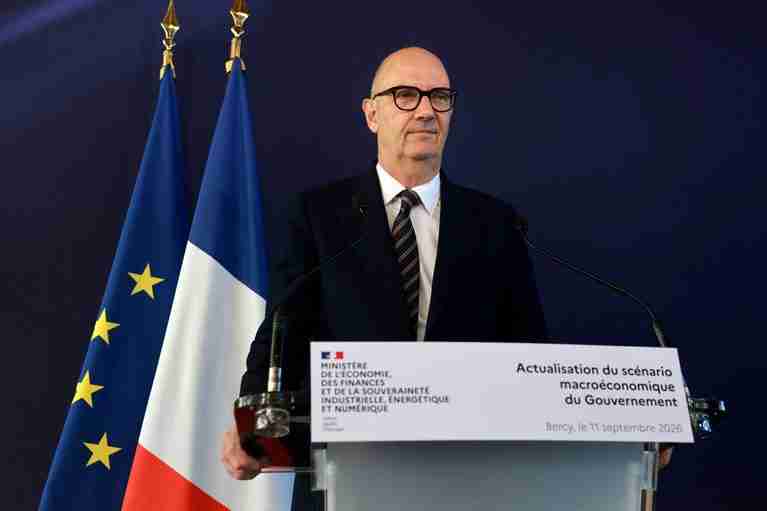
Calls to slow AI benefit US sector leaders, says French finance minister

“I want us to step up our efforts in France and across Europe, to become a leader and to be able to manage the risks,” Lescure added when asked about the discussion around AI safety on the sidelines of an event

International News via Reuters:

Calls to slow down the development of AI serve the interests of U.S. leaders in the sector, French Finance Minister Roland Lescure said on Wednesday, adding that France and Europe must accelerate AI usage so that they can control the risks.

“I can clearly see that the calls to slow down are now coming from those at the top of the class … Making everyone behind them slow down so they can stay in first place, I can clearly see their self-interest,” Lescure told Reuters.

“I want us to step up our efforts in France and across Europe, to become a leader and to be able to manage the risks,” Lescure added when asked about the discussion around AI safety on the sidelines of an event organised in Paris by French startup lobby, France Digitale.

The debate around AI risks accelerated last week, with Anthropic CEO Dario Amodei calling for a slowdown in development of the technology, citing several risks including losing control of AI systems.

Meanwhile, the CEO of rival OpenAI, Sam Altman, said he agreed with the need to pace AI development.

Their statements added to the debate prompted by Anthropic researchers who said last week that rapidly progressing AI could lead to the extinction of the human race in the near future.

“I am always wary of definitive statements,” said Lescure when asked about the risks to humanity from AI, adding: “Definitive statements can sometimes in the end serve as a way to escape collective responsibility”.

However, he identified risks due to AI implementation in the cyber sector and in education, saying France and Europe had to be aware of them in order to manage them. 

Reporting by Florence Loeve, Writing by Florence Loève and Dominique Vidalon, Editing by Alex Richardson and Alexander Smith

Morning Bid: Fed lifts the hawkish bar for BoE

The Fed’s hike cranks up pressure on every other central bank, starting with the Bank of England today

International News via Reuters:

A look at the day ahead in European and global markets from Stella Qiu

Turns out the guy Trump hired to cut interest rates just raised them instead. Kevin Warsh delivered the Fed’s first hike in more than three years, and did it in lock step with his colleagues – a united front presumably designed to show markets that the bank still has the upper hand on inflation and its independence.

Just as after the Fed’s last rate decision, Warsh didn’t provide forward guidance, insisting he wouldn’t fixate on any single data point. However, markets know well that hikes are like cockroaches – if you see one, there are probably more behind the wall.

Futures are pricing in three more hikes even though the dot plot pencilled just one this year. Goldman Sachs wasted no time in calling for a follow up move in October, arguing it was natural to deliver consecutive hikes to support a “timelier” return to the Federal Reserve’s 2% inflation target.

The Fed’s hike cranks up pressure on every other central bank, starting with the Bank of England today. Market watchers expect the BoE to hold steady, but the board is likely to split again so every syllable will be parsed for any hawkish hints that sticky energy prices could force its hand into a November hike.

The Bank of Japan is all but certain to lift its rate on Friday. And if you look around the world, the market assumes central banks in the U.S., Europe, Britain, Australia and New Zealand will all have to tighten policy again by the end of the year.

As Warsh talked, short-term Treasury yields shot up to their highest since mid-2024, lifting the dollar to seven-week highs. Longer-dated bonds actually found relief in the Fed rediscovering its inflation-fighting religion, with the benchmark 10-year yield hovering below the critical 5% level.

That offered relief to stocks in Asia, with most share markets catching a bid. European bourses are set for a 0.5% rise at open, while Nasdaq futures lifted 0.6% and S&P futures added 0.5%.

How long the calm lasts is anyone’s guess. The world is adjusting to an era of recurring supply shock, where inflation is running hotter than central banks would like and interest rates higher than investors had counted on.

Key developments that could influence markets on Thursday:

• The Bank of England interest rate decision

• Final Eurozone CPI figures for August

• U.S. weekly jobless claims

By Stella Qiu; Editing by Christopher Cushing

EU seeks China curbs on hybrid car exports to avert trade row, FT reports

Brussels wants Beijing to limit Chinese hybrid vehicles sales to around 15% of the EU market, the newspaper said, citing people familiar with the matter

International News via Reuters:

The European Union has asked China to voluntarily restrict exports of hybrid cars as part of efforts to prevent a trade war, the Financial Times reported on Thursday.

Brussels wants Beijing to limit Chinese hybrid vehicles sales to around 15% of the EU market, the newspaper said, citing people familiar with the matter.

“If they will not limit their exports to our market then we will,” the FT quoted an EU official as saying. “This is about stopping deindustrialisation. We have to act. It’s about managed trade.”

The EU has asked China to limit exports of other products, including chemicals, while seeking increased Chinese purchases of European exports, according to the report.

The EU did not immediately respond to a Reuters request for comment. Reuters could not immediately verify the report.

European Commission President Ursula von der Leyen said on Wednesday that the bloc would use every available tool to reduce what she called its “unsustainable” trade deficit with China.

She said in a speech to the European Parliament the EU’s goods trade deficit with China, which hit €360.6 billion ($413.4 billion) last year and widened by 9% in the first six months of this year, had reached a tipping point and that Europe was already experiencing a second “China shock” through deindustrialisation.

European Trade Commissioner Maros Sefcovic, who is leading talks with China to tackle the trade gap, has said he wants tangible results by October and is expected to visit China by early next month.

The EU says a surge in Chinese exports, including chemicals, batteries and vehicles, has been driven by overcapacity. Beijing rejects that criticism, saying concerns over economic imbalances and excess capacity are protectionist and aimed at constraining China.

($1 = 0.8723 euros)

Reporting by Rishabh Jaiswal in Bengaluru; Editing by Muralikumar Anantharaman and Sonali Paul