Friday, November 6, 2026
Home Blog Page 600

Opinion: Building the Bermuda we promised

Junior Housing Minister underscores the importance of Battery Park project

Construction at Battery Road

By Senator Lauren Hayward Bell Junior Minister of Housing & Municipalities

Bermuda’s housing crisis is one of the most urgent challenges facing our people. Across the Island, families, seniors, and young Bermudians continue to struggle to find safe, affordable places to live. In the private rental market, affordable options remain scarce and the pace of new construction has slowed. A decade ago, Bermuda was adding nearly two hundred and ninety (290) homes a year to the housing stock. That number has now dropped to just seventy-five (75).

That is why the Government’s work at Battery Park is so important; it shows what real, practical progress looks like.

Battery Park began as a commitment to transform underused land in St. David’s into modern, affordable homes for those who need them most. Phase One delivered four (4) new units and major infrastructure upgrades, including an 82,000-gallon water tank to support long-term sustainability. Families have already moved into these units, and their lives are more stable as a result.

Phase Two is now underway, bringing an additional twelve (12) homes including six (6) studios, two (2) one-bedrooms units, and four (4) two-bedrooms units. Supported by a $3.75 million investment, these units will be offered to Bermudians on the Bermuda Housing Corporation’s waitlist, ensuring help reaches those facing the greatest need.

Facing the Crisis, Delivering Solutions

But Battery Park is not an isolated initiative; it is only one part of a much larger, coordinated plan to expand affordable housing across Bermuda.

Through the Residential Building Programme, more than sixty (60) new affordable homes will come online by mid-2026. At the same time, modular housing units are being deployed to provide rapid relief for families in critical need and work is progressing under the Private Sector Refurbishment Programme. In addition, planning is currently on track for the next phase of development, expected to deliver more than two hundred (200) additional units. Through these projects, the Government will be introducing new construction methods to reduce costs and timelines.

All of this work is guided by the Government’s Affordable Housing Strategy (2025–2035), a long-term plan to close Bermuda’s housing gap and modernize how we deliver quality, accessible homes. This strategy recognizes a fundamental truth. While each individual project matters, it is the collective effort including the steady expansion of supply, the modernization of infrastructure and the revitalization of existing inventory that will reshape our housing landscape for years to come.

Building a Fairer Future, One Home at a Time

Housing is about more than walls and roofs. It is about dignity, security, and opportunity. Every renovated unit, every new key handed over represents a step toward a Bermuda where every person has a safe place to call home.

Battery Park is not just a project.

It is progress.

It is a promise kept.

It symbolizes this Government’s commitment to her people.

It is part of a coordinated, strategic, and people-focused housing plan that is delivering for Bermudians today while building the foundations of a fairer tomorrow and more secure Bermuda for all.
UK’s Reeves vents her frustration at leaks of her budget

Britain’s government bond market was rocked by a Financial Times story on November 13 that said Reeves had U-turned on a planned rise to income tax rates

International News via Reuters:

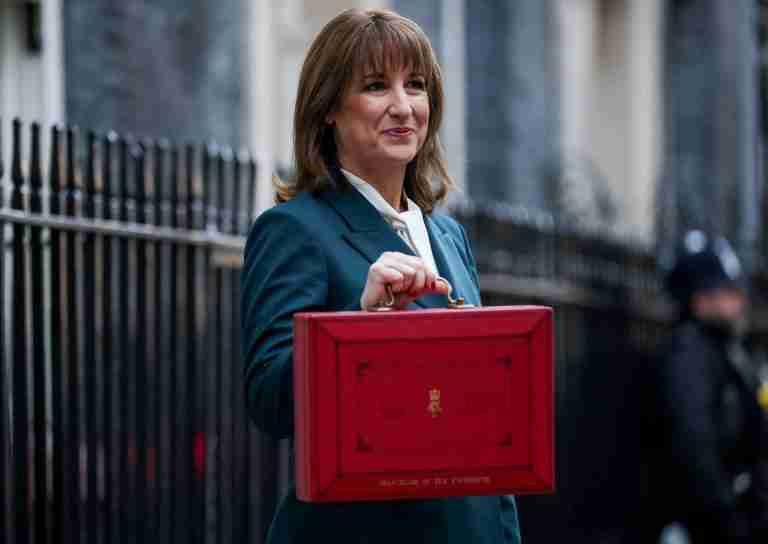
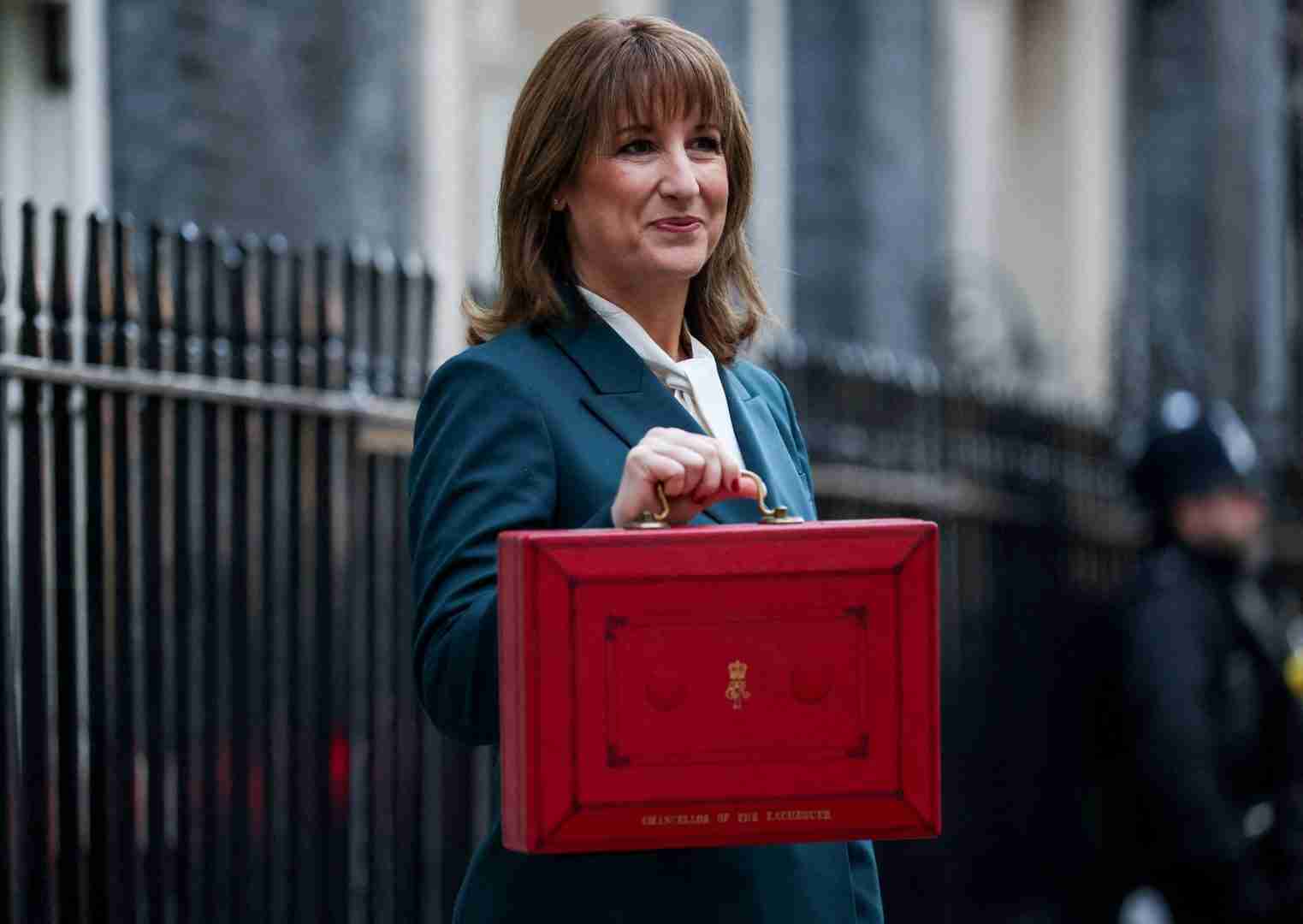
British finance minister Rachel Reeves on Wednesday condemned leaks about key details of her November 26 budget that appeared in media before her annual tax and spending statement to parliament.

Britain’s government bond market was rocked by a Financial Times story on November 13 that said Reeves had U-turned on a planned rise to income tax rates.

Reeves told parliament’s Treasury Committee that the leak to the FT was not the result of an authorised private briefing and presented what she said was a partial and inaccurate view of her budget strategy.

Political opponents have accused Reeves of misleading the public in the run-up to the budget and seeking to justify tax increases to fund higher welfare spending, a charge she denied.

“I would reiterate in the strongest terms that leaks are unacceptable. The budget had too much speculation. There were too many leaks, and much of those leaks and speculation were inaccurate and very damaging,” Reeves said.

The government is due to conduct an inquiry into whether civil servants, ministers or political advisers passed information to the media.

Reeves also said it was unlikely that the Office for Budget Responsibility, Britain’s independent fiscal watchdog, will have a new chair to replace Richard Hughes in time for her next fiscal update in the spring.

Hughes resigned after an investigation showed systemic issues were to blame for the OBR’s inadvertent publication of budget documents shortly before Reeves was due to present her tax and spending plans.

In her question-and-answer session with lawmakers, Reeves ruled out charging capital gains tax on primary residences and scrapping the so-called triple lock on state pensions during the remainder of the parliament which is due to run until 2029.

The triple lock pegs increases in the state pension to whichever is the highest out of consumer price inflation, average wage growth or 2.5%.

Prime Minister Keir Starmer pledged not to charge capital gains on primary residences or scrap the triple lock ahead of his Labour Party’s election victory in July 2024.

Reporting by David Milliken and Suban AbdullaWriting by Andy BruceEditing by William Schomberg

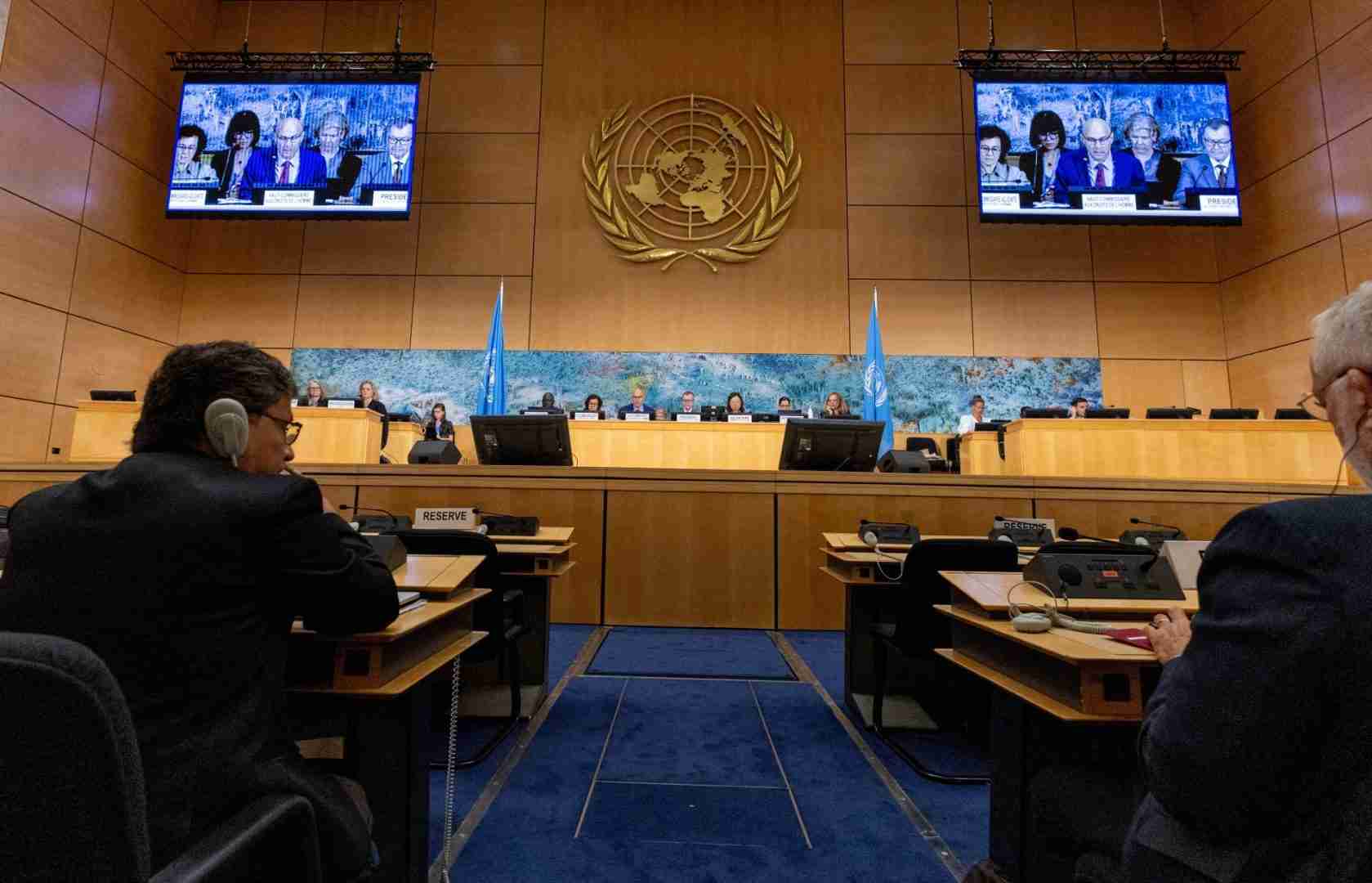
UN human rights office in ‘survival mode’ amid major funding cuts

United Nations human rights chief Volker Turk said on Wednesday that his office was in “survival mode” due to major funding cuts from global donors, while rights violations and needs in conflict-affected areas surge

International News via Reuters:

United Nations human rights chief Volker Turk said on Wednesday that his office was in “survival mode” due to major funding cuts from global donors, while rights violations and needs in conflict-affected areas surge.

“Our resources have been slashed, along with funding for human rights organisations – including at the grassroots level – around the world. We are in survival mode,” the high commissioner for the U.N. human rights office (OHCHR) told reporters.

OHCHR has $90 million less in funding than it needed this year, which resulted in 300 jobs cuts, directly impacting the office’s work, Turk said.

“Essential work has had to be cut, including on Colombia, the Democratic Republic of the Congo, Myanmar, Tunisia and other countries at a time when the needs are rising,” Turk said.

He said country visits by UN special rapporteurs, who are independent experts, as well as investigative missions by fact-finding bodies have been reduced, while dialogues with states on their compliance with UN human rights treaties have had to be postponed, with the number of state parties reviews falling to 103 from 145.

“All this has extensive ripple effects on international and national efforts to protect human rights,” Turk said, pointing to grave human rights concerns in Sudan, Gaza and Ukraine.

“I am extremely worried that we might see in Kordofan a repeat of the atrocities that have been committed in al-Fashir,” he said, referring to the conflict in Sudan.

Sudan’s paramilitary Rapid Support Forces took over Darfur’s city of al-Fashir in late October in one of its biggest gains of the two-and-a-half-year war with Sudan’s army. This month, advances have continued eastward into the Kordofan region, and they seized the country’s biggest oil field.

Russia’s increased use of powerful long-range weapons had driven a sharp rise in civilian casualties in Ukraine – with these rising 24% from the same period last year, he said.

Reporting by Olivia Le Poidevin Editing by Madeline Chambers, Miranda Murray

ECB may upgrade growth projections again in December, Lagarde says

Lagarde also repeated her mantra that monetary policy was in a ‘good place’, a signal taken by investors to mean that no interest rate change was needed

International News via Reuters:

The European Central Bank may lift its growth projections again in December given the economy’s unexpected resilience to uncertainty and trade tensions, ECB President Christine Lagarde said on Wednesday.

“In the last projection exercises, we have upgraded our projections,” Lagarde told a Financial Times event. “My suspicion is that we might do that again in December.”

Lagarde also repeated her mantra that monetary policy was in a ‘good place’, a signal taken by investors to mean that no interest rate change was needed.

Reporting by Balazs Koranyi; Editing by Jan Harvey

FirstGroup wins $4 billion London Overground rail contract, shares rise

Subsidiary First Rail London will take over operations from Arriva Rail London in May 2026 for an initial term of eight years, with public body Transport for London having the option to extend the contract for two more years

International News via Reuters:

Britain’s FirstGroup has been named the preferred operator for London’s Overground suburban rail network in a contract worth around 3 billion pounds ($4 billion), the company said on Wednesday, sending its shares up more than 5%.

Subsidiary First Rail London will take over operations from Arriva Rail London in May 2026 for an initial term of eight years, with public body Transport for London (TfL) having the option to extend the contract for two more years.

Panmure Liberum analyst Gerald Khoo said the London Overground would be FirstGroup’s largest single TfL contract and marked further progress in the company’s efforts to diversify its earnings and customer base.

Launched in 2007, the London Overground links areas outside central London. The network spans 100 miles (161 km) and 113 stations, and serves over four million passengers weekly.

The contract significantly expands FirstGroup’s London portfolio, where it already operates buses, trams and the London Cable Car for TfL, as the company grows its rail operations.

FirstGroup will run train services, stations and customer service under the contract, backed by a 30 million pound performance bond and an 80 million pound parent company guarantee.

The company’s shares were up 5% to 183.8 pence at 0919 GMT.

The agreement requires the operator to increase services on the Mildmay line, the oldest part of TfL’s rail network, as well as the Windrush line.

RBC Capital Markets analysts said the contract was low-risk since TfL retains all revenue and passenger risk, with a potential for a profit boost for FirstGroup.

($1 = 0.7513 pounds)

Reporting by Yamini Kalia in Bengaluru. Editing by Nivedita Bhattacharjee and Mark Potter

Airbus CEO says Boeing likely to win order race this year

Airbus remains ahead of its U.S. rival in deliveries and the pipeline of outstanding orders

International News via Reuters:

Airbus CEO Guillaume Faury conceded likely defeat in the annual order race against Boeing on Wednesday, saying it was possible Boeing would win for the first time in six years, helped by settlements over U.S. tariff disputes.

Airbus remains ahead of its U.S. rival in deliveries and the pipeline of outstanding orders, Faury told France Inter.

Buoyed by strong demand for its 787 long-haul jet, Boeing on Wednesday posted 908 net orders after cancellations between January and November, compared with 700 for Airbus.

“The fact that we have been ahead on orders for five years means our order backlog is much higher than that of our main competitor,” Faury told the French radio station.

“But it is true that they have been helped by the American president as part of tariff negotiations with several countries, where plane orders became part of the resolution of trade disputes.”

TRADE TENSIONS WITH US SUPPORT BOEING ORDERS

Analysts say several airlines either placed Boeing orders or timed previously planned order announcements to soothe trade tensions with the United States this year, particularly in Asia.

U.S. industry officials say the long-haul 787 is selling well regardless of trade matters. Airbus is leading on smaller jets, such as the A321.

Airbus orders have lagged for months, but Faury’s comments confirm a probable change in the ranking for new business, while Airbus is expected to retain its title as the world’s largest manufacturer through higher deliveries.

Asked about reports of a large pending order from China, Faury said he did not expect an imminent new order for hundreds of jets but spoke of clearances for previous orders.

On Wednesday, Airbus said it had secured Chinese agreement to go ahead with the delivery of 120 previously ordered jets.

Industry sources have said Airbus was banking on an order for up to 500 jets from China to meet its internal order goals. Beijing is in negotiations with Boeing for a similar package.

With China locked in fraught trade relations with the United States and Europe, Western analysts say it is expected to maintain a broad balance in jet imports to meet its growth after several years in which it was largely absent from the market.

China’s state buying agency did not respond to a request for comment.

Faury said a major software recall affecting 6,000 jets in the A320 family, which includes the A321, had been completed. The final number of jets needing attention was closer to 4,000 and all have now been fixed, he told France Inter.

Reporting by Tim Hepher; Editing by Jan Harvey and Barbara Lewis

Sterling edges up vs dollar, flat versus euro, Fed in focus

The greenback slipped against the euro and yen, with investors bracing for a so-called hawkish rate cut by the Fed

International News via Reuters:

Sterling edged up against the dollar and was roughly unchanged versus the euro as investors braced for the Federal Reserve policy meeting outcome due later in the session and data on British economic growth on Friday.

The greenback slipped against the euro and yen, with investors bracing for a so-called hawkish rate cut by the Fed.  

The pound rose 0.10% versus the dollar at $1.3313 <GBP=D3>. It hit $1.3385 last week, its highest since October 21.

The currency has added around 1% since finance minister Rachel Reeves delivered the budget on November 26.

“Sterling enjoyed a relief post budget,” said Francesca Fornasari, head of currency at Insight Investment, arguing that “a huge amount of bad news was already priced into markets” before November 26.

“Looking forward, we’re likely to need some positive news on growth for Sterling to outperform its European peers,” she added.

Some analysts also mentioned mildly positive revisions to the PMIs last week, suggesting that Britain’s economy was not slowing to the extent that market participants had feared.

Some firms said uncertainty about finance minister Rachel Reeves’ November 26 budget had prompted them to delay investment in new projects. 

Analysts’ views on the UK growth outlook remained mixed.

“Prospects for weaker UK growth suggest scope for the Bank of England to surprise with more interest rate cuts than markets currently discount,” said Mark Dowding, BlueBay chief investment officer at RBC BlueBay Asset Management.

Gross domestic product figures are due on Friday.

Investors await the Bank of England decision on rates next week, with policymakers striking differing tones over the outlook for monetary policy on Tuesday, suggesting that a split on the Monetary Policy Committee persists. 

Traders price in 50 bps of BoE rate cuts by next summer and an around 90% chance of a rate cut next week.

The euro was up 0.02% versus the British currency at 87.43 pence <EURGBP=D3>. It hit 87.21 pence on Tuesday, its lowest since October 24.

Money markets recently scaled back bets on possible European Central Bank rate cuts, supporting the euro.

Reporting by Stefano Rebaudo; Editing by Aidan Lewis

‘Building a future where everyone feels valued, protected’

Ministry reflects on Human Rights Day

Today, as the world comes together to observe Human Rights Day (December 10), the Ministry of Youth, Social Development and Seniors reflects on the rights and freedoms that shape our daily lives. This year’s theme, “Our Everyday Essentials”, reminds us that human rights are not distant ideas. They are present in the small, familiar moments we experience each day, moments that help us feel safe, valued, and able to belong.

Human rights are present in the warmth of a family home, the safety of a classroom, the dignity of work, and the comfort of knowing one’s voice matters. They exist in the elderly neighbour who receives the care they need, the young person who is given the chance to dream boldly, and the family who knows they will not be left behind in times of hardship. These rights may not always be visible, but like the foundations of a house, they uphold everything we depend on.

Around the world and here in Bermuda, we are reminded that when even one person’s rights are overlooked, the well-being of the whole community is diminished. And so, on this day, we reaffirm our commitment to protecting and promoting the rights of every individual, regardless of age, background, or circumstance.

We are proud of our community outreach work, which ensures that individuals facing hardship are met with compassion, resources, and real solutions. These efforts reflect our belief that human rights are lived experiences, shaped by the supports people can rely on every single day.

As we mark Human Rights Day 2025, let us remember that human rights are not abstract ideals. They are the everyday essentials that allow each of us to live fully, safely, and with purpose. Let us honour them not only with our words, but with the daily acts of kindness, justice, and respect that strengthen the fabric of Bermuda.

Together, we can build a future where everyone, young or old, feels seen, valued, and protected.

For more information on your Human Rights, here in Bermuda, go to Human Rights Act 1981.

BDA economy continues to grow… but slower

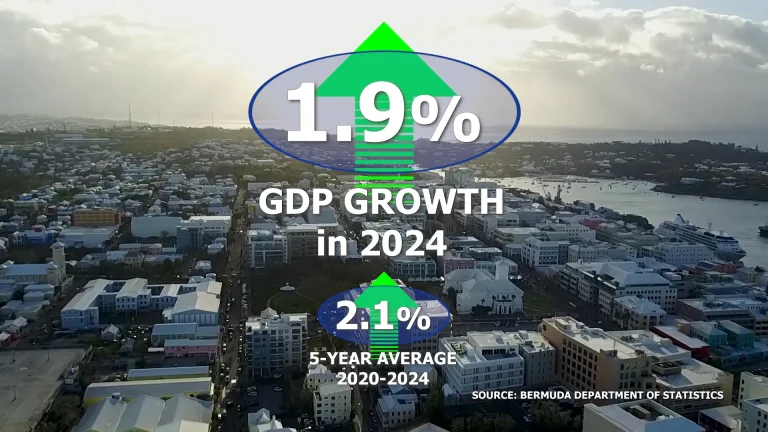
2024 saw annual GDP increase by 1.9% … still growing, but slower than International Business-driven growth during and after the pandemic

Bermuda’s overall economy continued to grow in 2024 – but slower than the previous post-pandemic years.

Last year’s Gross Domestic Product – the dollar value of all our goods and services – was $7.1 billion dollars, a 1.9% year-on-year increase.

Growth has slowed down a little in comparison to 4.3% in 2023, 6.3% in 2022 and 4.8% in 2021. Of course, those GDP increases followed a 6.8% contraction of our economy during COVID-riddled 2020.

Growth continues to be led by International Business, which grew by $48 million – although this is about a third of the growth the sector saw in the previous three years.

In all, 12 out of 19 saw year-on-year growth. Information and Communication, Human Health and Social Work, and Construction and Quarrying all grew, while Wholesale and Retail Trade, and Education were among sectors that contracted.

Jason Hayward, Minister of Economy and Labour, announced the figures earlier today (WATCH highlights above; SCROLL down for Press Statement; Download 2024 Annual GDP Report HERE)


Statement by Jason Hayward, Minister of Economy & Labour:

Bermuda’s economy demonstrated strong economic performance last year. The 2024 Annual Gross Domestic Product (GDP) report from the Department of Statistics confirmed that Bermuda’s economy continued to expand in 2024, growing by 1.9% in real terms to reach $7.1 billion, marking four consecutive years of economic growth and expansion.

The continued growth trajectory is a positive and stabilizing development. Importantly, twelve of the nineteen industrial groups contributed to this increase in value added, demonstrating broad-based resilience across much of the economy.

Bermuda’s economy increased by 6.9% in nominal terms in 2024. At current purchasers’ prices, the GDP per capita rose to $143,878 at the end of 2024. This compares with a GDP per capita of $134,450 in 2023.

Bermuda’s economic growth in absolute terms was led by International Business Activities, which grew by $48.5 million. This industry, which had a historic 5,040 filled jobs in 2024, was the largest contributor to the GDP at 29.3% of total GDP. Businesses engaged in reinsurance, insurance management and portfolio advisory experienced increases in value added.
The Information and Communication industry experienced the second-largest increase in value added, rising 16.4% or $25.1 million, driven primarily by growth in telecommunications services.

The Human Health and Social Work industry also recorded strong performance, increasing 6.3% or $21.5 million, with notable growth in private health services and continued expansion in social work activities.

Construction and Quarrying was another positive contributor, rising 8.8% or $21.1 million due to increased construction project activity throughout the year.

The following industries also demonstrated positive economic performance:

Administrative and Support Services, increased 12.3% or $16.8 million.
Professional, Scientific and Technical Activities, increasing by 3.5% or $13.7 million.
Transportation and Storage, expanded 5.9% or $6.9 million.
Accommodation and Food Services recorded a moderate increase of 0.3% or $0.7 million.

Other sectors experiencing modest growth include Arts, Entertainment and Recreation; Other Service Activities; Real Estate Activities; and Activities of Households as Employers.

The following sectors contracted during the year:
The Wholesale and Retail Trade industry declined by 3.4% or $10.5 million.
Financial and Insurance Activities decreased 1.1% or $10.1 million.
Education fell 3.2% or $3.9 million.

Small declines were also observed in Agriculture, Forestry and Fishing; Manufacturing; Electricity, Water Supply and Waste Management; and Public Administration.

Overall, the Annual GDP report on economic activity for 2024 indicates that Bermuda’s economy continues to grow,
supported by strong diversified performance in key industries. Local business activity represented 67 per cent of the total growth recorded in 2024, while International Business represented 37%. The continued expansion across most industries demonstrates the underlying strength, resilience and adaptability of Bermuda’s economy.

The Economic Development Strategy 2023-2027 outlines the economic priorities that will drive the initiatives required for a prosperous economy.

For more information, please review the 2024 Annual Gross Domestic Product report, available at the Department of Statistics online at gov.bm.

ECB backs simpler, not looser, bank rules, sources say

The recommendations, the result of a compromise between different European Union countries, would merge the systemic risk buffer (SyRB) and countercyclical capital buffer (CCyB)

International News via Reuters:

The European Central Bank will propose simplifying rules on capital buffers required of banks, pruning some of the complex regulation put in place after the global financial crisis, two sources familiar with the proposals told Reuters.

The list of measures that ECB Vice-President Luis de Guindos will present to reporters on Thursday aims for fewer, rather than lower, requirements for the amount of capital lenders must hold to cushion themselves against potential shocks.

That is a more conservative approach than regulators in Britain and the United States have taken recently and may disappoint bankers who had been hoping for more respite.

The recommendations, the result of a compromise between different European Union countries, would merge the systemic risk buffer (SyRB) and countercyclical capital buffer (CCyB), two separate capital requirements set by national supervisors, said the two sources. They spoke on condition of anonymity because the matter is still confidential.

A spokesperson for the ECB declined to comment.

STRONG REGULATION SUPPORTS RATINGS

Financial experts said simplification was more than welcome as the current system has become too complex but this should not lead to banks having to hold less capital.

“The strong regulation is a key factor supporting the ratings of European banks,” said Marco Troiano, a director at Scope Ratings.

“The messaging from the ECB has been very consistent so far, that there is room to simplify the framework, but that this should not lead to less capital at a system level. I welcome this approach,” he said.

The ECB recommendations will next go to the executive European Commission, which shares the power to propose changes to EU legislation with the European Parliament and Council, on which member states sit.

Such changes would take years and could reopen long-standing debates over how far Europe should go in loosening regulations designed to shield taxpayers from having to bail out ailing banks.

BANKERS ARGUED THE RULES WERE TOO COMPLEX

The SyRB and CCyB buffers were introduced by the 27-nation EU as part of a post-crisis overhaul aimed at preventing another banking sector meltdown like that seen in 2007-2008.

Bankers complain these rules are too complex and put them at a disadvantage to U.S. peers, particularly at a time when Donald Trump’s U.S. administration is leading a drive to deregulate.

U.S. regulators on Friday scrapped guidance aimed at curbing leveraged lending, which has helped shift business to lightly regulated private-credit funds.

The Bank of England last week cut its estimate of how much capital lenders need to hold – its first reduction since the crisis – in a bid to boost credit and support growth, although it left its countercyclical capital buffer unchanged.

The ECB report, capping months of work by a task force on simplifying regulation, will back the idea of cutting down requirements to just two types – those that can be released at times of stress and those that banks must keep at all times.

The task force will also propose reviewing rules for small lenders and harmonising the data banks report to supervisors, resolution authorities and statistical offices, aiming to lower compliance costs.

NO APPETITE FOR REDUCING OVERALL REQUIREMENTS

The SyRB allows national regulators to demand extra capital where they see risks not covered by other requirements.

Merging it with the CCyB – which is designed to curb credit booms – would cut the number of requirements without necessarily reducing overall demands. How much capital banks will need under the combined buffer will still depend on national supervisors.

A third source familiar with the ECB’s thinking said the simplification effort was focused on removing the duplication of rules but there was very limited appetite for reducing overall capital requirements.

The SyRB currently ranges from just 0.5% in countries like the Czech Republic and Italy to 7% in Denmark, and can be applied across the board or just to some types of loans, such as real estate.

The ECB recommendations reflect a compromise among euro zone authorities but show the lack of consensus in other areas, the sources added.

France had pushed for simplifying requirements governing how much capital Europe’s seven biggest lenders – four of which are French – must have to absorb losses if they fail.

Germany, where regional and smaller lenders still make up nearly half of the total, wanted lighter treatment for those banks and stricter reliance on equity, rather than convertible bonds, for fulfilling some requirements.

Neither idea won enough support and will appear only as options in the report.

Additional reporting by Andres Gonzalez in London; Editing by Mark John, Elisa Martinuzzi and Catherine Evans

Ray-Ban Meta glasses take off but face privacy and competition test

The frames, launched in 2021, promise to upend the smartphone era by letting wearers take photos and videos through tiny cameras in the lenses, stream content to Meta apps and talk to an AI assistant

International News via Reuters:

EssilorLuxottica is betting big on smart eyewear and the gamble is about to be tested. Its Ray-Ban Meta glasses, powered by artificial intelligence, have delivered their first meaningful revenue boost this year, but analysts warn that privacy concerns and a wave of new rivals could limit their growth. 

The frames, launched in 2021, promise to upend the smartphone era by letting wearers take photos and videos through tiny cameras in the lenses, stream content to Meta apps and talk to an AI assistant.

Yet the same features that promise to make the AI-powered frames – born from the collaboration between Mark Zuckerberg’s Meta and French-Italian eyewear giant EssilorLuxottica – into a must-have device are sparking concerns, as bystanders have little control over being recorded or how their data is handled.

“AI smart glasses raise significant privacy concerns,” said Kleanthi Sardeli, a lawyer at European digital rights advocacy group NOYB. “The main issues are linked to the use of people’s personal data to train AI models and transparency for bystanders.”

Meta Platforms, which owns Facebook, Instagram and WhatsApp and generates the bulk of its revenue from advertising, is leveraging user data to power artificial intelligence tools, a move that brought the company to face scrutiny over data practices.

REGULATORY SCRUTINY IN EUROPE

European regulators have flagged risks since 2021, when Italy and Ireland asked Meta to clarify how it complied with local privacy laws.

Ireland’s Data Protection Commission questioned whether a tiny LED indicator was enough to alert people they were being filmed, prompting Meta and EssilorLuxottica to enlarge the light and add a blinking pattern.

Privacy concerns are particularly strong in the European Union, where stricter regulations have slowed adoption of some AI features. 

AI-enabled wearables are regulated by the EU’s AI Act and the General Data Protection Regulation, or GDPR.

“Any recording of individuals must be clearly communicated and must have a legal basis to record individuals,” unless the data was processed for purely personal or household reasons, a European Commission spokesperson said.

But enforcing those rights is difficult when the device owner is unknown, says NOYB. 

A 2024 Monash University survey of more than 1,000 Australians found owners see smart glasses as boosting their self-image and social ties, while non-users fear privacy breaches and social disruption.

EssilorLuxottica said it partners “with competent authorities to drive innovation, safeguard privacy and set new industry standards.”

A Meta spokesperson declined to comment beyond referring to EssilorLuxottica’s statement.

COMPETITION HEATS UP

Ray‑Ban Meta glasses lead the AI eyewear market thanks to a partnership that bridges tech and fashion, analysts and experts say, a gap that doomed Google Glass a decade ago.

According to Barclays, EssilorLuxottica currently holds a 60% share of the smart glasses market.

“Instead of trying to make something cool, Meta partnered with people who know what’s cool,” said Ross Gerber, CEO of California-based wealth management firm Gerber Kawasaki, which holds Meta shares.

But its first-mover advantage may fade as rivals launch better products, said Bernstein analyst Luca Solca. Smart glasses could also cannibalise traditional eyewear, which accounts for about a quarter of EssilorLuxottica’s revenue.

Several tech giants aim to catch up.

In November Alibaba released its new Quark AI-powered glasses in China, where Ray-Ban Meta are not sold.

Apple is expected to unveil its own model next year and release it in 2027, Bloomberg News reported. 

Google is working with Warby Parker and luxury fashion house Kering to develop its own version, announcing on Monday it expected to launch a first product in 2026, sending EssilorLuxottica shares lower. Amazon is also reportedly exploring the market and Xiaomi launched a similar product in June. 

LEVERAGING ITS BRAND PORTFOLIO

EssilorLuxottica, the world’s biggest eyewear maker, can lean on its 18,000-store network and brands such as Prada, Armani and Chanel.

“One of the key differentiating elements for them is not just their ability to produce, but also their ability to distribute, and their ability to leverage a portfolio of brands,” said Bassel Choughari, Paris-based portfolio manager at Comgest, which holds EssilorLuxottica shares.

“That is an element that shouldn’t be underestimated.”

EssilorLuxottica CEO Francesco Milleri, who took over as head of the company in 2020, is steering the group towards medical technology.

Smart glasses, central to this strategy, contributed more than four percentage points to EssilorLuxottica’s nine-month sales growth, sparking a 14% market rally for the 140 billion euro company, even though they account for just 2% of global sales, investor CCLA estimates.

EssilorLuxottica is looking to build on this momentum. It has widened its portfolio to sports brand Oakley and held exploratory talks with Prada, heir to the luxury brand, Lorenzo Bertelli told Reuters. In September it introduced a model with an in-lens display, operated through a bracelet that converts hand gestures into commands. 

Competition is welcome, the company says: “A vibrant ecosystem will help us drive market growth, fuel innovation and expand consumer choice.”

Reporting by Elisa Anzolin in Milan and Gianluca Lo Nostro in Gdansk, additional reporting by Helen Reid in London and Echo Wang in New York, Editing by Lisa Jucca and Louise Heavens