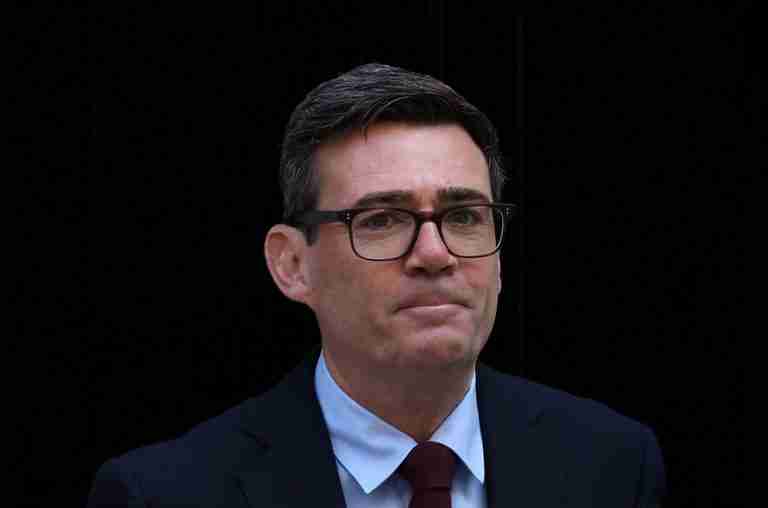
Burnham, who has been in the job since July, said Britain had long endorsed the two-state solution in the Middle East, but words needed to be backed by action
International News via Reuters:
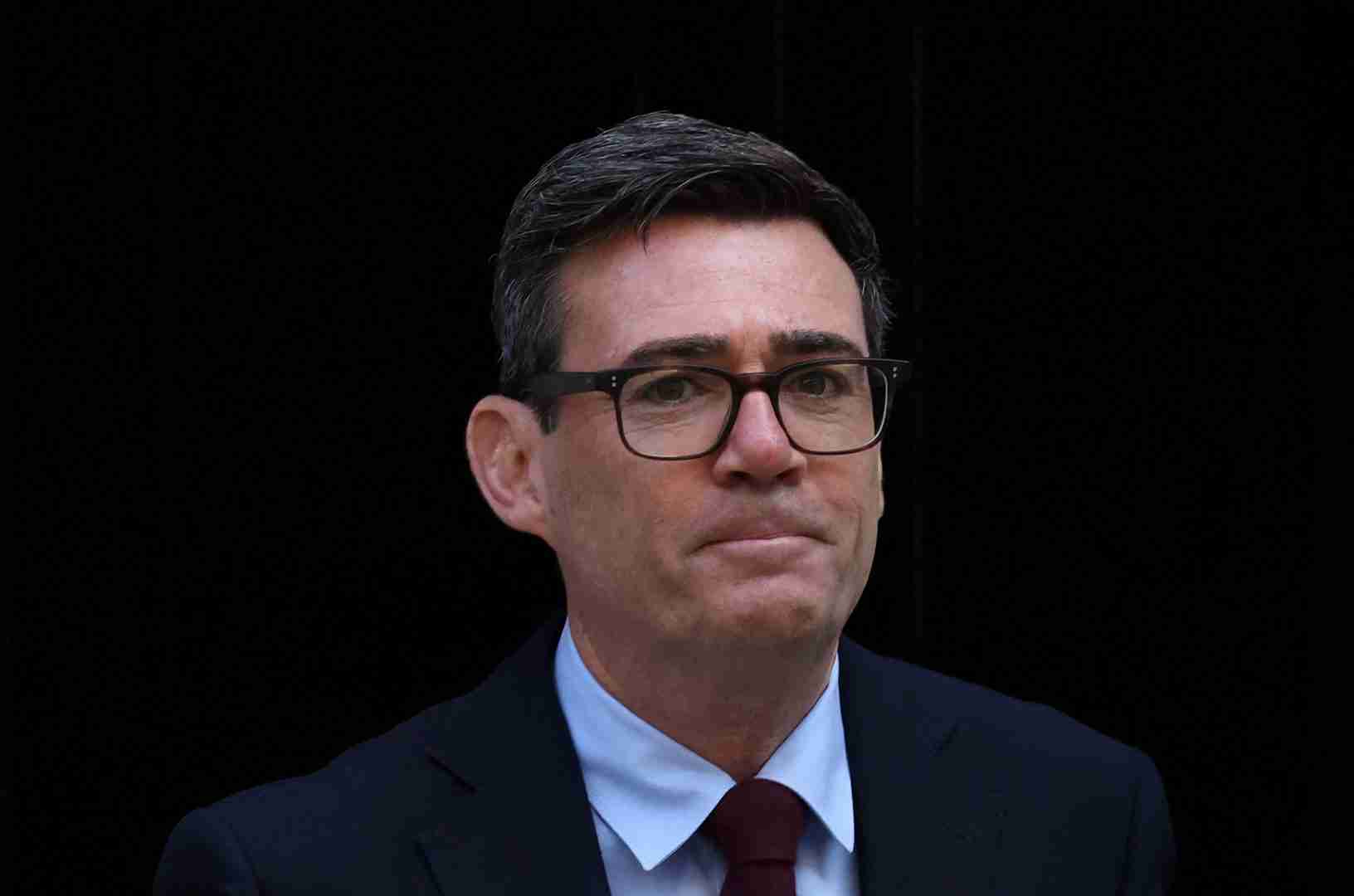
Britain had to “stand for something”, Prime Minister Andy Burnham told parliament on Wednesday in a defence of his government’s decision to block imports from Israeli settlements in the occupied West Bank.
Burnham, who has been in the job since July, said Britain had long endorsed the two-state solution in the Middle East, but words needed to be backed by action.
“Leadership is about taking action where there is injustice, where we need to correct unfairness, people being driven out of their homes,” he said.
“In this difficult and dangerous world, Britain has to stand for something.”
The import ban, announced on Tuesday by Foreign Secretary Ed Miliband alongside measures targeting settlement-linked companies and individuals, marked one of Britain’s most significant policy shifts toward Israel in years. It came as part of a coordinated push with France and Canada to pressure Israel over settlement expansion that the countries say threatens the two-state solution.
Israel reacted angrily to the sanctions. It ordered the closure of Britain’s consulate in East Jerusalem and barred 12 Britons from entering Israel in retaliation.
Israel’s Foreign Minister Gideon Saar said he had thanked Kemi Badenoch, the leader of the British opposition Conservative Party, for her criticism of the move.
Badenoch wrote in the Sun newspaper that the Labour government was “putting its own party-political interests ahead of our national interest”.
But she steered clear of the issue when she had the opportunity to question Burnham on Wednesday and instead chose to focus on defence spending.
Burnham, however, was keen to highlight action on an issue that had long been demanded by many of his lawmakers.
“We will always stand with the underdog and take what action we can to support them,” he said.
“That is leadership on the world stage, Britain being true to what it has always been about,” he said to cheers from his lawmakers.
Reporting by Paul Sandle; Editing by Sharon Singleton
There were 24 people arrested during the Labour Day Holiday weekend as the Bermuda Police Service continued with its repeatedly announced high visibility policing initiative.
Troublingly, four of those were for impaired driving with the highest breathalysed reading being three times the legal limit of 80 milligrams of alcohol in 100 millilitres of blood.
Speeding continues to be an issue with more than 30 tickets issued for that offence. Overall, close to 100 tickets were issued for traffic offences, ranging from illegal parking to underage driving and operating unlicensed and uninsured vehicles
Acting Chief Inspector, Anthony Smith, stated: “We’d like to thank the public for making the Labour Day weekend a relatively quiet one with no major incidents reported. However, drink driving and
speeding, two of the three major causes of road traffic collisions, inattention being the third, remain worryingly high. While our officers have a responsibility to reduce road harm through enforcement, road users must also take responsibility for their actions. One person’s inattention or driving while impaired or speeding could result in a life altering injury or loss of life.”
ARREST BREAKDOWN
D.U.I – 4
Actual Bodily Harm- 2
Breach of Domestic Violence Protection Order (DVPO) – 1
Common Assault – 2
Dangerous Driving – 1
Driving whilst disqualified by age – 1
Offensive/Threatening Words/ Carrying an offensive Weapon- 1
Theft (Greater than $1000) – 1
Trespassing- 1
Warrant- 7
Importation of a Controlled Drug – 1
Possession of a Controlled Drug with Intent to Supply – 1
Flights resumed at major airports across the country after the hours-long outage on Tuesday, which resulted in the cancellation of 2,000 flights and ramped up pressure on air traffic control provider NATS and its boss Martin Rolfe
International News via Reuters:
Airlines intensified their criticism of Britain’s aviation systems on Wednesday after a major air traffic failure left hundreds of thousands of passengers stranded, while ministers called in the flight control boss to explain the shutdown.
Flights resumed at major airports across the country after the hours-long outage on Tuesday, which resulted in the cancellation of 2,000 flights and ramped up pressure on air traffic control provider NATS and its boss Martin Rolfe.
Ryanair said NATS had told it that the cause of shutdown was the same problem behind the last major air traffic outage in 2023 which cost airlines £100 million ($135 million). The carrier has repeatedly called for Rolfe to step down.
Transport minister Heidi Alexander will later on Wednesday hear directly from Rolfe after she summoned him to explain the fault, amid concerns over the resilience of the infrastructure and technology.
The NATS shutdown in August 2023 caused travel chaos, and there was also a radar-related technical issue in July 2025, which affected major airports including Britain’s largest, Heathrow.
“I am seeking assurances that lessons will be learned and systems that support aviation are up to the job,” Alexander said on X.
‘ABSOLUTE RERUN’ OF 2023 MELTDOWN
Michael O’Leary, group CEO of Ryanair which is Europe’s biggest airline, told Reuters the outage was “an absolute rerun” of what happened in 2023, when a rogue flight plan caused the shutdown.
“Fire him. He’s been there since 2015. He is useless,” he said of Rolfe.
Apologising to those affected by the issue, Rolfe had earlier said that the problem was not the same as in 2023.
“This will be something different that we’ve never seen in 50 years of operation,” he told BBC Radio, adding that NATS had ruled out a cyberattack.
NATS did not immediately respond when asked by Reuters to confirm the cause.
Aviation analytics company Cirium confirmed about 2,000 flights to and from UK airports had been affected by the outage on Tuesday and Wednesday combined, with 30% of scheduled departures grounded on Tuesday and 5% on Wednesday.
Ryanair, which said Britain’s air traffic services routinely underperformed those in other European countries, said its losses from Tuesday’s outage were £3 million so far, after it cancelled 260 flights affecting 48,000 passengers.
British Airways on Tuesday cancelled or diverted 100 flights with tens of thousands impacted, and said on Wednesday 190 flights had been cancelled as disruption continued.
As operations restarted, Britain’s main airports – including London’s major Heathrow and Gatwick hubs – said passengers should check with their airline before heading to the airport as schedules would have changed.
“We are expecting knock-on impacts as aircraft and crew reposition,” the UK’s busiest hub said in a statement.
NATS, a public-private partnership which is partially owned by airlines including British Airways and easyJet, pension funds and the government, paid its owners dividends of £175 million in 2025.
Ryanair is suing NATS at London’s High Court and seeking over £7 million over the 2023 outage and has called on NATS to reinvest its profits into performance improvements and hiring more staff.
($1 = 0.7379 pounds)
Reporting by Sarah Young and Sam Tobin; editing by Michael Holden and Toby Chopra
Stock markets across the globe came under pressure as the latest surge in energy prices drove concerns that higher inflation will prompt central banks to keep monetary policy tighter for longer
A man walks in front of an electronic screen displaying Japan’s Nikkei stock prices quotation board inside a conference hall in Tokyo, Japan, April 27, 2026. REUTERS/Issei Kato
International News via Reuters:
Brent crude prices surged past $100 a barrel on Wednesday, as escalating conflict in the Middle East fuelled worries about energy-driven inflation and sent global stocks tumbling ahead of several major central bank decisions.
Brent crude futures rose as much as 3% to a session high of $100.95, breaching the symbolic price level for the first time since July 24, after Iran said it fired ballistic missiles at a U.S. base in Jordan and both sides claimed to have attacked vessels, raising worries about oil supplies from the region. [O/R]
Stock markets across the globe came under pressure as the latest surge in energy prices drove concerns that higher inflation will prompt central banks to keep monetary policy tighter for longer.
U.S. stock index futures fell about half a percent, setting Wall Street indexes up for a third consecutive day of losses. [.N]
The pan-European STOXX 600 index dropped 1.5% by 1123 GMT, on course for its biggest percentage drop in two months, with economically sensitive banking and industrial stocks among the top decliners. [.EU]
“$100 is a round number, a psychological number, but the break-even point of oil prices for the developed markets is much higher,” said Societe Generale multi-asset strategist Manish Kabra. “We think crude needs to hit $150 to create a major drawback in demand cycle.”
However, Kabra cautioned that if price margins for refined products did not decline “then diesel prices go up and there tends to be a trickle-down impact on inflation and services.”
U.S. diesel prices hit a record high last week, as a global supply crunch intensified after wars in Ukraine and Iran impacted refineries in Russia and the Middle East. The fuel is widely used in trucking, agriculture and industrial activity, and higher prices could have an impact on the broader economy.
The euro edged higher ahead of the European Central Bank’s policy decision on Thursday, with markets widely expecting a hike amid inflationary pressures from the Iran war. The currency rose to a more than one-week high of $1.16493.
The yen strengthened towards the nearly seven-month high touched against the dollar on Tuesday as traders exited short positions in the Japanese currency. Expectations are building for faster Bank of Japan rate hikes and a potential rush of repatriation of Japanese capital.
Both Japan and the euro zone are energy importers.
U.S. INFLATION TEST
The 10-year U.S. Treasury yield, the benchmark for global borrowing costs, traded at 4.808%. It touched a near three-year high of 4.818% last week as traders ramped up expectations of a tighter monetary policy.
U.S. producer and consumer price reports, set to be released later this week, are seen as a real test for those bets, with policymakers looking for further evidence that inflation pressures are continuing to cool.
Traders assign close to 60% odds for a quarter-point hike or a hold from the U.S. Federal Reserve on Wednesday of next week, while being all but certain of a quarter-point increase from the BOJ two days later.
The yen strengthened around 0.4% to 153.350 per dollar, edging back towards its high of 152.89 from the previous session. It had surged around 4% over the last five sessions, with hawkish comments from BOJ officials ostensibly initiating a move that then snowballed as breaks of key levels triggered additional buying, market players said.
Sterling edged 0.1% higher at $1.3558. The Bank of England is due to announce its latest policy decision on Thursday of next week, with economists predicting the key rate will be on hold for the remainder of this year.
Gold gained 1.1% to around $4,403 an ounce. [GOL/]
Reporting by Kevin Buckland and Sruthi Shankar; Editing by Amanda Cooper, Toby Chopra and Ros Russell
The deal, which saw strong demand, is the latest example of how hyperscalers are increasingly selling bonds across markets outside of the U.S. this year
International News via Reuters:
Amazon will raise £4.25 billion ($5.76 billion) in its first-ever sterling bond sale, more than initially expected, according to a bank managing the deal, as hyperscalers rush to diversify their funding sources to finance the AI boom.
The deal, which saw strong demand, is the latest example of how hyperscalers are increasingly selling bonds across markets outside of the U.S. this year, from euros to Swiss francs and the yen, as they make sure they can raise capital wherever they can, given their huge funding needs.
They have already issued more than $200 billion of debt this year, more than doubling from the whole of 2025, according to LSEG data.
Amazon saw over £12 billion in demand for the four-part deal. It will raise £1.25 billion from 3-year bonds, and £1 billion each from 6-, 12- and 19-year bonds, according to the memo sent by the lead manager seen by Reuters.
They will price to offer spreads of 53 basis points, 75 basis points, 90 basis points and 93 basis points, respectively, over corresponding British government bonds, the memo added.
The pound is the latest currency Amazon has added to its funding programme after tapping the euro, Swiss franc and Canadian dollar bond markets.
The European Central Bank warned earlier in September that hyperscalers’ push into the euro zone bond market could potentially crowd out other borrowers and push up their financing costs.
Google-parent Alphabet, was the first hyperscaler to tap the sterling market in February, when it raised £5.5 billion from a five-part deal, including a rare 100-year bond. It has also raised Japanese yen, Canadian and Australian dollar debt this year.
According to LSEG data, this is Amazon’s first bond sale since July, when it received weaker demand than in the past for a $25-billion offering, in one of several signs that the heavy pace of hyperscaler borrowing has started to test the limits of investor demand.
($1 = 0.7373 pounds)
Reporting by Yoruk Bahceli; Editing by Amanda Cooper
The government, which lacks a majority in the lower house, is set to propose its budget in the coming weeks though several opposition parties have already said they would reject it
International News via Reuters:
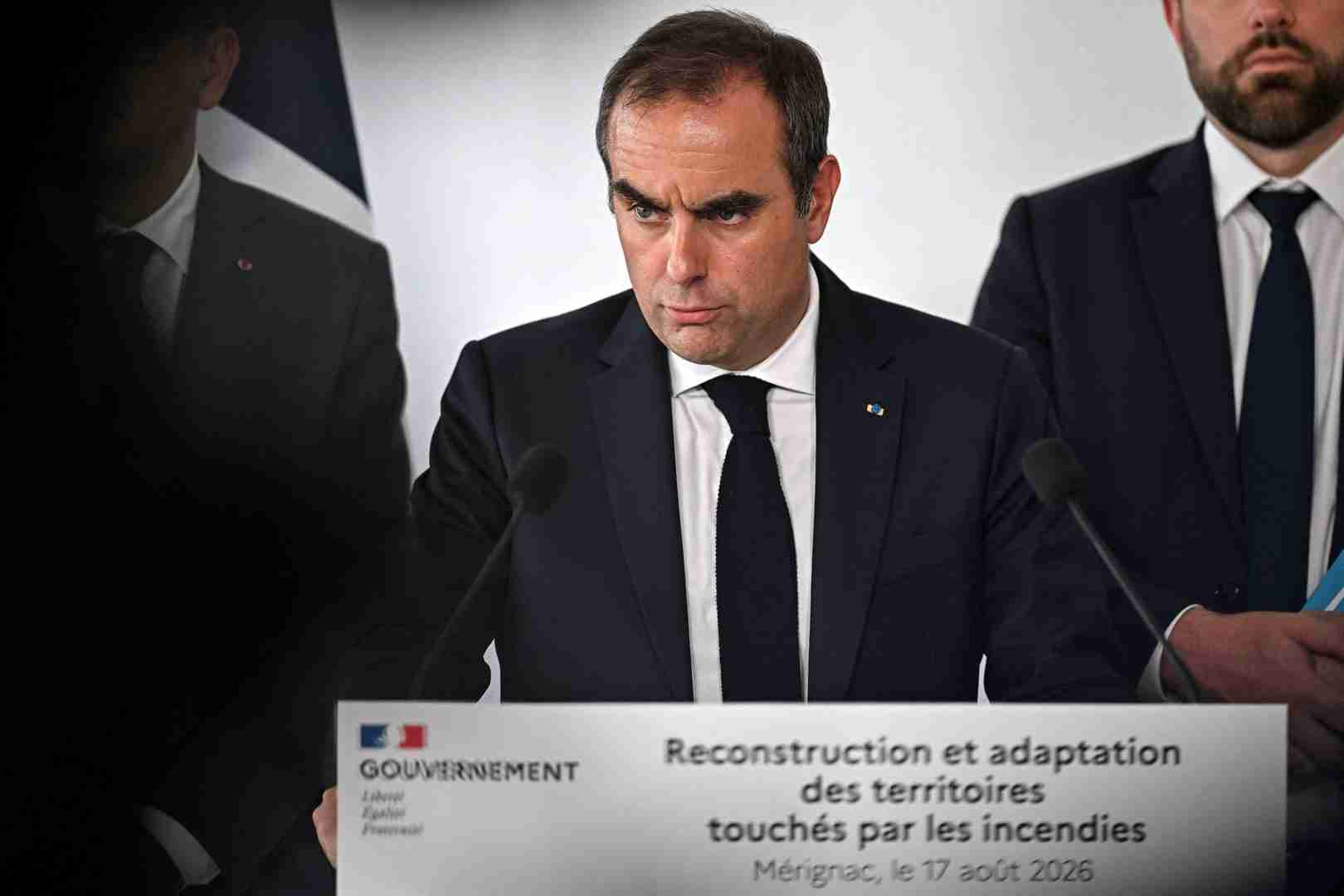
France plans to reduce, but not abolish, the exceptional corporate tax surcharge imposed on very large companies in its 2027 budget, Prime Minister Sebastien Lecornu said in a letter to executives on Wednesday, pledging tax stability to support growth.
• The government, which lacks a majority in the lower house, is set to propose its budget in the coming weeks though several opposition parties have already said they would reject it.
• France introduced the temporary surtax on large companies in 2025 that was only supposed to last a year, but was rolled over into 2026 under a budget compromise.
• In the letter, Lecornu also said that the government planned to introduce a new tax incentive to encourage business transfers, particularly to employees.
• Under the planned “Papin Pact”, companies taken over by staff would benefit from accelerated depreciation of new equipment needed for production, with enhanced support for small businesses.
• Lecornu said the government would review state support for businesses to determine whether they genuinely promoted investment, innovation, decarbonisation or production in France, or had become ineffective windfalls.
• He said there would be no new taxes in the 2027 budget, arguing that France could not restore its public finances by undermining economic growth.
• France’s largest employers’ organisation Medef said it welcomed Lecornu’s message, saying it was necessary to address the concerns of business leaders.
Reporting by Charlotte Van Campenhout; Editing by Alison Williams
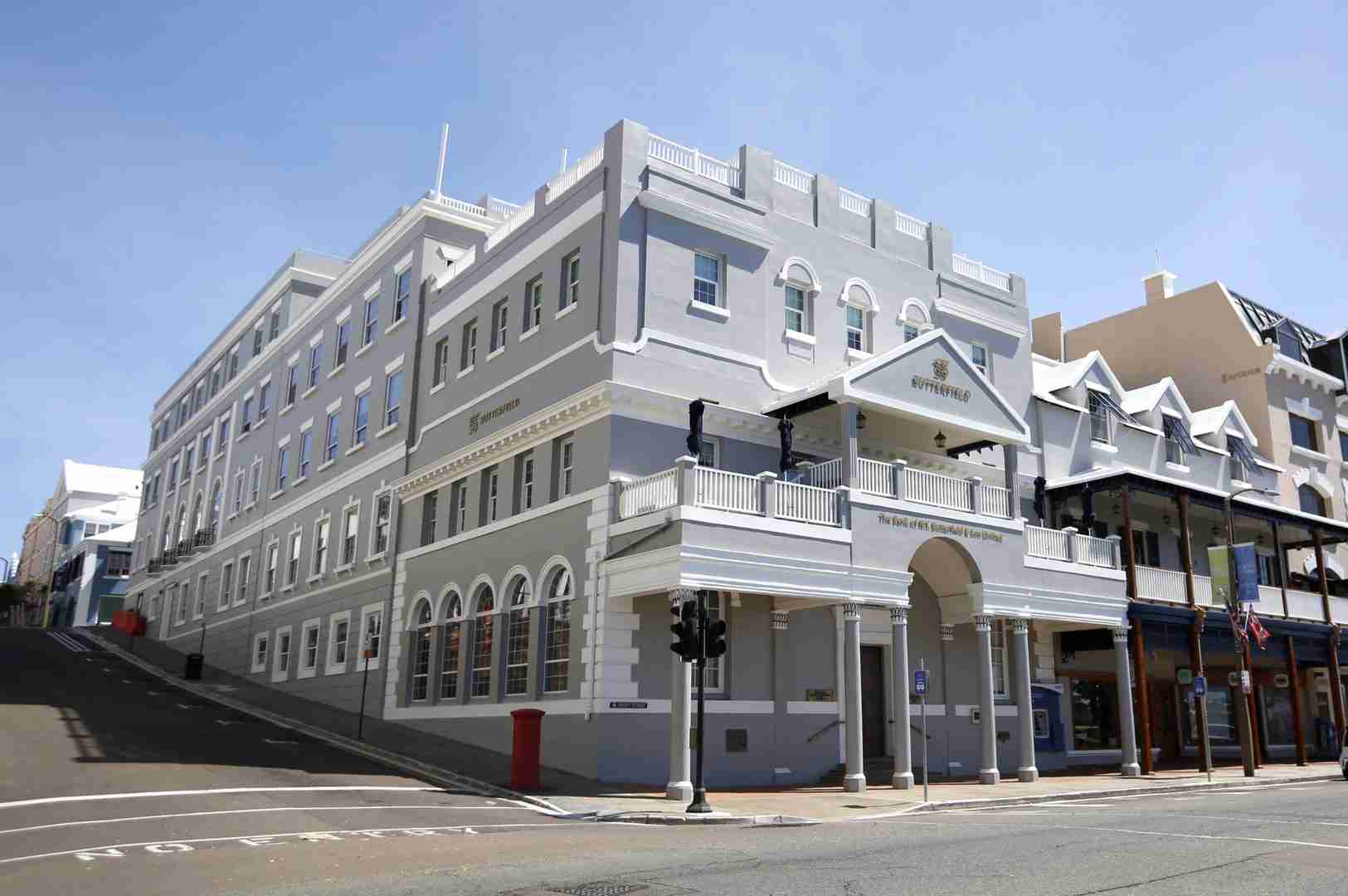
Butterfield has donated $30,000 to The Eliza DoLittle Society (TEDS) to support direct food purchases and strengthen overall pantry capacity.
The funding is expected to provide about one month’s worth of quality grocery support for registered households, helping ensure continued access to nutritious food and essential supplies for individuals and families experiencing financial hardship across Bermuda.
The Eliza DoLittle Society has operated in Bermuda for more than 20 years and, in the past four years, has assisted about 2,433 people, or 875 households (who together made 16,096 annual pantry visits), each receiving a nutritious bag of groceries. The pantry reduces pressure on household grocery budgets, allowing limited income to go toward other essentials such as housing, utilities, healthcare, transportation, and childcare. Rising food prices remain a key factor in Bermuda’s food insecurity, increasing both the cost of services and demand for support each year since 2015.
[QUOTE FROM CLARE MELLO-ROBINSON, EXECUTIVE DIRECTOR OF THE ELIZA DOOLITTLE SOCIETY]
“We are grateful for Butterfield’s partnership and shared commitment to strengthening food security in Bermuda. This support comes at a particularly important time for TEDS. Rising food costs, sustained pantry use, and ongoing financial pressure have strained the programme, while many households continue to rely on TEDS for regular food support. Butterfield’s funding will help protect the quality and consistency of grocery support while TEDS continues to manage costs responsibly.
[QUOTE FROM JODY FELDMAN, MANAGING DIRECTOR OF BUTTERFIELD IN BERMUDA]
“The Eliza DoLittle Society’s commitment to supporting individuals and families facing food insecurity continues to make a meaningful difference in our community. We are proud to support them at this critical time and to help ensure more households have access to nutritious food when they need it most. Through this contribution, we hope to strengthen an important community resource and support TEDS in continuing its essential work.”
The donation reflects Butterfield’s commitment to supporting initiatives that improve quality of life, promote community wellbeing and help address critical social challenges facing Bermuda.
Those interested in assisting The Eliza DoLittle Society on their own can donate to its Butterfield Bank account: 2000 6060 20757 0100.
The Minister of Economy and Labour, the Hon. Jason Hayward, JP, MP, joined the Bermuda Economic Development Corporation (BEDC) for the graduation of the second cohort of its Sports Club Business Planning Incubator, highlighting the importance of strengthening the business capacity, financial management and long-term sustainability of Bermuda’s sports clubs.
The graduation and Business Plan Showcase Dinner, held on Thursday, 3 September at Devonshire Recreation Club, marked the completion of ten business-planning sessions delivered from May through September 2026.
The four graduating clubs were Devonshire Recreation Club, Somerset Bridge Recreation Club, Pembroke Hamilton Club (PHC), and E Sports Bermuda.
In his remarks, Minister Hayward congratulated the participating club executives and recognised their commitment to voluntarily dedicating their evenings and weekends to the programme while balancing their professional, personal and club responsibilities.
“Bermuda’s sports clubs hold some of the most valuable community assets in this country: fields, kitchens, halls and gathering spaces,” said Minister Hayward. “But maintaining an asset and running a sustainable business are two different disciplines. This Incubator was designed to close that gap.”
The Minister highlighted the practical outcomes achieved through the programme. The four clubs entered the Incubator without current written business plans or up-to-date financial statements. Upon completing the programme, they had both in place, along with costed revenue strategies they had already begun to implement.
Minister Hayward explained, “A club with a credible plan and clean financial records can sit across the table from a bank, a funder or a sponsor and be taken seriously”.
The programme also included site visits to each participating club, allowing the clubs’ business plans to be tested against the buildings and grounds where they will be implemented.
With the completion of the second cohort, eight clubs have now completed the Sports Club Business Planning Incubator, with 21 sessions delivered across the two cohorts.
Minister Hayward also highlighted the tangible results achieved by graduates of the first cohort, noting that more than $55,000 in grant funding has already been converted into facilities and equipment. The results demonstrate that sports clubs are an important part of Bermuda’s entrepreneurship ecosystem and that sound business planning can help community organisations strengthen their operations and access opportunities for growth.
“This is entrepreneurship,” said Minister Hayward. “Our national entrepreneurship strategy, The Bermuda Entrepreneurship Blueprint, sets out to build a stronger base of small and medium-sized enterprises. Sports and recreation is a real part of that picture, one of the largest sectors on BEDC’s register of entrepreneurs.”
The Bermuda Entrepreneurship Blueprint, developed jointly by the Ministry of Economy and Labour and BEDC, includes identifying skills development and access to financing among its five areas of focus. The Sports Club Business Planning Incubator supports both objectives by equipping clubs with business-planning skills and helping them develop the financial information and strategies needed to pursue funding and other opportunities.
Minister Hayward thanked the Department of Sport and Recreation for its support and funding, which made the development grants and programme delivery possible. He also acknowledged BEDC, Fusion 4 Business, the guest presenters and other specialists who contributed to the programme.
He also thanked Chelsea Warren and William Spriggs of BEDC’s Economic and Cooperative Development Unit for their work supporting the clubs throughout the programme.
“Government’s role is straightforward,” said Minister Hayward. “We work to create the conditions in which Bermudians and Bermudian organisations can succeed: funding, skills, guidance and access to capital. The work itself belongs to the clubs.”
In closing, Minister Hayward encouraged the graduating clubs to move from planning to implementation and to continue reviewing and strengthening their business plans as their organisations grow.
“To our four graduating clubs, you have done the planning. Now comes the implementation. Congratulations to each of you and thank you for what you give to your members and to your communities.”
Wednesday’s proposal is the latest in a series of Commission measures to improve the Single Market, security and supply chain resilience, and prevent industrial decline
International News via Reuters:
The European Commission has proposed new rules for public tenders that would create an EU-wide platform to improve access and slash paperwork for companies, and give EU governments the option to exclude bids based on EU content criteria.
Wednesday’s proposal is the latest in a series of Commission measures to improve the Single Market, security and supply chain resilience, and prevent industrial decline following warnings by former European Central Bank president Mario Draghi and former Italian Prime Minister Enrico Letta.
Public buying accounts for around 15% of the European Union’s gross domestic product, or about €2.5 trillion ($2.91 trillion) in 2025, making it a powerful tool for tackling intense international competition and supply chain vulnerability. But critics, including Draghi and Letta, say that the bloc has not used procurement to harness its collective strength.
Companies bidding for tenders complain they face a myriad of hard-to-navigate templates, languages and duplications across the bloc’s 27 jurisdictions, from federal to regional.
The new rules will simplify the tender process and make it harder for authorities to award contracts largely on the basis of cost to counter, for example, cheap goods offered by Chinese companies that may be subsidised.
“This is a radical simplification, as we are moving from three directives to a single regulation,” Commission Executive Vice President Stéphane Séjourné told reporters.
“We believe that part of the economic response and the shift in Europe’s economic model also stems from the internal market and its strengthening…It is therefore a strategic lever at a time when, in particular, China, India, the United States and all the major powers are now using this lever for their own industrial and economic strategies,” Séjourné said.
QUALITY, EUROPEAN PREFERENCE
Procurement is also a central part of the European Innovation Act, another initiative to promote EU competitiveness proposed on Wednesday. It is designed to provide sufficient demand for innovations to come to market by increased investment, including from public bodies.
The new regulation would replace the EU’s three existing public procurement directives, reducing national discretion in how the rules are applied. The rules will cover all sectors except defence.
Authorities would be encouraged — and in some cases required — to take account of risks linked to critical infrastructure, cybersecurity, supply-chain disruptions, strategic dependencies and foreign influence when awarding contracts.
Contracts would have to be awarded on the basis of the “best price-quality ratio”, with quality criteria accounting for at least 30% of the total score and at least 50% for labour-intensive contracts.
The measures stop short of a blanket “Buy European” requirement, but would allow European authorities to rule out bids for public contracts that have less than 50% European content by total value, restrict access to EU operators only, and favour EU companies in strategic sectors. Countries with which the EU has trade agreements and reciprocity on public buying will not be excluded.
The new EU-wide digital procurement system would include electronic business credentials, interoperability rules for procurement platforms and national and EU-level procurement data spaces designed to improve transparency, oversight and cross-border access to contracts.
“It’s a very simple solution for businesses and SMEs alike: just a single registration on this platform, rather than having to register as many times as there are public tenders to respond to,” Séjourné said.
($1 = 0.8601 euros)
Reporting by Julia Payne, Editing by Catherine Evans
The Finnish deal includes a 22-year purchase agreement for up to 50% of the energy output of one of Finland’s two nuclear plants, its operator Fortum said separately
International News via Reuters:
Alphabet’s Google will invest at least €13 billion ($15.1 billion) in artificial intelligence infrastructure in Finland over the next two years and has signed its first nuclear power contract outside the U.S., it said on Wednesday.
The Finnish deal includes a 22-year purchase agreement for up to 50% of the energy output of one of Finland’s two nuclear plants, its operator Fortum said separately.
Nuclear power, as a source of large amounts of low-carbon energy, is one of the attractions Finland offers as companies including Microsoft and TikTok owner ByteDance as well as Google seek sites for data centres while containing energy costs and meeting climate goals.
“This is Google’s first nuclear energy deal outside of the United States, and we think it’s a really important cornerstone to everything that we are doing here,” the U.S. company’s Chief Investment Officer Ruth Porat told reporters in Helsinki.
Fortum and Google will also explore the development of new nuclear and renewable energy in Finland, the companies said.
Fortum’s share price rose 10% by 0825 GMT, outperforming a 1.4% increase in the Helsinki benchmark stock index.
BIGGEST DEAL SO FAR IN EUROPE
Alphabet this year increased its global investment to between $195 billion and $205 billion as it seeks to capture growing computing demand. Google said the AI investment deal in Finland is the biggest yet in Europe.
The investments will include data centres, electricity grid improvements and clean energy and battery projects driving services such as Gemini, Search, Maps and YouTube, Google said in a statement.
“The new digital infrastructure will serve as building blocks for Finnish and broader European digital readiness, innovation, and AI development,” the company said.
The investment, to be undertaken in 2027 and 2028, will contribute some $3.6 billion to Finland’s gross domestic product during the construction phase, and is projected to support some 7,000 jobs annually once operational, Google said.
Finland’s Prime Minister Petteri Orpo said in a statement Google’s decision was “a clear testament to our strengths”.
“The value of the data economy extends far beyond direct investment into spurring innovation, research, and development,” he added.
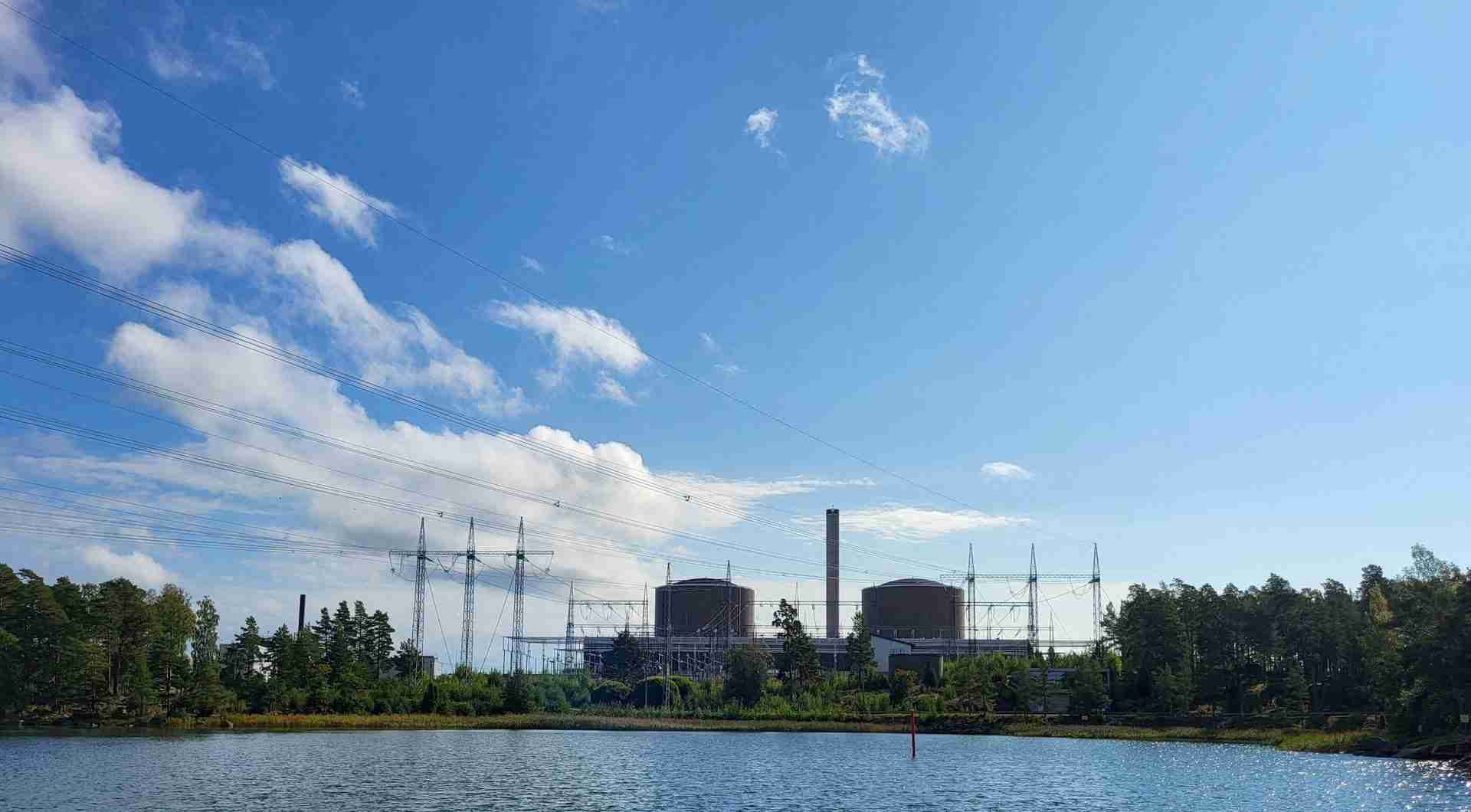
In its statement utility Fortum said the long-term purchase deal provided economic certainty for a lifetime extension and upgrade of the Loviisa power plant through 2050. The plant is situated near Google’s Hamina data centre.
Apart from copious amounts of low-emission power, Finland’s cold climate lowers costs because it reduces the amount of energy needed to cope with the heat produced by data centres.
($1 = 0.8603 euros)
Reporting by Essi Lehto, editing by Terje Solsvik and Barbara Lewis
The move brought futures prices into line with physical crude and fuel markets, where prices have already been trading above the psychological threshold
International News via Reuters:
Brent crude futures breached $100 a barrel on Wednesday for the first time since July 24, hitting a six-week high as the escalating Middle East conflict stoked concerns over oil supplies.
The move brought futures prices into line with physical crude and fuel markets, where prices have already been trading above the psychological threshold.
Brent crude futures were up $2.88, or 2.94%, at $100.80 a barrel by 1210 GMT, after earlier touching $100.95. U.S. West Texas Intermediate crude was up $2.57, or 2.76%, at $95.60 a barrel, its highest level since early June.
Since the Iran war began on February 28, Brent has surged as high as $126.41 a barrel, a peak reached on April 30.
“The move towards and back above $100 Brent is reflecting a market that increasingly has to change its view on how long the Middle East crisis will continue to curb supply from the region,” said Ole Hansen, head of commodity strategy at Saxo Bank.
This week, attacks by Iran-backed Houthis on Saudi energy facilities set oil installations ablaze, threatening a significant expansion of the conflict.
The attacks also threaten crude shipments via the Red Sea, which has been a key alternative route to the crucial Strait of Hormuz, where oil flows have been severely curtailed.
In a sharp escalation of the six-month-old war, U.S. forces also hit multiple Iranian oil tankers and Iran targeted a U.S. base in Jordan and attacked ships.
SUPPLY RISKS MOUNT
“Market participants appear to be pricing in a more prolonged conflict in the Middle East as well as the risk that the latest escalation in military strikes disrupts oil flows from the Middle East,” said Hamad Hussain, senior climate and commodities economist at Capital Economics.
“The key risk is whether the recent attacks on oil tankers lead to fewer ship-to-ship transfers taking place in the Gulf of Oman, which have so far played a key role in providing oil to global markets and keeping a lid on prices.”
A tanker carrying about 2 million barrels of Iraqi fuel oil was struck by a drone in Iraqi territorial waters on Wednesday, port officials said, while UKMTO, a British navy-linked agency, reported that several merchant vessels in the Gulf had been hit by disabling fire overnight.
In the week before a resumption in fighting on August 30, roughly 8 million to 9 million barrels per day had flowed through Hormuz, double the previous week’s volume, according to Rystad Energy’s Chief Economist Claudio Galimberti. More recently, flows have fallen below 2 million bpd.
FUELS, PHYSICAL CRUDE OIL ALREADY ABOVE $100
In the physical crude oil market, the dated Brent oil benchmark, against which roughly two-thirds of supply is priced, has been above $100 per barrel since September 3, according to LSEG data.
Physical oil markets react quickly to supply disruptions as buyers need to go into the market to seek alternative cargoes.
Meanwhile, consumers have been paying over $100 for their oil in the form of refined fuels such as gasoline and diesel for most of this year, as conflicts created a global refining crunch which sent fuel prices soaring even relative to crude.
European diesel futures were trading at around $199 per barrel on Wednesday, and have not been below $100 per barrel since the start of the Iran war.
Diesel refining margins, or the fuel’s premium to crude, have been at all-time highs since August as fuel shortages gripped markets, touching $78.90 per barrel on September 1.
By contrast, the margin averaged $21 per barrel in 2025 and $19.52 in 2024.
“We’re in a situation where actually, if we had normal refining margins, crude would be the equivalent of about $150,” said Alan Gelder, senior vice-president for refining, chemicals and oil markets at Wood Mackenzie.
Refining is tight globally because of lower exports from the Strait of Hormuz and Russia, and restrained throughputs in Asia, he added.
European gasoline has also been above $100 since March, and its premium to crude neared all-time highs of above $60 per barrel at the start of the month.
In the U.S., consumers faced record gasoline prices over the Labor Day holiday weekend, while diesel prices hit all-time highs last week as supply concerns continued to tighten fuel markets.
“It complicates the picture because central banks around the world are trying to grapple with high inflation,” said Nitesh Shah, commodity strategist at WisdomTree.
Reporting by Tony Munroe and Jeslyn Lerh in Singapore, Sethuraman N R in New Delhi, Anushree Mukherjee in Bengaluru, Robert Harvey in London. Editing by Louise Heavens, Jan Harvey and Mark Potter
With crude now 40% above where it was prior to the start of the war at the end of February, and European natural gas prices around three times higher, central banks are under pressure to raise interest rates
International News via Reuters:
The pound edged towards two-week highs against the dollar on Wednesday, shrugging off a rally in the oil price above $100 a barrel as the conflict in the Middle East widened.
With crude now 40% above where it was prior to the start of the war at the end of February, and European natural gas prices around three times higher, central banks are under pressure to raise interest rates.
Britain is especially reliant on energy imports. Consumer inflation picked up to a rate of 2.9% in July, from June’s 15-month low of 2.6%.
Money markets show traders do not expect the Bank of England to raise interest rates when it meets next week, but at least two hikes are priced in by next March, with a 40% chance of a third by then. The Federal Reserve, by contrast, is only expected to raise rates twice by that point, according to the rates market.
The pound was last a touch stronger on the day at $1.3545, its highest since August 28. It has been one of the better-performing major currencies against the dollar this year, with a gain of 0.5%, compared with a 1% drop in the euro, or the 2% decline in the yen.
INTEREST RATE EXPECTATIONS
Much of sterling’s tailwind has come from the expectation that the BoE will have to raise interest rates, especially with growth holding up.
Economists and analysts are at odds with the market, as is BoE Governor Andrew Bailey, who on Tuesday pushed back against the idea of a rate hike being inevitable.
“What I want to dispel is the idea that we’ve really got a secret plan, we know where we’re going to go to and it’s unconditional,” he said at a hearing before lawmakers in parliament.
There is good reason for the belief that higher energy prices could be a factor in the rate outlook, according to ING strategists, who say that, since the start of the Iran war, every $10 increase in Brent has added around 15 basis points to 2-year rates, compared with 11 bps for euro zone rates and 8 bps for U.S. ones.
The British rate outlook, as reflected by the market, appears to be overdone, ING strategist Michiel Tukker said, but the level of uncertainty around the oil price and the fiscal risks ahead, starting with the Autumn Budget next month, complicate the prospects for the pound itself.
“Only once the predictability of oil prices improves do we see scope for tactical opportunities. But with oil likely to test $100 again, we stay on the sidelines,” he said.
Reporting by Amanda Cooper; Editing by Alex Richardson
To provide the best experiences, we use technologies like cookies to store and/or access device information. Consenting to these technologies will allow us to process data such as browsing behavior or unique IDs on this site. Not consenting or withdrawing consent, may adversely affect certain features and functions.
Functional
Always active
The technical storage or access is strictly necessary for the legitimate purpose of enabling the use of a specific service explicitly requested by the subscriber or user, or for the sole purpose of carrying out the transmission of a communication over an electronic communications network.
Preferences
The technical storage or access is necessary for the legitimate purpose of storing preferences that are not requested by the subscriber or user.
Statistics
The technical storage or access that is used exclusively for statistical purposes.The technical storage or access that is used exclusively for anonymous statistical purposes. Without a subpoena, voluntary compliance on the part of your Internet Service Provider, or additional records from a third party, information stored or retrieved for this purpose alone cannot usually be used to identify you.
Marketing
The technical storage or access is required to create user profiles to send advertising, or to track the user on a website or across several websites for similar marketing purposes.