The pan-European STOXX 600 rose 0.3% to 551.8 points by 0851 GMT, although still on track to record a second successive weekly decline
International News via Reuters:
European shares bounced back from three-week lows on Friday with a boost from financial and industrial stocks, while the healthcare sector recouped early losses following U.S. President Donald Trump’s latest tariff salvo on pharmaceutical firms.
The pan-European STOXX 600 rose 0.3% to 551.8 points by 0851 GMT, although still on track to record a second successive weekly decline.
Germany’s Munich Re and France’s SCOR led gains in European insurer stocks, which jumped 1.3% after a three-day losing streak when it declined 0.5%.
Construction and materials gained 0.6%, with Ireland’s Kingspan jumping 2.9% after brokerage Citigroup raised its price target.
Steel stocks across Europe also gained after German business daily Handelsblatt reported that the European Commission plans to impose tariffs of 25% to 50% on Chinese steel and related products.
The world’s second-largest steelmaker ArcelorMittal gained 2.7%, while Aperam rose 2%. Germany’s Thyssenkrupp gained 3% and Salzgitter jumped 5%.
TARIFFS BACK IN FOCUS
Healthcare stocks were flat after earlier losing as much as 0.8%, a day after Trump unveiled a new round of punishing tariffs, including a 100% duty on branded drugs.
“It was already priced in,” said Nabil Milali, multi-asset & overlay portfolio manager at Edmond de Rothschild Asset Management in Paris.
“A lot of investors were expecting these kinds of tariffs and it was partly reflected in valuations in the healthcare sector.”
The sector is one of the worst performers in Europe so far this year, with a sharp decline in weight-loss drugmaker Novo Nordisk being one of the biggest drags.
Trump also announced a 25% levy on heavy-duty trucks, dragging the shares of truckmakers Daimler Truck and Traton down more than 2% each.
Later in the day, focus would turn to a key inflation reading in the United States that could help assess the Federal Reserve’s future policy path.
Markets had been betting on aggressive interest rate cuts by the Fed this year, though strong U.S. economic data have led to some trimming in optimism.
Traders currently see about 39 basis points worth of easing by December, compared to more than 40 bps earlier this week, according to data compiled by LSEG.
Among top-moving stocks, UK’s InterContinental Hotels Group gained 2.4% after J.P.Morgan double upgraded its rating to “overweight” from “underweight”.
Italian fashion group Brunello Cucinelli extended Thursday’s losses, rocked by short-seller Morpheus Research’s report. It was last down 5.3%.
Reporting by Shashwat Chauhan in Bengaluru and Amir Orusov in Gdansk; Editing by Harikrishnan Nair
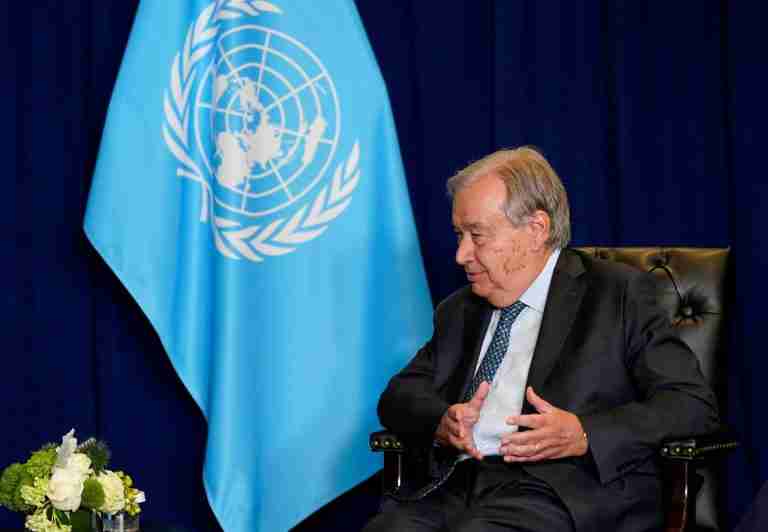
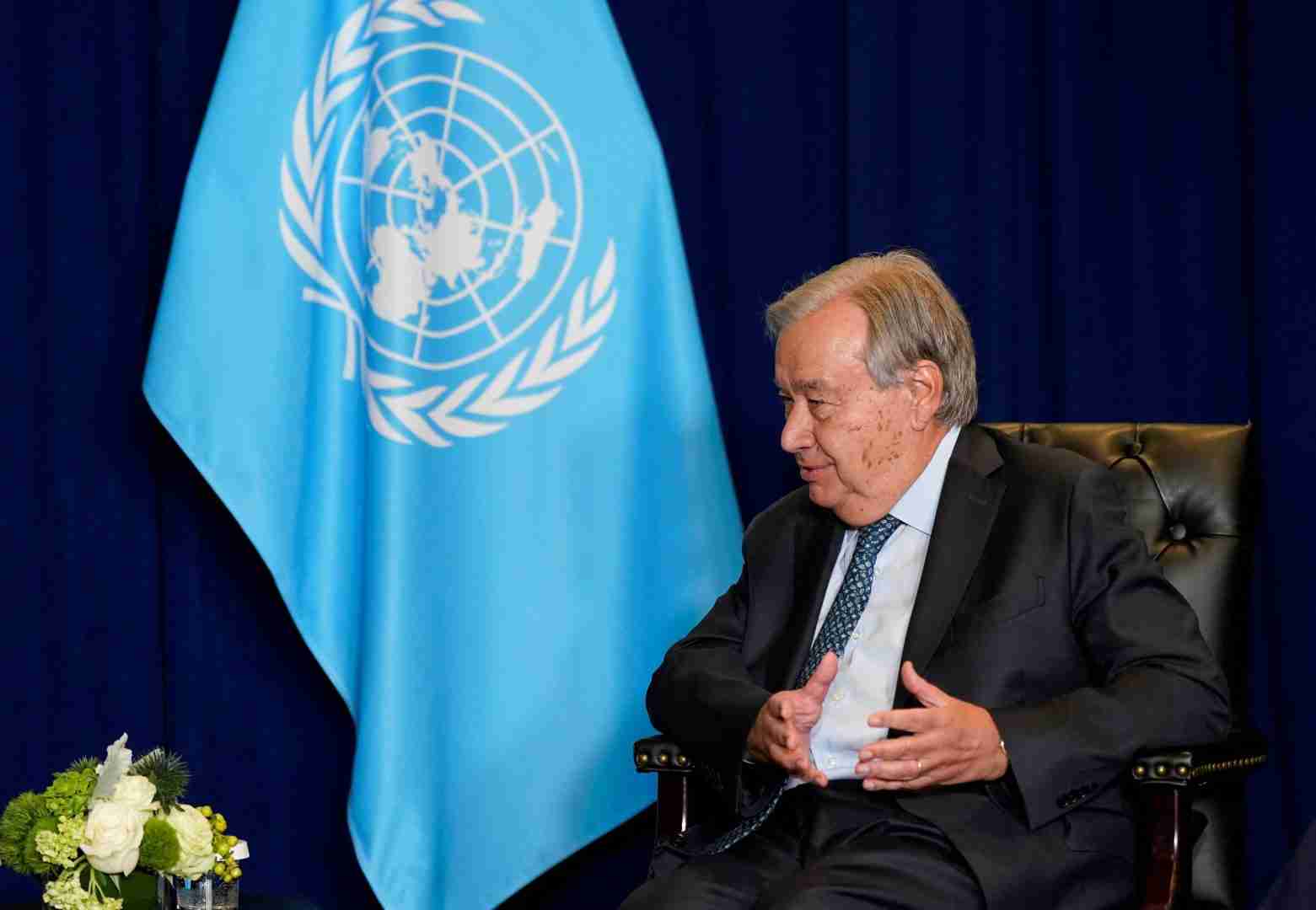
Secretary General Antonio Guterres wants to shrink the regular budget by 15% to improve efficiency and cut costs as the United Nations runs into a cash crisis as it turns 80
International News via Reuters:
U.N. cost savings plans for next year envisage far smaller cuts to senior staff than to lower ranks, a draft budget document shows, a contrast likely to fuel division just as financial support for the institution is slipping.
Secretary General Antonio Guterres wants to shrink the regular budget by 15% to improve efficiency and cut costs as the United Nations runs into a cash crisis as it turns 80.
A copy of the revised 2026 budget showed just two of 58 department head posts in the layer of under-secretaries-general beneath Guterres, or 3%, will go.
That compares with around 19% across the board and up to 28% for one lower-ranking category, according to Reuters calculations based on the U.N. document.
CRITICISM OF TOP-HEAVY U.N. STRUCTURE BARELY ADDRESSED
Ian Richards, president of the U.N. Geneva Staff Union, said Guterres’ proposals “will make the global body more top-heavy and bureaucratic”.
U.N. humanitarian agencies with their own budgets are set to shed more than a quarter of jobs.
U.N. spokesperson Stephane Dujarric said it was “inevitable” that the biggest reductions were where the workforce of more than 14,000 was largest.
“The timing of the UN80 revised estimates precluded more significant organizational restructuring that could reduce senior-level posts,” he said.
But he added that there was potential for further reductions in the future, including at senior levels.
The U.S. and China are the two biggest contributors, together making up 40% of the regular budget, and both are in arrears.
U.S. President Donald Trump, who is sceptical of multilateral institutions, slammed the U.N. this week at its headquarters, though he later told Guterres he backs it “100%”.
The number of senior posts has swollen over the decades – something that a U.N. internal memo this year sought to address through a major overhaul.
COUNTRIES GUARD PRESTIGIOUS U.N. POSITIONS
A non-American under-secretary-general in New York with no dependants earns a tax-free net salary of nearly $270,000, a U.N. website showed. Extra grants and allowances are given for relocation costs, a non-working spouse and children.
U.N. officials say these cabinet-rank posts are the toughest to eliminate, partly because countries view them as sources of prestige and influence. Unwritten rules reserve some for specific states.
Ronny Patz, an expert in U.N. financing, said Guterres appeared to have tried to avoid a backlash by sparing posts at the top. “It’s definitely not a bold proposal. He’s left out some of the hardest choices.”
The proposals are not final and require approval by the General Assembly’s ‘Fifth Committee’ in December after consultations with countries.
Dujarric said reducing senior posts meant structural changes, which would require member states’ approval.
Under the proposed budget, the under-secretary-general roles to be trimmed are one for policy and the special adviser on Cyprus. In the next layer down, six assistant secretary-general posts will be cut, or 11%.
Doubts about the U.N.’s future abound internally; in a survey of employees in August, less than a fifth voiced confidence in Guterres’ leadership.
Less than 10% said they thought U.N. job reforms to date were based on a sound rationale.
Reporting by Emma Farge; Additional reporting by Michelle Nichols in New YorkEditing by Dave Graham and Kevin Liffey
Banks including HSBC, NatWest and Lloyds have launched a pilot using tokenised deposits for payments via online marketplaces
International News via Reuters:
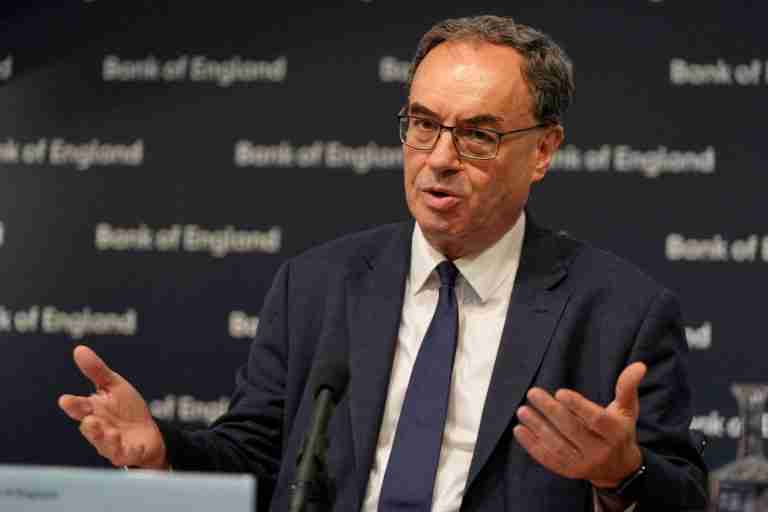
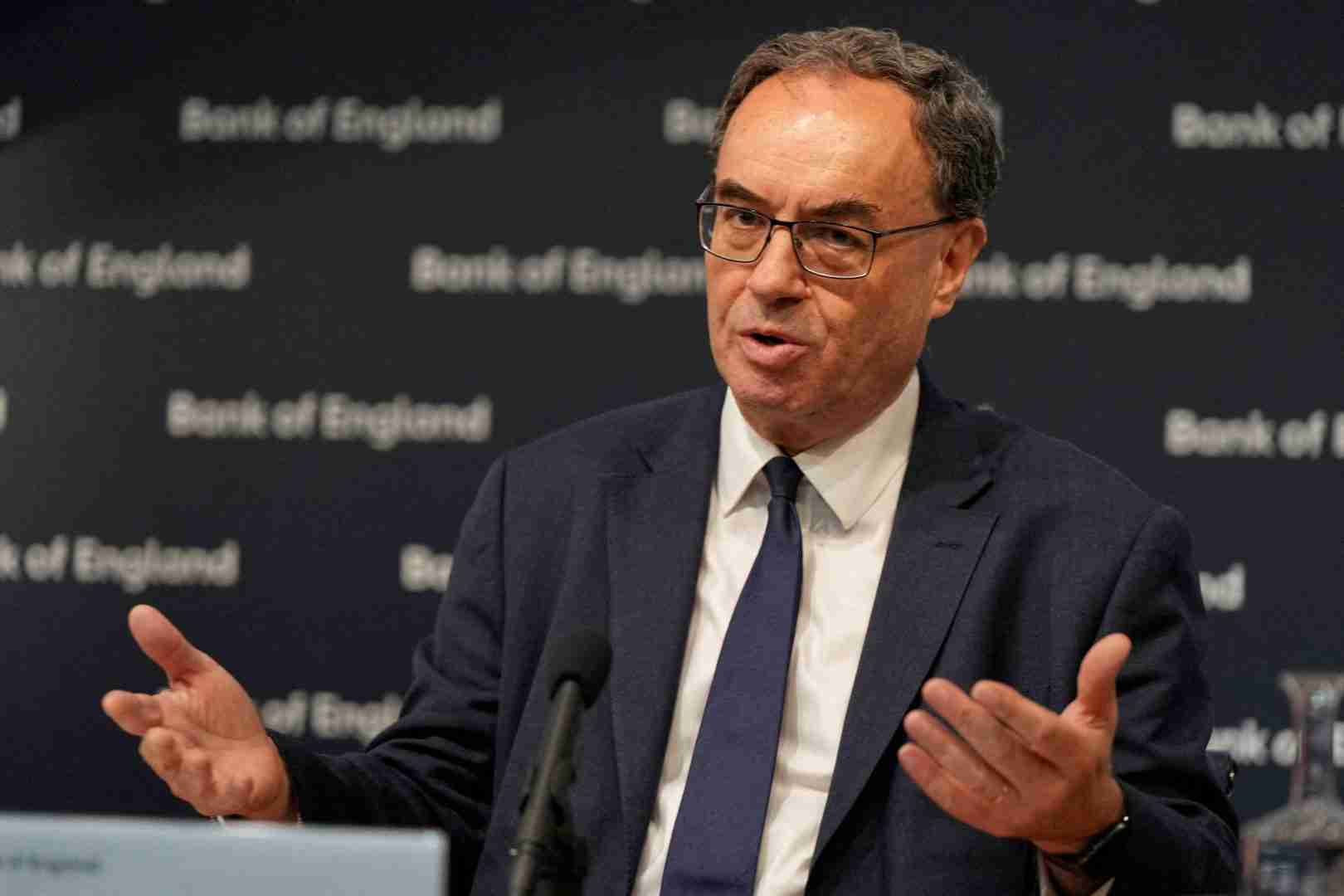
Britain’s biggest lenders are pushing ahead with plans to launch tokenised versions of customer deposits next year, a move that follows Bank of England Governor Andrew Bailey’s plea to prioritise the technology over stablecoins.
Tokenisation typically refers to creating digital representations of assets such as deposits, stocks and bonds that are stored on a blockchain. Proponents say they can make transacting faster, cheaper and safer.
Banks including HSBC, NatWest and Lloyds have launched a pilot using tokenised deposits for payments via online marketplaces, industry group UK Finance said on Friday.
BAILEY SCEPTICAL OF STABLECOINS
The pilot comes after Bailey said in July that while he was “not against stablecoins”, he could not understand their need and believed tokenisation offered more value.
Stablecoins, a type of cryptocurrency pegged to a fiat currency, have boomed in popularity. U.S. President Donald Trump’s GENIUS Act has brought more regulatory clarity and prompted several U.S. banks to say they could enter a market dominated by non-bank players.
On Thursday, a group of European lenders also announced plans to launch a euro-denominated stablecoin.
Bailey has warned that stablecoins take money out of the banking system and could threaten financial stability. In an interview with The Times newspaper in July, he warned banks against issuing their own stablecoins.
While the UK’s Financial Conduct Authority is not expected to finalise stablecoin regulation until end-2026, the BoE has said banks can experiment with tokenised deposits within existing regulation.
A senior UK banking official said tokenised deposits lacked the “brand image of a stablecoin” but were an important technological upgrade.
Many big lenders are examining both. Citi’s CEO said in July that tokenised deposits were probably more important than a stablecoin.
Tokenised deposits had not reached their full potential because they could not interact between financial institutions but the new pilot solves this, said Manish Kohli, HSBC’s head of global payments solutions.
While the pilot is currently focused on domestic use cases, Kohli said the technology showed the most promise in cross-border transactions. “That’s where we’re seeing a lot of client demand,” he told Reuters.
Britain’s tokenised deposit pilot also involving Barclays, Nationwide and Santander, will run until mid-2026. The pilot will also test applications in the remortgaging process and digital asset settlement.
Jana Mackintosh, managing director for payments and innovation at UK Finance, told Reuters that tokenisation allowed banks to innovate while keeping payments inside the regulated banking system.
Meteorological agency IPMA placed the islands on red alert – the highest emergency level, used only for weather events carrying extreme risk
International News via Reuters:
Portugal’s Azores archipelago cancelled all tourist and recreational activities for 24 hours and shuttered schools and public services on Thursday, urging people to stay indoors ahead of the arrival of cyclone Gabrielle.
Meteorological agency IPMA placed the islands on red alert – the highest emergency level, used only for weather events carrying extreme risk.
The environment secretary of the Azores’ regional government, Alonso Miguel, told reporters any activities along the coastline and in riverside areas were prohibited for the next 24 hours.
The hurricane, packing winds of between 130 and 200 kilometres per hour (81-124 mph), was likely to hit seven of the archipelago’s nine islands in the Atlantic Ocean during Thursday night and produce sea swells that could reach 18 metres (59 feet), according to the IPMA.
The Azores, known for their lush volcanic landscape, rainy weather and free-grazing cows, are home to about 250,000 people.
Reporting by Sergio Goncalves; editing by Philippa Fletcher
The latest salvo follows wide-ranging duties on trading partners of up to 50% and other targeted levies on imported products such as steel
International News via Reuters:
U.S. President Donald Trump on Thursday unveiled sweeping new import tariffs, including 100% duties on branded drugs and 25% levies on heavy-duty trucks, set to come into force next week.
The latest salvo, which Trump said was to protect the U.S. manufacturing industry and national security, follows wide-ranging duties on trading partners of up to 50% and other targeted levies on imported products such as steel.
It’s the latest upheaval for global businesses already struggling with snarled supply chains, soaring costs and consumer uncertainty caused by Trump’s trade war. The barrage has cast a pall over global growth, while the Federal Reserve has said it is also contributing to higher U.S. consumer prices.
MARKETS WAIT FOR DETAILS
Asian stocks fell, led by pharmaceutical companies, but European shares recovered from early losses amid uncertainty over how widely some of the duties might apply.
Trump’s announcement on Truth Social did not say whether the new levies would be on top of existing national tariffs. Recent trade deals with Japan, the EU, and Britain include provisions that cap tariffs for specific products like pharmaceuticals.
A non-binding preliminary trade deal between the EU and the U.S. agreed to limit tariffs to 15%. Trump hasn’t yet signed an executive order confirming the agreement.
The European Commission said on Friday the agreement was “clear” that there was an all-inclusive 15% tariff ceiling, which represented “an insurance policy that no higher tariffs will emerge” for European companies.
Nathalie Moll, director general of the European Federation of Pharmaceutical Industries and Associations, said that urgent discussions were needed on “how to avoid any tariffs on medicines that harm patients in the EU and the U.S.”
Japan has an agreement that its tariff rates will not exceed others including the EU, Tokyo’s trade negotiator Ryosei Akazawa said.
DRUGMAKERS HAVE BEEN BRACING FOR TARIFFS
Trump said the 100% tariff on branded drugs would only apply to producers that had not already broken ground on U.S. manufacturing plants.
Many drugmakers have announced multibillion-dollar investments in the United States, and Switzerland’s Roche underlined on Friday that one of its U.S. units recently started work on a new facility.
Rival Novartis, which has also made a large U.S. investment pledge, did not reply to a request for comment.
Switzerland is still discussing a trade agreement with the U.S. and its economy ministry said it was waiting for more details on Trump’s latest announcement.
The Pharmaceutical Research and Manufacturers of America, an industry group, said companies “continue to announce hundreds of billions in new U.S. investments. Tariffs risk those plans.”
Trump had long threatened higher tariffs on drugmakers and Ireland, where mainly American-owned pharmaceutical factories employ about 2% of the workforce, has frontloaded much of its exports to the U.S. in anticipation.
Exports of chemical and related products, including medicinal and pharmaceutical products, leapt 536% year-on-year to 23.9 billion euros ($27.9 billion) in the first seven months of 2025, according to Ireland’s Central Statistics Office.
FOREIGN POLICY TOOL
Trump also followed through on a pledge to “bring back” America’s furniture business, saying he would start charging a 50% tariff on imported kitchen cabinets and bathroom vanities and a 30% tariff on upholstered furniture.
All the new duties take effect from October 1.
The new actions are seen as part of the Trump administration’s shift to better-established legal authorities for its trade actions, given the risks associated with a case before the Supreme Court on the legality of his global tariffs.
The administration has opened a dozen probes into the national security ramifications of imports of wind turbines, airplanes, semiconductors, polysilicon, copper, timber and lumber and critical minerals to form the basis of new tariffs.
Trump this week announced new probes into personal protective equipment, medical items, robotics and industrial machinery. He previously imposed national security tariffs on steel and aluminum and derivatives, light-duty autos and parts, and copper.
Trump has made the levies a key foreign policy tool, using them to renegotiate trade deals, extract concessions and exert political pressure on other countries.
His administration has played down the impact on consumer prices and touted tariffs as a significant revenue source, with Treasury Secretary Scott Bessent saying Washington could collect $300 billion by the end of the year.
INFLATION PRESSURE
More than half of the $85.6 billion in ingredients for medicines used in the U.S. are manufactured domestically, with the remainder from Europe and other U.S. allies, the U.S. pharmaceutical trade group said earlier this year.
When it comes to furniture, imports to the U.S. hit $25.5 billion in 2024, up 7% from the year prior. About 60% of those imports came from Vietnam and China, according to Furniture Today, a trade publication.
“Many of our members were shocked when we heard the news. I think the decision on the additional tariff is unfair,” said Nguyen Thi Thu Hoai from the Wood and Handicraft Association of Dong Nai province, one of Vietnam’s largest furniture clusters.
Furniture and wood products manufacturing employment in the U.S. has halved since 2000 to around 340,000 today, according to government statistics.
Higher tariffs on commercial vehicles could put pressure on transportation costs just as Trump has vowed to reduce inflation, especially on consumer goods such as groceries.
Trump said the new heavy-duty truck tariffs would benefit companies such as Paccar-owned Peterbilt and Kenworth and Daimler Truck-owned Freightliner.
The U.S. Chamber of Commerce earlier urged against imposing new truck tariffs, noting the top five import sources are Mexico, Canada, Japan, Germany, and Finland, which pose “no threat to U.S. national security.”
($1 = 0.8562 euros)
Reporting by Ismail Shakil, David Shepardson and David Lawder in Washington, Rocky Swift and Kantaro Komiya in Tokyo, Khanh Vu and Francesco Guarascio in Hanoi, Philip Blenkinsop in Brussels, and Julia Payne in London. Writing by David Shephardson, John Geddie and Charlie Devereux. Editing by Caitlin Webber, Lincoln Feast and Mark Potter
The benchmark FTSE 100 gained 0.38% at 0926 GMT and headed for a marginal weekly gain
International News via Reuters:
London stocks inched up on Friday, lifted by gains in travel and leisure shares, while investors showed little reaction to fresh tariff threats from U.S. President Donald Trump.
The benchmark FTSE 100 gained 0.38% at 0926 GMT and headed for a marginal weekly gain.
The mid-cap FTSE 250 rose 0.06% and was also on track for a weekly gain.
Travel and leisure stocks rose 1.1%, led by InterContinental Hotels Group’s 2.9% gain after JPMorgan double upgraded it to “overweight” from “underweight”. IHG was the top percentage gainer on the FTSE 100.
Premier Inn-owner Whitbread gained 1.1%, while JD Wetherspoon rose 1%.
Oil and gas sub-index rose modestly, tracking gains in oil prices. [O/R]
Heavyweight Shell was up 1%, boosting the FTSE 100.
Meanwhile, trade tensions resurfaced after Trump on Thursday unveiled a fresh round of punishing tariffs on a broad range of imported goods, including 100% duties on branded drugs and 25% levies on heavy-duty trucks, set to come into force next week.
Britain said on Friday it was engaging with Washington over the pharmaceutical measures, hoping for a favourable outcome.
European healthcare stocks were flat after earlier falling as much as 0.8%. But British pharma and biotech sub-index rose 0.3%.
“AstraZeneca could be better placed than some of its European rivals, due to promised extra investment in the U.S.,” said Kathleen Brooks, research director at XTB, also highlighting Trump’s promise to treat the UK differently on these tariffs.
“The FTSE 100 could be a relative ‘safe haven’ in the middle of this latest tariff storm.”
Among individual stocks, British engineering firm Babcock rose 1.7% after brokerage Berenberg raised its target price on the stock.
Later in the day, focus would turn to a key inflation reading in the U.S. that could help assess the Federal Reserve’s future policy path.
Markets had been betting on aggressive interest rate cuts by the Fed this year, though strong U.S. economic data have led to some trimming in optimism.
Reporting by Sanchayaita Roy in Bengaluru, additional reporting by Purvi Agarwal; Editing by Shreya Biswas
The study, which Meta disputed as misleading, comes amid renewed pressure on tech companies to protect children and other vulnerable users of their social-media platforms
International News via Reuters:
Numerous safety features that Meta has said it has implemented to protect young users on Instagram over the years do not work well or, in some cases, don’t exist, according to a report from child-safety advocacy groups that was corroborated by researchers at Northeastern University.
The study, which Meta disputed as misleading, comes amid renewed pressure on tech companies to protect children and other vulnerable users of their social-media platforms.
Of 47 safety features tested, the groups judged only eight to be completely effective. The rest were either flawed, “no longer available or were substantially ineffective,” the report stated.
Features meant to prevent young users from surfacing self-harm-related content by blocking search terms were easily circumvented, the researchers reported. Anti-bullying message filters also failed to activate, even when prompted with the same harassing phrases Meta had used in a press release promoting them. And a feature meant to redirect teens from bingeing on self-harm-related content never triggered, the researchers found.
Researchers did find that some of the teen account safety features worked as advertised, such as a “quiet mode” meant to temporarily disable notifications at night, and a feature requiring parents to approve changes to a child’s account settings.
Titled “Teen Accounts, Broken Promises,” the report compiled and analyzed Instagram’s publicly announced updates of youth safety and well-being features going back more than a decade. Two of the groups behind the report – Molly Rose Foundation in the United Kingdom and Parents for Safe Online Spaces in the U.S. – were founded by parents who allege their children died as a result of bullying and self-harm content on the social-media company’s platforms.
The findings call into question Meta’s efforts “to protect teens from the worst parts of the platform,” said Laura Edelson, a professor at Northeastern University who oversaw a review of the findings. “Using realistic testing scenarios, we can see that many of Instagram’s safety tools simply are not working.”
Meta – which on Thursday said it was expanding teen accounts to Facebook users internationally – called the findings erroneous and misleading.
“This report repeatedly misrepresents our efforts to empower parents and protect teens, misstating how our safety tools work and how millions of parents and teens are using them today,” said Meta spokesman Andy Stone. He disputed some of the report’s appraisals, calling them “dangerously misleading,” and said the company’s approach to teen account features and parental controls has changed over time.
“Teens who were placed into these protections saw less sensitive content, experienced less unwanted contact, and spent less time on Instagram at night,” Stone said. “We’ll continue improving our tools, and we welcome constructive feedback – but this report is not that.”
The advocacy groups and the university researchers received tips from Arturo Bejar, a former Meta safety executive, indicating that the Instagram features were flawed. Bejar worked at Meta until 2015, then came back in late 2019 as a consultant for Instagram until 2021. During his second stint at the company, he told Reuters, Meta failed to respond to data indicating severe teen safety concerns on Instagram.
“I experienced firsthand how good safety ideas got whittled down to ineffective features by management,” Bejar said. “Seeing Meta’s claims about their safety tools made me realize it was critical to do a vigorous review.”
Meta spokesman Stone said the company responded to the concerns Bejar raised while employed at Meta with actions to make its products safer.
GETTING AROUND SEARCH-TERM BLOCKERS
Reuters confirmed some of the report’s findings by running tests of its own and reviewing internal Meta documents.
In one test, Reuters used simple variations of banned search terms on Instagram to find content meant to be off limits for teens. Meta had blocked the search term “skinny thighs” – a hashtag long used by accounts promoting eating-disorder content. But when a teen test account entered the words without a space between them, the search surfaced anorexia-related content.
Meta documents seen by the news agency show that as the company was promoting teen-safety features on Instagram last year, it was aware that some had significant flaws.
For instance, safety employees warned in the last year that Meta had failed to maintain its automated-detection systems for eating-disorder and self-harm content, the documents seen by Reuters show. As a result, Meta couldn’t reliably avoid promoting content that glorifies eating disorders and suicide to teens as it had promised, or divert users who appeared to be consuming large amounts of such material, according to the documents.
Safety staffers also acknowledged that a system to block search terms used by potential child predators wasn’t being updated in a timely fashion, according to internal documents and people familiar with Meta’s product development.
Stone said that the internal concerns raised about deficient search term restrictions have since been addressed by combining a newly automated system with human input.
Last month, U.S. senators began an investigation into Meta after Reuters reported on an internal policy document that permitted the company’s chatbots to “engage a child in conversations that are romantic or sensual.” This month, former Meta employees told a Senate Judiciary subcommittee hearing that the company had suppressed research showing that preteen users of its virtual reality products were being exposed to child predators. Stone called the ex-employees’ allegations “nonsense.”
Meta is making a fresh push to demonstrate its steps to protect children. On Thursday, it announced an expansion of its teen accounts to Facebook users outside the United States and said it would pursue new local partnerships with middle and high schools.
“We want parents to feel good about their teens using social media,” Instagram head Adam Mosseri said.
Reporting by Jeff Horwitz. Edited by Steve Stecklow and Michael Williams.
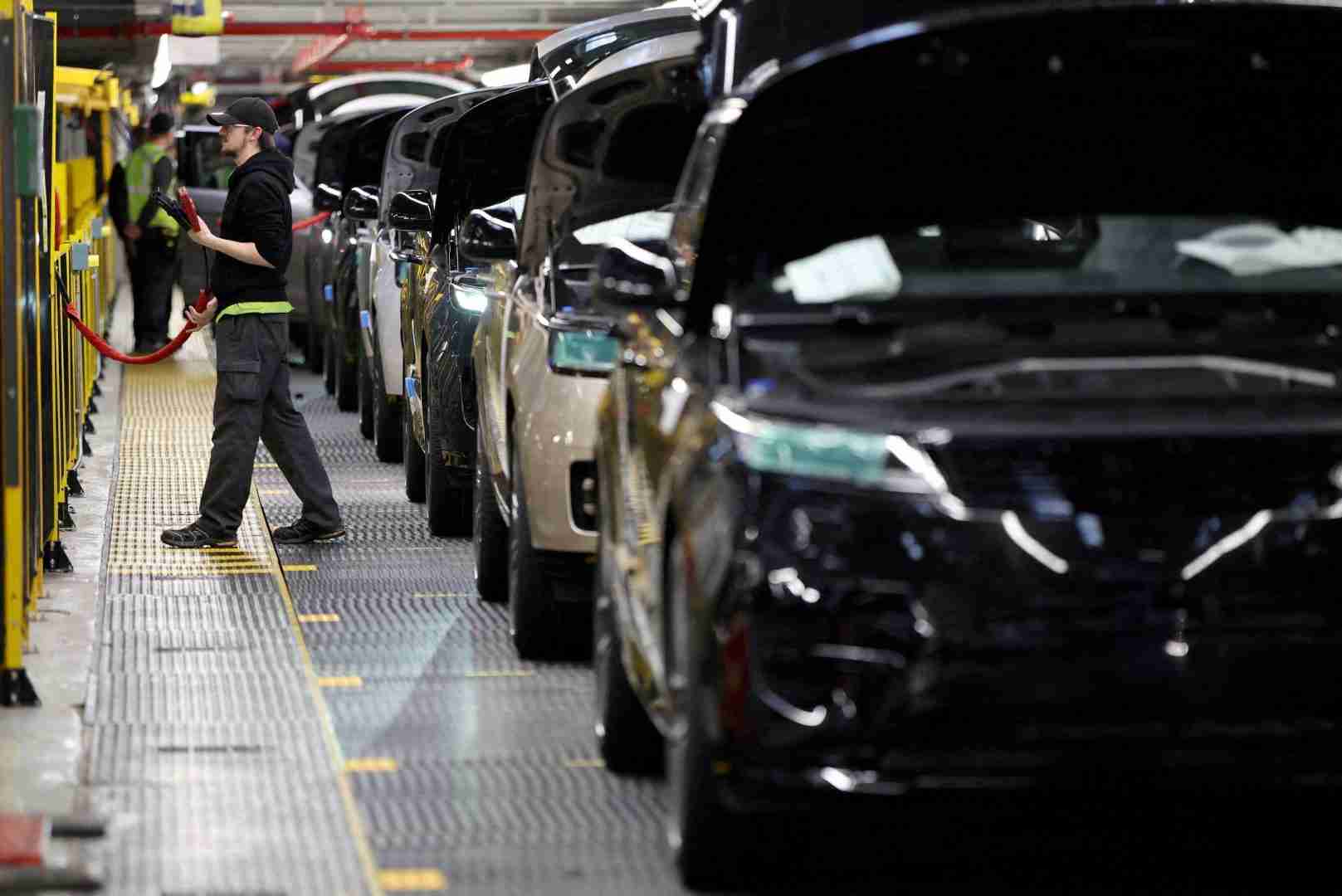
The luxury carmaker owned by India’s Tata Motors has three factories in Britain which together produce about 1,000 cars per day
International News via Reuters:
Britain’s government is considering throwing a financial lifeline to carmaker Jaguar Land Rover’s suppliers after a shutdown caused by a cyberattack was extended until October, a government source said on Thursday.
The luxury carmaker owned by India’s Tata Motors has three factories in Britain which together produce about 1,000 cars per day. The company is losing at least 50 million pounds ($68 million) a week, according to the BBC, with many of its 33,000 staff told to stay at home.
Business minister Peter Kyle and industry minister Chris McDonald visited JLR on Tuesday and talked to the CEO about how the company can work towards restarting production.
“We have two priorities – helping Jaguar Land Rover get back up and running as soon as possible, and the long-term health of the supply chain,” said McDonald.
“The government is looking at several ways to provide support to JLR suppliers,” the source said.
GOVERNMENT COULD BUY COMPONENTS
Schemes under consideration included the government buying component parts from the suppliers to enable them to survive until JLR resumes production, according to a BBC report.
Another option was providing government-backed loans to suppliers, the BBC said, although it added that the idea was not popular with suppliers.
When asked about the government stepping in, the business department pointed to a statement on Tuesday in which Kyle said “we are doing everything we can to minimise the impact of this incident.”
JLR WORKING TO PRIORITISE SUPPLIER PAYMENTS
The British parliament’s Business and Trade Select Committee will hear from companies in JLR’s supply chain on Thursday.
Tata Motors finance chief P B Balaji told the committee’s chair Liam Byrne in a letter dated on Tuesday that JLR was working with its supply partners to prioritise payments to “those with the greatest need,” adding that JLR intended to settle any outstanding payments “in the coming weeks”.
He said JLR was “fully empowered to take decisions that best reflect the interests of its business and commercial partners,” in the letter, which was published by the committee.
“As part of TML and the Tata Group, JLR benefits from faster, preferential access to competitive credit rates through its global banking relationships,” he said.
“We are engaged across multiple stakeholders to find solutions to support JLR’s commercial partners and hope to find a practical workable solution at the earliest.”
Mike Hawes, the head of Britain’s automotive trade body SMMT, said the cyberattack’s impact on the supply chain and wider industry on which it depends was “severe and of indeterminate duration”.
He said in an emailed statement that SMMT was working with JLR, the government and suppliers to identify what additional supportive measures might be needed.
Reporting by Paul Sandle, Muvija M and Elizabeth Piper; Editing by Mark Potter and Hugh Lawson
The sentence was harsher than many expected and marked a spectacular downfall for Sarkozy, who was president from 2007-2012
International News via Reuters:
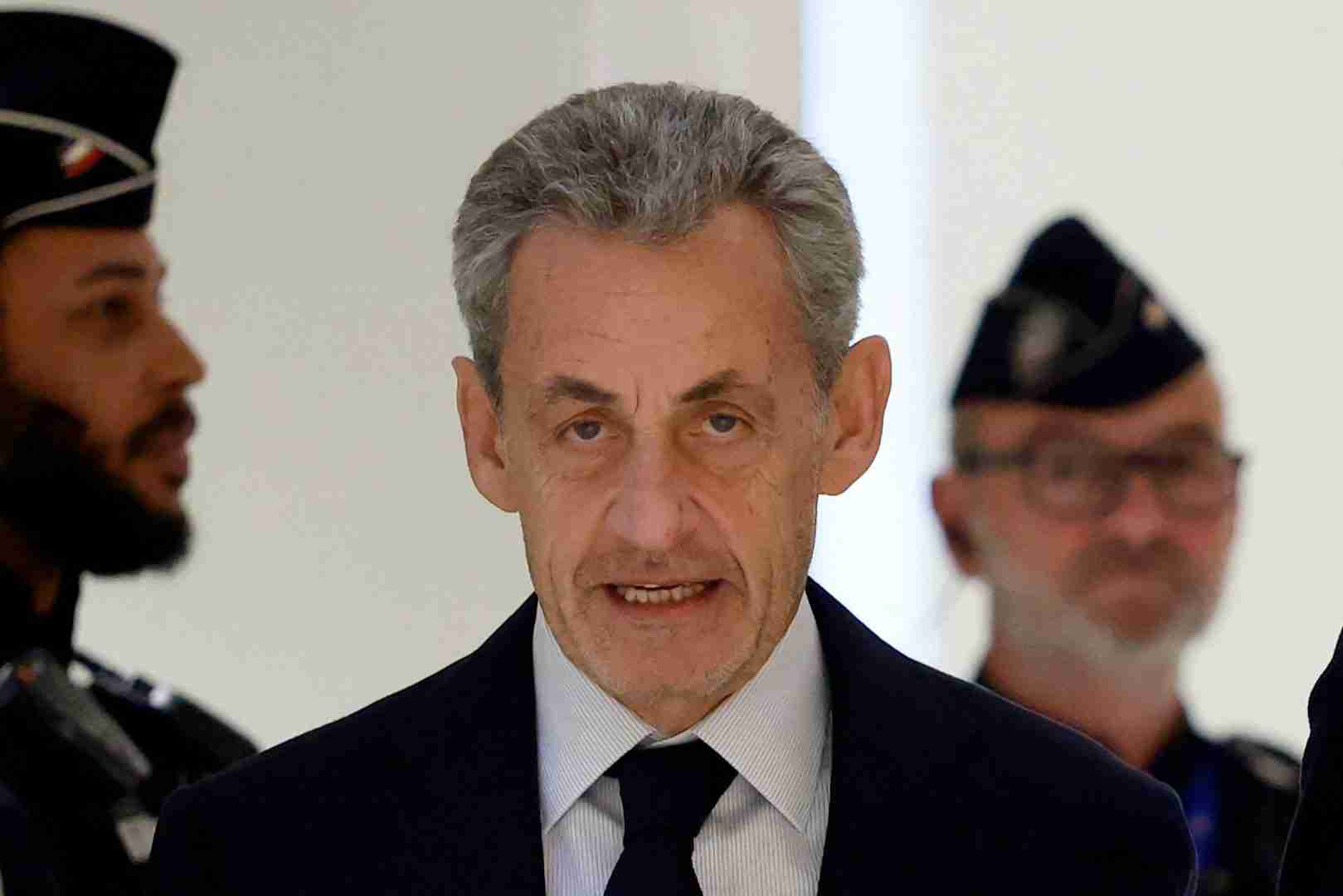
Former French president Nicolas Sarkozy was sentenced to five years in jail on Thursday for criminal conspiracy over attempts to raise campaign funds from Libya and will soon become the first former president of France to serve time in prison.
The sentence was harsher than many expected and marked a spectacular downfall for Sarkozy, who was president from 2007-2012. He will spend time in jail even if he appeals the ruling – which he said he would do.
As he exited the courtroom, Sarkozy, visibly moved, expressed his anger at what he said was a “scandalous” ruling.
“If they absolutely want me to sleep in jail, I will sleep in jail, but with my head held high,” he told reporters, adding that he was innocent. “I will not apologise for something I didn’t do.”
“What happened today … is of extreme gravity in regard to the rule of law, and for the trust one can have in the justice system,” he said of the ruling, as his model and singer-songwriter wife Carla Bruni stood by him.
Sarkozy was found guilty of criminal conspiracy over efforts by close aides to procure funds for his 2007 presidential bid from Libya during the rule of late dictator Muammar Gaddafi.
He was acquitted by the Paris court of all other charges, including corruption and receiving illegal campaign financing.
SARKOZY WILL GO TO JAIL
However, the prison sentence is enforceable immediately, with the judge saying Sarkozy would have just a short period to put his affairs in order before prosecutors call on him to head to jail. That should happen within a month.
“We were shocked because when we started hearing the decision being read out, we thought his innocence would be recognised,” one of his lawyers, Jean-Michel Darrois, told reporters. “We hope the appeals court will see things more clearly and will recognise his innocence.”
Sarkozy, who has always denied the charges, was accused of making a deal with Gaddafi in 2005, when he was France’s interior minister, to obtain campaign financing in exchange for supporting the then-isolated Libyan government on the international stage.
The judge said there was no proof that Sarkozy made such a deal with Gaddafi, nor that money that was sent from Libya reached Sarkozy’s campaign coffers, even if the timing was “compatible” and the paths the money went through were “very opaque”.
But she said Sarkozy was guilty of criminal conspiracy between 2005 and 2007 for having let close aides get in touch with people in Libya to try and obtain campaign financing. From May 2007, he was president and covered by presidential immunity, the court added.
This was the second time this year that a French court handed down a ruling with immediate effect on a major political figure.
Far-right leader Marine Le Pen was convicted in March of embezzling EU funds and given an immediate five-year ban on running for office.
Le Pen was prompt to react to Sarkozy’s sentencing, saying it was “a grave danger” that judges were opting for immediately enforceable rulings and not waiting for appeals.
Reactions among French politicians were mixed, with several on the right rushing to give support and criticise what they said was a biased ruling, while on the left, some welcomed the ruling as proof of the independence of the judiciary.
Vincent Brengarth, lawyer for economic justice campaign group Sherpa, which was party to the Libya trial, also welcomed the ruling. “This confirms we have an independent justice system that can be brave,” he said.
SARKOZY’S LEGAL WOES
Despite his legal battles, and having his Legion of Honour, France’s highest distinction, stripped in June, Sarkozy remains an influential figure on the French political stage.
He recently met with his former protege, Prime Minister Sebastien Lecornu, and has also lent credibility to Le Pen’s National Rally (RN), saying the far-right, anti-immigrant party now forms part of the “republican arc.”
Sarkozy has faced several legal battles since leaving office.
Last year, France’s highest court upheld his conviction for corruption and influence peddling, ordering him to wear an electronic tag for a year, a first for a former French head of state. The tag has now been removed.
Also last year, an appeals court confirmed a separate conviction for illegal campaign financing over his failed re-election bid in 2012. A final ruling from France’s highest court is expected on that case next month.
Reporting by Juliette Jabkhiro; additional reporting by Dominique Vidalon, Sudip Kar-Gupta, Makini Brice, Elizabeth Pineau; Writing by Ingrid Melander and Gabriel Stargardter; Editing by Toby Chopra, Alexandra Hudson
In his first year on the job, Niccol has zeroed in on investing in Starbucks’ stores to reduce service times and restore a coffee-house environment, while also trimming management layers
International News via Reuters:
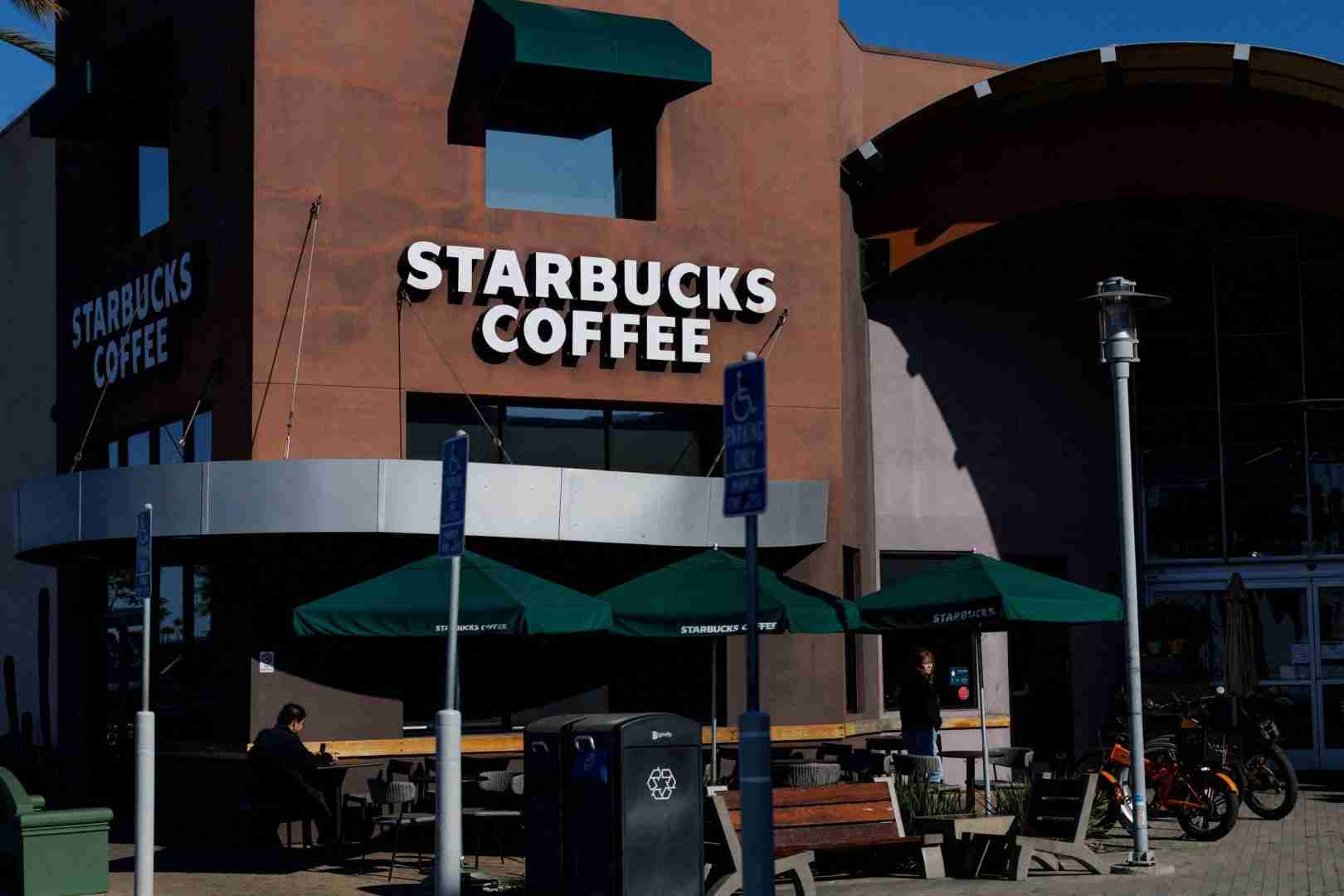
Starbucks said on Thursday it would shutter underperforming stores in North America and cut 900 jobs in a $1 billion restructuring effort, as CEO Brian Niccol presses ahead with his plan to revive the company’s fortunes.
In his first year on the job, Niccol has zeroed in on investing in Starbucks’ stores to reduce service times and restore a coffee-house environment, while also trimming management layers.
The company has posted six straight quarters of sales decline in the U.S. as demand for its pricey lattes took a hit from consumers turning picky and competition ramping up.
“During the review, we identified coffeehouses where we’re unable to create the physical environment our customers and partners expect, or where we don’t see a path to financial performance, and these locations will be closed,” Niccol said in a letter to employees.
The company expects a majority of the store closures to be completed by the end of this fiscal year, taking its company-operated store count in North America down by about 1%.
The CEO said the company would end the fiscal year with nearly 18,300 total Starbucks locations – company operated and licensed – across the U.S. and Canada. This compares to the 18,734 locations disclosed in a July regulatory filing.
INVESTING IN QUICKER SERVICE
Niccol has enjoyed the confidence of investors since taking over after his leadership at Chipotle Mexican Grill where he is credited with leading a turnaround at the burrito chain.
“I continue to like the turnaround story here as we continue to get more visibility into the future. The company has always invested in innovation and becoming more lean will enhance the story moving forward,” said Dave Wagner, portfolio manager at Aptus Capital Advisors, which holds Starbucks stock.
Starbucks said on Thursday the job cuts would be in its support teams and added the company would also close many open positions.
The company employed about 10,000 people in non-coffee-house roles in the U.S., as of September 29, 2024.
“This is a more significant action that we understand will impact partners and customers,” Niccol said.
At the same time, Starbucks is investing to improve staffing and incorporate technology to more efficiently sequence orders at its coffee shops and enhance customer experience.
The company said earlier this year it would eliminate 1,100 corporate roles. In August, it also announced a modest 2% hike to all salaried employees in North America this year.
Starbucks shares were down marginally in early trading. They have risen about 9% since Niccol took over in August 2024.
Reporting by Juveria Tabassum in Bengaluru; Editing by Leroy Leo and Sriraj Kalluvila
Ja’Dore Wilson’s mother makes impassioned plea for her “beautiful and loved” daughter to return home
The family of missing 15-year-old Ja’Dore Wilson are pleading for her safe return home.
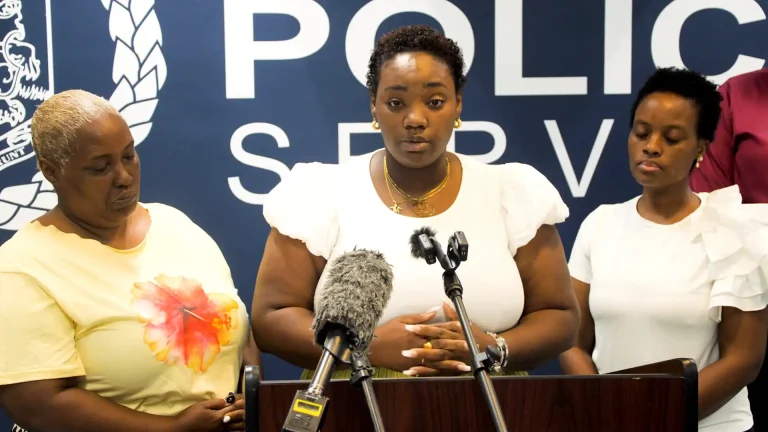
Dishunta Wilson, Ja’Dore’s mother, shared a message to her daughter at a police press conference today – “You are extremely missed. You are beautiful and loved. More loved than you could ever know.”
“You are not in any trouble, and nothing will ever dilute the love and support that we have for you. We need you here with us safe.”
Appealing to the public for help in finding her daughter, Dishunta Wilson emphasised that she is a 15-year-old girl “in a heightened position to be in grave danger”.
Detective Inspector Kenten Trott of the Vulnerable Persons Unit reminded the public that it is more than a week since Ja’Dore Wilson went missing from her North Terrace, Pembroke home on Wednesday, 17th September.
Di Trott said there have been unconfirmed sightings of her in the Pembroke area as recently as Saturday.
1,000 flyers have been printed and distributed, and DI Trott appealed to the public to be extra vigilant .
DI Trott said, “we’re asking if everyone can look out for [Ja’Dore]. If you have any property, if you have any abandoned sheds, if you have any open areas in your home where somebody may seek shelter – we’re also asking if you can look into those areas.”
He also highlighted that the distributed flyer includes private contact information for those who don’t want to contact the police directly.
If you have any information on the whereabouts of Ja’Dore Wilson, please contact Detective Inspector Kenten Trott by calling 717-2345, or e-mailing kenten.trott@bps.bm. Alternatively, use the contact number on the flyer below.
To provide the best experiences, we use technologies like cookies to store and/or access device information. Consenting to these technologies will allow us to process data such as browsing behavior or unique IDs on this site. Not consenting or withdrawing consent, may adversely affect certain features and functions.
Functional
Always active
The technical storage or access is strictly necessary for the legitimate purpose of enabling the use of a specific service explicitly requested by the subscriber or user, or for the sole purpose of carrying out the transmission of a communication over an electronic communications network.
Preferences
The technical storage or access is necessary for the legitimate purpose of storing preferences that are not requested by the subscriber or user.
Statistics
The technical storage or access that is used exclusively for statistical purposes.The technical storage or access that is used exclusively for anonymous statistical purposes. Without a subpoena, voluntary compliance on the part of your Internet Service Provider, or additional records from a third party, information stored or retrieved for this purpose alone cannot usually be used to identify you.
Marketing
The technical storage or access is required to create user profiles to send advertising, or to track the user on a website or across several websites for similar marketing purposes.