Saturday, October 31, 2026
Home Blog Page 765

NASA rover finds potential sign of ancient life in Martian rocks

The discovery, detailed in research published on Wednesday, represents one of the best pieces of evidence to date about the possibility that Earth’s planetary neighbor once harbored life
International News via Reuters:

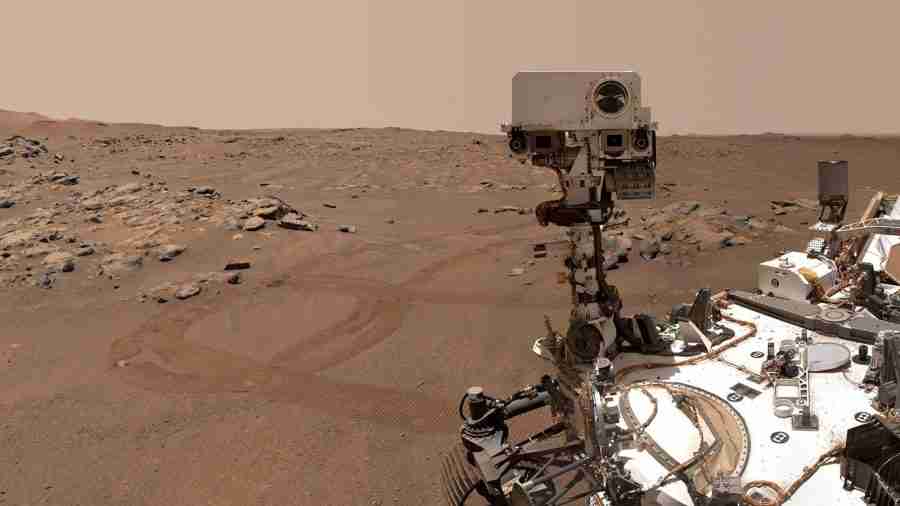
A sample obtained by NASA’s Perseverance rover of rock formed billions of years ago from sediment on the bottom of a lake contains potential signs of ancient microbial life on Mars, according to scientists, though the minerals spotted in the sample also can form through nonbiological processes.

The discovery, detailed in research published on Wednesday, represents one of the best pieces of evidence to date about the possibility that Earth’s planetary neighbor once harbored life.

Since landing on the Martian surface in 2021, the six-wheeled rover has been exploring Jezero Crater, an area in the planet’s northern hemisphere that once was flooded with water and home to an ancient lake basin, as it seeks signs of ancient life. Perseverance has been collecting samples of rock and loose material called regolith and analyzing them with its various onboard instruments.

The rover obtained the newly described sample, called the Sapphire Canyon sample, in a place called the Bright Angel rock formation. This formation consists of fine-grained mudstones and coarse-grained conglomerates, a kind of sedimentary rock composed of gravel-sized particles cemented together by finer-grained sediments.

Stony Brook University planetary scientist Joel Hurowitz, who led the study published in the journal Nature, said that a “potential biosignature” was detected in multi-billion-year-old sedimentary rocks.

This came in the form of two minerals that appear to have formed as a result of chemical reactions between the mud of the Bright Angel formation and organic matter also present in that mud, Hurowitz said. They are: vivianite, an iron phosphate mineral, and greigite, an iron sulfide mineral.

“These reactions appear to have taken place shortly after the mud was deposited on the lake bottom. On Earth, reactions like these, which combine organic matter and chemical compounds in mud to form new minerals like vivianite and greigite, are often driven by the activity of microbes,” Hurowitz said.

“The microbes are consuming the organic matter in these settings and producing these new minerals as a byproduct of their metabolism,” Hurowitz said.

But Hurowitz offered some words of caution.

“The reason, however, that we cannot claim this is more than a potential biosignature is that there are chemical processes that can cause similar reactions in the absence of biology, and we cannot rule those processes out completely on the basis of rover data alone,” Hurowitz said.

Mars has not always been the inhospitable place it is today, with liquid water on its surface in the distant past. Scientists have suspected that microbial life once could have lived in Jezero Crater. They believe river channels spilled over the crater wall and created a lake more than 3.5 billion years ago.

The Sapphire Canyon sample was collected in July 2024 from a set of rocky outcrops on the edges of Neretva Vallis, an ancient river valley carved by water rushing into Jezero crater.

The sample collected and analyzed by Perseverance provides a new example of a type of potential biosignature that the research community can explore to try to understand whether or not these features were formed by life, Hurowitz said, “or alternatively, whether nature has conspired to present features that mimic the activity of life.”

“Ultimately, follow-on research will provide us with a suite of testable hypotheses for how to determine whether biology is responsible for the generation of these features in the Bright Angel formation, which we can evaluate by examining the Sapphire Canyon sample if it is returned to Earth,” Hurowitz added.

Reporting by Will Dunham, Editing by Rosalba O’Brien
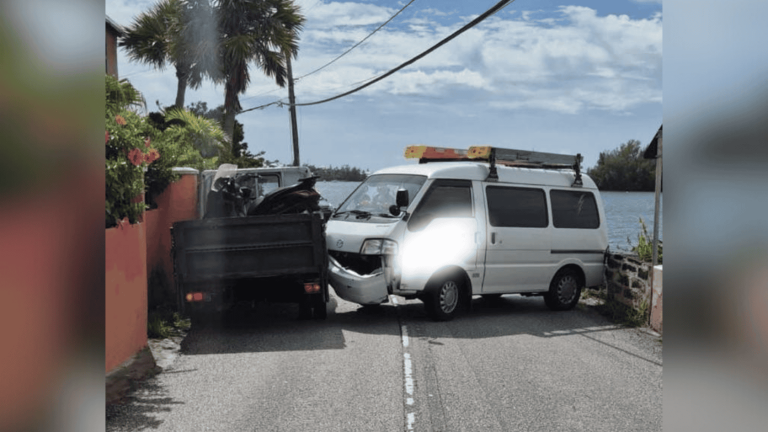
Two trucks collide on Harbour Road

The roadway was blocked but swiftly reopened; police say no injuries reported

Harbour Road briefly returned to the spotlight today following a two-vehicle collision.

The crash occurred shortly before 3:00 pm in the area near the Lower Ferry in Paget, involving a truck and a van.

The incident caused a temporary blockage on the roadway.

Police confirmed that, upon arrival to the scene, officers helped clear both vehicles, with the road fully reopened by around 3:10 pm.

There were no reported injuries.

Readers will recall that an accident on Harbour Road last week caused huge tailbacks.

Bermuda archers gain invaluable experience at championships

Bermuda’s archers Camerin Pickering and Jaydon Roberts have concluded their campaign at the Gwangju 2025 Hyundai World Archery Championships in the Republic of Korea, with both athletes gaining invaluable experience despite not progressing to the elimination rounds.

Competing against a field of 153 recurve men from 75 nations, Pickering finished in 139th place with a score of 608, while Roberts finished 145th with a score of 581. The competition was a true test of physical and mental toughness, with the archers facing challenging conditions and frequent downpours throughout the week.

The Bermuda team’s participation in this event is a historic one, as they are the first from the Caribbean region to have not one but two archers competing at this level. Despite the rankings, officials are focused on the long-term benefits of the experience. The team has had a good outdoor season, and the lessons learned from competing against the world’s elite in difficult conditions will be instrumental in developing the Bermuda programs further.

The archers have a few more days to use the practice field to train and test their equipment, with the continued rain and wind allowing them to fine-tune their gear and conditioning for future competitions. This experience on and off the field of play will serve as a strong foundation for their continued development.

Britain’s Prince Harry meets father King Charles for first time in 20 months

Harry, 40, flew into Britain on Monday for a series of engagements, and earlier on Wednesday visited a research centre which specialises in improving treatment for victims with blast injuries

International News via Reuters:

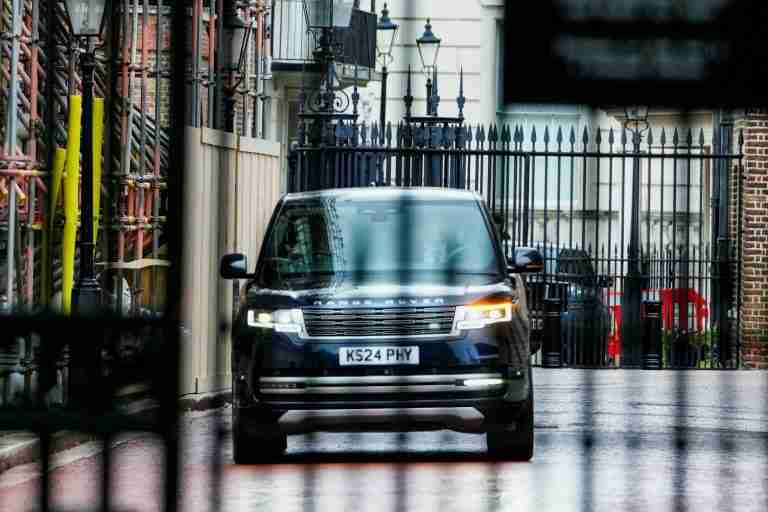
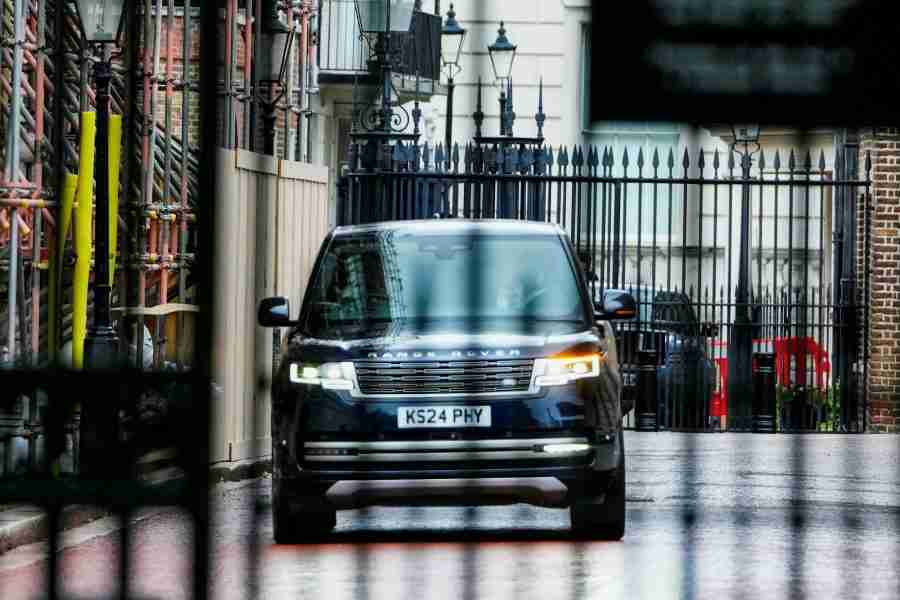
Prince Harry had tea with King Charles on Wednesday at their first meeting in 20 months, in what may prove a first step towards ending a much-publicised rift between father and son.

Harry, the Duke of Sussex, last saw his father in February 2024, shortly after it was announced that the king was undergoing treatment for an unspecified form of cancer.

Buckingham Palace confirmed that Charles, 76, had a private tea at Clarence House in London with his son on Wednesday.

Harry, 40, flew into Britain on Monday for a series of engagements, and earlier on Wednesday visited a research centre which specialises in improving treatment for victims with blast injuries.

Since Harry and his American wife Meghan moved to California in 2020 where they now live with their two children, they have been highly critical of the royal family and the institution in interviews, TV documentaries and Harry’s autobiography “Spare”.

Harry had some particularly barbed comments for Charles and his elder brother, heir-to-the-throne Prince William, leading to a total breakdown in his relationship with his family.

But after losing a legal battle with the British government over his security in May, Harry said he wanted a rapprochement.

“Of course some members of my family will never forgive me for writing a book. Of course they will never forgive me for lots of things. But you know … I would love reconciliation with my family … There’s no point in continuing to fight anymore. And life is precious,” he told the BBC.

“I don’t know how much longer my father has. He won’t speak to me because of this security stuff, but it would be nice to reconcile.”

‘A LOT OF ANGUISH’

Both Buckingham Palace and Harry’s representatives had been tight-lipped ahead of the prince’s visit to Britain about whether there would be a meeting with the king.

However, Charles’ communications chief and Harry’s media representatives were pictured in July at a secret meeting in London in what newspapers suggested might be the first steps towards a reconciliation.

Historian and author Anthony Seldon said mending their relationship was important for the monarchy and for both Charles and Harry as individuals.

“The king is the king, but he’s also a human being and a loving father,” Seldon told Reuters.

“I think the rift will have caused both of them a lot of anguish. So if that can be healed, at least in part, now or subsequently, then that’s all to the good.”

Reporting by Michael Holden and William James; Editing by Gareth Jones

What voters want from Robert King

The OBA has a new leader … but what do the people think?
Kendal Trott went into the city to ask islanders what Robert King will need to do to win the next election – and what personal characteristics will prove to be most important.

Augustus makes solid start at Leatherhead Classic

Bermudian golfer Daniel Augustus has completed his first round in the Leatherhead Classic, a Tier 2 event on the Clutch Pro Tour, with a score of 2-over par 73. His round leaves him in a tie for 46th place heading into the second round of the tournament.

Augustus’s scorecard for the day consisted of three birdies, ten pars, and five bogeys. He will be looking to capitalize on his strong play and eliminate the bogeys as he looks to climb the leaderboard in the remaining rounds. The Leatherhead Classic is a key event for Augustus as he aims to build momentum and improve his standing on the Clutch Pro Tour.

Hamilton & Tucker to represent Bermuda on NORCECA tour

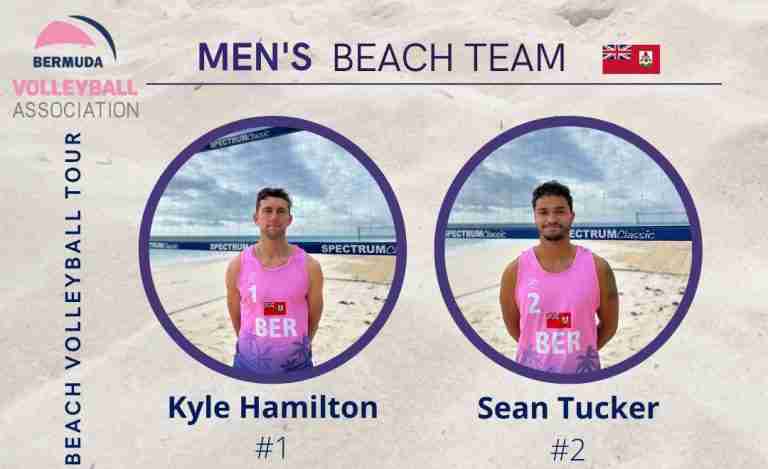
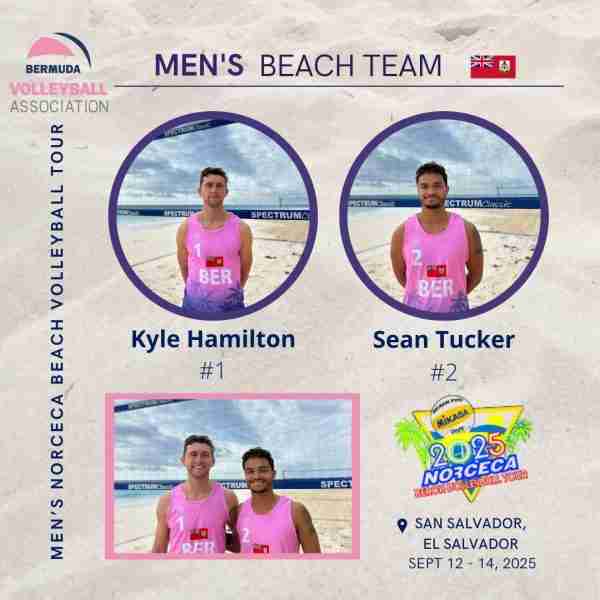
The Bermuda Volleyball Association (BVA) has announced its continued participation in the North America, Central America, and the Caribbean (NORCECA) Beach Volleyball Tour, with the eighth stage taking place this weekend, September 12-14, in San Salvador, El Salvador.

Bermuda will be represented by the experienced duo of Kyle Hamilton and Sean Tucker. Although they have trained together for several years, this will mark only the second time they have competed together internationally, with their first outing being in Costa Rica in 2024. The partnership brings a fresh dynamic to the court and continues to highlight the growth of Bermuda’s national beach volleyball program.

The NORCECA Beach Volleyball Tour is the premier competition circuit in the region, offering valuable international experience and ranking opportunities. Hamilton and Tucker will face teams from eleven countries, including powerhouses like the United States, Canada, and Mexico.

Meagan McPeek, Assistant Coach of the Men’s National Beach Team, said the competition is a crucial step for the players’ development. “It will be exciting to see these athletes, who have pushed each other in training for years, as teammates,” she said. “Every competition sharpens our skills and builds momentum for the future of beach volleyball in Bermuda.”

Astronomers get best view yet of two merging black holes

The merger of two black holes is a momentous event, revealing the wildest and most extreme configurations of space, time and gravity known to science

International News via Reuters:

The merger of two black holes is a momentous event, revealing the wildest and most extreme configurations of space, time and gravity known to science.

Researchers have now gotten their best look yet at such an event based on the detection of ripples in space-time called gravitational waves in an observation that lends strong support to hypotheses from eminent physicists Albert Einstein and Stephen Hawking.

The collision occurred 1.3 billion light-years from Earth in a galaxy beyond our Milky Way, and involved two black holes – one about 34 times the mass of the sun and the other about 32 times the sun’s mass. They merged in a fraction of a second after orbiting each other at nearly the speed of light, and left behind a single black hole around 63 times the mass of the sun that was spinning at approximately 100 revolutions per second.

A light-year is the distance light travels in a year, 5.9 trillion miles (9.5 trillion km). Black holes are extraordinarily dense objects with a gravitational pull so strong not even light can escape.

The merger unleashed a tremendous amount of energy that radiated outward as gravitational waves, an amount equivalent to pulverizing three sun-sized stars. These waves were detected on January 14 at research sites in Hanford, Washington and Livingston, Louisiana that are part of the U.S. National Science Foundation’s Laser Interferometer Gravitational-Wave Observatory, or LIGO.

These observations came about a decade after the groundbreaking first detection of gravitational waves, which were produced by a similar merger. Technological improvements since 2015 meant this merger was observed with four times better resolution than the prior one.

Gravitational waves propagate outward from a source like ripples in a pond. In this case, the pond is space-time, the four-dimensional fabric that combines the three dimensions of space – height, width and length – with the dimension of time.

“Thanks to Albert Einstein, we know that space and time are intertwined and are best thought of as facets of a single entity, space-time,” said astrophysicist Maximiliano Isi of Columbia University and the Flatiron Institute, one of the leaders of the study published on Wednesday in the journal Physical Review Letters.

“This manifests, for example, in that time flows at different rates depending on where you are: close to a heavy object, like a black hole, time flows more slowly compared to someone farther away, so that someone close to a black hole would age more slowly,” Isi said.

The researchers analyzed the frequencies of the detected gravitational waves to discern fundamental qualities of the black holes immediately before and after the merger. While these frequencies were not sound waves, the researchers compared them to the ringing of a bell.

“This is just like trying to figure out what a bell is made out of from the ringing sound it makes when struck,” Isi said.

A large iron bell, for instance, makes a different sound than a small aluminum bell.

What the researchers learned based on the frequency of gravitational waves offered validation for a basic tenet of scientific understanding of black holes advanced by Hawking, who died in 2018.

Hawking hypothesized that the total surface area of black holes – specifically the surface area of the event horizon, the boundary beyond which nothing can escape – should never decrease. His hypothesis implies that the surface area of the single black hole produced in a merger should exceed the combined surface areas of the two black holes that merged.

This merger met that expectation. Before colliding, the black holes together had a total surface area of about 93,000 square miles (240,000 square km). The single black hole produced by the merger had a surface area of about 155,000 square miles (400,000 square km).

“This is the first time that we have been able to make this measurement so precisely, and it’s exciting to have direct experimental confirmation of such an important idea about the behavior of black holes,” said astrophysicist Will Farr of Stony Brook University and the Flatiron Institute, one of the study leaders.

The observations also provided the most direct evidence yet that black holes are the paradoxically simple objects foreseen in Einstein’s theory of general relativity, which holds that gravity results from the curvature of space-time caused by mass and energy.

The findings validated Einstein’s proposed simplicity of black holes – that they can be fully understood based exclusively on their mass and spin – as worked out by mathematician Roy Kerr in 1963.

The gravitational wave measurements were obtained in a remarkably short time. Caltech astrophysicist Katerina Chatziioannou said the black holes were observed spiraling inward toward each other for about 200 milliseconds, and the signal from the merged black hole was measured for about 10 milliseconds.

Reporting by Will Dunham, Editing by Rosalba O’Brien
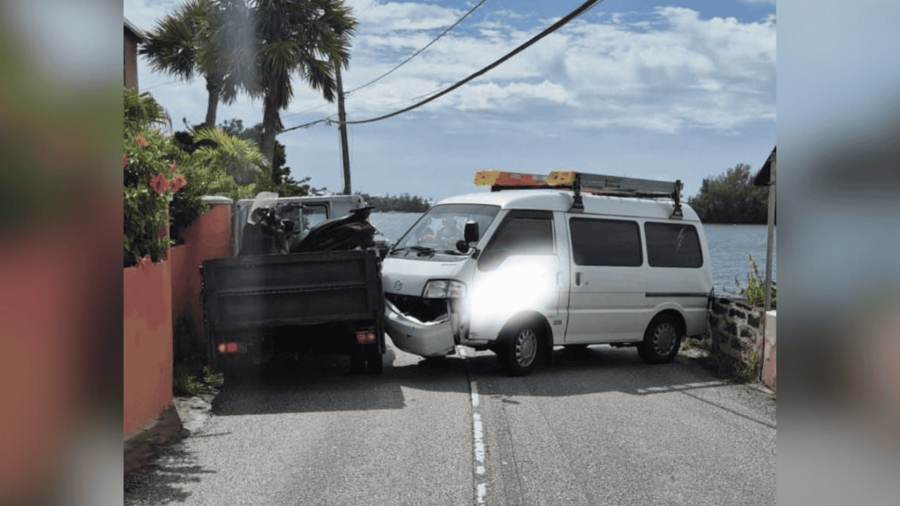
EU targets 8 power grid bottlenecks to cut prices, boost security

Electrification is essential to the bloc’s climate ambitions but there remain stark price and connection gaps across the 27 member states

International News via Reuters:

The European Union will prioritise fixing eight power grid bottlenecks, the Commission President said on Wednesday, in an effort to lower the bloc’s uncompetitive energy prices and improve energy security. 

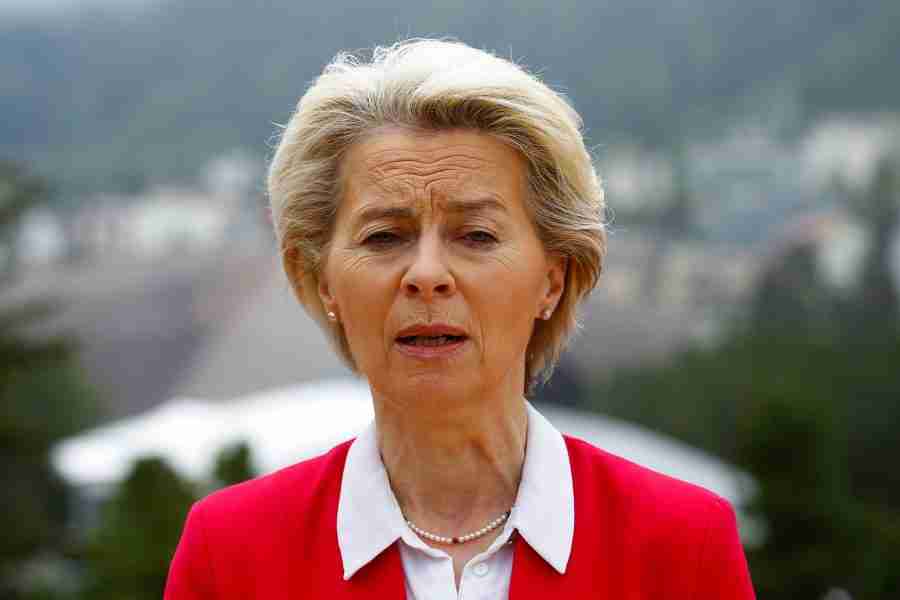
“I am presenting today a new initiative called Energy Highways. We have identified eight critical bottlenecks in our energy infrastructure. From the Oresund Strait to the Sicilian Canal,” European Commission President Ursula von der Leyen said in her State of the Union address in Strasbourg. 

“We will now work to remove these bottlenecks one by one.”

Electrification is essential to the bloc’s climate ambitions but there remain stark price and connection gaps across the 27 member states.

Earlier this year, Spain and Portugal suffered country-wide blackouts while southeastern Europe, especially Greece, saw power prices skyrocket above the EU average. 

“If our energy systems are not better connected, then we will not decrease the (energy) prices as much as we should,” EU energy commissioner Dan Jorgensen told reporters in Strasbourg. 

A key project will be to increase electricity interconnections between the Iberian peninsula and France. Spain and Portugal asked the Commission to intervene in May. 

“We saw the blackout, we cannot conclude yet exactly why that happened, but it’s clear to every expert that the more connected you are, the better connected you are, the less the risk of blackouts like that,” Jorgensen said.

“It will be a main priority for us to make it happen to make it happen. And I’m confident that France will also see the value.”

Here is the list of the priority bottlenecks: 

1. Better integrate Iberia with power interconnectors across the Pyrenees to France

2. Connect Cyprus with continental Europe to end its electricity isolation 

3. Strengthen power links in the Baltic states 

4. Improve energy supplies in the Balkan region and eastern neighbouring states 

5. Turn the North Sea into an offshore interconnector hub

6. South hydrogen corridor connecting the North Sea to the Mediterranean 

7. Southwest hydrogen corridor from Portugal to Germany 

8. Improve price stability and energy security in southeastern Europe

Reporting by Julia PayneEditing by Ros Russell

Floods in Indonesia’s Bali kill at least nine, officials say

Out of 600 people affected, nearly 200 have been evacuated to schools and mosques because their houses were still flooded

International News via Reuters:

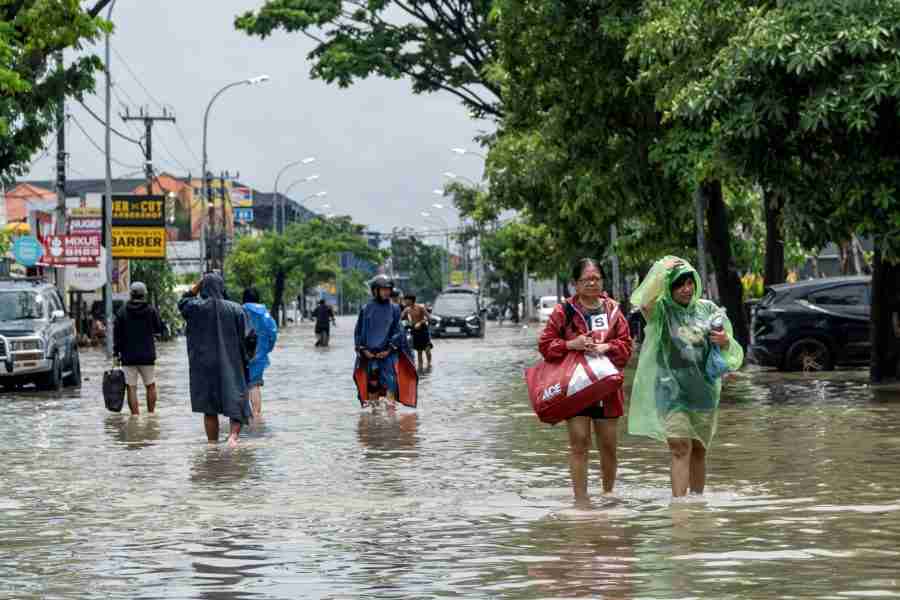
Floods on Indonesia’s holiday island of Bali have killed at least nine this week and affected 600 people, blocking off major roads in the capital and disrupting a busy travel destination, officials said on Wednesday.

Continuous heavy rains between Tuesday evening and Wednesday caused the floods and killed five people in Bali’s capital Denpasar, Abdul Muhari, the spokesperson of the country’s disaster mitigation agency said in a statement.

Four more people were killed in the regions of Jembrana, Gianyar, and Badung, Abdul added. Two people were still missing.

Out of 600 people affected, nearly 200 have been evacuated to schools and mosques because their houses were still flooded, the agency said.

The floods brought down two buildings in Denpasar, said I Nyoman Sidakarya, the head of the island’s search and rescue agency.

Access to the island’s international airport near Denpasar was limited as only trucks could use the roads, he added.

Videos on social media, which Reuters could not authenticate, showed floods on major roads leading to complete gridlock.

About 200 rescuers have been dispatched, Nyoman said.

Heavy rain also led to flooding in Indonesia’s East Nusa Tenggara where four people have been killed, the disaster mitigation agency said.

Indonesian president Prabowo Subianto expressed his condolences and instructed the head of national disaster agency to fly to Bali to lead the emergency response and ensure people’s basic needs are met.

The agency had distributed tents, food, blankets, mattresses, water pumps, and rubber boats.

Reporting by Stanley Widianto and Ananda Teresia; Editing by Saad Sayeed, Alexandra Hudson

Africa feeding 20 million more children with school meals, WFP says

The region saw the biggest rise in school feeding of any region, by nearly a third to 87 million in 2024

International News via Reuters:

Governments in sub-Saharan Africa have provided school meals to roughly 20 million extra children over the past two years, the World Food Programme (WFP) said on Wednesday, showing a move away from dependence on foreign aid and a stronger commitment to education.

The region saw the biggest rise in school feeding of any region, by nearly a third to 87 million in 2024. Ethiopia, Rwanda and even severely impoverished Madagascar and Chad all managed to feed six times as many over the period.

“Government investments in school meals … (signal) a significant shift from reliance on foreign aid to recognising school meals as a strategic public investment in children’s education (and) health,” the report said.

It was a welcome bright spot on a continent plagued by rising numbers of hungry people as a result of extreme weather linked to climate change, armed conflict and food inflation.

A U.N. report at the end of July found that more than one in five Africans, 307 million, were chronically malnourished, meaning hunger is worse than two decades ago. It predicted the continent would have 60% of the world’s hungry people by 2030.

Poor countries face falling aid from their rich counterparts, with U.S. President Donald Trump’s administration gutting its aid arm and some European nations slashing assistance to reallocate spending to defend themselves against Russia.

The WFP report found that local farmers had also benefited from the school feeding. The government of Benin’s buying local food for these programmes contributed over $23 million to the economy in 2024, it said. More than a third of school meals in Sierra Leone came from food produced by smallholder farmers.

It warned, however, that millions of children, especially in some of the lowest income African countries like the Democratic Republic of the Congo (DRC), Somalia, and South Sudan, still lacked access to school meals, as donor support continued to fall.

Reporting by Tim Cocks; Editing by Andrew Cawthorne

OBA ‘no longer the defeated party of 2017’

…that’s David Sullivan’s take on the election of Robert King as OBA leader, although Cordell Riley says the party still needs to show it has changed

Robert King’s election as OBA leader shows the party is shedding the skin of the defeated 2017 OBA…but the party has yet to connect with the community and show it has changed.

Those two contrasting opinions come from political commentators David Sullivan and Cordell Riley, responding to the recent changes at the helm of the One Bermuda Alliance.

WATCH their comments above.