Saturday, October 31, 2026
Home Blog Page 766

Global health group to prioritize poorest amid aid cuts

The Global Fund to Fight Aids, Tuberculosis and Malaria is trying to raise $18 billion for its work from 2027-2029

International News via Reuters:

One of the world’s largest global health initiatives will shift more of its resources to the very poorest countries to help them manage cuts in foreign aid, its chief executive said, warning of widening health inequalities worldwide.

The Global Fund to Fight Aids, Tuberculosis and Malaria is trying to raise $18 billion for its work from 2027-2029. But it faces a challenging funding climate as many donor governments, led by the United States, have pulled back from aid. It has also already warned some countries their existing grants for 2025-2026 may be cut as a result.

“We’re skewing our resources even more to the very poorest countries… We are particularly concerned about places where there is really no alternative,” said Peter Sands, chief executive of the Global Fund, pointing to places like Sudan, which is in the midst of a humanitarian crisis after two and a half years of civil war.

He said some low-income countries have made huge progress on tackling infectious disease in recent years, and many are also now trying to mobilise domestic funding to cope with international cuts. But some simply do not have that option, he said.

“There are some parts of the world which are suffering from a kind of vicious combination of poverty, conflict, climate change and disease, and the idea that… we can leave those parts of their world to their own devices, is morally repugnant,” he said.

Sands was speaking to reporters in London ahead of the release of the Global Fund’s 2025 results report on Wednesday, which showed that record numbers of people had access to tools to prevent or treat all three deadly diseases in 2023. Since 2002, the partnership’s work has saved 70 million lives, the report said.

But Sands said future progress was at risk if funding dries up. The Global Fund had to warn countries this year that they may face an 11% cut on average to their existing grants, as it is unclear if donors will give all the money they initially pledged for work in 2024-2026. The gap is currently around $1.4 billion, he said.

Reporting by Jennifer RigbyEditing by Alexandra Hudson
France’s new prime minister takes office amid anti-government protests

Lecornu may then use his first speech to lay out how he will seek to reach consensus with an unruly parliament

International News via Reuters:

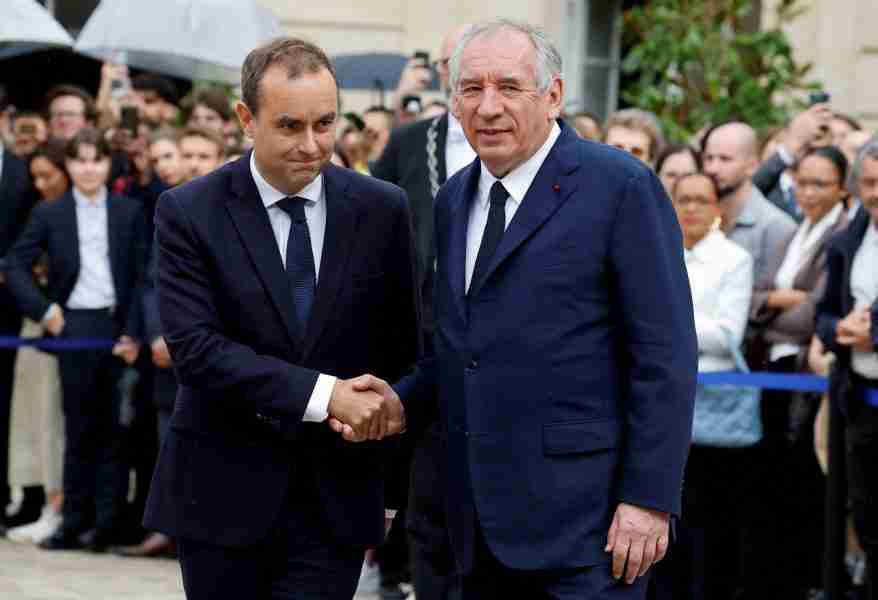
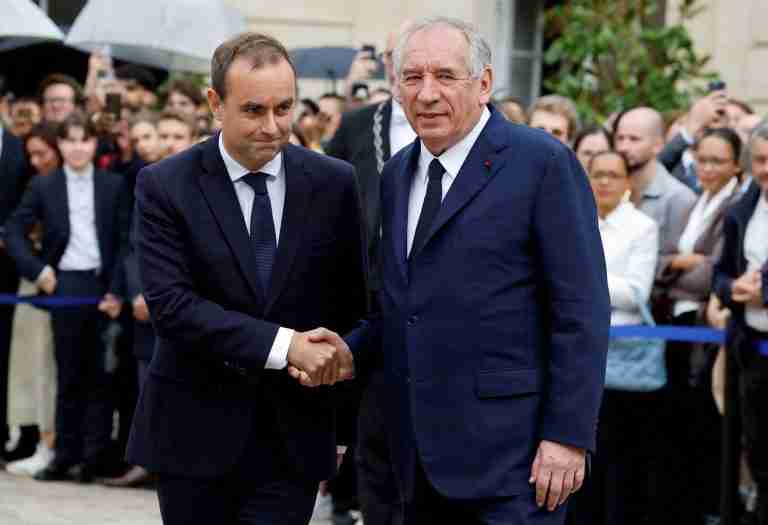
Sebastien Lecornu, the loyalist picked by President Emmanuel Macron to be France’s fifth prime minister in two years, took office on a day of sprawling anti-government protests on Wednesday that underlined the depth of the country’s political crisis.

Lecornu, a conservative Macron protege who most recently served as his defence minister, arrived at the prime minister’s residence at midday where he met with former Prime Minister Francois Bayrou, who was ousted by parliament on Monday over plans to trim the country’s outsized deficit.

Lecornu may then use his first speech to lay out how he will seek to reach consensus with an unruly parliament, split into three distinct ideological blocs, and pass a slimmed-down budget for next year.

Lecornu has to send a full draft of the 2026 budget to parliament by October 7, although there is some wiggle room until October 13, after which lawmakers will run out of time to pass the budget by year’s-end.

Reactions to Lecornu’s appointment on Tuesday underscored the challenge he faces. Parties broadly agree on the need to slash France’s deficit, which reached 5.8% of GDP in 2024, but not on how to do it.

While the hard-left said it would seek to topple Lecornu with an immediate no-confidence motion, the far-right National Rally (RN) signalled tentative willingness to work with him on the budget – as long as its budgetary demands are met.

“His budget will be RN or his government will not be,” RN lawmaker Laure Lavalette posted on X late on Tuesday.

The RN is France’s largest parliamentary party and as such a crucial factor in any potential no-confidence motion. Still, Lecornu is seen as the closest member of Macron’s circle to the RN, having dined with RN president Jordan Bardella last year.

‘BLOCK EVERYTHING’ PROTESTS

Lecornu’s other path to passing a budget involves uniting the Socialists, who want to water down budget cuts and tax the rich, with his former party The Republicans, who are dead-set against any tax rises.

Macron, in an unusual step, called Socialist party leader Olivier Faure on Tuesday to tell him he would not be appointing a leftist as prime minister. On Wednesday, Faure appeared to leave the door ajar to working with Lecornu, while also saying he would support a no-confidence measure if he felt the government didn’t take on board its budgetary priorities.

Thousands of people across France meanwhile took to the streets as part of the so-called “Block Everything” protests, an expression of broad discontent with Macron, proposed budget cuts and the entire political class.

Authorities deployed some 80,000 police nationwide to contain protesters who disrupted traffic, burned rubbish bins and at times clashed with security forces.

“Anger has been rumbling for months, even years,” said Daniel Bretones, a union member protesting in Marseille. “We’re on the fifth prime minister under Macron’s second term, and it has never changed anything.”

Reporting by Gabriel StargardterEditing by Frances Kerry

UK’s Starmer: Russia’s violation of Polish airspace ‘extremely reckless’

Russia’s RIA state news agency quoted a Russian diplomat as saying Poland had not given any evidence that the drones shot down in Poland were of Russian origin

International News via Reuters:

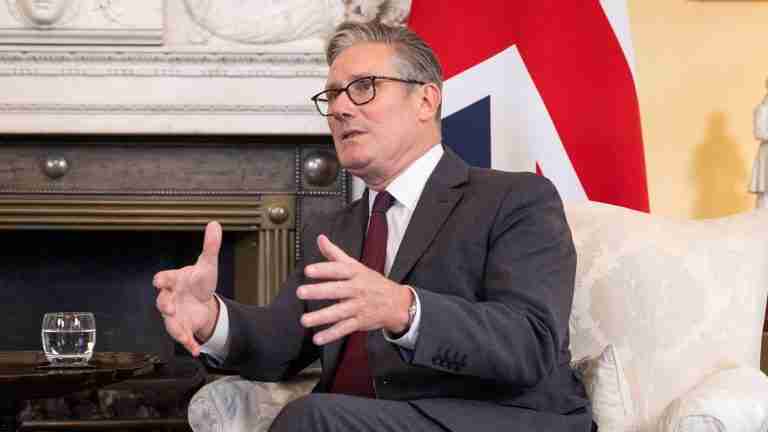
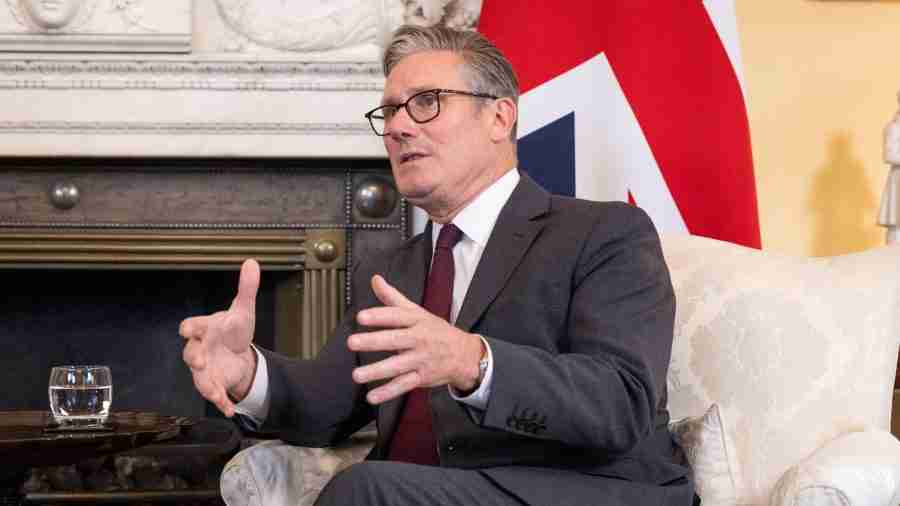
British Prime Minister Keir Starmer said on Wednesday he was deeply concerned by the violation of Polish and NATO airspace by Russian drones during an air attack on Ukraine, calling it an “extremely reckless” move by Moscow.

“This morning’s barbaric attack on Ukraine and the egregious and unprecedented violation of Polish and NATO airspace by Russian drones is deeply concerning,” Starmer said in a statement.

“This was an extremely reckless move by Russia and only serves to remind us of (Russian) President (Vladimir) Putin’s blatant disregard for peace,” Starmer said, adding that he had been in touch with Polish counterpart Donald Tusk on Wednesday to express British support for Poland.

Russia’s RIA state news agency quoted a Russian diplomat as saying Poland had not given any evidence that the drones shot down in Poland were of Russian origin.

British defence minister John Healey, who was hosting a meeting of the E5 grouping of European nations of Britain, Poland, France, Germany and Italy in London, condemned Russia’s action at the start of that meeting.

“We will discuss this morning what additional support we can provide to Poland,” Healey said.

Reporting by Muvija M, writing by Sachin Ravikumar; Editing by Kate Holton

European shares rise, led by Zara owner Inditex, Novo Nordisk

Retailers led sectoral gains with a 2.6% jump, as Inditex climbed 7% after the company said sales had picked up between August 1 and September 8 after months of poor demand

International News via Reuters:

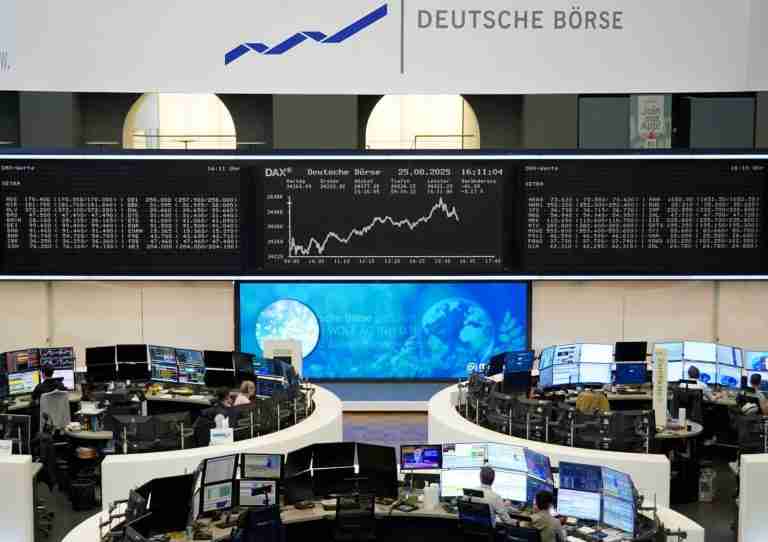
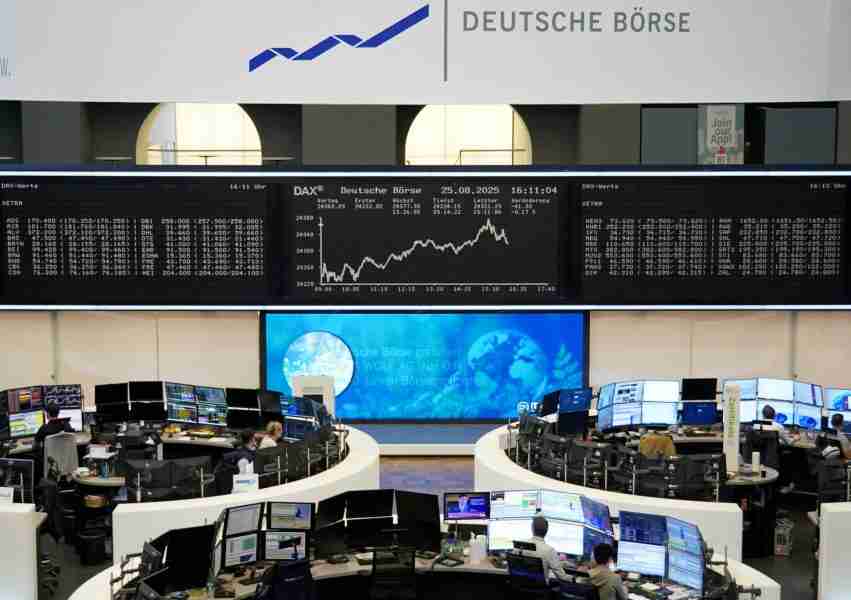
European shares climbed on Wednesday after Spanish fast-fashion giant Inditex said sales were picking up and Wegovy-maker Novo Nordisk said its plans to cut jobs and make other changes will save the firm around $1.26 billion annually.

The pan-European STOXX 600 was up 0.5% at 555.55 points as of 0822 GMT, hovering near a two-week high.

Retailers led sectoral gains with a 2.6% jump, as Inditex climbed 7% after the company said sales had picked up between August 1 and September 8 after months of poor demand.

Shares of Novo Nordisk rose nearly 2.6% after the Danish company said it could cut about 11.5% of its workforce as the company struggles to remain competitive in the weight-loss drug market.

The broader healthcare sector edged up 0.5%, but has lost over 3% this year.

“You have fundamental problems within the sector, and that’s what Novo Nordisk is trying to address with falling margins and then, of course, we have the tariffs and stronger currencies,” said Marija Veitmane, head of equity research at State Street Markets.

Meanwhile, France’s CAC 40 rose 0.8% to a two-week high after president Emmanuel Macron appointed loyalist and former defense minister Sebastien Lecornu as prime minister on Tuesday, the fifth one in less than two years.

Recent governments in the country have struggled to unify over plans to reign in debt-fuelled fiscal spending and investors are bracing for ratings agency Fitch’s verdict on the country’s credit condition on Friday.

It was also an upbeat day for European tech stocks, with German software maker SAP up 2.4% and Dutch company ASML climbing 1% after Oracle projected over half a trillion dollars in booked cloud orders. The U.S. company soared 28% in premarket trading.

Uncertainty prevailed after Poland shot down drones that entered its airspace during a widespread Russian attack in western Ukraine.

Polish stocks dropped 1.2%, while European defence stocks rose 1.3%.

Among others, Alstom gained 7.1% after the French train maker struck a $1.17 billion deal with NJ Transit in the U.S., while Puig shed 6.1% after the Spanish beauty company reported results for the first half of the year.

The European central bank’s monetary policy verdict is due on Thursday, with economists anticipating no change. But, the bigger focus will instead be on the release of U.S. inflation data.  

($1 = 6.3725 Danish crowns)

Reporting by Tristan Veyet in Gdansk, Johann M Cherian in Bengaluru; Editing by Sherry Jacob-Phillips and Nivedita Bhattacharjee

Meta, TikTok win challenge against EU tech fees, forcing regulators to recalculate

Meta and ByteDance’s TikTok sued the European Commission after they were hit with a supervisory fee of 0.05% of their annual worldwide net income

International News via Reuters:

Meta Platforms and TikTok on Wednesday won a legal challenge to the way EU regulators calculated a supervisory fee imposed on them under landmark tech rules, but will receive no money back while officials reformulate the levy.

Meta and ByteDance’s TikTok sued the European Commission after they were hit with a supervisory fee of 0.05% of their annual worldwide net income to cover the EU executive’s cost of monitoring their compliance with the Digital Services Act.

The size of the annual fee is tied to the number of average monthly active users for each company and whether each posts a profit or loss in the preceding financial year. The two companies said the methodology was flawed, resulting in disproportionate fees.

The Luxembourg-based General Court sided with Meta and TikTok, giving European Union regulators 12 months to fix their methodology using a different legal act.

“That methodology… should have been adopted not in the context of implementing decisions but in a delegated act, in accordance with the rules laid down in the DSA,” judges said.

They said regulators need not repay the 2023 fees paid by the companies for now, while they come up with a new legal basis for the methodology used to determine the size of the fee.

The Commission said the court had confirmed that its fee methodology is sound and sees no issue with the principle of the fee nor the amount.

“The Court’s ruling requires a purely formal correction on the procedure. We now have 12 months to adopt a delegated act to formalise the fee calculation and adopt new implementing decisions,” a Commission spokesperson said.

The DSA, which entered into force in November 2022, requires very large online platforms to do more to tackle illegal and harmful content on their sites or risk fines as much as 6% of their annual global turnover.

Other companies required to pay the supervisory fee include Amazon, Apple, Booking.com, Google, Microsoft, Elon Musk’s X social media platform, Snapchat and Pinterest.

The cases are T-55/24 – Meta Platforms Ireland v Commission and T-58/24 – TikTok Technology v Commission.

Reporting by Foo Yun Chee; Editing by Tomasz Janowski and Jan Harvey

Barclays lifts 2025 S&P 500 target for second time in three months

The British brokerage joins a growing list of global research firms that have raised targets on the benchmark index, including Citigroup and HSBC

International News via Reuters:

Barclays on Wednesday raised its 2025 year-end target for the S&P 500 to 6,450 from 6,050, its second in three months, on stronger-than-expected corporate earnings, resilient U.S. economic growth and optimism around artificial intelligence.

The British brokerage joins a growing list of global research firms that have raised targets on the benchmark index, including Citigroup and HSBC.

After hitting lows in April following President Donald Trump’s “Liberation Day” tariffs, the S&P 500 has rallied, steadily – gaining about 30% – buoyed by resilient earnings and investor enthusiasm around the AI boom.

However, the new target is slightly below the index’s last close of 6,512.61 points, indicating labour market risks.

Data on Friday showed U.S. job growth weakened sharply in August and the unemployment rate rose to a near four-year high of 4.3%, slowing the momentum a little.

“Corporate earnings are solid and global GDP growth is stabilizing, but US labor market risks are worsening,” said Barclays strategists.

The AI-centric growth narrative, immediate-term rate cuts and favorable seasonality after the July-September quarter will be supportive of equities through year-end, it noted, adding that these expectations were probably already priced in.

The brokerage expects three rate cuts by the U.S. Federal Reserve before the year-end, which it says will help offset labor market risks.

It also raised its 2025 earnings-per-share (EPS) estimate for the S&P 500 to $268 from $262.

In addition, it lifted its 2026 year-end target for the index to 7,000 from 6,700, and forecast EPS of $295, up from $285.

Barclays made several sector calls, upgrading its view on the broader U.S. tech space to “positive”, citing strong data center demand and easing concerns around AI disruption in software.

It downgraded U.S. healthcare to “neutral” due to regulatory overhangs, while upgrading the materials sector to “neutral” on improving outlooks for metals and agricultural chemicals.

Investors will be closely watching the Fed’s policy meeting next week for clues on the rate cut path and broader market direction.

Reporting by Rashika Singh in Bengaluru; Editing by Janane Venkatraman

One person shot inside Devon Springs Road residence

Detective Chief Inspector Andrew Smalling told media the victim is currently in hospital receiving treatment

Police reported one victim was shot and injured during an incident early Wednesday morning in the Devon Springs Road neighbourhood.

It happened around 12.50am.

Officers could not confirm the age of the victim however, Bermuda Broadcasting understands he is believed to be in his late teens.

The status of his injuries is unknown at this time although more information is expected as detectives advance their investigation.

Several police officers were present at the scene including forensic investigators to determine the number of gunshots discharged at the residence.

Detective Chief Inspector Andrew Smalling told media, “Upon arrival we ascertained that a person had sustained gun shot wounds…that person has been taken to KEMH for medical treatment at this time.”

No suspects have been identified at this stage of the investigation, according to police.

Police are urging anyone with information is asked to contact the senior investigating officer Acting Detective Inspector Anneka Donowa 717 2250 or call the independent and confidential crime stoppers hotline 800 8477.

Gutsy performance falls short as Bermuda edged by Curaçao in 3–2 thriller

Full time: Curaçao 3 Bermuda 2

The Gombey Warriors battled bravely but ultimately fell short in their World Cup qualifier against Curaçao on Tuesday night.

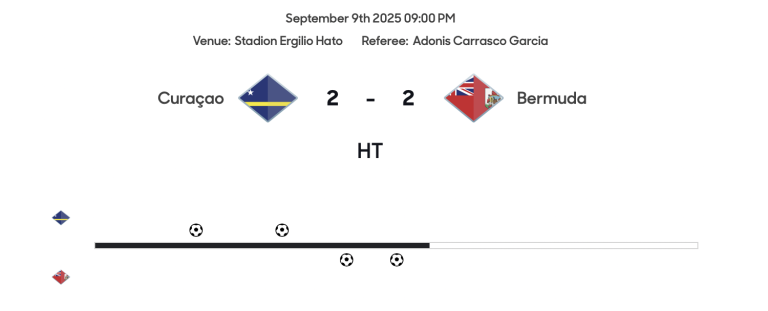
Team Bermuda looked to build on the momentum they generated in the first half, having clawed back from a two-goal deficit to level the match 2–2 before the break. But despite their resilience, the visitors were unable to sustain that comeback in the second half.

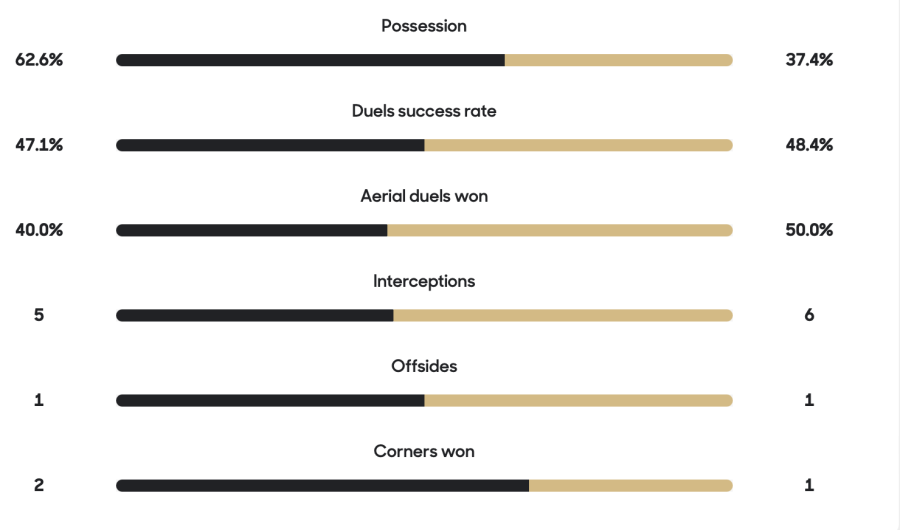
Curaçao, who outshot Bermuda 23 to 6, finally broke the deadlock in the 75th minute when Tyrese Noslin fired a right-footed shot from the right side of the box into the top left corner — a clinical finish that proved decisive.

Despite nine minutes of stoppage time, Bermuda couldn’t find a third goal. The hosts held on for the 3–2 win and secured all three points.

With the result, Bermuda now sits at the bottom of Group B in fourth place.

Half-time score: Bermuda 2 Curacao 2

Team Bermuda Fights Back to Draw Level with Curaçao in World Cup Qualifier

Under relentless pressure from the opening whistle, Team Bermuda had their work cut out in the second leg of the final round of World Cup qualifying against hosts Curaçao.

Despite standout saves from Bermudian goalkeeper Dale Eve, the Gombey Warriors found themselves trailing 2–0 just 26 minutes into the match.

But Bermuda refused to fold.

Digging deep, the squad responded with two quick goals — Kane Crichlow finding the net in the 35th minute, followed by Djair Parfitt-Williams just seven minutes later to level the score before halftime.

The comeback capped a spirited first-half performance and gave Bermuda renewed momentum heading into the second period.

Wells cautiously optimistic ahead of Curaçao match

FIFA World Cup Qualifying: Team Bermuda takes on Curaçao in the 2nd leg of the final round

Team Bermuda will face Curaçao tonight in their first away match of the final round of World Cup qualifiers. The Gombey Warriors are hoping to bounce back after a tough 4 nil loss to Jamaica on Friday at Flora Duffy Stadium. Despite the setback, captain Nahki Wells says there’s still plenty of football to play and remains cautiously optimistic about Team Bermuda’s chances.

Tonight’s match begins at 9pm Bermuda time

UK’s Reeves should break tax promises, not target business, CBI head says

Before July 2024’s election, Labour promised not to raise the rates of income tax, value-added tax or national insurance contributions – the main sources of government revenue

International News via Reuters:

British finance minister Rachel Reeves should break pre-election promises not to raise taxes on the general public rather than target businesses again in her November 26 budget, the head of the Confederation of British Industry said on Tuesday.

Writing in The Guardian newspaper, CBI chief executive Rain Newton-Smith said new tax rises on businesses would go against the government’s goal to boost economic growth and commitments made after last year’s budget, which raised taxes by the most since 1993.

“The chancellor cannot raid corporate coffers again so she must look elsewhere, embracing long-term strategic tax reforms rather than maintaining a slavish adherence to manifesto promises on tax,” Newton-Smith said.

Before July 2024’s election, Labour promised not to raise the rates of income tax, value-added tax or national insurance contributions – the main sources of government revenue.

But in October’s budget Reeves increased employers’ national insurance contributions – which she said were not covered by the pledge – by 25 billion pounds ($34 billion).

Since then, businesses have blamed the tax rise, which took effect in April alongside an increased minimum wage, for weaker hiring and investment and higher prices.

At this year’s budget, many economists think Reeves will need to find tens of billions of pounds more in revenue due to higher borrowing costs, a less certain growth outlook and a failure to pass welfare cuts through parliament.

Newton-Smith said Reeves should restructure the tax system, repeating longstanding calls to change business property taxes.

Other areas for reform included thresholds around tax and state-subsidised childcare, taxes on house purchase which discouraged labour mobility, road pricing and the threshold at which businesses must start to pay VAT.

“Geopolitics and global markets have shifted. The world is different from when Labour drafted its manifesto, and when the facts change so should the solutions,” Newton-Smith said.

($1 = 0.7384 pounds)

Reporting by David Milliken; Editing by Sachin Ravikumar