Saturday, October 31, 2026
Home Blog Page 779

Plea for help after landslide wipes out Sudan village, killing 1,000

Only one person survived the destruction of the village of Tarseen in the mountainous Jebel Marra area of the Darfur region, said the Sudan Liberation Movement/Army

An area is damaged following a landslide that destroyed the Tersin village, in the Marra Mountains area of Sudan September 1, 2025. Sudan Liberation Movement/Army/Handout via REUTERS

International News via Reuters:

An armed group that controls part of western Sudan appealed on Tuesday for foreign help in recovering bodies and rescuing residents from torrential rain, after it said at least 1,000 people were killed when a landslide buried a mountain village.

Only one person survived the destruction of the village of Tarseen in the mountainous Jebel Marra area of the Darfur region, said the Sudan Liberation Movement/Army.

SLM/A, which has long controlled and governed an autonomous portion of Jebel Marra, appealed to the United Nations and international aid agencies to help collect the bodies of victims, including men, women and children.

“Tarseen, famed for its citrus production, has now been completely levelled to the ground,” the group said in a statement. Continuing rains have made travel in the region difficult and could impede any rescue or aid efforts.

“Nearby villagers are overwhelmed with fear that a similar fate might befall them if the … torrential rainfall persists, which underscores the urgent need for a comprehensive evacuation plan and provision of emergency shelter,” the group’s leader, Abdelwahid Mohamed Nur, said in a separate appeal.

A statement by the U.N.’s resident coordinator put the death toll at between 300 and 1,000, citing local reports.

Arjimand Hussain, regional response manager for the development group Plan International, said the last 45 km of the route to Tarseen were impassable to motor vehicles and could only be negotiated on foot or by donkey.

Nine bodies were recovered by volunteers, said Abdelhafiz Ali from the Jebel Marra Emergency Room, who noted that the village had hosted hundreds of people displaced by fighting.

The SLM/A has remained neutral in the battle between the main enemies in Sudan’s civil war, the Sudanese army and the paramilitary Rapid Support Forces. The two foes are fighting over control of al-Fashir, capital of North Darfur state, which is under siege from the RSF and has suffered famine.

Residents of al-Fashir and nearby areas have sought shelter in Jebel Marra, though food, shelter, and medical supplies are insufficient and hundreds of thousands have been exposed to the rains. Tawila, where most have arrived, is in the throes of a cholera outbreak, as are other parts of Darfur.

The two-year civil war has left more than half of Sudan’s population facing crisis levels of hunger and driven millions from their homes, leaving them especially exposed to the country’s damaging annual floods.

Sudan’s army-controlled government expressed its condolences and willingness to assist.

The prime minister of a newly-installed RSF-controlled rival government, Mohamed Hassan al-Taishi, said he would be coordinating with the SLM/A on the delivery of aid supplies to the area.

Pope Leo sent his condolences and said he was praying for those affected, according to a Vatican statement.

Reporting by Khalid Abdelaziz; writing by Enas Alashray and Nafisa Eltahir; editing by Andrea Ricci, Stephen Coates, Peter Graff and Mark Heinrich


Impaired driver arrested for being 3 times over the legal limit, said Police

The Bermuda Police Service revealed there were no major incidents during the Labour Day holiday weekend

Twenty people were arrested over the Labor Day holiday weekend, Police reported today.


There were no major incidents but serious infractions kept police busy.


Details in this report.

Nestle CEO axed after probe into complaints of favouritism, CFO says

Freixe was fired due to an undisclosed relationship with a subordinate, exactly a year after he replaced Mark Schneider, plunging the Swiss food giant into turmoil

International News via Reuters:

Nestle staff complained in May about improper favouritism by former CEO Laurent Freixe towards an employee with whom they alleged he was romantically involved, a senior executive said on Wednesday, two days after Freixe was sacked.

Freixe was fired due to an undisclosed relationship with a subordinate, exactly a year after he replaced Mark Schneider, plunging the Swiss food giant into turmoil.

Chief Financial Officer Anna Manz said the relationship between Freixe and the employee, who has not been named, was first examined in an internal investigation following concerns raised via Nestle’s internal reporting system, called Speak Up.

“Back in May, we received a Speak Up through our internal channels alleging a romantic relationship with an employee and improper favouritism,” Manz told a Barclays investor conference.

The matter was investigated by the board, but no evidence was found, she said.

“And it was at that point that Laurent also made a personal statement stating that there had been no such thing,” Manz said, referring to the concerns about Freixe raised by whistleblowers.

But complaints continued to be made, Manz said, leading to a second, broader inquiry being launched with help from Swiss lawyers Baer & Karrer.

“And it was that that triggered information that led to the board believing that there had been a breach of conduct and that they needed to act to change the CEO,” she said.

Freixe, who had denied the relationship throughout the course of both investigations, was dismissed on Monday following a board meeting, and will not receive an exit package.

He could not be immediately reached for comment.

Investors and analysts have described the dismissal of the 39-year company veteran as a crisis of historic proportions at Nestle, traditionally seen as a pillar of the Swiss business establishment.

‘STRATEGIC, THOUGHTFUL LEADER’

Freixe was replaced by Nespresso boss Philipp Navratil. Manz said he will bring a fresh perspective to the company.

Navratil, 49, has spent 24 years at Nestle, mainly in its coffee business, and joined the executive board in January.

“He’s a really strategic, thoughtful leader. He’s also very pragmatic and executionally focused,” Manz said.

Nestle denied reports Manz’s appearance had been hastily arranged to present the company’s side of Freixe’s sacking to investors. The company said Freixe had also been due to attend the conference with Manz before his dismissal.

The company, famous for KitKat chocolate bars and Nescafe instant coffee, has been struggling since the tenure of Freixe’s predecessor Schneider, the first outsider to lead Nestle since 1922.

Some analysts accused Schneider of focusing too much on acquisitions and cutting spending in vital areas.

Schneider was fired in August 2024 following Nestle’s slow post-pandemic recovery, triggering what has become one of the messiest managerial periods in the 159-year-old company’s history.

Manz said Navratil’s quick appointment was possible because the Nestle board had already begun succession planning due to the fact that Freixe is 63.

Navratil would be present for Nestle’s third-quarter results on October 16, and would likely meet investors before then, Manz said.

Reporting by John Revill;Editing by Dave Graham and Emelia Sithole-Matarise

Who should lead the OBA?

Ahead of Saturday’s vote for a new Leader of the Opposition, Kendal Trott hit the streets of Hamilton, to find out where public sentiment lies.

The two contenders to lead the OBA are Ben Smith and Robert King.

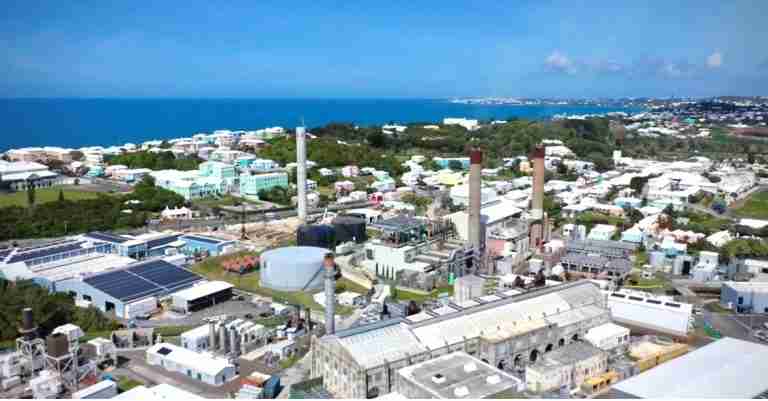
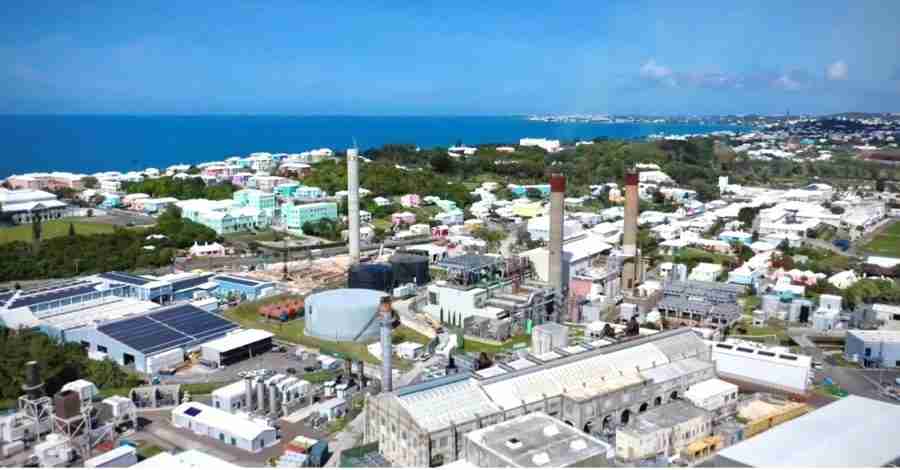
Power pointers: Have your say on energy

Public given more time to help shape energy policy as RA extends consultation deadline for its Integrated Resource Plan

Press release:
The Regulatory Authority of Bermuda (RA) today announced that it has reopened the consultation period for the Integrated Resource Plan (IRP) to ensure that the voices and perspectives of the community are fully captured. The consultation, originally set to close on 29 August, will now remain open until 17 September 2025.

The IRP outlines Bermuda’s long-term energy plan, guiding the island’s approach to meeting its future electricity needs through a mix of resources, including renewable energy. It represents a critical framework to balance affordability, sustainability, and security of supply for the entire country.

Given the high level of public interest and discussion surrounding the IRP recently, the RA believed it imperative to extend the opportunity for feedback. By reopening the consultation, the RA hopes to reaffirm its commitment to transparency, accountability, and meaningful stakeholder engagement.

Donn Foggo, Director of Communications & Stakeholder Engagement at the RA, stated: “At the RA, we place great importance on community feedback because every perspective helps shape the decisions that impact us all.” He continued: “I understand that, like many documents from the RA, the IRP can seem technical and may feel as if it is meant just for industry experts. However, The Integrated Resource Plan is about the future of Bermuda’s energy, a plan that affects all of us – our homes, businesses, and the energy we rely on every day. Your input is vital, and we can only reflect the views that are shared with us. Make sure your voice is heard now, to ensure that you are not left out of the conversation later.”

All interested parties are invited to review the consultation materials and make submissions before the new closing date. Details on how to participate can be found on the RA’s website at: www.ra.bm/public-consultations/integrated-resource-plan-alternative-proposal-consultation-2025

The RA remains committed to ensuring that the development of Bermuda’s energy sector reflects the priorities of the people it serves.

###

About the Regulatory Authority of Bermuda (RA) 

The Regulatory Authority of Bermuda is an independent regulatory body that oversees various sectors, including the Electricity, Electronic Communications, and Submarine Communication Cables sectors. The RA is committed to promoting competition, safeguarding the interests of residents and consumers, stimulating the Bermudian economy, promoting innovation, and fulfilling any additional functions as specified by sectoral legislation. 

Bermudian arrested in Florida for sexual assault

Incident allegedly occurred at home of a male complainant, in March

A Bermudian man has been arrested and charged with sexual assault by the Palm Beach County Sheriff’s Office.
The arrest follows an investigation into events that allegedly took place in the early hours of March 17 in Wellington, Florida.
The Palm Beach County Sheriff’s Office told Bermuda Broadcasting today that a sexual assault – with no physical force – allegedly took place at the home of a male complainant.
The Bermudian man was arrested on the 26th of August and later charged and released on bond on August the 28th. We are not naming him for legal reasons.
He is due to appear for a court hearing in the coming weeks.


Union meeting to delay public services

There will be no bus or ferry services during the BIU meeting on Friday from 2 pm – 4 pm

The public is advised that due to a Bermuda Industrial Union (BIU) membership meeting taking place Friday September 5, from 2:00 p.m. – 4:00 p.m., there will be an interruption in public services.

Specifically, there will be no bus or ferry services during this period. Members of the public are encouraged to seek alternative transportation arrangements during this time to avoid delays. 

Other delayed services may include trash collection, parks, postal delivery, and other services. 

All disrupted services will resume following the conclusion of the BIU meeting.

Please note the public transportation services that will be interrupted during this time:

Orange Route

No impact

Blue Route

Dockyard           

  • 2:15
  • 4:00
  • 5:00

Hamilton           

  • 1:30      
  • 3:15

Green Route    

Hamilton – 4:10

Rockaway – 4:30

Cavello Bay – 4:40

Watford Bridge – 4:50

Pink Route

Hamilton – 3:45

Salt Kettle – 3:50

Darrel’s – 3:55

Belmont – 4:00

UN committee says Portugal kept information on lithium mine from public scrutiny

In its findings the U.N. committee said that Portugal failed to respect citizens’ rights to environmental information and to participation in the licensing process

International News via Reuters:

Portugal has breached an international treaty by preventing the public from accessing key information about Europe’s largest lithium mining project during its environmental licensing process, a U.N. committee said on Wednesday.

In 2023, Portugal’s environmental agency APA gave its go-ahead, conditional on some remedies, for London-listed Savannah Resources to develop the mine in the northern Barroso region, which has been a World Heritage site for agriculture since 2018.

Local residents and environmentalists have opposed the project, and said on Wednesday that the findings by the U.N. Aarhus Convention Compliance Committee reinforced their demand for the license to be revoked.

The APA said in a statement that despite having a divergent interpretation of the application of the convention, it “has always acted in strict compliance with administrative procedures, applying the law” and that all the required information had already been made available.

Savannah Resources declined to comment.

In its findings the U.N. committee said that Portugal failed to respect citizens’ rights to environmental information and to participation in the licensing process – rights enshrined in the 2001 convention, which the country ratified in 2003.

The committee added that the APA had failed to respond to requests for environmental information within legal deadlines, and when it refused, failed to inform citizens how to appeal.

The complaint against the authorities’ actions was filed in 2021 by Spanish preservation group Montescola Foundation, with two Portuguese groups serving as observers in the process.

Montescola President Joam Evans welcomed the decision, saying the environmental permit should be revoked.

Savannah, which is keen to supply Europe’s electric vehicles sector, has said Barroso’s deposit of spodumene – an important source of lithium used in batteries – is the biggest in Europe with estimated reserves of at least 28 million metric tons of high-grade lithium. It wants to start production in 2027.

Reporting by Sergio GoncalvesEditing by Andrei Khalip and Frances Kerry

Canadian PM says he spoke to Trump on Monday, had good conversation

Carney, speaking to reporters ahead of a cabinet retreat in Toronto, also said a senior team of Canadian officials was in Washington for the latest round of talks

International News via Reuters:

Canadian Prime Minister Mark Carney on Wednesday said he had a lengthy and productive conversation with U.S. President Donald Trump on Monday, covering trade issues and other topics.

Carney, speaking to reporters ahead of a cabinet retreat in Toronto, also said a senior team of Canadian officials was in Washington for the latest round of talks on a new trade and economic relationship with the United States.

Reporting by David Ljunggren and Promit Mukherjee

BoE’s Bailey says markets have grasped message on less certain rate cuts

Last month the Monetary Policy Committee voted by the narrowest of margins – 5 to 4 – to cut Bank Rate to 4% from 4.25% after an unprecedented two rounds of voting

International News via Reuters:

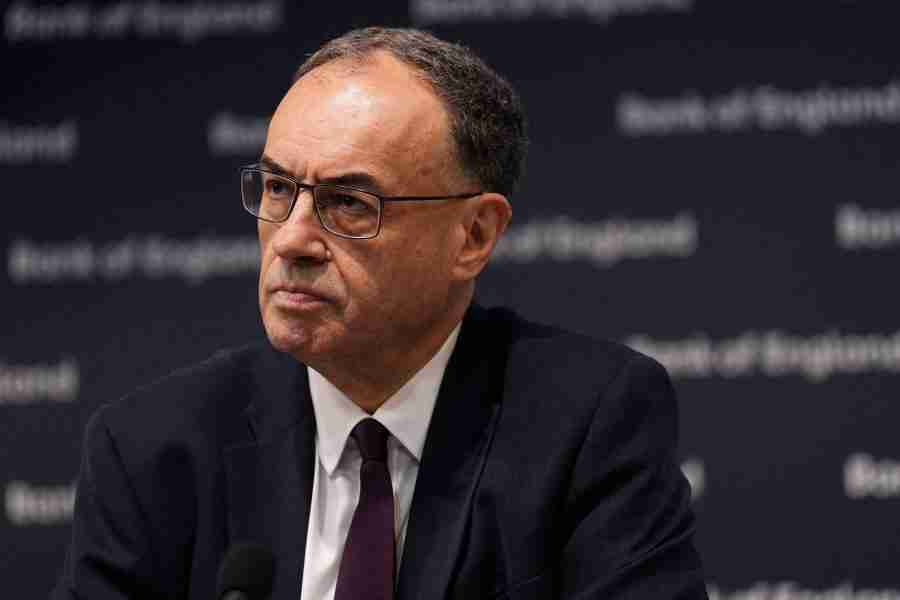
Bank of England Governor Andrew Bailey said markets had understood his message that BoE interest rates would continue to move “downwards gradually over time” but that there was now less certainty about the speed of cuts.

“There is now considerably more doubt about exactly when and how quickly we can make those further steps,” Bailey told a hearing of the House of Commons’ Treasury Committee, echoing the message he gave at a press conference after August’s rate cut.

“That’s the message I wanted to get across. Now, I think actually, judging by what’s happened, certainly to market pricing since then, I think that message has been understood.”

Bailey also said he was “very concerned” about political pressure being put on the U.S. Federal Reserve.

Last month the Monetary Policy Committee voted by the narrowest of margins – 5 to 4 – to cut Bank Rate to 4% from 4.25% after an unprecedented two rounds of voting, its fifth quarter-point rate cut since starting to reduce borrowing costs in August 2024.

Financial markets currently see only a one in three chance of another rate cut by the end of the year and do not fully price in a next quarter-point rate cut until April 2026, according to LSEG data.

A Reuters poll of economists last month still showed a median expectation for a further rate cut before the end of this year and another one in the first quarter of 2026.

Since then, inflation has picked up to 3.8% – nearly double its target and the highest in the Group of Seven advanced economies – and the BoE expects it to reach 4% in September and not return to target until the second quarter of 2027.

SPLIT COMMITTEE

Speaking alongside Bailey at the parliamentary hearing were Deputy Governor Clare Lombardelli and external MPC member Megan Greene – who voted against cutting rates last month – and MPC member Alan Taylor who initially voted for a half-point cut before switching to support a quarter-point reduction.

Taylor said his preference would be to see rates cut at a pace of four or five cuts a year as he thought incoming wage deals were in line with inflation returning to its 2% target and did not see warning signs from what he viewed as a modest rise in household inflation expectations.

By contrast, Lombardelli and Greene said they were concerned by the rise in expectations and did not think interest rates were still at a level that placed significant downward pressure on inflation.

“I am not predicting that we are already at neutral, but nor am I confident that if we reduce restrictiveness much further we will still be sufficiently restrictive to return inflation to target sustainably,” Lombardelli said in a written report to the committee at the start of the hearing.

Earlier on Wednesday, British 30-year gilt yields rose to their highest since 1998 at 5.75%.

Bailey said it was “important not to over-focus” on this as the government no longer raised significant finance from debt of this maturity and that he viewed the move as reflecting a global trend rather than UK-specific problems.

Additional reporting by Sarah Young, William James, Yoruk Bahceli and Sachin Ravikumar; Editing by Hugh Lawson

Stocks rebound, but bond selloff keeps investors on edge

Spot gold hit an all-time high of $3,557 as the rush out of long-term government debt, traditionally considered low-risk, sparked a hunt for alternative safe-haven assets

International News via Reuters:

Wall Street stocks recovered on Wednesday after Alphabet gained on a favorable antitrust ruling and investors awaited labor market data that could influence the central bank’s upcoming interest-rate decision.

Alphabet jumped around 8% in early trading, while Apple also gained about 2% as the ruling allowed Google to continue lucrative payments to the iPhone maker. Broadly, the Dow Jones Industrial Average was little changed, the S&P 500 rose 0.4%, and the Nasdaq Composite added 0.73%. 

At the same time, a sell-off in global long-dated bonds sent Japan’s government borrowing costs to record highs on Wednesday, as mounting concerns over government debt sustainability and long-term inflation also rattled investors in Europe. 

Spot gold hit an all-time high of $3,557 as the rush out of long-term government debt, traditionally considered low-risk, sparked a hunt for alternative safe-haven assets. 

The 30-year Japanese government bond yield hit an unprecedented 3.28% on Wednesday, following a sell-off in similarly dated British gilts, U.S. Treasuries and Canadian bonds in the prior session.

“The economic reforms needed to really cover increasing debt are lacking, and the capital market sees that,” Deutsche Bank chief executive Christian Sewing said about the long-dated debt sell-off in comments at a conference on Wednesday morning. 

The trend may continue, he added, “if we see a further increase in political instability, if we don’t see any reforms”. 

British finance minister Rachel Reeves is expected to raise taxes in her autumn budget to remain in line with her fiscal targets, while in France Prime Minister Francois Bayrou looks set to lose a confidence vote as opposition parties balk at his spending cuts.

In Japan, government departments have just presented record budget requests and senior aides to Prime Minister Shigeru Ishiba, including Secretary-General Hiroshi Moriyama, have offered to resign following their party’s defeat in July’s upper house election.

On Wednesday, British 30-year gilt yields rose 6 basis points to a fresh post-1998 high of 5.752%, before recovering to last trade at 5.65%. 

Germany’s 30-year yield stood at 3.37%, remaining close to its highest level in 14 years. 

The global trend would likely feed on itself, some analysts said, because higher yields in Japan meant Japanese savers who had for decades looked to overseas assets for income now had fewer reasons to buy non-domestic government debt.

“Global bond markets no longer benefit from the Japanese hunt for yield,” L&G Asia head of investment strategy Ben Bennett said. “It’s a perfect storm for long-dated bonds and a headache for governments.” 

RIPPLE EFFECTS 

The gap between 2-year and 30-year U.S. government bond yields stands at about 130 bps, around its highest since December 2021, while the comparable measure in Britain is the highest since 2017. 

The 30-year U.S. Treasury yield briefly rose above 5% during Asia trade and last stood at 4.971% and, with yields at this level, investors are starting to watch for spillovers into other asset classes. 

“The 5% level is going to be impactful to equities,” said Josh Chastant, portfolio manager, public markets at GuideStone Funds. “And you are starting to see some of that pressure.” 

Britain’s pound briefly fell to a four-week low of $1.343, before recovering a little. Japan’s yen was a touch softer at 148.64 per dollar after sliding 0.8% in the previous session.

The dollar index, which measures the greenback against a basket of currencies including the yen and the euro, fell 0.1%.

European stock markets remained unscathed as traders pinned their hopes on an anticipated U.S. rate cut later this month, with Europe’s STOXX index up 0.46%. 

But Japan’s broad Topix share index closed almost 1.1% lower and MSCI’s broad index of Asia-Pacific shares outside Japan dropped 0.4%.    

TARIFF TREMORS

European purchasing managers’ indexes on Wednesday, viewed as barometers of overall economic conditions, showed expansion in Germany had slowed and France remained in contractionary territory as businesses dealt with U.S. President Donald Trump’s unpredictable tariff policies. 

Trump on Tuesday said his administration would ask the Supreme Court for an expedited ruling on tariffs that an appeals court found illegal last week. The court allowed for the tariffs to stay in place until October 14.

U.S. manufacturing also contracted for a sixth straight month in August as factories grappled with the impact of import tariffs, data showed on Tuesday, helping to drive Brent crude oil 1.4% lower to $68.16 a barrel on Wednesday.

Friday’s U.S. nonfarm payrolls data will be preceded by data on job openings and private payrolls, offering an update on the labor market that has become the focus of policy debate at the Fed. 

Reporting by Lawrence Delevingne in Boston and Naomi Rovnick in London; Additional reporting by Tom Sims in Frankfurt, Dhara Ranasinghe in London, Rocky Swift in Tokyo and Ankur Banerjee and Rae Wee in Singapore. Editing by Alex Richardson, William Maclean