Monday, November 9, 2026
Home Blog Page 793

Opinion: ‘Our system is failing to protect children’

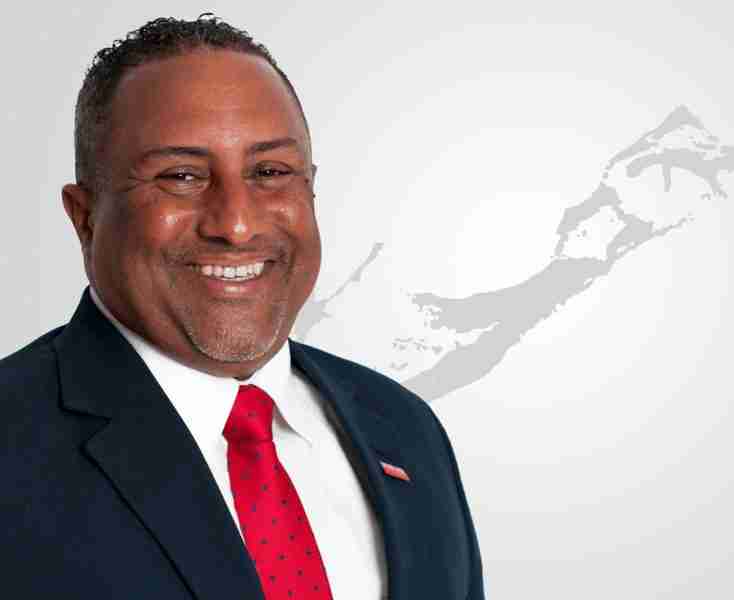
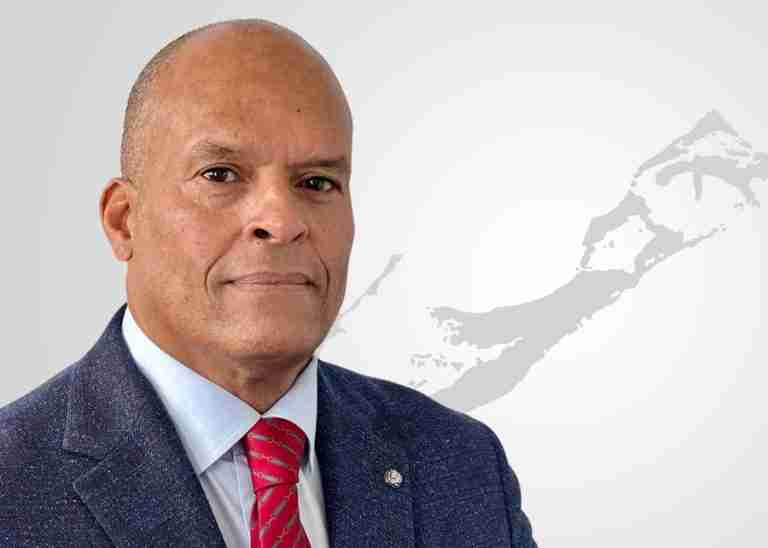
Statement by Shadow Minister of National Security Robert King, MP:

What message are we sending to survivors of sexual abuse? And what is the government doing to ensure this issue is a priority and being urgently addressed?

As was recently reported in the media, a man who admitted having sex with a 15-year-old girl was handed an 18-month suspended sentence after court delays resulted in the case taking four years.

For the survivor and her family, it is a devastating outcome. For Bermuda, it is a wake-up call: our system is failing to protect children and failing to hold offenders accountable. It sends a message that crimes against children can be minimised, that the trauma endured is negotiable, and that our system is willing to look away.

This ruling does not exist in isolation. It comes at a moment when members of the public are already expressing deep frustration about sexual offenders being seen and harassing people in our community, without sufficient oversight.

The Non-Profit Alliance of Bermuda outlined in a recent report that one in three Bermudians have been the victim of child sexual abuse and one in two women in Bermuda has experienced child sexual abuse.

Recently on social media, dozens of parents and women shared experiences of being harassed, intimidated and even approached by a known repeat sexual offender. Bus drivers described the fear of having him near their routes. Parents recounted children no longer feeling safe walking home. These are not abstract concerns – they are real experiences of fear and retraumatisation, and they point to a justice and corrections system that is failing to protect our children and community.

Justice delayed is justice denied. Survivors who bravely come forward often wait years for cases to move through the courts, only to face outcomes that minimise the crime and embolden offenders. The impact on victims and their families is profound: it compounds trauma, discourages reporting and reinforces the perception that child sexual abuse is not taken seriously in Bermuda.

But the problem is bigger than sentencing. As a country, we lack the infrastructure to deal with sexual offenders in a way that prioritises both justice and prevention. Bermuda does not have a dedicated correctional treatment centre for high-risk sexual offenders. Without proper intervention and monitoring, incarceration alone becomes a revolving door. Releasing untreated offenders into our community without safeguards or accountability puts our children, vulnerable persons and women at risk.

We must do better – because protecting the community is our responsibility. I have put forward a a plan that includes;

●      Bail ineligibility for serious and repeat offenders

●      Stronger sentencing guidelines that reflect the gravity of crimes against children.

●      Mandatory treatment and monitoring for offenders, so they cannot simply walk free.

●      A specialised correctional and rehabilitation framework, and forensic unit must be resourced so that offenders are not just punished but are also prevented from reoffending.

●      Faster court processes, so survivors are not retraumatised by years of waiting and appropriate sentencing that makes the victim’s rights a priority.

We must also strengthen prevention. Organisations like SCARS continue to train parents, teachers, coaches and community members to recognise signs of abuse and to act swiftly. But prevention cannot fall only on the shoulders of families and advocacy groups. It requires a justice system that delivers consistent protection and a government that makes child safeguarding a priority.

It is unacceptable that court delays are benefiting the perpetrators of serious crimes and not the victims. How do current practices increase motivation to adhere to the laws and for victims to report crimes against their person? It also has the knock-on effect of supporting the attitudes around vigilante justice, we can and must do better!

Bermuda cannot afford complacency. As a community, we must decide: will we continue to tolerate a system that fails our children and victims of sexual assault? Or will we summon the courage to put their protection at the centre of our justice system? Every child deserves to grow up safe, and every survivor deserves justice that acknowledges the harm done to them.

The safety of our children, vulnerable persons and women is not negotiable., We must act – not after the next headline, but now.

Bermuda’s future depends on it.
Opinion: ‘Students deserve more than promises’

Statement by Ben Smith JP, MP, Shadow Minister of Education:

Every September should feel like progress. Students should be returning to classrooms that are safe, fully staffed, and ready to inspire. Teachers should be feeling supported, not overburdened. 

Parents should know exactly what lies ahead. Sadly, in Bermuda today, too many families are returning to uncertainty.

The Government pledged to eliminate middle schools and replace them with Parish Primary Schools and stronger senior programmes. 

This year, Elliot and Harrington Sound will open as the first Parish Primary Schools. Yet older students remain caught in a cycle of shifting promises.

Instead of confusion, we need a clear and published transition map showing exactly where each year group will be learning, from this September through the next two years. Parents shouldn’t need rumours or guesswork to know their child’s path.

Reform cannot succeed if classrooms are not ready and teachers are stretched thin. Every year we hear about unfinished works, a shortage of substitutes, and counsellors sharing limited space.

The Opposition believes the first priority must be classroom readiness. That means completing facility upgrades before term starts, guaranteeing every school has functioning student support spaces, and ensuring health and safety standards are published and met.

At the same time, we need a teacher-first approach: build a reliable substitute pool, expand para-educator support, and fast-track recruitment to keep class sizes manageable. No reform can succeed without teachers who feel valued and supported.

The Government has spoken of an Education Authority in multiple throne speeches. We agree—but it must be independent and transparent. That means publishing true literacy and numeracy outcomes, graduation rates, and attendance data on a regular basis. It means quarterly reports that parents and teachers can access, so progress is measured by results, not announcements.

This year’s education budget is the largest in history, yet the budget still displays the high cost of TN Tatem because the accounting still hasn’t been updated to show where the money is actually being spent. 

The Opposition would prioritise direct investment in students and teachers—upgrading facilities, hiring staff, increasing counseling services and funding learning resources. Parents must see that dollars are being spent where they make the greatest impact.

Back to school should not be about uncertainty; it should be about opportunity. The Opposition’s approach is clear:

  • Publish and update a national transition map for all year groups.
  • Guarantee classroom readiness before day one.
  • Put teachers first through staffing, support, and morale-building.
  • Establish an independent Education Authority with public performance measures.
  • Prioritise classroom investment
  • Report progress quarterly so the public can see results, not spin.

Our children deserve more than promises. They deserve delivery. And Bermuda deserves an education system that builds confidence, trust, and excellence from the first day of term to the last.

BCB announce knock-out semi-final & final schedule

The Bermuda Cricket Board announced the schedule for the three upcoming 40-Over Knockout Cup fixtures, which will be held at Somerset Cricket Club and St. David’s Cricket Club on Saturday, September 6th, and at St. David’s County Cricket Club on Sunday, September 7th.

On Saturday, September 6th, the Semi-Finals will see the Premier Division 50 Over League Champions, St. David’s Cricket Club faced Warwick Workmen’s Club, who ended the season in 4th place.

The second semi-final will see St. George’s Cricket Club (runners-up) facing the Somerset Cricket Club, who ended the season in 3rd place.

The winners of each semi-final match will advance to the BCB 40-Over KO Cup final on Sunday, September 7th at St. David’s Cricket Club.

All matches will start at 11:30 am, and the entry fees are $10 for adults, $5 for seniors, and children 12 and under are free.

The Bermuda Cricket Board appreciates the cooperation and understanding of all clubs and supporters as we continue to promote the growth and excitement of domestic cricket.

Waldron secures a winner in busy night at Hoosier Park

Bermudian harness driver Kiwon Waldron had a productive night at Harrah’s Hoosier Park in Indiana, securing a win and two top-five finishes across a busy three-race schedule.

Waldron’s night started in RACE 2 in the Trot Class, where he guided Wiggy Hill to a fourth-place finish with a time of 1:57.7. He followed that up in RACE 9, also in the Trot Class, where he and K-lyn finished fifth with a time of 1:59 flat.

The highlight of the evening came in his final race, RACE 13 in the Pace Class. In the sulky of Firing Onall Fours, Waldron powered to a winning time of 1:55 flat, securing the victory and ending his night on a high note. The win is a testament to Waldron’s consistent form and growing success on the competitive US harness racing circuit.

London stocks edge higher led by industrials, banks; US jobs data in focus

The domestically focused FTSE 250 was up 0.3%, but headed towards its second straight weekly decline

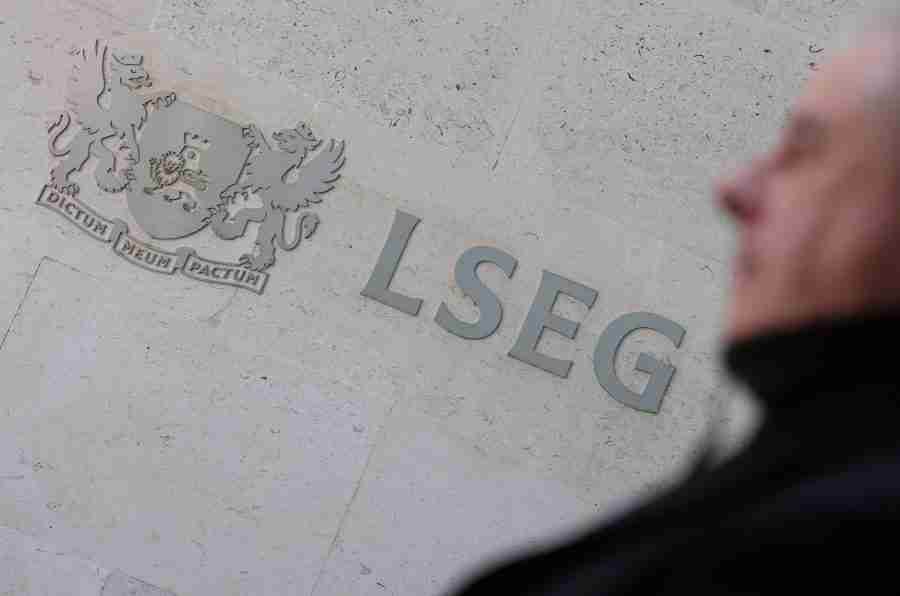
Signage is seen outside the LSEG (London Stock Exchange Group) headquarters in Paternoster Square, London, Britain, April 25, 2025. REUTERS/Toby Melville/File Photo

International News via Reuters:

London shares nudged higher on Friday, led by gains in heavyweight banks and industrials, while investors assessed corporate updates and retail sales data.

As of 1012 GMT, the blue-chip FTSE 100 edged up 0.2% and was on track to log a weekly gain.

The domestically focused FTSE 250 was up 0.3%, but headed towards its second straight weekly decline.

In the market, aerospace and defence companies rose. Babcock and Melrose Industries were up about 2.1% each, while Rolls-Royce added 1.1%.

Industrial miners rose, tracking higher copper prices, with Rio Tinto up 1.5%. Precious metal miners also advanced.

Heavyweight bank stocks gained 0.7%. Top lenders HSBC and Standard Chartered added 1.7% and 1.3%, respectively.

Conversely, consumer staples stocks such as Tesco, Unilever and M&S declined.

Non-life insurers declined 1.2%, dragged down by Admiral Group that fell 2.8%, to the bottom of the FTSE 100, after Peel Hunt downgraded the stock to “sell” from “reduce”.

In corporate updates, Ashmore fell 6.5%, to the bottom of the mid-cap index, after the asset manager reported lower-than-expected fee revenue and a dip in profit in its annual results.

Concerns over Britain’s finances and the government’s ability to keep them under control weighed on the markets earlier this week, briefly sending yields on long-dated government bonds to a 27-year high.

Investors continue to speculate about tax rises that could dampen economic growth, with Britain set to deliver its budget on November 26.

On the data front, retail sales rose more than expected in July, boosted by good weather and the women’s European soccer championship, but annual growth was slower than expected after extensive revisions to previous months’ data.

Investors now await U.S. payrolls data for August, expected at 1230 GMT. Signs of weakness in the report could be crucial for investors who have been pricing in a 25-basis-point Federal Reserve rate cut at its meeting later this month.

Reporting by Sukriti Gupta in Bengaluru; Editing by Shailesh Kuber

EDF, European Investment Bank sign 500 million euro deal to update French power grid

The second phase of financing will cover about 40% of the investment cost

International News via Reuters:

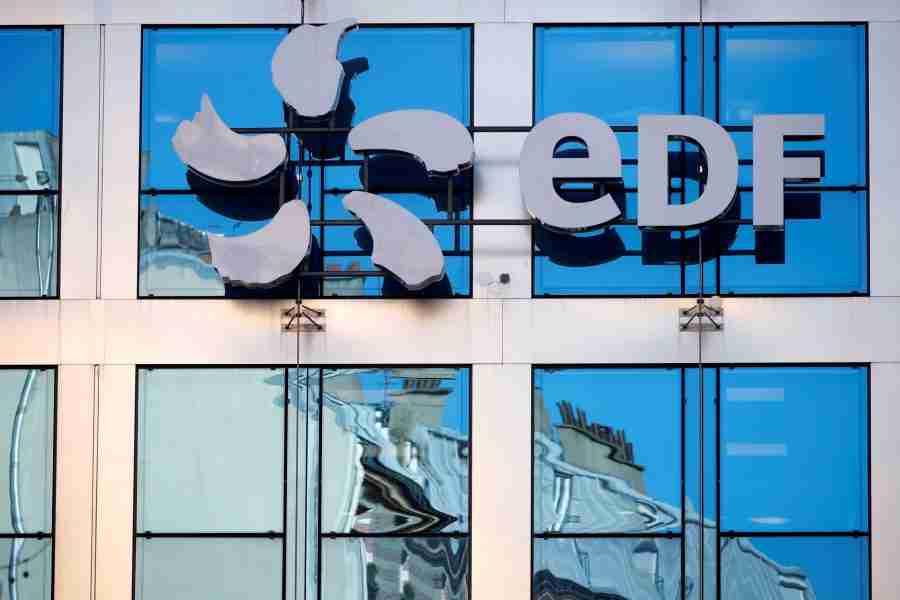
French utility EDF and the European Investment Bank on Friday announced a 500 million euro ($585.4 million) financing deal for the second phase of a 1 billion euro overhaul of France’s public electricity network.

European electricity grids have come under scrutiny in recent years as excess renewable energy production has raised interest in cross-border connections, and reinforcement is needed to upgrade and protect grids against climate change.

The second phase of financing will cover about 40% of the investment cost for the connection of 7 gigawatts of renewable generation capacity and more than 2,500 kilometres of underground or distribution line replacement by EDF’s subsidiary Enedis, the joint statement said.

Nearly 90% of the wind and solar energy produced in France is integrated into the distribution network managed by Enedis.

EU governments agreed in June to lift the annual lending of the bloc’s powerful European Investment Bank to 100 billion euros this year and treble its funding for the EU’s defence industry.

($1 = 0.8542 euros)

Reporting by Alban Kacher in Gdansk and Forrest Crellin in Paris; Editing by Jan Harvey, Alexandra Hudson

Myanmar’s Suu Kyi health worsening in military custody, son says

The Nobel Peace Prize laureate has also suffered from bone and gum issues

International News via Reuters:

Myanmar’s detained former leader Aung San Suu Kyi is suffering from worsening heart problems and needs urgent medical attention, her son said on Friday, in an appeal for her immediate release from “cruel and life-threatening” custody.

Kim Aris told Reuters that his 80-year-old mother, in military custody since a 2021 coup that deposed her government, had asked to see a cardiologist about a month ago, but he had been unable to determine whether her request had been granted.

“Without proper medical examinations … it is impossible to know what state her heart is in,” he said by phone from London. “I am extremely worried. There is no way of verifying if she is even alive.”

The Nobel Peace Prize laureate has also suffered from bone and gum issues, Aris said, adding that it was likely she had been injured in an earthquake in March that killed more than 3,700 people. In a Facebook video, he appealed for Suu Kyi and all political prisoners in Myanmar to be released.

A spokesman for Myanmar’s military-backed interim government did not pick up calls from Reuters seeking comment, and its information ministry did not immediately respond to questions sent via email.

Myanmar has been gripped by violence since the military takeover in February 2021, which prompted mass rallies that were crushed by brutal force, sparking a widespread armed uprising.

Suu Kyi, a long-standing symbol of Myanmar’s pro-democracy movement, is serving a 27-year sentence for offences including incitement, corruption and election fraud, all of which she denies.

One of her last public appearances was in court in May 2021, a few months after the coup, when pictures aired by state television showed her sitting upright in the dock, with her hands in her lap and wearing a surgical mask.

DECADES IN DETENTION

The military justified its takeover on the basis of what it said was widespread fraud in an election that Suu Kyi’s party won by a landslide, although election monitors found no evidence of cheating.

Foreign governments and rights groups have consistently called for her release.

Starting in late December, the military-backed interim government plans to hold new elections in multiple phases, the first polls since the one that triggered the coup.

Anti-junta groups, including Suu Kyi’s party, are either boycotting or are barred from running, with only military-backed and approved parties participating. Western governments have criticised the vote as a move to entrench the generals’ power.

Born in 1945 to Myanmar’s independence hero, General Aung San, who was assassinated when she was an infant, Suu Kyi has spent nearly two decades in detention, including some 15 years under house arrest at her colonial-style family on Yangon’s Inya Lake, as ordered by a previous junta.

Educated at Oxford University, she married British scholar Michael Aris in 1972 and had two sons with him, before returning to Myanmar in 1988 to care for her ailing mother.

That is also when she joined nationwide protests against military rule, forming the National League for Democracy party and rising to become Myanmar’s most prominent pro-democracy leader.

Reporting by Reuters staffEditing by Ros Russell

Swiss economy minister to meet US officials on Friday, government says

Switzerland has been desperately trying to lower the tariffs among the highest of any applied under Trump’s global trade reset

International News via Reuters:

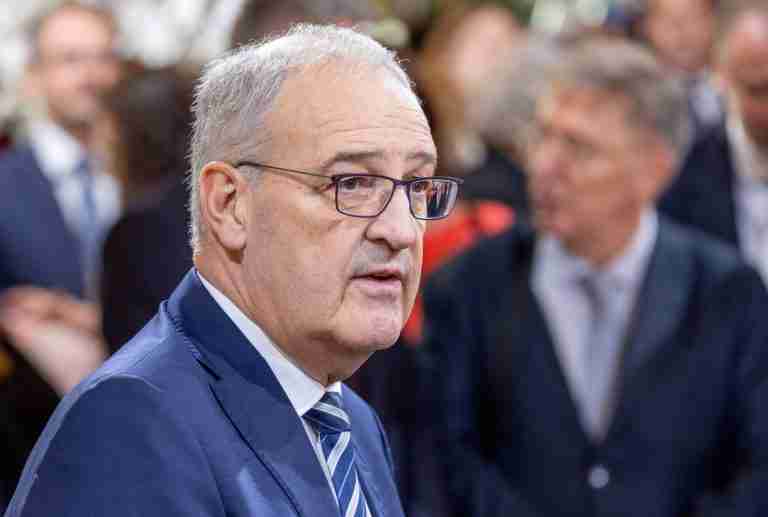
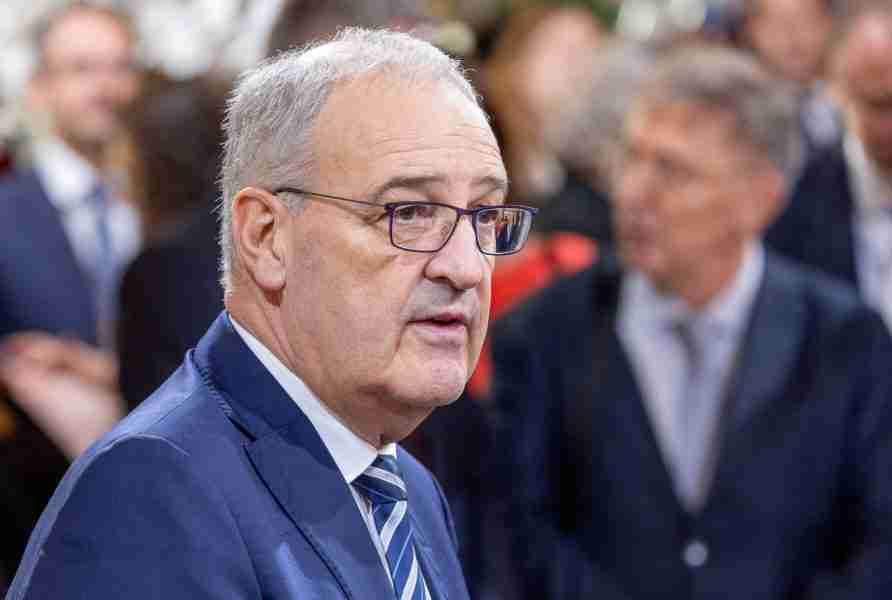
Swiss economy minister Guy Parmelin is due to meet senior U.S. administration officials on Friday in the country’s latest effort to negotiate down the crippling 39% tariffs imposed by U.S. President Donald Trump on most Swiss exports.

Switzerland’s government said that Parmelin flew to Washington on Thursday night, with talks planned on Friday at a “ministerial level.”

The Economic Affairs Department declined to give further details of the talks, including which officials Parmelin planned to meet.

Switzerland has been desperately trying to lower the tariffs among the highest of any applied under Trump’s global trade reset.

A last-ditch attempt led by President Karin Keller-Sutter failed to produce a better deal and the tariffs went into effect on August 7, threatening major damage to the Swiss economy by reducing access to its biggest export market.

Parmelin also took part in that delegation, and his latest trip to the United States meant he was unable to speak at a Swiss business event in Baden on Friday.

UBS Chief Executive Sergio Ermotti, speaking at the same event, said he was worried U.S. tariffs would put pressure on economic growth and contribute towards higher inflation.

Ermotti said that he was also very disappointed by the tariffs imposed on Switzerland, but was confident that Bern would be able to reach an agreement for lower duties.

Reporting by Dave Graham and John Revill, editing by Aidan Lewis and Tomasz Janowski

BMW unveils iX3 EV hopeful in push to recover market share

It is the first in a sequence of next-generation EV launches under the carmaker’s branding umbrella Neue Klasse

International News via Reuters:

BMW on Friday took the wraps off its Neue Klasse iX3 electric sport utility vehicle, a key model for the German carmaker that could help it reclaim some of the market share lost in its largest market China.

The model, which will enter production at the end of the year and go on sale in Europe in March 2026 at a price of 68,900 euros ($80,700), is one of BMW’s great hopes in the global market for premium electric vehicles.

It is the first in a sequence of next-generation EV launches under the carmaker’s branding umbrella Neue Klasse, German for new class.

Forming the backbone of that push, the iX3 has a range of more than 800 kilometres and is able to charge more than 370 kilometres worth of power within ten minutes.

“It represents a completely new model generation. A massive leap that will shape the entire brand for years to come,” BMW CEO Oliver Zipse said at the showcase in Munich ahead of the official opening of the IAA Mobility car show.

Analysts at Deutsche Bank said that BMW was targeting a market share recovery with the launch of Neue Klasse in China, where BMW – along with other European peers – has suffered setbacks in light of aggressive local competition.

“As such, Neue Klasse’s success in China will require a careful balancing act: adapting to local market demands and implementing a pricing strategy that resonates with Chinese consumers,” they said in a recent note.

($1 = 0.8542 euros)

Reporting by Christina Amann and Christoph SteitzEditing by Ludwig Burger

Dollar slides as bond markets stabilise, jobs data looms

On Friday, the dollar index dipped 0.2% to 98.018, trimming its gain for the week back to 0.2%

International News via Reuters:

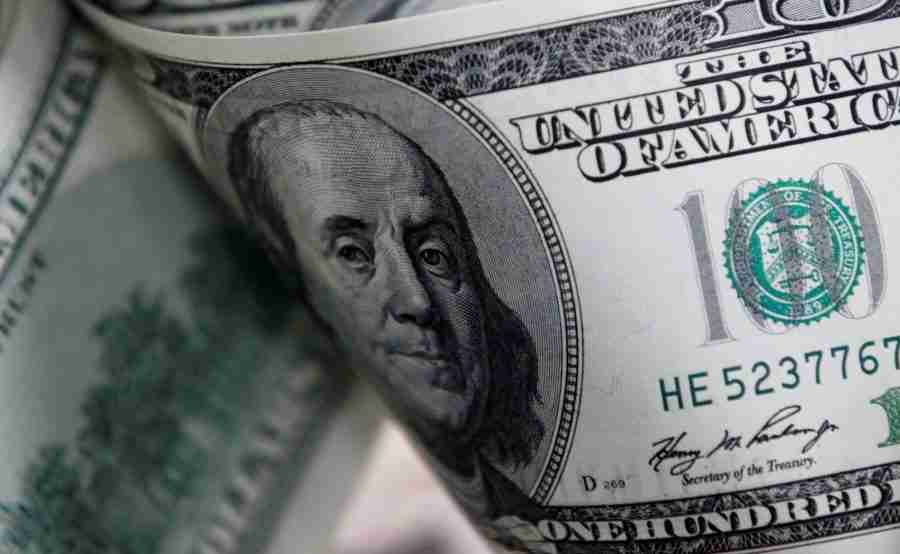
The dollar declined versus major peers on Friday, trimming its weekly gain as bond markets stabilised and traders awaited key U.S. jobs data expected to firm up the case for an interest rate cut by the Federal Reserve.

Data on Thursday showing higher-than-expected applications for jobless benefits in the U.S. served as a prelude to the more critical nonfarm payrolls report. Bonds rallied in the U.S., Europe and Japan after fiscal concerns spurred a run-up in long-term yields, while the S&P 500 hit a new all-time high.

“It seems to me that the reaction to the ADP yesterday was a bit too muted,” said Francesco Pesole, FX strategist at ING.

“All in all, it is pointing to a probably weak payroll figure today. I was a little surprised to see the dollar holding up yesterday,” he said.

He added that dollar weakness in early European trading on Friday could be indicative of traders offloading greenbacks ahead of the U.S. job figures later in the session.

On Friday, the dollar index, which tracks the greenback against a basket of currencies of other major trading partners, dipped 0.2% to 98.018, trimming its gain for the week back to 0.2%.

The dollar dropped 0.2% to 148.14 yen. The euro was up 0.2% on the day at $1.1682.

In the UK, retail sales data for July came in hot but failed to move the dial on sterling, which was last up 0.2% at $1.34695, while versus the euro, the pound weakened 0.05% to 86.74 pence.

Anxiety over U.S. President Donald Trump’s meddling with Fed policy and his unpredictable tariff regime has made investors shy about holding dollar assets of late, said Bart Wakabayashi, the Tokyo Branch Manager of State Street. 

“The dollar remains very, very underweight,” Wakabayashi said. “I do think there is room for the dollar buying to come back at some point. Maybe investors are just waiting for the rate cut to happen and then pile back in.”

Several Fed officials said labour market worries continue to support their calls for rate cuts, boosting expectations of an imminent easing. The Fed is due to convene on September 16-17.

The Labor Department’s Bureau of Labor Statistics (BLS) will report U.S. nonfarm payrolls for August, with economists surveyed by Reuters expecting an increase of 75,000 jobs after a gain of 73,000 in July.

That follows figures on Thursday showing that U.S. private payrolls rose by less than expected in August and jobless claims in the final week of the month were higher than predicted.

“The risk is still tilted to payrolls underperforming U.S. economists’ expectations that will weigh on the USD tonight,” Joseph Capurso, head of international economics at the Commonwealth Bank of Australia, wrote in a note.

Traders are pricing in a near-100% chance of the Fed cutting interest rates later this month, up from 87% a week ago, CME FedWatch showed.

Michael Brown, senior research strategist at Pepperstone, said that Friday’s jobs report doesn’t really matter in the grand scheme of things.

“The Fed will be delivering a 25-bp cut at the September meeting. A hot report shan’t dissuade them from doing so, given the broader trend of softening jobs data. A cool report shan’t convince them to plump for a larger rate reduction, given lingering upside inflation risks,” he wrote in a note.

Stephen Miran, Trump’s pick to fill an open seat at the Fed, said he would “not at all” be the president’s puppet when questioned by lawmakers on Thursday about whether he would make interest-rate decisions independently of political pressure.

Trump signed an order on Thursday to implement lower tariffs on Japanese automobile imports and other products that were announced in July. Japan also confirmed its commitment to an annual $7 billion worth of energy purchases from the U.S., a joint statement from the countries showed.

The Australian dollar rose 0.4% to $0.6544 . The New Zealand dollar rose 0.6% to $0.58785 .

In cryptocurrencies, bitcoin climbed 2.16% to $112,796.78, while ether added 2.1% to $4,398.61.

Reporting by Rocky Swift; editing by Sam Holmes and Jamie Freed and Mark Heinrich

TikTok users top 200 million in Europe, firm says

That is up from 175 million people last year, among users in 32 European countries

International News via Reuters:

TikTok has more than 200 million monthly users in Europe, or roughly one in three citizens on the continent, the short video app platform said on Friday, the latest sign of its rapid growth among teenagers.

That is up from 175 million people last year, among users in 32 European countries. TikTok, owned by Chinese technology behemoth ByteDance, has more than 1 billion users globally who visit monthly, a spokesperson said.

While the company has faced regulatory challenges worldwide, it has faced particular ire from U.S. President Donald Trump, who is pushing for divestment of its assets there.

In Europe, TikTok was fined 530 million euros ($600 million) by its lead EU privacy regulator in May.

ByteDance is set to launch a employee share buyback that will value the Chinese firm at more than $330 billion, Reuters reported in late August.

Reporting by Supantha Mukherjee in London; Editing by Clarence Fernandez

European stocks rise, long-dated yields ease ahead of US jobs data

Markets are all but certain of a quarter-point cut at the conclusion of the Fed’s two-day rate-setting meeting on September 17

International News via Reuters:

European equities rose in early trading on Friday while long-dated bond yields eased, as expectations for U.S. rate cuts helped markets overcome concerns about fiscal deficits in various countries.

The S&P 500 hit a new all-time high on Thursday after weekly jobs data showed more jobless claims than expected. Asian stocks tracked Wall Street higher overnight.

At 0752 GMT, the MSCI World Equity Index was up 0.3% on the day and Europe’s STOXX 600 was up 0.4%, set to end the week slightly higher overall after recovering from a dip earlier in the week.

The FTSE 100 was up 0.3% and France’s CAC 40 was up 0.2%.

Markets are all but certain of a quarter-point cut at the conclusion of the Fed’s two-day rate-setting meeting on September 17, according to LSEG data.

Traders will be looking to the monthly U.S. jobs report due later in the session to confirm their expectations. A weaker labour market boosts stocks because it raises expectations that the Federal Reserve will cut rates.

“We have already seen yesterday the sign that perhaps there will be a weakening in jobs, paving the way for a done deal in September,” said Francesco Sandrini, head of multi-asset strategies at Amundi.

Today’s numbers “can confirm to some extent an easing stance of the Federal Reserve,” Sandrini added.

Fed Chair Jerome Powell had already reinforced rate cut speculation with an unexpectedly dovish speech at last month’s Fed symposium in Jackson Hole.

“Unless it’s an absolutely stellar payrolls print, it’s hard to see too much that’s going to change the market away from locking in a September cut,” said Ken Crompton, head of rates strategy at National Australia Bank.

“Beyond that, the terminal rate and how you get there, that’s arguably still up for grabs.”

Market sentiment has recovered in recent sessions after global stocks fell earlier this week and long-date bond yields in Europe hit their highest in years, as investors became concerned about the state of various countries’ finances, particularly Britain and France.

Yields eased on Friday, with France’s 30-year yield at 4.3944%, down from a peak of 4.523% on Wednesday, and the UK’s 30-year yield at 5.563%, after borrowing costs hit their highest level since 1998 earlier in the week.

The benchmark 10-year German yield was at 2.7122%. German industrial orders unexpectedly fell in July, data on Friday showed.

Yields on 30-year Treasuries were at 4.8593%, having touched their lowest in three weeks during Asian trading.

The U.S. dollar eased, with the dollar index down 0.2% at 98.054, while the euro was up 0.2% at $1.1678.

After months of negotiations, the U.S. signed a deal to impose lower auto tariffs on Japan. The dollar was down 0.3% against the yen, with the pair at 148.14.

Oil prices were in their third day of declines. Brent crude futures fell 0.5% to $66.65 a barrel, while U.S. West Texas Intermediate crude eased 0.6% to $63.05.

Gold was steady at $3,546.24, having hit a record peak of $3,578.50 on Wednesday.

Reporting by Elizabeth Howcroft and Kevin Buckland; Editing by Ros Russell