Monday, November 9, 2026
Home Blog Page 796

Lisbon mourns 17 victims of cable car crash as investigation begins

Thirty-eight people were involved in the accident, with 15 killed at the scene while two more died in hospital overnight

International News via Reuters:

Flags flew at half-mast in Lisbon on Thursday after at least 17 people were killed and 21 injured in a crash of a hillside funicular railway popular with tourists, while Portuguese authorities began investigating the cause of the accident.

The city’s remaining two lines were shut for inspections, authorities said.

Footage from the site showed the mangled wreckage of the yellow tram-like funicular, which carries people up and down a steep hillside in the Portuguese capital, lying where it had left the track and hit a building, just metres from another car at the bottom of the hill.

Eliane Chaves, a Brazilian who has lived in Lisbon for 20 years, said she walked past the funicular every day.

“It is truly sad,” she said, as tears streamed down her cheeks. “People say that it was negligence but it was not negligence. They supervise it thoroughly. It was an accident, just like a plane or car accident can happen.”

Manuel Leal, leader of the Fectrans union, told local TV that workers on the Gloria railway – one of the symbols of the city – had complained about problems with the funicular’s haulage cable tension that made braking difficult, but it was too early to say if that was the cause of the crash.The municipal public transport company Carris said in a statement that “all maintenance protocols have been carried out”, including monthly and weekly maintenance programmes and daily inspections.

Thirty-eight people were involved in the accident, with 15 killed at the scene while two more died in hospital overnight, said Margarida Martins, head of the city’s emergency services.

The injured included four Portuguese, two Germans, two Spanish, one Korean, one Cape Verdean, one Canadian, one Italian, one French, one Swiss and one Moroccan, she said.

The German foreign ministry said in a statement that it assumed some of its citizens were among the victims.

CABLE SNAPPED

At the scene of the crash police could be seen taking photos of the wreckage as well as inspecting the braking system on the undamaged car nearby.

The line’s two cars, each capable of carrying around 40 people, are attached to opposite ends of a haulage cable with traction provided by electric motors on the cars that counterbalance each other.

As the cable apparently snapped, the car that was coming down the 265-metre slope lost its ability to brake and derailed on a turn, crashing into a corner building.

The car at the bottom of the line jolted back a couple of metres (yards) and was apparently undamaged, but video from bystanders showed several passengers jumping out of its windows.

The line, which opened in 1885, connects Lisbon’s downtown area near the Restauradores Square with the Bairro Alto, or Upper Quarter, famous for its vibrant nightlife.

The Gloria line transports around 3 million people annually, according to the town hall.

Authorities did not identify the victims or disclose their nationalities, but said some foreign nationals were among the dead.

Some local media reported that a German family-of-three was among the victims, including a three-year-old child who suffered minor injuries, while the father died and the mother was seriously hurt.

Portugal, and Lisbon in particular, has experienced a tourism boom in the past decade, with visitors cramming the popular downtown area in the summer months.

Reporting by Andrei Khalip, Inti Landauro, Sergio Goncalves; Writing by Charlie Devereux; Editing by Alex Richardson


Huge traffic jams after utility poll toppled on Harbour Road

From police:
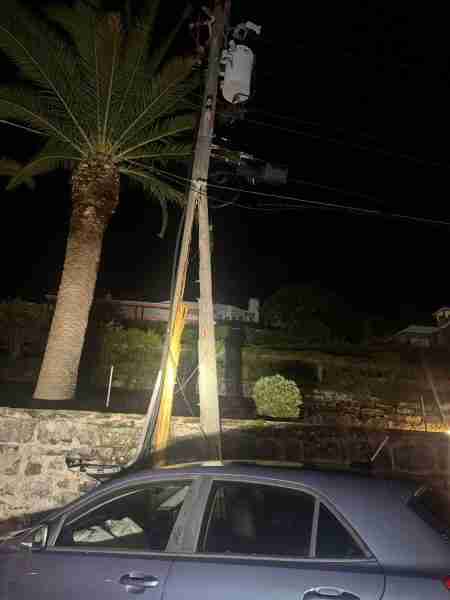
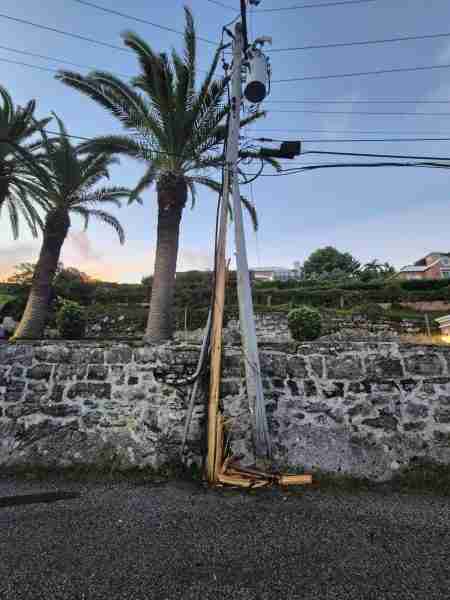
Harbour Road, near the junction with Lover’s Lane, Paget, (the scene of last night’s collision) will remain closed for an extended period this morning.

A utility pole was brought down in that incident and repair work is ongoing.

Motorists are advised to use alternative routes to get to their destinations. Harbour Road, near the junction with Lover’s Lane, Paget, (the scene of last night’s collision) will remain closed for an extended period this morning.

A utility pole was brought down in that incident and repair work is ongoing.

Motorists are advised to use alternative routes to get to their destinations.

Government press release:

The Ministry of Public Works and Environment is advising the motoring public of an emergency road closure on Harbour Road, which will remain in effect until further notice.

The closure has been implemented following an accident that resulted in damage to a BELCO utility pole. Emergency response teams are currently on-site working to carry out urgent repairs and restore the road for safe use as quickly as possible.

During this period, eastbound traffic will be rerouted via Chapel Lane, while westbound traffic will be diverted via Lovers Lane. Motorists are urged to avoid the area, use alternate routes, and follow any instructions from officials present.

ECB says digital euro needed for major disruptions

A digital version of the euro is needed so that residents of the euro zone can continue to make payments even during disruptions such as cyberattacks on banks

International News via Reuters:

A digital version of the euro is needed so that residents of the euro zone can continue to make payments even during disruptions such as cyberattacks on banks, European Central Bank board member Piero Cipollone said on Thursday.

“The digital euro will ensure that all Europeans can pay at all times with a free, universally accepted digital means of payment, even in case of major disruptions,” Cipollone told the European Parliament.

Reporting By Francesco Canepa; editing by Balazs Koranyi

Smart new look for Sea Cadets

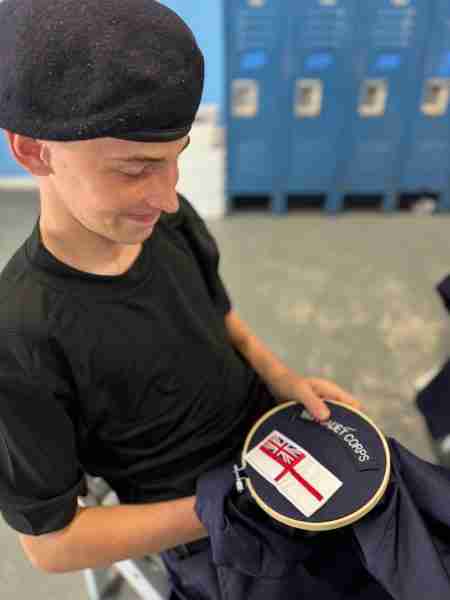
The Bermuda Sea Cadet Corps is stepping into the new training year with a fresh look, thanks to the rollout of the Royal Navy Personal Clothing System (RNPCS) rig over the summer. This modern uniform replaces the long-standing “Number 4 rig”, in use for over 30 years, and aligns the Corps with current Royal Navy standards, reinforcing its proud naval heritage.

Featuring the Royal Navy White Ensign badge and “Royal Navy” proudly displayed on the chest, alongside the “Cadet Forces” designation, the RNPCS rig is now worn by all Cadets and uniformed adult volunteers. While formal RN-style uniforms remain for ceremonial events, the RNPCS rig will be the new standard for daily training.

The upgrade was coordinated alongside the UK Sea Cadets, with Chairman of the Bermuda Sea Cadet Association, Peter Donnellan and Sue Outerbridge, Chair of the Unit Management Committee, leading the effort to secure and distribute the new gear.

“Uniform is a vital part of the Sea Cadet ethos, and one of the most significant expenses.” said Mr. Donnellan. “Thanks to fundraising efforts from the Cadets and their families, our generous donors, and support from our UK counterparts, we’ve outfitted the Corps with high-quality gear at excellent value, including drill boots, to ensure that they look their best on parade. Well worth it!” Mrs Outerbridge agreed, saying, “the new uniform looks great, and really makes us feel like we are part of the Royal Navy family, and the Cadets are especially proud of that!” BSCC Development Officer, Sub-Lieutenant (SCC) Sam Bennett, RNR also highlighted the uniform’s durability and comfort, noting that it is ideal for active Sea Cadet training, including boating, seamanship, and drill.

Lieutenant Commander (SCC) Michael Frith, RNR, the Commander of the Bermuda Sea Cadet Corps, praised the positive impact on Cadet morale, noting their pride and attention to detail in maintaining the new kit. “With this new look we can already see how great it makes them feel. They are proud to be wearing it – and rightly so!”

Cadets echoed that sentiment: “It’s comfortable, well-designed, and I love all the pockets,” said Ordinary Cadet Lexie Taylor, and Able Cadet Oca-Ray Brown added, “Sewing the badges was a lot of work, but totally worth it – it looks great!”.

The Bermuda Sea Cadet Corps kicks off its training year on Friday, 5 September, and will host a recruitment night on Friday, 12 September at 7:00 p.m. at the TS Admiral Somers Sea Cadet building at 2 Convict Bay Lane, St George’s. Girls and boys aged 10+ (or turning 10 before 31 December) are welcome. For more info, email bermudaseacadets@gmail.com or tsadmiralsomers@hotmail.com.

Bermuda Sea Cadet Corps – Background notes

The Bermuda Sea Cadet Corps is a wholly voluntary uniformed youth organization. Its mission is to inspire Bermuda’s young people to achieve their potential through challenge and nautical adventure guided by the customs and traditions of today’s Royal Navy. T.S.(Training Ship) Admiral Somers is the name of the St. George’s Unit (and the only Unit currently operating), based at Convict Bay Lane, St. George’s, and is made up of female and male Cadets (ages 12-18) and Junior Cadets (ages 10-12), uniformed adult volunteer officers and senior rates, and civilian adult volunteers.

Training takes place every Friday evening from 6:30 to 9:30p.m. and incorporates a wide variety of nautical themed activities including: seamanship, drill and ceremonial, leadership development, cooking, first aid, physical training and practical skill building. In the summer months outdoor activities including sailing, rowing, powerboat handling, kayaking, swimming and camping.

Community Service is also an important part of being a Sea Cadet, and activities include participation in various community events throughout the year, including providing a ceremonial guard for various formal parades (Remembrance Day, King’s Birthday, Midshipman Dale ceremony, Pilot Jemmy Darrell Memorial and others).

Euro zone retail sales fall more than expected in July

Retail sales in the 20 nations sharing the euro fell by 0.5% on the month

International News via Reuters:

Retail sales growth in the euro zone slowed further in July, raising doubts that healthy domestic consumption could continue to offset a hit to economic growth from U.S. tariffs, data from Eurostat showed on Thursday.

Retail sales in the 20 nations sharing the euro fell by 0.5% on the month, underperforming expectations for a 0.2% monthly drop, while sales were 2.2% higher than a year ago, below the 2.4% rise seen in a Reuters poll of economists.

Euro zone growth was unexpectedly strong in first half of the year as household consumption picked up and economists have been debating whether this increase was sustainable given the hit to sentiment from tariffs and economic turmoil elsewhere.

Reporting by Balazs Koranyi; Editing by Toby Chopra

Sterling steadies as UK bond market frenzy ebbs

Sterling traded a shade higher at $1.3455, heading for a third weekly decline

International News via Reuters:

The pound drifted on Thursday, in what has been its most volatile week in months, as investors grow increasingly nervous about Britain’s finances and the government’s ability to keep them under control, which has rattled the bond market too.

Sterling traded a shade higher at $1.3455, heading for a third weekly decline. The pound was also steady against the euro, which held at 86.67 pence.

Yields on 30-year British government bonds, or gilts, briefly shot up this week to their highest since 1998, swept along in a rout that has punished the long-dated debt of most major economies.

Typically, higher yields would support the pound. But when that increase in borrowing costs is the product of concern about the outlook for inflation, rather than that of optimism that longer-term growth looks robust, the currency suffers.

Bank of England Governor Andrew Bailey on Wednesday suggested that British interest rates would continue to fall, but there was far less certainty about the pace of cuts.

“There is now considerably more doubt about exactly when and how quickly we can make those further steps,” Bailey told a hearing of the House of Commons’ Treasury Committee, reiterating his comments after August’s rate cut.

The derivatives market shows traders are assuming the BoE will almost certainly cut rates at its meeting on September 18, but the picture beyond that is fuzzier.

“There is just an 18% chance of a cut in November, a month ago there was a 67% chance of a cut. Thus, UK yields may be able to reverse recent gains, but we still expect UK yields to remain higher than our peers’ yields for some time,” Kathleen Brooks, research director at XTB, said.

“With uncertainty likely as we lead up to the budget in November, we believe that sterling peaked in July at $1.38, and may trade sideways below $1.35 in the short term.”

Finance minister Rachel Reeves presents her autumn budget on November 26. Reeves is under pressure to keep the government’s finances on track and has vowed to keep a grip on spending to help bring down inflation and borrowing costs.

Bond investors are concerned. Britain has the highest borrowing costs among the Group of Seven advanced economies. A 10-year gilt yields 4.74%, compared with 4.2% for an equivalent U.S. Treasury and 1.6% for low-yielder Japan.

Reporting by Amanda Cooper; Editing by Alex Richardson

Swedish government to halve VAT on food

Deputy Prime Minister Ebba Busch said the VAT cut would be temporary

International News via Reuters:

The Swedish government plans to halve value-added tax (VAT) on food to 6% in its 2026 budget bill to help boost households and the wider economy, Prime Minister Ulf Kristersson told a press conference on Thursday. Growth has stalled amid tariff related uncertainty, with households and businesses holding hesitating to spend despite a series of rate cuts.

Deputy Prime Minister Ebba Busch said the VAT cut would be temporary, between April 2026 and December 2027.

“This is a reform that will have the greatest effect on households that have had the toughest time,” she said on social media X.

The right-wing coalition government said last week its budget bill for 2026, an election year, will include 80 billion crowns of unfinanced measures to boost the economy. 

The government, which sees 0.9% GDP growth this year and 3.0% in 2026, will submit the budget bill to parliament on September 22. Analysts have said it is likely to contain income and corporate tax cuts as well as unfinanced spending. 

Reporting by Anna Ringstrom and Simon Johnson, editing by Stine Jacobsen

Travel firm Jet2 forecasts lower profit as later bookings trend worsens

The company now sees operating profit towards the lower-end of the expected range of 449 million and 496 million pounds for the year ending March 2026

International News via Reuters:

British low-cost airline and travel firm Jet2 tempered its profit outlook on Thursday as visibility was muddled by travellers booking tickets closer to departure, sending its shares plummeting and dragging down those of its European peers.

The company now sees operating profit towards the lower-end of the expected range of 449 million and 496 million pounds ($606.6 million and $670.1 million) for the year ending March 2026, as seats for the summer and winter remain to be sold.

It reported operating profit of 446.5 million pounds last year. Geopolitical disruptions and extreme weather have become pain points for travel firms, as vacationers are choosing to book hotels and flights closer to their departure dates to avoid unforeseen expenses.

British inflation also looks set to hit 4% this month, likely forcing Britons to curb discretionary spending like vacations.

Jet2 said on Thursday that average holiday prices are rising slightly, and the company plans to maintain “attractive pricing” to lure customers.

Jet2 added it was exercising “capacity discipline in a less certain consumer environment” as the later booking trend has become more pronounced since its July update, and its flight-only booking options have become “increasingly attractive”.

The company, whose “Nothing beats a Jet2 holiday” advertisement has become a viral sensation on social media platforms, reduced its seats on sale to 5.6 million from 5.8 million for the upcoming winter season.

“Although we are currently operating in a difficult market, we have a proven business model,” CEO Steve Heapy said in a statement.

Jet2 shares fell as much as 25% to 1,209 pence on Thursday. If losses hold, the stock will record its worst one-day percentage fall since May 2020.

“It appears to us that flight-only volumes and package holiday pricing are holding up, but at the expense of flight-only pricing and package holiday volume growth,” analysts at Panmure Liberum said.

Jet2’s European rivals Ryanair, EasyJet, IAG, Wizz Air and TUI were also down between 2% and 4%.

Ryanair – Europe’s largest low-cost carrier – said in August that bookings were strong, and the company kept its financial guidance unchanged.

($1 = 0.7402 pounds)

Reporting by Yamini Kalia and Pushkala Aripaka in Bengaluru; Editing by Mrigank Dhaniwala and Joe Bavier

UK’s Lloyds to put thousands of staff at risk of dismissal

Along with other banks in Britain, Lloyds has reduced its high street presence, saying in January it would shut 136 branches as more customers take up digital banking

International News via Reuters:

Around 3,000 people at Britain’s Lloyds Banking Group, judged to be among the bottom 5%, will find themselves considered for possible dismissal, a source familiar with the matter told Reuters, as CEO Charlie Nunn pursues cost cuts.

Lloyds expects about half that number will lose their jobs unless their work improves, the source said, declining to be named, while adding there was no fixed target for layoffs from its 63,000-strong workforce.

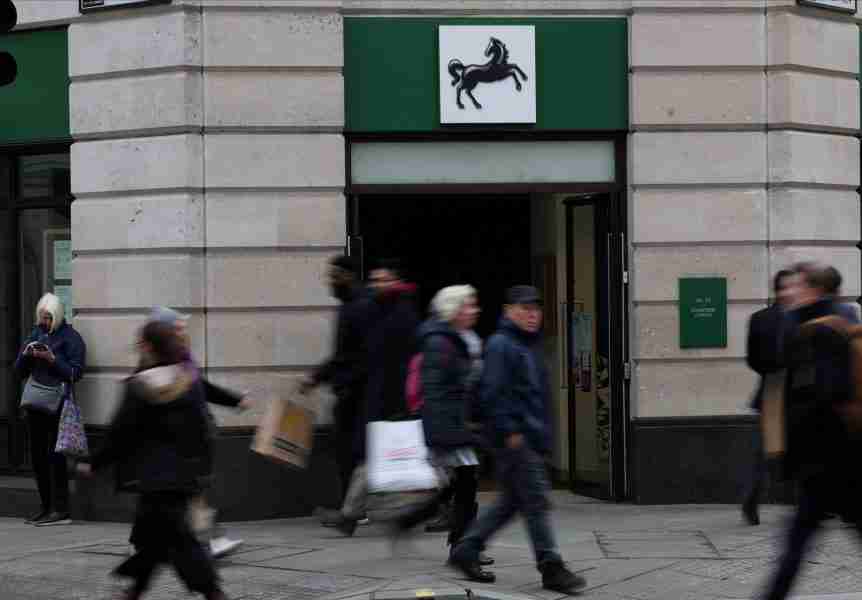
Along with other banks in Britain, Lloyds has reduced its high street presence, saying in January it would shut 136 branches as more customers take up digital banking, although it said that would not directly result in job cuts.

Economic uncertainty has also made workers cautious about changing jobs. Lloyds employees have been leaving at an annual rate of 5% each year compared to an average of closer to 15% historically, according to the Financial Times newspaper, which first disclosed the performance shake-up.

U.S. banks have typically been the most aggressive in sacking what they regard as the least productive of their workforce, especially when profitability dwindles.

A Lloyds spokesperson told Reuters in an emailed statement that it was transforming its business and “striving to embed a high-performance culture”.

“We know change can be uncomfortable, but we are excited about the opportunities ahead as we propel forward to achieve our growth ambitions and deliver exceptional customer experiences,” the spokesperson said.

The Financial Times reported managers would place underperformers on “structured support” plans and that they would be dismissed if that did not lead to improved performance.

Reporting by Ananya Palyekar and Rishabh Jaiswal in Bengaluru and Iain Withers in London; Additional reporting by Nilutpal Timsina; Editing by Mrigank Dhaniwala, Janane Venkatraman and Barbara Lewis

Treading water as the tide rises?

OBA urges the public to weigh up the effectiveness of the PLP government

Statement By Scott Pearman, OBA MP for Paget East, Constituency 22:

As the Summer draws to a close, and we enter the autumn season of party political conferences – with the OBA’s party conference in September and the PLP following after in October – here are two questions for you to ponder…

First, are you better off than you were eight years ago?  Second, is Bermuda better off than it was in 2017?

2017 was, of course, the year when our current Premier David Burt won his first general election as PLP Leader.  Way back in July 2017.

It is true that David Burt had a helping hand in some disastrous decision-making before 2017.  Don’t forget that our outgoing Premier was once the Junior Finance Minister under then Premier Paula Cox.  That was more than a decade ago in 2013.  Yet 2017 was the year when David Burt finally seized the helm of our ship of state by becoming Bermuda’s Premier.

With David Burt’s repeatedly confirming to Parliament that he will step down as Premier in October 2026, how do his past eight years look to you? 

Is our Island better off for his leadership?  Are you better off?

BEWARE THE VICTORY LAP

It seems slightly odd that Premier Burt keeps telling us he is leaving, but then – in the very same breath – declares he will remain as the Premier until the PLP Party Conference in October 2026?  That’s over a year away.

Students of politics may remember British PM Harold Wilson’s quote: “a week is a long time in politics”.  If one week is a long time, doesn’t 14 months seem exceedingly long for a victory lap?  What a tight grip David Burt must have on his Progressive Labour Party if he – and he alone – can dictate when he steps down.

Sticking with famous quotes, this next one may inform this circumstance.  It was a Hall of Fame baseball pitcher (Christy Mathewson of the old New York Giants, since you asked) who once remarked: “You can learn little from victory.  You can learn everything from defeat.”  Wise words.

Beware the victory lap Premier Burt.  Now that people know you are leaving, some may seek to hasten your departure.  And others will naturally have cause to reflect, and to judge a departing Premier by his record.

Take Premier Burt’s record on tourism for example.  In the red corner, the OBA’s brief stint as the Bermuda Government saw the major development of new Hamilton Princess Marina and Beach Club.  And several splendid new hotels opened, including The Loren, St. Regis, and Azura.  Bermudians received an award-winning new airport, built without adding to the people’s debt (the PLP’s plan, if you remember, was to tack on yet another $500 Million to our already sky-high debt).  And under the OBA, the eyes of the World focused on Bermuda with the massive success of the America’s Cup.

What are the PLP’s tourism wins under Premier Burt?

Flora Duffy’s spectacular triathlon victory is certainly one for the record books, although some may rightly feel Dame Flora deserves the credit for that beauty.  The nifty renovation of Aunt Nea’s Inn in St. George’s deserves special mention.  Beyond that, well, you be the judge…

A DEBT OF GRATITUDE

For those who feel like Bermudians are treading water in a rising tide, there is some positive news coming soon.  Don’t let your eyes glaze over, but let’s talk for a moment about the Corporate Income Tax (CIT).  The predicted tax take from our new CIT is due in soon, as my OBA colleague and Shadow Finance Minister Douglas De Couto commented elsewhere.

This is the first year of CIT payments, so the numbers should be healthy, and possibly robust.  Yet the promised tax credit system still seems rather late to arrive?  With the Tax Reform Commission’s Report having just been published, will Premier Burt deliver what is needed?  And we would be wise to remember that those paying the CIT are international businesses: they could easily choose to pay the tax elsewhere.

You can be sure the Premier will be out there seeking to take credit for the taxes paid by our friends in IB.  Yet instead of another victory lap, the Premier could and should do the one thing that would actually earn him a place in Bermuda’s history.  He should use this singular opportunity to hack away at our stifling public debt, which remains above $3 Billion.  Will the Burt Administration make any real progress on the very real issues facing Bermudians today, including our Bermudians employed in the IB sector?

The next generation of Bermudians would then have a fighting chance, in a global rising tide that may not recede anytime soon…

Scott Pearman is the MP for Paget East (Constituency 22) and OBA Shadow Minister for Legal Affairs.  He can be reached at spearman@oba.bm. 

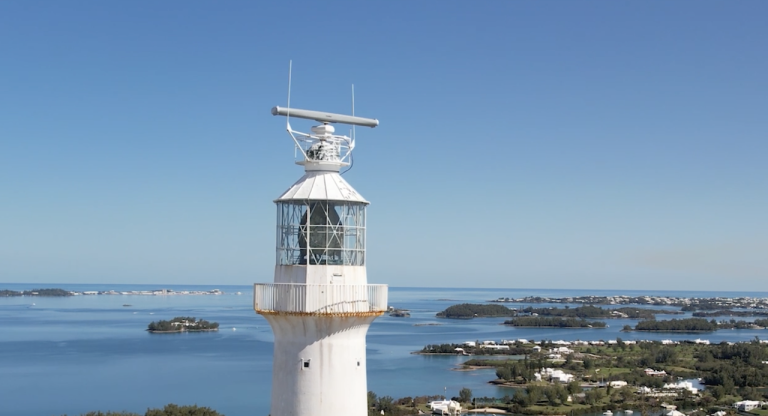
Gibbs Hill Lighthouse awaits new safety railing

The observation deck for the iconic landmark has been closed for safety reasons since January

The observation deck from one of Bermuda’s most iconic landmarks has been off-limits to visitors since January.

As efforts continue to bring Gibbs Hill Lighthouse back to life, Julie Matthews-Borchardt looks at the steps underway to restore this historic — and much-loved — tourist attraction.