Cardiff City goalkeeper Nathan Trott produced a “breathtakingly brilliant” performance to deny compatriot Nahki Wells and his Luton Town teammates, securing a 1-0 victory for the visitors in an EFL League One encounter at Kenilworth Road.
The match was a showcase for the Bermudian pair, but it was Trott who ultimately stole the headlines, with his remarkable saves ensuring a perfect start to the season for Cardiff.
Making his return from injury, Wells was a central figure in Luton’s attack and created a series of chances. In the 17th minute, he came close with a low shot from 12 yards, which went just wide. Five minutes later, a cross to the back post found Wells, but his volley went over the bar.
Luton continued to press, but they were repeatedly thwarted by the superb Trott. In the 34th minute, he superbly kept out a powerful first-time strike from Saville. Just moments later, Nordås’ instinctive effort was also clawed away by the in-form goalkeeper. Trott’s heroics continued in the 42nd minute, as he kept out a Makosso effort from a whipped-in Saville free-kick.
The second half began in a similar fashion, with Trott once again proving to be the difference-maker. He got down superbly to his right to prevent a goal-bound header from McGuinness just four minutes after the break.
Wells’s active night came to an end in the 58th minute when he was substituted, but even without the striker on the pitch, Trott was forced into a final save in the 71st minute, this time with his feet from a close-range Nordås shot.
Trott’s clean sheet was a masterclass in goalkeeping and a key factor in Cardiff’s impressive win.
A commentator on BBC Radio 5 Live, which has more than five million listeners, said Trott was “breathtakingly brilliant between the sticks today”.
250th anniversary of the Gunpowder Plot marked by re-enactment
Visitors to Tobacco Bay were treated to an eye-catching sight last weekend … the re-enactment of Bermuda’s daring role in the American War of Independence.
It became known as The Gunpowder Plot and it took place 250 years ago this month.
On August the 14th, 1775, Bermudians raided the Powder Magazine in St George’s and loaded 100 barrels of gunpowder onto boats and then onto American ships waiting offshore.
The theft aided the Continental Army, providing munitions that were subsequently used in key engagements, most notably in Boston and Charleston.
As you’ll seen in the re-enactment, Bermuda’s Governor was furious – he offered a reward to capture the thieves but no one was ever caught.
The re-enactment was presented by the Bermuda Pilot Gig Club, in collaboration with Explore St. George’s Bermuda and The St. George’s Foundation, under the patronage of Governor Andrew Murdoch.
Though summer is winding down, Bermuda is still buzzing with culture, music, and island traditions. There are various events planned for this weekend, from live performances to hands-on workshops. Here’s a look at what’s on.
The British army conducts joint exercises with Kenya in the northern Laikipia region, where it has a base in the town of Nanyuki
International News via Reuters:
The UK has agreed to pay 2.9 million pounds ($4 million) in compensation to residents living near a Kenyan wildlife conservancy, following a fire sparked by a British military exercise in 2021, the plaintiffs’ lawyer said on Friday.
The British army conducts joint exercises with Kenya in the northern Laikipia region, where it has a base in the town of Nanyuki. The fire broke out in the nearby Lolldaiga in March 2021.
“We arrived at a settlement and have dispatched payments,” lawyer Kelvin Kubai said in a short message to Reuters. He said compensation was paid to over 7,000 residents for what he described as “smoke nuisance” caused by the fire.
Residents of Lolldaiga area accused a British army training unit of causing the wildfire that destroyed much of a nature reserve, leaving behind ordnance that injured locals.
A British soldier later seemed to claim responsibility for starting the wildfire in a social media post, prompting the British High Commissioner at the time to say she was “appalled” and to pledge an investigation by the Royal Military Police.
The British government on Friday expressed regret over the incident.
“The Lolldaiga fire was extremely regrettable, and the UK recognises the length of time it has taken to resolve this matter and the frustration that this has caused within the affected communities,” a spokesperson at the British High Commission in Nairobi said in a statement.
Reporting by Humphrey Malalo; Writing by George Obulutsa; Editing by Ammu Kannampilly and Clelia Oziel
Details of an EU-U.S. trade deal indicated wines and spirits will not be shielded from the baseline 15% rate applied to most European goods
International News via Reuters:
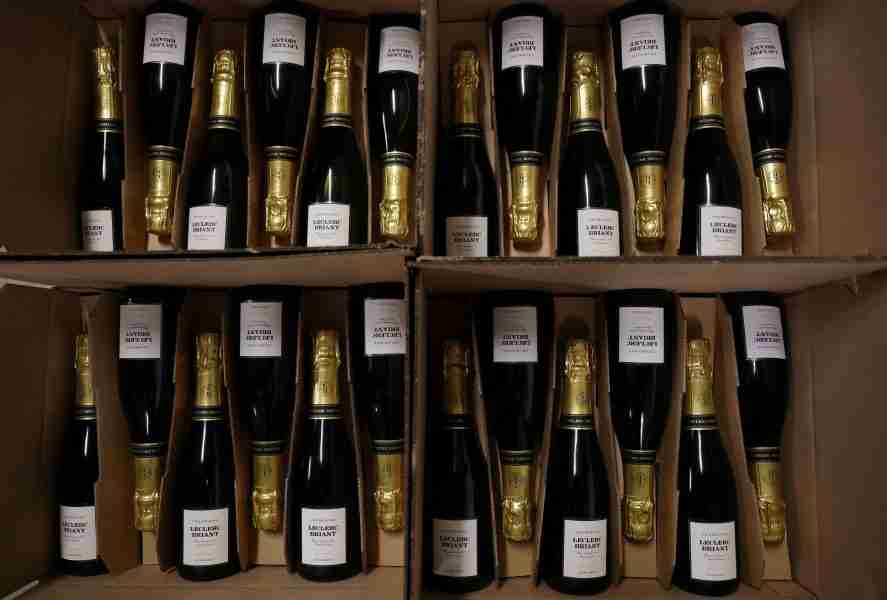
French wine and spirits producers are bracing for a 15% tariff on their exports to the United States, a crucial market, even as the European Commission pledges to keep pressing for a preferential rate for the sector.
Details of an EU-U.S. trade deal released on Thursday after months of negotiations indicated wines and spirits – a culturally and economically important industry in France – will not be shielded from the baseline 15% rate applied to most European goods.
“This is a major source of concern for our emblematic sectors,” French agriculture minister Annie Genevard wrote in a post on X, citing the lack of a tariff exemption for the sector and other agricultural goods.
The tariffs’ impact coupled with unfavourable currency exchange rates could slash annual French wine and spirits sales revenues by around 1 billion euros ($1.17 billion), according to Gabriel Picard, president of France’s federation of wines and spirits exporters.
“Our first reaction is very simple: it’s a huge disappointment,” he told Reuters.
The U.S. is the biggest market for champagne, for example, accounting for 10% of exports by volume and 15% by value.
“It’s a very important, rich market that is growing, with people who love the French art de vivre,” said Frederic Zeimett, CEO of champagne label Leclerc-Briant, using a French phrase that translates as “the art of living”.
Producers of the world-renowned sparkling wines have said the new import levies will push up prices for U.S. consumers, threatening jobs throughout the supply chain, both in France and the United States.
President Donald Trump’s tariffs come at a time when Zeimett said the sector is already grappling with a weaker dollar compared to the euro, and few other markets are in a position to quickly pick up the slack from any weakness in U.S. sales.
He estimates the price of a bottle of his label’s champagne could increase by $20 for U.S. shoppers, bringing it to around $70, but added that he was considering flexibility in order to maintain business in the United States.
“I don’t want to leave the American market,” Zeimett said. “It’s the leading export market for champagne. So let’s try to preserve this leading position, even if it means making an effort on the price of our bottles.”
($1 = 0.8537 euros)
Reporting by Manuel Ausloos; Writing by Mimosa Spencer; Editing by Joe Bavier
The Competition and Markets Authority said it set October 20 as the deadline for its phase 1 decision on the investigation
International News via Reuters:
Britain’s antitrust watchdog on Friday said it has launched an investigation into U.S.-listed Getty Images’ $3.7 billion merger with rival Shutterstock.
The Competition and Markets Authority said it set October 20 as the deadline for its phase 1 decision on the investigation.
Reporting by DhanushVignesh Babu and Raechel Thankam Job in Bengaluru; Editing by Sahal Muhammed
In a statement, the highest Swiss prosecutors’ office said the bank had settled with Petrobras, a claimant in the case, for 16 million francs
International News via Reuters:
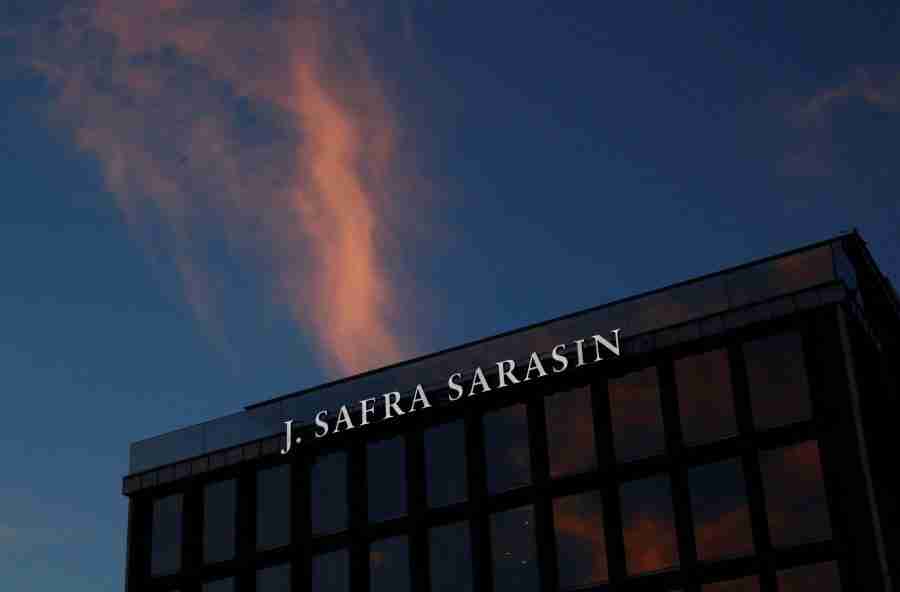
Switzerland’s attorney general has fined Swiss private bank J. Safra Sarasin SA 3.5 million Swiss francs ($4.3 million) under a years-long corruption and money laundering case surrounding Brazilian state oil company Petrobras, it said on Friday.
In a statement, the highest Swiss prosecutors’ office said the bank had settled with Petrobras, a claimant in the case, for 16 million francs and that no further compensation payment was therefore due.
Safra Sarasin said the prosecutors’ “ordinance does not constitute an admission of guilt or an acceptance of civil or criminal liability on the part of the bank or any of its representatives”.
A former Safra Sarasin employee was also sentenced to a suspended custodial sentence of six months for aggravated money laundering acts committed between November 2011 and July 2014 while she was working for another Swiss bank, involving a total amount of $29.2 million, the statement said.
The money laundering that Safra Sarasin failed to take measures against around that time amounted to $71 million, it added.
According to the statement, the probe covered several bank accounts with Safra Sarasin that were used for bribes going to senior executives at Petrobras to promote contracts for about 10 companies in the oil and construction sectors.
The prosecutors opened the investigation in 2019. The case against the sprawling scheme, dubbed “Operation Car Wash”, has resulted in the imprisonment of former Brazilian President Luiz Inacio Lula da Silva, among others.
More than 130 politicians and business officials have been convicted in Brazil.
The prosecutors added the fine takes into account various corrective measures that the bank has since taken and that the parties involved have declared that they will not appeal the penalty.
($1 = 0.8078 Swiss francs)
Reporting by Ludwig Burger and Oliver Hirt, editing by Thomas Seythal and Jan Harvey
The Department of Parks’ Lifeguard Service is urging beachgoers to avoid entering the rough seas in the wake of Hurricane Erin
The island’s lifeguards are back on duty today however, the government is urging beachgoers to avoid entering the sea due to rough surf.
Following Hurricane Erin, lifeguards resumed service at 10.30 this morning at Turtle Bay, Clearwater Beach, John Smith’s Bay and Horseshoe Bay – but sea conditions remain hazardous.
As a result, a spokesperson advised that high surf warning signs remain in place island-wide.
They added, “At Horseshoe Bay, the red flag is flying, indicating the presence of dangerous surf and rip current conditions.
“Beachgoers are strongly discouraged from entering the water. With seas expected to gradually abate into the weekend, it is anticipated that high surf warning signs will begin to be removed in the coming days.”
The Department encourages members of the public to review official forecasts from the Bermuda Weather Service before swimming.
Global fertiliser prices have been rising this year in part due to the additional levies introduced on July 1 on top of import tariffs
International News via Reuters:
EU tariffs on Russian fertiliser imports that aim to cut funding for Moscow’s war in Ukraine have so far hit European farmers, raising costs and risking higher consumer prices while Russian companies say they can divert exports to other markets.
“We’re shooting ourselves in the foot,” farmer Cedric Benoist, deputy secretary general of French wheat farmers union AGPB and head of the cereals committee of EU farmer association Copa Cogeca, told Reuters, saying farmers are now faced with paying higher global prices.
Global fertiliser prices have been rising this year, World Bank data shows, in part due to the additional levies introduced on July 1 on top of import tariffs, adding to other challenges facing European farmers such high energy costs and environmental regulations.
Western countries did not impose sanctions on food or fertiliser exports over Moscow’s February 2022 invasion of Ukraine. But fertiliser export tariffs are now being imposed gradually over three years by Europe as it looks to further reduce dependence on Russian supplies.
Russia produces more than 20% of the world’s fertiliser and supplies around 25% of the EU’s fertiliser imports.
The EU said it will be monitoring the impact of tariffs closely to ensure that the EU’s fertiliser industry and farmers are protected.
Tariffs kicked off at 40 euros per metric ton for urea and nitrogen in July and are set to reach 315 euros per ton from July 2028. Average prices for urea, a nitrogen-based fertiliser, rose 26.5% to $496 per metric ton from May to July, World Bank data showed.
The EU does not yet have data to evaluate the impact of its tariffs, but an official said the tariffs can be postponed if the result is that prices rise too high.
“Due to…hesitancy around Russian purchases, European suppliers are pricing their products higher than in other regions,” independent fertiliser market analyst Swati Kushwaha told Reuters, referring to prices of fertiliser products. “Consequently, buyers are turning to more expensive sources, like Canada.”
Farmers are concerned, particularly as wheat prices have hit five-year lows.
Benoist said lots of farmers were holding off buying, hoping fertiliser prices would fall.
“It can’t last at this price, given the price of wheat,” Benoist said. “But right now, in terms of profitability for farmers, it’s completely unsustainable.”
Rising prices for fertilisers such as diammonium phosphate (DAP) and urea contributed to soaring consumer prices after Russia’s invasion of Ukraine. Prices eased in early 2023, but are once again rising.
Average annual DAP prices, down to $550 per metric ton in 2023 from $772.2 per metric ton in 2022, according to World Bank data, were back up to $736 per metric ton in July on average, rising 10% since May when the tariffs won parliamentary backing.
Farmers across Europe protested throughout 2024 against excessive regulation, free-trade deals and efforts to bring down food inflation that left many producers unable to cover high costs for energy, fertiliser and transport.
GLOBAL SUPPLY SHIFTS
Dmitry Tatyanin, chairman of Russia’s Uralchem, told the RIA news agency in June that the fertiliser producer would redirect European exports to other markets if necessary.
Reuters could not determine whether Russian producers had started diverting supplies. Major producers Acron, PhosAgro and EuroChem did not respond to requests for comment.
Russian producers are major suppliers of potash, urea and phosphate to markets such as Brazil, India and the United States, a report from Canadian fertiliser producer Nutrien showed.
Billionaire Dmitry Mazepin, who resigned as CEO of Uralchem and reduced his stake to 48% from 100% after being added to an EU sanctions list in March 2022, said sanctions on Russia had created problems and raised prices.
African, Indian, and Chinese farmers ultimately buy fertiliser at higher prices because Russian fertilisers have longer distances to travel, Mazepin told Reuters.
“In the end, European farmers will pay extra for these tariffs,” Mazepin said.
Uralchem, which declined to comment, is not under sanctions and Mazepin no longer has any operational involvement.
General sanctions on Russia have made it harder for traders to process Russian payments or to obtain vessels and insurance.
However, Norwegian fertiliser producer Yara International said Russian fertiliser imports to Europe significantly increased since Moscow’s 2022 invasion, with urea imports 48% higher in the 2023-24 season, compared to the average of five seasons before the war.
EU countries sharply increased imports of Russian fertilisers in anticipation of the import duties, Yara added.
“We fully understand that tariffs can cause concern amongst European farmers, but the tariff measures have been designed by EU policymakers with farmers’ long-term stability and resilience in mind,” Yara said, adding that the tariffs were important in levelling the playing field for European fertiliser producers.
Antoine Hoxha, director general of industry lobby Fertilizers Europe, said it was too early to assess the tariffs’ impact, but said EU countries have ample stocks and that tariffs would ultimately benefit Europe’s strategic autonomy.
Reuters could not determine how long those stocks would last before any potential pressure on consumer prices begins to filter through.
Reporting by Alexander Marrow in London, Gus Trompiz in Paris and Tristan Veyet in Gdansk; Editing by Elaine Hardcastle
To provide the best experiences, we use technologies like cookies to store and/or access device information. Consenting to these technologies will allow us to process data such as browsing behavior or unique IDs on this site. Not consenting or withdrawing consent, may adversely affect certain features and functions.
Functional
Always active
The technical storage or access is strictly necessary for the legitimate purpose of enabling the use of a specific service explicitly requested by the subscriber or user, or for the sole purpose of carrying out the transmission of a communication over an electronic communications network.
Preferences
The technical storage or access is necessary for the legitimate purpose of storing preferences that are not requested by the subscriber or user.
Statistics
The technical storage or access that is used exclusively for statistical purposes.The technical storage or access that is used exclusively for anonymous statistical purposes. Without a subpoena, voluntary compliance on the part of your Internet Service Provider, or additional records from a third party, information stored or retrieved for this purpose alone cannot usually be used to identify you.
Marketing
The technical storage or access is required to create user profiles to send advertising, or to track the user on a website or across several websites for similar marketing purposes.